
The Best Foreign Casinos for UK Players, Ranked and Reviewed
 Available in GB
A foreign casino, for a UK player, is not a marketing category. It is a legal one. The moment a casino does not appear on the Gambling Commission’s public register of licence holders, it is foreign to anyone in Great Britain — regardless of where its servers sit, which flag its logo carries, or how British its homepage looks. That boundary line is what this page is built around: the ten foreign-licensed casinos that actively serve UK players, what each one actually offers, and the full set of UK protections a player walks away from the second an account is opened at any of them.

Data current as of 17 August 2026 and cross-checked against the UK Gambling Commission’s public register of licence holders.
What a “Foreign Casino” Actually Means for UK Players
A Casino Sitting Outside the UKGC’s Reach
The single criterion that makes a casino “foreign” for a UK player is the absence of a UKGC operating licence. Under the Gambling Act 2005 and the Gambling (Licensing and Advertising) Act 2014, any operator that provides gambling facilities to customers in Great Britain must hold a UKGC licence — no matter where the operator is incorporated, where its servers run, or which other regulator has signed it off. The point-of-consumption reform of 2014 closed the old loophole that let operators base themselves offshore while targeting British customers. A Curaçao licence, an MGA licence, a Gibraltar licence, an Anjouan licence — none of them authorises activity directed at GB residents. Each of these is, from a UK legal standpoint, a foreign casino.
The UKGC’s public register, last refreshed in late July 2026, lists more than 2,661 active licensed businesses. Any operator not on it is foreign to a UK player by definition, and the register itself can be searched by name, trading name or domain. That is the practical test: not the language on the homepage, not the “Pounds Sterling accepted” badge, not the Union Jack in the footer — the entry, or its absence, on the Commission’s register.
So why do UK players look beyond UKGC sites at all? The reasons are practical and well-documented. UKGC-licensed bonuses are now capped at 10× wagering under the Social Responsibility Code, but that ceiling makes welcome offers less generous by design — operators respond by trimming headline value. Online slots at UK-licensed casinos carry a statutory maximum stake of £5 per game cycle for adults aged 25 and over, and £2 for the 18–24 band, imposed from April and May 2025 respectively. Auto-play was banned in October 2021 and spin speeds are pinned at a minimum 2.5 seconds. Each of these rules exists to protect the player; collectively, they make a UK-licensed slot a slower, smaller-staked, less feature-rich experience than what a Curaçao-licensed lobby can offer. The foreign casino exists because the protected one feels constrained to a slice of the market that does not want those constraints.
Foreign, Offshore, Non-UK, International: What Each Label Tells You
The terminology around non-UK casinos is loose, and competitors blur the distinctions. Four labels recur in affiliate copy and reader searches, and each carries a slightly different signal.
“Foreign” is the broadest term and the one that maps most cleanly to UK law. It simply means not licensed by the UKGC for the activity being offered to a GB customer. Nothing more is implied about the regulator that did issue the licence, the rigour of its oversight, or the protections a player can fall back on.
“Offshore” is narrower and more specific. It points to a licensing jurisdiction that sits outside the UK and, typically, outside the European Union’s tighter regulatory orbit. Curaçao, Anjouan and Costa Rica are the offshore jurisdictions that appear most often in the marketing of casinos serving UK players. The label carries a connotation — sometimes deserved, sometimes not — of lighter-touch regulation.
“Non-UK” is the plain factual description. A casino is non-UK if it is not licensed in the UK. The term avoids the value judgment that “offshore” sometimes smuggles in, and it is the language the UKGC itself uses in its guidance to players about unlicensed operators.
“International” is the marketing wrapper. An “international casino” is one that targets players across multiple jurisdictions, often through country-specific domains and currency options. The label tells the player nothing about the regulator behind the licence or the protections it offers.
The distinction matters because player expectations shift with the label. A reader who searches for “international casino” is looking for a multi-currency, multi-language operation. A reader who searches for “offshore casino” is signalling that they understand the licensing question is the one that matters. The page you’re reading uses “foreign” as the primary term because it is the one that maps directly to the legal boundary a UK player needs to understand.
How Foreign Casinos Accept and Serve UK Players Day to Day
The mechanics of playing at a foreign casino are familiar. Registration does not require the upfront identity verification that has been standard at UKGC sites for years — the UKGC’s KYC regime, tightened materially since 2019, applies only to operators it licenses, and an offshore casino sets its own verification threshold. GBP is accepted at most of the casinos that actively target UK players, and the payment methods typically include Visa, Mastercard, Skrill, Neteller, Bitcoin, Ethereum and bank transfer. Credit card deposits, banned at UKGC sites since April 2020 under licence condition 6.1.2, are widely accepted offshore — the ban does not extend beyond the GB regulatory perimeter.
What is missing, day to day, is the architecture of UK-mandated protection. There is no deposit-limit prompt before the first deposit (UK operators must offer this from 31 October 2025). There is no financial vulnerability check at the £150 net-deposit threshold (mandatory for UK licensees from 28 February 2025). There is no reality check interrupting the session, no automatic time-out, and no display of session net position in the way UKGC remote technical standards require. The casino is free to offer any or all of these as goodwill; nothing compels it to. The player is the one building the safety net, not the operator.
The Trade-Off: More Freedom, Fewer UK Safeguards
A UK player at a foreign casino trades the UK protection stack for a different value proposition. Welcome bonuses run at 150%, 200%, 300% and even 450% match percentages — multiples that have been functionally impossible at UKGC-licensed casinos since the 10× wagering cap took effect in December 2025, because the economics of high-match offers with low wagering do not close. Offshore, wagering typically sits at 30× to 40× on the bonus, sometimes higher; the headline percentage is bigger because the rollover asks for more. Slot stakes are not capped at £5 or £2 per spin. Auto-play, faster spin cycles, and feature-buy mechanics are available as the game designer intended. Crypto deposits and withdrawals are routine. Credit cards work. The catalogue often includes the full Nolimit City and Hacksaw Gaming ranges at the providers’ default RTP settings, rather than the reduced RTP variants the UKGC’s framework sometimes pushes operators toward.
What the player leaves behind: GAMSTOP coverage — the mandatory self-exclusion scheme covers GB-licensed sites only and cannot reach operators outside the GB licensing system. The UKGC complaints procedure and approved ADR routes (IBAS, eCOGRA) are unavailable. The 10× statutory wagering cap does not apply. Credit card deposit protections are gone. Mandatory deposit-limit prompts and financial vulnerability checks are absent. Statutory fund-segregation protections — the requirement that customer funds be held in ring-fenced accounts — do not extend to offshore operators. The right to gamble remains; no law prohibits a UK player from placing a bet at an unlicensed site. What is gone is the safety net that the UK spent a decade and a half building.
The 10 Best Foreign Casinos for UK Players in 2026
The ten casinos below were selected on four criteria: licence quality and the standing of the issuing regulator; the structure of the welcome offer (wagering multiple, max cashout, free-spin terms); the game-provider range and catalogue depth; and payment-method diversity, including crypto support. None of the ten appears on the UKGC’s public register of licence holders as of late July 2026. All operate under foreign licences — Curaçao, Anjouan or Costa Rica — that do not authorise activity in Great Britain. The ranking is qualitative; no numerical weighting has been applied, and the order reflects editorial judgment across the four criteria.
| Casino | Licence | Welcome Bonus | Free Spins | Wagering | Game Providers | Payment Methods |
|---|---|---|---|---|---|---|
| MyStake | Curaçao (Santeda International B.V.) | 150% up to £750 | 30 no-deposit | 30× on bonus | Pragmatic Play, NetEnt, Evolution, Play’n GO, Nolimit City, Hacksaw Gaming, Push Gaming | Visa, Mastercard, Skrill, Neteller, Bitcoin, Ethereum, bank transfer |
| Velobet | Curaçao GCB | 150% up to £500 or 100% up to £1,000 | 70 | 30× bonus / 35× FS | Pragmatic Play, Evolution, NetEnt, Play’n GO, Hacksaw Gaming | Skrill, Neteller, Bitcoin, Ethereum, Visa, Mastercard, bank transfer |
| Freshbet | Curaçao | 300% up to £3,000 across 3 deposits | 200 (100 + 50 + 50) | 40× on bonus | Pragmatic Play, Evolution, NetEnt, Play’n GO, Nolimit City, Push Gaming | Visa, Mastercard, Skrill, Bitcoin, Ethereum, Litecoin, Monero, XRP, Dash, bank transfer |
| MadCasino | Anjouan | 100% up to £1,500 | 300 | 35× bonus and FS | Pragmatic Play, NetEnt, Evolution, Play’n GO, Push Gaming, BetSoft, Spinomenal, Habanero, Boom | Bitcoin, CoinDraw, bank transfer |
| Rolletto | Curaçao | 150% up to £500 | 200 (50 instant + 30/day × 5) | 30× on bonus + deposit | Pragmatic Play, Evolution, NetEnt, Play’n GO, Nolimit City, Hacksaw Gaming | Skrill, Neteller, Bitcoin, Ethereum, Visa, Mastercard, bank transfer |
| Cosmobet | Curaçao | 100% up to €500 | 250 | 30× on bonus | Pragmatic Play, Evolution, NetEnt, Play’n GO | Skrill, Neteller, Bitcoin, Ethereum, Visa, Mastercard, bank transfer |
| Donbet | Curaçao GCB | 150% up to £750 | 50 | 30× on deposit + bonus | Pragmatic Play, Evolution, NetEnt, Play’n GO | Skrill, Neteller, Bitcoin, Visa, Mastercard, bank transfer |
| Winorio | Costa Rica (AXENTRA LTD) | 100% up to €500 | 150 | 40× slots / 20× live casino | Pragmatic Play, Evolution, NetEnt, Play’n GO (10,000+ titles) | Visa, Mastercard, Google Pay, Apple Pay, Bitcoin, Ethereum, Litecoin, Tether, Ripple, Tron, Dogecoin, bank transfer |
| Emperia | Not confirmed this run | 450% up to £3,000 across 4 deposits | 325 | 35× deposit + bonus / 40× FS | Pragmatic Play, NetEnt, Evolution, Play’n GO, Push Gaming, BetSoft, Spinomenal, Habanero, Boom | ecoPayz, Neteller, Revolut, Interac, Boku, TransferWise, Paysafecard, Litecoin, Google Pay, Astropay, bank transfer, Ripple |
| Slottio | Costa Rica | 200% up to £500 | — | 10× on bonus | Not confirmed this run | Not confirmed this run |
The table is the quick-reference view; the operator-by-operator breakdown that follows adds what the columns cannot capture — the structure of multi-deposit packages, the fine print on max-cashout caps, the validity windows and the daily-login mechanics that govern free-spin release.
MyStake — Broad Provider Mix, Curaçao Licence
MyStake runs a 150% welcome match up to £750 on the first deposit with 30× wagering on the bonus amount. A 30-free-spin no-deposit bundle is available alongside, and bonus winnings are capped at 10× the bonus figure. The minimum deposit is £20. The game catalogue covers Pragmatic Play, NetEnt, Evolution, Play’n GO, Nolimit City, Hacksaw Gaming and Push Gaming — a provider mix broad enough to cover the full Nolimit City high-volatility range at default RTP settings. Payments run through Visa, Mastercard, Skrill, Neteller, Bitcoin, Ethereum and bank transfer. The operator behind MyStake is Santeda International B.V., registered in Curaçao; the licence does not authorise GB activity, and MyStake does not appear on the UKGC’s public register.
For a UK player weighing MyStake against UKGC-licensed alternatives, the calculus is straightforward. The 150% match is roughly five times the percentage most UK sites now offer under the 10× wagering cap. The trade is the wagering itself: 30× on a £750 bonus means £22,500 in required turnover before withdrawal — a figure that has real expected value against the player, as the slots section below makes plain. MyStake is the highest-profile foreign casino in this set and the one with the broadest provider line-up; the verdict is that it suits a player who has read the bonus terms, set a personal deposit limit in advance, and understands the protection gap they are walking into.
Velobet — Two-Tier Bonus and 70 Free Spins
Velobet splits its welcome track at the £500 deposit line. Deposits below £500 take a 150% match up to £500 plus 70 free spins; deposits of £500 or more take a flatter 100% match up to £1,000 plus 70 free spins. The wagering is 30× on the bonus amount and 35× on free-spin winnings, with a £100 max cashout from the free spins. Game providers include Pragmatic Play, Evolution, NetEnt, Play’n GO and Hacksaw Gaming; payments run through Skrill, Neteller, Bitcoin, Ethereum, Visa, Mastercard and bank transfer. The operator is licensed by the Curaçao Gaming Control Board (GCB) and does not hold a GB licence.
The two-tier structure rewards larger deposits with a smaller match percentage but a higher cap, while smaller deposits get a more aggressive percentage against a tighter ceiling. The free-spin terms are the binding constraint: 35× wagering on spin winnings with a £100 cap means the upside on the 70 spins is strictly limited, regardless of how they land. Velobet suits a player who values the live-casino range (Evolution is the live-dealer anchor) and is comfortable with a bonus structure that converts the headline percentage into a real ceiling at the withdrawal step.
Freshbet — Three-Deposit Package Worth up to £3,000
Freshbet carries the largest welcome package in the set by headline value. The structure: 150% up to £1,500 plus 100 free spins on the first deposit, 100% up to £1,000 plus 50 free spins on the second, and 50% up to £500 plus 50 free spins on the third — totalling 300% up to £3,000 and 200 free spins across the three deposits. Wagering sits at 40× on the bonus amount, the highest in the set for a Curaçao-licensed operator. The payment list is the broadest in the set: Visa, Mastercard, Skrill, Bitcoin, Ethereum, Litecoin, Monero, XRP, Dash and bank transfer. The catalogue includes Pragmatic Play, Evolution, NetEnt, Play’n GO, Nolimit City and Push Gaming. The operator is Curaçao-licensed and does not appear on the UKGC register.
A reader who runs the numbers on the full package quickly finds that 40× wagering on a £3,000 bonus total means £120,000 in required turnover — a figure that defines what the bonus actually costs in expected play, and the subject of the calculation further down this page. Freshbet is the package for a player who plans to deposit across three sessions and has the bankroll to support the rollover; it is the wrong choice for someone who reads “300% up to £3,000” as £3,000 in withdrawable cash.
MadCasino — Anjouan-Licensed with 300 Free Spins
MadCasino is the only Anjouan-licensed operator in the set. The welcome offer is a 100% match up to £1,500 plus 300 free spins on the first deposit, with 35× wagering on both bonus funds and free-spin winnings, a 7-day bonus validity window, and a £10 minimum deposit — the lowest in the set. Game providers include Pragmatic Play, NetEnt, Evolution, Play’n GO, Push Gaming, BetSoft, Spinomenal, Habanero and Boom. Payments are crypto-focused: Bitcoin, CoinDraw, bank transfer and additional cryptocurrencies.
The Anjouan licence is the youngest in the set, and the regulatory framework has had the least time to develop an enforcement track record. That is not a disqualification — it is information. A player who chooses MadCasino is choosing the newest regulatory regime in the set, the largest single-deposit free-spin count, and the lowest minimum deposit. The 7-day bonus validity is the binding constraint: 35× wagering on a £1,500 bonus in seven days means over £7,500 in turnover per day, which only suits a player with deep session time and a thick bankroll.
Rolletto — 200 Free Spins Drip-Fed Across Five Days
Rolletto’s structure rewards daily login over five days. The offer is 150% up to £500 plus 200 free spins, with 50 spins released instantly and 30 per day across the next five consecutive logins. Wagering is 30× on the combined deposit and bonus amount — a meaningfully different figure from the 30×-on-bonus-only structure at MyStake and Velobet, because the deposit is folded into the rollover base. Bonus validity is 30 days, the longest in the set. The minimum deposit is £20. Game providers include Pragmatic Play, Evolution, NetEnt, Play’n GO, Nolimit City and Hacksaw Gaming; payments cover Skrill, Neteller, Bitcoin, Ethereum, Visa, Mastercard and bank transfer. The operator is Curaçao-licensed.
The deposit-plus-bonus wagering is the line that matters. A £500 deposit taking the 150% match produces a £750 bonus, but the 30× multiplier applies to the £1,250 combined — £37,500 in required turnover. That is the largest turnover burden in the set for a single-deposit welcome offer, and the trade for it is the 30-day validity window, which gives the player time. Rolletto is the choice for someone who plans to log in across five days to collect the full 200 spins and who has the bankroll to sustain the higher turnover base.
Cosmobet — 250 Free Spins with a 100% Match
Cosmobet offers the largest single-deposit free-spin count in the set: 250 free spins paired with a 100% match up to €500. Wagering is 30× on the bonus amount, and the minimum deposit is £20. The game catalogue covers Pragmatic Play, Evolution, NetEnt and Play’n GO — the core four that anchor most Curaçao-licensed lobbies — and payments run through Skrill, Neteller, Bitcoin, Ethereum, Visa, Mastercard and bank transfer. The operator is Curaçao-licensed and does not hold a GB licence.
The structure is the cleanest in the set: one deposit, one match, 250 spins, identical wagering on both elements. The euro denomination on the headline cap is worth noting — a UK player depositing in GBP will see the £/€ conversion applied at the cashier. Cosmobet suits a player who wants a simple structure without the multi-deposit mechanics that Freshbet and Emperia require, and who values volume of free spins over the depth of a high-percentage match.
Donbet — 150% Match with Combined Deposit-Plus-Bonus Wagering
Donbet runs a 150% match up to £750 plus 50 free spins, with 30× wagering applied to the combined deposit and bonus amount — the same structure Rolletto uses. Free-spin winnings are capped at €100 max withdrawal. The minimum deposit is £20. Game providers include Pragmatic Play, Evolution, NetEnt and Play’n GO; payments cover Skrill, Neteller, Bitcoin, Visa, Mastercard and bank transfer. The operator is licensed by the Curaçao Gaming Control Board and does not appear on the UKGC register.
The deposit-plus-bonus wagering base pushes the effective turnover requirement higher than the headline 30× suggests. On a £500 deposit, the £750 bonus takes the wagering base to £1,250, producing £37,500 in required turnover — the same figure Rolletto produces on an equivalent deposit. The €100 free-spin cap is the tighter constraint, and it converts the headline “50 free spins” into a strictly bounded upside. Donbet is the pick for a player who values the Curaçao GCB’s newer regulatory framework and is comfortable with the higher turnover base.
Winorio — Costa Rica-Registered, 10,000-Plus Titles
Winorio launched in March 2025 under AXENTRA LTD, registered in Costa Rica. The welcome structure is 100% up to €500 plus 150 free spins on the first deposit and 75% up to €500 plus 50 free spins on the second. Wagering is 40× on the bonus for slots and 20× for live casino — a split that makes the live-casino rollover meaningfully lighter, a feature not offered elsewhere in the set. The minimum deposit is €20. The catalogue is the largest in the set at 10,000+ titles, anchored by Pragmatic Play, Evolution, NetEnt and Play’n GO. Payments cover the broadest range in the set: Visa, Mastercard, Google Pay, Apple Pay, Bitcoin, Ethereum, Litecoin, Tether, Ripple, Tron, Dogecoin and bank transfer.
The Costa Rica licence is the lightest-touch regulatory regime in the set. Costa Rica does not issue casino operating licences in the conventional sense; operators register as businesses and are bound by general commercial law rather than gambling-specific oversight. The 10,000-title catalogue is the draw, and the split wagering (lighter on live casino) is a real differentiator. Winorio is the choice for a player who values catalogue depth and payment-method breadth, and who has read what a Costa Rica registration actually means for dispute resolution — which, in practice, is very little.
Emperia — 450% Welcome Package Across Four Deposits
Emperia is the newest operator in the set, launched in 2026. The welcome package is the highest headline match percentage in the set: 450% plus 325 free spins across four deposits, up to £3,000 total. Wagering is 35× on the deposit plus bonus amount and 40× on free-spin winnings, with a £4 max bet during wagering — a constraint that limits the rate at which turnover can be cleared. The minimum deposit is £17. Game providers include Pragmatic Play, NetEnt, Evolution, Play’n GO, Push Gaming, BetSoft, Spinomenal, Habanero and Boom. Payments cover ecoPayz, Neteller, Revolut, Interac, Boku, TransferWise, Paysafecard, Litecoin, Google Pay, Astropay, bank transfer and Ripple.
The licence for Emperia was not confirmed in this research pass. The operator is not on the UKGC register and does not hold a GB licence; the absence of a confirmed foreign licence is a gap that a risk-conscious player should weigh. The 450% match is the headline; the 35× deposit-plus-bonus wagering on a four-deposit package means the cumulative turnover requirement is substantial, and the £4 max bet slows the rate at which it can be worked through. Emperia is the newest entrant with the biggest headline, and the choice for a player comfortable with the least-established operator in the set.
Slottio — Low Wagering, Costa Rica Licence
Slottio carries the lowest wagering requirement in the set: 10× on bonus funds, equal to the UKGC statutory cap. The welcome offer is 200% up to £500 on the first deposit as part of a three-tier slots package totalling roughly £3,500. The operator is Costa Rica-licensed and outside GAMSTOP coverage. Game providers, free-spin count and payment methods were not confirmed in this research pass.
The 10× wagering is the line that defines Slottio against every other operator in the set. At 10× on a £500 bonus, the required turnover is £5,000 — roughly a quarter of the turnover a 30× or 40× bonus demands on the same deposit. The headline match percentage (200%) is competitive, and the Costa Rica licence is the same light-touch regime Winorio operates under. The unconfirmed game-provider and payment data is a real gap; a player considering Slottio should verify the catalogue and cashier directly before depositing. The wagering structure suits a player who wants a UKGC-equivalent rollover with a higher match percentage and is comfortable with the unverified details.
Are Foreign Casinos Legal? What UK Law Actually Says
The UKGC and Its Point-of-Consumption Rule
The UK Gambling Commission is the single statutory regulator for gambling in Great Britain — an executive non-departmental public body sponsored by the Department for Culture, Media and Sport. It licenses operators, personnel and software, and it publishes the public register that anyone can search to confirm whether a casino holds a GB licence. Section 1 of the Gambling Act 2005 sets three licensing objectives: preventing gambling from being a source of crime or disorder, ensuring gambling is conducted in a fair and open way, and protecting children and other vulnerable persons from being harmed or exploited by gambling. The day-to-day obligations on licensees are set out in the Licence Conditions and Codes of Practice (LCCP) and the Remote Technical Standards (RTS).
The Gambling (Licensing and Advertising) Act 2014 was the reform that closed the offshore loophole. Before 2014, an online casino could be licensed anywhere in the world and still target British customers, because the old regime taxed and licensed at the point of supply. The 2014 Act moved the licensing requirement to the point of consumption: any operator taking a bet from a customer in Great Britain needs a UKGC licence, regardless of where the operator is incorporated or where its servers sit. That is the rule that makes every casino in the table above “foreign” in the legal sense. None of the ten holds a UKGC licence, all of them accept UK customers, and the 2014 Act is the reason that combination is unlawful for the operator, even though it is not unlawful for the player.
Offshore Licensing: Curaçao, MGA, Gibraltar, Anjouan and Costa Rica
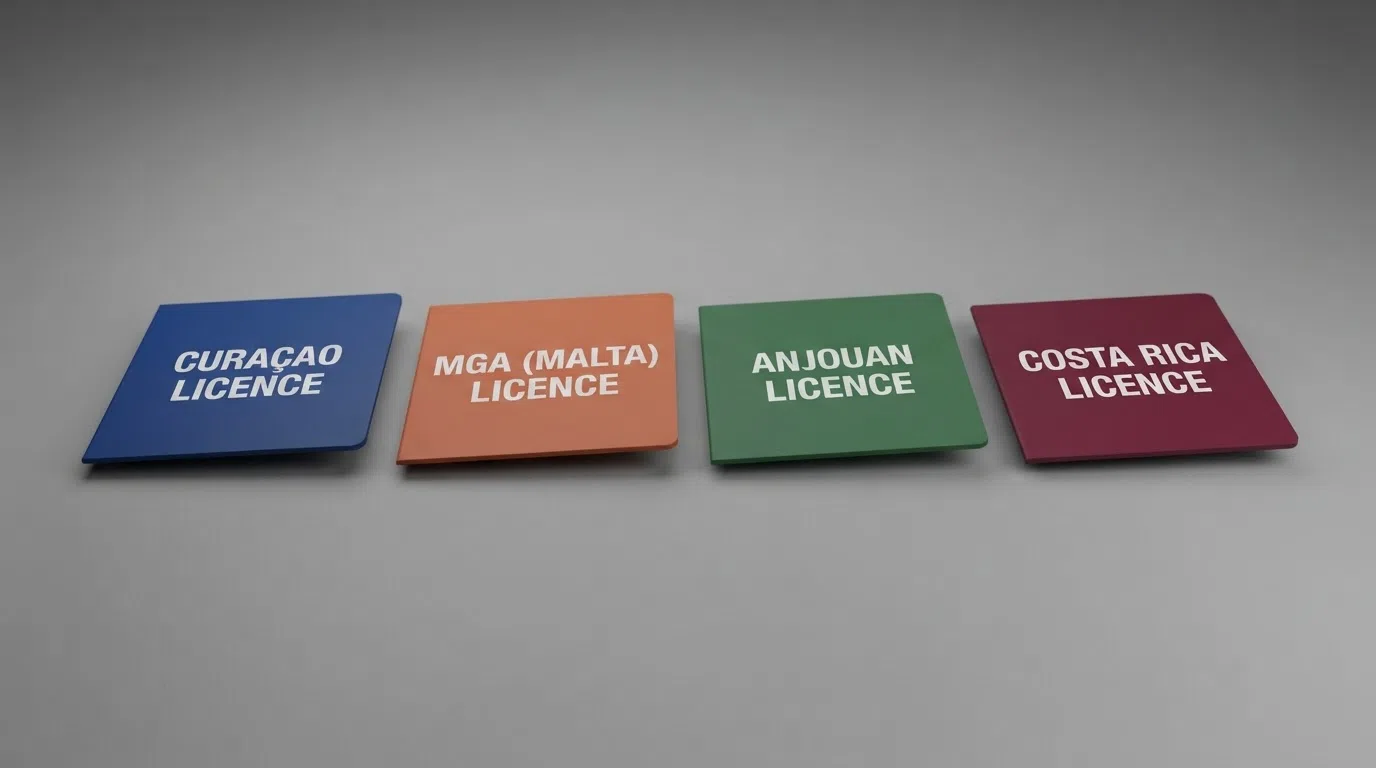
The foreign licences that appear most often in casinos serving UK players fall into four tiers of regulatory rigour. The MGA (Malta Gaming Authority) and the Gibraltar Gambling Commissioner sit at the top — Tier 1 regulators with binding alternative dispute resolution, player-protection frameworks and an enforcement track record measured in years. Disputes at MGA-licensed casinos can be escalated to the authority’s Player Support Unit, which has the power to compel operator compliance. A Curaçao licence has historically been lighter-touch, but the 2024 LOK (National Ordinance on Games of Chance) framework tightened the regime materially, and the Curaçao Gaming Control Board now operates a more structured player-complaints pathway than the old master-licence model allowed. Anjouan is the youngest of the recognised offshore regimes and the least tested; the licensing infrastructure exists but the case-law and enforcement precedents are thin. Costa Rica sits at the bottom of the rigour scale: the jurisdiction does not issue casino-specific operating licences, and operators register as general businesses. Player recourse in a Costa Rica dispute is effectively limited to the operator’s own internal process.
The crucial point for a UK player is that the tier of the foreign licence does not change the UK legal position. None of these four authorises activity directed at GB customers. The framing — “MGA-licensed, so it is fine” — is incorrect for a player in Great Britain. The MGA licence authorises the operator to take players from jurisdictions where the MGA framework is recognised; the UK is not one of them. The same is true of Gibraltar, Curaçao, Anjouan and Costa Rica. A UK player at any of them is at a foreign-licensed casino, full stop, regardless of the regulator’s standing elsewhere.
Can a UK Player Be Prosecuted? The Legal Risk Sits with the Operator
Section 33 of the Gambling Act 2005 makes it a criminal offence to provide gambling facilities without the required licence. The penalty is up to 51 weeks’ imprisonment and/or an unlimited fine, and enforcement is directed at the operator — not the player. The UKGC’s disruption model uses cease-and-desist notices with a 48-hour deadline, test purchases, URL delisting referrals to search engines, domain registrar and host pressure, and payment-provider referrals. The published figures are substantial: 3,140 disruption notices, 447,778 URLs referred to search engines, 287,961 URLs removed, and an average 32% fall in engagement across 160 disrupted sites for the period from April 2024 to June 2025. For October 2024 to September 2025, the UKGC recorded 208,080 enforcement actions on illegal online gambling.
What the UKGC does not have is statutory ISP or DNS blocking powers. Legislation has been proposed to grant those powers but has not been enacted. The disruption model works at the edges — delisting, payment friction, registrar pressure — but a UK player with the URL can still reach an unlicensed site. No confirmed penalty has been recorded against a UK player who has merely gambled on an unlicensed site. The legal risk falls on the operator; the player’s exposure is the loss of every protection the UK spent fifteen years building.
What a UK Player Leaves Behind: The Full Protection Gap
The protections that disappear when a UK player opens a foreign-casino account are specific, and they compound.
- GAMSTOP self-exclusion — mandatory for all GB-licensed remote operators since 31 March 2020, with exclusion periods of six months, one year, five years, or five years with auto-renewal, none of which can be cancelled early. GAMSTOP covers GB-licensed sites only and cannot reach operators outside the GB licensing system; a self-excluded player is not blocked at any foreign casino.
- UKGC complaint procedures and approved ADR — IBAS (Independent Betting Adjudication Service) and eCOGRA are the approved alternative dispute resolution providers for GB-licensed operators. Neither covers foreign-licensed casinos. A UK player with a dispute at a Curaçao, Anjouan or Costa Rica-licensed operator must pursue the complaint through the foreign regulator, where the enforcement capacity varies widely.
- Credit-card deposit protections — the ban on credit card deposits for gambling, in force since 14 April 2020 under LCCP licence condition 6.1.2, extends to credit-card-funded payments through e-wallets. The ban does not reach foreign casinos. Most of the operators in the table above accept Visa and Mastercard credit deposits.
- The 10× statutory wagering cap — in force from 19 December 2025 under LCCP Social Responsibility Code 5.1.1, capping wagering requirements on any GB-licensed bonus at 10×. Mixed-product promotional offers (free bets conditioned on slots play, and the like) are banned at the same time. None of this binds a Curaçao-licensed operator.
- Mandatory deposit-limit prompts and financial vulnerability checks — from 31 October 2025, UK operators must prompt customers to set a financial limit before the first deposit; from 28 February 2025, financial vulnerability checks trigger at a net deposit threshold of £150 in a rolling 30-day period. Neither obligation extends offshore.
- Statutory fund-segregation protections — UKGC rules require customer funds to be held in ring-fenced accounts at approved financial institutions, with different levels of protection depending on the segregation classification the operator has elected. No equivalent requirement applies at most foreign-licensed casinos.
The right to gamble remains. No UK law prohibits a player from placing a bet at an unlicensed site. What is gone is the architecture that would have caught a problem before it became one.
Dispute Resolution Outside the UK: Who Hears Your Complaint
The practical question — what happens if a foreign casino refuses to pay — does not have a clean answer, and the honest version of the page should say so. The MGA’s Player Support Unit provides a structured complaints pathway, and a player with a dispute at an MGA-licensed casino can escalate the case to the authority. The Curaçao Gaming Control Board has built a complaints function under the new LOK framework, but case outcomes and timelines are not published in a way that lets a player benchmark what to expect. Anjouan’s player-dispute process exists on paper but has had limited public testing. Costa Rica offers effectively no player recourse beyond the operator’s own internal process.
The UK-approved ADR providers — IBAS and eCOGRA — do not cover foreign-licensed operators. The information gap is real: competitors in the affiliate space rarely publish concrete dispute outcomes or timelines at offshore regulators, and the data a player would need to compare enforcement quality across jurisdictions simply does not exist in the public domain. The practical step a player can take is to check the operator’s complaint procedure before depositing, to keep records of every transaction and communication, and to understand that a dispute at a Tier-3 or Tier-4 licensed casino may have no external resolution path at all.
Staying Safe Outside the UK’s Player-Protection Net
GAMSTOP Stops at the UK Border — What Replaces It Offshore
GAMSTOP is the mandatory national self-exclusion scheme for GB-licensed remote operators, in force since 31 March 2020. The exclusion periods are six months, one year, five years, or five years with auto-renewal, and none can be lifted early. The scheme is licence-bound: it covers every operator on the UKGC’s register and it cannot reach an operator that is not on that register. GamStop’s own published guidance is explicit on the limit — it cannot prevent access to gambling on sites that do not participate in the scheme. A UK player who registers with GAMSTOP and then opens an account at an unlicensed offshore site has stepped outside the scheme’s reach entirely.
The tools that do work internationally are device-level blockers. Gamban and GamBlock install on the player’s device and block access to gambling URLs regardless of which jurisdiction the operator is licensed in. They are not a substitute for GAMSTOP — they can be uninstalled, and a determined player with the technical knowledge can circumvent them — but they are the closest thing to a self-exclusion mechanism that works across the foreign-casino landscape. For a player who has self-excluded via GAMSTOP and is concerned about offshore access, installing a device-level blocker before the first urge to play is the most reliable practical step.
Setting Your Own Limits When the Operator Does Not Require Them
The UKGC’s framework from late 2025 and 2026 builds a mandatory limit-setting architecture that does not exist offshore. From 31 October 2025, UK operators must prompt the customer to set a financial limit before the first deposit. From 30 June 2026 (extended to 30 September 2026), a gross deposit limit must be offered, and only that form may be called a “deposit limit” under the remote technical standards. None of this compels a foreign casino. The player who chooses a foreign-licensed operator is the one setting the limits.
The practical framework is straightforward, and it is worth building before the first deposit rather than after a losing session. Set a deposit limit at the cashier if the operator offers one — most do, even if they are not compelled to — and set it lower than you think you need. Set a loss limit and a session-time limit if the operator supports them. Use an e-wallet with its own spending cap as an external brake; a Skrill or Neteller account with a monthly ceiling is a budget the casino cannot override. Open a separate bank account for gambling deposits and cap the transfer; the friction of moving money is itself a limit. Use the reality-check and time-out tools where the operator provides them, and treat any session longer than 60 minutes as a signal to step back.
Problem-Gambling Signals and Where to Get Help in the UK
The data on problem gambling in the UK is sobering, and the trend lines are not flattering. The NHS Adult Psychiatric Morbidity Survey 2023–24 found that 0.4% of adults experienced problem gambling (a PGSI score of 8 or higher) and 1.6% experienced at least moderate risk (PGSI 3+). The 2024 Gambling Survey for Great Britain reported 2.7% of adults aged 18 and over scored 8+ on the PGSI, statistically stable compared to 2023. The demand for treatment is rising: GamCare’s National Gambling Helpline made 996 referrals to treatment and peer-based support services in January 2026, up 48% from 674 in January 2025. The National Gambling Support Network treated 11,960 clients between April 2024 and March 2025, an 11% increase on the previous year.
The help infrastructure is free, confidential and available regardless of where a person plays.
- National Gambling Helpline: 0808 8020 133 — free, confidential, 24/7, run by GamCare.
- GamCare live chat and self-help tools — available via the GamCare website, including exercise-based self-help work and psychoeducation.
- GamCare counselling — psychosocial techniques, Motivational Interviewing and CBT, delivered by trained practitioners.
- NHS gambling harm clinics — specialist treatment available in England, Scotland and Wales through referral.
- Gamblers Anonymous UK — peer-support meetings across the country.
If the question is whether to play at a foreign casino at all, the data above is the context. The 0.4% problem-gambling figure is small as a percentage and large in absolute terms — hundreds of thousands of UK adults. The 48% year-on-year rise in treatment referrals is the line that says the safety net is needed, and it is the line that says a player stepping outside that net should know where the help is before they need it.
Foreign Casino Slots: More Games, Fewer Limits — and a Hidden Cost
What Foreign Slot Libraries Offer That UK-Regulated Ones Cannot
The UK’s online-slot framework is one of the tightest in the world, and the differences show up in every session. From 31 October 2021, the UKGC banned auto-play on online slots, capped spin speed at a minimum of 2.5 seconds, banned features that speed up play, banned audio-visual cues that disguise losses as wins, and banned reverse withdrawals. The stake cap from April and May 2025 layered a per-spin ceiling on top: £5 for adults aged 25 and over, £2 for the 18–24 band. A “game cycle” runs from initiation to the point where all money staked has been lost or all winnings delivered, and the £5 or £2 cap applies to the total staked within that cycle. Two adults at the same casino, on the same slot, can face different maximum bets based on age.

None of this binds a Curaçao-licensed operator. Auto-play works. Spin cycles are as fast as the provider designs them. Features that speed up play — turbo mode, quick-spin, feature-buy — are available as the studio intended. The £5/£2 stake cap does not exist. A player at a foreign casino can sit down with a £10 or £20 spin on a high-volatility Nolimit City title and play the full bonus round, which is not legal at a UK-licensed site.
The RTP layer is the subtler difference. Nolimit City’s catalogue runs at 96.0% to 96.5% RTP at the highest available settings; operators can configure lower RTP versions, with verified minimums reaching 94.0% on select titles. The configuration sits with the operator, not the studio, and the version that loads when a player opens a Nolimit City game at a foreign casino may not be the highest-RTP setting available. A UK player who knows the catalogue at 96%+ from UK-licensed play may find themselves playing a 94% variant without realising it. The information is in the game’s paytable or info screen at every reputable operator; the discipline is to check it.
Five Slots with Verified RTP Data at Foreign Casinos
| Slot Title | Provider | RTP | Volatility | Max Win |
|---|---|---|---|---|
| Book of Dead | Play’n GO | 96.21% | High | 5,000× |
| Dead or Alive 2 | NetEnt | 96.8% | High | 111,111× |
| San Quentin xWays | Nolimit City | 96.03% | Very High | 150,000× |
| Jammin’ Jars 2 | Push Gaming | 96.4% | High | 50,000× |
| Bonanza Megaways | Big Time Gaming | 96% | High | 10,000× |
The five titles above are the slots for which verified RTP, volatility and max-win figures are available in this research pass. All five appear in the catalogues of the Curaçao-licensed operators in the table above. The volatility ratings are uniformly high or very high — these are not the low-variance, slow-burn games that UK stake caps were designed to constrain; they are the high-variance titles that the £2/£5 cap and the 2.5-second spin speed were designed to slow down. At a foreign casino, they run at the pace and stake the provider designed.
Why a 150% Welcome Bonus Can Cost More Than It Gives
The arithmetic of a high-wagering bonus is the part of the foreign-casino pitch that the marketing copy skips. Worked through with MyStake’s 150% up to £750 offer at 30× wagering on the bonus, a player depositing £500 takes a £750 bonus (capped at the £750 ceiling), producing a required turnover of £22,500. Assuming the bonus amount alone is wagered at Bonanza Megaways’ 96% RTP, the expected loss on the playthrough is roughly £900 — 4% of the turnover, which is the house edge built into a 96% RTP game. The £750 bonus headline has a real cost of about £900 in expected play, meaning the bonus’s net expected value to the player is negative before any free-spin winnings, max-cashout caps or the 10×-bonus winning ceiling are layered on.
The point of the calculation is not that the bonus is a trap — it is that the headline percentage and the bonus value are different numbers, and only the second one is real. At 30× wagering and 96% RTP, the expected loss from clearing a £750 bonus is on the order of £900, which is more than the bonus pays out. A UK player weighing the offer should read the wagering multiple, multiply it by the bonus amount, multiply the result by 4% (the house edge at 96% RTP) and treat that as the real cost — not the £750 the bonus advertises.
How We Selected and Ranked These Foreign Casinos
The ten operators in the ranking were selected on four criteria, applied qualitatively. Licence quality and regulator standing is the first filter: the operator’s foreign licence identifies the regulatory regime the player falls back on in a dispute, and the four regimes in this set (Curaçao, Anjouan, Costa Rica, and a licence not confirmed for Emperia) carry different enforcement weight. Bonus terms — wagering multiple, free-spin terms, max-cashout caps, deposit-plus-bonus versus bonus-only wagering bases — are the second filter, and they are the criteria that decide what the headline percentage actually costs. Game-provider range and catalogue depth is the third: the breadth of the provider list and the size of the catalogue determine what the player can actually play, and the operator-configurable RTP layer makes the catalogue’s specific titles and RTP settings worth checking. Payment-method diversity and crypto support is the fourth: the range of payment rails, the inclusion of crypto, and the practical question of whether a UK player can deposit in GBP without an eye-watering conversion fee.
The UKGC’s public register of licence holders, last updated 29 July 2026, was checked for each of the ten. None appears on the register as holding a GB operating licence for the activities described. Per-operator data on bonus terms, game providers and payment methods was drawn from operator websites and from established affiliate review platforms; the sources are flagged in the research notes and the figures used are the ones the operators themselves publish. No numerical weighting has been applied to the four criteria, and the ranking order reflects editorial judgment across the four, not a score.
Your Move: What This Means for Choosing a Foreign Casino
The protection gap is real, and it is irreversible. A foreign casino cannot replicate the UKGC safety net because it sits outside the regulatory perimeter that creates it. No amount of marketing language closes that distance. The single most important differentiator among the ten operators in this set is the licence, because the licence is the body a player turns to when the operator will not pay — and the four regimes covered here deliver enforcement at four different levels.
The bonus numbers tell the same story at a different scale. A 10× wagering cap, in force at UK-licensed casinos since December 2025, produces expected losses against the player that are a fraction of what 30× or 40× wagering produces at the same RTP. The MyStake calculation above is not a worst case — it is a representative one. A bonus that advertises 150% or 200% or 450% at 30× to 40× wagering has a real cost in expected loss that runs higher than the bonus value, and the player who reads only the headline is the player who bears that cost without seeing it.
The slots are richer and the RTP may be lower. Foreign casinos carry the full high-volatility catalogue at the providers’ default settings, but the operator can configure RTP downward on individual titles, and the version that loads may not be the highest-RTP variant. The Nolimit City range, for instance, can run as low as 94% on selected titles — a figure the paytable will show, and a figure worth checking before the first spin.
The reader’s course of action is the same regardless of which of the ten they end up at. Check the licence — the operator’s licence type is the dispute-resolution pathway you will use if you need one. Read the bonus terms beyond the headline percentage, and multiply the wagering multiple by the bonus amount by roughly 4% (the house edge at 96% RTP) to find the real cost. Set personal deposit, loss and session-time limits before the first deposit, and use the cashier’s limit-setting tools if the operator offers them. Install Gamban or GambBlock on your device if you have self-excluded via GAMSTOP or if you want a technical barrier against the sites you do not want to reach. Keep records of every transaction and communication, because a dispute at a Tier-3 or Tier-4 licensed casino is harder to fight without them.
The ranking gives the data. The decision stays with the player. No operator in this set is recommended as a place to play — each is described, and the trade-offs are laid out, because the page is built around the comparison a reader needs to make their own choice. A foreign casino is a legitimate option for a UK player who has read the terms, understood the gap, and decided the trade is worth it. It is a poor option for a player who has not.
Frequently Asked Questions
What is the difference between a non-UK casino and an offshore casino?
A non-UK casino is any casino not licensed by the UK Gambling Commission for activity directed at GB customers — the plain factual description, with no value judgment. An offshore casino is a subset: it points to a casino licensed in a specific foreign jurisdiction (Curaçao, Anjouan, Costa Rica, and so on) where the regulatory framework sits outside the UK. All offshore casinos serving UK players are non-UK, but not all non-UK casinos market themselves as offshore. The terms are often used interchangeably by affiliate sites, but “offshore” carries a regulatory connotation that “non-UK” does not.
Do foreign casinos accept GBP and UK payment methods?
Most foreign casinos that actively target UK players accept GBP and offer UK-friendly payment methods — typically Visa, Mastercard, Skrill, Neteller, and bank transfer, with the larger operators adding Bitcoin, Ethereum and other cryptocurrencies. Credit card deposits, banned at UKGC sites since April 2020, are widely accepted offshore because the UK ban does not extend beyond the GB regulatory perimeter. The specific methods available vary by operator, and the cashier page is the only place to confirm the current list before depositing.
What happens if a foreign casino refuses to pay out my winnings?
The first step is the operator’s own internal complaints procedure, which every reputable foreign-licensed casino is required to maintain. If that does not resolve the issue, the escalation path depends on the licence. MGA-licensed casinos can be escalated to the Malta Gaming Authority’s Player Support Unit. Curaçao GCB-licensed casinos can be referred to the Gaming Control Board under the new LOK framework, though case outcomes and timelines are not published in a way that lets a player benchmark what to expect. Anjouan and Costa Rica offer effectively no external player recourse beyond the operator’s own process. The UK-approved ADR providers (IBAS and eCOGRA) do not cover foreign-licensed operators.
Are the bonuses at non-UK casinos better than at UKGC-licensed sites?
The headline numbers are larger — 150% to 450% match percentages versus the more conservative offers at UKGC-licensed sites, and 70 to 325 free spins versus the lower counts typical under the UK regime. The wagering multiples are also higher: 30× to 40× on the bonus at most Curaçao-licensed casinos, versus the 10× statutory cap at UK-licensed sites from December 2025. Whether a bonus is “better” depends on whether the player reads the wagering terms. At 30× wagering and 96% RTP, the expected loss from clearing a £750 bonus is roughly £900, which exceeds the bonus value — meaning the bonus’s net expected value to the player is negative before free-spin winnings and cashout caps are factored in.
Is my money safe at an offshore casino?
The fund-segregation protections that apply at UKGC-licensed casinos — the requirement that customer funds be held in ring-fenced accounts at approved institutions — do not extend to most offshore operators. Whether customer funds are segregated, and at what level, depends on the operator’s own policy and the requirements of the foreign regulator. The practical steps a player can take are to check the operator’s fund-segregation policy in the terms and conditions, to withdraw winnings promptly rather than leaving a balance in the account, and to use payment methods (bank transfer, established e-wallets) that offer their own chargeback or dispute pathways if funds are withheld.
What responsible gambling tools are available at non-UK casinos?
The UK-mandated tools — deposit-limit prompts before the first deposit, financial vulnerability checks at the £150 net-deposit threshold, GAMSTOP self-exclusion — do not apply at foreign-licensed casinos. Most foreign casinos do offer voluntary responsible-gambling tools: deposit limits, loss limits, session-time limits, reality checks and time-out periods. The availability varies by operator, and the player should check the responsible-gambling page before depositing. For self-exclusion that works across the foreign-casino landscape, the device-level blocking tools Gamban and GamBlock are the most reliable option — they block access to gambling URLs at the device level, regardless of the operator’s licence. The National Gambling Helpline (0808 8020 133) is free, confidential and available 24/7 for anyone concerned about their own or someone else’s gambling.
Licence – Real Money Online Casinos UK
Content created by the «Real Money Online Casinos UK» team