
The best international casinos for UK players, ranked for 2026
 Available in GB
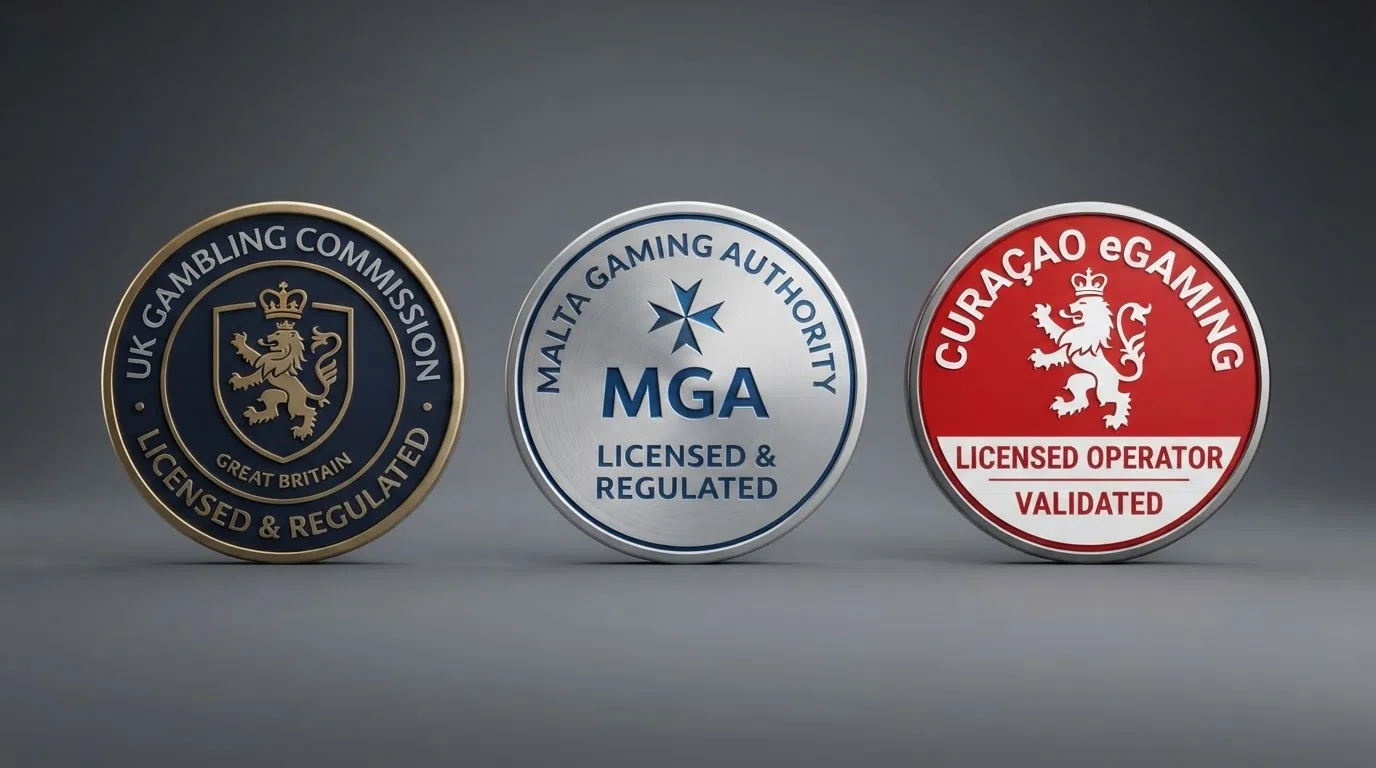
A UK player searching for an international casino is not looking for a single product. The market splits along a licensing line that runs from the UK Gambling Commission at one end to Curaçao at the other, and the experience on either side of that line is built from different rules, different bonuses and different safety nets. A “best” list that hides that split is a list a reader cannot use. The ranking below keeps it visible: eight UKGC-licensed operators first, one dual-licensed MGA brand, then the two Curaçao-licensed names that accept UK players without a GB licence, and a flag at the top of each write-up that names which side of the line the operator sits on.

This page is built on operator data current as of 17 August 2026, checked against the UK Gambling Commission’s public register, the Malta Gaming Authority’s licence database, the Curaçao Gaming Authority portal and the operator websites themselves. Bonus terms, wagering multipliers and free-spin offers were transcribed from the latest published terms at each operator at time of research; wagering windows and the like can shift between visits, so the section on what to check before you join sets out what to confirm at the cashier before depositing.
The article runs through three jobs. The first is to define what “international casino” actually means when applied to a UK player, and to make the licensing fork the page keeps returning to. The second is the ranking itself: ten operators, side by side, with the UKGC and offshore tiers kept separate so the protection gap is visible in the structure. The third is the rest of what a comparison shopper needs to weigh: the legal reality, the bonus arithmetic, the payment path, the game library, the crypto track, the responsible-gambling tools, and the criteria that decided the order. The verdict at the end pulls the findings into a course of action without picking a casino on the reader’s behalf.
What “International Casino” Means for UK Players — and Why the Distinction Matters
“International” is a licensing descriptor, not a quality mark. A casino licensed in Malta, a casino licensed in Curaçao and a casino licensed by the UK Gambling Commission can each describe itself as international, because each serves customers in multiple jurisdictions. The word tells the reader where the licence was issued, not whether the operator is safe or generous. A UKGC-licensed brand with offices in London and a Curaçao-licensed brand accepting UK players from an offshore server both qualify. The level of player protection between them is not the same.
This page treats the term as a licensing label and uses it to mean any online casino that accepts UK players, whether or not it holds a GB licence. That decision shapes everything below. The two Curaçao brands in the ranking (Velobet and MyStake) are international by the broad definition. Eight of the ten are also international in the narrower sense that they are part of multi-jurisdiction groups (MGM Resorts, Flutter Entertainment, Entain, SkillOnNet, Videoslots, Betway/Super Group, bet365, Rootz) operating in the UK and elsewhere. The page ranks them together because they compete for the same deposit, but the licensing tier each one sits on is named in every write-up, because that is the variable that determines what the rest of the experience looks like.
What “International Casino” Actually Means
The label is created by the licensing jurisdiction, not by the brand, the game library or the welcome offer. A casino that calls itself international is one that operates in at least one country outside the jurisdiction where its licence was issued. A Malta Gaming Authority (MGA) brand serving the UK is international. A Curaçao brand serving the UK is international. A UKGC-licensed brand serving Sweden, Ireland or Ontario is also international. The word is the same in all three cases; the player protection behind it is not.
The tier that matters is the one the regulator enforces. UKGC-licensed operators work under the Gambling Act 2005 and the LCCP — a code of practice covering stake limits, bonus caps, identity checks, GAMSTOP integration, financial vulnerability reviews and an Alternative Dispute Resolution route through an approved provider. MGA licensees work under Malta’s separate framework: segregated player funds are mandatory, dispute resolution is structured, and the regulator publishes enforcement notices. Curaçao-licensed operators (and Anjouan-licensed ones, the newer offshore tier) work under lighter-touch regimes: fund segregation is not guaranteed, dispute resolution is handled inside the operator, and identity checks vary in how strictly they run. Three licences, three very different safety nets.
A UKGC-licensed brand can also call itself international. Bet365, Betway, LeoVegas, Mr Vegas, PlayOJO, Sky Vegas, BetMGM and Wildz are all UKGC-licensed and all part of multi-jurisdiction groups that operate in jurisdictions outside the UK. The UKGC licence is what makes them eligible to take GB customers; the international label is a description of the group they sit inside. The page keeps them in the ranking because UK players deposit at them, but the section heading for each write-up names the regulator first, so the reader never has to guess which side of the line a brand is on.
How International Casinos Serve UK Players Specifically
UK players who look abroad are not doing so for novelty. They are doing so because the UK-regulated market restricts the parts of the product that, in a less-regulated market, are the selling points. Three restrictions matter.
Bonuses. The UKGC has capped wagering requirements at 10× the bonus amount since 19 December 2025, and mixed-product promotional offers (a free bet on football, say, attached to a casino bonus) are banned. A UKGC-licensed brand cannot economically run a 200% match at 30× wagering, because the 10× ceiling is the maximum a UKGC offer can carry. Offshore brands are not bound by that cap. Velobet’s 150% match to £500 carries 30× wagering; MyStake’s three-deposit 170% package to £1,500 carries the same. The number at the top of the banner is larger because the multiplier at the bottom is too.
Slot stake and game design. Since April and May 2025, UKGC operators have enforced age-banded stake caps of £5 (25+) and £2 (18–24) per game cycle on online slots, a 2.5-second minimum spin speed, a ban on auto-play, and a ban on features that disguise losses as wins. Offshore brands apply none of these. A Curaçao-licensed casino can run a slot at any stake the player chooses, with auto-play on, turbo spin engaged, and bonus-buy features enabled.
Self-exclusion. GAMSTOP became mandatory for all GB-licensed online operators on 31 March 2020. An excluded player cannot access a UKGC-licensed casino while the exclusion is in force. An offshore casino is not on the GAMSTOP register, so the same player can register, deposit and play the same day. The protection works exactly as designed inside the GB perimeter, and the gap outside it is the most consequential difference a reader comparing the two tiers needs to understand.
International Casino Directories and 2026 Picks
A “best international casinos” round-up built in 2026 looks different from one built two years ago, because the UK regulatory landscape has changed in ways that determine which operators make the list and which drop off. The changes that matter most:
- From 1 April 2026, Remote Gaming Duty rose from 21% to 40%, the steepest single jump in the tax’s history. The effect on UKGC-licensed operators is straightforward: margin compression, and an incentive to push welcome offers lower, restrict free-spin counts or shorten validity windows to keep the bonus budget in line with what the new tax leaves them.
- From 9 April 2025 (£5 cap) and 21 May 2025 (£2 cap), slot stake limits have applied. A UKGC brand can no longer host a player staking £10 or £20 per spin, and offshore competitors can.
- From 19 December 2025, the 10× bonus-wagering cap has been in force. The size of the welcome package a UKGC brand can run is now bounded by that ceiling, and the headroom between a UKGC offer and an offshore one is wider than it was before the cap landed.
A directory that ran in early 2024 could lean more heavily on UKGC-licensed brands because the bonus gap was narrower and the stake cap was not yet in force. A directory built now has a structural reason to include more offshore brands: they are the ones carrying the higher bonus numbers and the higher per-spin stakes that the UK market no longer permits. The featured set below reflects that. Two Curaçao-licensed operators sit in the ranking because they offer what UKGC operators cannot, and the protection gap that comes with them is named in the write-up, not buried.
Top 10 International Casinos for UK Players, 2026 — UKGC-Licensed and Offshore, Compared Side by Side
The ten operators below are ordered for the page’s readers, not for the operators. The first seven hold a UK Gambling Commission licence; the eighth is dual-licensed under the UKGC and the Malta Gaming Authority; the ninth and tenth are Curaçao-licensed offshore brands. That split is structural, not cosmetic: it determines which row of the comparison below a brand belongs on and which section of the responsible-gambling chapter applies to it.
| Operator | Licence / Regulator | Welcome Bonus | Free Spins | Wagering |
|---|---|---|---|---|
| BetMGM UK | UKGC | 200 free spins on £10 deposit | 200 | 10× |
| LeoVegas UK | UKGC | 50 wager-free spins on Big Bass Splash (£10 deposit) | 50 | 0× |
| PlayOJO | UKGC | 50 no-wagering spins on Big Bass Bonanza (£10) | 50 | 0× |
| Mr Vegas | UKGC | 100% up to £50 + 11 no-wager spins | 11 | 10× match / 0× spins |
| Sky Vegas | UKGC | 200 no-wagering spins + 70 no-deposit spins on registration | 200 (+ 70) | 0× |
| Betway | UKGC | 100 free spins on Big Bass Splash (£10 deposit) | 100 | 10× |
| Bet365 | UKGC | Up to £100 | — | — |
| Wildz | UKGC + MGA | 500 EUR + 200 free spins | 200 | 35× |
| Velobet | Curaçao (offshore) | 150% up to £500 + 70 free spins (under £500 deposit) | 70 | 30× |
| MyStake | Curaçao (offshore) | 170% up to £1,500 across three deposits + 30 spins | 30 | 30× |
The table is the page’s single most-clicked artefact, and the five columns are chosen for a reason. Licence / Regulator tells the reader which side of the protection line the brand sits on — the single most important variable. Welcome Bonus is the headline number the reader has come to compare. Free Spins counts what the offer actually delivers, because a 100% match and 11 free spins is not the same shape as 200 free spins on a £10 deposit. Wagering is the multiplier that decides what the bonus actually costs, and it is the column that exposes the UKGC-versus-offshore gap at a glance: 0×, 10× and 35× in the same view, with no row that hides which one the operator chose.
Spin value, slot title, validity window and maximum cashout are not in this table because the data did not surface uniformly across the ten operators. Spin value is £0.10 across every operator that confirmed it; the slot attached to the spins is named in the write-up rather than repeated in a row that would carry an em dash for half the brands. The wagering column carries the multiplier on the bonus amount, not on the deposit plus bonus, which is the formulation every operator in the set uses.
The rankings inside the UKGC cluster are not in size order. They are in a roughly descending order of how much bonus value the welcome package delivers in real terms (spins at 0× wagering ranked above spins at 10×, all-UKGC ranked above dual-licensed), with the standalone payout-speed leader (Bet365) and the dual-licensed outlier (Wildz) placed where the column data puts them. The two offshore brands sit at the end because the structure demands it: they belong in the ranking a UK player is shopping, and the protection gap they carry belongs at the top of their write-up, not in a footnote.
BetMGM UK — MGM-Backed, 200 Free Spins on a Tenner
UKGC-licensed under the joint venture between MGM Resorts International and Entain plc, BetMGM UK runs on Entain’s platform infrastructure with a game roster that spans Evolution, Playtech, Pragmatic Play, NetEnt, Microgaming and Play’n GO. The welcome package is built around 200 free spins triggered by a £10 deposit, with each spin valued at £0.10 and a 10× wagering requirement applied to spin winnings within a 7-day validity window. There is no cash-match component, which is the shape the UKGC’s 10× bonus ceiling has pushed most UKGC welcome offers into: a token deposit, a stack of spins, and a short clearance window.
The 10× multiplier is the UKGC cap. It is the cheapest the page is going to show on a spins-based welcome, and it is the figure that defines what a UKGC offer costs the player in real terms (the bonus-cost calculation later in the article runs that arithmetic). The 7-day window is on the tight side of the UKGC cluster; Mr Vegas gives the player 60 days on its match bonus, while BetMGM expects the spin winnings to be turned over inside a week.
What BetMGM UK is worth: a player who wants a familiar set of providers, a £10 entry point and a 10× ceiling, and is comfortable running the wagering in a one-week window. The offer is not the largest in spins count (Sky Vegas matches it at 200) but it sits at 10× where Sky Vegas runs at 0×, so the real-money value depends on which slot the spins land on and whether the player can clear the turnover inside seven days. It remains a competitive UKGC choice for players seeking familiarity.
LeoVegas UK — Wager-Free Spins on Big Bass Splash
UKGC-licensed and now owned by MGM Resorts International, LeoVegas UK pairs an award-winning mobile product with a 50-wager-free-spin welcome on Big Bass Splash, the Pragmatic Play title that runs at 96.71% RTP on its default setting with medium volatility. The 50 spins are credited after a £10 deposit and £10 wager; spin value is £0.10, wagering is 0×, the maximum cashout is uncapped, and winnings are paid as cash. The deposit must be made within 7 days of registration, and the spins expire 3 days after they are credited — the tightest expiry window in the comparison.
The provider depth is the widest in the UKGC cluster. Evolution, Playtech, Pragmatic Play, NetEnt, Microgaming, Play’n GO, Nolimit City, Big Time Gaming and Hacksaw Gaming all sit on the roster, and that breadth is what a player who has used LeoVegas for more than a year points to when they describe the casino. The mobile reputation — LeoVegas has picked up industry recognition for the mobile product over multiple years — is built on the same provider depth rendered through a mobile-first interface.
What LeoVegas UK is worth: a player who wants zero wagering, a named high-RTP slot on the spins, and the broadest provider list in the comparison, and is willing to play inside a 3-day spin window. The 3-day expiry is the price of the 0× multiplier, and the player who does not log in for three days loses the spins. This remains the leading wager-free option for those prioritising game depth over bonus size.
PlayOJO — No-Wagering Philosophy, Cash Winnings Across 5,000+ Titles
UKGC-licensed under SkillOnNet Ltd, PlayOJO runs 100+ providers and over 5,000 titles — the deepest library in the UKGC cluster outside Mr Vegas. The welcome is 50 no-wagering free spins on Big Bass Bonanza (96.71% RTP, high volatility) triggered by a £10 deposit, with winnings paid in cash, 0× wagering and no maximum-win cap. The OJOplus cashback model sits alongside the welcome offer as a loyalty mechanic: a small percentage of every bet returns to the player as cash, irrespective of whether the bet won.
The cashback is the differentiator that the welcome offer alone does not show. A 0× wagering offer already pays winnings as cash, so on day one there is no difference between a wager-free offer and a cashback model. The difference is what happens in week twenty. At a UKGC brand with a 10× welcome, the bonus is over by then. At PlayOJO, the cashback is still paying out, and at a UKGC-licensed operator, every penny of it is GAMSTOP-covered and falls inside the UKGC complaints route.
What PlayOJO is worth: a player who plays regularly rather than once, who wants 0× wagering on the welcome and a return-to-player model that runs beyond the first deposit, and who values library depth over a single-slot welcome. The 50-spin welcome is the smallest in the wager-free cluster (LeoVegas and Sky Vegas both run higher spin counts at 0×), so the value versus the rest of the comparison depends on what the player plays after the welcome. This operator stands out for the steady player who values long-term rewards.
Mr Vegas — Match Bonus with No-Wager Free Spins and an 8,500-Game Library
UKGC-licensed under Videoslots Ltd, Mr Vegas runs over 8,500 games — the largest library in the comparison. The welcome splits into two parts: a 100% deposit match up to £50 with 10× wagering inside a 60-day window, and 11 wager-free spins on Pink Elephants 2 (Thunderkick), which must be activated within 7 days and used within 24 hours of activation. Spin value was not surfaced for the free-spins portion, and the maximum cashout from the spins was not confirmed at time of research.
The 60-day wagering window is the longest in the UKGC cluster and a meaningful contrast to BetMGM’s 7-day ceiling. A player who wants to clear a £50 match at 10× wagering (a £500 turnover requirement) can spread the play across two months rather than a week, which is closer to a typical recreational cadence. The 24-hour spin-use window is tight: once the 11 wager-free spins are activated, they must be used the same day.
What Mr Vegas is worth: a player who wants a real cash match on top of the spins, the largest game library in the comparison, and a wagering window long enough to play at a normal pace. The trade-off is the spin mechanics: 11 spins at an unconfirmed value versus 50 or 200 at the rest of the wager-free cluster. This operator provides a superior alternative for users who prefer longer clearance windows to the standard one-week terms.
Sky Vegas — 200 No-Wagering Free Spins, Flutter Group Stability
UKGC-licensed and part of the Flutter Entertainment group alongside Sky Bet, Paddy Power and Betfair, Sky Vegas runs a 200 no-wagering free-spin welcome on a £10 deposit, with 70 additional no-deposit free spins credited on registration. The 200 spins carry 0× wagering, no maximum cashout cap, and winnings withdraw as cash. The 70 no-deposit spins are the only confirmed no-deposit offer in the comparison from a UKGC-licensed brand, and the only one that does not require the player to deposit before any spins are credited.
The Flutter group backing is the structural fact underneath the welcome offer. Sky Vegas, Sky Bet, Paddy Power and Betfair share a parent company with the kind of multi-jurisdiction compliance operation that a standalone UKGC brand does not have to maintain. For a player who treats casino play as one product among several, the Flutter group means a shared wallet and shared safer-gambling tools across brands. For a player who only plays casino, the Flutter backing is a stability signal rather than a feature.
What Sky Vegas is worth: a player who wants 0× wagering, a 200-spin welcome and an additional 70 no-deposit spins on registration, all from a UKGC-licensed brand with a large group behind it. The slot title attached to the spins was not surfaced, and the spin value was not confirmed at time of research, so the offer’s real-money value depends on which game the spins land on. The verdict: the largest 0× wagering offer in the UKGC cluster, the only one that pairs a deposit welcome with a no-deposit element, and the right fit for a player who wants to test the casino before committing the £10.
Betway — 100 Free Spins on Big Bass Splash, Decades of Operating Trust
UKGC-licensed under Betway Limited / Super Group, Betway runs 100 free spins on Big Bass Splash (96.71% RTP, medium volatility) triggered by a £10 deposit and wager, with each spin at £0.10 and 10× wagering inside a 7-day validity. The provider roster spans Microgaming, NetEnt, Evolution, Pragmatic Play and Playtech — five of the largest studios in the market, with a slight skew toward Microgaming and Evolution that the player will see in the live-dealer lobby and the progressive jackpot range.
The Super Group parent and the multi-decade operating history are the structural points. Betway is one of the longer-established UKGC-licensed brands in the comparison, and the group’s footprint extends to Betway’s sportsbook and Spin Casino on the casino side. The casino product is the steady middle of the comparison: not the largest spin count (Sky Vegas, BetMGM at 200), not the largest library (Mr Vegas, PlayOJO), not the fastest withdrawals (Bet365), but consistent on the terms.
What Betway is worth: a player who wants a named high-RTP slot on the spins, a familiar UKGC-licensed brand, and 10× wagering at the regulatory ceiling. The 7-day window is on the tight side, and the spin count is mid-range, so the value is in the slot choice and the brand familiarity rather than the headline number. This is a consistent, reliable option for existing sportsbook customers looking to consolidate their accounts.
Bet365 — UKGC Giant with 1,500+ Slots and 1–4 Hour Withdrawals
UKGC-licensed under bet365 Group Ltd, Bet365 is the largest UKGC-licensed brand in the comparison by game count and the only one with a confirmed withdrawal-speed benchmark. Over 1,500 slots at an average 96.30% RTP (per RTPTrack), a provider roster that spans Playtech, NetEnt, Microgaming, Evolution, Pragmatic Play and Big Time Gaming, and withdrawals confirmed at 1–4 hours for debit card and PayPal — the fastest documented payout in the set.
The current welcome offer was not surfaced from search snippets at time of research, and the player checking Bet365 at time of reading should confirm the latest terms directly. The withdrawal speed is the part of the Bet365 proposition that does not require a welcome offer to be evaluated, and it is the part of the comparison where Bet365 stands alone: no other operator in the set has a published payout window in the same range. The player who values the time between requesting a withdrawal and seeing the money in the bank has one option in this comparison.
What Bet365 is worth: a player who cares about withdrawal speed above welcome offer size, who wants the largest UKGC-licensed slot library in the comparison, and who is willing to check the current welcome terms at the operator site. The 1–4 hour withdrawal window is the structural advantage and the reason a player stays with Bet365 after the welcome bonus is gone. For those prioritising payout speed, Bet365 is the primary choice in this set.
Wildz — Dual MGA + UKGC Licence, EUR-Denominated Welcome, 3,800+ Slots
Dual-licensed under the UK Gambling Commission and the Malta Gaming Authority through Rootz Limited, active since 2019, Wildz is the only operator in the set that holds two Tier-1 regulator licences simultaneously. The welcome package is 500 EUR plus 200 free spins at 35× wagering, denominated in euros rather than pounds — a structural choice the player should account for at the cashier. The library runs 3,800+ slots at an average 96.28% RTP, with NetEnt, Pragmatic Play, Play’n GO, Microgaming, Evolution, Big Time Gaming and Nolimit City on the roster.
The 35× multiplier is the price of the dual-licence structure and the larger headline number. It sits above the UKGC’s 10× cap because the offer is denominated in EUR and the MGA framework does not impose the UKGC ceiling. The player running the bonus-cost arithmetic on a 500 EUR welcome at 35× wagering is looking at a higher required turnover than any UKGC offer in the set, even before the currency conversion is layered on. The MGA licence brings segregated player funds and a structured dispute-resolution route, both of which the UKGC licence already provides — the MGA is the additional layer rather than the substitute.
What Wildz is worth: a player who wants a dual-licensed operator for the regulatory redundancy, a larger welcome package in EUR, and a library size that sits between Bet365 and Mr Vegas. The 35× multiplier is the cost; the dual-licence structure is the benefit. The verdict: the right fit for a player who values the MGA route on top of the UKGC, and who is comfortable with the higher wagering multiple in exchange for the larger package.
Velobet — 150% Match and High-Roller Ceilings, but Curaçao-Only
Curaçao-licensed under Santeda International B.V. and NOT UKGC-licensed, Velobet operates offshore and accepts UK players without a GB licence. The welcome bonus is tiered: 150% up to £500 plus 70 free spins for deposits under £500, and 100% up to £1,000 plus 70 free spins for deposits of £500 or more, with 30× wagering on the bonus amount and a £100 cap on free-spin winnings. The provider roster spans Pragmatic Play, Evolution, NetEnt, Hacksaw Gaming, Nolimit City and Play’n GO. A separate 20 no-deposit free-spin offer is reported, with 35× wagering on winnings.
The protection profile is the inverse of the UKGC cluster. No GAMSTOP integration, no UKGC ADR route, no British consumer redress, no mandatory deposit-limit prompt, no financial vulnerability check. The casino’s own terms govern, and the dispute path runs through the operator and the Curaçao Gaming Authority, not the UKGC. The 30× wagering on a £500 max bonus produces a required turnover of £15,000 — a real-money cost the bonus-cost calculation later in the article walks through. The £100 cap on free-spin winnings is a structural ceiling that limits what the spins are worth in cash, regardless of the multiplier they land on.
What Velobet is worth: a player who has decided that the larger bonus and the higher per-spin stakes at a Curaçao-licensed operator are worth the loss of UKGC protection, who is comfortable with a 30× wagering multiplier and a £100 free-spin cap, and who understands that a self-exclusion under GAMSTOP does not extend to this brand. High-deposit players may find the terms more accommodating here than at regulated UK sites.
MyStake — 170% Triple-Deposit Package, Curaçao-Only, Wide Provider Mix
Curaçao-licensed under Santeda International B.V. and NOT UKGC-licensed, MyStake operates offshore and accepts UK players without a GB licence. The welcome is a three-deposit package totalling 170% up to £1,500 with 30 free spins and 30× wagering on the casino track: 150% on the first deposit, 100% on the second and 50% on the third, paid out against the cumulative £1,500 cap. A “Slots of the Week” rotating promotion runs alongside, awarding additional free spins on a changing title each cycle. The provider roster spans Pragmatic Play, Evolution, NetEnt, Play’n GO, Hacksaw Gaming and Nolimit City. No-deposit free spins are reported as a separate offer with wagering requirements that were not confirmed at research time.
The three-deposit structure changes the shape of the offer compared to Velobet’s single-deposit welcome. The £1,500 cap is the maximum across three deposits, not the maximum on the first one, and the 30× multiplier applies to each deposit’s bonus in turn. The protection profile matches Velobet’s: no GAMSTOP, no UKGC ADR, no British consumer redress, no mandatory deposit prompt, no UKGC vulnerability check. The “Slots of the Week” mechanic is the loyalty differentiator — a recurring free-spin path that the UKGC cluster does not typically offer — but the wagering attached to the rotating spins was not confirmed.
What MyStake is worth: a player who plans to deposit across three top-ups rather than one, who wants the higher combined cap and the rotating slot promotion, and who is choosing an offshore operator with the protection profile that comes with it. The verdict: an alternative offshore structure to Velobet for the player who prefers spreading deposits over accumulating them, with the same regulatory caveat at the top.
The Legal Reality — What UK Law Actually Says About Playing at International Casinos
The legal position for a UK player splits cleanly down the middle, and the two halves are not the same question. It is not illegal for a UK resident to deposit and play at an offshore casino. It is illegal for an operator to offer gambling to GB customers without a GB licence. The offence sits on the operator side of the counter, and the player has not been prosecuted for gambling on an unlicensed site.
The statute is the Gambling Act 2005, extended to remote operators by the Gambling (Licensing and Advertising) Act 2014. The 2014 reform made a GB licence compulsory for any operator serving GB customers, regardless of where the operator is based. Section 33 of the 2005 Act makes unlicensed provision a criminal offence: up to 51 weeks’ imprisonment, an unlimited fine, or both. The offence applies to the operator, not the consumer, and no statute criminalises a UK resident placing a bet with an international provider. That is the legal reality, and the rest of this section unpacks what the player trades away when the operator on the other side of the bet is offshore.
GamStop and International Casinos — What the Self-Exclusion Scheme Actually Covers
GAMSTOP became mandatory for every GB-licensed online operator on 31 March 2020. An exclusion can be set for six months, one year, five years, or five years with auto-renewal, and it cannot be cancelled early. The data behind the scheme tells its own story: in the first half of 2026, GAMSTOP reported a 16% year-on-year rise in registrations, with May setting a new monthly record; under-25s drove most of that growth, up 26% and now accounting for nearly one in three self-exclusions.
The coverage is bounded. GAMSTOP integrates only with operators that hold a GB licence. An offshore casino — Curaçao, Anjouan, MGA-only — is not on the register, and an excluded player can register, deposit and play at one the same day they are blocked from every UKGC-licensed site. The protection works as designed inside the GB perimeter, and the gap outside it is the most consequential difference a reader comparing the two tiers needs to understand. If GAMSTOP matters to the reader, the choice is a UKGC-licensed operator. If it does not, the offshore tier becomes a real option — but the player should know that no device-side or self-set limit at an offshore casino replicates the GAMSTOP mechanism.
Non-GamStop International Casinos — the Protection Gap
The phrase “non-GamStop casino” is not a product category. It is a description of an absence: a casino that does not integrate with the GAMSTOP self-exclusion scheme because it does not hold a GB licence. The label tells the reader what the casino is not, and the absence is the point.
A non-GamStop casino is, by definition, an offshore or non-GB operator. The specific protections absent at a Curaçao-licensed site are: no GAMSTOP integration, no UKGC Alternative Dispute Resolution route, no British consumer redress, no mandatory deposit-limit prompt before the first deposit, and no financial vulnerability check at the £150 net-deposit threshold. The player sets their own limits if the casino offers the option, and the dispute path runs through the operator and the offshore regulator, not the UKGC. Two operators in this comparison sit in this category (Velobet and MyStake), and the page flags them accordingly at the top of each write-up.
The protection gap is not a marketing claim. It is a list of mechanisms that UKGC operators are required to run and that offshore operators are not. A player who has used GAMSTOP and finds themselves at a non-GamStop casino is not protected by the same machinery; the casino is not bound to honour a self-exclusion the player has set with another operator. That is what “non-GamStop” means in practice.
UKGC Licensing vs International Regulators — What Each One Gives the Player
The four regulator tiers a UK player encounters offer four different combinations of protection and product freedom.
UK Gambling Commission (UKGC). Mandatory GAMSTOP integration, mandatory ADR through an approved provider, age-banded stake caps (£5/£2), 10× bonus-wagering cap, financial vulnerability checks at the £150 net-deposit threshold, deposit-limit prompt before the first deposit, and the operator pays 40% Remote Gaming Duty on gross gaming yield. The highest protection and the lowest bonus ceiling.
Malta Gaming Authority (MGA). Segregated player funds, mandatory dispute resolution, no GAMSTOP integration (MGA-only operators do not appear on the GAMSTOP register), and no UKGC bonus cap. Stronger than Curaçao on fund safety and player recourse; the MGA publishes enforcement notices and licence actions, and the framework predates the UKGC’s online reforms.
Curaçao Gaming Authority. Fund segregation not guaranteed, disputes handled inside the operator with limited offshore recourse, identity checks unpredictable. The operator can run any stake, any bonus, any wagering. Stake surrendered its UKGC licence in March 2025 and now operates under a Curaçao licence only, and BC.Game’s UKGC licence was revoked in December 2024, with BC.Game now Anjouan-licensed — both names are now in the lowest-protection tier.
Anjouan. The newer offshore tier; the lightest regulatory framework of the four. BC.Game’s current licence.
The eight UKGC-licensed operators in this comparison sit at the top. Wildz sits one tier down by virtue of its MGA licence, with the UKGC licence on top of that. Velobet and MyStake sit at the bottom of the table and at the bottom of the protection hierarchy, and the ranking reflects it.
Why International Casino Bonuses Look Bigger — and What the Wagering Terms Really Cost You
Offshore bonuses carry larger numbers because offshore operators are not bound by the UKGC’s 10× wagering cap or its ban on mixed-product promotional offers. A 150% match to £500 at 30× wagering is structurally possible at a Curaçao-licensed brand and structurally impossible at a UKGC-licensed one. The larger banner is the symptom; the higher multiplier is the cost; the absence of a UKGC ceiling is the cause.
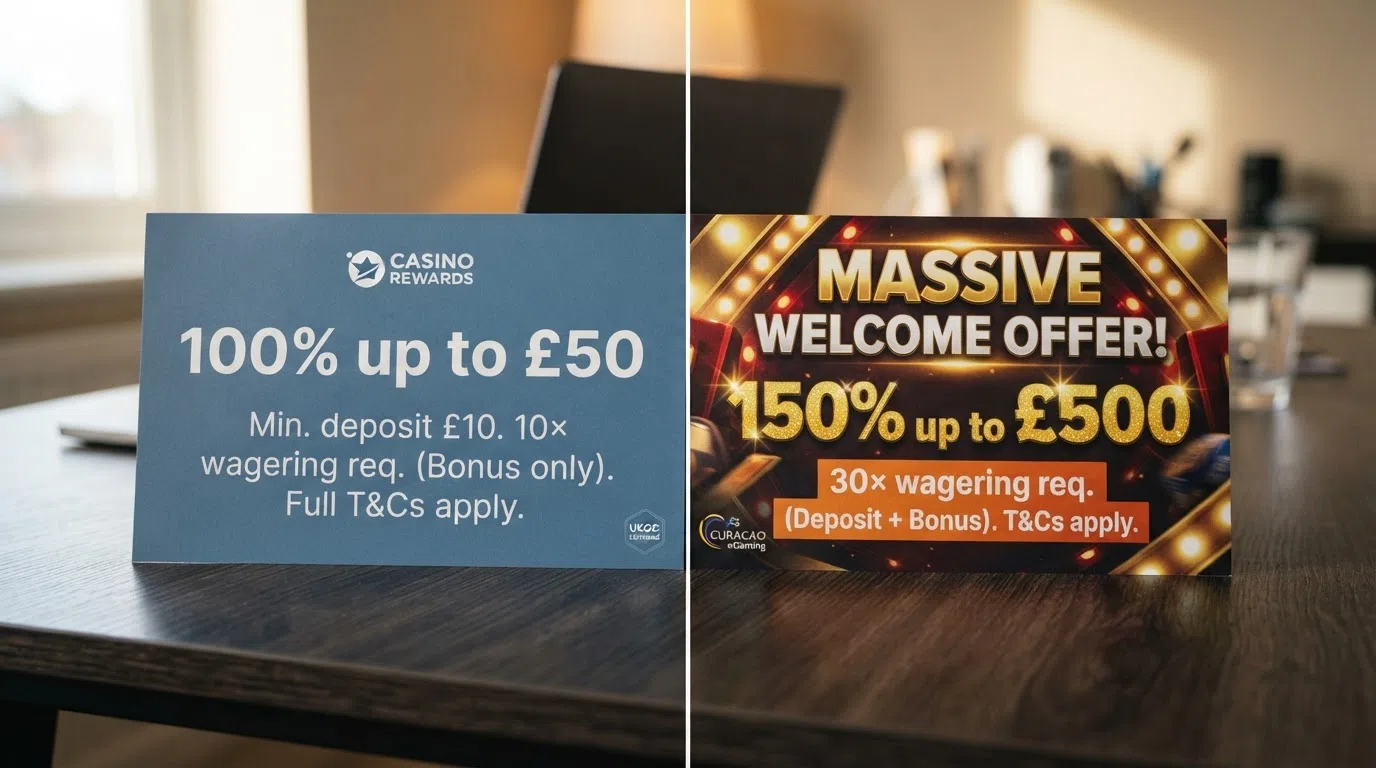
The comparison the player has to make is not between a £500 bonus and a £50 bonus. It is between the real cost of turning each one into withdrawable cash. That is what the wagering multiplier measures, and it is the only number on the bonus page that should drive the decision.
The bonus-cost calculation runs as follows. A £500 bonus at 30× wagering requires £15,000 in turnover before withdrawal. At a representative slot RTP of 96.21% (Book of Dead, the page’s reference slot), the expected loss on that turnover is approximately £573. A £50 bonus at 10× wagering, the UKGC’s ceiling, requires £500 in turnover. At the same 96.21% RTP, the expected loss on that turnover is approximately £19. The difference is roughly £554 in expected cost, against a difference of £450 in headline bonus. The bonus-cost calculation does not say the player will lose £573; it says that across enough spins to clear the wagering, the maths lands at that figure on average. The UKGC’s 10× cap is the reason the expected cost is twenty-five times lower.
Wagering is not the only variable. Maximum cashout caps bind at some operators (Velobet’s £100 free-spin winnings cap is one) and not at others (LeoVegas, PlayOJO and Sky Vegas all run uncapped). Validity windows run from 3 days (LeoVegas) to 60 days (Mr Vegas) in the UKGC cluster, and the offshore windows were not confirmed at research time. Spin value is £0.10 across the set where it was surfaced. A 0× wagering offer with a 24-hour spin-use window is not the same as a 0× offer with a 3-day window; the player who does not log in on day one loses the spins either way.
No-Deposit Bonuses at International Casinos — What Is Actually Available
A no-deposit offer — a free-spin or free-bonus package that does not require the player to fund their account in any way — is rare across both UKGC and offshore operators. In this comparison, Sky Vegas is the only UKGC-licensed brand with a confirmed no-deposit element: 70 free spins credited on registration, in addition to the 200-spin deposit welcome. No other UKGC-licensed operator in the set carries a confirmed no-deposit offer at research time.
Among the offshore brands, Velobet reports 20 no-deposit free spins as a separate offer from the main welcome, with 35× wagering on winnings. MyStake reports no-deposit free spins as a separate offer with wagering requirements that were not confirmed. The structure is consistent: a small number of free spins, with a higher wagering multiple than the deposit welcome carries, used to let the player test the casino before committing.
A genuine no-deposit offer — one that requires no payment, no card registration, and no follow-up deposit before the spins are credited and the winnings are withdrawable — is the rarest structure in online casino marketing. The closer the offer gets to that, the more the player should read the terms on what the winnings can be cashed out for.
Free Spins Offers Compared — Count, Spin Value and the Wagering That Follows
Free-spin offers differ on three numbers: the count, the per-spin value, and the wagering multiplier that attaches to spin winnings. Across the comparison:
- LeoVegas: 50 spins, £0.10 each, 0× wagering, on Big Bass Splash (96.71% RTP).
- PlayOJO: 50 spins, £0.10 each, 0× wagering, on Big Bass Bonanza (96.71% RTP).
- Mr Vegas: 11 wager-free spins, spin value not confirmed, on Pink Elephants 2, with 0× wagering.
- Sky Vegas: 200 spins, 0× wagering, slot not confirmed at research; plus 70 no-deposit spins on registration.
- BetMGM: 200 spins, £0.10 each, 10× wagering, slot not confirmed.
- Betway: 100 spins, £0.10 each, 10× wagering, on Big Bass Splash.
- Velobet: 70 spins, value not confirmed, 30× wagering on spin winnings, capped at £100.
- MyStake: 30 spins, value not confirmed, wagering as part of the 30× welcome.
- Wildz: 200 spins in EUR-denominated package, 35× wagering, slot not confirmed.
- Bet365: offer not confirmed this run.
The single most important variable is the wagering multiplier. A 200-spin offer at 10× wagering is not worth twice a 100-spin offer at 0× wagering, because the 100-spin offer at 0× pays winnings as cash with no playthrough at all. The wagering multiplier is the column in the comparison table that decides which offer is worth the most in real money, and it is the column a reader should look at first.
Welcome Bonuses and Sign-Up Deals — Match Rates, Caps and the UKGC-Offshore Divide
The UKGC cluster’s welcome offers cluster around free-spin packages with token deposits (£10) rather than large match percentages. The 10× wagering cap makes a large match bonus uneconomical: at 10× wagering, a £200 match bonus costs £2,000 in required turnover, and the operator’s bonus budget is the difference between that and the expected player loss. A free-spin package with a 200-spin count at 10× is a tighter economics for the operator and a smaller headline for the player.
Offshore welcome offers run the other way. Velobet’s 150% to £500 (or 100% to £1,000 at the higher deposit tier) and MyStake’s 170% to £1,500 across three deposits are the kind of welcome packages the UKGC cluster cannot match, because the 30× wagering is the multiplier that makes them viable for the offshore operator. Wildz’s 500 EUR plus 200 free spins at 35× wagering sits in the same bracket, with the EUR denomination the only UKGC-equivalent comparison point.
The player who values the larger bonus is the player who should be reading the offshore tier — knowingly, with the wagering terms and the protection gap in view. The player who values 0× wagering and full UKGC protection is the player the UKGC cluster is built for.
Bonus Terms and Wagering — Why the Multiplier Matters More Than the Headline
The mechanic: turnover = bonus amount × wagering multiplier. The real cost: that turnover at the house edge implied by the slot’s RTP. The time cost: turnover divided by the stake per spin, multiplied by the time per spin, divided by 3,600 seconds for hours. The validity window: the number of days the operator gives the player to clear it.
Take a UKGC 10× offer on a £50 match. Turnover is £500. At £1 per spin, that is 500 spins. At a 2.5-second minimum spin speed on a UKGC site, that is 1,250 seconds, or about 42 minutes of play — but the 60-day window in the Mr Vegas example means the player is not expected to do it in one session, and the 21-minute figure is the floor, not the typical play time. The expected loss on £500 turnover at 96.21% RTP is approximately £19.
Take a Curaçao 30× offer on a £500 match. Turnover is £15,000. At £1 per spin, that is 15,000 spins. At an offshore casino without the 2.5-second spin floor, the time is shorter per spin, but the spin count is what determines the expected loss: approximately £573 at 96.21% RTP. The same stake per spin, the same slot, the same math, and the cost is twenty-five times higher because the multiplier is three times higher.
This is the calculation the bonus page should be running for the reader, and the calculation the 10× UKGC cap exists to keep small. A larger headline is not a better deal. It is a larger turnover requirement at a higher multiplier, with a real-money cost the bonus page does not print.
Getting Money In and Out — Deposits, Withdrawals and the Real-Money Experience for UK Players
Payment friction is where the UKGC-versus-offshore difference hits the player’s wallet directly, and the difference starts with the credit-card ban. Since 14 April 2020, every UKGC-licensed operator has been barred from accepting credit cards for any remote gambling, including e-wallets funded by credit cards. The ban is structural: a UKGC operator that accepted a Visa credit deposit would lose its licence. An offshore operator is not bound by LCCP 6.1.2, and a UK player with a credit card can find a deposit route that a UKGC brand does not offer. The credit-card deposit at an offshore casino is a risk marker, not a feature.
The deposit-limit prompt is the second mechanism that shapes the UKGC experience. From 31 October 2025, every UKGC-licensed operator must prompt the customer to set a financial limit before the first deposit, action a decrease immediately, and allow an increase only after a delay. A gross deposit limit is being phased in by 30 September 2026. An offshore casino is not bound by the same prompt, and the player who arrives at one without having set a personal limit will not be asked to set one before the cashier accepts the first deposit.
Real-Money Play at International Casinos
Real-money mode at a UKGC-licensed casino is governed by the game-design rules that came into force on 31 October 2021: age-banded stake caps (£5 for 25+, £2 for 18–24, both in force via SI 2025/215), a 2.5-second minimum spin speed, a ban on auto-play, a ban on features that speed up play, a ban on losses disguised as wins, a permanent ban on reverse withdrawals, and a mandatory on-screen display of total losses, wins and time played during a session. The stake cap applies per game cycle, including live-dealer game rounds.
At an offshore casino, none of these restrictions apply. A player at a Curaçao-licensed site can stake £20 or £50 per spin, run auto-play on a 100-spin cycle, activate turbo spin, and play without an on-screen session display. The features exist because the UKGC’s game-design rules do not extend to offshore operators. The player who values them is the player who should be at an offshore casino; the player who is uncomfortable with the speed of loss that comes with them is the player the UKGC game-design rules were written for.
Deposit Methods for UK Players at International Casinos
Debit cards and bank transfers are universally accepted across UKGC and offshore operators. PayPal availability is concentrated among UKGC-licensed brands — its presence at the cashier is a structural signal of GB licensing, because PayPal’s UK gambling terms require operator compliance with UKGC standards. The absence of PayPal from an offshore checkout is not a payment-method gap; it is the payment-method expression of the licensing tier.
Crypto deposits are available at offshore casinos and not typically offered at UKGC-licensed brands (the UKGC’s position is de facto rather than explicit, and no UKGC operator in this set offers a confirmed crypto deposit path). Bitcoin, Ethereum, Litecoin and Tether are the standard currencies at offshore checkouts, and the crypto track at the same operator may carry different bonus terms from the fiat track — Velobet’s crypto welcome runs at 35× wagering against 30× on the casino track, which is the same operator, the same offer shape, and a different multiplier. The crypto section below covers that in detail.
Withdrawal Speed and Limits — What the Data Shows
Bet365 is the only operator in the comparison with a confirmed withdrawal-speed benchmark: 1–4 hours for debit card and PayPal, per tested sources. The other nine operators did not have withdrawal-speed data surfaced at research time, and the player who values fast payouts has one confirmed option in this set. The general absence of published withdrawal times is itself information: a UKGC-licensed brand is more likely to publish a withdrawal window than an offshore one, and the absence of a number at an offshore brand is consistent with the absence of a UKGC ADR route to challenge it.
Withdrawal limits and per-transaction caps were not systematically surfaced across the featured set. The general rule: UKGC operators have operator-set daily and monthly limits that are not bound by the LCCP to a specific figure, and offshore operators set their own limits within the terms of their Curaçao or MGA licence. The player who values the time between requesting a withdrawal and seeing the money in the bank should test the cashier before depositing, with a small withdrawal, before committing a larger balance.
Mobile Play at International Casinos — Apps vs Browser, and Which One Delivers
Most international casinos skip the dedicated app and invest in the mobile web. The HTML5 standard has replaced Flash, and the modern mobile browser can run the full slot and live-dealer library without an install. The result: a default that is the same experience on every operator’s mobile site, with the dedicated app as a value-add where it exists rather than the only path to mobile play.
Dedicated Casino Apps — What Is Available and What They Add
LeoVegas is the only operator in the comparison with a documented award-winning mobile reputation, and the recognition is for the overall mobile product rather than a specific native app. The general case: a casino app is a wrapper around the same mobile-web platform, with push notifications and biometric login as the main additions, and game loading that is sometimes faster than the browser version because the app caches assets locally. The trade-off: a download step, an app-store update cycle, and the loss of the “open in browser” path a player might prefer on a device that does not have the app installed.
App availability varies across the comparison, and the player who wants a native app should check the App Store and Google Play at time of reading for each operator they are considering. The mobile-browser product on every operator in the set is the more reliable default; the native app, where it exists, is a layer on top.
Mobile Browser Play — the Default and What It Gets Right
Every operator in the comparison offers a mobile-browser version with the full or near-full game library. Slots run in the browser without an install. Live-dealer streams load over the mobile data connection, with the data cost on the player rather than the operator. The trade-off against a native app is no offline access, no system-level notifications, and a heavier data load on live-dealer games.
The player who values convenience over notifications has the mobile browser as the default. The player who values push notifications for bonus credits and session reminders has the native app, where it exists, as the better fit. The two paths are not mutually exclusive: most operators allow a single account across both, and the player can move between them within a session.
Crypto and Anonymity — the Offshore Payment Path and What It Trades Away
Crypto casinos accept UK players but sit outside the UKGC perimeter. The reason is structural: no UKGC-licensed operator in this comparison offers a confirmed crypto deposit path, and the UKGC’s position on crypto is de facto rather than explicit. A UK player who wants to deposit in Bitcoin, Ethereum or Tether is depositing at an offshore operator, and the licensing tier that goes with that deposit is the licensing tier that governs the rest of the experience.
Bitcoin and Crypto Casinos Accepting UK Players
The two offshore operators in the comparison (Velobet and MyStake) accept crypto deposits under Curaçao licences. Beyond the comparison, the dedicated crypto casino landscape includes Stake, which surrendered its UKGC licence in March 2025 and now operates exclusively under Curaçao (licence OGL/2024/1451/0918), and BC.Game, whose UKGC licence was revoked in December 2024 and which now operates under an Anjouan licence. Both names are visible in the UK-facing crypto market; both sit in the lowest regulatory tier; neither offers UKGC protection to a UK player.
The standard crypto currencies at offshore checkouts are Bitcoin, Ethereum, Litecoin and Tether (a stablecoin pegged to the US dollar). The crypto volatility adds a second layer of risk to the gambling itself: a player who wins 0.1 BTC at one price and converts at a lower price has lost on the conversion, regardless of the spin outcome. Stablecoins remove that volatility but keep the offshore licensing tier.
Crypto-Friendly International Casinos — What Changes with a Crypto Deposit
A crypto deposit at the same offshore operator can carry different bonus terms from a fiat deposit. Velobet’s crypto welcome runs at 35× wagering, against 30× on the casino track. The multiplier is higher, the offer shape is the same, and the player choosing the crypto track is paying the difference in expected loss rather than in headline bonus.
Withdrawal speed at crypto casinos is typically faster than bank transfer at fiat casinos, because the payout runs over the blockchain rather than through the banking rail. The exact times were not confirmed per operator at research time, and the player should expect the variability that comes with blockchain confirmation times and the operator’s internal processing queue.
The regulatory reality is the same for every crypto deposit in this comparison: a UK player depositing in crypto at any of the operators in the set is depositing at an offshore casino, with no UKGC protection on the funds, no GAMSTOP coverage on the account, and no UK ADR route on a dispute. The crypto path is the offshore path with a different deposit rail.
Benefits of Crypto Play — Anonymity, Speed and the Absence of UKGC Limits
Three things a crypto deposit offers that a UKGC deposit does not. Anonymity, in the sense that no UK identity verification is mandated by UKGC rules at a casino that does not hold a UKGC licence; the casino’s own KYC governs, and the depth of that KYC at a Curaçao operator is less predictable than at a UKGC one. Speed, in the sense that crypto payouts do not pass through the banking rail and its delays, even if the operator’s processing queue is the binding constraint. Freedom from UKGC limits, in the sense that no £5/£2 stake cap, no 10× bonus ceiling, no auto-play ban, and no 2.5-second spin speed applies at an offshore operator that is not bound by the LCCP.
The trade-off is the one the rest of this page keeps returning to. Everything gained in freedom is lost in protection. The player who chooses the crypto path is choosing a different regulatory tier, and the tier is the one the responsible-gambling tools, the dispute-resolution routes and the safer-gambling infrastructure are written for. The UKGC’s machinery does not extend to the crypto deposit because the UKGC’s jurisdiction does not extend to the offshore operator.
What You Can Actually Play — Slots, Live Dealer and Table Games at International Casinos
Game libraries at international casinos are wider than UKGC-only sites for the same reason the bonuses are bigger: the offshore operator is not bound by the game-design rules the UKGC enforces. The slot catalogue at Velobet and MyStake can include titles with auto-play, turbo-spin and bonus-buy features built in, and the per-spin stake can run to whatever the player chooses rather than the £5/£2 ceiling. The library depth is real, and the regulatory ceiling on the player’s experience is lower.
Online Slots at International Casinos — RTP, Volatility and What the Numbers Mean
A slot’s RTP (return to player) is the percentage of all wagered money the game is programmed to return to players over millions of spins. It is not what any single session returns; it is the long-run average the maths converges on. The default RTP is the figure the manufacturer sets, and it is the figure that matters for comparison. Some casinos run lower RTP variants of the same title — Book of Dead has been observed at 87.25% at certain operators, well below the 96.21% default — and the player who wants the default should check the game’s information panel before staking.
Volatility is the risk gauge. A high-volatility slot pays out less often but in larger amounts; a low-volatility slot pays out more often but in smaller amounts. Book of Dead (96.21% RTP, 10/10 volatility, 5,000× max win, Play’n GO) is the high-volatility reference; Big Bass Splash (96.71% RTP, medium volatility, ~2,100× max win, Pragmatic Play) is the medium; Starburst (96.09% RTP, low volatility, ~500× max win, NetEnt) is the low. Gates of Olympus (96.50% RTP, high volatility, 5,000× max win, Pragmatic Play) sits at the high end with a 100× stake bonus-buy feature that is not available in the UK.
| Slot Title | Default RTP | Volatility | Max Win (× stake) | Provider |
|---|---|---|---|---|
| Book of Dead | 96.21% | High (10/10) | 5,000× | Play’n GO |
| Big Bass Splash | 96.71% | Medium | ~2,100× | Pragmatic Play |
| Gates of Olympus | 96.50% | High | 5,000× | Pragmatic Play |
| Starburst | 96.09% | Low | ~500× | NetEnt |
The four titles are not a complete library; they are a comparison of four popular games the reader is likely to encounter at any of the ten operators. The RTP column carries the default setting. The volatility column carries the manufacturer’s classification. The max-win column carries the published ceiling on a single spin. The provider column carries the studio. The player who wants to compare two specific games should use the same source for both, and the same casino for the RTP variant — a slot’s RTP can differ between operators running different configurations.
Live Dealer Tables at International Casinos
Live casino is a provider story. Evolution and Pragmatic Play Live run the live-dealer tables at every operator in the comparison, and the live-dealer lobby at a UKGC brand and a Curaçao brand looks structurally similar — same providers, same game-show titles, same studio feeds. The difference is the stake ceiling and the regulatory framework around it.
UKGC stake caps apply per game cycle, including live-dealer game rounds. A £5 maximum per game cycle for 25+ and £2 for 18–24 binds the live-dealer lobby at a UKGC-licensed operator; the offshore operator can host the same Evolution table at any stake the player chooses. Game-show titles — Crazy Time, Monopoly Live, Sweet Bonanza CandyLand — are available at international casinos where the UKGC stake cap does not apply. Live-dealer RTPs are game-rule dependent: standard single-zero roulette returns 97.30%, blackjack with favourable rules returns above 99.50%. The figures are the game rules, not casino-specific data.
Roulette and Table Games — What International Casinos Offer Beyond Slots
RNG table games (random-number-generator blackjack, roulette, baccarat and video poker) are standard across all ten operators, with the same providers running the same maths across the UKGC and offshore tiers. The difference, again, is the stake ceiling. At a UKGC-licensed casino, table-game stakes are subject to the same £5/£2 per-game-cycle cap as slots. At an offshore casino, table limits can run into the hundreds or thousands per hand, and the speed of loss that comes with higher stakes is correspondingly faster.
The player who values a £500-per-hand blackjack table is the player the offshore tier is built for, with the same protection caveat as the rest of the offshore experience. The player who values the UKGC session-level display of total losses, wins and time played is the player the UKGC game-design rules are written for.
New International Casinos Worth Watching in 2026 — and What to Check Before You Join
New international casinos launch regularly, and the licence they pick at launch is the first signal of what kind of operator they will be. Most 2026 launches carry a Curaçao or Anjouan licence because UKGC licensing is slow and expensive, and the economics of a UKGC licence in an environment of 40% Remote Gaming Duty, a 1.1% statutory levy and a 10× bonus-wagering cap have pushed new entrants away from the GB perimeter. A new international casino with a UKGC licence is a rare sight in 2026; a new international casino with a Curaçao or Anjouan licence is the rule.
The market context for new launches in 2026 is the most restrictive the UK has set in twenty years. Remote Gaming Duty at 40% from 1 April 2026 is the steepest operator tax in the online casino market in any major jurisdiction. The statutory levy at 1.1% of GGY from 6 April 2025 sits on top of it. The 10× bonus-wagering cap, the slot stake caps, the deposit-limit prompt and the financial vulnerability checks are all in force. New UKGC-licensed launches in this environment are operating on a thinner margin than any cohort of UKGC operators has operated on before, and the welcome offers at new UKGC brands are likely to be conservative accordingly.
Newest International Casinos — What Launched and Under Which Licence
The new-launch landscape in 2026 skews Curaçao and Anjouan. New entrants in the offshore tier typically launch with a 150%–200% match welcome, a 30×–40× wagering multiplier, and a 7–14 day validity window. The player evaluating a new offshore brand should treat the welcome offer as a small portion of the picture: the licence, the operator behind the brand, the withdrawal policy and the complaint record matter more than the headline number on the banner.
The player evaluating a new international casino at time of reading should check the licence against the regulator’s public register, confirm the operator entity behind the brand, and search player forums for the casino’s first months of operation. New casinos have short track records, and the absence of complaints is not the same as a record of clean operation.
What to Look For in a New International Casino
When evaluating a new international casino, you should start by verifying its licence on the official regulator’s public register. It is equally important to confirm the operator entity behind the brand and carefully review the bonus terms, focusing specifically on the wagering multiplier, validity window, and any max cashout caps. Finally, check the withdrawal policy for limits or processing times and search for any unresolved complaints, as a clean initial record is often less reliable than established performance.
How to Choose an International Casino — Reviews, Licensing and the Criteria That Matter
The four pillars the ranking above is built on: licence and regulation, bonus fairness, payment reliability and game quality. The criteria are not equally weighted. The licence tier is the primary sort, because it determines the protection profile that governs every other variable. A casino with a perfect bonus and a Curaçao licence is not a better deal than a casino with a smaller bonus and a UKGC licence; it is a different deal, with a different set of trade-offs.
A “best international casino” list that does not separate the licensing tiers is a list a reader cannot use. The one above does, and the split is structural rather than cosmetic.
Reading International Casino Reviews — What to Trust and What to Skip
Most “international casino review” pages are affiliate funnels. The review site earns a commission on the player who clicks through and deposits, and the structural incentive is to surface the offer rather than the operator. The reader who can spot a genuine review is the reader who can compare offers without being steered.
A genuine review names the licence and verifies it against the regulator’s public register. It quotes specific wagering terms rather than the headline number. It cites withdrawal-speed data from a test account rather than a generic “fast payouts” claim. It places a “visit now” or “claim offer” button below the criticism, not above it. It rates a casino below 4.5 stars when the terms warrant it, and it explains the rating in the body.
Red flags: every casino rated 4.5 stars or above. Bonus amounts quoted without the wagering multiple. “Fast payouts” with no timeframe in hours or days. “Licensed and regulated” with no licence number. A review page that ranks the same five operators in the same order on every “best of” list. The reader who sees any of these patterns is reading an affiliate funnel, not a review.
Key Criteria for Choosing an International Casino
To select an international casino, begin by verifying the licence against the official regulator register. Confirm if the operator is covered by GAMSTOP, as this is a GB-licensed requirement. Review bonus terms for wagering and cashout caps, test the payment interface with small transactions, and search player forums for unresolved complaints before committing larger funds.
Responsible Gambling — Tools, Limits and Where to Get Help, Beyond the Footer
The UK figures on problem gambling are not abstract. An estimated 0.5% of the adult English population experiences problem gambling, equivalent to roughly 445,000 adults who could benefit from treatment. The 2024 GambleAware GB Treatment and Support Survey found that 30% of adults experiencing gambling problems now want treatment, up from 17% in 2020. Eight per cent of adults — 4.3 million people — are negatively affected by someone else’s gambling. The numbers are not a footnote; they are the reason the rest of this section exists.
Deposit Limits, Self-Exclusion and the Tools That Work Across Both Regimes
UKGC-mandated tools are the structural answer to those numbers, and they bind every operator in the comparison’s UKGC cluster. The deposit-limit prompt, mandatory from 31 October 2025, asks the customer to set a financial limit before the first deposit. The financial vulnerability check triggers at £150 net deposit in a rolling 30-day period, using publicly available data only (bankruptcy orders, CCJs, IVAs, DROs) — it is not a credit check and does not ask for documents. Reality checks, time-outs, session-level display of losses, wins and time played: all required. Auto-play ban, 2.5-second minimum spin speed: enforced.
Offshore, none of these are mandatory. The player at Velobet or MyStake sets their own limits manually if the casino even offers the option. There is no deposit-limit prompt. There is no financial vulnerability check. There is no session display required. The player who needs the UKGC machinery is the player who should be at a UKGC-licensed operator, and the player who has self-excluded via GAMSTOP and is considering an offshore casino should know that the exclusion does not extend.
Gamban is the cross-regime tool. It is device-level blocking software that can block access to non-UK platforms regardless of the casino’s licence. For a player who needs both a UKGC self-exclusion and an offshore block, Gamban bridges the gap. It is not a substitute for the UKGC’s mandatory tools; it is a layer on top.
Financial risk assessments — the “affordability checks” — are announced but not yet in force. The UKGC Board confirmed on 7 July 2026 a staged rollout: Stage 1 thresholds at £5,000 net deposits in 24 hours for 25+ and £2,500 for under-25s, with final thresholds of £1,000/£3,000 for 25+ and £750/£2,000 for under-25s. The start date has not been confirmed. The page does not treat these as in force, because they are not.
Responsible Gaming Resources for UK Players — Numbers, Sites and What to Do Now
The National Gambling Helpline, run by GamCare, is free, confidential and available 24/7: 0808 8020 133 for England and Scotland, 0808 2819 265 for Wales. Live chat is available at gamcare.org.uk. The helpline is the first call a UK player should make if gambling has stopped being fun.
GAMSTOP is the free online self-exclusion scheme at gamstop.co.uk. It blocks access to every GB-licensed online operator for the chosen period: six months, one year, five years, or five years with auto-renewal. The exclusion cannot be cancelled early. GAMSTOP does not cover offshore casinos, and the player who needs that coverage should use Gamban alongside it.
GambleAware (begambleaware.org) commissions treatment, prevention and research. The NHS runs gambling harm clinics in England, Scotland and Wales, accessible through a GP or by self-referral in some regions. Gamblers Anonymous (gamblersanonymous.org.uk) runs peer-support meetings across the UK. The funding behind all of this is the statutory levy on operators: 1.1% of gross gambling yield, split 50% treatment, 30% prevention, 20% research. The levy is on the operator, not the player; the services it funds are free at the point of use.
How We Evaluated and Selected These International Casinos
The evaluation basis is the public record, not the marketing material. The UK Gambling Commission’s public register confirmed active licence status for every UKGC-licensed operator in the set. The Curaçao Gaming Authority portal was checked for the offshore brands. The Malta Gaming Authority’s licence database was checked for Wildz. The operator websites themselves were the source for current bonus terms at time of research.
The criteria, in order: licence status and regulator tier as the primary sort, with UKGC-licensed operators ranked above MGA-licensed above Curaçao-licensed; bonus fairness measured by wagering multiplier and cashout caps rather than headline match percentages; game-library depth and provider quality as a tiebreaker; payment reliability, where confirmed, as a final sort. The data behind every specific on the page — bonus amounts, wagering multiples, free-spin counts, licence jurisdictions — was sourced from operator sites, regulator registers or tracked data platforms, and time-sensitive bonus terms should be confirmed against current operator sites at time of reading.
The enforcement context is the regulator’s own data. Between April 2024 and June 2025, the UKGC issued 3,140 disruption notices, referred 447,778 URLs to search engines for delisting, and saw 287,961 URLs removed, with an average 32% fall in engagement across 160 disrupted sites. The regulator is active, and the benchmark against which the offshore tier should be measured is the protection the UKGC enforces on the operators it licenses.
What You Should Actually Do — Choosing Your International Casino with Confidence
The single most important finding this page reaches is also the simplest to state. The international casino market for UK players splits into two tiers, and the choice between them is a trade-off the reader must make knowingly, not a default. UKGC-licensed operators carry the highest protection and the lowest bonus ceiling: 10× wagering, £5/£2 stake caps, mandatory GAMSTOP, ADR, deposit-limit prompts, financial vulnerability checks, and 40% Remote Gaming Duty that compresses welcome offers into the free-spin-and-token-deposit shape. Offshore operators carry the highest bonus ceiling and the lowest protection: 30×–35× wagering, no stake cap, no GAMSTOP, no UKGC dispute route, no British consumer redress. The two tiers compete for the same deposit, and they are not the same product.
Three questions decide which tier a reader should be in. First: does the reader need GAMSTOP coverage. If yes, the choice is a UKGC-licensed operator, because GAMSTOP does not extend offshore and no other mechanism replicates the same machinery. Second: is the reader willing to trade UKGC dispute resolution for a larger bonus. If yes, the offshore tier is a real option, and the reader should choose with the wagering terms in view, not the banner. Third: does the reader understand the wagering terms well enough to compare the real cost. If yes, the comparison table above gives the reader what it takes. If not, the wager-free cluster (LeoVegas, PlayOJO, Mr Vegas’s spins, Sky Vegas) is the part of the UKGC set where the cost-of-bonus calculation does not apply at all, because the multiplier is zero.
The page’s most reliable single signal is also the one a reader can check in under a minute. A casino’s licence jurisdiction is the first and most reliable indicator of what kind of experience the reader will have, and every other feature on the page follows from it. The licence is the variable the UKGC’s enforcement data, the LCCP’s bonus cap, the GAMSTOP register and the responsible-gambling tools all anchor to. The reader who chooses on the licence and then chooses on the wagering terms is the reader the page was written for.
If the reader takes one action after this page, it should be this: register with GAMSTOP before choosing a casino, not after. The registration is free, takes under five minutes, and is the single most consequential safer-gambling decision a UK player can make. The GamCare helpline (0808 8020 133) and the GAMSTOP site (gamstop.co.uk) are linked in the section above. Help is available 24/7, it is free, and the reader does not need to be in crisis to use it.
Frequently Asked Questions
Are international casinos legal for UK players to use?
It is not illegal for a UK resident to deposit and play at an international casino, whether or not it holds a GB licence. The offence under section 33 of the Gambling Act 2005 applies to operators, not consumers: providing gambling facilities without a GB licence carries up to 51 weeks’ imprisonment, an unlimited fine, or both, and no player has been prosecuted for gambling on an unlicensed offshore site. The legality of the player’s action does not change the protection profile of the casino, which is the real cost of the choice.
Do international casinos accept GBP and PayPal for UK players?
UKGC-licensed international casinos accept GBP at the cashier and list PayPal as a deposit and withdrawal method. Offshore international casinos (Curaçao- or Anjouan-licensed) typically accept GBP through debit card and bank transfer but do not offer PayPal, because PayPal’s UK gambling terms require operator compliance with UKGC standards. The absence of PayPal from an offshore checkout is a structural signal of the licensing tier rather than a payment-method gap.
Are my gambling winnings tax-free at international casinos?
Yes. UK gambling winnings are not treated as income and are outside capital gains tax, and player-side betting duty was abolished in 2001. The player pays no tax on winnings at a UKGC-licensed or offshore international casino. The operator pays Remote Gaming Duty (40% from 1 April 2026) and the statutory levy (1.1% of gross gambling yield) on the operator side; neither is charged to the player.
Do international casinos have higher RTP slots than UK-licensed casinos?
The default RTP is set by the game manufacturer, not the casino, and the same title runs at the same default RTP across UKGC and offshore operators. Some casinos run lower RTP variants of the same slot (Book of Dead has been observed as low as 87.25% at certain operators against the 96.21% default), and the player should check the game’s information panel before staking. The offshore casino is more likely to host titles with bonus-buy and turbo-spin features that UKGC rules prohibit, but the underlying RTP is a manufacturer setting rather than a licensing-tier setting.
What happens if an international casino withholds my withdrawal?
At a UKGC-licensed casino, the player can raise the dispute through the operator’s internal process and, if unresolved, escalate to an Alternative Dispute Resolution provider approved by the UKGC. The route is structured and the player has a defined escalation path. At an offshore casino, the dispute is handled inside the operator with recourse to the offshore regulator (Curaçao Gaming Authority or Anjouan); the escalation path is less structured and the outcome is harder to predict. The player who values dispute resolution should weigh the protection tier before committing a balance.
Can I play at crypto casinos from the UK legally?
Yes, in the sense that no UK statute criminalises a UK resident depositing and playing at a crypto casino. The crypto casino will be an offshore operator, because no UKGC-licensed casino in this comparison offers a confirmed crypto deposit path. The player is therefore playing in the offshore regulatory tier, with no GAMSTOP coverage, no UKGC dispute route and no British consumer redress. The crypto path adds a second layer of risk through currency volatility for non-stablecoin deposits.
Licence – Real Money Online Casinos UK
Content created by the «Real Money Online Casinos UK» team