
The Best Low Volatility Slots for UK Players — What Steady Wins Are Actually Worth
 Available in GB
Low volatility slots promise the thing every cautious player wants: a win landing roughly every other spin, in sizes that never embarrass the bankroll. That promise is genuine — but it has a cost, and the cost is hidden in the math that operators do not put on the welcome banner. This guide walks through what low volatility really means, which UK-licensed brands offer the cleanest entry points, how to spot a low-volatility title before risking a penny, and the UK rules that now shape every session you play.

Data current as of September 8, 2026. UK Gambling Commission licence status checked against the public register last updated 29 July 2026.
Steady Wins, Longer Sessions: How the Paytable Tunes the Risk
Volatility, in slot design, is a setting, not a label. A studio tunes the paytable so the slot returns wins at a specific frequency, and the hit rate you see in practice is the direct output of that tuning. Low volatility is the dial turned toward frequent, smaller returns. Understanding what that dial does — and what it does not do — is the foundation for every claim that follows.
What Slot Volatility Actually Measures
Volatility is the mathematical variance built into a slot’s payout distribution. A low-volatility title spreads its returns across a much wider percentage of spins, while a high-volatility title concentrates the same expected return into a small number of large payouts. The studio chooses this shape by adjusting symbol weights, payline structure and bonus-feature frequency. One guide describes low-volatility slots as paying on 40–55% of spins with wins typically ranging from 2× to 20× the bet — a tight band that produces what players experience as a “steady drip” of returns rather than the lurching rhythm of a high-variance title.
The number that most often sits beside volatility is hit frequency: the percentage of spins that return any win at all. A 96% RTP slot with a 25% hit frequency feels completely different from a 96% RTP slot with a 50% hit frequency, even though the long-run return is identical. The first holds its RTP through occasional bursts; the second grinds it out spin by spin.
Low Volatility vs High Volatility: Two Radically Different Sessions
The 40–55% hit-rate window and the 2–20× win-size range define a session rhythm. Across 100 spins of a low-volatility title, a player can expect somewhere between 40 and 55 wins, most of them modest. A high-volatility title running the same 100 spins might deliver 15 wins — and four or five of those could carry the entire RTP budget, with the rest returning less than the stake or nothing at all.
Bankroll depletion curves tell the same story. The low-volatility session erodes the balance gently, with regular replenishment from small wins. The high-volatility session bleeds stake after stake until a bonus round or feature lands, at which point the curve either recovers sharply or breaks entirely. The psychological difference matters as much as the math: a player who enjoys watching the balance tick down slowly and steadily is built for the first kind of session, while a player who needs the prospect of a 500× payout to stay interested is built for the second.
The session-length comparison is just as stark. Starting from the same £50 bankroll and playing at the same stake per spin, a low-volatility title stretches that bankroll over hundreds more spins than a high-volatility equivalent. Time on device, not entertainment per spin, is what the volatility dial really trades.
Who Low Volatility Slots Actually Suit
Three player profiles benefit most. Beginners, because frequent returns build confidence — a player who wins on every other spin is not learning to absorb long losing streaks while they figure out what a payline even does. Players with a small bankroll, because the steady drip keeps the balance alive long enough for the session to feel like something rather than a single bad minute. And anyone who treats slots as a leisure activity measured in hours rather than a single high-stakes moment, because the slow erosion is the whole point of being there.
A thrill-seeking player who wants the possibility of a four-figure payout from a 50p spin will not enjoy low volatility. The 670× max win on Thunderkick’s 1429 Uncharted Seas is real, but it is a rare event on a slot that otherwise returns in 2–20× dribbles. Anyone who buys a slot for the bonus round will find low-volatility sessions uneventful by design.
What Low Volatility Gameplay Feels Like in Practice
A typical 100-spin session at 10p per spin on a low-volatility title produces something close to what the numbers suggest. Forty to fifty-five wins, most between 20p and £2. A handful might land at the upper end of the 20× range. The balance dips, recovers, dips again. There is no single moment that defines the session — the session is the sum of the small wins, not any one of them.
What changes the mood of that session, more than the math, is the absence of long dry spells. A high-volatility title can deliver 30 or 40 dead spins in a row between meaningful wins. A low-volatility title does not — the hit rate alone makes a 10-spin run of nothing statistically unlikely. Players who find those empty stretches unpleasant will notice the difference immediately.
Session length, in clock time, is where low volatility quietly delivers. The same bankroll produces two or three times the number of spins on a low-volatility title compared with a high-volatility one. That is the practical trade the player is making: fewer peak moments, more total time in the game.
The RTP Sweet Spot: Why 97% and Above Changes the Sums
Return to player (RTP) is the long-run percentage of stakes a slot returns to players across millions of spins. A 96% slot keeps 4p of every £1 wagered, on average. A 98.60% slot keeps 1.4p. That 2.6-point gap sounds small until you scale it across a 1,000-spin session — over 1,000 spins at 10p per spin, the 96% slot retains £4, while the 98.60% slot retains £1.40.
In low-volatility territory, RTP matters more, not less. Because returns are spread across many small wins rather than concentrated in a few large ones, every percentage point of RTP shows up in the balance after a few hundred spins, not after a lucky streak. The 97–98% RTP range is where the best low-volatility titles sit, and the gap between a 96% and a 98.60% title is the gap between a session that costs the player £4 and one that costs £1.40 over the same number of spins.
1429 Uncharted Seas by Thunderkick sits at the top of the researched range: 98.60% RTP, low volatility, with a 670× maximum win exposure on the provider’s own game page. That combination — near-top-end RTP and low volatility — is the rarest and most useful configuration for a player who wants the grind without the bleeding.
The Best Low Volatility Slots for UK Players in 2026
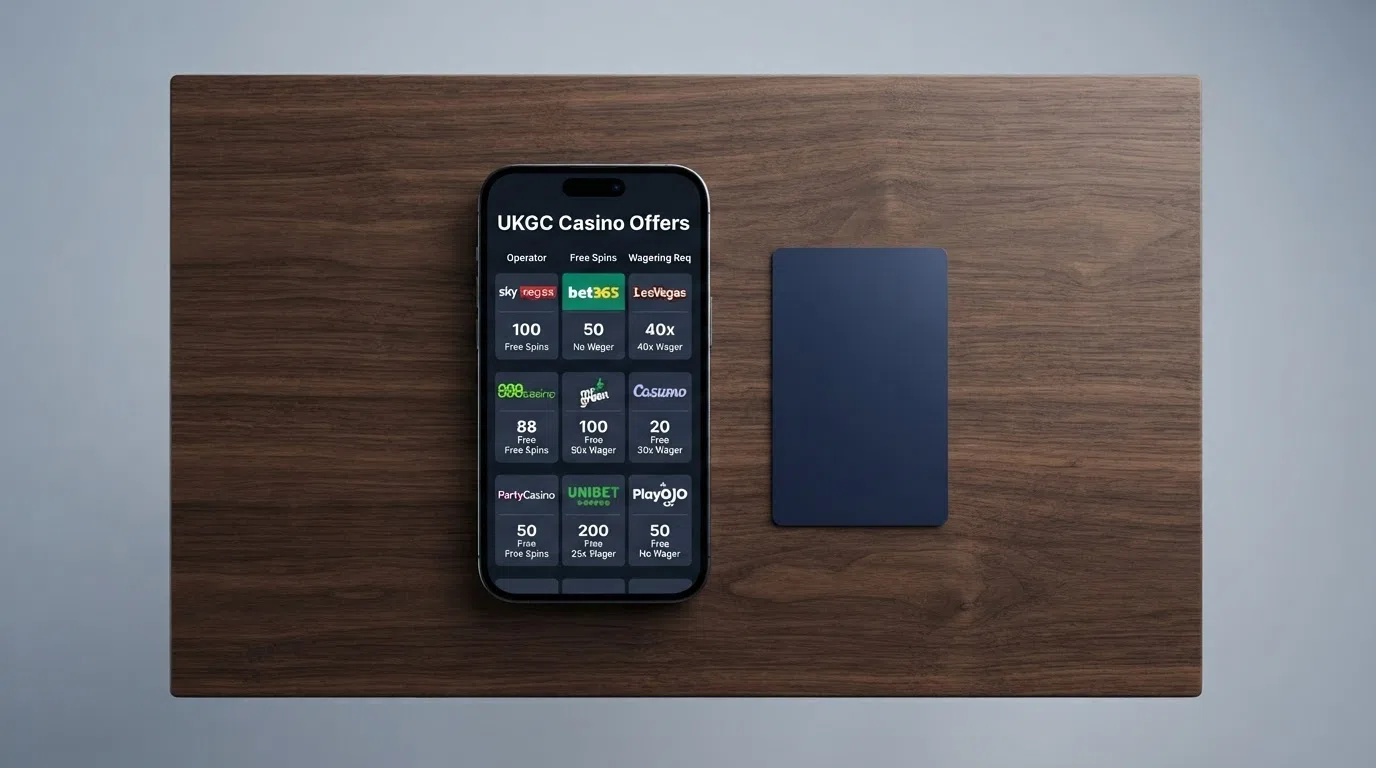
Every operator below holds a current UK Gambling Commission licence, verified against the public register last updated 29 July 2026. The table summarises the welcome terms visible in August 2026 comparator data; operator-specific blocks beneath cover what the table cannot.
| Operator | UKGC Licence | Welcome Offer | Free Spins | Wagering Requirement | Bonus Validity |
|---|---|---|---|---|---|
| Betfair Casino | Active (ref 29 Jul 2026) | 50 FS no deposit + 100 FS after £10 stake | 150 | 0× (no wagering) | — |
| Bet365 Games | Active (ref 29 Jul 2026) | 500 FS on named titles | 500 | 0× (no wagering) | 30 days to claim |
| Sky Vegas | Active (ref 29 Jul 2026) | 50 FS no deposit + 200 FS after £10 deposit and spend | 250 | 0× (no wagering) | 7-day FS expiry, 30-day deposit window |
| Betfred Casino | Active (ref 29 Jul 2026) | Stake £10, get 200 wager-free spins | 200 | 0× (no wagering) | 48-hour use window |
| Paddy Power Games | Active (ref 29 Jul 2026) | 60 FS no deposit + 200 FS after £10 deposit and wager | 260 | 0× (no wagering) | 7 days after claiming |
| William Hill Vegas | Active (ref 29 Jul 2026) | 200 FS on Big Bass Splash after £10 deposit and wager | 200 | 0× (no wagering) | 72-hour expiry, £30 winnings cap |
| Ladbrokes Casino | Active (from 1 Nov 2014; ref 29 Jul 2026) | 100 FS for registering and playing £10 | 100 | — | 48h to accept, 7-day spin validity |
| Coral Casino | Active (ref 29 Jul 2026) | 100 FS after £10 play (£5 variant also seen) | 100 | — | 7-day validity |
| 888casino | Active (ref 29 Jul 2026) | 100% bonus up to £100 on £10+ first deposit | — | 10× on selected slots | 90 days, £100 winnings cap |
| Virgin Games | Active (ref 29 Jul 2026) | Offer details not captured this run | — | — | — |
The cleanest read of this table is what it does not say. Wager-free spins are now the dominant shape — eight of the ten offers carry zero wagering on the spin value itself, which is the structural outcome of the 10× statutory cap on bonus wagering that took effect on 19 December 2025. The two offers that depart from that pattern (Ladbrokes and Coral) carry unspecified terms in the captured data rather than a confirmed wagering figure, and 888casino’s deposit-match is the only offer in the set that asks the player to turn over the bonus amount ten times before withdrawing.
Betfair Casino: 50 Wager-Free Spins with No Deposit Required
Betfair’s headline welcome sequence is the lowest-barrier entry in the featured set: 50 free spins credited with no deposit required, zero wagering on any winnings from those spins, then a further 100 free spins triggered after a £10 stake on the qualifying games. That two-tier structure lets a player test the platform and a low-volatility title without committing funds first, then scale up once they have seen what the slot does.
The wager-free design is what makes this offer interesting rather than merely generous. There is no playthrough target to hit, no expiry pressure beyond the operator’s standard spin window, and no cap on winnings disclosed in the headline terms. For a player who wants to feel out a low-volatility slot’s rhythm on someone else’s money, this is the cleanest starting point in the table. The licence is active on the UK Gambling Commission public register, reference date 29 July 2026.
Verdict: the natural entry point for a player who wants to try a low-volatility title without funding the test themselves, with enough follow-up volume to make a meaningful session once they decide to deposit.
Bet365 Games: 500 Free Spins Across Four Named Titles
Bet365’s offer sits at the opposite end of the volume scale: 500 free spins credited across four named titles — Book of Horus, Curse of the Bayou, Magic Forge and Wrath of the Deep — with no wagering stated and a 30-day window from sign-up to claim. The exact deposit-trigger mechanic is described in the offer terms as a prize-spin selection (5, 10, 20 or 50 free-spin segments), and players should verify the trigger conditions directly on the operator’s site before depositing.
The practical effect of 500 wager-free spins is volume rather than per-spin value. At standard 10p per spin, that is £50 of slot time at no playthrough cost, spread across four specific titles. The limitation is the named-games requirement — a player who wants a particular low-volatility title outside that set will not find it on this welcome. For a player who is happy to take the operator’s selection and run with it, the volume is unmatched in the featured set. UKGC licence confirmed on the register, reference date 29 July 2026.
Verdict: a volume play, best suited to a player who is happy to spin whatever the operator has named and who wants the longest single welcome session without a playthrough target.
Sky Vegas: 250 Free Spins with a No-Deposit Starter
Sky Vegas splits the welcome in two: 50 free spins on registration, no deposit required, then 200 more after a £10 deposit and spend on qualifying games. Both tiers carry no wagering on spin winnings, the no-deposit spins expire seven days after credit, and the deposit-and-spend requirement must be met within 30 days of registration.
The no-deposit starter makes this offer comparable to Betfair’s entry point, but the larger post-deposit tranche (200 spins at £0.10 each is £20 of slot time) gives Sky Vegas a longer follow-up runway once the player has committed the £10. The seven-day expiry on the no-deposit spins is the constraint worth noting — a player who signs up and returns three days later will find their spins waiting, but a player who delays a week will not.
Verdict: a balanced offer for a player who wants a no-deposit test and is willing to deposit £10 within a month to unlock the larger follow-up, with enough volume to make the deposit worthwhile.
Betfred Casino: 200 Wager-Free Spins at 10p Each
Betfred’s terms are the cleanest in the set on a per-spin basis: stake £10 on a debit-card deposit, receive 200 wager-free spins at £0.10 each (£20 of slot time), with a 48-hour window to use them. The wager-free design means whatever the spins return is the player’s, with no playthrough target.
The 48-hour use window is the operational constraint. A player who cannot return to the site within two days of depositing will lose the spins. For a player who plans their session in advance — deposit Friday evening, play Saturday morning — the structure is straightforward. For a casual player who might not log in for a week, it is a real friction point. UKGC licence confirmed, reference date 29 July 2026.
Verdict: the best per-spin-value clarity in the set, suited to a player who can commit a specific two-day window and wants zero ambiguity about what the spins cost them.
Paddy Power Games: 260 Free Spins Split Across No-Deposit and Deposit
Paddy Power’s 260-spin total is the highest in the featured set: 60 no-deposit free spins (50 on selected slots plus 10 on Paddy’s Mansion Heist), then 200 more at £0.10 per spin after a £10 deposit and wager, with a 7-day post-claim validity on the spins. No wagering is stated on the spin winnings.
The split across two games in the no-deposit tranche is unusual — most competitors keep the no-deposit spins on a single title. For a player who wants to see two different slots before depositing, that gives a small but real comparison opportunity. The £10 deposit-and-wager trigger on the second tranche is a step beyond a pure deposit, and players should confirm what counts as a “wager” on the qualifying games before committing.
Verdict: the highest total spin volume in the set, with a no-deposit portion that gives a two-title preview — useful for a player who wants the most slot time per offer before any playthrough target enters the picture.
William Hill Vegas: 200 Wager-Free Spins on Big Bass Splash
William Hill’s offer is the most narrowly defined in the table: 200 free spins on Big Bass Splash after a £10 deposit and wager, wager-free, £0.10 per spin, with a £30 winnings cap and a 72-hour expiry on the spins. The single-title focus is the trade — a player who wants Big Bass Splash gets 200 spins on it, and nothing else.
The £30 winnings cap is the critical detail. Even with no wagering requirement, the maximum a player can withdraw from the offer is £30. For a player testing a specific title they already want to play, that cap is an acceptable ceiling. For a player hoping to turn the welcome into a meaningful payout, it is a hard limit. UKGC licence active, register reference 29 July 2026.
Verdict: a single-title specialist offer with a clear ceiling — ideal for a player who specifically wants Big Bass Splash and is comfortable with the £30 cap as the maximum return from the welcome.
Ladbrokes Casino: 100 Free Spins After a £10 Play
Ladbrokes’ welcome is the most traditional shape in the set: 100 free spins for registering and playing £10 on qualifying slots, at £0.10 per spin, with a 48-hour acceptance window and 7-day validity once claimed. The licence summary on the Gambling Commission register shows Ladbrokes Betting & Gaming Limited holding a Casino Remote licence active from 1 November 2014, one of the longest-standing entries in the table.
The 48-hour acceptance window is a step players miss: the offer has to be actively accepted within two days of qualifying, separate from the 7-day use window on the spins themselves. Wagering terms on the spin winnings are not explicitly captured in the comparator data; players should confirm directly on Ladbrokes’ terms page whether the spins are wager-free or carry a playthrough target before depositing.
Verdict: a straightforward entry from a long-established UK brand, suited to a player who wants the familiarity of a household name and is willing to verify the wagering detail themselves before committing.
Coral Casino: 100 Free Spins with a Low Entry Threshold
Coral’s primary comparator listing shows 100 free spins after a £10 play at £0.10 per spin with 7-day validity, but a separate Coral variant in the same data set shows a £5 play triggering a £10 slots bonus plus 100 free spins — among the lowest entry thresholds in the featured set. Wagering terms vary between the two listings, with some sources describing the spins as wager-free and others referencing a 10× term on a different bonus shape. Players should confirm which offer is active on the day they intend to deposit.
The dual entry threshold is unusual. A player with only £5 to test the platform can find a Coral welcome that matches their budget; a player with £10 gets the more standard 100-spin offer. That flexibility is the genuine advantage here. UKGC licence active, register reference 29 July 2026.
Verdict: a useful entry point for a player on a tighter budget, with the caveat that the active offer and its wagering terms should be verified on Coral’s site before committing — the same operator can carry materially different terms on a £5 versus a £10 trigger.
888casino: A 100% Match Bonus — the Set’s Sole Deposit-Match Offer
888casino’s welcome is the structural outlier in the table: a 100% deposit match up to £100 on a first deposit of £10 or more, with 10× wagering on selected slots within 90 days, and winnings from the bonus capped at £100. There are no free spins in the headline offer. This is the only entry in the featured set that asks the player to turn over a bonus amount rather than handing them wager-free spins.
The 10× wagering figure is the same statutory cap that took effect on 19 December 2025 under LCCP SR Code 5.1.1, so 888casino is operating at the maximum the regulator permits, not above it. A £100 bonus at 10× wagering means £1,000 of qualifying turnover before withdrawal. The £100 winnings cap applies even after the wagering is complete. For a player who wants a deposit match rather than free spins, this is the only option in the set; for a player who prefers wager-free spin value, it is the wrong shape entirely.
Verdict: the only deposit-match in the set, and the right pick only for a player who specifically wants a cash bonus rather than free spins — and who is comfortable working through 10× turnover within 90 days under a £100 winnings cap.
Virgin Games: A UKGC-Licensed Brand with Rotating Promotions
Virgin Games appears on the UK Gambling Commission public register, reference date 29 July 2026, as a licensed online casino brand. The research run for this page did not capture the current welcome offer in detail; operator promotions on the platform rotate, and players should check Virgin Games’ current promotions page directly before deciding whether to deposit.
The right way to treat this entry is as a confirmed-licensed option whose current terms are not in the dataset this guide was built from. The licence status is verified; the offer shape, spin count, wagering terms and validity windows are not. A player who wants to include Virgin Games in their shortlist should treat the brand as licensable and the offer as something to verify on the day.
Verdict: a confirmed UKGC-licensed option for a player willing to check the current offer directly on the operator’s site — the licence is solid, the welcome terms need to be verified before any commitment.
How to Spot a Low Volatility Slot Before You Risk a Penny
Three reliable methods exist, and they work best in combination. Each has limits; together they narrow a sprawling catalogue to a shortlist of titles that will actually behave the way low volatility promises.
Reading the Paytable and Info Pane for Volatility Clues
The first stop is the game’s information pane, which most modern slots surface through a menu icon or paytable button. Where providers supply a volatility rating on a 1–5 scale, a 1 or 2 is the clearest signal. Where they do not, max win is a rough proxy — a title with a 500× or lower maximum exposure is more likely to sit in the low-volatility band than a title advertising 5,000× or 10,000×.
The paytable structure tells a related story. A low-volatility title typically spreads payouts across many symbol combinations at modest values, with a small number of mid-tier wins (the 5× to 20× range that defines the steady drip) and a rare top symbol that pays meaningfully more. A high-volatility title concentrates value in three or four premium symbols and leaves the lower symbols paying less than the stake.
Provider documentation matters too. Studios that publish per-game RTP and volatility on their own product pages — Thunderkick’s 1429 Uncharted Seas page lists RTP 98.60%, low volatility, 670× max win — are easier to evaluate than studios that bury the data in a sub-menu. Where the documentation is thin, cross-referencing a slot database or review site is the next step.
Testing in Demo Mode: What to Watch For
Most UK-licensed operators offer a free-play or demo mode on their slot catalogue. A 50–100 spin sample in demo mode is enough to see whether the title matches the low-volatility profile: count the wins, measure their size against the stake, and compare both against the 40–55% hit-rate benchmark and the 2–20× win-size range. A title that hits every other spin and pays between 20p and £2 on 10p spins is behaving the way low volatility should. A title that hits every fifth spin and occasionally pays 50× the stake is not.
The distinction between low and medium volatility is harder to draw from a 50-spin sample. A medium-volatility title can look low-volatility on a lucky run and high-volatility on an unlucky one. Extending the sample to 200 or 300 spins gives a clearer read, but even then a single bonus round landing during the test can distort the average. Demo testing is best used as confirmation after the paytable and provider documentation have already pointed toward a candidate, not as a sole method.
Curated Lists and Provider Filters as a Shortcut
Provider volatility labelling and third-party slot databases are the third method, and the fastest. A studio that labels its games on a 1–5 scale and applies that label consistently across its catalogue is the easiest studio to filter. Slot databases and review sites that carry volatility filters reduce the catalogue from thousands of titles to a few dozen in seconds.
The shortcut has a known weakness: labelling is inconsistent across providers, and no industry-wide standard exists for what “low” means in absolute terms. One studio’s “low” is another studio’s “medium-low.” The cure is cross-referencing. A title that appears on three independent low-volatility lists and carries a low-volatility label on its provider page is a safer bet than a title that appears on one list with no provider confirmation.
Why Low Volatility Slots Are a Bonus-Wagering Shortcut
Clearing a wagering requirement is a turnover problem, not a luck problem. The maths: required turnover divided by stake per spin equals the number of qualifying spins, and the player’s job is to reach that spin count with enough balance left to finish. Low volatility is the configuration that makes that job easiest.
Why Frequent Small Wins Beat Variance When Clearing a Bonus
A high-volatility title clears wagering requirements inefficiently. Long stretches of dead spins drain the balance while the turnover counter barely moves, and when a big win finally lands it pushes the balance up sharply but does not accelerate the turnover target any faster than a small win does. The combination is unfriendly to a player with a finite bonus balance: the balance erodes faster than the wagering completes.
A low-volatility title with a 40–55% hit rate reverses that balance. Frequent small returns keep the balance topped up while the turnover counter ticks steadily upward. The result is a flatter bankroll curve and a much higher probability of reaching the wagering target before the bonus balance runs out. The expected loss on the wagering itself is identical at the same RTP — the house edge does not change — but the path to that expected loss is far less likely to end in a busted bonus.
The Best Low Volatility Titles for Bonus Play in the UK
The arithmetic favours the highest RTP available within the low-volatility band. 1429 Uncharted Seas at 98.60% RTP is the strongest researched candidate for bonus play: every percentage point above 96% reduces the expected cost of clearing a wagering target. On a £100 bonus with 10× wagering at this RTP, the expected loss works out at required turnover × (1 − RTP), which is £1,000 × (1 − 0.986) = £14. The same scenario on a 96% RTP slot would cost £40.
Checking the RTP before committing bonus funds is the practical step. The game rules page or the provider’s product page will state it; UK-licensed operators are required to make this information available. A bonus player who spends two minutes confirming the RTP of their chosen title can reduce the expected cost of clearing the wagering by a factor of nearly three.
UK-Specific Bonus Rules That Change the Equation
Three rules now shape UK bonus strategy. Under LCCP SR Code 5.1.1, in force since 19 December 2025, wagering requirements are capped at 10× the bonus amount and mixed-product promotional offers (bonuses that bundle slots with sports betting or other gambling products) are banned. From 31 October 2025, operators must prompt a customer to set a financial deposit limit before their first deposit, and from 30 September 2026 (extended from an earlier 30 June 2026 date) only a gross deposit limit may be called a “deposit limit” under RTS 12B.
The 10× cap is the headline change for bonus value. Before the cap, UK operators routinely attached 30×, 40× or even 65× wagering requirements to welcome bonuses; those structures are now unlawful. The result is a market where every legitimate welcome offer sits at or below the statutory ceiling, which makes the comparison between offers much cleaner than it was two years ago. The no-mixed-product rule means a casino welcome bonus cannot be conditional on also placing a sports bet, which removes a category of cross-product traps that used to inflate effective wagering.
The deposit-limit prompt is a player-protection change with a secondary effect on bonus strategy: a player who sets a sensible deposit limit at the front door has a natural ceiling on how much bonus value they can claim, which makes the comparison between offers more about per-pound value than about absolute volume.
Which Providers Build the Strongest Low Volatility Line-Up
Provider catalogues differ in three ways that matter to a player looking for low-volatility titles: the breadth of the low-volatility range, the transparency of RTP and volatility labelling, and the availability of those titles across UK-licensed operators. Two providers stand out for their UK-market low-volatility presence.
Pragmatic Play: The Volume Leader in Low Volatility
Pragmatic Play runs one of the largest low-volatility ranges in the UK market, with frequent-win titles appearing across most UK-licensed operator catalogues. The studio’s design philosophy favours accessible mechanics and steady return profiles, which makes its catalogue a natural starting point for a player looking for low-volatility options. Pragmatic Play titles are available on the majority of featured operators in this guide.
The trade-off for that volume is variability within the range. Pragmatic Play’s low-volatility titles do not all share the same RTP, and the studio’s volatility labelling practices vary by title. A player filtering Pragmatic Play’s catalogue for low volatility still needs to check per-game RTP, because the studio’s range spans the full spectrum from low-volatility to high-volatility titles within a single product family.
IGT: The Land-Based Legacy in Low Volatility Design
IGT’s history in slot design runs through land-based casino cabinets in the UK and elsewhere, where the studio built its reputation on titles with steady, predictable return profiles. That design philosophy carried into the online transition, and IGT’s online catalogue retains a meaningful low-volatility presence. Several of IGT’s most recognisable titles sit in the frequent-win band that defines low volatility.
IGT’s catalogue is smaller than Pragmatic Play’s online, and its UK operator availability varies more. Some IGT low-volatility titles appear on only a handful of the featured operators; others are more widely distributed. The trade-off is curation over volume: a player who finds an IGT low-volatility title they enjoy may have fewer operator choices than they would with a Pragmatic Play equivalent.
How Provider Catalogues Differ: Slot Count, RTP Ranges and Volatility Labelling
The practical comparison between providers comes down to three measurable differences. Slot count in the low-volatility segment is highest at Pragmatic Play and the other volume studios, narrower at IGT and the legacy land-based suppliers. RTP transparency — whether the provider publishes per-game RTP and volatility on its own product pages — is inconsistent across the industry; Thunderkick’s 1429 Uncharted Seas page is the clearest example of good practice, while many studios bury the data in sub-menus or omit it from the public product page entirely. Volatility labelling, where it exists, is not standardised: a “1/5” rating at one studio is not directly comparable to a “Low/Medium/High” tag at another.
The cross-reference approach — checking the provider page, a third-party slot database and the operator’s info pane before committing — handles all three gaps. It costs a player two or three minutes per title and produces a much more reliable read than any single source.
The UK Rules That Reshape How You Play Slots
The UK online slot market operates under a regulatory framework that no other major jurisdiction matches for player-protection density. The table below sets out the current rules; the blocks that follow explain what each one means for the player spinning today.

| Regulatory Measure | Rule | Effective Date |
|---|---|---|
| Online slot stake cap (25+) | £5 maximum per game cycle | 9 April 2025 |
| Online slot stake cap (18–24) | £2 maximum per game cycle | 21 May 2025 |
| Deposit-limit prompts | Operator must prompt before first deposit; decreases immediate | 31 October 2025 |
| Gross deposit limit definition | Only a gross deposit limit may be called “deposit limit” under RTS 12B | 30 September 2026 |
| Auto-play ban | Auto-play feature banned on online slots | 31 October 2021 |
| Minimum spin speed | 2.5 seconds per game cycle minimum | 31 October 2021 |
| Losses disguised as wins | Banned | 31 October 2021 |
| Reverse withdrawals | Banned | 31 October 2021 |
| Session display | Losses, wins and time played must be displayed | 31 October 2021 |
| Credit-card gambling | Banned for all GB-licensed remote gambling, including e-wallet funding | 14 April 2020 |
| Bonus wagering cap | 10× maximum on bonus wagering | 19 December 2025 |
| Mixed-product promos | Banned | 19 December 2025 |
| Remote Gaming Duty | 40% (raised from 21%) | 1 April 2026 |
| GAMSTOP | Mandatory multi-operator self-exclusion (6 months / 1 year / 5 years) | 31 March 2020 |
The Age-Banded Stake Cap: £5 or £2 — What It Means Per Spin
The stake cap is a per-game-cycle maximum, not a per-spin maximum in the traditional sense: a “game cycle” includes any feature spins, bonus rounds or gamble features that follow from a single stake. The £5 cap for players aged 25 and over took effect on 9 April 2025; the £2 cap for players aged 18 to 24 took effect on 21 May 2025, both under SI 2025/215.
For a low-volatility player, the cap changes the session-length calculation more than the per-spin experience. At £5 per cycle, a £50 bankroll produces 10 game cycles; at £2 per cycle, the same bankroll produces 25. Each cycle in low-volatility play delivers a longer sequence of spins than a high-volatility equivalent, but the absolute stake-per-cycle ceiling still governs how many cycles the bankroll can fund. A player who wants to stretch a fixed bankroll into a longer session benefits directly from a lower per-cycle stake — which is part of why low-volatility play and the £2 stake cap for younger players align so naturally.
Deposit Limits, Reality Checks and the End of the Autoplay Era
The player-protection design rules in force since 31 October 2021 reshaped how every UK slot session unfolds, spin by spin. Auto-play is banned. Each game cycle must take at least 2.5 seconds. Features designed to speed up play are banned. Losses disguised as wins — slot animations that celebrate a return smaller than the stake — are banned. Reverse withdrawals — the practice of cancelling a withdrawal request to gamble the funds instead — are banned. Operators must display session losses, session wins and time played throughout the session.
From 31 October 2025, the front-end of the session changed too. Every GB-licensed operator must now prompt a customer to set a financial deposit limit before their first deposit, must make the limit easy to review and change, and must action a decrease immediately. Increases are not immediate by default. From 30 September 2026, only a gross deposit limit may be called a “deposit limit” under RTS 12B — a definitional tightening that closes the gap between marketing language and what the limit actually measures.
Bonus Rules, the Credit-Card Ban and the 40% Duty Rise
Three regulatory shifts changed what UK bonus offers look like and how operators run them. LCCP SR Code 5.1.1, in force since 19 December 2025, caps wagering requirements at 10× the bonus amount and bans mixed-product promotional offers. The credit-card gambling ban has been in force since 14 April 2020 across all GB-licensed remote gambling, and it extends to e-wallet payments funded by a credit card — a loophole that briefly existed and was closed.
The Remote Gaming Duty rise from 21% to 40%, effective from 1 April 2026, is a tax on operator gross gaming yield rather than a direct player rule. It does not change any stake cap, deposit rule or wagering limit. It does change operator economics, and indirectly it shapes how generous welcome offers and ongoing promotions can be. A 40% duty is a heavy enough margin pressure that some operators will respond by trimming promotional value; others will absorb it. Either way, the player cannot see the change directly on the game screen, only in the offers that arrive in their inbox.
GAMSTOP: How the Mandatory Self-Exclusion Scheme Works
GAMSTOP is the UK’s multi-operator online self-exclusion scheme, mandatory for every GB-licensed online gambling operator since 31 March 2020. A player who registers with GAMSTOP chooses an exclusion period of six months, one year or five years, and during that period they cannot access any GB-licensed online gambling site. The exclusion cannot be cancelled early: once the six-month minimum is set, the player waits it out.
The scheme’s effectiveness comes from its coverage. A self-exclusion registered with a single casino in 2019 would not have stopped the player opening an account at a different casino the same week; GAMSTOP removes that gap. For a player who has decided that online gambling is no longer safe for them, GAMSTOP is the single most consequential step available, and it works across every operator in this guide.
When Slot Play Stops Feeling Safe: Tools and Help That Work
The UK operates one of the most developed responsible-gambling infrastructures in the world. Three layers are worth knowing: the prevalence data that explains why the infrastructure exists, the in-account tools every licensed operator provides, and the external help services that operate independently of any operator.
How Many UK Players Are Affected — and Why the Numbers Are Rising
Two surveys define the picture. GambleAware’s Annual Treatment and Support Survey for 2024 reported that 13.1% of adults — equivalent to approximately 6.8 million GB adults — were classified at PGSI 1 or above, meaning any level of gambling-related harm indicators. NHS England Digital’s Adult Psychiatric Morbidity Survey for 2023–24 reported a narrower clinical picture: 0.4% of adults at PGSI 8+, the threshold for problem gambling, and 1.6% at PGSI 3+, indicating at least moderate risk.
The two figures measure different things and should not be conflated. The 13.1% figure captures anyone showing any gambling-harm indicator, including low-severity cases; the 0.4% figure captures the clinical problem-gambling population. The NHS threshold of PGSI 8+ is the level at which harm is likely to be substantial, and the NHS website states plainly: if your total score is 8 or higher, you or those closest to you are likely to be experiencing gambling-related harms.
GamCare reported that in January 2026 it made 996 referrals to treatment and peer-based support services, up from 674 in January 2025 — a 48% increase year-on-year. That referral rise is the most current indicator of how many people are seeking help, and it points in the same direction as the prevalence data: more people are crossing the threshold from harm indicator to help-seeking.
Deposit Limits, Session Timers and Reality Checks: Tools You Control
Every UK-licensed operator provides a standard set of safer-gambling tools inside the player account. Deposit limits, with immediate enforcement of any decrease, are the most powerful — setting a £50 weekly deposit limit caps exposure before any session begins. Session time reminders and reality-check prompts interrupt play at operator-defined intervals (commonly 30 or 60 minutes) and display the session’s running time and net position. Time-out options let a player lock themselves out of the account for a short cooling-off period (24 hours to several weeks), distinct from the longer and irreversible GAMSTOP exclusion.
The practical reality of these tools is that they work best when set before a session starts, not in response to one in progress. A player who opens an account, sets a £50 weekly deposit limit and a 30-minute reality check, and sticks to both, has built a framework that no individual spin can overwhelm. The tools do not require the player to admit anything is wrong; they are standard account features on every UK-licensed platform.
Where to Get Help: Helpline, NHS Clinics and Self-Assessment
The National Gambling Helpline is 0808 8020 133, free and available 24/7, run by GamCare. It is the single most direct route for a player who has decided they need to talk to someone. The call is confidential, and the line can connect callers to treatment and peer-support services in their area.
Beyond the helpline, the NHS operates gambling treatment clinics in England, Scotland and Wales. Referral routes run through GPs, the helpline itself, or self-referral via the NHS website. GambleAware hosts an online self-assessment and signposts the Gambling Support Network for treatment and peer support. The NHS PGSI-style self-check uses the same scoring framework as the prevalence surveys, with the threshold of 8+ as the marker for likely harm.
GAMSTOP registration, covered in detail in the previous section, is the structural step for any player who wants to lock themselves out of every GB-licensed online gambling site. It does not replace treatment, but it removes the immediate access that makes treatment harder to maintain.
How We Selected and Ranked These Low Volatility Slots
The operator comparison in this guide draws on UK-focused comparator data from Oddschecker, Bookies, British Gambler, The Sun, SI, Freebets and Casino Buddies, all current to August 2026. The featured-operator set covers ten UK-licensed brands selected for their relevance to the low-volatility slot topic — specifically, brands whose welcome offers include free spins or bonus structures that interact with slot play.
Each operator was checked against the UK Gambling Commission public register of gambling businesses, last updated 29 July 2026. Licence status reported in the table reflects that check. Welcome offer terms are taken from the comparator sources cited per operator; players should always verify the current terms on the operator’s own promotions page before depositing, because offers rotate and small print changes without notice.
Ranking criteria were assessed qualitatively rather than through a proprietary weighting formula: UKGC licence status (verified for all ten), free-spin volume where applicable, wagering terms (with a preference for wager-free structures), bonus validity windows, and per-spin value where stated. No single criterion dominates, and the table order is not a quality ranking — it is the order in which the operator data was assembled for this guide.
Slot-specific figures (RTP, volatility classification, max win) are drawn from provider documentation where available and from the cited research sources. Where the research does not provide a per-title figure for a specific slot, the comparison table does not invent one.
What This Means for Your Next Slot Session
Low volatility is a configuration, not a guarantee. The hit rate and win-size profile it promises are real, and they produce a session rhythm that suits a specific kind of player — the one who values time on the game over the possibility of a single large payout. The best low-volatility titles combine that rhythm with a high RTP, and the difference between a 96% and a 98.60% RTP slot compounds across every session the player runs.
The UK market makes the comparison cleaner than unregulated alternatives. The 10× wagering cap, the ban on mixed-product promos, the age-banded stake limit and the mandatory deposit-limit prompt together mean that every legitimate offer in this guide is playing by the same rules. A player can compare offers on their actual terms rather than on which operator has the most generous small print.
The practical next step is verifying the live terms on whichever operator’s site the player intends to use, setting a deposit limit before the first deposit, and choosing a title whose RTP and volatility profile is documented on the provider’s page. The UK Gambling Commission public register is the authority to check against if licence status needs to be confirmed. The rest of the session — stake size, session length, when to stop — is a matter of the player’s own bankroll and judgement.
Frequently Asked Questions
Why do some titles pay out small amounts on nearly every round?
Those titles sit in the low-volatility band of the paytable spectrum, where game designers tune symbol weights and payline structures so that wins land on roughly 40–55% of spins with most payouts in the 2× to 20× range of the stake. The result is a session rhythm built on frequent small returns rather than occasional large ones. High-volatility titles reverse the trade: fewer wins, larger payouts when they land.
Which games return more than 97% of every pound wagered over their lifetime?
The standout researched example is 1429 Uncharted Seas by Thunderkick, listed at 98.60% RTP with low volatility and a 670× maximum win. Other low-volatility titles commonly sit in the 96% to 97% range; the gap between 96% and 98.60% scales significantly across hundreds of spins, so a player who checks the RTP before committing bonus funds can meaningfully reduce the expected cost of a session.
Does a steadier payout rhythm actually unlock a welcome promotion sooner?
Yes, in two ways. First, wagering requirements are now capped at 10× the bonus amount under UK rules in force since 19 December 2025, and low-volatility play is the most efficient way to clear that turnover because the balance survives the spin count. Second, many UK welcome offers now consist of wager-free free spins, where the only “cost” is the time to use them — and a low-volatility session is by definition a longer session from the same bankroll.
Does the £5 maximum stake rule change which titles give you the longest session?
The £5 stake cap for players aged 25 and over (and the £2 cap for players aged 18 to 24) is a per-game-cycle maximum that directly governs how many cycles a fixed bankroll can fund. Low-volatility titles stretch each cycle into a longer sequence of small-return spins than high-volatility titles, so the cap interacts with volatility to shape session length: a low-volatility player at £2 per cycle on a £50 bankroll will see far more spins than a high-volatility player at £5 per cycle on the same bankroll.
What number do I call the moment gambling no longer feels under my control?
The National Gambling Helpline on 0808 8020 133, free and available 24 hours a day, run by GamCare. The call is confidential and the helpline can connect callers directly to local treatment services. For online self-exclusion across every UK-licensed gambling site, GAMSTOP registration is the structural step, with exclusion periods of six months, one year or five years that cannot be cancelled early once set.
Slots – realmoney-onlinecasinos-uk
Content created by the «realmoney-onlinecasinos-uk» team