
The Independent UK Casino Guide — Real Standalone Brands, Not Sister-Site Networks
 Available in GB
Most British online casinos are not really one casino. They are a network — a dozen brands running on the same licence, the same platform, the same player database, dressed up to look like rivals. The “no sister sites” angle is the market’s quiet rebellion against that model. A standalone casino operates a single brand on its own licence, with its own wallet and its own bonus terms. The offering is narrower in some ways and sharper in others. The trade-off is real, and it is what this page is built around.
What this guide does, and what it does not do. Every brand named below has been checked against the UK Gambling Commission’s public register of licence holders, last refreshed on 29 July 2026. Ten operators earn a place: seven are genuinely standalone, three operate in small groups of two or three brands. The welcome offers, wagering terms and licence details are taken from each operator’s own published terms and cross-checked against the Commission’s register. No offshore brands appear. The page is current as of September 8, 2026 and the licence claims have been verified against the UK Gambling Commission’s public register.
The Independent Casino Landscape: What Going Solo Means in the UK
A casino with no sister sites is not a fringe product. In the British market, where Flutter, Entain and evoke each operate five or more brands under a single licence, independence is the minority model. The minority has weight. The Gamblizard definition is the plainest on the subject: an independent casino is one that does not use pre-made solutions and is not part of a casino network, which by extension means it has no sister site. That definition cuts both ways — independence is about ownership structure, and it carries consequences for what a player sees on the bonus page, in the loyalty scheme and in the data trail.
The British market is large enough that the model matters at scale. Total online gross gambling yield reached £1.55 billion in the first quarter of 2026, a 7% year-on-year rise. Online slots alone produced £773 million of that total, up 12% on the prior year, with 4.8 million average monthly active accounts. Those numbers describe a market dominated by groups, not single brands. The independent casino exists inside that structure, often holding a smaller share of revenue, but competing on focus and on a bonus offer that no sister brand can undercut.
What a Casino Sister Site Actually Is
A sister site is a casino brand that runs on the same UK Gambling Commission licence as another brand. They share a platform, a game library, a wallet backend and a single set of player-protection tools. The platform provider or group operator holds the licence; every brand on it is a skin. That structure is the white-label model: one licence, multiple front doors.
The distinction matters because the licence is what gives a player UKGC protection, not the brand. When a player opens an account at a white-label brand, the protection they receive is identical to what the licence holder’s flagship offers — same GAMSTOP coverage, same dispute resolution route, same deposit-limit tools. The UK Gambling Commission states this plainly: the responsibility for compliance of all operating gambling websites, including white-labelled sites, sits with the licence holder and cannot be transferred to any other party. Sister sites are a commercial arrangement, not a regulatory exemption.
The term gets confused with two related concepts. A “copycat” brand is a marketing lookalike, not a sister site — it may hold its own licence and operate independently while borrowing the design cues of a more famous casino. A “sister brand” in the looser sense can refer to any operator from the same parent company, whether or not they share a licence. For the purposes of this page, the licence is what defines the relationship, because the licence is what defines the protection.
How UK Operators Build Sister-Site Empires
The British market runs on three commercial structures, and each one builds sister-site networks at scale. The first is the white-label platform, where a single licence holder hosts dozens of brands — the most efficient way to launch a new casino and the model that populates the lower reaches of the register. The second is the multi-brand group: Flutter operates Sky Bet, Sky Vegas, Paddy Power, Betfair and Tombola. Entain runs Ladbrokes, Coral, Foxy Bingo, Gala, Party Casino and Sportingbet. Evoke owns William Hill, 888 and Mr Green. The third is the integrated multi-product operator, which adds sportsbook and bingo to casino under a single account — the model Flutter and Entain use to keep players inside one ecosystem.
The economic logic is straightforward. One platform licence, one player database, one compliance team — and the marketing spend gets distributed across a dozen front doors. The network outnumbers the standalone roughly ten to one, which is why the British market looks the way it does: a few dominant groups, a long tail of smaller brands, and a smaller still population of genuinely independent operators. The independent is not the natural shape of this market. It is the deliberate choice to compete on focus and brand identity instead of on cross-product breadth.
What You Gain and What You Give Up by Going Solo
The honest answer is that independence buys three things and costs three things. The gains come first. A standalone casino offers a welcome package no sister brand can undercut, because no sister brand exists to compete with it. The bonus terms are not optimised for a portfolio strategy — they are the brand’s main marketing line. The data trail stays with one operator: your play history, your deposits, your self-exclusion requests do not leak across brand boundaries.
The costs are real. Network casinos share a wallet across casino, sportsbook and bingo, which means a player can move money between products without a withdrawal. The standalone cannot offer that, because the standalone has only one product. Loyalty schemes at network operators pool activity across brands; a standalone player accumulates loyalty at one casino only. Game libraries vary: some independents — Videoslots, for example — run thousands of titles, while a smaller standalone may carry a few hundred. The cross-product promotion that used to be the network’s headline weapon (“bet on football, get free spins”) has been banned from 19 December 2025 anyway, so this particular advantage has been levelled away by regulation.
The trade-off is preference, not protection. A standalone casino is not safer than a network casino; both are covered by the same UKGC licence framework. What changes is the product on offer — narrower in scope, more focused in design, with bonus terms that do not have to serve a portfolio strategy. Players who want one casino, one wallet, one bonus programme, and who do not care about a shared sportsbook-bingo account, find the standalone a cleaner fit. Players who want everything under one login find the network easier.
Why a UKGC Licence Matters More Than Independence
The licensing regime, not the sister-site count, decides what a player is actually protected by. Every casino on this page holds a UKGC licence; that is the entry condition for being reviewed at all. The “no sister sites” angle is a marketing claim, not a regulatory one. What protects a British player is the licence they sit under, the GAMSTOP registration they can make, and the operator-level tools they can access — all of which apply identically to standalone and network brands.
The UKGC Register: Your Single Source of Truth
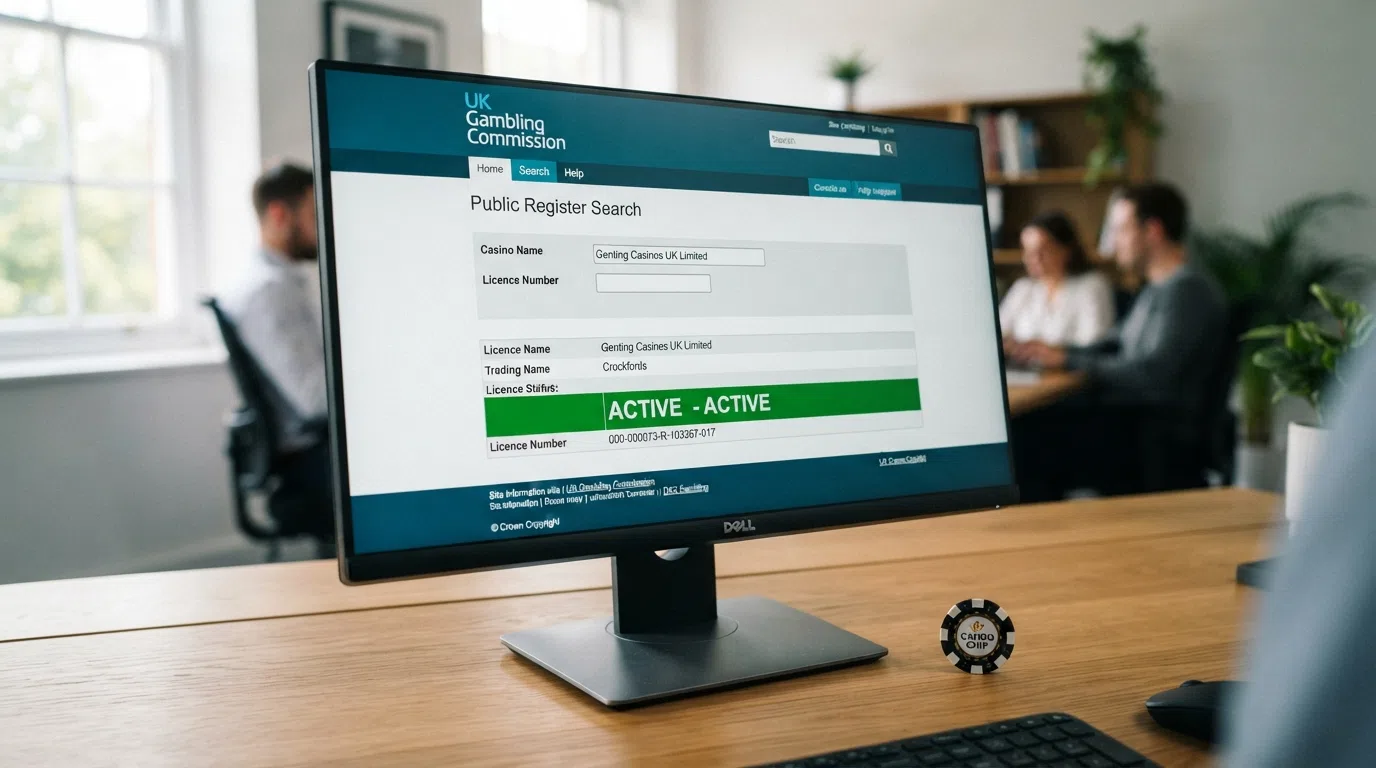
The UK Gambling Commission maintains a public register of licence holders that is the only reliable way to verify a casino’s status. The register holds 2,663 business records, was last updated on 29 July 2026, and lists every operator’s account number, licence type, status and trading names. A player who wants to confirm a casino is genuinely independent — rather than a white-label brand running on someone else’s licence — can find out in under a minute by searching the operator’s name or account number on the register.
The check is mechanical. Open the register, search the operator or parent company name, and read the trading names listed under that account. If the casino you are reviewing appears alongside three or four other brands, it is on a multi-brand licence and has sister sites. If it appears alone, or in a pair, you have your answer. The register is also where a player checks whether a licence is active, suspended or revoked. No website’s “about us” page is a substitute for this; the register is the only document that decides the question.
White-Label Casinos and the LCCP Safety Net
The white-label model confuses players for a reason. When a brand is hosted on another operator’s licence, the player at that brand might assume the protection is thinner — after all, the licence belongs to a different company. The opposite is true. Under LCCP Condition 1.1.2, the licence holder carries full responsibility for every site on its licence, including white-labelled brands, and that responsibility cannot be transferred. The player at a white-label brand receives identical UKGC protection to a player at the licence holder’s flagship.
What that means in practice is that the “no sister sites” angle is about bonus exclusivity and brand focus, not about regulatory coverage. A standalone casino is no safer under UKGC rules than a white-label brand. Both sit under the same Commission, the same LCCP, the same RTS framework. The player who chooses a standalone is choosing a product shape, not a protection upgrade.
The myth persists because it flatters the standalone. A reader who assumes “no sister sites” means “more carefully regulated” is misreading the framework. The accurate framing is that every GB-licensed casino is regulated to the same standard, and the question of independence is a question of commercial structure, not regulatory tier.
What a Player Gives Up Outside the Licensed System
Playing at an unlicensed site is a different category of decision, and one that this page does not cover in the rankings. The five protections that vanish outside the GB licence are GAMSTOP coverage, access to the UKGC complaints route, ADR (alternative dispute resolution) access, mandatory deposit-limit tools, and the financial-vulnerability check at £150 net deposit. Each of those is anchored to the licence. Remove the licence, remove all five.
Several competitor pages muddy this distinction. One affiliate in the search results describes independent casinos as not subject to UKGC rules and as holding offshore licences only. That claim is wrong for any GB-licensed independent — every brand on this list holds a UKGC licence and operates under UKGC rules, not beside them. The misinformation risk is real enough to address plainly: independence in the British market means a single-brand structure, not an unregulated offshore operation. The two are not the same thing.
The UKGC does have a real enforcement role outside the licensed system. Between April 2024 and June 2025 the Commission issued 3,140 disruption notices and referred 447,778 URLs to search engines for delisting, working through cease-and-desist, registrar action and payment-provider referrals. The Commission has no statutory ISP or DNS blocking powers — that would require primary legislation not yet enacted — so enforcement works through disruption, not blocking. For a player, the practical upshot is that unlicensed sites do exist and are chased, but the player at such a site has no British protection if something goes wrong.
The Best Standalone UK Casinos in 2026
The ten casinos below are ranked on three criteria: licence status verified against the UKGC register, bonus fairness measured by wagering and max-cashout terms, and the independence or small-group status of the brand. Seven are genuinely standalone operators. Three — Videoslots, Mr Vegas and BetVictor — operate in small groups of two to four brands, small enough that the player experience is closer to standalone than to a Flutter-scale network, but the relationship is named on the register. Where a column has no value to show, an em dash appears — that cell carries no figure the page is willing to print.
| Operator | UKGC Licence | Welcome Bonus | Wagering | Sister Sites | Key Game Providers |
|---|---|---|---|---|---|
| Bet365 | 55149 — Hillside UK Gaming ENC | Up to 500 free spins (10-day challenge) | 0× | None | NetEnt, Microgaming, Playtech, Pragmatic Play |
| Videoslots | 39380 — Videoslots Limited | 100% up to £200 + 11 wager-free spins on Starburst | 10× on bonus funds | Mr Vegas, Mega Riches | Microgaming, NetEnt, Pragmatic Play, Play’n GO, Evolution |
| Casumo | 61549 — Jelf Group Limited t/a Casumo | 100% up to £100 + 20 bonus spins | 30× on bonus funds | None | NetEnt, Microgaming, Play’n GO, Evolution, Pragmatic Play |
| BetVictor | 39576 — BV Gaming Limited | Wager £10, get £30 bonus funds + 50 spins on Fishin’ Frenzy | 10× | Heart Bingo, Parimatch UK, TalkSPORT BET | NetEnt, Microgaming, IGT, Evolution, Pragmatic Play |
| Kwiff | 44448 — Eaton Gate Gaming Limited | Up to 200 free spins on Book of Dead (wager £20 to trigger) | 0× | None | NetEnt, Microgaming, Pragmatic Play, Evolution, Play’n GO |
| Lottoland | EU Lotto Limited | Stake £20, get 100 free spins on Fishin’ Frenzy Even Bigger Fish | 0× | None | Pragmatic Play, NetEnt, Microgaming, Evolution, Red Tiger |
| Mr Vegas | 39380 — Videoslots Limited | 100% up to £50 + 11 wager-free spins on Pink Elephants 2 | 10× on deposit | Videoslots, Mega Riches | Same platform as Videoslots |
| Betfred | Petfre (Gibraltar) Limited | Stake £10, get up to 200 free spins | 0× | None | Playtech, Microgaming, NetEnt, IGT, Evolution, Pragmatic Play |
| Lottomart | Maple International Ventures Limited | 100% up to £100 + 100 free spins on Big Bass Splash | 10× (capped by UKGC rule) | None | NetEnt, Microgaming, Pragmatic Play, Evolution, Red Tiger, Blueprint |
| BoyleSports | BoyleSports (Gibraltar) Limited | Up to 100 bonus spins | 0× | None | Playtech, Microgaming, NetEnt, Evolution, Pragmatic Play |
Three observations about the table.
Pros and Cons of Independent Casinos
| Feature | Independent Casino | Network Casino | |
|---|---|---|---|
| Bonus Strategy | Focused on brand identity | Portfolio-based strategy | |
| Wallet System | Single-product account | Pooled wallet (casino/sports/bingo) | |
| Loyalty Scheme | Single-brand accumulation | Cross-brand pool | |
| Data Trail | Single operator boundary | Shared across network | |
| Promotional Offer | Exclusive to brand | Often shared-pool cross-product | First, seven of the ten brands offer zero-wagering free spins — the post-19 December 2025 UKGC environment has compressed bonus terms sharply. Second, three of the ten share the Videoslots licence, which means three of the ten are sister sites to each other; if the page required strict single-brand status, that count would fall to seven. Third, wagering multiples range from zero on free-spin winnings to 30× on Casumo’s deposit match — Casumo’s headline number is the outlier, and worth flagging as you read. |
Bet365 — The Genuine Standalone Giant
Bet365 is the largest genuinely independent operator in the British market. UKGC account 55149, held by Hillside (UK Gaming) ENC, lists Bet365 as the sole remote casino brand on the licence. There are no sister casino sites on this account, which is unusual for an operator at this scale. The welcome offer runs as a 10-day challenge: stake a minimum £10 lifetime deposit, then make 10 selections over 20 days to unlock up to 500 free spins, credited in batches of 5, 10, 20 or 50. There is no wagering on winnings. Seven days to claim, 20 days to complete, no cap on cashout stated in the published terms. The game library runs to 100+ providers — NetEnt, Microgaming, Playtech and Pragmatic Play among them.
The verdict for a reader. Bet365 is the standalone casino to point a player who wants scale without a network. The welcome structure is generous by the 2026 norm and the wagering-free treatment on free-spin winnings removes the most common bonus trap. The cost is that Bet365 is not a boutique operation — the brand is enormous and the product reflects that. A player who wants a smaller, more curated casino will not find it here.
Videoslots — 7,000+ Games, One Small Group
Videoslots holds UKGC account 39380 and shares it with Mr Vegas and Mega Riches, which makes Videoslots the largest of a three-brand independent group rather than a pure standalone. The trade-off is worth making. The welcome package is 100% up to £200 in bonus funds plus 11 wager-free spins on Starburst, with a minimum £10 deposit and 30 days to use it. The wagering is 10× on the bonus funds — the figure that research records, with earlier 20× terms now superseded by the UKGC 10× cap that took effect on 19 December 2025. The game library is the standout feature: 7,000+ titles from Microgaming, NetEnt, Pragmatic Play, Play’n GO and Evolution.
The verdict for a reader. Videoslots earns its place on game count alone. The 7,000+ library is the largest among the ten brands reviewed and a real draw for a player who values variety over brand focus. The small-group caveat — three brands on one licence — does not change the regulatory position but does change the language: Videoslots is not strictly “no sister sites,” it is a tight cluster of three.
Casumo — The Standalone Brand with 3,000+ Titles
Casumo operates on UKGC account 61549, held by Jelf Group Limited, as a single-brand casino with no sister sites on the register. The welcome offer is the cleanest of the deposit-match brands: 100% up to £100 plus 20 bonus spins, with a £10 minimum deposit and 30 days to complete. Wagering on the bonus funds is 30× — the outlier on this list and worth pausing on. The 30× figure predates the 19 December 2025 UKGC cap in Casumo’s published terms and may not have been refreshed; the 10× cap applies to every GB-licensed bonus from that date, and a reader should confirm the live terms before depositing. The game library runs to 3,000+ titles.
The verdict for a reader. Casumo is the straightforward choice for a player who wants one brand, one bonus, and a 3,000-title library with no cross-brand complications. The 30× wagering figure is the main reservation — it is well above the 10× the market has settled at — and a reader who values low wagering should treat the Casumo bonus as less competitive than the 0× spin offers elsewhere on this list.
BetVictor — The Primary Brand in a Small Group
BetVictor operates on UKGC account 39576, held by BV Gaming Limited, alongside Heart Bingo, Parimatch UK and TalkSPORT BET — a four-brand group, which is small by UK standards and large by the standard of this page. The welcome offer is structured differently from the rest of the list: deposit and wager £10, receive £30 in Casino Bonus Funds plus 50 free spins on Fishin’ Frenzy. Wagering on the bonus funds is 10×, with 30 days to use the bonus and 7 days to use the spins. Max cashout on the bonus funds is £300 — the only cashout cap on this list and worth noting.
The verdict for a reader. BetVictor is the right fit for a player who wants casino plus sportsbook under one licence, with bonus terms that are competitive under the 10× cap. The £300 max cashout on bonus funds is the constraint to plan around — a player clearing the bonus who hits a win above £300 will see the surplus retained. The group size (four brands) is larger than the rest of the list except Videoslots, so a strict “no sister sites” reader will want to know about it.
Kwiff — Truly Independent, 200 Spins, No Wagering
Kwiff holds UKGC account 44448, held by Eaton Gate Gaming Limited, as a genuinely independent casino-plus-sportsbook with no sister sites on the register. The welcome offer is among the cleanest on the list: up to 200 free spins on Book of Dead at £0.10 per spin, triggered by a £20 qualifying wager, with zero wagering on winnings and a £250 max cashout. The cashout cap is the constraint. 200 spins at £0.10 is £20 in spin value, but the £250 cap means the upside on a bonus win is bounded.
The verdict for a reader. Kwiff is the standalone casino for a player who values simplicity and zero wagering. The £250 max cashout is the limitation — a player clearing a high-multiplier win on Book of Dead will see the surplus retained. The brand is small by Bet365 standards but operates its own licence cleanly and that is the point.
Lottoland — Casino Plus Lottery, No Sister Sites
Lottoland operates under EU Lotto Limited on a UKGC licence that covers remote casino plus lottery — a combination unique on this list. The welcome offer is straightforward: deposit and stake £20, receive 100 free spins on Fishin’ Frenzy Even Bigger Fish at £0.10 per spin, with zero wagering and a 30-day expiry on the spins. No max cashout is stated, which is unusual and worth flagging — most GB-licensed bonuses cap the conversion from bonus funds to withdrawable cash at some figure.
The verdict for a reader. Lottoland is the standalone for a player who wants casino and lottery on one licence and a no-wagering spin welcome without an obvious cashout cap. The brand’s lottery heritage is the differentiator; a reader who plays lottery draws alongside slots will find the combination natural. The research record does not name sister sites on this licence, and that matches what the register shows for EU Lotto.
Mr Vegas — Videoslots’ Sister Brand with a 10% Chunk Bonus
Mr Vegas shares UKGC account 39380 with Videoslots and Mega Riches — a three-brand independent group, not a network. The welcome offer runs as a 100% match up to £50 plus 11 wager-free spins on Pink Elephants 2, with a £10 minimum deposit and 60 days to use the bonus. Wagering is 10× on the deposit, but the bonus releases in 10% chunks rather than in one payment — a distinctive structure that rewards ongoing play. Game library is shared with Videoslots and runs to 7,000+ titles.
The verdict for a reader. Mr Vegas earns its place on the chunked-release structure, which is unusual in the GB market and rewards a player who intends to play through the bonus rather than cash out early. The 10× wagering is in line with the post-cap norm and the 60-day validity is the longest on this list. A strict “no sister sites” reader will want to know about the Videoslots relationship; a reader comfortable with small-group operation will find the offer competitive.
Betfred — 50 Years of UK Heritage, Genuinely Independent
Betfred operates under Petfre (Gibraltar) Limited on a UKGC licence covering remote casino, sportsbook and bingo — one of the longest-running British gambling brands. The welcome offer is stake £10 and receive up to 200 free spins, with zero wagering on winnings and a 7-day validity. The max cashout is not capped in the published terms. Game providers run to Playtech, Microgaming, NetEnt, IGT, Evolution and Pragmatic Play.
The verdict for a reader. Betfred is the standalone for a player who values British heritage and a simple welcome. The 50+ year history matters less in practice than the offer shape — a stake of £10 unlocking up to 200 free spins at zero wagering is competitive against any other brand on the list. The 7-day validity is short, so a player who wants time to think will want to plan around it.
Lottomart — Standalone Casino with a Full Match Bonus
Lottomart operates under Maple International Ventures Limited on a UKGC licence covering remote casino and lottery betting. The welcome offer is 100% up to £100 plus 100 free spins on Big Bass Splash at £0.10 per spin, with a £20 minimum deposit and 30 days to use. Wagering on the bonus is 35× in the published terms — a pre-cap figure that the UKGC 10× rule overrides from 19 December 2025. The 10× cap is the operative figure now.
The verdict for a reader. Lottomart is the standalone for a player who wants the casino-plus-lottery combination and a deposit-match plus free-spins welcome. The 35× published figure should be read as 10× under the current UKGC cap. The 100 free spins at £0.10 is the strongest spin offer in this brand’s tier.
BoyleSports — Irish Roots, UK Independent
BoyleSports operates under BoyleSports (Gibraltar) Limited on a UKGC licence covering remote casino and sportsbook, with no casino sister sites on the register. The welcome offer is up to 100 bonus spins at zero wagering, with a 7-day validity. Game providers include Playtech, Microgaming, NetEnt, Evolution and Pragmatic Play. The brand is Irish-origin and runs as a standalone in the UK market.
The verdict for a reader. BoyleSports is the standalone for a player who values a sportsbook-casino combination under one licence and a no-wagering spin welcome. The 7-day validity is tight and the max cashout is not capped, which is unusual for a free-spin offer. The brand’s smaller UK profile means the game library is narrower than Bet365 or Videoslots, but the independence claim is clean.
Why Your “No Sister Sites” Bonus Looks Better on Paper
Welcome offers at standalone casinos are real, but the wagering maths, the UKGC caps and the validity windows decide what a player actually keeps. A 500-free-spin headline reads well in a marketing email; the same offer read in terms of wagering, max cashout and validity tells a different story. The arithmetic below is what a reader needs in order to compare offers without being misled by the largest number on the page.
A worked example for the bonus-cost calculation, using deposit-match offers from three of the ten brands:
Videoslots: required turnover = £200 bonus × 10× wagering = £2,000; at a £5 stake per spin (the statutory cap for players aged 25 and over) that produces 400 spins; at a 5-second interval per spin, 400 spins take 2,000 seconds, or about 33 minutes of play to clear the bonus.
Casumo: required turnover = £100 bonus × 30× wagering = £3,000; at £5 per spin that produces 600 spins; at 5 seconds per spin, 600 spins take 3,000 seconds, or 50 minutes to clear.
Lottomart: required turnover = £100 bonus × 10× wagering (the operative figure under the UKGC cap) = £1,000; at £5 per spin, 200 spins; at 5 seconds per spin, 200 spins take 1,000 seconds, or about 17 minutes to clear.
For free-spin offers with zero wagering, the calculation collapses. Bet365’s up to 500 free spins at £0.10 per spin is £50 in spin value with no turnover requirement to release winnings. Kwiff’s 200 free spins at £0.10 is £20 in spin value. The £0.10 per spin standard is the norm across the list, and at that level the spin value is a small fraction of a deposit-match bonus — but the absence of wagering is the trade-off that matters.
The conclusion here is plain: a higher headline bonus number with a higher wagering multiplier leaves the player with more required play than a lower headline with zero wagering. The 0× wagering free-spin offers at Bet365, Kwiff, Lottoland, Betfred and BoyleSports are not generous by headline — they are generous by what the player keeps.
No-Deposit Bonuses at Standalone Casinos — The Honest Picture
No checked operator among the featured ten currently runs a true no-deposit welcome bonus. The data on this page is current as of September 8, 2026, and a reader who is hunting for a no-deposit offer among GB-licensed standalone casinos will not find one in this set. That absence is itself information.
The UKGC’s 10× wagering cap and the gross-deposit-limit framework arriving in September 2026 have combined with the regulatory cost burden — Remote Gaming Duty rose to 40% on 1 April 2026, with a statutory levy of 1.1% of GGY running since 6 April 2025 — to make no-deposit offers scarcer in the GB market than they were in the pre-cap years. A standalone operator launching a no-deposit bonus is exposing itself to the full regulatory cost without a guaranteed deposit behind the player. The economics have moved against the offer type, and the standalone set reflects that.
A reader who does find a no-deposit bonus in the GB market should check three figures before claiming: wagering multiple (the 10× cap is now the ceiling), max cashout (some no-deposit offers cap withdrawals from the bonus at a low figure), and game restrictions (some bonuses restrict play to specific titles).
Free Spins: The Go-To Welcome Offer at Independent Casinos
Seven of the ten featured brands lead with free spins, and the free-spin welcome is now the standard GB-licensed welcome shape. The differentiators are wagering on winnings (0× is now the norm, post-cap), the spin value (£0.10 is the standard), the game the spins are tied to, and the validity window. The 0× wagering treatment on free-spin winnings changes the offer’s real value: a 100-free-spin welcome at zero wagering is worth whatever the spins produce, with no playthrough requirement to release the cash.
Bet365’s up to 500 free spins at zero wagering is the headline figure, but the structure — a 10-day challenge with 5, 10, 20 or 50 spins per selection — means the player has to claim them in tranches. Kwiff’s 200 free spins on Book of Dead at zero wagering is the cleanest single-batch offer. Lottoland’s 100 free spins on Fishin’ Frenzy Even Bigger Fish at zero wagering, Betfred’s up to 200 free spins at zero wagering, and BoyleSports’s up to 100 bonus spins at zero wagering round out the 0× cluster. The remaining brands — Videoslots, Mr Vegas — offer 11 wager-free spins alongside a deposit match, where the wagering sits on the match funds rather than the spin winnings.
The £0.10 per spin standard means a 100-free-spin offer has £10 in spin value before any multiplier is applied. The number of spins matters for time-on-game, not for stake-size; the wagering treatment matters for what comes out the other end.
Deposit-Match Bonuses and the Wagering Trap
A 100% match up to £200 sounds generous. The maths underneath it is what the player plays through. A £200 deposit match at 10× wagering is £2,000 of required turnover — the volume of bets the player has to place before withdrawing bonus-derived winnings. At the £5 maximum stake per spin for players aged 25 and over, that is 400 spins of volume. At the 2.5-second minimum spin speed (the regulatory floor), 400 spins is a minimum of about 33 minutes; in practice, with decision time between spins, the average runs closer to 30–35 minutes.
The wagering trap is the gap between the marketing number and the turnover number. A 200% match at 10× wagering on a £100 deposit produces £200 of bonus funds and £2,000 of required turnover. A 100% match at 30× wagering on a £100 deposit produces £100 of bonus funds and £3,000 of required turnover — the same bonus value, but 50% more required play. Casumo’s 30× figure on this list is the outlier, and the UKGC 10× cap that took effect on 19 December 2025 will compress it; until that compression is reflected in the brand’s published terms, a reader should treat the 30× figure as a reading of legacy terms, not the operative cap.
The pattern across the standalone set is clear: lower headline bonus plus lower wagering multiplier leaves more in the player’s pocket than higher headline bonus plus higher multiplier. The UKGC cap has flattened the market — almost every brand on this list sits at 10× or zero on wagering — but the bonus numbers themselves still move, and a reader who compares offers should compare turnover, not just headline.
The UKGC 10× Cap: What It Means for Every Bonus on This Page
From 19 December 2025, no GB-licensed casino bonus may carry a wagering requirement above 10×. The rule is in LCCP Social Responsibility Code 5.1.1 and applies to every welcome bonus, reload bonus and free-spin welcome offered to a GB-licensed player. The same rule banned mixed-product promotions — no more “bet on football, get free spins” cross-vertical offers. The 10× cap is the great leveller across the GB market and it is why eight of the ten brands on this list sit at 10× or zero on their bonus terms.
What the cap covers is the wagering multiplier on bonus funds and on bonus-derived winnings. What it does not cover is the max-cashout cap (a brand may still cap the conversion from bonus to withdrawable cash at £300 or another figure), the bonus validity window (7, 30 or 60 days), and game-weighting contributions (some games count less than 100% toward wagering). Those secondary terms still differ across brands, and they are where the real comparison sits post-cap. The pre-cap market ran at 30×, 40× and 50×; the post-cap market sits at 10×. The compression has removed the most punitive bonuses; it has not flattened the welcome offers into one.
The mixed-product promotion ban is the second half of the rule. A standalone casino offering casino plus sportsbook cannot run a cross-product welcome — the cross-vertical promotional offer is no longer available at any GB-licensed operator. That ban sits oddly for a standalone casino, which is unlikely to run cross-product offers anyway, but the regulatory rule applies across the market. The standalone casino competes on casino terms alone, and the network casino no longer has the cross-product welcome as a differentiator.
Fresh Faces: New Standalone Casinos in 2026
Genuinely new independent casino launches in the British market are rare in 2026. The economics of going solo have tightened. Remote Gaming Duty rose from 21% to 40% with effect from 1 April 2026, applying to every online casino licence. The statutory levy on gambling operators replaced voluntary contributions from 6 April 2025, with the top rate set at 1.1% of gross gambling yield for remote casino licences. The combined operator-side tax burden is heavier than at any point in the British market’s history. A new standalone operator launching in this environment has to fund both the licence application and the ongoing compliance cost from day one, and the gross deposit limit requirement arriving on 30 September 2026 adds another constraint on top.
The Newest Standalone Casino Launches
The research record on which this page is built does not name a genuinely new independent casino launch in 2026 among the featured set. That absence is itself information: the standalone launch pipeline is thinner than the affiliate-page headlines suggest, and the operators skill’s record for genuinely independent GB-licensed casinos does not show a new single-brand entrant in the period this page covers. A reader who wants a new standalone casino will find older single-brand brands that have refreshed their welcome offers — BoyleSports, Lottoland, Kwiff — before they find a brand-new operator on a fresh licence.
A reader who wants to verify whether a “new casino” claim is real can use the UKGC register directly. A brand-new licence will appear on the register with a recent activation date; a re-skinned white-label brand on an existing licence will appear as a new trading name under an existing account number. The register does not distinguish between new launches and brand refreshes — the brand does. The verification route is the same as for any other claim: open the register, read the licence, read the trading names.
New-Operator Bonus Offers: What a Launch Bonus Looks Like in 2026
The shape of a 2026 launch offer at a GB-licensed standalone is constrained by the 10× wagering cap and the mixed-product ban, both in force from 19 December 2025. A launch offer at a new standalone cannot offer 50× wagering — the cap is 10×. It cannot run a cross-product welcome — the cross-vertical promotional offer is banned. What a launch offer can do is compete on free-spin count, on bonus-funds size at 10× wagering, or on cashback and loyalty. The free-spins trend is the default new-operator welcome tool for the same reason it is the default for the established set: zero-wagering free spins are simple to communicate, generous in appearance, and fit within the cap.
A reader comparing a new-launch welcome to an established standalone’s welcome should look at the same three figures: wagering multiplier, max cashout, and validity window. The 10× cap means the wagering comparison is now narrow; the max cashout and the validity still differ brand to brand.
What a 2026 Market Entrant Faces on Day One
A new standalone casino opening its doors in 2026 has to clear a longer regulatory checklist than at any point in the British gambling market’s history. The mandatory deposit-limit prompt before first deposit took effect on 31 October 2025, requiring every operator to surface a financial-limit choice before the first deposit lands. The gross deposit limit requirement, extended from 30 June to 30 September 2026, requires operators to offer a gross-deposit-only limit and to give it at least equal prominence to other financial limits — only that form may be called a “deposit limit.” The financial vulnerability check at £150 net deposit in a rolling 30-day period has been mandatory under LCCP Social Responsibility Code 3.4.4 since 28 February 2025, using publicly available data on bankruptcy orders, CCJs, IVAs and DROs. GAMSTOP integration is mandatory for every GB-licensed online operator since 31 March 2020. Identity verification before first deposit has been mandatory since 7 May 2019.
That checklist is the regulatory floor for a 2026 launch. Add the 40% Remote Gaming Duty and the 1.1% statutory levy, and the economics of going solo are tighter than at any prior point. The standalone casino that does launch in this environment has to find its margin on brand focus, on a clean bonus shape and on operational efficiency, because the regulatory and tax load does not leave much room elsewhere.
One Login, Three Games: Casino, Bingo and Betting Under One Roof
The cross-vertical sister-site network is the dominant British gambling model. The standalone casino is the exception. Flutter’s UK brands — Sky Bet, Sky Vegas, Paddy Power, Betfair, Tombola — run casino and sportsbook on a shared platform. Entain’s UK brands — Ladbrokes, Coral, Foxy Bingo, Gala, Party Casino, Sportingbet — span casino, sportsbook and bingo across six front doors. Evoke owns William Hill, 888 and Mr Green, with casino plus sportsbook across the trio. The network operator offers a player one login, one wallet, three products and a single loyalty scheme; the standalone offers one login, one wallet, one product and a single-product loyalty scheme. The trade-off is breadth for focus.
Casino Plus Sports Betting: The Most Common Cross-Vertical Pair
The casino-and-sportsbook combination is the most common cross-vertical structure in the British market. Flutter’s Sky Bet and Sky Vegas share a platform; Entain’s Ladbrokes and Coral share a platform; Bet365 runs both casino and sportsbook on a single licence without sharing with a sister brand. The player advantage at a network operator is operational: one deposit covers casino and sports bets, one withdrawal serves both, one set of limits applies across both. The mixed-product promotion ban from 19 December 2025 has removed the cross-vertical welcome as a player incentive — that lever used to be the network’s strongest marketing line — but the operational integration of a shared wallet and shared identity is unaffected by the ban.
Bet365 is the odd case. It runs casino and sportsbook on one licence, but the licence has no other casino brand on it. A Bet365 player moves between casino and sports with the same login and the same wallet, but the player is at a single operator rather than a network. That is the structure the standalone model offers when the standalone happens to be multi-product.
Casino and Bingo Sister Sites: Entain’s Four-Brand Bingo Network
Entain’s bingo portfolio runs Gala Bingo, Foxy Bingo, Ladbrokes Bingo and Coral Bingo on a single proprietary in-house platform, after the group migrated the four brands off Playtech’s Virtue Fusion in 2021. All four are sister sites sharing one operator, one licence and one backend. A player who self-excludes at Gala Bingo is excluded at Foxy Bingo, Ladbrokes Bingo and Coral Bingo for the same reason — operator-level self-exclusion covers all brands on the operator’s licence, and the operator is the same entity across all four.
The bingo-plus-casino cross-sell model that runs across those four brands is the kind of cross-vertical integration a standalone casino cannot match. The standalone has one product. The Entain bingo network has four brands and a shared player base. The trade-off in product breadth is the trade-off the standalone player has already made by choosing independence.
Why Cross-Vertical Operators Are the Norm — and What That Means for Independence
The biggest UK gambling groups are multi-product by design, and the economics push them that way. One acquisition cost covers three product margins. One compliance team covers three licences. One platform hosts three brands. The standalone casino competes against that structure by being narrower. It does not offer a sportsbook or a bingo room or a lottery. It does not pool loyalty across products. It does not run a cross-product welcome.
What it offers instead is focus. The bonus terms are the brand’s main marketing line, not one of three competing offers. The data trail is one operator, not a portfolio. The brand identity is the product, not a skin on a platform. The player at a standalone is buying a sharper, narrower experience in exchange for giving up the breadth of a network. Inside a market that produced £1.55 billion in online gross gambling yield in the first quarter of 2026 — £773 million of that from online slots, with 4.8 million average monthly active accounts — the standalone is a real choice with real consequences, not a marketing edge case.
The Safety Net: Responsible Gambling at Standalone Casinos
Every GB-licensed casino is legally required to offer GAMSTOP coverage, deposit-limit tools, reality checks and self-exclusion, regardless of network size. The standalone casino is not more or less safe than the network casino on these dimensions; it is required to offer the same tools. What has changed in the last three years is the depth of the requirement: more mandatory prompts, a wider set of limits, and a tighter definition of what counts as a “deposit limit.”
GAMSTOP: One Registration, Every UK Site Blocked — Including Every Sister Site
GAMSTOP works at the GB-licence level. A single registration blocks the person from every UKGC-licensed online gambling site in the country — casino, sportsbook, bingo, lottery, network or independent, every one of them. The scheme has been a mandatory condition of every UKGC online operating licence since 31 March 2020. Exclusion periods run six months, one year, five years, or five years with auto-renewal, and none of them can be cancelled early. The registration is at gamstop.co.uk, and it is the single most powerful player-protection tool in the British market.
The sister-site count does not affect GAMSTOP coverage — the licence is what matters. A player registered with GAMSTOP cannot access Bet365, cannot access any Entain brand, cannot access any Flutter brand, and cannot access any of the ten standalone casinos on this list. The coverage is total, and it does not depend on the player knowing the network structure of the operator they intended to use.
Operator-level self-exclusion is the second layer. A player who excludes directly with a casino brand is excluded from every brand on that operator’s licence — which means a player excluding at Videoslots is also excluded at Mr Vegas and Mega Riches, because the three share a licence. The same logic applies to BetVictor’s group of four brands. A player who excludes at one of the genuinely standalone brands on this list — Kwiff, Lottoland, Betfred, BoyleSports — excludes at that one brand only, because there are no sister brands to extend the exclusion to. GAMSTOP remains the comprehensive layer; operator-level exclusion is the brand-specific layer underneath it.
Deposit Limits, Reality Checks and the Tools Every Casino Must Offer
The deposit-limit framework in the British market has tightened in two stages. From 31 October 2025, every operator must prompt a customer to set a financial limit before the first deposit. Decrease requests on an existing limit must be actioned immediately. From 30 September 2026 — the date extended by the Commission from the original 30 June 2026 schedule — operators must offer a gross deposit limit, give it at least equal prominence to other financial limits, and only that form may be called a “deposit limit.” The distinction matters: a gross deposit limit is based on money paid into the account, with no netting against withdrawals. The requirement is a tightening of the language as well as of the offer.
Reality checks and time-outs sit alongside the deposit-limit requirements. Reality checks interrupt play at intervals to display session length and net position; time-outs are short-term self-exclusion tools the player sets themselves. Both are mandatory operator-side tools at every GB-licensed casino. The £150 net-deposit financial vulnerability check under LCCP 3.4.4 has been mandatory since 28 February 2025, using publicly available data on bankruptcy orders, county court judgments, individual voluntary arrangements and debt relief orders — not a credit check, but a public-data flag at the £150 rolling 30-day threshold.
The game-design rules apply uniformly. Auto-play is banned on online slots in GB. Spin speed cannot be faster than 2.5 seconds per game cycle. Features that speed up play are banned. Losses disguised as wins — slot features that celebrate a spin that cost more than it returned — are banned. Reverse withdrawals — the practice of letting a player cancel a withdrawal request and return the funds to the playable balance — have been permanently banned since 31 October 2021. The rules apply identically at standalone and network casinos. A player at any of the ten brands on this list sits under the same framework.
Where to Get Help: Helplines, Treatment and Support
The support infrastructure has scale and rising demand. GamCare’s National Gambling Helpline (0808 8020 133) received over 130,000 calls and online messages in the year April 2024 to March 2025, with 7,100 referrals into treatment services and 8,100 treatment sessions delivered regionally. The average wait for treatment was 1.3 days. In January 2026 alone, GamCare made 996 referrals to treatment and peer-based support services — a 48% increase on the 674 referrals in January 2025. The Gambling Survey for Great Britain (Wave 4, covering September 2025 to January 2026) found 48% of adults had gambled in the past four weeks, with 38% gambling online and 28% in person.
The National Gambling Support Network treated 11,960 clients in Great Britain between April 2024 and March 2025, an 11% increase on the prior year, with waiting times for treatment under two weeks from initial referral. NHS gambling harm clinics operate in England, Scotland and Wales. Gamblers Anonymous runs peer-support groups across the country. The full infrastructure is reachable from any of the standalone casinos on this page — the operators are required to surface the National Gambling Helpline number and the support routes on every responsible-gambling page and at every reality-check prompt.
How We Chose Every Casino on This List
The verification process is mechanical. Every brand on this page was checked against the UK Gambling Commission’s public register, last refreshed on 29 July 2026 with 2,663 business records. The check confirms the licence status (active, suspended or revoked), the licence type (remote casino, remote casino plus sportsbook, remote casino plus lottery), the licence holder’s name, and the trading names listed under the account. The brands are ranked on three criteria applied in order: licence status verified on the register, bonus fairness measured by wagering multiplier and max-cashout terms, and the independence or small-group status of the brand.
This page does not include offshore casinos. Every brand on the list holds a UKGC licence, which means a GB point-of-consumption licence under the Gambling (Licensing and Advertising) Act 2014. Offshore brands — Curaçao-licensed, MGA-licensed, Anjouan-licensed — are not reviewed here because the British player-protection framework does not reach them. The page also does not include unlicensed operators; the regulator’s enforcement record shows what becomes of those sites (3,140 disruption notices and 447,778 URLs referred to search engines between April 2024 and June 2025) and the player at such a site loses GAMSTOP, ADR access, the Commission complaints route and every British consumer protection.
The affiliate narrative in the search results is sometimes wrong about what independence means. One competitor page claims independent casinos are not subject to UKGC rules and hold offshore gambling licences. That claim is inaccurate for any GB-licensed independent — every brand on this list operates under UKGC rules, not outside them. The verification step on this page exists to correct that narrative by reading the register directly.
What Your Casino Choice Comes Down To — Beyond the Sister-Site Count
Independence is a real choice with a real trade-off, not a safety upgrade. The player who chooses a standalone casino gets a focused brand, a unique bonus programme that no sister brand can undercut, and a data trail that stays with one operator. The player gives up the shared-wallet convenience of a network casino, the cross-product loyalty perks and the pooled jackpot access that a network’s player base makes possible.
The market context shapes the decision. The British online gambling market produced £1.55 billion in gross gambling yield in the first quarter of 2026, with online slots contributing £773 million and 4.8 million average monthly active accounts. Inside that market, the network operators dominate. The standalone is the deliberate minority — a brand shape chosen by a smaller set of players who want one product, one wallet and one bonus programme rather than three products under one login.
The UKGC 10× wagering cap from 19 December 2025 has compressed the bonus landscape across every GB-licensed casino, standalone and network alike. The mixed-product promotion ban has removed the cross-vertical welcome as a network differentiator. The white-label liability framework under LCCP 1.1.2 means the licence holder is responsible for every site on its licence, and that responsibility is identical for a player at a white-label brand and a player at the licence holder’s flagship. Independence is preference, not protection. The licence is what protects, and every brand on this list holds one.
Frequently Asked Questions
What does “no sister sites” mean for an online casino?
A casino with no sister sites operates a single brand on its own UKGC licence, with no other casino brands sharing that licence. The platform, wallet, game library and player-protection tools belong to one operator rather than to a network. Sister sites are a commercial arrangement, not a regulatory status — a white-label brand and an independent brand sit under the same UKGC protection framework. The “no sister sites” label is about brand focus and bonus exclusivity, not about safer regulation. The market context is that most British casinos are part of multi-brand groups — Flutter, Entain and evoke each operate five or more brands under their licences — which makes genuine independence the minority model. The Gamblizard definition is the plainest: an independent casino does not use pre-made solutions and is not part of a casino network, so it has no sister site.
How do I check if a casino is genuinely independent using the UKGC register?
Open the UK Gambling Commission’s public register, search the operator’s name or account number, and read the trading names listed under that licence. If the casino you are reviewing appears alongside three or four other brands, it is on a multi-brand licence and has sister sites. If it appears alone or in a pair, you have your answer. The register also confirms licence status (active, suspended or revoked), licence type (remote casino, plus sportsbook, plus bingo, plus lottery) and the licence holder’s company name. The register holds 2,663 business records and was last refreshed on 29 July 2026. The check takes under a minute and is the only reliable way to verify the relationship between a casino brand and the licence it sits on.
Is it safer to play at a casino with or without sister sites?
Safety in the British market is set by the licence, not by the network structure. Under LCCP Condition 1.1.2, the licence holder is responsible for every site on its licence, including white-labelled brands, and that responsibility cannot be transferred. A player at a white-label brand receives identical UKGC protection to a player at the licence holder’s flagship. A standalone casino and a network casino sit under the same Commission, the same LCCP, the same Remote Technical Standards and the same player-protection tools. The independence claim is about brand focus and bonus exclusivity, not about regulatory tier. The single protection that matters is whether the operator holds a UKGC licence — and that applies equally to standalone and network brands.
Do I lose anything by playing at a casino with no sister sites?
You give up three things and gain three things. The trade-off is preference, not protection. Network casinos share a wallet across casino, sportsbook and bingo, which means a player can move money between products without a withdrawal. A standalone cannot offer that. Loyalty schemes at network operators pool activity across brands; a standalone player accumulates loyalty at one casino only. Game libraries vary — some independents run 7,000+ titles, others carry a few hundred. On the other side, a standalone offers a welcome package no sister brand can undercut, the bonus terms are the brand’s main marketing line, and the data trail stays with one operator. The choice is between breadth (network) and focus (standalone), and the right answer depends on whether a player wants one product under one login or three products under one login.
What is the difference between a white-label casino and an independent casino?
A white-label casino runs on another operator’s UKGC licence. The licence holder owns the platform, the wallet backend, the game library and the player-protection framework. The white-label brand is a skin on top. An independent casino holds its own licence and operates its own platform. The licence is the difference: under LCCP 1.1.2, the licence holder is responsible for every site on its licence, and a white-label brand’s player receives the same UKGC protection as a player at the licence holder’s flagship. The independent is not safer under the framework — it is structurally different in that it owns the licence rather than renting space on one. The UKGC register makes this visible: a white-label brand appears as a trading name under a licence holder’s account, while an independent brand is the sole trading name on its own account.
Does GAMSTOP self-exclusion work at independent casinos?
Yes. GAMSTOP is a mandatory GB-wide exclusion scheme. One registration blocks you from every UKGC-licensed gambling site — standalone or network. It lasts six months to five years and cannot be cancelled early. For brand-specific exclusion, you can also exclude directly with an operator, which covers all sites on their specific licence.
Account – realmoney-onlinecasinos-uk
Content created by the «realmoney-onlinecasinos-uk» team