
Solana Casinos UK: What Offshore Crypto Sites Actually Offer (and What They Cost)
 Available in GB
Updated September 8, 2026 — verified against the UK Gambling Commission’s public register of licence holders.
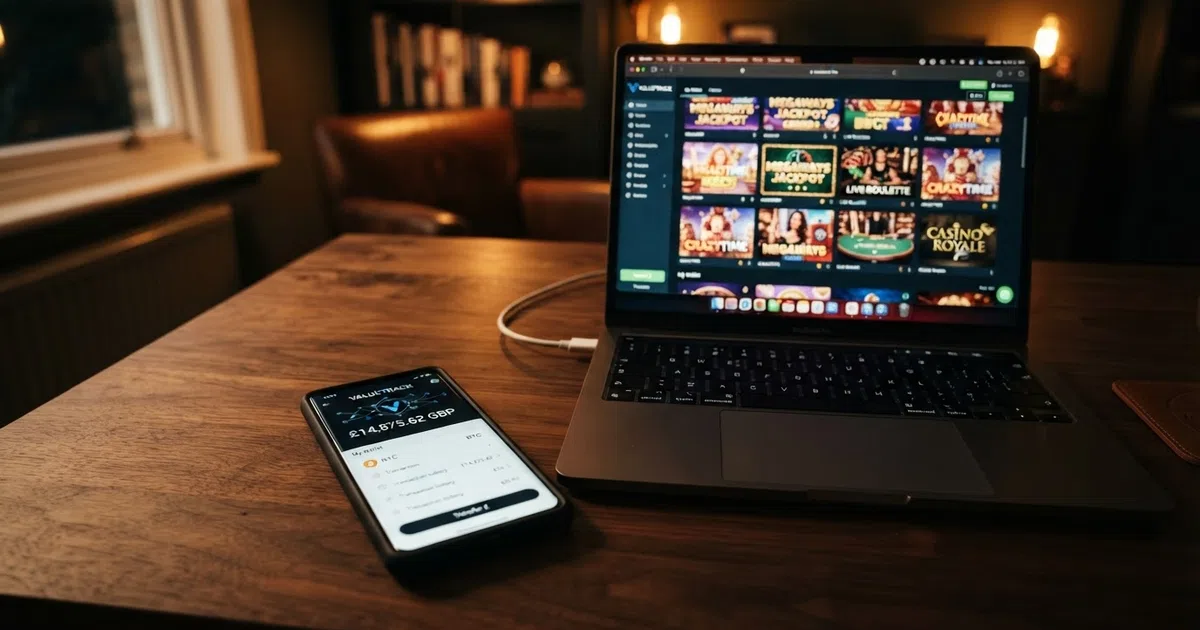
The fastest deposits in online gambling settle in under a second. A £2.50 credit card fee, charged at the counter by a UK-licensed casino, has no equivalent in a Solana transaction. Offshore crypto casinos market those numbers hard. They say little about the trade sitting behind them: no UK-licensed operator currently accepts Solana, every Solana-accepting site is licensed outside Britain, and the protections British players are used to (GAMSTOP, Commission complaints, independent adjudication, British consumer-law redress) stop at the border. This page sets out what those sites offer, what they cost, and what a UK player gives up to use them. The regulatory picture is a gap, not a closed door; a clearer one may open when the FCA’s crypto framework takes effect on 25 October 2027.
What a Solana Casino Is — and the UK Reality No Review Tells You
A Solana casino is an online gambling site that accepts deposits and pays out withdrawals in SOL, the native token of the Solana blockchain. That is the entire definition. Everything else is plumbing. A “casino” behind a “Solana” label is the same slot-and-table product found on any offshore site, with a Solana payment rail bolted to the cashier. The blockchain layer is what makes the rail fast and cheap; the games are licensed from the same studios that supply UK-licensed operators.
The transactional mechanics are unusually straightforward for an online casino. A player moves SOL from a self-custody wallet (Phantom, Solflare, or any wallet that handles the Solana network) to a deposit address published by the casino. The transaction confirms in roughly 400 milliseconds on average. Network fees sit below one US cent. The casino credits a playable balance, typically converted from SOL into a stable display currency (USDT, USDC, or a casino house unit) so that winnings and losses can be tracked without the screen flickering on every price tick. Withdrawals reverse the flow and settle in 2 to 15 minutes at most featured operators, depending on internal review rather than network speed.
The honest framing for a UK reader comes before the feature list. The UK Gambling Commission has not banned cryptocurrency payments, but has publicly stated it would be “challenging at the moment for an operator to show that they could accept crypto and still be compliant” with the LCCP, the Licence Conditions and Codes of Practice that govern every GB licensee. No Solana casino, and no other crypto casino, currently holds a GB operating licence. Every site a UK player can reach through a search engine for “casinos that accept Solana” is licensed in Curaçao, Anjouan, Costa Rica, or another offshore jurisdiction. The search results for this topic are dominated by global crypto-affiliate sites. None of the top-ranking pages is a UK-focused publication, and none of them surfaces the GB-licence gap first. A UK player reading the usual review pages could be forgiven for assuming a UK option exists. It does not, today.
How Solana Casino Payments Actually Work
A Solana casino payment is a regular blockchain transaction, with a casino as the recipient. The flow begins with a wallet. The most common choices for a UK player are Phantom and Solflare, both available as browser extensions and mobile apps. The wallet holds SOL, the native token, or SPL tokens (Solana Program Library tokens) — the most relevant being USDT on Solana, a dollar-pegged stablecoin that removes the volatility problem. The player opens the casino’s cashier page and copies the deposit address the casino publishes. The wallet then signs a transaction sending the chosen amount to that address. Confirmation arrives in well under a second. The casino’s backend sees the incoming transfer and credits the player’s account in the casino’s internal currency.
The two practical distinctions are between native SOL deposits and SPL stablecoin deposits, and between casino-side and network-side fees. Sending SOL exposes the player to SOL price movement between deposit and play; sending USDT removes that exposure at the cost of one extra token swap. Both use the same network, and both confirm in roughly the same time. The casino’s role in the flow is to detect the inbound transaction, verify it against its minimum deposit, and credit the balance. It does not hold the player’s private keys at any point. The player stays in custody of the funds until they are spent inside the casino, a structural difference from a UK-licensed site where the operator holds the deposit directly.
The Deposit Process: Wallet to Wager in Under a Second
A first SOL deposit from the UK takes four steps in practice. Set up a Solana wallet (Phantom is the most common starting point for a UK player because it is well-documented and supports the UK exchange route). Fund the wallet with SOL purchased on a UK-registered exchange that supports SOL withdrawals — the user moves SOL from the exchange to their personal wallet, retaining full self-custody. Open the chosen casino, create an account, and navigate to the cashier or deposit page. Copy the deposit address the casino provides, paste it into the wallet, enter the amount, and confirm. The transaction lands on the Solana network in about 400 milliseconds, network fees under one US cent, and the casino balance updates within a second of confirmation at most featured sites. The same flow works in reverse for withdrawals, with the casino’s processing window the only meaningful delay.
The same flow is shared across every competitor review page on this topic. The infrastructure does not vary by operator, only by the casino’s minimum deposit and which token it accepts at the cashier.
No, There Are No UK-Licensed Solana Casinos — Here Is Why
Zero. That is the count, and the reason is structural rather than a matter of policy choice. The UK Gambling Commission licenses operators, personnel, and software under the Gambling Act 2005, extended to remote gambling by the Gambling (Licensing and Advertising) Act 2014. A GB licence is compulsory at the point of consumption: any operator taking GB customers, wherever based, must hold one. The compliance obligations attached to that licence make Solana effectively impossible to satisfy today. The Commission’s own framing is that showing compliance with anti-money-laundering obligations, source-of-funds checks, and pre-deposit identity verification while accepting self-custodied crypto would be “challenging” under the LCCP. It is not a question of willingness; it is a question of whether the existing rulebook can be met.
The future is on the calendar but not imminent. The Financial Conduct Authority’s crypto regulatory framework, the Financial Services and Markets Act 2000 Cryptoassets Regulations 2026, is expected to take effect on 25 October 2027. The UKGC has signalled that the framework “changes the picture” for licensed-operator crypto payments. A licensed SOL casino in GB is, at the earliest, a 2028 proposition once the framework is in force and the Commission has drafted the rule changes that would flow from it. Until then, every Solana-accepting casino a UK player can register with is licensed in a jurisdiction whose protections do not map onto British consumer law.
The Real Pros and Cons of Gambling with SOL as a UK Player
The advantages are real and the costs are real, and they sit on different sides of the same offshore account. On the upside, deposits confirm in under a second, withdrawals clear in minutes, network fees are negligible, and no chargeback mechanism is hovering over the transaction. Self-custody means the player holds the SOL until the moment of deposit, which is a structural protection the UK banking rails do not offer. The speed advantage is not theoretical: it is the difference between a same-day withdrawal and a 1-to-5-business-day bank transfer. On a £500 cashout at a UK-licensed site, the time difference is days, not minutes.
The costs are the ones the marketing page does not put on the front. The player loses GAMSTOP coverage, the Commission complaints route, access to an alternative dispute resolution (ADR) adjudicator, and the practical ability to seek British consumer redress if funds are withheld. None of these are abstract. Self-excluded players face no block on a Solana casino, because none of them are integrated with the national scheme. A dispute over a bonus term or a delayed withdrawal is handled by the operator alone, with no independent review available. Two other risks sit on the technology side: SOL price volatility between deposit and withdrawal (a real exposure if the casino credits a non-stablecoin balance) and the Solana network’s outage history, which has been material in past years and remains a single point of failure for the rail itself.
Solana Casino Payments: Speed the Licensed Market Cannot Match
The headline advantages of a Solana casino are mechanical, and the mechanical facts are unambiguous. Deposits confirm faster than a UK bank transfer, and faster than a debit card deposit once the card processor’s fraud screen runs. Withdrawals clear faster than anything the UK-licensed market offers. The numbers carry no marketing language, and that is the point. A 2-to-15-minute withdrawal at an offshore site is not a competitive edge against the UK system; it is a different system, with a different rulebook behind it.
Depositing with SOL — Instant and Nearly Free
A SOL deposit settles in about 400 milliseconds. A debit card deposit at a GB-licensed casino takes seconds to authorise, but the underlying flow is a 3-D Secure check, an acquirer authorisation, and a settlement window — and, since 14 April 2020, credit cards are not an option at GB-licensed operators at all. A bank transfer takes longer. The SOL network fee is under one US cent; the card fee, where the player bears it, runs at 1% to 3% depending on issuer. The casino credits the balance in its own unit, typically a USD-pegged figure, after converting the SOL at its published rate. The exchange-rate spread on that conversion is the closest thing to a hidden cost on the deposit side, and the player can sidestep it entirely by depositing USDT on Solana rather than SOL itself, since the stablecoin’s price does not move between the wallet and the casino.
Withdrawal Speed — Minutes, Not the Usual Days
The 2-to-15-minute range at top offshore casinos comes from operator processing, not network speed. The blockchain leg of a withdrawal is the same second-or-two confirmation as a deposit; what adds the rest of the time is the casino’s internal review. Manual approval queues, KYC triggers, and large-withdrawal checks can stretch a withdrawal toward the 15-minute end, while a small withdrawal from a verified account at a fast operator can land in two. The UK benchmark is 1 to 5 business days for a bank transfer, and 0 to 24 hours for an e-wallet once the operator releases the funds. The UK also banned reverse withdrawals from 31 October 2021, so a UK player cannot cancel a withdrawal once it is in motion; the offshore equivalent has no such rule, and the player should read the cashier terms to find out whether the operator reserves the right to reverse on its own side.
Deposit Minimums — What You Need to Start Playing
The minimum deposits research carries for the featured operators are: CoinCasino $10, BetPanda €10 equivalent, JustCasino.io $20, and Casinopunkz 0.1 μBTC (about €1). At representative SOL prices, that puts the practical entry to most featured sites in the £8 to £17 range. The minimum for Stake, BC.Game, Goated, Wild.io, Cryptorino, and Betplay.io is not specified in current research, and a player should check the cashier page before depositing. The UK-licensed benchmark is £5 to £10 via debit card; offshore minimums in this set are roughly comparable on the entry tier, with Casinopunkz’s μBTC minimum the lowest by a wide margin.
Fees — What You Pay and Where You Do Not
The Solana network fee is below one US cent and is not the cost driver at any featured operator. Casino-side deposit fees are not specified in research, and the standard offshore marketing line is zero deposit fees — that is a claim to verify at the cashier, not an assumption to take into the deposit. Casino-side withdrawal fees are also not specified in research across the featured set, which is itself a signal: a player should check the terms page for each operator before committing funds, since withdrawal fees are the line item most likely to vary. The hidden cost is the exchange-rate spread on the casino’s SOL-to-USD conversion; it is usually small but not always zero, and the cleanest workaround is to deposit and withdraw in USDT on Solana, where the spread tightens because the token is pegged.
What If You Cannot or Will Not Use SOL? Casino Payment Alternatives
Every featured operator accepts other major cryptocurrencies alongside SOL: BTC, ETH, USDT, and at most sites a range of smaller-cap coins. The same offshore cashier typically also offers a fiat on-ramp via card or e-wallet, but that on-ramp can be the trigger for higher KYC, and some UK card issuers decline transactions to offshore gambling merchants. The most useful alternative is USDT on Solana itself, which keeps the speed and cost of the SOL rail while removing the volatility of holding SOL between sessions. For a player who does not want to hold crypto at all, the GB-licensed alternative is straightforward: deposit GBP via debit card or e-wallet at a UKGC casino. The payment is slower, the bonus is smaller, and the game-design rules are tighter. In return, the player gets GAMSTOP coverage, ADR access, and a complaints route that ends in a British adjudicator.
The 10 Solana Casinos UK Players Use — Compared Side by Side
| Operator | Licence & Jurisdiction | Game Count | Welcome Bonus |
|---|---|---|---|
| Stake | Curaçao GCB (LOK) + Anjouan | — | 200% up to $2,000 (via partner links) |
| BC.Game | Anjouan (ALSI-202410011-FI1) | 80+ provider studios | Up to 360% across 4 deposits + 400 FS |
| CoinCasino | Anjouan offshore | — | 200% up to $30,000 + 50 Super Spins |
| BetPanda | Anjouan (ALSI-202408063-FB) + Costa Rica | 4,000+ | 100% up to 1 BTC |
| Betplay.io | Costa Rica | 2,000+ | 100% up to 5,000 USDC |
| JustCasino.io | Anjouan offshore | 10,000+ | Up to $5,000 across 5 deposits + 400 FS |
| Goated | Anjouan (ALSI-202411063-FI2) | 1,200+ | — |
| Wild.io | Anjouan offshore | 8,500+ | — |
| Cryptorino | Curaçao offshore | 10,000+ | — |
| Casinopunkz | Offshore (operator: SBM S.R.L.) | — | — |
The table is honest about what is known and what is not. Four operators carry no research-verified welcome bonus figure: Goated, Wild.io, Cryptorino, and Casinopunkz. Three carry no research-verified game-count breakdown: Stake, CoinCasino, and Casinopunkz. The picture across the set is a mix of large established brands, a small number of providers-and-bonuses-rich entrants, and a long tail where only the licence and a high-level game count are publicly verifiable. The set is also entirely offshore, which means the entire comparison sits outside the protections British players get at a UKGC casino. There is no “best” Solana casino for a UK player in the way there is a best UKGC casino; the relevant choice is whether to play offshore at all, and if so, which operator’s terms a player finds most defensible.
Stake.com
Stake.com is the largest crypto casino brand by user count and wagered volume, and it is now fully offshore. The company surrendered its GB licence in March 2025 following enforcement action against its white-label partner TGP Europe, and the Stake.uk.com site shut down by 11 March 2025. It now operates under a Curaçao Gaming Control Board licence under the LOK framework, with a secondary Anjouan licence, and there is no GB-licensed replacement on the horizon. The game catalogue is broad: Pragmatic Play, Evolution, Hacksaw, Nolimit City, and Push Gaming supply the third-party content, while Stake’s own originals handle the crash and dice formats. The standard welcome offer is not a traditional match bonus; the headline 200% up to $2,000 figure appears via specific partner links, and the operator’s regular focus is on rakeback, daily races ($100K prize pool), and weekly raffles ($75K). Wagering on the bonus side is 40x on deposit plus bonus.
For a UK player used to a UK-licensed site’s deposit flow, Stake is the brand to compare everything else against. The game library and liquidity are real, the licence jurisdiction is verifiable, and the brand has more public operating history than any other name on this page. The trade-off is exactly the one this whole page describes: speed and game choice, paid for in protections British players otherwise have.
BC.Game
BC.Game’s profile is bonus-heavy. The headline offer runs up to 360% across four deposits, with a 180% first-deposit match and 400 free spins capped at $10 per batch. Wagering is 40x to 45x on deposit plus bonus, depending on the deposit tier. The game library draws on 80+ provider studios, with Evolution and Pragmatic Play at the live dealer end and BC’s own originals at the crash and dice end. The licence is Anjouan, under number ALSI-202410011-FI1. The relevant fact for a UK player is that the UKGC revoked BC.Game’s GB licence in December 2024; the operator is now Anjouan-only, and the UKGC register no longer lists it.
A UK player drawn to BC.Game’s bonus scale should look at the wagering multiplier first and the free-spin cap second. A 40x-to-45x turnover on deposit plus bonus is roughly four times the UK hard cap, and the $10 free-spin batch cap is the line that decides whether the 400 free spins are a meaningful offer or a marketing number.
CoinCasino
CoinCasino’s headline is a 200% match up to $30,000 plus 50 Super Spins, and the terms that follow are where the offer’s shape becomes clear. Wagering is 60x on the bonus amount only (not on deposit plus bonus), 35x on free-spin winnings, with a 14-day validity and the bonus released in 10% increments as the wagering clears. Minimum deposit is $10. The game library is well-stocked: Pragmatic Play, Evolution, Hacksaw, Nolimit City, Playson, 3 Oaks, Spinomenal, and Gamzix are all listed. The licence is Anjouan, and CoinCasino does not hold a GB licence.
The structural catches are the 10% incremental release and the 14-day clock. A $200 bonus on a $100 deposit at 60x turnover means $12,000 of wagering; with the bonus released in 10% slices, the player effectively needs to clear a slice’s full wagering before the next slice’s money is playable, which is the design that turns a $30,000 headline into a 14-day grind. The arithmetic on that grind is the calculation the page runs in the bonus section below.
BetPanda
BetPanda is a 1 BTC match at 100% with 80x wagering on the deposit amount and a 7-day expiry window. Minimum deposit is the €10 equivalent. The catalogue runs to 4,000+ games with Evolution and Pragmatic Play Live at the live dealer end. The corporate structure is Star Bright Media S.R.L., a Costa Rica-registered company (registration 3-102-880000) operating under an Anjouan gaming licence (ALSI-202408063-FB). UK access is restricted in practice, and BetPanda holds no gaming licence in any regulated jurisdiction.
For a UK player, the 80x on deposit with a 7-day window is the figure to weigh. 80x on a €200 deposit means €16,000 of turnover in seven days, which is a workload the bonus’s headline number does not advertise.
Betplay.io
Betplay.io runs a 100% match up to 5,000 USDC at 80x wagering on the deposit, with the bonus credited only after the wagering is complete and a 30-day validity window. An alternative tier offers 100% up to $500 at 35x. The lower tier also includes 50 free spins. The library is 2,000+ games. The licence is Costa Rica; Betplay.io does not hold a GB licence.
The catch sits in the phrase “bonus credited after wagering is complete.” A player can see the wagering progress on the deposit, but the bonus is not available to withdraw until the full turnover is hit. The 30-day window is more generous than CoinCasino’s 14 days or BetPanda’s 7, but the structure of an uncredited-until-cleared bonus is a real difference from a standard match, and a player should read the term before assuming a £500 bonus is £500 of playable balance on day one.
JustCasino.io
JustCasino.io’s pitch is volume: 10,000+ games, the largest library in the featured set, with a welcome package of up to $5,000 across five deposits plus 400 free spins distributed at 20 per day. Minimum deposit is $20. The licence is Anjouan offshore. The wagering requirement is not specified in current research, which is itself a signal: a player should check the bonus terms page before depositing.
The honest read is that the headline numbers are large and the verification of how they convert into withdrawable balance is not yet in evidence. A 20-per-day distribution of the free spins is the kind of structure that requires a multi-day login cadence to clear, and the wagering multiple is the one that decides whether the offer is worth chasing.
Goated
Goated is the only Solana-native casino in the featured set. It launched in June 2024, is operated by Mirai Kaze Ltd, and holds an Anjouan licence under number ALSI-202411063-FI2. The game library is 1,200+ titles across slots, live dealer, and a sportsbook, and the operator reports over $1 billion in wagered volume since launch. The “Solana-native” label means the casino is built on Solana infrastructure, not a multi-chain casino that added SOL as a payment option after the fact. The welcome bonus, free-spin offer, and minimum deposit are not specified in current research; the wagering multiplier is also not specified. A player considering Goated should check the promotions page for the current welcome offer.
The pitch is integration with the SOL ecosystem rather than game-library size, and the public wagered-volume figure is a useful scale signal. The gap on bonus terms is a gap; this page does not invent figures to fill it.
Wild.io
Wild.io’s profile is catalogue-led: 8,500+ games, 8,000+ slots, 580+ live dealer tables. The licence is Anjouan offshore. Welcome bonus, wagering, free spins, and minimum deposit are not specified in current research. The site is a high-volume game library on an offshore licence, with the bonus and terms layer to be confirmed at the cashier.
For a UK player, the appeal is the live dealer count; the gap is the absence of research-verified terms on the welcome offer. As elsewhere in this set, the page leaves the gap as a gap rather than filling it with a number no source carries.
Cryptorino
Cryptorino runs 10,000+ games under a Curaçao offshore licence. Welcome bonus, free spins, wagering, game providers, and minimum deposit are not specified in current research. The site is a volume play on a Curaçao licence, with the terms layer to be confirmed at the cashier.
Casinopunkz
Casinopunkz is operated by SBM S.R.L., is not integrated with GamStop, and does not hold a UKGC licence. The minimum deposit is 0.1 μBTC, roughly €1, the lowest entry in the set. Game count, providers, welcome bonus, free spins, and wagering are not specified in current research. The page’s specific offshore jurisdiction for Casinopunkz is not documented in the sources reviewed.
The honest read is that Casinopunkz is a low-minimum, offshore, no-GamStop option. The low entry makes it accessible, and the absence of a research-verified welcome offer and game count is the cost of that accessibility.
Why Your 2026 Solana Casino Bonus Is Bigger — and Harder to Clear
Offshore SOL casinos advertise welcome packages in figures UK-licensed operators have never offered: 200% to 360% match bonuses, $30,000 ceilings, 1 BTC caps. They exist because the wagering requirements are calibrated to keep most of the bonus value in the casino’s hands. The wagering reality is the difference between a UK bonus and an offshore one. The GB hard cap is 10x, in force from 19 December 2025. The featured offshore set runs 40x to 80x, with the highest number on the shortest clock. A 200% match at 60x on bonus (CoinCasino), a 1 BTC match at 80x on deposit (BetPanda), and a 360% spread at 40x to 45x on deposit plus bonus (BC.Game) are not small differences from 10x; they are an order of magnitude apart, and they are the reason the headlines are large.
The wagering figures sit on top of structural catches. Mixed-product promotional offers (the bet on football, get free spins structure) are banned at GB licensees; offshore casinos still run them. Free spins at SOL casinos are typically capped per batch (BC.Game’s $10 per-batch cap is the cleanest example), and CoinCasino’s 50 Super Spins carry their own 35x turnover. No-wagering offers, increasingly common in the UK market, are nearly absent across the featured set. The simplest way to compare bonus value across operators with such different terms is to look at the wagering multiplier first, the validity window second, the maximum cashout third, and the free-spin cap last, in that order.
Welcome Bonuses at Solana Casinos — Big Numbers, Big Strings
The welcome offers the featured operators advertise run from 100% to 360% match, with ceilings from $500 to $30,000 and free-spin packages from zero to 400. The structural catches sit underneath. CoinCasino’s 200% up to $30,000 is the highest headline, with 60x on bonus and a 14-day clock. BC.Game’s 360% across four deposits is the most generous percentage, with 40x to 45x on deposit plus bonus. BetPanda’s 1 BTC ceiling is the highest by absolute value at representative BTC prices, with 80x on deposit and a 7-day window. Betplay.io’s 5,000 USDC ceiling with bonus credited only after wagering is the most structural catch, paired with a 30-day window. Stake’s 200% up to $2,000 figure is partner-link-exclusive; the operator’s standard orientation is rakeback and ongoing promos rather than a traditional match. JustCasino.io’s $5,000 across five deposits is a moderate number with an unusually large free-spin component (400 at 20 per day). For Goated, Wild.io, Cryptorino, and Casinopunkz, the welcome offer is not specified in current research, and a player should check the promotions page at the casino before depositing.
Wagering Requirements — 40x to 80x vs the UK’s 10x Cap
The wagering range across the featured operators where research verifies the figure: Stake 40x on deposit plus bonus, BC.Game 40x to 45x on deposit plus bonus, CoinCasino 60x on bonus, BetPanda 80x on deposit, Betplay.io 80x on deposit (35x on the alternative tier). The UK benchmark is 10x on deposit plus bonus, in force from 19 December 2025, hard cap with no exceptions. The difference is structural. A £200 bonus at 10x requires £2,000 of turnover. The same £200 bonus at 60x on bonus (CoinCasino) requires £12,000. At 80x on deposit (BetPanda), a £200 deposit carries £16,000 of required turnover. The UK cap is a regulatory floor on what is fair; the offshore numbers are a marketing line, because the larger the multiple, the larger the bonus the casino can advertise, and the larger the share of the bonus that never clears in practice. For JustCasino.io, Goated, Wild.io, Cryptorino, and Casinopunkz, the wagering requirement is not specified in research, and the same gap-rule applies: check the terms before depositing.
No-Wagering Offers and Bonus Codes — The Exception, Not the Rule
No-wagering offers are nearly absent from the featured set. The UK market has moved toward no-wagering welcome offers over the past two years; offshore crypto casinos have not, and the wagering multiples on this page (40x, 45x, 60x, 80x) are the reason. A bonus code is a marketing token, not a better bonus; the underlying terms are the same whether a player enters a code at the cashier or not, and the page’s view is that codes change too frequently to track reliably. A player who wants a current offer should check the promotions page at the casino in question. The structural truth of the offshore bonus market is that wagering requirements of 40x to 80x are the rule, and the absence of a no-wagering offer is the default rather than the exception.
What You Can Play with SOL — Slots, Live Dealer and a Lot More
The game libraries at the featured operators run from 1,200+ at Goated to 10,000+ at JustCasino.io and Cryptorino. The studios behind them are the same names that supply UK-licensed operators: Pragmatic Play, Evolution, Hacksaw, Nolimit City, Push Gaming, Playson, 3 Oaks, Spinomenal, Gamzix. What changes between a UK-licensed site and an offshore SOL casino is not the game catalogue but the rules around the games. UKGC rules cap slot stakes at £5 for players 25 and over and £2 for players 18 to 24, set a 2.5-second minimum on spin speed, ban auto-play, ban features that speed play, ban imagery that disguises a loss as a win, and permanently ban reverse withdrawals. None of those rules apply at an offshore casino. The game math is the same; the regulatory wrapper around it is not.
Solana Slots — Thousands of Titles, None of the UK’s Restrictions
The slot libraries at Wild.io (8,000+), JustCasino.io (10,000+), and Cryptorino (10,000+) are the largest in the set, with Goated at 1,200+ as the smallest. The provider lists where research carries them include Pragmatic Play, Hacksaw, Nolimit City, Push Gaming, Playson, 3 Oaks, Spinomenal, and Gamzix. The UK-licensed equivalents of these studios supply both markets, and the RTP setting per operator may differ, but the game mechanics do not. What a UK player gives up offshore is the £5/£2 stake cap, the 2.5-second spin minimum, the auto-play ban, and the ban on losses disguised as wins. None of those rules apply at an offshore casino, and the experience on a £5-per-spin slot with no spin-speed floor is genuinely different from a UK-regulated slot of the same name. Solana-native games add a provably fair layer: the player can verify each spin’s outcome against an on-chain hash, which is a transparency feature UK-licensed RNG certification does not provide to the player directly.
Live Dealer Tables — Real Dealers, Crypto Chips
Live dealer is the cleanest overlap between a UK-licensed casino and an offshore SOL casino. Evolution and Pragmatic Play Live are the dominant suppliers across the set: Evolution is listed at Stake, BC.Game, CoinCasino, and BetPanda; Pragmatic Play Live is listed at BetPanda; Wild.io carries 580+ live dealer tables. The stream, the dealer, the game rules are the same as the UK experience. The difference is on the regulatory side. A live-game dispute at a UK-licensed casino can go to the UKGC complaints route and then to ADR; at an offshore casino, the operator is the only adjudicator, and the player has no independent review of a game outcome or a settlement error. The chips are denominated in the casino’s internal unit, but the rail is the same SOL network on the way in and out.
Crash Games and Table Games — Beyond the Reels and the Live Stream
The crypto-native game format is the crash game: a multiplier that climbs from 1.00x upward, the player cashing out before the multiplier “crashes.” Stake Originals and BC Originals are the proprietary crash, dice, and limbo formats at the two largest brands. The provably fair structure is the same: each round’s outcome is hashed before the bet, and the player can verify it after. Table games (digital roulette, blackjack, baccarat) are present alongside the live dealer versions at most operators, with the RNG versions using a separate random-number generator. Sportsbook is available at Stake and Goated, which adds a sports betting product to the casino suite. None of these formats carry UKGC RTS compliance, because the operators are not under UKGC supervision; what they offer instead is provably fair verification at the protocol layer, which is a different kind of proof, not a weaker one.
The Studios Behind the Games — Who Powers SOL Casinos
The same studios supply both markets. Pragmatic Play, Evolution, Hacksaw, Nolimit City, and Push Gaming all hold UKGC supplier licences, and they all supply offshore operators alongside the UK-licensed ones. A UKGC supplier licence is separate from an operator licence: it covers the studio and its games, not the casino that hosts them. The game math at a Pragmatic Play slot is the same whether the casino is licensed in Britain, Curaçao, or Anjouan. What varies is the RTP setting per operator (a studio can publish a slot at 96.5%, and an operator can opt for 94% if the licence jurisdiction permits), and the rules around the game (stake caps, spin speed, auto-play). For operators where research carries a provider list (Stake, BC.Game, CoinCasino, BetPanda, Goated, Wild.io), the studios are named; for Betplay.io, JustCasino.io, Cryptorino, and Casinopunkz, the provider list is not in current research, and a player who cares about a specific studio should check the game lobby at the casino.
Playing SOL Casinos on Your Phone — No App Store Needed
Every featured Solana casino works in a mobile browser. None of them has a confirmed dedicated iOS or Android app in the sources reviewed, which is the rule rather than the exception in the crypto-casino space. Apple and Google restrict real-money gambling apps to operators who hold a local licence in the player’s jurisdiction, and offshore operators do not clear that bar. The mobile experience is the responsive website, and the responsive website is the same product as the desktop experience, with a smaller screen. The deposit flow on mobile is the same two-app tap: open the wallet app (Phantom or Solflare), copy the casino deposit address, send SOL, switch to the browser tab, and watch the balance credit in under a second. The advantage on mobile is the integration between the wallet app and the browser: on a desktop, the flow is copy-paste; on mobile, it can be a QR-code scan or a tap from a wallet dApp browser. The speed is the same; the friction is lower on mobile.
Mobile Browser — The Standard (and Usually the Only) Way to Play
The mobile experience at the featured operators is a responsive site, not a native app. The full game library, the deposit flow, the withdrawal flow, and the live dealer tables all run in the mobile browser. What is missing is the native-app feature set: no push notifications for new bonuses, no biometric login, no saved payment method beyond the wallet integration. The reason is straightforward: a real-money gambling app requires a local licence, and an offshore operator does not have one. The GB-licensed equivalent offers native apps on the App Store and Google Play because the operator holds a GB licence; the offshore route has no equivalent on-ramp to the app stores. A UK player who wants a native-app experience at a casino that accepts SOL will not find one in the current set.
Depositing via Phone — Wallet to Casino in Two Taps
The mobile deposit flow is a two-app sequence. Open Phantom or Solflare, copy the casino’s deposit address (or scan the QR code the casino publishes on the cashier page), enter the amount, and confirm. The SOL transaction confirms in under a second, network fee below one cent, and the casino balance updates within the same second at most operators. The mobile wallet’s dApp browser (a built-in browser inside the wallet app) is a one-tab alternative to the two-app flow: the casino loads inside the wallet’s browser, the wallet signs the transaction in the same window, and the player does not need to switch apps at all. The speed is the same, the friction is the same, and the experience is the same on a £200 deposit as on a £2,000 one. The only meaningful mobile-specific consideration is the screen size, and a responsive site is built for it.
New Solana Casinos in 2026 — What Is Fresh and What to Watch For
The newest launch in the featured set is Goated, a Solana-native casino that launched in June 2024 and reports over $1 billion in wagered volume since. Beyond Goated, the sources reviewed do not carry launch dates for the other nine operators; most offshore operators do not publish a launch date, and the absence of a date in research is a gap rather than a finding. The newer entrants in the broader SOL casino market tend to compete on three things: larger welcome bonuses (the headline-grabber), higher game counts (JustCasino.io and Cryptorino at 10,000+), and Solana-native features that older multi-chain casinos added as an afterthought (Goated’s full-stack Solana integration). The trade-off is the protective moat of a long track record. A new casino has less community review history, fewer dispute precedents, and no multi-year payout track record. The features that attract a new player (a big bonus, a huge library, a native SOL experience) are the same features that should make a careful player slow down.
What a New Solana Casino Offers That an Established One Does Not
The competitive plays at newer operators are scale and integration. JustCasino.io and Cryptorino carry 10,000+ games; Goated is built on Solana infrastructure rather than as a SOL payment option bolted onto a multi-chain cashier. The wagered volume at Goated ($1B+ in roughly two years) is a useful scale signal, and the Anjouan licence is verifiable on the regulator’s register. The risk of being an early depositor is the absence of long-run data. No established track record means no community-aggregated history of payout speed, no multi-year dispute record, and no third-party audit of the operator’s stated game count or bonus terms. A player who deposits early at a new SOL casino is trading the protective moat of a brand like Stake for the upside of a larger welcome offer, and the page’s view is that the trade is real and the protection is genuinely absent.
How to Assess a New Solana Casino Before You Deposit
A qualitative checklist for an unproven operator: licence verification first (look up the licence number on the regulator’s website — Anjouan, Curaçao GCB, and Costa Rica each publish a public register); provider logos second (Pragmatic Play and Evolution do not supply unlicensed operators, and their presence is a minimum-standards signal, not a guarantee); community review third (Reddit r/cryptocasino, Trustpilot, and Bitcointalk are the standard scanning grounds, with unresolved withdrawal complaints the most useful signal); a small test deposit fourth (use the minimum-deposit tier, withdraw a small amount, and verify the operator’s stated payout speed before committing larger funds). The red flags are the same as the rest of the offshore space: no published licence number, no provider names, no terms page, no responsive support, a domain registered within the last twelve months, and a bonus whose headline number has no wagering multiple behind it.
The Legal Tightrope: UK Law, Offshore Licences and Your SOL
Gambling with SOL from the UK is not a criminal offence for the player. The enforcement model targets operators, advertisers, and intermediaries, not the people placing the bets. Section 33 of the Gambling Act 2005 carries up to 51 weeks’ imprisonment, an unlimited fine, or both for an operator providing facilities without a GB licence; no equivalent penalty applies to the player on the other side of the screen. The practical consequence of that legal position is that the UK player is not breaking the law by using an offshore SOL casino, but is also not protected by UK law if the casino fails to pay, voids a bonus, or closes the account. The protections British players are used to (GAMSTOP coverage, UKGC complaints route, ADR access, British consumer-law redress) are tied to a GB licence, and no offshore operator holds one.
Why No GB-Licensed Casino Accepts Solana — and What Could Change
The UKGC’s position is that cryptocurrency is not banned, but the compliance burden under the existing LCCP makes it effectively impossible for a GB licensee to accept it today. The Commission’s own words are that it would be “challenging at the moment for an operator to show that they could accept crypto and still be compliant.” The compliance obligations in question are not abstract: anti-money-laundering controls, source-of-funds checks, and pre-deposit identity verification are all harder to demonstrate with self-custodied crypto than with a debit card tied to a UK bank account. The future is on the calendar. The FCA’s crypto framework, the Financial Services and Markets Act 2000 Cryptoassets Regulations 2026, is expected to take effect on 25 October 2027, and the UKGC has signalled that it “changes the picture” for licensed-operator crypto payments. A licensed SOL casino in GB is, at the earliest, a 2028 proposition, once the framework is in force and the Commission has drafted the rule changes that would flow from it.
Offshore Licences Explained — Curaçao, Anjouan, Costa Rica
| Jurisdiction | Regulator | Operators Holding It | Player-Protection Framework | UK Recognition |
|---|---|---|---|---|
| Curaçao | Gaming Control Board (GCB) — LOK framework | Stake, Cryptorino | Operator-level complaints only; no statutory ADR; no UK consumer-law alignment | Not a substitute for a GB licence |
| Anjouan | Anjouan Gaming Authority (Comoros) | BC.Game, CoinCasino, BetPanda, JustCasino.io, Goated, Wild.io | Operator-level complaints only; no statutory ADR; no UK consumer-law alignment | Not a substitute for a GB licence |
| Costa Rica | No dedicated gaming regulator (data-processing model) | Betplay.io, Casinopunkz (SBM S.R.L.) | Effectively no gaming-specific consumer protection; operator sets its own terms | Not a substitute for a GB licence |
The three jurisdictions are not equivalent. Curaçao’s GCB is the oldest and most established framework, with a new LOK (Licence Online for Kasino) regime that took effect in recent years and is the most common crypto-casino jurisdiction. Anjouan (officially the Union of the Comoros) is a newer framework that has grown quickly among crypto casinos, with verification of licence holders on the regulator’s register. Costa Rica does not have a dedicated gaming regulator at all; the model is a data-processing licence, and the absence of a gaming-specific framework is itself the relevant fact for a UK player. None of the three substitute for a GB licence: no GAMSTOP integration, no UKGC complaints route, no independent ADR, no British consumer redress, no mandatory affordability checks, no stake caps, no spin-speed rules. The protections a UK player is used to are tied to the GB licence, and no offshore licence provides them.
GAMSTOP and Solana — The Self-Exclusion Gap
GAMSTOP is mandatory for every GB-licensed online operator, has been since 31 March 2020, and offers exclusion periods of six months, one year, five years, or five years with auto-renewal. It cannot be cancelled early, and an excluded player faces a hard block at every GB-licensed casino, bingo site, and sportsbook. None of the SOL casinos accessible to a UK player are integrated with GAMSTOP, because none of them hold a GB licence. An excluded player can register at a SOL casino, deposit SOL, and play, with no block from the national scheme. This is a risk, not a feature. A player who has self-excluded has done so for a reason, and the offshore SOL casino route bypasses the entire UK self-exclusion infrastructure.
What a UK Player Loses When They Play Offshore
A GB licence is a package of protections. GAMSTOP coverage is one. The UKGC complaints route, ending in an independent ADR adjudicator, is another. Mandatory affordability checks (when staged rollout begins), a £150 financial-vulnerability-check threshold (in force from 28 February 2025), stake caps on slots (£5 for 25+, £2 for 18-24), game-design rules (no auto-play, 2.5-second spin minimum, no losses disguised as wins, no reverse withdrawals), and a deposit-limit prompt at first deposit (in force from 31 October 2025) are the rest. None of these apply at an offshore SOL casino. What the player gets instead is operator-level complaints handling, no independent review of a dispute, no statutory affordability assessment, no stake caps, no spin-speed floor, no mandatory limit-prompt. The financial vulnerability check is the sharpest single loss: at a GB-licensed casino, a player who has hit the £150 net-deposit threshold in a rolling 30 days will be subject to a public-data check (CCJs, IVAs, DROs, bankruptcy); at an offshore casino, no such check exists.
How to Verify a SOL Casino Is Legitimate — Even Without a GB Licence
A qualitative checklist for an offshore operator: licence verification (look up the licence number on the regulator’s website — Anjouan, Curaçao GCB, and Costa Rica each publish a public register of licence holders); provider logos (Pragmatic Play and Evolution do not supply unlicensed operators, and their presence is a minimum-standards signal, not a guarantee); community review scanning (Reddit r/cryptocasino, Trustpilot, and Bitcointalk are the standard grounds, with unresolved withdrawal complaints the most useful signal); a terms-and-conditions audit (wagering, max cashout, withdrawal limits, and KYC trigger clauses before depositing); a small test withdrawal (verify the operator’s stated payout speed with the minimum tier before committing larger funds). The red flags are consistent: no published licence number, no provider names, no terms page, no responsive support, a domain registered within the last twelve months, and a bonus headline that has no wagering multiple behind it. The UKGC’s enforcement model (447,778 URLs referred for delisting between April 2024 and June 2025, with 287,961 removed) is a useful background signal of which operators the regulator considers credible, but it is an enforcement signal, not a safety endorsement.
The FCA Crypto Framework — What Changes for SOL Gambling in 2027
The FCA’s crypto regulatory framework, the Financial Services and Markets Act 2000 Cryptoassets Regulations 2026, is a comprehensive piece of crypto regulation covering exchanges, custody, stablecoins, and payment services. It is expected to take effect on 25 October 2027, and the UKGC has signalled that the framework “changes the picture” for licensed-operator crypto payments. What could realistically happen is that GB-licensed casinos may be permitted to accept SOL and other crypto, subject to new compliance requirements yet to be drafted. The timeline is late 2027 for the framework, with UKGC rule changes to follow, and a licensed SOL casino in GB is, at the earliest, a 2028 proposition. The current state is not a prohibition; it is a compliance gap, and the gap may close in the next two years.
Staying in Control When the UK’s Usual Safeguards Are Absent
GB-licensed casinos must provide a layer of responsible-gambling tools: a deposit-limit prompt before first deposit, reality checks, time-outs, self-exclusion via GAMSTOP, and a financial-vulnerability check at the £150 rolling-30-day threshold. None of these are mandatory at an offshore SOL casino. Some offshore operators offer voluntary deposit limits, session timers, and self-exclusion, but the design and enforcement of those tools is at the operator’s discretion, and the cross-operator reach of GAMSTOP is absent by definition. The UK help resources, by contrast, do not depend on which casino a player used. GamCare, the National Gambling Support Network, NHS gambling-harm clinics, Gamblers Anonymous, and GamLearn are free, confidential, and available regardless of where the gambling happened. The prevalence data behind those services is the reason they exist: 0.5% of English adults experience problem gambling, 3.8% are at elevated risk, an estimated 7% of the British population is negatively affected by someone else’s gambling, and GamCare made 996 treatment referrals in January 2026 alone, a 48% year-on-year increase.
Deposit Limits, Session Limits and Reality Checks — What Offshore Casinos Offer vs What the UK Requires
The UK mandatory framework has two parts in force in 2026. A deposit-limit prompt before the first deposit, in force from 31 October 2025, with decreases immediate and increases subject to a delay. A financial-vulnerability check at the £150 net-deposit threshold in a rolling 30 days, in force from 28 February 2025, using publicly available data only. Offshore casinos may offer voluntary deposit-limit tools, session timers, and reality checks, but none of these are required, and the player should treat the presence or absence of any one of them as a feature, not a given. The practical advice is to set a deposit limit in the casino’s own tool if the casino provides one, and to set a parallel limit in the wallet by only transferring the SOL the player intends to spend. The financial-vulnerability check at a GB-licensed casino is a regulator-mandated tripwire; at an offshore casino, the equivalent is whatever the player builds for themselves.
Self-Exclusion Beyond GAMSTOP — What Works at Offshore Casinos
GAMSTOP is a national scheme; it covers GB-licensed sites only. An excluded player faces no block at any of the SOL casinos on this page. Operator-level self-exclusion is the offshore equivalent, and most offshore casinos offer an account-closure or self-exclusion option, but the scope is per-casino rather than cross-operator, and the enforcement depends entirely on the operator. The wallet strategy is a partial workaround: moving SOL out of the spending wallet into a cold-storage address adds friction between the impulse and the action, but it is friction, not a block. None of these substitute for GAMSTOP, and the honest framing is harm reduction rather than equivalent protection. A player who has self-excluded and is reading this page is the player for whom the offshore SOL casino route is the most dangerous option on the table, and the page states that plainly.
Where to Get Help — UK Resources That Work Regardless of Where You Play
The National Gambling Helpline (run by GamCare) is 0808 8020 133, free, 24/7, and confidential. GamCare made 996 referrals to treatment and peer-based support services in January 2026, up 48% year-on-year. The National Gambling Support Network, funded by GambleAware, treated 11,960 clients between April 2024 and March 2025, an 11% year-on-year increase. NHS gambling-harm clinics are available in England, Scotland, and Wales, with GP referral or self-referral. Gamblers Anonymous and GamLearn (the Gambling Lived Experience and Recovery Network) are the peer-support routes. The NHS and GamCare offer online self-tests for problem gambling. The prevalence context behind these services is real: 0.5% of English adults experience problem gambling (around 593,000 people in Great Britain), 3.8% are at elevated risk, and 7% of the British population is negatively affected by someone else’s gambling. The Health Survey for England 2024 found 5% of adults had a PGSI score of 1+ (men 7%, women 3%), with 48% participating in any gambling activity in 2024. These services exist because the need is real, and they do not check which casino a caller used before they pick up.
How We Selected and Ranked These Solana Casinos
The featured-operator list was built from the sources reviewed in research, with the UKGC public register as the licence-verification anchor. Stake and BC.Game’s licence status was confirmed against the UKGC register this run: Stake surrendered its GB licence in February/March 2025, and BC.Game’s UKGC licence was revoked in December 2024. The remaining eight operators were not individually checked against the UKGC register this run; their offshore status is consistent across all sources reviewed, but a player should verify the licence number on gamblingcommission.gov.uk/public-register before publication. The criteria that ordered the ranking were: licence transparency (whether a jurisdiction and licence number are published); bonus-term clarity (whether wagering, validity, and caps are stated); game-provider presence (whether major regulated studios supply the casino); UK-player accessibility (whether the casino accepts UK registrations and SOL deposits); and community-reputation signals (withdrawal complaints, support responsiveness). The ranking is not a safety endorsement, because every operator is offshore and unregulated in GB. The ranking is not sponsored, and no operator paid for placement. The ranking is not exhaustive: there are more SOL casinos than the ten reviewed here.
What You Actually Risk When You Deposit SOL at an Offshore Casino
The trade-off is real and it sits on the page in full. Near-instant deposits, near-zero fees, thousands of games, and a cashier that runs on a network no UK bank can match, in exchange for zero GAMSTOP coverage, no UKGC complaints route, no ADR access, no British consumer redress, no stake caps, no spin-speed rules, no affordability check at the £150 threshold, and no statutory deposit-limit prompt. The decision belongs to the player, and the page is built so that decision is informed rather than assumed. A player who weighs speed and game choice over protections will find what they are looking for in the ten operators on this page; a player who weighs protections over speed will find the alternative at a UKGC casino, where the deposit is slower, the bonus is smaller, the games carry the same studio names, and the rulebook is British. The honest framing is that this page is not an endorsement of offshore gambling; it is an acknowledgment that UK players are already accessing these sites and need the facts to make an informed choice. If the choice is to play at a SOL casino, do it with your eyes open, a limit set, and the GamCare number saved: 0808 8020 133, free, 24/7, and confidential.
Frequently Asked Questions
How do I deposit with Solana at an online casino from the UK?
Set up a Solana wallet (Phantom or Solflare are the most common), fund it with SOL from a UK-registered exchange, open the casino’s cashier page, copy the deposit address, and send SOL from your wallet. The transaction confirms in about 400 milliseconds, network fees are under one US cent, and the casino balance updates within a second. USDT on Solana is the alternative for players who want to avoid SOL price volatility between deposit and play.
Is it legal for UK players to gamble at offshore Solana casinos?
There is no criminal offence for a UK player who gambles at an offshore casino. The UKGC’s enforcement model targets operators, advertisers, and intermediaries, not players. The practical consequence is that a UK player can use these sites, but loses the protections tied to a GB licence: no GAMSTOP coverage, no UKGC complaints route, no ADR access, and no British consumer redress if funds are withheld. A GB licence is compulsory at the point of consumption for operators.
What are the fastest Solana casinos for withdrawals from the UK?
The blockchain leg of a withdrawal settles in one to two seconds; the operator’s internal review is what adds the rest. Across the featured set, the typical range is 2 to 15 minutes, with the shorter end of that range at small withdrawals from verified accounts at fast operators. CoinCasino, BetPanda, JustCasino.io, and Stake all sit in that range in current research. The UK-licensed benchmark is 1 to 5 business days for a bank transfer.
What happens if a Solana casino withholds my winnings — do UK consumer protections apply?
No. An offshore Solana casino is not under UKGC supervision, is not subject to the UKGC complaints process, and is not bound to follow an independent ADR adjudicator’s ruling. A player whose winnings are withheld has whatever remedies the casino’s own terms provide, plus the option of pursuing the matter under the casino’s licensing jurisdiction (Curaçao, Anjouan, or Costa Rica). The practical track record of recovery from offshore casinos is uneven, and a player should read the operator’s KYC trigger clauses before depositing.
Are Solana casinos on GAMSTOP or can excluded players still access them?
No Solana casino accessible to UK players is integrated with GAMSTOP, because none of them hold a GB licence. An excluded player can register, deposit SOL, and play at any of the operators on this page with no block from the national scheme. GAMSTOP covers GB-licensed sites only. A player who has self-excluded and is considering an offshore SOL casino should treat the absence of the block as a risk, not a feature.
How does Solana gambling compare to using Bitcoin or Ethereum at online casinos?
Solana’s advantages are speed and cost: deposits confirm in under a second (versus 10 minutes or more for Bitcoin, around 15 seconds for Ethereum on average) and network fees are under one US cent (versus several dollars for Bitcoin during congested periods). Ethereum sits in between, with cheaper fees than Bitcoin post-Merge but slower confirmation than Solana. The game libraries, the bonus terms, and the licence jurisdictions are the same across the three at the featured operators, because the casino’s product is the casino, not the rail.
Free Spins at SOL Casinos — Real Value or Window Dressing?
Free-spin offers at the featured casinos split into two groups. BC.Game, CoinCasino, Betplay.io, and JustCasino.io carry research-verified free-spin packages: 400 at BC.Game (capped at $10 per batch), 50 Super Spins at CoinCasino (35x wagering on winnings), 50 at Betplay.io at the lower tier, and 400 at JustCasino.io distributed 20 per day. Stake, BetPanda, Goated, Wild.io, Cryptorino, and Casinopunkz do not carry a research-verified free-spin count, and a player should check the promotions page for current terms. The cap at BC.Game is the clearest single figure on what free spins are worth at an offshore casino: 400 spins at a $10-per-batch cap means $4,000 of total free-spin value at most, and substantially less in practice once the wagering on the winnings is applied.
Payments – realmoney-onlinecasinos-uk
Content created by the «realmoney-onlinecasinos-uk» team