
The Best Android Casinos in the UK, Ranked for 2026
 Available in GB
The smartphone in your pocket is now the casino floor. Twenty-five billion spins a quarter — that is 25,100,000,000 individual bets on online slots over three months, recorded in the Gambling Commission’s most recent market overview for Q4 to March $$CY$$ — and the average monthly active account count sits at 4.8 million, up 6% on a year earlier. Those two numbers describe a market that has quietly moved off the desktop and into the hand. Picking the right Android casino in $$CY$$ is less about finding a brand name and more about knowing which licence, which bonus terms and which app actually deliver once the welcome screen has loaded.
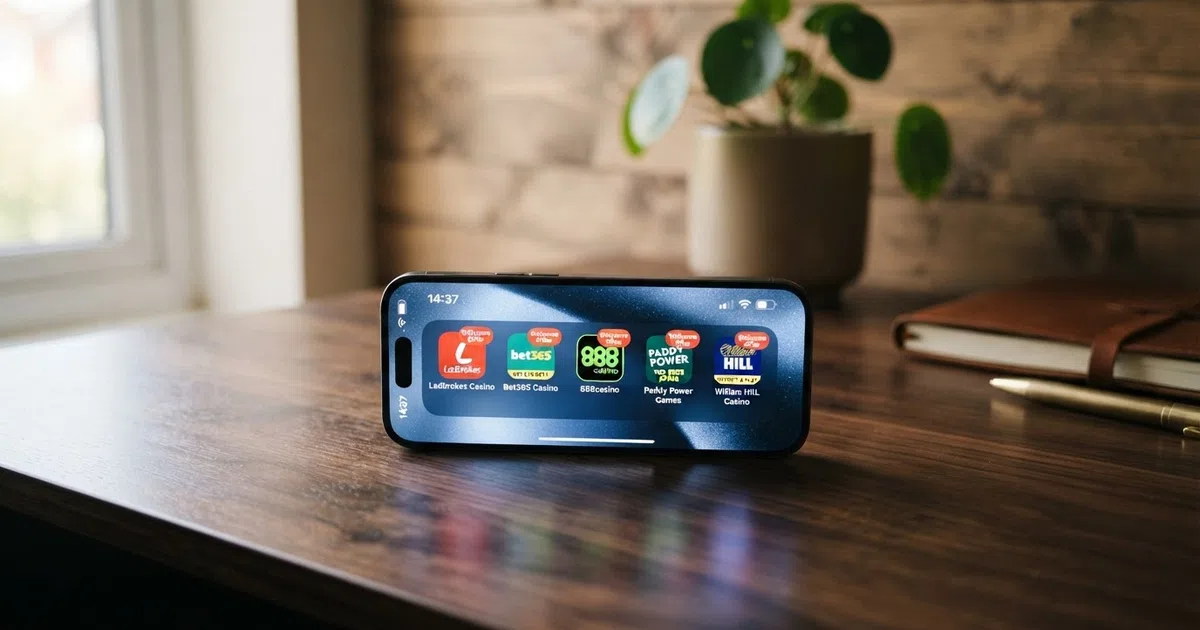
This ranking covers ten UKGC-licensed operators, all confirmed against the Commission’s public register (last updated 29 July $$CY$$), with welcome offers dissected, app ratings weighed and the legal framework that protects the player set out plainly. The page assumes you want real-money play on an Android device, that you are 18 or over, and that the choice between operators matters more than the choice between slots.
Current as of 17 August 2026. Licences and regulatory details verified against the Gambling Commission public register.
What an Android Casino Actually Is
An Android casino is a real-money online gambling site or app that runs on Google’s mobile operating system. In practice, it is one of two things — a native app installed from the Google Play Store or directly from the operator’s website, or a mobile browser version of the same site, optimised for a phone or tablet screen. Both paths end at the same place: a UKGC-licensed cashier, the same slot catalogue, the same real-money wagering.
The two paths differ in friction, not in licence. A native app lives on your home screen, launches with a tap, remembers your fingerprint, and pushes a notification when a promotion drops. A mobile browser version asks nothing of your storage, runs the same games through the device’s browser engine, and disappears when you close the tab. Neither route is the “right” one. The right one is the one that matches how you actually play.
Real-money play on Android is the same regulated activity as on a desktop. The Gambling Commission requires every remote operator to verify your name, address and date of birth before you make a first deposit — that rule has been in force since 7 May 2019, with no grace period. By the time you can see the deposit screen, the operator has confirmed you are 18 or over. Credit cards have been banned for any remote gambling payment since 14 April 2020, including credit-card-funded e-wallet top-ups. A session-loss and time-played display became mandatory in October 2021, so a live counter on your screen is the norm rather than the exception.
The Browser-vs-App Split Every New Player Hits
A mobile browser version of a casino is the fastest path from “I am curious” to “I have placed a bet.” Type the URL, log in, deposit, play. Nothing downloads, nothing updates, nothing asks for permission to use your camera. The trade-off is speed: a browser tab takes longer to launch than a native icon, biometric login is unavailable on most browsers, and the experience is slightly less polished than a purpose-built app.
A native Android app reverses those trade-offs. The download takes a minute, the home-screen icon opens in a heartbeat, fingerprint or face-unlock replaces a password, and push notifications arrive without you opening the casino at all. The cost is storage, an update every few weeks, and the small risk that Google Play’s policy on real-money gambling apps changes around you. (Google permits licensed UK gambling apps on the Play Store under specific content rating requirements, but some operators still prefer to distribute via their own APK — an Android installation package downloaded directly from the operator’s website — or a Progressive Web App shortcut that adds a browser-based casino to your home screen without an app store in sight.)
A browser path suits the player who plays once a week, never on a schedule, and would rather not commit storage to an app. A native app suits the player who logs in daily, wants biometric security, and treats the casino as one of their regular phone activities.
Real-Money Play on Android: What That Means
Real-money play on Android is the standard remote gambling product, served through a mobile interface. You fund the account with a debit card or e-wallet (credit cards are blocked), place a wager on a slot, table game or live-dealer table, and withdraw whatever is left. The lifecycle is identical to a desktop session — the only difference is the device.
Identity verification happens before the first deposit, not after the first withdrawal. By the time you can move money into the account, the operator has confirmed your name, date of birth and address. This is the Commission’s design — to prevent under-18s and self-excluded players from even funding an account. If a casino does not ask for documents before your first deposit, it is not following the rule.
A session typically looks like this: deposit £10, claim a welcome offer if one is running, play a slot or two at £0.10–£1 per spin, withdraw any balance. The mandatory session display — time played and net win or loss — sits on the screen the whole time, and a reality check pops up at intervals you can set yourself. Auto-play is banned on slots, the spin speed is capped at 2.5 seconds, and “losses disguised as wins” (where a celebratory animation plays on a spin that returned less than the stake) are prohibited. The slot on your Android behaves like a slot in a licensed premises — slower, less flashy, more honest.
Why Your Casino App Matters More Than the Casino
The casino’s reputation comes from years of marketing, its licence, its name recognition. The Android app is what you actually touch. A bad app wastes a good licence: a clumsy cashier, a spinner that lags, a fingerprint reader that fails three times out of five. The same offer from the same operator reads as “excellent” on a clean app and “frustrating” on a broken one.
The best casino apps for Android are not necessarily the best casinos in absolute terms. They are the operators whose app quality, biometric login, push-notification cadence and home-screen shortcut are all smooth. The newest entrant on the UK market — Betty Gaming, which launched in the UK on 1 June $$CY$$ under a UKGC remote casino licence active from 1 April $$CY$$ — is a reminder of how much the app matters at the point of launch: a brand nobody has heard of can win on day one if the app behaves, and a household name can lose on day one if it doesn’t.
Native App vs Mobile Browser: The Trade-off Nobody Explains
The native app wins on three things: launch speed, biometric login, and push notifications. A home-screen icon opens in under a second; a browser tab takes two to three times that. Fingerprint or face-unlock replaces a typed password on most apps. Push notifications land even when the app is closed — a deposit-matched offer, a reminder that a free-spin batch is about to expire.
The mobile browser wins on storage, updates and privacy. An app can take 50–150 MB; a browser tab takes nothing. Apps update every few weeks; the browser updates itself when the casino site changes. And a browser leaves no footprint on the phone — useful for anyone who would rather not have a casino icon on a home screen that gets shared with a child or a partner.
The choice is not absolute. Many players keep the browser as a default, install the app only at the operators they play most often, and use the APK or Progressive Web App route when the operator does not appear on Google Play. There is no single right answer.
How to Download and Install a Casino App on Android
Three paths, in roughly descending order of common use.
The first is Google Play. Search the operator, tap Install, wait a minute. The Play Store enforces Google’s content rating policy on real-money gambling apps — age-gated, geographically restricted to the UK, listed in the gambling category. The major operators (Bet365, Betfair, LeoVegas, William Hill, Sky Vegas) are all on the Play Store.
The second is an APK from the operator’s site. For brands that do not appear on the Play Store — often for policy reasons, sometimes by choice — the operator hosts the installation file on its own site. You download the APK, allow installs from this source in Android’s settings, and the app installs. It works, but it asks for a permissions toggle most users have not seen before.
The third is a Progressive Web App. The operator’s mobile site offers an “Add to Home Screen” prompt. Tapping it adds an icon that opens the site full-screen, with no browser chrome. It is not technically an app — there is no APK, no Play Store entry — but it behaves like one, with a home-screen icon and full-screen display. This path avoids all storage-clutter and is the best route for intermittent play.
Top-Rated Casino Apps: What the Scores Actually Measure
A Google Play rating of 4.2 out of 5 — the score LeoVegas carries — is the average of thousands of player reviews, weighted toward recent ones. It captures crashes, login failures, withdrawal delays, and customer-service gripes. It is noisy, but it is honest in aggregate. A rating below 4.0 is a yellow flag; a rating below 3.5 is a red flag.
A professional review score is a different animal. It weighs game load time (a clean app loads a slot in under five seconds on a mid-range device), navigation (how many taps to find a specific game), payment flow (how many screens to deposit, how many to withdraw), and the live-dealer experience (does the video stream drop on a 4G connection). These are the criteria a serious reviewer uses — and they are also the criteria that predict whether you will enjoy the app six months from now.
Some top casinos do not appear on Google Play at all. The reason is usually policy: Google’s terms on real-money gambling apps vary by country and content rating, and some operators prefer APK distribution to avoid being delisted by a policy change. The absence of a Play Store entry does not mean the app is poor — it means the operator chose a different distribution path.
Best Android Casinos UK: The Top 10 Ranked
The list below ranks the ten UKGC-licensed operators most worth considering for real-money play on Android in $$CY$$. Ranking is ordered by fit to the page’s lead angle — welcome bonus value combined with no-wagering terms, app quality, payment speed and Android-specific design — and verified against the Commission’s public register. Every operator holds an active casino remote operating licence. Every welcome offer is described as research carries it: deposit-gated offers stay deposit-gated, no-deposit offers stay no-deposit, and the type of bonus research states is the type the table shows.
| Operator | UKGC licence status | Free spins (total) | No-deposit spins? | Wagering on spins | Bonus slot example | Google Play rating | Standout trait |
|---|---|---|---|---|---|---|---|
| Bet365 | Active (Hillside UK Gaming ENC, account 55148) | 500 | No | 0× | Book of Horus, Curse of the Bayou, Magic Forge, Wrath of the Deep (fixed set) | — | Highest-volume no-wagering free-spin offer on the list |
| BetMGM | Active (LeoVegas Gaming plc) | 200 | No | 0× | Big Bass Splash | — | Focused wager-free welcome on a single high-recognition slot |
| LeoVegas | Active (LeoVegas Gaming plc) | 50 | No | 0× | Big Bass Splash | 4.2/5 | Highest Google Play rating among the featured set; IGA Mobile Operator of the Year 2023 |
| Betfair | Active (Betfair Casino Limited, licence 39435) | 150 (50 + 100) | Yes — 50 | 0× | Choice of five eligible games | 4.1/5 | Only operator on the list with a genuine deposit-free offer |
| Paddy Power | Active (PPB Entertainment, Flutter group) | 260 (60 + 200) | Yes — 60 | 0× | Slots (50) + Paddy’s Mansion Heist (10) | — | Biggest no-deposit spin count among featured operators |
| Betfred | Active (Petfre Gibraltar Limited) | 200 | No | 0× | Selected slots | — | High-volume offer that asks for play, not just a deposit (debit card only, e-wallets excluded) |
| Sky Vegas | Active (Bonne Terre Limited, Flutter group) | 250 (50 + 200) | Yes — 50 | 0× | First eligible game selected | — | Highest combined spin count on the list with a no-deposit tier |
| PlayOJO | Active (SkillOnNet Ltd) | 80 | No | 0× | Big Bass Bonanza | — | No-wagering pioneer — every win is cash, plus OJOplus cashback |
| William Hill | Active (WHG International Limited, account 39225) | 200 (+ £20 no-deposit bonus on Vault Cracker Megaways) | Yes — £20 bonus | 10× | Mining Pots of Gold | — | High-street name with Vegas-branded Android app updated December 2025 |
| MrQ | Active (Lindar Media Limited) | Up to 200 | No | 0× | Selected slots | — | Mobile-first design, instant/24-hour payouts including PayPal, no win cap on free spins |
The table shows what research carries, and where research does not, the cell is empty. The 10× wagering cap that has applied to all UKGC-licensed operators since 19 December 2025 is the ceiling on the column “Wagering on spins” — and nine of the ten featured operators sit at 0×, well below that ceiling. That is the single most useful pattern in the table: a no-wagering bonus is no longer a rare perk, it is the market norm for the operators worth ranking.
Bet365
Bet365’s welcome offer is the largest by spin count on this list: 500 free spins, dripped across ten reveals (5, 10, 20 and 50-spin batches) over a 20-day window, from a £10 lifetime deposit. Every spin carries 0× wagering — what the reels return is yours to withdraw. The eligible titles are a fixed set: Book of Horus, Curse of the Bayou, Magic Forge and Wrath of the Deep. Their RTPs are not stated in the operator’s promotion terms, which is a small but real gap — players who like to know the house edge before they play will need to look those up elsewhere.
Behind the offer sits the deepest game library on the list: Playtech, NetEnt, Play’n GO, Microgaming/Games Global, Pragmatic Play and Evolution. The Android app is the older, more conservative build of the two Bet365 mobile products, and it does not carry a Google Play rating worth quoting — the brand’s reputation is built elsewhere. Bet365 is the volume play for anyone targeting 500 spins who prioritises library size over RTP transparency.
BetMGM
BetMGM’s 200 wager-free spins are concentrated on a single slot: Big Bass Splash, the Pragmatic Play fishing-themed game that has become the welcome-offer workhorse across the UK market. A £10 deposit plus a 1× wager on any casino game unlocks the spins; they are valid for three days from credit, with seven days to make the qualifying deposit and wager. Every spin is £0.10, and every winning line pays out in cash.
The BetMGM UK app runs on the LeoVegas Gaming platform — the same software that powers the LeoVegas app reviewed elsewhere on this list. The result is a stable, well-designed Android experience with Evolution and Playtech powering the live-dealer floor, and Pragmatic Play handling the slot catalogue. It represents one of the most streamlined wager-free options available on Android today.
LeoVegas
LeoVegas is the mobile specialist of the ranking. Its 50 wager-free spins on Big Bass Splash are fewer than BetMGM’s 200, but the app carries the highest Google Play rating in the featured set — 4.2 out of 5 — and the operator took the IGA Mobile Operator of the Year award in 2023. The welcome offer requires a £10 deposit and a 1× wager within seven days; spins are valid for three days from credit.
For the player who treats the app as part of the product, LeoVegas is the most polished Android experience among the ten. The wager-free framing matches the wider market: a 0× bonus used to be a perk, now it is the baseline. LeoVegas is the operator that set the baseline for mobile design; the welcome offer is a courtesy rather than a reason to play.
Betfair
Betfair is the only operator on the list with a genuinely deposit-free welcome offer that delivers a real spin count. New players get 50 free spins before they deposit a penny, with another 100 spins released on a £10 deposit on Jackpot King games. Every spin carries 0× wagering. The Flutter group backing — Betfair sits alongside Paddy Power and Sky Vegas under the same parent — shows up in the depth of the game catalogue and the maturity of the Android app, which holds a 4.1/5 Google Play rating.
The deposit-free tier is what makes Betfair stand out. A player who wants to test a casino before committing any money — to see how the app loads, how the lobby is laid out, how the cashier behaves — can do so for free. The 100 deposit-triggered spins are the bonus; the 50 no-deposit spins are the on-ramp.
Paddy Power
Paddy Power’s 60 no-deposit free spins are the largest genuinely free spin count on the list. The deposit-gated tier adds another 200 spins on a £10 debit card, Apple Pay or Pay by Bank deposit. Every spin carries 0× wagering, and the offer is valid for seven days from claiming. The Flutter group backing means the same provider stack as Betfair — Playtech, NetEnt, Evolution, Pragmatic Play, Red Tiger and Blueprint.
The no-deposit tier splits into 50 spins on standard slots and 10 spins on Paddy’s Mansion Heist, a Paddy Power-branded title. Paddy Power delivers the UK market’s largest no-deposit test drive, combining spin volume with seven days of validity and 0× wagering.
Betfred
Betfred’s 200 free spins are unlocked by a £10 deposit and a £10 stake on slots, with a seven-day validity from credit and 0× wagering on any winnings. The provider stack — Playtech, IGT, NetEnt, Evolution, Pragmatic Play, Blueprint — is the standard high-street offering. The detail that matters is the deposit method: Betfred’s offer is debit-card only, and e-wallets (PayPal, Skrill, Neteller) are excluded. A player who normally funds via PayPal will need to switch methods to claim this one.
For a player with a debit card and a willingness to stake £10 on slots before the spins unlock, Betfred is a high-volume no-wagering offer from a brand with one of the longest track records on the UK high street. The e-wallet exclusion is the friction point to plan around.
Sky Vegas
Sky Vegas is the highest combined spin count on the list after Bet365: 50 no-deposit free spins plus 200 more on a £10 deposit and stake, all at 0× wagering. The Flutter group parent means the same provider depth as Betfair and Paddy Power — NetEnt, Evolution, Playtech, Pragmatic Play, Blueprint and Red Tiger. The deposit/stake requirement is valid for 30 days, and the free spins themselves are valid for seven days from credit.
For a player who wants the no-deposit on-ramp and the volume of a 250-spin package, Sky Vegas sits in the middle of the pack on terms. The Flutter backing gives the app a maturity smaller operators cannot match. The 30-day window for the deposit/stake requirement is the most generous on the list.
PlayOJO
PlayOJO is the no-wagering pioneer of the UK market, and the welcome offer reflects that: 80 free spins on Big Bass Bonanza from a £10 first deposit, with every win paid in cash and OJOplus cashback running in the background. The defining feature is not the offer; it is the philosophy. PlayOJO does not run wagering requirements on any promotion, ever. A win on a free spin is a cash withdrawal, not a bonus balance with conditions attached.
The SkillOnNet platform powers the app, and the provider stack — NetEnt, Microgaming/Games Global, Play’n GO, Evolution, Pragmatic Play, Yggdrasil — is broad enough to cover the major studios. For a player who values transparency over volume, PlayOJO is the brand that proved the model.
William Hill
William Hill is the high-street name on the list, and the welcome offer reflects that heritage: 200 free spins on a £10 deposit and stake, with a £20 no-deposit bonus on Vault Cracker Megaways also available. The wagering multiplier on the spins is capped at 10×, in line with LCCP Social Responsibility Code 5.1.1. The William Hill Vegas Casino app on Google Play was updated in December 2025 and carries the Playtech/Evolution provider stack familiar from the rest of the high-street brands.
For a player who trusts the high-street name and wants the deposit-gated offer plus a £20 no-deposit bonus, William Hill is the most established option on the list. The exact wagering terms should be confirmed in the offer’s full terms before claiming.
MrQ
MrQ closes the list as the mobile-first option. Up to 200 no-wagering free spins on first deposit, with no win cap on the free spin winnings — a feature no other operator on this list matches. The Lindar Media licence backs the brand, and the differentiator is operational: instant and 24-hour payouts, including PayPal, plus a design that was built for the phone from day one rather than adapted from a desktop product.
For a player who wants the spins paid out the moment they land, and a casino app that does not feel like a desktop site compressed, MrQ is the most distinctive option on the list. The smaller brand recognition is the trade-off; the payout speed is the offset.
Casino Games You Actually Play on Android
The Android game library of a UKGC-licensed casino is the desktop library, ported. The major studios — NetEnt, Playtech, Pragmatic Play, Play’n GO, Evolution, Microgaming/Games Global — have rebuilt their slot and table games for touchscreens, and the best of them behave indistinguishably from the desktop version. A slot that lags on a £300 phone is a slot that was not properly ported; a live-dealer stream that drops on a 4G connection is a stream the operator has not paid the bandwidth for.
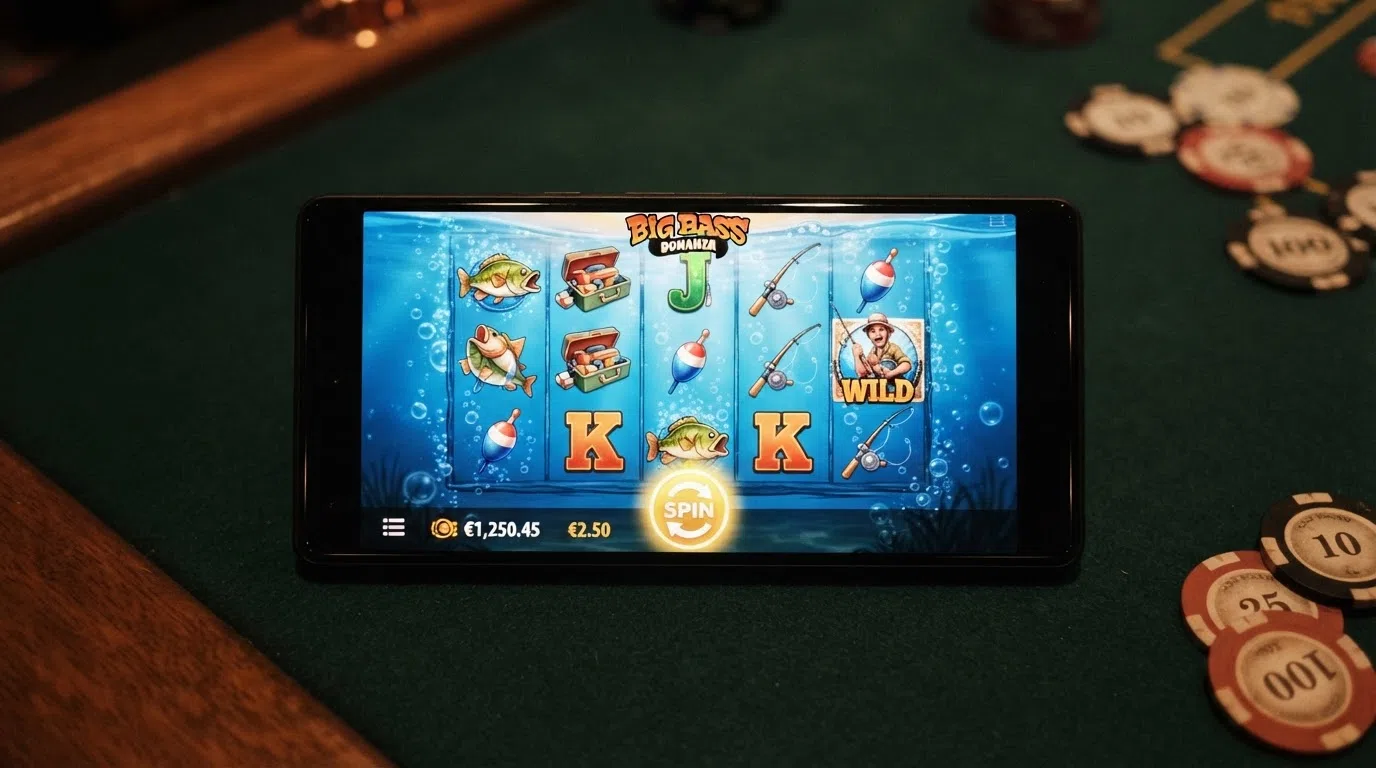
Slots dominate. Megaways titles (a game mechanic licensed by Big Time Gaming that varies the number of symbols per reel on every spin, producing tens of thousands of possible payline combinations) and progressive jackpots are standard, and the touch-friendly design is the rule rather than the exception. Table games — blackjack, roulette, baccarat — are well-represented, with touchscreen betting layouts that work on a phone in portrait. Live dealer is the heavy data user: Evolution and Playtech stream continuously, in landscape, and a 4G connection will burn through a data plan faster than the slots ever will.
Game providers that optimise for mobile do so as a default. A Pragmatic Play slot released in 2024 is a mobile-first product; the desktop version is the afterthought. Studios that lag on this — and there are a few smaller providers still in that category — are the ones whose games feel like a desktop slot squeezed into a phone screen.
Slots on Android: What the Stake Cap Changes
The age-banded stake cap is the most distinctive UK regulation feature, and the one most Android pages skip. Since 9 April 2025, online slots in Great Britain carry a statutory maximum stake of £5 per game cycle for players aged 25 and over, imposed by SI 2025/215. For players aged 18 to 24, the cap is £2 per game cycle, in force from 21 May 2025. The cap applies to the total staked within one game cycle — not the per-line stake, not the per-spin stake, but the total amount risked on a single game round.
The cap reshapes slot selection on two levels. At the low end, the £2 cap for 18–24 players makes a 20-line slot at £0.10 per line (£2 total) the natural ceiling; the £5 cap for 25+ players leaves room for higher-volatility bets. At the high end, the cap does not apply to live casino, table games or sports betting — only to online slots. A player who wants to bet more per round can move to a live-dealer blackjack table; a player who wants to bet less is capped below the £2 floor regardless of which slot they choose.
The RTP variability is the second half of the picture. Book of Dead (Play’n GO) has a default RTP of 96.21% — the top tier — but UKGC-licensed casinos can deploy it at certified lower tiers: 94.25%, 91.99%, 88.12% and 87.25%. Bet365 deploys the top tier. Some Aspire Global brands deploy 87.25%. The same title at the same casino type can carry a house edge of 3.79% at one operator and 12.75% at another, and the player sees no difference in the game window. The way to check is the casino’s RTP information page — every UKGC-licensed operator must publish the RTP of every game they offer, and a player who knows what to look for will find it.
Live Dealer on a Phone Screen
Live dealer on Android is real. The dealer is a person, dealing real cards, in a real studio, streamed in real time. Evolution and Playtech run the dominant UK live-dealer floors, and both have rebuilt their lobbies for the phone. The stream is landscape, the betting layout fits the lower half of the screen, and the chat box sits in the corner. On a tablet the experience is close to a desktop session; on a phone, it is functional rather than luxurious.
Data consumption is the trade-off. A live-dealer stream in HD runs at 3–5 Mbps, which means a 30-minute session uses roughly 700 MB to 1.1 GB of data. On an unlimited WiFi connection, that is fine. On a 4G plan with a 10 GB cap, that is a tenth of the monthly allowance gone in three sessions. A WiFi recommendation is not paternalism; it is arithmetic.
Slots Worth Knowing: The Titles Behind the Offers
The welcome offers on this page are dominated by a handful of slot titles, and the ones worth knowing are listed below. The table shows what research carries — RTPs where research has them, volatility where research has it, the featured welcome offer where research names it. Where research does not carry a figure, the cell is empty.
| Slot title | Provider | RTP | Volatility | Featured in welcome offer at |
|---|---|---|---|---|
| Book of Dead | Play’n GO | 96.21% (top tier) — also deployed at 94.25%, 91.99%, 88.12%, 87.25% | — | Bet365 (alongside other titles in the fixed set) |
| Starburst | NetEnt | 96.09% | Low | — |
| Gonzo’s Quest | NetEnt | 95.97% | Medium-high (2,200× max win) | — |
| Big Bass Splash | Pragmatic Play | — | — | BetMGM, LeoVegas, Paddy Power (deposit tier), Sky Vegas |
| Big Bass Bonanza | Pragmatic Play | — | — | PlayOJO |
The cluster of cells with no RTP or volatility is a real gap, not a missing entry. Most operators do not publish the RTP of the slots they feature in welcome offers, and the studios themselves (Pragmatic Play, in particular) publish a wide RTP range that the operator picks from. The table shows what is honestly knowable: the top-tier Book of Dead RTP, the stable Starburst and Gonzo’s Quest numbers, and the absence of published figures for the Big Bass titles that dominate the welcome-offer market.
Bonuses and Free Spins on Android: What Is Actually Yours
The bonus market in $$CY$$ looks different from the bonus market in 2023. Since 19 December 2025, UKGC-licensed operators are capped at a maximum 10× wagering requirement on bonus funds, under LCCP Social Responsibility Code 5.1.1. Since the same rule, mixed-product promotional offers — the “bet £10 on football, get free spins” cross-sells — are banned. The result is a market where free spins dominate, deposit-match offers are rare, and the offers that do exist either sit at the 10× ceiling or at 0×.
Seven of the ten featured operators on this list run 0× wagering on their welcome free spins. The remaining three — BetMGM, Betfred and William Hill — sit within the 10× cap, with the market norm applying. The gap between a no-wagering offer and a standard one has narrowed since the cap came in, but no-wagering still wins on simplicity: every win is a cash withdrawal, and the player does not need to track a turnover requirement.
Welcome bonuses on Android are almost entirely free-spin packages. A deposit match — “100% up to £100” — exists at some operators, but it is the minority product, and the 10× cap means a £100 bonus requires £1,000 in turnover before withdrawal. The free-spin package is cleaner: a fixed number of spins at a fixed stake, with a defined wagering load (zero, in most cases), and a clear win cap or no win cap at all.
A bonus code is a relic of the pre-2025 market. Most UKGC-licensed operators apply the welcome offer automatically on first deposit; an opt-in checkbox is the most a player is asked to do. The “bonus code” field at the cashier is increasingly vestigial, and the codes that once circulated through affiliate sites are largely inactive.
No-Deposit Free Spins: The Offers That Cost Nothing to Claim
Three of the ten featured operators give away free spins before a player deposits a penny. Betfair offers 50 no-deposit spins on registration; Paddy Power offers 60; Sky Vegas offers 50. The value of each spin is £0.10, the wagering is 0×, and the validity is seven days (Paddy Power) or runs until the operator withdraws the offer (Betfair).
A no-deposit spin is not a path to a payout. £0.10 per spin, 50 spins, a 96% RTP slot — the expected return over the batch is roughly £4.80, with a high variance. The real value of a no-deposit offer is the test drive. A player can see how the app loads, how the cashier behaves, how the game library is laid out, and how the withdrawal process works — all without risking a deposit.
Wagering Requirements: The 10× Cap and What It Actually Costs
The 10× cap is the single biggest shift in the UK bonus market of the last decade. A 35× bonus that took £3,500 of turnover to clear a £100 deposit match has been replaced, at most operators, by a 10× ceiling that takes £1,000. At the leading edge of the market — the seven operators on this list running 0× wagering — the question is moot: there is no turnover requirement, and a win is a win.
For a representative 50-spin bonus at £0.10 per spin — the Big Bass Splash welcome offer at LeoVegas, for instance — the expected loss calculation works as follows. A £5.00 bonus (50 spins × £0.10) played on Big Bass Splash carries a theoretical RTP that the operator has not published in its welcome offer terms. Assuming an RTP in the range of 95–96% (the band Pragmatic Play publishes for the Big Bass series), the expected loss on a single playthrough of the 50 spins sits in the region of £0.20 to £0.25. That is the cost of the bonus at face value — the amount a player statistically gives back to the house across the 50 spins, with a wide variance around the figure.
The 10× cap applies where wagering exists. A bonus that carried 35× wagering in 2023 is now capped at 10×. A bonus that carried 0× wagering in 2023 still carries 0× in $$CY$$. The cap narrowed the gap between the two ends of the market, but the no-wagering offers still win on transparency. A player who does not have to track a turnover requirement does not have to misjudge one.
This is a statistical estimate — an average over many spins under the stated assumptions — not a guaranteed outcome for any single player. The cost of the bonus to a given player depends on the variance of the slot and the order in which the wins and losses fall.
Paying on Android: Deposits, Withdrawals and What Works
The payment method a player picks changes two things: how fast the deposit lands, and how fast the withdrawal arrives. On Android, the methods that work at most UKGC-licensed casinos are debit card (Visa, Mastercard), PayPal, Apple Pay (where supported), Trustly, Skrill, Neteller, bank transfer, and pay-by-phone-bill services like Boku and Fonix. Credit cards are banned, including credit-card-funded e-wallet top-ups.
A debit card is the default. A £10 minimum deposit lands instantly at every operator on this list, and a withdrawal to the same debit card takes 1–3 working days at most operators. PayPal is the fastest withdrawal route at the operators that support it — MrQ advertises instant and 24-hour payouts including PayPal, and the standard at other Flutter brands (Betfair, Paddy Power, Sky Vegas) is under 24 hours. Trustly and bank transfer sit in the middle. E-wallets (Skrill, Neteller) are fast on deposits and fast on withdrawals, but the bonus terms at some operators exclude e-wallet deposits — Betfred’s welcome offer is debit-card only, with e-wallets excluded.
The £10 minimum deposit is the market norm. A player who wants to fund less than £10 will struggle to find an operator that allows it. A player who wants to fund more will find no upper cap at the cashier (the deposit-limit prompt before first deposit sets a personal ceiling, but the operator’s technical ceiling is higher).
Pay by Phone Bill: Deposit Instantly, Withdraw Elsewhere
Pay by phone bill — via Boku, Fonix and similar services — lets a player fund a casino account by adding the deposit to their monthly mobile phone bill or deducting it from their pay-as-you-go credit. The deposit is instant, requires no card details, and is the most private funding method on the UK market. The catch is that it is deposit-only: a withdrawal cannot be returned to a phone bill, and the player needs a bank account, debit card or e-wallet to cash out.
The other catch is the cap. Phone-bill deposits are typically limited to £10–£30 per day and £100–£300 per month, depending on the operator and the mobile network. A player who wants to deposit £100 in a single session will hit the daily cap; a player who wants to deposit £1,000 in a month will hit the monthly cap. Phone-bill funding is built for small, frequent deposits, not for a single large transfer.
Google Pay on Android: The Frictionless Option
Google Pay is built into every Android device with a recent version of the operating system, and the deposit flow is the same as at a contactless terminal: select Google Pay at the cashier, authenticate with a fingerprint, and the deposit lands. No card numbers typed, no expiry dates, no CVV codes. The friction is low; the privacy is high.
The catch is that Google Pay is a token, not a funding source. The actual card sitting behind the Google Pay token is a debit card (credit cards are banned for gambling), and the deposit hits the player’s bank account through that card. Withdrawal to a Google Pay token is not supported at most UKGC-licensed operators — a player who deposits via Google Pay withdraws to a debit card, bank transfer or e-wallet. Google Pay acceptance is also inconsistent across the featured set: not every operator lists it at the cashier, and the absence is worth checking before assuming the option exists.
Crypto Casinos on Android: What Is Actually Available to UK Players
No crypto casino holds a UKGC licence. That is the headline, and the rest of the section is a footnote. Bitcoin, Ethereum, Monero and the rest of the altcoin universe are accessible to UK players via offshore operators, but those operators run outside the Gambling Act 2005 framework, hold no GB licence, and offer none of the protections that licence confers.
The structural gap is real. A UK player at a crypto casino cannot register with GAMSTOP — the self-exclusion register covers only GB-licensed operators. A UK player at a crypto casino cannot file a complaint with the Gambling Commission. A UK player at a crypto casino cannot invoke alternative dispute resolution (ADR) when an operator withholds funds, because the operator is not part of any British ADR scheme. A UK player at a crypto casino has no recourse to British consumer protection law when a withdrawal is delayed, a bonus term is changed, or an account is closed without explanation.
The legal status of the player is not in jeopardy. No UK player has been prosecuted for gambling at an unlicensed site. The legal risk sits with the operator, the advertiser and the payment intermediary — section 33 of the Gambling Act 2005 makes operating without a licence a criminal offence, carrying up to 51 weeks’ imprisonment and an unlimited fine. What the player loses is protection, not freedom.
What You Lose When You Play at an Unlicensed Crypto Casino
The list is short, but every item on it matters.
No GAMSTOP coverage. The self-exclusion register that has blocked GB-licensed casinos since 31 March 2020 does not see a crypto casino. A player who has self-excluded and is trying to control their gambling can open an account at an unlicensed crypto casino in minutes.
No Gambling Commission complaints route. The Commission is the regulator of GB-licensed operators. A complaint about a crypto casino falls outside its remit.
No ADR (alternative dispute resolution). A GB-licensed operator is required to be part of an ADR scheme. An unlicensed operator is not. A dispute is between the player and the operator, with no independent third party to escalate to.
No statutory stake limits. The £5/£2 cap on online slots does not apply at an unlicensed operator. The spin speed cap does not apply. The auto-play ban does not apply. The session-loss display does not apply.
No protection on funds. A GB-licensed operator holds player funds in segregated accounts. An unlicensed operator holds them where it likes. If the operator disappears, the funds go with it.
The trade-off is anonymity. A crypto casino that does not require KYC (know-your-customer identity verification) does not need a name, an address, or a date of birth to open an account. The privacy is real; the protection is absent. The player weighs the two and makes a choice.
Free Play and Demo Mode on Android
Every UKGC-licensed casino offers demo mode. A demo slot is the same game as the real-money version — same reels, same RTP, same bonus-round frequency, same volatility — played with virtual credits instead of cash. The win cannot be withdrawn; the loss cannot be deposited. The point is to test a game before committing real money.
Demo mode is accessible without registration at most UKGC-licensed sites. A player who wants to see what Big Bass Splash looks like on a phone screen before claiming a 200-spin welcome offer can load the demo, play 50 spins at £0.10 each, and form a view on the volatility, the bonus-round frequency, and the session feel. The exercise takes five minutes and costs nothing.
Free casino apps — the social-casino, play-money alternatives on Google Play — are a different product. They run on virtual credits only, never offer real-money play, and are not regulated by the Gambling Commission. They are useful for a player who wants the slot-spinning experience without the financial risk; they are not a substitute for a UKGC-licensed casino.
Why Demo Mode Is the Smartest Pre-Deposit Move
The slot a player saw in a welcome-offer screenshot behaves differently in a live session. The bonus round triggers less often than the screenshot suggested. The base-game wins are smaller than expected. The session feel — how fast the reels spin, how the animations land, how the balance moves — is something no screenshot captures. Demo mode is the only way to test a slot honestly before depositing.
The same RTP runs in demo and real-money mode. A slot at 96.21% RTP pays back £96.21 for every £100 wagered in the long run, whether the wager is in real cash or virtual credits. The house edge does not change between modes. The demo is a real test of the game’s mechanics, not a sanitised version of it.
A UKGC-licensed casino does not time-limit demo play. A player can run 500 demo spins in one sitting. The only friction is the data use — the slot runs through the same engine as the real-money version, and a 4G connection will burn through a data plan as quickly as in a real-money session.
New Android Casinos Worth Knowing
Betty Gaming is the most relevant new entrant. The Canadian operator launched in the UK on 1 June $$CY$$ under a UKGC casino remote operating licence confirmed active from 1 April $$CY$$ — the first market outside Ontario for a brand that has spent the last decade building a mobile-first product. The launch is recent enough that the welcome offer and the Android app’s Google Play rating are not yet established in the way the ten featured operators’ are, and Betty Gaming is not yet ranked alongside them on this page.
The interest is in the signal. A new GB licence being granted in 2026 is a meaningful event. It indicates that the Gambling Commission is still willing to license new entrants, that the application process remains navigable, and that the regulated UK market is not yet closed to competition. For a player who tracks the market, Betty Gaming is the brand to watch through the rest of $$CY$$.
What to Check Before You Sign Up to a Brand-New Casino App
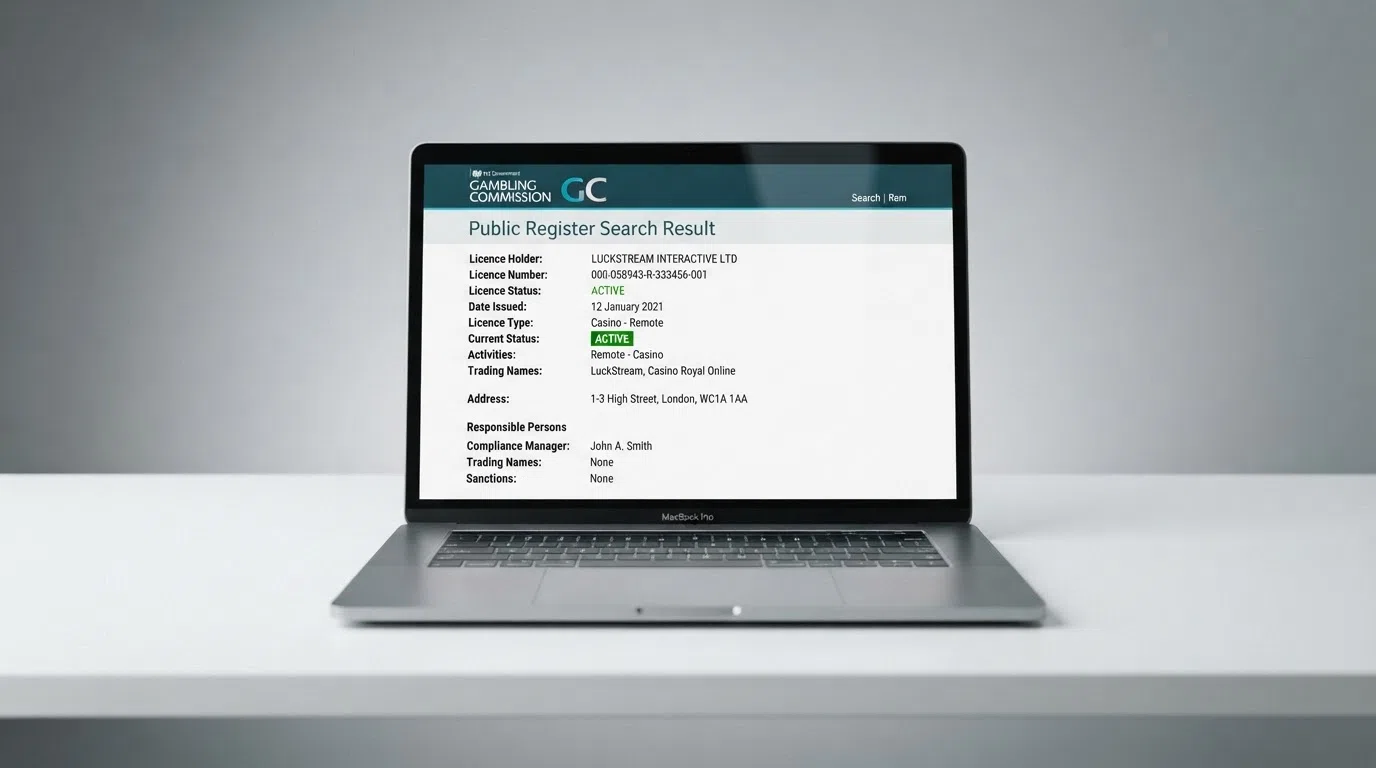
A new UKGC licence is a public document. A three-minute check on the Gambling Commission’s public register separates a real launch from a rebrand.
Confirm the licence is active. The Commission’s register lists every operating licence, its status, the company name and the trading name. A “real” launch is one where the status is “Active” and the trading name matches the brand on the app.
Check the Google Play Store. A new UKGC-licensed operator is not guaranteed to be on Google Play. Some operators distribute via APK; some via Progressive Web App. The absence of a Play Store entry is not a red flag, but the presence of one with a recent update is a positive signal.
Read the bonus terms against the 10× cap. A new operator is bound by the same 10× wagering ceiling as an established one. Any welcome offer that exceeds the cap is a flag — either the operator has misread the rule, or the bonus terms have not been updated since the cap came in.
Confirm the payment methods. A new operator takes time to integrate the full set of payment providers. A player who normally deposits via PayPal should check that PayPal is listed at the cashier before signing up.
Confirm the game providers. A new casino app with a thin game library is a red flag; a new casino app with NetEnt, Pragmatic Play and Evolution on the floor is a positive signal. The provider stack is one of the easiest things to verify from the lobby before depositing.
Is It Legal? How UK Regulation Protects Android Players
Every casino on this page holds an active GB operating licence, and that licence carries protections no unlicensed site can match. The legal framework is the Gambling Act 2005, extended to remote operators by the Gambling (Licensing and Advertising) Act 2014 — the point-of-consumption reform that made a GB licence compulsory for any operator serving GB customers, wherever the operator is based. Northern Ireland is outside GB licensing scope; the regulatory regime there runs on older, separate law.
The Gambling Commission’s licensing objectives, set out in section 1 of the 2005 Act, are three: preventing gambling from being a source of crime or disorder, ensuring gambling is conducted fairly and openly, and protecting children and other vulnerable persons from harm or exploitation. Every condition in the LCCP (Licence Conditions and Codes of Practice) and the RTS (Remote Technical Standards) traces back to one of those three objectives.
Age verification is the first line. Since 7 May 2019, a remote operator must verify name, address and date of birth before any deposit or any gambling — no grace period, no exception. By the time the deposit screen appears, the operator has confirmed the player is 18 or over. The rule is the same on Android as on desktop.
The statutory levy — 1.1% of gross gambling yield for remote casino, remote bingo and remote general betting licences, in force since 6 April 2025 — funds treatment, prevention and research. The split is 50% to treatment (NHS gambling harm clinics), 30% to prevention (Office for Health Improvement and Disparities), 20% to research (UK Research and Innovation). It is a separate charge from the Remote Gaming Duty that operators pay on their gross yield.
The Stake Limits That Changed UK Slots: £5 and £2
The age-banded stake cap is the most distinctive UK regulation feature, and the one that most directly affects what an Android player can bet per spin. Since 9 April 2025, online slots in Great Britain carry a statutory maximum stake of £5 per game cycle for players aged 25 and over. Since 21 May 2025, the cap for players aged 18 to 24 is £2 per game cycle. Both caps are imposed by SI 2025/215.
A “game cycle” means one full game round — a single spin on a slot, including any feature rounds or gamble features that follow it. The £5 or £2 is the total staked within that cycle, not the per-line stake. On a 20-line slot at £0.25 per line, the total stake is £5; on the same slot at £0.10 per line, the total is £2. The cap applies to online slots only. There is no statutory cap on live casino, table games, sports betting or bingo.
The cap is the Commission’s response to a body of evidence on the relationship between stake size and harmful play. It is the most product-specific restriction in the GB framework, and the one that a player on Android will encounter most directly.
GamStop: What Self-Exclusion Actually Covers
GAMSTOP is the national self-exclusion register for online gambling, mandatory for every GB-licensed operator since 31 March 2020. A player who registers with GAMSTOP is blocked from every GB-licensed online casino, sportsbook and bingo site for the chosen exclusion period. There is no opt-out, no early cancellation, and no appeal.
The exclusion periods are six months, one year, five years, or five years with auto-renewal. The auto-renewal option is the most restrictive — the exclusion continues until the player actively takes steps to end it, and the steps are designed to be difficult. The five-year option without auto-renewal ends automatically at the end of the period; the player can then reopen accounts at GB-licensed operators.
The structural gap is unlicensed sites. GAMSTOP covers every GB-licensed operator and only GB-licensed operators. A crypto casino, an offshore operator, a brand without a GB licence — none of them sees the GAMSTOP register, and none of them blocks the self-excluded player. The gap is the trade-off the unlicensed market asks the player to accept.
Financial Checks and Deposit Limits: What the Casino Must Do
Two separate rules sit under this heading, and conflating them is the most common error in coverage of UK affordability regulation.
The first is the financial vulnerability check. Since 28 February 2025, a GB-licensed operator must run a check on publicly available data — county court judgments (CCJs), individual voluntary arrangements (IVAs), bankruptcy orders — when a player’s net deposits reach £150 in a rolling 30-day window. The check is automated, takes seconds, and uses no income data. The Commission’s intent is to flag players in formal financial distress before the gambling becomes a driver of that distress.
The second is the mandatory deposit-limit offer. Since 31 October 2025, every GB-licensed operator must prompt a player to set a financial limit before their first deposit. The offer is mandatory; the level is the player’s choice. Britain does not impose a state-set deposit ceiling — unlike Germany (€1,000 per month) or the Netherlands (€700 net deposit) — and the limit the player sets is the limit the operator applies. Decreases take effect immediately; increases may carry a delay. From 30 September 2026, the terminology standardises on “gross deposit limit” under RTS 12.
Financial risk assessments — a separate, more intrusive check that would use income and expenditure data — have been announced but are not in force. The Stage 1 thresholds (£5,000 net deposit / £2,500 in some scenarios) and the final thresholds (£1,000–£3,000 / £750–£2,000) are not yet commenced, and a player who has been asked for payslips or bank statements in connection with a GB-licensed operator is either dealing with a non-standard operator policy or has run into a fraud check. The £150 vulnerability check is the rule; the income-based affordability check is the proposal.
How Britain Enforces Its Gambling Rules
Enforcement is the test of any regulatory regime, and the Commission’s record is unusually heavy by international standards. In the period October 2024 to September 2025, the Commission logged 208,088 enforcement actions on illegal online gambling — the largest category being search-engine URL referrals, with 3,140 disruption notices issued and 287,961 URLs removed between April 2024 and June 2025.
The British model is disruption, not blocking. The Commission issues cease-and-desist notices to operators, refers URLs to search engines for delisting, refers payment providers to the banks that route transactions, and works with the National Crime Agency and the police on the most serious cases. There are no statutory ISP or DNS blocking powers — legislation has been proposed but not enacted — and the Commission’s approach is to make the unlicensed site difficult to find, not impossible to reach.
The player is not penalised for gambling on an unlicensed site. The legal risk sits with the operator, the advertiser and the payment intermediary. What the player loses is protection: no GAMSTOP, no Commission complaints route, no ADR, no recourse to British consumer law. The penalty is structural, not criminal.
Staying in Control: Responsible Gambling Tools on Android
The responsible-gambling tools built into every UKGC-licensed Android casino are not optional features. They are LCCP-mandated conditions, and an operator that does not implement them breaches its licence.
Deposit limits are the headline. The offer to set one is mandatory before the first deposit (from 31 October 2025), and the operator must honour the limit without delay. A player who sets a £50 weekly limit cannot deposit more than £50 in that week; the operator’s cashier enforces it. Decreases are immediate; increases may carry a cooling-off period.
Reality checks are the second pillar. A pop-up appears at a player-set interval (typically 30, 60 or 90 minutes) showing time played, net win or loss, and a prompt to continue or take a break. The check is a hard pause — the player must acknowledge it before the game resumes. Time-outs are the operator-level equivalent: a 24-hour to six-week block on the account, set by the player, lifted automatically at the end of the period.
GAMSTOP is the nuclear option — a national self-exclusion register that blocks the player from every GB-licensed online operator for six months to five years. The session loss/win and time-played display, mandatory since 31 October 2021, sits on the screen throughout play and provides a real-time view of where the session is going.
For players who need help, the National Gambling Helpline (run by GamCare) is 24/7 and free: 0808 8020 133. NHS gambling harm clinics operate in England, Scotland and Wales. Gamblers Anonymous runs peer-support meetings. GambleAware funds treatment and prevention. None of these requires the player to stop gambling through a licensed operator first; the help is available regardless of the player’s current relationship with gambling.
The Numbers Behind Responsible Gambling in Britain
The Gambling Survey for Great Britain (GSGB) Year 3 report, covering data collected in 2025, found that 2.4% of adults scored 8 or more on the Problem Gambling Severity Index (PGSI) — equating to an estimated 1.3 million adults. The figure is stable across three years of the survey (2.5% in Year 1, 2.7% in Year 2, 2.4% in Year 3), suggesting that the prevalence of problem gambling in GB has plateaued at roughly one in forty adults.
The helpline data tells a sharper story. GamCare’s National Gambling Helpline received 130,000+ calls and online messages in 2024-25. In January 2026, the helpline made 996 referrals to treatment and peer-based support — a 48% year-on-year increase from 674 in January 2025. Online gambling accounts for 81.5% of helpline contacts in 2026, the highest rate recorded and up from 72.9% in 2021. The trend is unambiguous: more people are seeking help, and the gambling they are seeking help for is increasingly online.
GambleAware’s Annual Treatment and Support Survey found that 30% of adults who gamble and experience any level of problems want treatment, support or advice — almost double the 17% recorded in 2020. The doubling of treatment-seeking behaviour against a stable prevalence rate suggests that the barrier to seeking help is falling, not that the underlying harm is rising. Both readings are useful; neither is the whole picture.
The Tools Built Into Every UK Casino App
A licensed Android casino app is, by LCCP requirement, a safer-gambling environment. The deposit-limit prompt appears before the first deposit and on a recurring basis thereafter. Reality checks pop up at player-set intervals. The session display — time played, net win or loss — sits in the game window throughout play. Time-outs can be set for 24 hours to six weeks at the account level. GAMSTOP registration is reachable from the responsible-gambling page in two taps.
A player who wants to use these tools can do so without contacting the operator. The deposit limit can be set in the cashier; the reality-check interval can be set in the responsible-gambling menu; the time-out can be activated from the account page. GAMSTOP registration is at gamstop.co.uk and takes under five minutes.
A player who would rather not manage the tools themselves can contact the operator and ask for a deposit-limit reduction, a cooling-off period, or a self-exclusion at the operator level. The operator is required to honour the request, and the tools are designed to be sticky — a player who asks for a six-week time-out does not have to argue their way back in at the end of it.
How We Selected and Ranked These Android Casinos
The ranking on this page rests on three sources of evidence, each verified independently.
The first is the Gambling Commission’s public register, last updated 29 July $$CY$$. Every operator in the top ten was checked against the register for an active casino remote operating licence, and the licence details (operator name, account number) are recorded in the operator write-ups. An operator without a confirmed active licence is not on the list.
The second is the operator’s promotion terms, read against the 10× wagering cap in force since 19 December 2025. A welcome offer that exceeds the cap, runs a mixed-product promotion banned under LCCP Social Responsibility Code 5.1.1, or applies a wagering load above the player’s expected reading is flagged in the write-up. The seven operators running 0× wagering on their welcome spins are noted as such; the three with a non-zero wagering load are noted with the qualifying assumptions.
The third is the app experience on Android, captured in Google Play ratings where research carries them, in app-update dates where research names them, and in the qualitative assessment of the operator’s mobile design. The Betty Gaming launch in June $$CY$$ is noted as a signal of market direction, not as a ranking entry; the brand is not yet established enough to be ranked alongside the ten featured operators.
Operators excluded from the ranking: any brand without a confirmed active GB casino remote licence; any crypto-only operator (see the section on crypto casinos for the structural gap); any operator with no Android offering at all. Ranking within the ten is qualitative — no invented weightings, no scoring matrix. The order reflects fit to the page’s lead angle: welcome bonus value combined with no-wagering terms, app quality, payment speed, and Android-specific design.
What You Should Actually Do With This List
A ranked list is a starting point, not a decision. Five moves turn a list into a choice that fits the player behind the phone.
Pick the priority. A player who values the no-deposit test drive ranks Betfair, Paddy Power and Sky Vegas at the top. A player who values spin volume ranks Bet365, Sky Vegas and Paddy Power. A player who values app polish ranks LeoVegas, MrQ and the Flutter brands. One list cannot optimise all three priorities; the player picks the one that matters most.
Test the app before depositing. A Google Play rating is a useful aggregate, but a 10-minute session in demo mode is a better signal. Load the casino’s mobile site in a browser, play a few demo spins, check the cashier’s payment methods list, and read the responsible-gambling page. If the app behaves, deposit. If it does not, move on.
Verify the licence. The Gambling Commission’s public register is free, public and updated monthly. A search for the operator’s name takes under a minute. An active casino remote operating licence is the floor; the absence of one is a wall.
Set a deposit limit before funding the account. The mandatory prompt will appear at the cashier; the player can accept it or set a different figure. A limit set before the first deposit is a limit set with a clear head. A limit set after a bad session is a limit set under pressure.
Remember the house edge. A 0× wagering bonus still costs the spins played through. The RTP works on every spin, on every slot, at every operator. A bonus of 50 free spins at £0.10 carries a theoretical cost to the player that the wagering cap has reduced to zero on the marketing side but not on the play side. The spins themselves are the cost; the bonus is what the casino gives back for the time the player spends playing them.
Frequently Asked Questions
Are real-money casino apps legal on Android in the UK?
Yes, provided the operator holds an active GB operating licence from the Gambling Commission. Every casino on this page is licensed under the Gambling Act 2005, with point-of-consumption rules in force since 2014. Age verification (18+) is required before the first deposit, and credit cards have been banned for remote gambling since 14 April 2020. An unlicensed operator — including every crypto casino — is not legal for the operator, though the player is not penalised for using one.
How do I download and install a casino app on my Android phone?
Three paths: Google Play (search the operator, tap Install), APK from the operator’s site (download the installation file, allow installs from this source, run the file), or a Progressive Web App shortcut (open the operator’s mobile site, use the “Add to Home Screen” prompt). The Play Store path is the most common; the APK and PWA paths exist for operators that do not appear on the Play Store.
Can I use Google Pay or pay by phone bill to deposit at a UK casino app?
Google Pay is accepted at some UKGC-licensed casinos but not all — the player should check the cashier before signing up. Pay by phone bill (via Boku, Fonix and similar services) is deposit-only, with daily and monthly caps typically in the £10–£30 and £100–£300 range. Both methods are subject to the credit-card ban; if the card behind a Google Pay token is a credit card, the deposit will be declined.
Do casino bonuses on Android apps have wagering requirements, and what is the UKGC cap?
The UKGC cap is 10× bonus funds, in force since 19 December 2025 under LCCP Social Responsibility Code 5.1.1. Seven of the ten operators on this list run 0× wagering (no turnover requirement) on their welcome free spins. The remaining three sit within the 10× cap. Mixed-product promotions (e.g. “bet £10 on football, get free spins”) are banned under the same rule.
What happens if I self-exclude through GamStop — does it cover all casino apps?
GamStop blocks every GB-licensed online casino, sportsbook and bingo site for the chosen period — six months, one year, five years, or five years with auto-renewal. The exclusion cannot be cancelled early. GamStop does not cover unlicensed sites, including crypto casinos and offshore operators; a self-excluded player can still open an account at those brands, which is one of the structural reasons to play at a licensed operator in the first place.
Can I play live dealer casino games on an Android phone or tablet?
Yes. Evolution and Playtech are the dominant UK live-dealer providers, and both have rebuilt their lobbies for mobile. The stream runs in landscape, the betting layout fits the lower half of a phone screen (or the full screen on a tablet), and a WiFi connection is recommended: a 30-minute HD session uses roughly 700 MB to 1.1 GB of data. Live casino is not subject to the £5/£2 online slots stake cap.
Are crypto or bitcoin casinos available to UK players on Android?
Yes, but outside the UK regulatory framework. No crypto casino holds a UKGC licence. Crypto casinos accessible to UK players operate in a regulatory grey area, with no GAMSTOP coverage, no Commission complaints route, no ADR, and no British consumer redress if funds are withheld. The player is not prosecuted, but the protection that a GB licence confers is absent.
Is my money safe at a UK-licensed Android casino, and do I pay tax on my winnings?
Player funds at a UKGC-licensed operator are held in segregated accounts, separate from the operator’s operating capital, and protected in the event of operator insolvency. Players pay no tax on gambling winnings — the player-side duty was abolished in 2001. The operator pays Remote Gaming Duty (40% of gross yield from 1 April $$CY$$) and the statutory levy (1.1% of GGY for treatment, prevention and research). The player-side cost is the house edge on every wager, not a tax on the winnings.
Android Phone vs Tablet: Does It Matter?
The same account works on both. The same bonus terms apply, the same payment methods deposit, the same game library loads. The difference is screen real estate and orientation.
A phone, held in portrait, is what the slots were redesigned for. Touch-friendly reels, a spin button centred under the thumb, a paytable that fits the screen — the major studios have spent a decade refining this. Live dealer tables, by contrast, were designed for a wider canvas. On a phone, the betting grid squeezes into the lower half of the screen; the dealer takes the upper half. A tablet in landscape gives the full table back, with the betting layout on the right and the live stream on the left. Players who spend serious time at live blackjack or roulette tend to migrate to a tablet for that reason; players who live on slots never need to.
Touch-friendly design is now table stakes. A mobile slot that does not respond cleanly to a tap, a live-dealer lobby that does not scroll under the thumb, a cashier that does not auto-fill card details on Android — these are the friction points the studios have worked hardest to remove. The operators that win on Android are the ones that took this seriously several years ago.
Casinos – Real Money Online Casinos UK
Content created by the «Real Money Online Casinos UK» team