
Non UK Licence Casinos Ranked: A 2026 UK Player Guide
 Available in GB
British players who end up at an offshore casino have usually hit a wall the UK Gambling Commission built in the past five years. They want higher stakes than £5 a spin, bonuses with wagering below the new 10× cap, or simply the option to keep playing after a GAMSTOP self-exclusion period they regret starting. Each of those choices trades a UKGC protection for an offshore freedom, and the trade has a price that the marketing never names. This page is a working audit of what ten offshore operators actually offer, what the licences behind them cost, and where the arithmetic of an offshore welcome bonus lands a careful player.

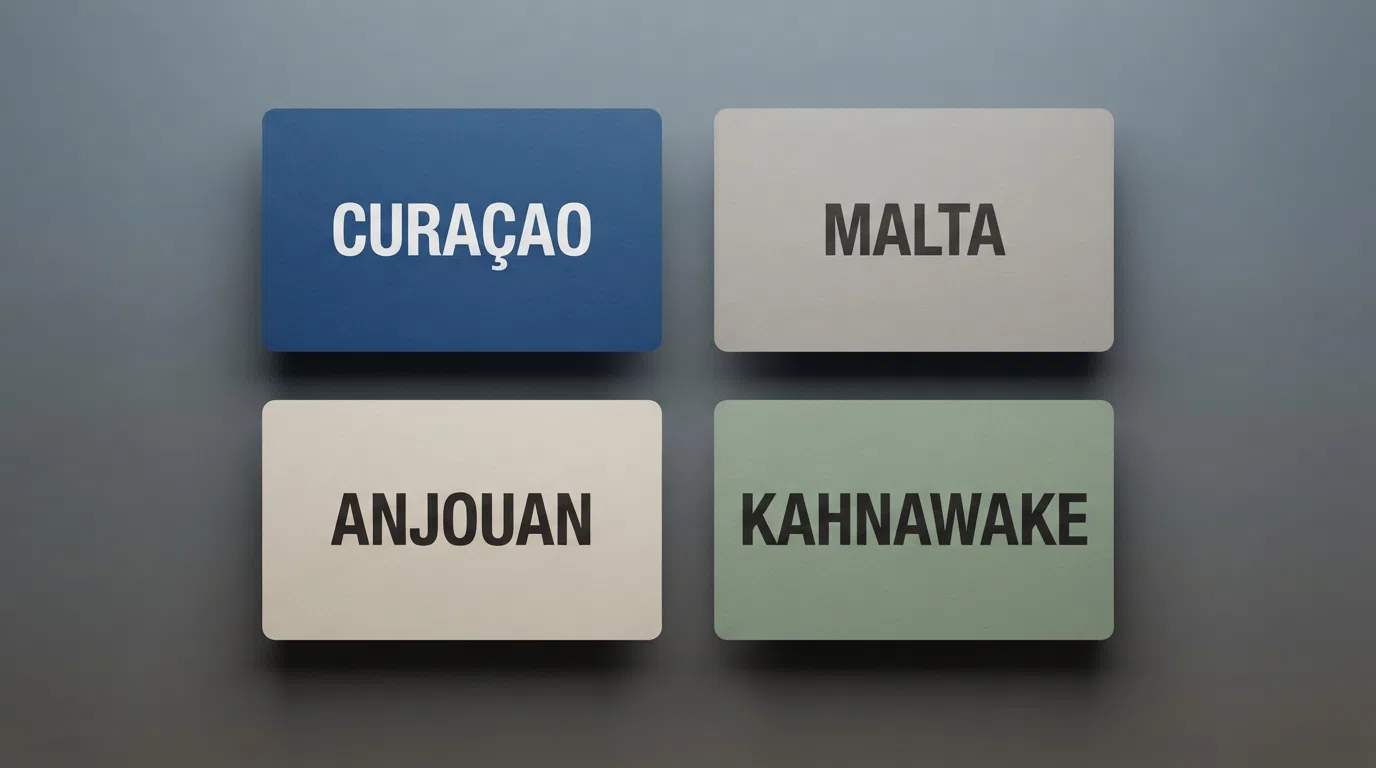
Current as of September 8, 2026; licence claims verified against the UK Gambling Commission public register, the Curaçao Gaming Authority licensee portal, the Malta Gaming Authority register, the Anjouan Offshore Finance Authority registry and the Kahnawake Gaming Commission list.
What a Casino Licence Actually Guarantees — and What It Doesn’t
A casino licence is a legal contract between an operator and a regulator. The regulator sets the terms, the operator accepts them, and the player is supposed to benefit from the bargain. In practice the bargain covers a narrow band of obligations, and what falls outside that band is left to the operator’s own house rules. Players who read the badge in a website footer as a quality mark tend to be surprised by what the badge does not cover.
The Three Things Every Casino Licence Must Deliver
Player fund segregation, game fairness testing, and access to an independent complaints body are the three obligations every credible regulator imposes. Without them, a player has no meaningful recourse if the operator fails. With them, the player has at least a defined path forward and a third party with the standing to compel the operator.
Fund segregation matters most when the operator fails. Segregated player funds sit in a separate trust account and survive the operator’s bankruptcy; unsegregated funds become part of the insolvent estate, available to creditors before players. The GB licensing objectives under section 1 of the Gambling Act 2005 — preventing crime and disorder, ensuring fair and open play, and protecting children and vulnerable persons — define the spirit of the regime, but the operational substance lives in the licence conditions and codes of practice that follow.
RNG testing is the second pillar. An independent test laboratory audits the random number generator behind each game and certifies the published return-to-player percentage. The certificate means the mathematics holds; it does not mean the operator will pay out at the published rate, or that the rate is generous, or that the game is anything other than what it appears to be.
ADR is the third pillar. An alternative dispute resolution provider, named in the casino’s terms and recognised by the regulator, hears complaints the operator’s own support team could not resolve. At a Malta-licensed operator this access is built into the framework; at a Curaçao or Anjouan operator it is either underdeveloped or absent. An MGA or Isle of Man licence signals a higher baseline for responsible gambling and complaint handling, including detailed T&Cs, transparent bonus rules and an independent mediator — that difference is what a player pays for when they pick a higher-cost jurisdiction.
Licence Types at a Glance — Operating, Personal and Premises
Licensing bodies issue different categories of permission. Under the Gambling Act 2005 the GB market distinguishes operating licences from personal management licences and premises licences. For an online casino serving GB customers the only one that matters is the remote casino operating licence — and it has been mandatory at the point of consumption since the Gambling (Licensing and Advertising) Act 2014. A footer that names an “operating licence” without naming the type is, at best, ambiguous.
Offshore regimes use their own terminology. Curaçao now issues direct operator licences under the reformed LOK framework, with the Curaçao Gaming Authority as the licensing body. Malta operates a Type 1 casino licence for casino games, a Type 2 for fixed-odds and Type 3 for peer-to-peer, with Type 4 covering host-server software. Anjouan runs a single-tier licence under the AOFA that covers casino games, sports betting and other verticals under one permit. Each regime costs a different amount to enter — and the cost is itself a signal of how much the operator is willing to spend on player protection.
“Licensed and Regulated” — What the Badge on the Footer Really Means
A footer badge costs nothing to display and proves nothing on its own. Any operator can paste an official-looking logo, fabricate a licence number, and disappear before a regulator catches up. The UKGC’s enforcement data tells the scale of the problem: between April 2024 and June 2025 the Commission issued 3,140 disruption notices (2,032 cease-and-desists, 774 registrar referrals, 402 host referrals, and 3 payment-provider referrals) and referred 447,778 URLs to search engines for delisting, with 287,961 removed.
Verification requires checking the claimed licence against the issuing regulator’s official records, not against the badge. That is work the player has to do before a deposit is made, because the regulator’s enforcement is disruption-based — cease-and-desists, registrar referrals, host referrals and payment-provider referrals — and the Commission has no statutory power to block sites at the ISP level. Proposed legislation for court-ordered blocking has been drafted but enacted nowhere.
Playing Outside the UKGC Safety Net — What British Players Gain and Give Up
The structural trade-off at the heart of the non-UK licence decision is straightforward to describe and harder to evaluate. UKGC-licensed sites offer a protection stack built up over two decades; offshore sites offer larger bonuses, higher stakes and looser rules, but every layer of that protection stack either thins or disappears.
What “Non-UK Licence” Means — and Why British Players Search for It
A non-UK licence, in the form the search term takes, means any regulator other than the UK Gambling Commission. The variants — non-UKGC, offshore, without UK licence, non-GamStop — all describe the same broad category, with slightly different emphasis. Non-GamStop is the term used by players who have self-excluded and want to keep playing; non-UKGC is the formal phrasing; offshore is the operator-side word for jurisdictions outside the UK and EU.
British players search for it because the UKGC has built five walls over the past five years, and at least one of them has become thick enough to push a player off the licensed market. Online slot stakes were capped at £5 per game cycle for players aged 25 and over from 9 April 2025, and at £2 for 18-to-24-year-olds from 21 May 2025. Wagering requirements on bonuses were capped at 10× from 19 December 2025, with mixed-product promotional offers banned outright. GAMSTOP has been mandatory for every GB-licensed online operator since 31 March 2020, with exclusion periods of 6 months, 1 year or 5 years — and the exclusion cannot be cancelled early. Credit cards have been banned for gambling since 14 April 2020, including credit-card-funded e-wallet payments. Each wall has a reason, and each is also a reason to leave.
The UKGC Safety Net — Protections You Lose When You Play Offshore
The table below maps the UKGC’s mandatory protections against what an offshore casino may, must or cannot offer. The list is not exhaustive, but it covers every protection that has moved a UK player to look offshore in the past three years. A “n/a” in the offshore column means the UKGC requirement either does not exist at the regulator’s level or is unenforceable from London.
| Feature | UKGC-Licensed Casino | Non-UK Licensed Casino |
|---|---|---|
| Slot stake cap (age-banded) | £5 (25+), £2 (18–24) | No statutory cap |
| Wagering requirement cap | 10× bonus | 35×–80× typical; some offer 0× |
| Auto-play | Banned | Available |
| Minimum spin speed | 2.5 seconds per cycle | Faster cycles available |
| Losses disguised as wins | Banned | Permitted |
| Reverse withdrawals | Permanently banned | Permitted |
| Credit card deposits | Banned (incl. e-wallet top-ups) | Widely accepted |
| GAMSTOP coverage | Mandatory since March 2020 | Not covered |
| Financial vulnerability check | Mandatory at £150 net deposit (30-day rolling) | None |
| Affordability checks | Announced, staged rollout from July 2026 | None |
| ADR access | Approved provider, escalation to Commission | Varies by jurisdiction |
The protections listed under the UKGC column did not arrive by accident. The £150 financial vulnerability check, which uses publicly available data only (CCJs, bankruptcy orders, IVAs, DROs), came into force from 28 February 2025. The mandatory deposit-limit prompt before first deposit came in from 31 October 2025, with a further standardisation effective 30 September 2026 restricting the term “deposit limit” to gross deposits only. Each of these layers adds friction the regulator judged necessary, and each layer is the thing an offshore casino does not have to provide.
How Offshore Licensing Works — and Why Casinos Choose It
The economics that push operators offshore are visible in the licence fees alone. The Curaçao Gaming Authority licence costs from approximately €47,450 annually under the post-LOK regime; MGA total costs start from approximately €80,000 including compliance overhead; Anjouan licences cost from approximately €17,828 per year. The UKGC application requires a fit-and-proper test on every key individual, source-of-funds verification, a business plan, software testing, and ongoing compliance against the LCCP and Remote Technical Standards — the cost of entry is substantial even before tax.
Tax is where the spread widens further. A UKGC operator pays Remote Gaming Duty at 40% of gross gaming yield from 1 April 2026, plus the statutory gambling levy at 1.1% of GGY for remote casino operators from 6 April 2025 (split 50% treatment, 30% prevention, 20% research). An MGA operator pays 5% gaming tax on casino revenue today, rising to 15% for Type 1 licences from 1 October 2026 — a significant increase, but still well below the UK rate. Anjouan operators pay 0% GGR tax. Curaçao operators pay a small percentage of net revenue.
Stake is the clearest exhibit for what that tax spread does. In March 2025 Stake surrendered its UKGC licence and exited the GB market, citing the unworkable economics of the UK regime. It now operates globally under Curaçao licence OGL/2024/1451/0918 via Medium Rare N.V., with the same game catalogue serving a wider market at a fraction of the compliance cost. The unworkable economics of the UK regime, including the impending 40% RGD rate, were the cited reasons for the exit; the Curaçao licence is the route.
What You Gain — Higher Stakes, Bigger Bonuses and No GAMSTOP
The concrete upsides are real. Offshore casinos accept the stakes the UKGC bans — slot bets of £10, £50, £100 per spin are routine, and bonus-buy slots that the UKGC has restricted remain widely available. Auto-play is offered, spin cycles run faster than the 2.5-second minimum, and credit card deposits are accepted. GAMSTOP does not cover offshore operators, which is the headline reason some players move; it is also the reason a self-excluded player can keep playing at any non-UKGC site without the exclusion database intervening.
Bonuses are the headline draw. Offshore welcome packages commonly run from 175% to 380% match with 40× to 45× wagering — figures that would be illegal at a UKGC operator under the 10× cap, and a £3,000 to £5,000 headline that no licensed-GB site can match. The marketing calls them “free money”. The arithmetic is less generous.
A BitStarz welcome bonus of 1 BTC at 40× wagering requires 40 BTC of slot turnover before any withdrawal clears. At a typical spin stake and a five-second spin cycle, that works out to roughly 1.6 million spins and around 2,200 hours of continuous play, assuming only the bonus amount is wagered. The same bonus at a UKGC-licensed operator, capped at 10× wagering, would require 10 BTC of turnover and about 550 hours of play — roughly a quarter of the time. The offshore bonus costs four times more to clear than the equivalent UKGC offer, before a single spin is taken. That is the trade the marketing copy does not perform.
The expected loss is the other half of the trade. Assuming a 96% return-to-player on a typical slot, the theoretical cost of clearing 40 BTC of turnover is 40 × 0.04 = 1.6 BTC in expected losses. Under the UKGC’s 10× cap the expected loss on the same bonus would be 0.4 BTC. The offshore bonus is not “free money” — it is a liability of about 1.6× the bonus amount in expected losses before any penny can be withdrawn.
The UK Gambling Commission — What Its Rulebook Means for Your Money and Your Rights
The UKGC is the regulator every other comparison on this page is measured against. Its powers, its enforcement record, and its rulebook define what a GB licence guarantees — and the absence of each guarantee is what an offshore casino offers.
The UKGC’s Powers — Register, Enforcement and 3,140 Disruption Notices
The Commission’s first tool is the public register. Every operator holding a GB licence is listed there with a licence number, a trading name and the activities covered by the licence. Verification starts and ends with that register — a licence number that does not appear there is not a licence.
The second tool is disruption, because the Commission has no statutory power to block sites at the ISP or DNS level. Proposed legislation for court-ordered blocking has been drafted but enacted nowhere. What the Commission does instead is issue cease-and-desists with a 48-hour deadline, refer domains to search engines for delisting, refer them to domain registrars and hosting providers, and ask payment companies to stop processing transactions for the named operator. The 3,140 disruption notices issued between April 2024 and June 2025 are the output of that toolkit.
The scale of the work matters. The 447,778 URLs referred to search engines in fifteen months, and the 287,961 subsequently removed, are the closest proxy for how many unlicensed and falsely-licensed operations are targeting British customers at any given moment. The Commission’s own assessment is that the volume has been rising — a finding that is consistent with the same window seeing a 10× wagering cap introduced, a 40% RGD rate take effect, and a statutory levy come online.
UK Licence Types — Remote, Operating, Ancillary and the Application Gauntlet
The remote casino operating licence is the core authorisation a casino needs to offer games to GB customers remotely. Ancillary licences cover gambling software (the game studios), betting intermediaries and lottery operating. A personal management licence covers key individuals within the operator — the directors, the beneficial owners, the persons responsible for the gambling operation.
The application gauntlet is the reason the licence costs what it costs. A fit-and-proper test on every key individual, source-of-funds verification on the applying entity, a full business plan, a software audit against the Remote Technical Standards, and ongoing compliance with the Licence Conditions and Codes of Practice. Operators must also integrate with GAMSTOP, run financial vulnerability checks, prompt deposit limits before the first deposit, and report to the Commission on a defined schedule. The LCCP and the RTS are the working instruments; the CAP and BCAP Codes govern advertising. None of this is optional; all of it is the price of a GB licence.
MGA vs UKGC — Two Regulators, Two Very Different Bargains for Players
The Malta Gaming Authority is the closest comparator to the UKGC for a UK-facing player, and the bargain it offers is meaningfully different. The MGA operates an EU-standard framework with fund segregation, detailed T&Cs rules, transparent bonus requirements, and access to an independent mediator. From the player’s perspective an MGA-licensed casino gives the second-strongest protection package available, behind only the UKGC.
The differences are in the cost. The MGA application fee, annual licence fees and compliance overhead together start at approximately €80,000 per year — about 70% more than a Curaçao licence at minimum. The MGA’s gaming tax was 5% on casino revenue for years, and the Gaming Tax (Amendment) Regulations 2026 raise that to 15% for Type 1 (casino) and 10% for Types 2, 3 and 4 from 1 October 2026. That is the biggest shift in MGA economics in a decade, and the question for the next two years is whether MGA-licensed operators follow the path Stake took with the UKGC, or absorb the higher tax.
What the MGA gives a UK player that the UKGC does not is also relevant. A 200% welcome bonus, a 40× wagering offer, and crypto deposits are all available at MGA sites in a way they are not at UKGC sites. What the MGA does not give a UK player is GAMSTOP coverage, the £5/£2 stake cap, the £150 vulnerability check, or the auto-play ban — protections that are GB-specific.
The Offshore Licence Landscape — Curaçao, MGA, Anjouan and Kahnawake Compared
The four offshore jurisdictions on this page offer very different levels of oversight. The table below summarises the regulatory shape, the cost, and the player-protection mechanisms each one provides, with the key risk that a player should weigh before depositing.
| Jurisdiction | Regulator | Annual Operator Cost | Player Protection | ADR Access | Crypto-Friendly | Key Risk |
|---|---|---|---|---|---|---|
| Curaçao | Curaçao Gaming Authority | From ~€47,450 | Fund segregation under LOK reform | ADR developing | Yes | Enforcement capacity unproven |
| Malta (MGA) | Malta Gaming Authority | From ~€80,000 | Full suite incl. independent mediation | Yes | Less so | Gaming tax rising 5%→15% from October 2026 |
| Anjouan | AOFA (Comoros) | From ~€17,828 | Minimal | Minimal | Yes | AOFA legitimacy dispute (December 2025) |
| Kahnawake | Kahnawake Gaming Commission | $40,000 application fee | Established over two decades | Established | Yes | Smaller ecosystem |
| Costa Rica | None | n/a | None | None | Yes | No gambling licence exists |
Curaçao eGaming — The Dominant Offshore Licence, Rebuilt in 2024
Curaçao was the dominant offshore licence for most of the past decade, but the regime that built that dominance was not the regime that existed in 2024. The pre-LOK framework ran on a master-licence and sub-licence model: a handful of master licence holders issued sub-licences to operators, with weak oversight and inconsistent enforcement. The National Ordinance on Games of Chance, in force from 24 December 2024, replaced that model with direct operator licensing through the Curaçao Gaming Authority.
The new regime costs operators from approximately €47,450 annually and requires a physical office in Curaçao. The reform strengthened fund segregation and player-protection requirements on paper. ADR is still developing, enforcement capacity against an operator that breaches the rules is unproven, and the transition has been uneven across the operator base — some operators carry new CGA-issued licences, others still operate under legacy sub-licence numbers like 8048/JAZ that are being transitioned. Curaçao remains the dominant licence for crypto casinos and for UK-facing offshore operators, but a player should confirm the licence type on the CGA’s portal before treating the badge as meaningful.
MGA / Malta Gaming Authority — EU-Standard Regulation at a Price
The Malta Gaming Authority is the gold standard among offshore regulators. The MGA framework includes detailed T&Cs rules, transparent bonus conditions, segregated player funds, mandatory responsible-gambling tools, and access to a recognised ADR provider whose decision is binding on the operator. An MGA licence signals an operator philosophy built around compliance rather than around cheap entry.
The cost barrier is the reason most operators on this list chose Curaçao instead. MGA total costs start at approximately €80,000 per year, with compliance overhead on top, and the gaming tax increase from 5% to 15% for Type 1 casino licences from 1 October 2026 will narrow the spread further. For a player, an MGA licence is the highest non-UKGC protection available — and it is the one a careful player should look for first.
Anjouan — Cheap, Fast and Under a Legitimacy Cloud
Anjouan is the lowest-cost route to a real gambling licence on the offshore market, and the fastest to obtain — operators can be licensed in four to eight weeks. The Anjouan Offshore Finance Authority charges from approximately €17,828 per year, charges 0% GGR tax, and offers a single-tier licence that covers casino, sports betting and other verticals in one permit. The trade-off is player protection: dispute resolution is minimal, the regulator’s enforcement record is short, and the legal standing of the licence itself has been questioned.
The 10 December 2025 communique from the Comorian Ministry of Finance is the most direct evidence of that legitimacy question. The Ministry named the AOFA as conducting illegal offshore banking activity, referred the matter to prosecutors and to international financial authorities, and put every AOFA-issued licence into a regulatory grey zone. A player signing up at an Anjouan-licensed casino today is signing up under a licence whose parent body has been accused by its own government of operating illegally. The cost savings are real; the recourse is thin.
BC.Game is the highest-profile Anjouan-licensed operator in the market. Its UKGC licence was revoked in December 2024 after its parent company Blockdance B.V. entered bankruptcy with documented player losses exceeding $2 million. The operator migrated to Anjouan — the cheapest, fastest jurisdiction available — and that trajectory is itself the most visible signal a player can read.
Kahnawake — The Long-Established Canadian Alternative
The Kahnawake Gaming Commission has been licensing online gambling operators since the late 1990s, predating most of the offshore industry. The Commission runs a Client Provider Authorization model, charges a $40,000 application fee, and has built a two-decade reputation for banking acceptance and player trust. The licence is well established in the North American market, less so in the UK-facing offshore segment.
For a player, the trade-off is ecosystem size. Kahnawake-licensed operators tend to be smaller and more established than the Curaçao-licensed crypto-native brands; fewer bonus headlines, but a longer compliance history. The Commission’s enforcement record is modest but visible, and the dispute resolution process is defined. For a player prioritising regulatory longevity over bonus size, Kahnawake is a credible alternative to Curaçao.
Top 10 Offshore Casino Sites for UK Players — Ranked and Compared
The ten operators below are ranked by licence credibility, bonus fairness and player experience, with a UK-facing eye. Each entry profiles the licence, the welcome offer, the wagering terms and the distinctive trait. The ranking methodology is set out in its own section later in this guide.
Head-to-Head — How the Ten Offshore Operators Stack Up
| Operator | Licence | UKGC Status | Welcome Bonus | Wagering | Free Spins | Bonus Validity | Game Count |
|---|---|---|---|---|---|---|---|
| Stake | Curaçao (CGA, post-LOK) | Surrendered March 2025 | 200% up to $2,000 | 40× | None standard | — | 4,000+ |
| BC.Game | Anjouan | Revoked December 2024 | 380% up to $4,000 + 400 FS | 45× (dep+bonus) | 400 (100 per deposit) | 30 days | 4,000+ (incl. 75+ BC Originals) |
| Cloudbet | Curaçao + Anjouan | Not GB-licensed | Up to $2,500 (zero-wagering rakeback) | 0× | None | 30 days | 1,000+ |
| BitStarz | Curaçao (CGA) | Not GB-licensed | Up to 5 BTC + 180 FS across 4 deposits | 40× | 180 (+ 20 no-deposit) | 14 days per deposit | 4,500+ |
| 7Bit Casino | Curaçao (CGA) | Not GB-licensed | 325% up to 5.25 BTC + 250 FS | 35× | 250 | 14 days per deposit | 5,000+ |
| mBit Casino | Curaçao (CGA) | Not GB-licensed | 175% up to 2 BTC + 300 FS | 40× | 300 | — | 2,500+ |
| Freshbet | Curaçao (CGA) | Not GB-licensed | 300% up to £3,000 + 200 FS | 40× | 200 (+ 25 no-deposit) | — | — |
| Wild.io | Curaçao (CGA transition) | Not GB-licensed | 350% up to $3,000 + 200 FS | 40× | 200 | 7 days | 9,000+ |
| BetPanda | None (Costa Rica registration) | Not GB-licensed | 100% up to 1 BTC | 40× on deposit | None | 7 days | 4,000+ |
| Flush | Curaçao (CGA) | Not GB-licensed | 100% up to $200 / 150% up to $1,500 | 30× / 35× | None | — | — |
The table is built from each operator’s published terms, with the licence verified against the regulator’s own register at the time of writing. Cells where the operator does not publish a figure carry an em dash rather than a guess — a missing number is information, not a gap to paper over.
Stake — The Giant That Walked Away from the UKGC
Stake is the biggest name on this list by game count, by brand recognition and by player volume, and the cleanest case study for why an operator walks away from GB. In March 2025 the company surrendered its UK Gambling Commission licence and exited the British market, citing the unworkable economics of the UK regime at 40% Remote Gaming Duty. It now operates globally under Curaçao licence OGL/2024/1451/0918 through Medium Rare N.V., serving the same UK customer base from a different licence.
The game catalogue is the headline. Pragmatic Play, Evolution, Hacksaw Gaming, Push Gaming, Nolimit City and Relax Gaming power more than 4,000 titles, with new releases appearing weekly. The welcome structure differs from the standard deposit-match: Stake runs a VIP programme with rakeback and reload offers rather than a fixed first-deposit match, though some sources report a 200% up to $2,000 headline at 40× wagering on the standard track. There is no traditional free-spin welcome offer — the bonus economics sit inside the VIP programme instead.
A player signing up here is buying into a different bargain from the one a UKGC licence offered. The Stake exit was not a regulatory failure; it was a calculation that the 40% RGD rate made the GB market unprofitable at the scale Stake operates. That same calculation is the trade a player is accepting: a bigger game catalogue and the Stake brand, against the protection stack a UK licence provided.
BC.Game — A UKGC Cautionary Tale with an Anjouan Second Act
BC.Game is the cautionary tale of this list. In December 2024 the UKGC revoked the operator’s licence after Blockdance B.V., the parent company, entered bankruptcy with documented player losses exceeding $2 million. The operator migrated to Anjouan — the cheapest, fastest jurisdiction available — and continued serving players under a different licence. The history is the verdict.
The current offer is the most generous in the table: 380% up to $4,000 plus 400 free spins across four deposits, with 45× wagering on the deposit-plus-bonus amount and a 30-day validity window. The game library is unusual — 38+ provider studios alongside 75+ BC Originals, the operator’s own provably fair titles that let players verify each spin’s outcome on-chain. The Originals are the closest thing the offshore market has to a transparency advantage over a UKGC site.
A player weighing BC.Game should read the trajectory first. The operator was revoked by a regulator that requires segregated player funds, then migrated to a jurisdiction that does not require them. The bonus size is the marketing response to a player base that has already lost money to the same operator. The expected-loss math still applies: at 45× wagering on deposit plus bonus, the offshore cost is even higher than the BitStarz benchmark.
Cloudbet — Zero-Wagering Rewards and a Crypto-First Philosophy
Cloudbet solves the bonus-cost problem by deleting it. The welcome package is structured as up to $2,500 in real cash rewards over 30 days — 10% rakeback plus daily cash drops plus Cash Vault credits — with zero wagering requirements on those rewards. The only friction is a 1× deposit turnover before the first withdrawal can be processed. For a player who calculates expected losses on every offer, this is the most efficient structure on the page.
The operator runs a Curaçao plus Anjouan dual licence under Halcyon Super Holdings B.V., with 1,000+ games from Pragmatic Play, Evolution, Microgaming, Betsoft, Play’n GO and Spinomenal. The minimum deposit is 0.001 BTC, which puts a floor on the bonus claim that crypto-new players should know. The game library is smaller than the larger brands on this list, but the provider list is mainstream enough that the missing volume is unlikely to be missed.
The structural contrast is what matters: 0× wagering against the 35× to 45× norm elsewhere on the page, and a 1× deposit turnover against the 40× to 45× the same bonus would demand elsewhere. For a player depositing crypto, Cloudbet’s offer is the only one on this list where the bonus’s expected cost is meaningfully close to zero. That difference compounds across multiple deposits and across a player’s lifetime at the site.
BitStarz — The Multi-Award Winner with 4,500+ Games and No-Deposit Spins
BitStarz is the best-known brand on this list, run by Dama N.V. under Curaçao licence OGL/2023/174/0082 from the post-LOK CGA regime. The game library sits at 4,500+ titles from Pragmatic Play, Evolution, NetEnt, Play’n GO, Microgaming and Yggdrasil. The welcome package runs across four deposits — 100% up to 1 BTC plus 180 free spins on the first, then 50% / 50% / 100% on subsequent deposits, totalling up to 5 BTC plus 180 free spins at 40× wagering and 14-day validity per deposit, with a €20 minimum.
The 20 no-deposit free spins on email verification are the rare thing on this list — a way to test an offshore casino’s withdrawal process without staking your own bitcoin. The 40× wagering applies to no-deposit spin winnings too, with a $200 maximum cashout. That cashout cap is the catch, and the no-deposit offer’s value is in confirming the operator pays at all rather than in the dollar amount that comes back.
The headline bonus is competitive but not the cheapest wagering on this list. A player comparing BitStarz against 7Bit Casino or Flush for a small-deposit bonus will find 35× or 30× wagering at those alternatives. A player prioritising the no-deposit test, the larger game library and a brand with established third-party review coverage will find BitStarz the safer starting point. The €20 minimum deposit is the lowest barrier on the page alongside mBit’s 30 USDT floor.
7Bit Casino — Retro Style, 5,000+ Games and a 325% Welcome Package
7Bit is the Dama N.V. sister brand to BitStarz, sharing the Curaçao CGA licence and the same group compliance infrastructure. The game library is larger — 5,000+ titles from Pragmatic Play, Evolution, Betsoft, NetEnt, Microgaming and BGaming — and the welcome package is more aggressive: 325% up to 5.25 BTC plus 250 free spins across four deposits, with 35× wagering on both the match funds and the free-spin winnings, 14-day validity per deposit, and a $200 maximum cashout per free-spin bonus. The minimum deposit is $20.
The headline comparison is with BitStarz, and the case for 7Bit is the slightly lower wagering multiple. A 35× turnover versus 40× is a real saving in expected-loss terms — roughly 12.5% less theoretical cost per bonus cleared — at the cost of the no-deposit free-spin offer BitStarz provides. For a player who has settled on Dama N.V. and wants the lower-cost of the two brands, 7Bit is the choice.
7Bit is the BitStarz operation with a larger library and a slightly smaller wagering multiple. The game count is real; the 35× wagering is real; the absence of a no-deposit offer is the trade. Both brands share the same underlying operator, the same licence and the same withdrawal infrastructure.
mBit Casino — Bitcoin-First with 300 Free Spins and a 3 BTC Weekly Cashout Cap
mBit is the crypto-native Dama N.V. brand, with a 2,500+ title library from Pragmatic Play, Evolution, Betsoft, NetEnt and BGaming. The welcome is 175% up to 2 BTC plus 300 free spins at 40× wagering, with a 30 USDT minimum deposit. The headline match rate is the lowest in the Dama N.V. trio, but the 300 free-spin count is the second-highest on the page.
The structural limit that defines the mBit experience is the 3 BTC weekly withdrawal ceiling. For most players that ceiling is invisible. For a player who hits a large win in the first week of play, the ceiling turns a single payout into a multi-week drip. The terms are published; the friction is real.
mBit is the same Dama N.V. group with fewer games, more free spins, and a tighter withdrawal ceiling. For casual crypto play it is competitive. For high-volume winners the weekly cap is the limit that matters.
Freshbet — No-Deposit Free Spins and a £3,000 Welcome Package for UK Players
Freshbet is unusual on this list for pricing the welcome offer in sterling rather than US dollars or bitcoin, which removes the FX friction for a British player. The package runs 300% up to £3,000 plus 200 free spins across three deposits at 40× wagering, with a £20 minimum for the full package. The 25 no-deposit free spins on registration are the marketing lead, with playthrough required before withdrawal.
The provider list is the same group as Stake: Pragmatic Play, Evolution, Hacksaw Gaming, Push Gaming, Nolimit City and Relax Gaming. The operator runs under Ryker B.V. with a Curaçao CGA licence. What research does not cover is the no-deposit free-spin cashout cap — the operator’s published terms do not specify it in the version available at the time of writing. A player claiming the offer should check the terms before playing rather than after, because a cap that is not visible is a cap that surprises.
Freshbet’s sterling pricing is a small but real advantage for a UK player funded from a GBP bank account, and the no-deposit free spins are the test the BitStarz offer also provides. The headline bonus terms sit in the 40× middle of the pack. The information gap on the no-deposit cap is the caveat that should not be glossed over.
Wild.io — 9,000+ Games and the Biggest Welcome Multiplier on This List
Wild.io carries the largest game library in the featured set — 9,000+ titles from 50+ providers including Pragmatic Play, Evolution, Hacksaw Gaming and Nolimit City. The welcome package is the highest headline match rate at 350% up to $3,000 plus 200 free spins across three deposits, at 40× wagering. The Nonce Gaming B.V. operator runs under Curaçao 8048/JAZ — a legacy sub-licence number that is being transitioned to the post-LOK CGA regime.
The detail that defines the Wild.io offer is the 7-day validity window from claim. Every other bonus on this page runs on 14-day or 30-day windows; Wild.io’s runs on seven. At 40× wagering on $3,000, clearing the bonus requires $120,000 of slot turnover in seven days — about $17,000 a day at a $1 spin, or 17 million spins over the week. The per-stage cashout caps are $1,000 / $1,000 / $3,000, and a player who fails to clear within the window forfeits the bonus and any winnings from it.
The 350% headline looks generous until the 7-day validity is read. A player who cannot clear $3,000 of turnover in seven days will lose the bonus. The game library is genuinely the biggest on the page; the bonus window is the shortest.
BetPanda — Fast Withdrawals and a 1 BTC Bonus, but No Gambling Licence
BetPanda is the entry on this list with no gambling licence at all. The Star Bright Media S.R.L. operator holds a Costa Rica data-processing registration — and Costa Rica issues no gambling-specific licence, has no gambling regulator, and runs no register to check. The bonus is 100% up to 1 BTC at 40× wagering on the deposit amount (some sources report 80×), with a 7-day clearance window and €10 minimum deposit. The game library sits at 4,000+ titles from Pragmatic Play, Evolution, Ezugi, Hacksaw Gaming, Slotmill and Spribe.
The terms of the bonus are competitive. The licence is not. A Costa Rica data-processing registration does not require fund segregation, does not require independent game testing, does not require any responsible-gambling tools, and does not provide any ADR process. A player with a complaint about a delayed withdrawal, a confiscated bonus or a closed account has no regulator to file the complaint with.
There is no gambling regulator behind BetPanda. Costa Rica issues no gambling licence, and the operator holds only a data-processing registration. A player with a complaint has nowhere to file it — and the bonus terms that make the offer look competitive do not change that absence.
Flush — Low Wagering, Two Tiers and a Clean Crypto Experience
Flush offers the lowest wagering multiple on this list after Cloudbet’s zero. The two-tier welcome lets a player choose the bonus that matches their deposit size: Tier 1 is 100% up to $200 at 30× wagering on deposit plus bonus with a $10 minimum; Tier 2 is 150% up to $1,500 at 35× on deposit plus bonus with a $200 minimum. There are no free spins on either tier, but the full account balance is withdrawable subject to wagering completion.
The crypto-native operator runs under a Curaçao CGA licence, with Pragmatic Play, Evolution, Hacksaw Gaming, Nolimit City and Push Gaming on the provider list. Game counts are not published in the available data. The structural appeal is the wagering: a 30× multiple on a small deposit is the cheapest expected-loss proposition in the table after Cloudbet’s zero, and the smaller deposit ceiling means the bonus is realistically clearable within the validity window.
Flush’s 30× wagering on the $200 tier is the second-cheapest on this list, behind only Cloudbet’s zero. For a player depositing $200 or less, it is the cleanest expected-loss proposition in the table. For a player depositing $1,500 the 35× Tier 2 is competitive with 7Bit’s 35× across the same range.
Crypto Casinos with a Licence — Can You Really Play Anonymously?
The licensed crypto casino is the operator that runs a gambling licence and a crypto payment rail side by side. Most of the operators on this page accept cryptocurrency; some are crypto-first, and the marketing tends to promise anonymity. The promise is partial.
What a Licensed Crypto Casino Is — and How It Differs from a Fiat Site
A licensed crypto casino is a gambling operator that holds a recognised gambling licence — most commonly Curaçao, sometimes Anjouan, rarely MGA — and accepts cryptocurrency as a deposit and withdrawal method. Bitcoin and Litecoin are the most common, with Ethereum, USDT and a growing list of altcoins at the larger brands. The licence applies to the operator’s operations regardless of the payment rail; a Curaçao licence is a Curaçao licence whether the player deposits in US dollars or in bitcoin.
The differences from a fiat casino are practical rather than legal. Crypto deposits clear faster — typically within minutes rather than days. Crypto withdrawals avoid the card-issuer and bank friction that slows fiat payouts. Minimum deposits are lower — Cloudbet’s 0.001 BTC floor is roughly equivalent to a £40 deposit at current bitcoin pricing, but feels smaller to a player who thinks in BTC. Provably fair games, where the player can verify each spin’s outcome on-chain, are a crypto-native transparency mechanism — BC.Game Originals are the highest-profile example in the featured set.
The licence dimension does not change. A licensed crypto casino is subject to the same fund-segregation, RNG-testing and ADR obligations as a fiat casino, where the regulator imposes them. At a Curaçao CGA-licensed operator that means segregated funds under the LOK reform; at an Anjouan operator that means minimal obligations; at a Costa Rica data-processing registration it means no gambling regulator at all. The crypto rail does not add or subtract from those requirements.
No-KYC Crypto Casinos — Playing Without Identity Verification
The no-KYC marketing claim is that a player can register, deposit and play without providing identity documents. In practice that claim holds until the operator decides it does not. Most “no-KYC” casinos accept documents voluntarily, but reserve the right to request identity verification at withdrawal — particularly for larger payouts, for bonus claims, or for any withdrawal that triggers the operator’s anti-money-laundering review threshold. The licence tension is direct: a regulator that requires AML checks from operators cannot be squared with a marketing claim that the operator never checks.
A player at a UKGC-licensed site has no anonymity at all — name, address and date of birth are verified before the first deposit, and source-of-funds checks apply above defined thresholds. A player at a Costa Rica-registered site like BetPanda has no regulatory obligation to verify at all, which means the only KYC check is whatever the operator chooses to do for its own risk management. A player at a Curaçao-licensed crypto casino sits in between — no mandatory check at registration, but a check that may arrive at withdrawal.
The trade-off is anonymity against recourse. A no-KYC casino with no gambling regulator is a black box if it refuses to pay — the player has no document trail, no regulator to complain to, and no ADR provider to escalate to. A no-KYC casino with a Curaçao licence has slightly more recourse; a no-KYC casino with an MGA licence has the most. Anonymity and protection move in opposite directions, and the operator’s licence is the proxy for how much protection remains when the anonymity ends.
How to Verify a Casino Licence — and Spot a Fake Before You Deposit
Verification takes minutes and prevents the most common mistake a UK player makes at an offshore casino — depositing at a site whose licence badge does not survive a five-second check on the regulator’s own register. The work is the player’s, because the UKGC cannot block sites and the offshore regulator’s enforcement capacity is uneven.

The Two-Step Licence Check — Find the Number, Search the Register, Confirm the Domain
The first step is to find the licence number. Every genuine regulator requires a numbered licence to be displayed, typically in the casino’s footer, on the about page, or in the terms and conditions. A badge without a number, a logo without text, or a footer that says “Licensed and Regulated” without naming the regulator is already a red flag — the marketing copy has done the work the licence number was supposed to do.
The second step is to search the regulator’s own public register. The UK Gambling Commission runs a public licence register covering every GB-licensed operator. The Curaçao Gaming Authority runs a licensee portal covering post-LOK direct licences. The Malta Gaming Authority runs a licensee search covering every MGA-licensed entity. The Anjouan Offshore Finance Authority runs a registry of licensed operators. The Kahnawake Gaming Commission runs a Client Provider Authorization list. Costa Rica issues no gambling licence and has no register to check — an operator claiming a Costa Rica gambling licence is making a claim the jurisdiction does not support.
The third step is to confirm the domain. The register entry should list a registered domain or trading name that matches the URL in the player’s browser bar exactly. A licence issued to “Example Casino Ltd” with a registered domain of example-casino.com does not cover a player browsing example-casino.co or example-casino.net. The mismatch is sometimes innocent — operators use multiple domains — but it should be checked, not assumed.
Red Flags — What a Fake or Unlicensed Casino Looks Like
The signals below should make a player close the tab before depositing. None is conclusive on its own; several together are.
- No licence number anywhere on the site, only a logo or badge
- A licence number that does not appear on the regulator’s own public register
- A licence from a regulator that does not exist, or from a jurisdiction with no gambling-specific licensing regime
- A Costa Rica “licence” or company registration presented as a gambling licence
- No ADR provider named in the terms, or an ADR provider that does not recognise the regulator
- Terms that reserve the right to confiscate funds without a stated reason
- No responsible-gambling page, no deposit-limit tool, no self-exclusion mechanism
- A domain registered within the last six months at the time of the check
- Bonus terms with no stated wagering requirement or no stated validity window
- Withdrawal limits buried in a separate terms document rather than on the bonus page
- No live-chat or email support channel that responds within 24 hours
- An operator address that resolves to a virtual office or a PO box only
The BC.Game trajectory is the worked example. The operator held a UKGC licence, had it revoked in December 2024 after a parent-company bankruptcy left documented player losses exceeding $2 million, and migrated to Anjouan — a jurisdiction whose own regulator was named in a December 2025 communique from the Comorian Ministry of Finance for illegal offshore banking activity. A player who ran the two-step check at any point in that sequence would have found the licence number, found the revocation notice, found the Anjouan licence, and found the Comorian dispute. Each step takes seconds.
Staying in Control — Responsible Gambling Tools That Still Work Offshore
The UKGC’s responsible-gambling framework is the strictest in the offshore comparison. GAMSTOP coverage, the £150 financial vulnerability check, the mandatory deposit-limit prompt, the affordability-check rollout, the auto-play ban and the 2.5-second spin minimum — every one of those is a UKGC obligation that does not transfer to a Curaçao, Anjouan or Costa Rica operator. The responsible-gambling tools a player can still rely on offshore are the operator’s own, plus the UK and international support organisations that exist outside the licensing regime.
Deposit Limits, Session Timers and Reality Checks — What Offshore Casinos Offer
Most offshore casinos offer self-set deposit limits, loss limits and session timers inside the player’s account. These are voluntary — the operator is not required to prompt the player to set one, the player is not required to set any limit, and the operator is not required to enforce a limit if the player requests an increase. The UKGC’s mandatory deposit-limit prompt from 31 October 2025, the gross-deposit-limit standardisation from 30 September 2026, the £150 financial vulnerability check from 28 February 2025, and the affordability-check staged rollout from July 2026 do not apply to offshore operators.
The implication is that the player must do the work themselves. A reasonable starting configuration on any offshore account: a deposit limit set below the maximum the operator allows, a loss limit set at half the deposit limit, a session timer at 60 minutes with a mandatory logout at expiry. None of these settings are enforced by the regulator, and most offshore operators will action an increase in any limit on request without a cooling-off period.
The UKGC tools that are absent offshore are not duplicated by international equivalents. There is no global self-exclusion scheme that covers every offshore operator; there is no international affordability check; there is no equivalent of the £150 vulnerability threshold. The tools the operator offers exist because the operator chose to offer them, and they can be withdrawn or weakened at any time.
GAMSTOP and International Self-Exclusion — What Reaches Offshore
GAMSTOP has been mandatory for every GB-licensed online operator since 31 March 2020. The exclusion periods are 6 months, 1 year or 5 years, with a 5-year auto-renewal option for players who want the longest possible period. The exclusion cannot be cancelled early — once started, the player waits out the period or lets the auto-renewal continue for up to 7 years beyond the minimum.
GAMSTOP covers the operator, not the player, and the database does not reach unlicensed or offshore operators. An offshore casino has no obligation to consult the GAMSTOP register, and a self-excluded player can sign up, deposit and play at any non-UKGC casino without the exclusion mechanism intervening. The same applies to any international self-exclusion scheme: there is no global register, and the site-specific exclusion tools some offshore casinos offer are easily bypassed by opening an account elsewhere.
For a player who has self-excluded and is looking offshore because the exclusion period feels wrong, the right move is not to bypass it but to engage with the support infrastructure that exists. GamCare runs the National Gambling Helpline on 0808 8020 133, free 24/7, and is the first call. The National Gambling Support Network treated 11,960 clients between April 2024 and March 2025 — an 11% year-on-year increase — with 93% of clients completing treatment showing improvement. The exclusion can be undone at the end of its period if the player still wants to play; the support exists in the meantime.
UK and International Problem-Gambling Support — Where to Get Help
- GamCare — operates the National Gambling Helpline on 0808 8020 133, free and confidential, 24 hours a day. In 2026, 81.5% of helpline contacts cited online gambling — a five-year high.
- GambleAware — funds treatment and research through the National Gambling Support Network; publishes the annual NGSN statistics.
- NHS gambling harm clinics — operate in England, Scotland and Wales; referral routes via the GP or directly via the clinic.
- Gamblers Anonymous UK — peer-support meetings across the country; runs the fellowship model that has operated for four decades.
- GAMSTOP — national online self-exclusion scheme; sign-up excludes the player from every GB-licensed online operator for the chosen period.
The prevalence data behind the support infrastructure tells two stories at once. The Gambling Survey for Great Britain Year 2 (2024), using a push-to-web methodology, reported 2.7% of participants scoring 8 or more on the Problem Gambling Severity Index — the threshold indicative of problem gambling. The NHS Health Survey for England 2024, using face-to-face methodology, reported 0.4% scoring 8+ and 5% scoring 1 or more (at risk or problem gambling combined). The two figures measure different things, and the GSGB’s online methodology tends to capture a more gambling-active sample; the NHS face-to-face methodology captures a more representative sample. The figure to act on is whichever survey matches the player’s own situation.
The statutory levy that funds the support infrastructure sits at 1.1% of gross gambling yield for remote casino operators from 6 April 2025, split 50% treatment, 30% prevention, 20% research. The levy is paid by GB-licensed operators only; offshore operators do not contribute. A player who uses the support infrastructure at a UKGC-licensed site is funding it through their play; a player who uses it after moving offshore is drawing on it without contributing.
How We Selected and Ranked These Operators
This ranking is built from published licence records, operator terms and conditions, and third-party review data — not from first-hand play. No deposit, no gameplay and no withdrawal test was performed by the author at any operator on this list. Where the data is incomplete, the article says so rather than guessing.
The ranking methodology gives the most weight to licence credibility and UKGC status. An operator with an MGA licence ranks above an operator with a Curaçao CGA licence, which ranks above an operator with an Anjouan licence, which ranks above an operator with no gambling licence at all. Within a tier, the ranking is driven by bonus fairness — wagering multiple, validity window, free-spin count and cashout caps — and then by game selection, provider quality and player feedback visible on specialist review sites.
Sources used for every operator include the UKGC public register, the Curaçao Gaming Authority licensee portal, the MGA licensee search, the Kahnawake Gaming Commission CPA list and the Anjouan AOFA registry, plus the operator’s own terms and conditions page. The UKGC enforcement and disruption data from the Commission’s published summaries is the basis for the regulatory context in the first half of the article. Where research could not confirm a specific figure, the article marks the cell as such rather than substituting a guess.
Your Offshore Casino Checklist — Making the Decision with Your Eyes Open
The decision to play at an offshore casino is a trade. A higher stake ceiling, a larger bonus, faster withdrawals and crypto deposits come at the cost of GAMSTOP coverage, the £150 vulnerability check, the 10× wagering cap, the auto-play ban, and the approved ADR route back to the regulator. A player who wants the upside and is comfortable managing their own limits, who is not self-excluded, who is comfortable with crypto or offshore banking, and who will verify the licence on the regulator’s own register before depositing is a player for whom the trade makes sense. A player who is self-excluded via GAMSTOP, wants ADR-backed complaints, is uncomfortable with crypto or offshore banking, or relies on the £150 vulnerability-check safety net is a player for whom the trade does not.
The one non-negotiable step is verification. Find the licence number on the casino’s footer or terms. Go to the regulator’s own public register. Confirm the number and the registered domain match the site in the browser bar. A licence that does not appear on the regulator’s register is not a licence, no matter what the footer says. That check takes a minute; the deposit is irreversible once it lands.
The expected-loss reality is the other thing to internalise before the first deposit. A 40× wagering bonus is not “free money”. It is a liability of roughly 1.6× the bonus amount in expected losses before a penny can be withdrawn, assuming a 96% RTP. The same bonus at a UKGC operator, capped at 10× wagering, would carry an expected loss of 0.4× the bonus — making the offshore bonus four times more expensive to clear than the equivalent UKGC offer. The marketing calls the larger bonus “exclusive” or “limited”; the arithmetic calls it four times the cost.
The page’s central finding is that a non-UK licence is not inherently unsafe, but it shifts the entire protection burden onto the player. Every check the UKGC performs at a licensed site — affordability, vulnerability, dispute resolution, fund segregation — is a check the player must perform, or commission, or accept the absence of, at an offshore site. Most players do not pick that burden up. The ones who do — the players who verify before they deposit, who read the bonus terms before they claim, who set their own deposit limits, who know where to call if the operator stops paying — are the ones for whom an offshore casino is a reasonable adult choice. The rest are the players the regulator’s enforcement data was written about.
Frequently Asked Questions
Is it legal for a UK player to gamble at a non-UK licensed casino?
Section 33 of the Gambling Act 2005 criminalises the operator providing gambling without a licence, not the player placing a bet. No UK player has been prosecuted for gambling at an offshore casino — every enforcement action on record targets operators and intermediaries. The practical risk is loss of UKGC protection, not legal jeopardy.
What protections do I lose by playing at an offshore casino instead of a UKGC-licensed one?
You lose the GAMSTOP register, the £150 financial vulnerability check, the £5/£2 age-banded stake cap, the 10× wagering limit, the auto-play ban and 2.5-second spin minimum, the credit card ban, and access to an approved ADR provider. The offshore casino has no obligation to offer any of them.
How can I check whether an offshore casino’s licence badge is real?
Find the licence number in the casino’s footer or terms. Go to the issuing regulator’s own public register — the Curaçao Gaming Authority portal, the MGA licensee search, the Kahnawake list, or the Anjouan AOFA registry. Confirm the number and the registered domain match. A number that does not appear is not a licence.
How do Curaçao, MGA and Anjouan licences compare for player safety?
The MGA sets the highest offshore bar: fund segregation, detailed T&Cs rules, independent ADR, and a gaming tax rising from 5% to 15% for casinos from October 2026. Curaçao’s reformed CGA covers fund segregation but ADR is still developing. Anjouan offers minimal dispute resolution and operates under an unresolved regulatory dispute from December 2025.
Can a non-UK casino offer higher stakes than the £5 UK slot limit?
Yes. The £5 cap (£2 for 18-24-year-olds) applies only to UKGC-licensed operators. Offshore casinos are not bound by those licence conditions and set their own ceilings. The operators on this page generally accept bets at whatever size the individual game allows — often several hundred pounds per spin on high-volatility titles.
What happens if an offshore casino refuses to pay my winnings?
Start with the operator’s own complaints procedure. At an MGA-licensed casino you can escalate to the approved ADR provider named in the terms, whose decision binds the operator. At Curaçao or Anjouan casinos, ADR is underdeveloped or absent — your only practical recourse is the operator’s goodwill or a chargeback.
Do I have to pay tax on winnings from a non-UK casino in the UK?
No. UK players pay no tax on gambling winnings from any jurisdiction — the player-side betting duty was abolished in 2001. The Remote Gaming Duty and the statutory levy are paid by the operator. Whether the winnings come from a UKGC-licensed site or a Curaçao-licensed crypto casino, they are yours without deduction.
Licence – realmoney-onlinecasinos-uk
Content created by the «realmoney-onlinecasinos-uk» team