
Best Online Slots Payout Percentage in the UK: How to Find the Highest RTP and Which Casinos Actually Pay It
 Available in GB
Every UK slot advertises a return-to-player figure, and every UK player trying to make sense of the marketing wants the same answer: which game, and which casino, actually gives back the most? The honest reply is two numbers, not one. The game’s theoretical return is fixed by its mathematics; the return you experience at the cashier is whatever tier of that mathematics the operator has chosen to deploy. Knowing the difference is what separates a player who chases advertised promises from one who plays on a number that has been independently verified.

This page works through both numbers, from the math of a single spin to the audit chain that pins a published RTP to reality, then ranks the seven highest-RTP slots available to UK players and ten GB-licensed casinos against the welcome offers, free-spin counts and wagering burdens that determine what real money actually buys. The voice throughout is that of a sceptical editor, not a marketing department — the maths is presented straight, the operator claims are taken at their word, and the house’s 4% cut is named wherever the text is about what an offer costs the person paying it.
Data current as of September 8, 2026, verified against the UK Gambling Commission public register and independent RTP monitoring.
What a Slot’s RTP Actually Means for Your Money
RTP — return to player — is the share of total wagered money a slot is designed to return to players across its entire working life. Express it as a percentage and the number sits somewhere between 90% and 99% for mainstream online slots; the UK average runs around 96%. That figure is not a forecast of your next session. It is a long-run average derived from a certified simulation across hundreds of millions of spins — a statistical property of the game’s design, not a promise to the player sitting at the screen.
The companion figure is the house edge, and the relationship between the two is a simple subtraction. House edge equals one minus RTP. A slot returning 96% retains 4% of every pound wagered as the operator’s mathematical margin. This margin is what the casino is selling the player access to; the RTP is the price the player pays for the entertainment. Conflating the two is the most common error a player can make, because it makes the difference between “the casino takes 4%” and “I will get 96% of my deposit back” sound like restatements of the same number. They are not. The first is a statement about a population of wagers. The second is a statement about one player’s deposit, and there is no arithmetic that turns one into the other.
The Mathematics Behind Every Spin: How RTP Is Calculated Over Millions of Rounds
A slot’s theoretical RTP is set at the design stage and verified before the game is ever offered to a real player. The studio that builds the game calculates the exact theoretical return and the volatility profile — the shape of the payout distribution, whether wins tend to be small and frequent or rare and large. That work is then reviewed by one of the UKGC’s approved independent test houses, four bodies — eCOGRA, Gaming Laboratories International (Gaming Laboratories International), iTech Labs and BMM Testlabs — that check the maths, the software and the artwork through simulation, emulation and manual testing. The simulation alone runs across hundreds of millions of spins, which is why the resulting percentage is described as theoretical long-run: it is an average that has converged in design, not a record of anything that has happened on a real machine.
That pre-release figure becomes the slot’s published RTP. It is the number the player sees in the game help screen under the UKGC’s disclosure requirement. It is not, however, necessarily the return the player will experience at a given casino — a point this page returns to in the section on deployment tiers.
RTP, House Edge and Volatility: Three Numbers That Mean Different Things
Three terms get used interchangeably in slot marketing and mean three different things in practice. RTP, as established, is the long-run return. House edge is its complement. Volatility, sometimes called variance, is a separate axis: it describes the shape of the payout distribution. A low-volatility slot pays out often, in small amounts; a high-volatility slot pays out rarely, in large ones. Two slots can share an RTP and sit at opposite ends of the volatility spectrum. Ugga Bugga at 99.07% is a low-volatility game with a 1,000× max win; Book of 99 at 99.00% is a high-volatility game with expanding-symbol mechanics. The higher RTP, on its own, says nothing about which game will keep a bankroll alive longer.
A fourth term often muddled with these is hit frequency — the proportion of spins that produce a qualifying award of any size. A 40p return on a £1 spin counts as a hit; the bankroll still drops by 60p on that spin. A high hit frequency is not a proxy for profitability and is not a proxy for safety. It is a single, narrow statistic that says how often the reels stop on something that pays, and nothing else.
Where Every UK Slot Hides Its RTP — And How to Find It
The published RTP lives in one specific place on every legal UK slot: the game help or rules screen, reachable from a “?” or info icon inside the game window. Under the UKGC’s Remote Technical Standards, the operator must make the theoretical RTP clearly available in the help screen or elsewhere within the game itself. The figure is rarely on the loading screen, and it is almost never in the marketing the casino runs around the game. The player has to look.
When the displayed number is a single percentage, that is the slot’s published RTP. When it appears as a range — for example, “94%–96.5%” — the slot ships with multiple certified RTP configurations and the operator has chosen one tier, but the page is not telling you which. The audit trail that would tell you — independent monitoring of deployed versus theoretical RTP — exists, and the data shows that the published number is not always the number in play. Independent monitoring of ten UK casinos found seven running the tested titles at the full 96.50% tier, but three showed reduced settings on at least some titles. The difference is invisible to a player who only looks at the help screen and trusts the headline.
Online Slots vs Land-Based Machines: The RTP Gap Is Real
The UK online slot average of around 96% sits roughly ten to fifteen percentage points above the typical return of a land-based slot cabinet. The gap exists for the same reason a budget airline ticket is cheaper than a full-service one: overheads. An online operator does not need to manufacture, ship and service a physical cabinet per machine, and the player base is large enough to support higher returns per pound wagered. The result is that the same game — the same mathematical design, certified by the same test house — typically returns more when played online than when played in a pub or arcade.
Since Remote Gaming Duty rose to 40% on 1 April 2026, however, the gap has narrowed at the top end. Independent monitoring shows aggregate deployed RTP has declined around 0.4 to 0.6 percentage points since the duty change, with the middle of the distribution shifting downward by roughly two percentage points. The 96% average still holds, but the operator pulling the average down is no longer hypothetical — it is the documented behaviour of a real slice of the licensed market, and a player who treats the average as a guarantee is gambling against the trend.
The Highest-RTP Online Slots UK Players Can Spin in 2026
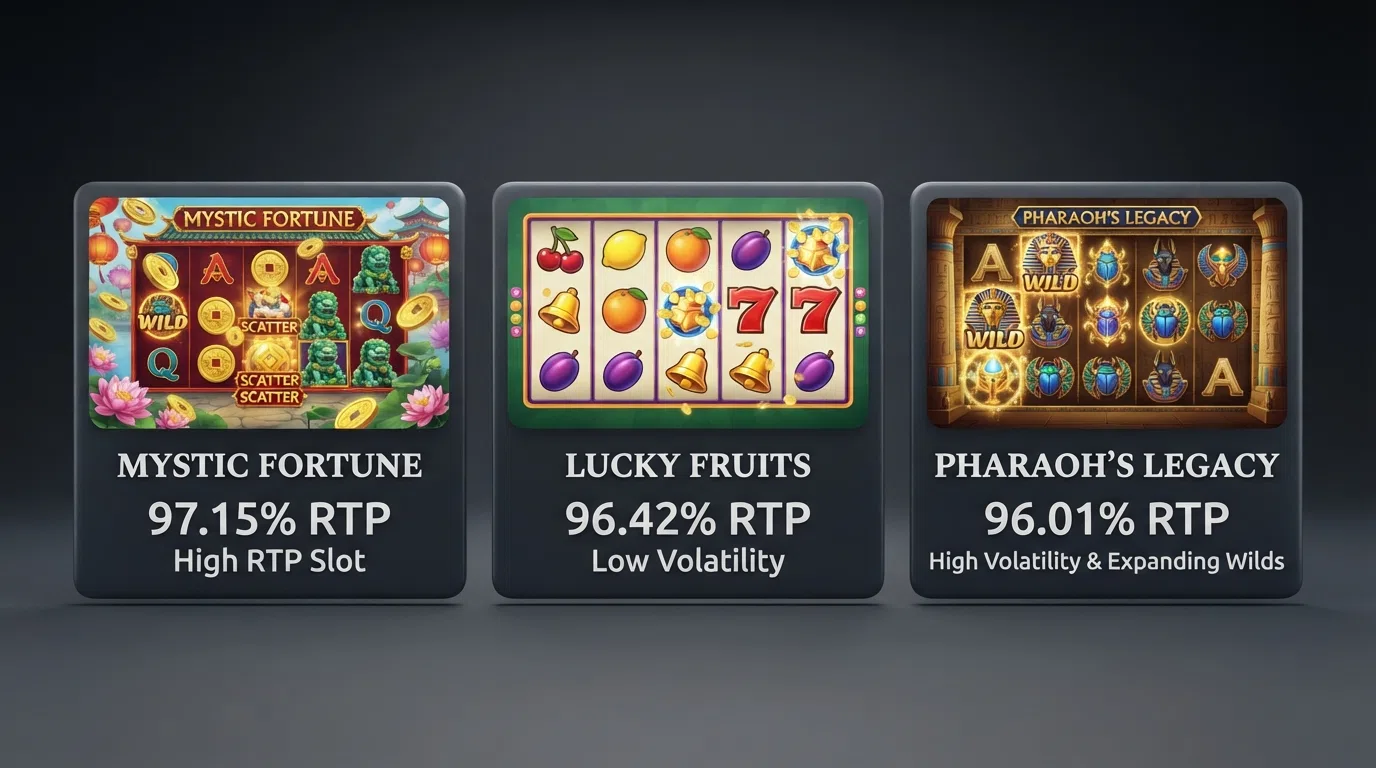
Seven titles anchor the high end of the UK online slot market. The table below ranks them by published RTP, with the provider, volatility class where it is on the record, and the maximum win multiplier. The volatility column is the honest one: research documents volatility for five of the seven titles, and the two gaps remain gaps. The max-win column shows how far above the stake a single spin can pay — a high number on a high-volatility game is the headline the marketing copy is built around, and the same headline on a low-volatility game is a number most sessions will never approach.
| Slot Title | RTP | Provider | Volatility | Max Win |
|---|---|---|---|---|
| Ugga Bugga | 99.07% | Playtech | Low | 1,000× |
| Mega Joker | 99.00% | NetEnt | High | 2,000× |
| Book of 99 | 99.00% | Relax Gaming | High | — |
| 1429 Uncharted Seas | 98.60% | Thunderkick | Low | 1,860× |
| Marching Legions | 98.12% | Relax Gaming | — | — |
| Blood Suckers | 98.00% | NetEnt | Low to Medium | 7,500× |
| White Rabbit Megaways | 97.72% | Big Time Gaming | — | 13,000× |
Mega Joker’s 99% carries a condition the table cannot show in full: the published figure applies only at maximum coin level in Supermeter mode. At lower stakes the return drops meaningfully. The number is real, but it is real only at the stake the game requires for the number to exist, and a player who reads the headline without reading the small print will be playing a different game than the one they think they chose.
How to Identify a High-RTP Game Before You Commit Real Money
A short checklist, drawn from the regulatory framework and the independent monitoring data, gives a player the most reliable read on what they are about to play.
- Open the game’s help or rules screen before the first spin. The published RTP is required to be there.
- Read the RTP as a single number or a range. A range means the operator has chosen a tier; a single number means only that tier is certified.
- Note the volatility and the max-win figure. A 99% RTP on a high-volatility game behaves very differently from a 98% RTP on a low-volatility one, and a 13,000× max-win headline is a statement about the tail of the distribution, not the typical session.
- Where the operator’s deployment tier matters, look for independent monitoring data. RTPTrack’s audits found that three of ten UK casinos were running reduced settings on at least some titles, and the casino’s help screen will not tell you whether it is one of the three.
- Treat any operator that does not name its test house, or that hides the RTP behind a help-link three menus deep, as a red flag. The disclosure is a regulatory requirement; the choice to make it hard to find is the operator’s own.
“Highest RTP” vs “Best Slot”: What the Distinction Means for Your Bankroll
The slot with the highest RTP number is not always the slot that costs the least per minute of play. The volatility and stake conditions are doing more work than the percentage on a session the size of a typical deposit.
Mega Joker’s 99% applies only at max coin in Supermeter mode. Below that stake the RTP falls, and at a £0.01 coin level the theoretical return is several percentage points lower. A player who wants Mega Joker’s number has to play the stake the number is built around, which is a higher minimum than most slots at the casino demand.
Book of 99’s 99% is a high-volatility design — long quiet stretches punctuated by larger wins, with the headline RTP realised only across the full distribution. Blood Suckers’ 98% is a low-to-medium volatility design — smaller, more frequent wins, with a lower ceiling but a smoother ride. Over a session of 200 spins at £1, the bankroll on the 98% low-volatility game is more likely to be alive at the end than the bankroll on the 99% high-volatility game, even though the second slot is, in the long run, the better-paying one. The two figures are answering different questions, and the right question for a player with a finite deposit is the per-session one.
UK Casino Operators Compared: RTP, Licensing and Welcome Offers
Ten GB-licensed operators anchor the UK comparison. The table below ranks them on the welcome offer, the free-spin count, the wagering burden, and whether any of the spins are genuinely deposit-free. The GB-licence column is the only column on which all ten operators can be marked the same way: every one of them is active on the UK Gambling Commission’s public register. The other columns split sharply.
| Operator | GB Licence | Welcome Offer | Free Spins | Wagering | Deposit-Free Spins? |
|---|---|---|---|---|---|
| bet365 Casino | Yes | Up to 500 free spins | 500 | 0× | No |
| Sky Vegas | Yes | 50 no-deposit + 200 spins on £10 spend | 250 | 0× | Yes |
| 888 Casino | Yes | 100% up to £100 | — | 10× | No |
| Ladbrokes Casino | Yes | Bet £10 get 100 spins | 100 | 10× | No |
| Coral Casino | Yes | Bet £10 get 100 spins | 100 | 10× | No |
| Betfred Casino | Yes | £10 stake for 50/100/200 spins | Up to 200 | 0× | No |
| Paddy Power Games | Yes | 60 no-deposit + spins on £10 spend | Up to 260 | 0× | Yes |
| Betfair Casino | Yes | 50 no-deposit (0×) + 100 on stake (10×) | Up to 150 | 0×/10× | Yes |
| William Hill Vegas | Yes | £10 stake for 200 spins on Big Bass Splash | 200 | 10× | No |
| Betway Casino | Yes | Not detailed in available data | — | — | — |
The shape of the welcome offer landscape has been redrawn by the UKGC’s 10× wagering cap, in force from 19 December 2025 (implementation 19 January 2026). The cap is the ceiling, and the spread of multiples across the table shows where operators have chosen to sit: half the set at zero wagering, the rest at the cap, and no one in between. That is what a regulatory ceiling does to a market — it flattens the distribution to the edges.
Three operators in the set — Sky Vegas, Paddy Power Games and Betfair Casino — extend the deposit-free structure to a slice of their spins, with no deposit required and no wagering on the winnings. The other seven require at least a £10 stake to unlock anything, and several impose additional conditions. The deposit-free tranche is the closest thing to a true test of a slot the welcome-offer structure allows, and it is the slice of the table that tells a player what the operator is willing to give away before the player has risked anything.
bet365 Casino: 500 Free Spins With Zero Wagering and Maximum RTP Deployment
bet365’s welcome offer is the largest free-spin count in the featured set, with up to 500 spins delivered across ten daily selections of 5, 10, 20 or 50 spins, and winnings paid as cash with no wagering attached. The minimum entry condition is a £10 lifetime deposit, and the 30-day claim window gives a player a month to opt in after the deposit clears. Spin values vary by daily selection between 5p and 50p.
The offer’s RTP-transparency signal is the part that matters most for this page. Independent monitoring has identified bet365 as one of two operators in the GB-licensed set that deploy all tracked titles at the theoretical maximum tier. The published RTPs in the game help screens are the RTPs the player will experience. The provider portfolio — NetEnt, Playtech, Pragmatic Play, Microgaming, Play’n GO — covers the full spread of the high-RTP titles in the previous section, and a player who wants to play Ugga Bugga or Blood Suckers at the certified maximum has a route to do so here that the reduced-tier operators do not offer. bet365 is the most consistent choice in this market.
Sky Vegas: 50 Genuinely Deposit-Free Spins With No Wagering
Sky Vegas splits its welcome offer across two tranches: 50 free spins credited with no deposit required, and 200 additional spins after a £10 deposit and stake. Both tranches carry zero wagering on winnings — even the no-deposit allocation, which most operators attach a 40× or 50× requirement to, is paid as cash. The free-spin expiry is 7 days, and the deposit-and-spend must clear within 30 days of registration.
The 50 no-deposit spins are the structurally important number. They are a chance to test the operator’s slot library — NetEnt, Pragmatic Play, Blueprint — and the deployed RTP settings, without risking a penny. The 200-spin tranche, by contrast, is the same shape as the rest of the £10-stake offers in the set, and the wagering zero makes it the higher-quality version of that shape. Sky Vegas is one of three operators in the featured set offering a genuinely deposit-free welcome slice, and the only one whose deposit-free slice carries the no-wagering structure as well. This offer stands out as a transparent way to sample the library without initial risk.
Paddy Power Games: 60 Deposit-Free Spins With Zero Wagering Across All Tiers
Paddy Power’s structure mirrors Sky Vegas with a larger no-deposit tranche: 60 deposit-free spins, credited on registration, plus 100 additional spins after a £10 deposit and a further 100 on continued play, for a total of up to 260 spins. The no-deposit allocation carries zero wagering, as do the subsequent tranches. The 7-day validity applies to the full set, and the deposit tranche must clear via Debit Card or Apple Pay.
The no-deposit count of 60 is the largest in the featured set. That is the only structural distinction from Sky Vegas; the rest of the architecture — Flutter group GB licence, NetEnt/Pragmatic Play/Playtech/Red Tiger provider mix, zero wagering across every tranche — is similar. Paddy Power represents a larger version of that same structure for players who prioritise a high no-deposit spin count.
Betfair Casino: 50 No-Deposit Spins With Mixed Wagering Across Two Tiers
Betfair splits its welcome offer into two tiers that look the same as a single offer at a glance but differ sharply in the small print. The first 50 spins are no-deposit, credited on registration, and carry zero wagering — the same structure as Sky Vegas and Paddy Power. The next 100 spins are credited after a £10 stake, valued at £0.10 each, and carry 10× wagering on winnings, the regulatory cap. Each tranche expires 72 hours from credit.
The two-tier structure is the relevant feature. A player who takes only the no-deposit tranche and stops there has a no-wagering, no-risk test of the platform’s slot library. A player who takes the deposit tranche and lands winnings has to work through 10× turnover before withdrawal. The mix is the trade-off: more spins than the no-deposit-only operators can offer, at the cost of accepting a slice of the offer that runs at the regulatory wagering maximum. The choice depends on whether you prefer to take the no-wagering no-deposit bonus or are comfortable with the turnover requirement of the deposit tier.
Betfred Casino: Choose Your Free-Spin Tier With Zero Wagering
Betfred’s offer is the only player-chosen tier in the featured set. A £10 stake unlocks 50, 100 or 200 free spins at the player’s option, with spin values of 5p, 10p or 20p per spin respectively, for a maximum total spin value of £40 at the top tier. All three tiers carry zero wagering on winnings. The deposit must clear via Debit Card only — a tighter restriction than the other operators — and a promo code is required before the deposit to activate the offer. Free-spin validity is 7 days.
The tier choice is the offer’s defining feature, and the right tier depends on the player’s stake preference rather than the headline spin count. A player who wants to stretch a £40 spin pool across more, smaller bets takes the 200-spin tier; a player who wants fewer, larger bets per spin takes the 50-spin tier. The provider mix — Playtech, Pragmatic Play, Blueprint, IGT — covers most of the high-RTP titles. Betfred’s tiered approach gives the player more control over their bankroll management.
888 Casino: A 100% Deposit Match With the UKGC’s Maximum Wagering Cap
888 is the only deposit-match bonus in the featured set: a 100% match up to £100 on selected slots, with 10× wagering on bonus funds — the UKGC’s cap. Two conditions sit on top of the structure. The maximum cashout from the bonus is £100, meaning winnings above that figure are forfeited at withdrawal. The wagering must be completed within 90 days. The deposit must be staked on slots within 48 hours of crediting to qualify.
The offer is the simplest in the set to value, because the inputs are explicit and the cap is a known number. A £100 deposit earns a £100 bonus, the player must turn over £1,000 in wagering on selected slots, and winnings beyond £100 are forfeit. The expected loss on a £1,000 turnover at the 96% UK average RTP is roughly £40 — the calculation the next section walks through. This structure provides a straightforward deposit-match experience for those preferring a single, clear bonus.
Ladbrokes Casino: 100 Free Spins for a £10 Stake at the Standard Wagering Cap
Ladbrokes runs a classic bet-to-unlock structure: a £10 stake returns 100 free spins at £0.10 each on Big Bass Bonanza, Sweet Bonanza and Starburst, with 10× wagering on winnings — the regulatory cap. The acceptance window is 48 hours, the spin-use window is 7 days, and the bonus expires 30 days after credit. The provider mix is Pragmatic Play, NetEnt and Playtech.
The offer is structurally identical to its Entain stablemate Coral’s, and the comparison point is brand preference rather than offer terms. Ladbrokes is a standard choice for those comfortable with the regulatory wagering cap and a well-known bonus library.
Coral Casino: 100 Free Spins With the Entain-Standard 10× Wagering
Coral’s offer mirrors Ladbrokes: a £10 stake returns 100 free spins at £0.10 each on selected slots, with 10× wagering on winnings. The 48-hour acceptance window and 7-day spin-use period are the same. The Entain GB licence is the same. The provider mix — Pragmatic Play, NetEnt, Playtech — is the same.
The two operators are effectively interchangeable on the welcome offer, and the difference for the player is the rest of the platform: game library depth outside the bonus titles, ongoing promotions, and any loyalty structure the brand runs. Coral provides an identical experience to Ladbrokes, making this a choice based on preferred platform interface or ongoing loyalty rewards.
William Hill Vegas: 200 Free Spins on Big Bass Splash With a £30 Redemption Cap
William Hill’s offer is the highest single-game free-spin count in the set: 200 free spins at £0.10 each on Big Bass Splash, for a total spin value of £20. The wagering on winnings from the free spins is 10×, the regulatory cap, with a 7-day spin-use window and a 72-hour wagering window. The constraint unique to this offer is the £30 maximum redeemable winnings cap — no other operator in the featured set imposes a ceiling on free-spin winnings, and the £30 figure is well below the 200 × £0.10 × 10× = £200 implied ceiling at the 10× wagering cap on a clean spin.
The cap is the part to read. At a £0.10 stake across 200 spins, the total amount risked is £20; the £30 cap is a 50% return on that stake if every spin produced a max-line win, and the wagering multiple is layered on top. A player who lands a single large win above £30 sees the excess forfeited. For a player who values spin count over cap-free upside, the offer is the larger version of the Ladbrokes/Coral structure; this bonus structure is best suited for high-volume players comfortable with the redemption limit.
Betway Casino: GB-Licensed With a Microgaming-Focused Slot Library
Welcome-offer details for Betway were not confirmed in the research pass for this page, and the write-up is honest about that gap rather than papering over it. What the public record does confirm is the operator’s active GB Gambling Commission licence, a Microgaming-heavy provider portfolio alongside NetEnt and Pragmatic Play, and the standard regulatory framework that applies to any GB-licensed operator.
A player considering Betway should apply the same checklist the rest of the page applies to every other operator. The welcome-offer page on the operator’s own site is the source of record for the current bonus structure, and the relevant questions are the same four: what is the wagering multiple, what is the maximum cashout, is the offer genuinely deposit-free, and what is the deployed RTP tier of the bonus slot. As with any operator, we advise reviewing the current bonus terms directly on the Betway site before opting in.
Licensed vs Offshore: What Operator Transparency Signals About Your RTP
A GB licence is not a quality mark for the slots themselves — the maths is the same in any licensed jurisdiction that recognises the same test houses. It is a quality mark for the wrapper around the maths. Inside the GB-licensed market, the RTP disclosure requirement applies, the audit chain runs to an independent test house, the operator’s deployed RTP is monitored, and the player has a complaints route to the UKGC and an alternative dispute resolution provider. Outside it, none of that applies.
The point-of-consumption regime makes the GB licence compulsory: any operator taking GB customers must hold one, on pain of a section 33 offence under the Gambling Act 2005 — up to 51 weeks’ imprisonment, an unlimited fine, or both, for the operator. The player on an unlicensed site faces no criminal penalty, but the player-protection framework vanishes. No GAMSTOP, no ADR, no UKGC complaints route, no enforceable RTP checks, no recourse if a withdrawal stalls. The RTP number on the slot’s help screen is the operator’s own claim, and there is no independent body with the authority to check it. A player who values the deployed-RTP transparency this page is built around has that transparency because the GB-licensed market is required to provide it; an offshore operator is not.
How UK Gambling Regulation Shapes the RTP You Actually Get
Five regulatory levers sit between a game’s certified RTP and the return a UK player experiences. The first is the disclosure requirement — the rule that puts the published number in the help screen. The next three are 2025 and 2026 reforms that rewrote the bonus and stake math. The fifth is the post-RGD-rise trend in deployed RTP, which is the most significant real-money impact on UK payout percentages in 2026.
The age-banded stake caps sit at the centre of the new framework. A £5 maximum per game cycle for players aged 25 and over, and £2 for players aged 18 to 24, both in force from 2025 under SI 2025/215. A “game cycle” runs from the initiation of a game to the point where all money staked has been lost or all winnings delivered; the cap applies to the total staked within that cycle. The cap is the ceiling on a single spin’s cost, and the £2 lower band for under-25s is the regulator’s explicit recognition that the same stake has a different impact on a younger player. For high-RTP play specifically, the caps compress the upside of any strategy that scales stake to chase the theoretical return: the maximum bet that counts toward the RTP number is now a fixed ceiling rather than the player’s choice.
The 10× wagering cap sits beside the stake caps as the bonus-side reform. From 19 December 2025 (implementation 19 January 2026), the LCCP SR Code 5.1.1 caps wagering requirements on bonuses at 10× the bonus amount and bans mixed-product promotional offers. The regulator’s stated rationale was that capping wagering decreases the likelihood of harm, reduces complexity and improves transparency. The market’s response, visible in the operator table above, is the flat distribution: every welcome offer in the featured set now sits at 0× or 10×, with nothing in between. The pre-reform landscape of 30× and 40× wagering multiples has been compressed to the regulatory ceiling.
The Remote Gaming Duty rise — from 21% to 40% on 1 April 2026 — is the third reform, and the one with the most direct impact on payout percentages. The duty is the operator’s tax on gross profit, and the rise has been passed through in the form of lower deployed RTPs at a meaningful slice of the market. Independent monitoring shows the aggregate UK average deployed RTP has declined roughly 0.4 to 0.6 percentage points since the change, and the middle of the RTP distribution for the most-played titles has shifted downward by approximately two percentage points. The summary from one industry monitor: the cumulative effect of the 2026 regulatory changes is a UK gambling market that is meaningfully safer from harm but offering meaningfully worse RTP than the 2025 market. Both halves of that statement are true, and the player who wants the high RTP is paying the price for the safety in the form of a smaller theoretical return.
What the UKGC Requires for RTP Disclosure and Slot Game Auditing
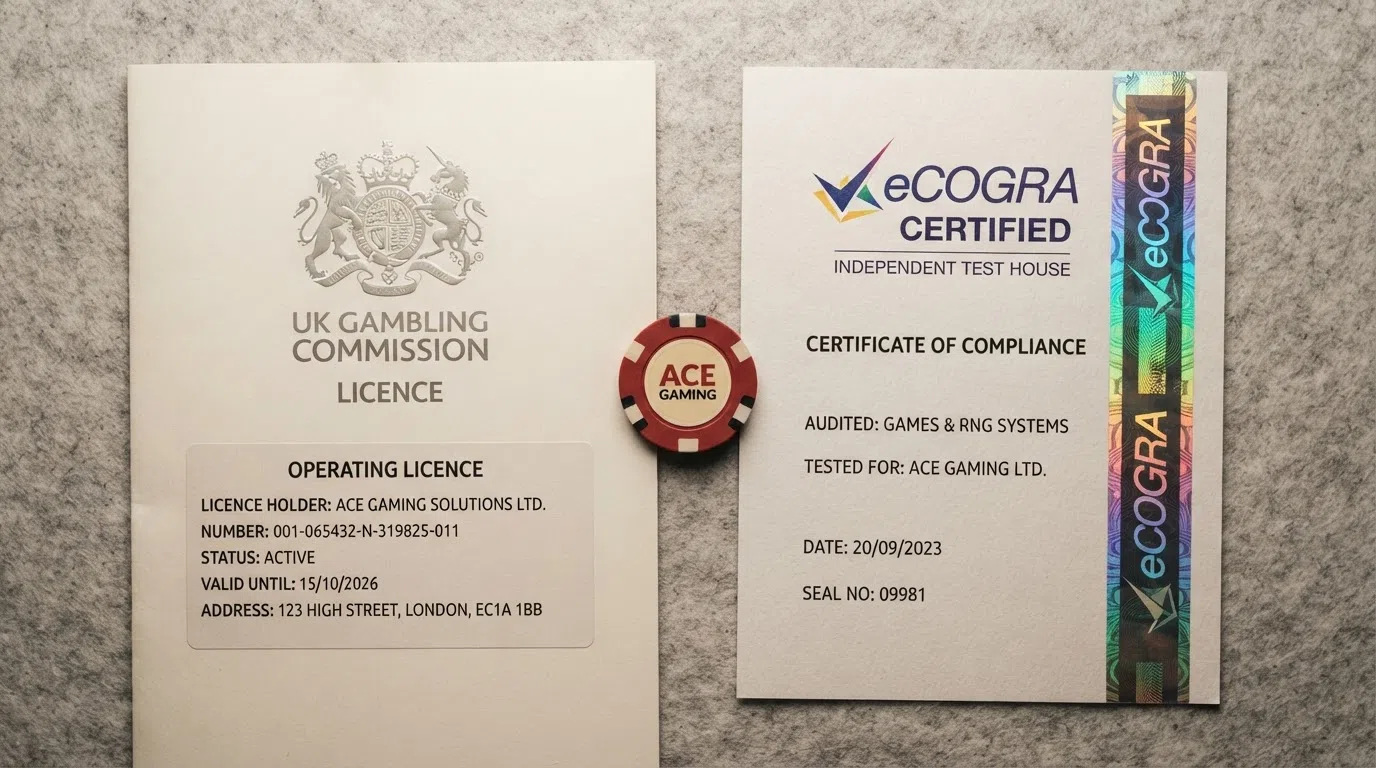
The audit chain that puts a published RTP on the screen has three stages. The first is design: the studio calculates the game’s theoretical RTP and volatility profile, runs the simulation across hundreds of millions of spins, and produces a mathematical specification. The second is independent verification: one of the four UKGC-approved test houses — eCOGRA, Gaming Laboratories International, iTech Labs, BMM Testlabs — reviews the maths, the software and the artwork through simulation, emulation and manual testing. The third is deployment and ongoing monitoring: the operator selects an RTP tier from the certified configurations, deploys the game, and is required to compare actual RTP against the theoretical number on an ongoing basis, with alerts for out-of-tolerance results.
The published RTP is the result of stage two. The RTP a player experiences is the result of stage three — and stage three is where the divergence between theoretical and deployed appears. The disclosure mandate and the ongoing monitoring obligation are the two regulatory instruments that make the divergence visible. Without them, the published number is the operator’s word and nothing else; with them, independent bodies can verify the deployment and the regulator can act on the gap. The framework is what makes the rest of this page possible, because every operator comparison that names a deployed RTP tier relies on monitoring data the regulatory framework requires to be generated.
The 2026 Regulatory Shifts That Changed UK Slot Payouts
Three reforms in twelve months have redrawn the UK slot landscape. The age-banded stake caps in spring 2025, the wagering and bonus reforms in late 2025 and early 2026, and the Remote Gaming Duty rise in April 2026. Each one shifted the math a player runs in their head before depositing.
The stake caps are a ceiling on the amount that can be risked per game cycle, and they apply to online slots only — not to roulette, blackjack, live casino, bingo or sports betting. For a player who scaled stake to the level at which the game’s RTP applied, the caps remove the top of that scaling. Mega Joker’s 99% applies at maximum coin; the cap does not change that, but it does mean the maximum coin a player can stake is now bounded by the regulatory ceiling rather than the operator’s own table limits.
The wagering cap is the reform that simplified the bonus-value math. A 10× cap on the bonus amount is a fixed number, and the operator table above shows the market has converged to the cap and to zero. The pre-reform landscape of 30× and 40× multiples is gone, and the player’s calculation is now: bonus amount × 10 = turnover required, turnover × (1 − RTP) = expected loss. That calculation is the next section’s subject.
The RGD rise is the reform with the most direct effect on payout percentages, and it is the reform whose effect is still moving. The aggregate decline of 0.4 to 0.6 percentage points and the middle-of-distribution shift of two percentage points are early readings, and the trend is downward at the median. The two operators identified as maintaining theoretical-tier deployment — bet365 and PlayOJO — are the exceptions, and their position at the top of the distribution is what makes them stand out.
GAMSTOP, Deposit Limits and the UK Player-Protection Framework
The protection framework sits alongside the payout-percentage framework, and the two intersect at the player’s deposit. GAMSTOP is the national multi-operator online self-exclusion register, mandatory for every GB-licensed online operator since 31 March 2020. The exclusion periods are six months, one year or five years; the choice is the player’s at registration, and the exclusion cannot be cancelled early. A player who has self-excluded cannot deposit at any GB-licensed operator for the duration of the exclusion; that is the framework’s point.
The deposit-limit framework is the daily-grind counterpart to GAMSTOP. From 31 October 2025, every GB-licensed operator must prompt the player to set a financial limit before the first deposit, with at least equal prominence on a gross deposit limit (based solely on money paid in). Decreases to the limit are actioned immediately; increases may carry a delay. The deposit limit is the player’s own ceiling, and the operator’s obligation is to offer it before the first deposit clears — not to enforce a default the player has not chosen.
The game-design rules sit underneath both. Auto-play is banned; spin speed is bounded to a 2.5-second minimum per game cycle; loss-disguised-as-wins features are banned; reverse withdrawals are permanently banned. All in force from 31 October 2021. The combined effect is a slot session that cannot accelerate beyond the regulatory minimum spin speed, cannot offer a “spin until you win” auto-loop, and cannot let the player reverse a withdrawal back into play. The design rules are what stop the slot from running faster than the player’s attention; the deposit limit is what stops the slot from being paid for beyond the player’s budget.
Why a High-RTP Slot Still Costs You Money — And What You Can Do
The 96% UK average RTP is a long-run return, and the long run is not a session. A 4% house edge is a statement about what the operator keeps on every pound wagered across the population of wagers — every spin, every player, every casino, in aggregate. It is not a statement about what the player keeps on their deposit, and the two are different enough that the player who treats them as the same is the player who is surprised by the outcome.
The problem-gambling prevalence data gives the conversation its real-world weight. The 2024 Gambling Survey for Great Britain found 2.7% of adults scoring 8+ on the Problem Gambling Severity Index, statistically stable on 2023. The NHS Health Survey for England 2024, using a different methodology, found 0.4% of adults at PGSI 8+ and 1.6% at PGSI 3+, the at-least-moderate-risk threshold. The two surveys use different methods — push-to-web versus face-to-face — and the methodological difference accounts for some of the divergence. The point that holds across both is that a non-trivial slice of the adult population is gambling at a level that meets a clinical definition of harm, and the slots market is where most of that play occurs.
The treatment infrastructure has grown to meet the demand. GamCare’s National Gambling Helpline made 996 referrals to treatment and peer-based support services in January 2026, a 48% increase on the 674 referrals in January 2025. The National Gambling Support Network treated 11,960 clients between April 2024 and March 2025, an 11% increase on the prior year. The numbers are up because the demand is up, and the funding is the statutory levy — 1.1% of gross gambling yield, split 50% to treatment, 30% to prevention, 20% to research. The system exists because the regulator decided the cost of treating harm should be paid by the market that generates it.
What RTP Actually Promises — And What It Does Not
The published RTP is a long-run average. It is the number a certified simulation converges to across hundreds of millions of spins. It says nothing about the next 100 spins, and the player who takes it as a session forecast is reading the wrong number.
A 99% slot can drain a deposit in a session of 200 spins, and the 1% the house keeps on every spin is the mechanism. On a £1 stake, the 1% is a penny; on a 200-spin session, the 1% is £2 in expected loss. The 99% number says £198 of that £200 in stakes will on average come back; the 1% says the other £2 will not. The variance around the average is where the session lives, and on a high-volatility game the variance is wide enough that a 200-spin session can be anywhere in a range that includes a small loss and a substantial win, with a long tail of large losses in between. The average is not the session, and the player’s deposit is not the population.
Mega Joker’s 99% is the cleanest illustration of the gap. The number is real, and it is the number the maths produces, but it is the number only at maximum coin in Supermeter mode. A player reading the headline and staking a smaller coin is playing a different game, and the RTP of that game is several percentage points lower. The headline does not lie; it simply applies to a stake the player may not be making.
Hit frequency is the other number the headline can obscure. A 40p return on a £1 spin is a hit, and the bankroll has still dropped 60p on that spin. A high hit frequency is a feel statistic — the reels stop on something that pays more often — and it is not a safety statistic. The session can be full of hits and still end down, and the player who treats hit frequency as a proxy for “the slot is paying out” is reading the wrong number for the same reason they read the RTP as a session forecast.
The Tools Every UK Player Has: Reality Checks, Limits and Where to Get Help
A player who wants to keep the session inside what the RTP maths says they can afford to lose has a fixed set of mandatory tools on every GB-licensed platform. Reality-check prompts and a session time and total-loss display are required during play. The deposit-limit offer is required before the first deposit, and decreases are actioned immediately. The National Gambling Helpline (run by GamCare), the NHS gambling-harms clinics, GambleAware and Gamblers Anonymous are the four routes to free treatment, and GamCare’s helpline saw a 48% year-on-year increase in referrals in January 2026. The National Gambling Support Network treated 11,960 clients in 2024/25, an 11% increase on the prior year. The statutory levy — 1.1% of GGY, split 50/30/20 across treatment, prevention and research — funds the system, and the funding is the regulator’s decision that the cost of harm should be paid by the market that generates it.
The expected cost of a bonus is the cleanest way to size a session against the deposit. Using the 888 Casino offer as the worked example: a £100 deposit earns a £100 bonus, the wagering requirement is £1,000 at the 10× cap, and the expected loss at the 96% UK average RTP is £1,000 × (1 − 0.96) = £40. That is the cost of clearing the bonus on the average slot. On a higher-RTP title — say Ugga Bugga at 99.07% — the expected loss on the same turnover falls to £1,000 × (1 − 0.9907) = £9.30. The difference is the entire point of playing a high-RTP slot during bonus clearing: the 4% house edge compresses to under 1%, and the cost of the bonus falls by a corresponding factor. The arithmetic is straightforward, the inputs are stated, and the conclusion is that the slot a player chooses to clear a bonus on matters as much as the bonus amount.
A second worked example, on session cost. A player runs 500 spins at £1 on a 96% RTP slot. The expected loss is 500 × £1 × (1 − 0.96) = £20. The same session on Ugga Bugga at 99.07% is 500 × £1 × (1 − 0.9907) = £4.65. The 4% versus 0.93% spread is the gap between the UK average and the top of the high-RTP table, and on a session the player has already paid for, the difference is the difference between losing £20 and losing under £5. Neither figure is a guarantee; both are statistical estimates across many spins under the stated assumptions, and the actual session can land anywhere in the variance around the expected value.
How We Evaluated and Ranked These UK Slot Payouts
The ten operators in the featured set are all active on the UK Gambling Commission’s public register, and the verification is against that register rather than against the operator’s own marketing. The slot-RTP figures are taken from operator-published game-info screens and cross-checked against independent monitoring data (RTPTrack) where available, plus the test-house certification chain that sits behind every published number. The operator-specific facts — welcome offer, free-spin count, wagering multiple, deposit-free status, maximum cashout — were verified in August 2026.
The ranking criteria are three. First, RTP tier deployment: whether the operator runs its slot library at the theoretical maximum or at a reduced tier, per independent monitoring. bet365 and PlayOJO are the only two operators in the monitored set confirmed at the theoretical maximum; the rest sit somewhere in the distribution, and the deployed RTP is the largest variable a player cannot see from the help screen. Second, welcome-offer structure: the free-spin count, the wagering burden, the deposit-free status, the maximum cashout. The 10× wagering cap has flattened the distribution to the edges, and the spread of multiples across the operator table reflects that. Third, regulatory standing: the GB licence is the floor, and every operator in the set clears it; the regulatory question that matters is the audit and disclosure chain, not the licence itself.
The data has limits. Independent monitoring of deployed RTP covers ten casinos and a handful of tested titles; the rest of the market is unmonitored at this granularity, and the help-screen number is the player’s only read on the rest. Welcome-offer details were not confirmed for Betway Casino in this research pass, and the write-up acknowledges that gap rather than filling it. Volatility data was not on the record for two of the seven highest-RTP slots. Where the data is missing, the table and the prose say so; where the data is present, the table and the prose say what it says.
What the RTP-Conscious UK Player Should Actually Do Now
The shape of the right action is a sequence rather than a single decision. Check the slot’s RTP in the help screen before the first spin, and treat the number as a long-run average rather than a session forecast. Compare operators on deployed RTP tier, not just on welcome-offer size: the data shows a split between max-tier and reduced-tier operators, and a player who picks the bigger bonus at a reduced-tier casino is paying for the bonus in lost return. Factor the 10× wagering cap and the £5/£2 stake limits into any bonus-value calculation, because the maths is simpler but the cost is real — the expected loss on a £1,000 turnover at 96% RTP is £40, and the 10× cap is the ceiling on the wagering that produces that number. Use the mandatory deposit-limit and reality-check tools to keep the session inside what the RTP maths says the player can afford to lose. The tools are there, the operator is required to offer them, and the cost of not using them is paid by the player.
The high-RTP strategy is a long-run preference, not a winning one. It reduces the house edge from 4% to under 1%, and on a session of 500 spins at £1, the difference between the two is £15 in expected cost. It does not eliminate the edge, and it does not turn slots into a profitable activity. The 4% exists at every RTP, the volatility exists at every RTP, and the variance around the expected value is what determines the session’s outcome. A high-RTP slot is a less expensive form of the same entertainment. That is a real benefit, and it is the whole of the benefit.
Frequently Asked Questions About UK Online Slots Payout Percentage
What is the average RTP for online slots in the UK?
Around 96%, per UKGC figures and corroborating industry data. Since the Remote Gaming Duty rose to 40% on 1 April 2026, independent monitoring shows the aggregate deployed average has slipped roughly 0.4 to 0.6 percentage points, with the middle of the distribution down by about two points. A small number of operators continue to deploy at the theoretical maximum tier.
Are online slot payout percentages checked and audited in the UK?
Yes. Game designers calculate the theoretical RTP and volatility, and an independent UKGC-approved test house — eCOGRA, Gaming Laboratories International, iTech Labs or BMM Testlabs — verifies the maths, software and rules through simulation, emulation and manual testing before release. Operators are then required to compare actual RTP against the theoretical number and flag out-of-tolerance results.
Can UK casinos change the RTP of a slot game?
Yes, within the certified configurations. Every game ships with multiple certified RTP tiers, and the operator selects which tier to deploy. The published RTP in the help screen reflects the deployed tier. Independent monitoring has found that most UK casinos run competitive settings but a minority deploy reduced tiers on at least some titles.
Do UK online casinos have to display the RTP of their slots?
Yes, under UKGC Remote Technical Standard 3C. Operators must make the theoretical RTP clearly available in the game help screen or elsewhere within the game itself. The requirement covers the theoretical figure; the deployed figure is not required to be displayed, which is why independent monitoring exists.
What is the difference between RTP, volatility and hit frequency?
RTP is the long-run percentage of wagered money returned to players. Volatility is the shape of the payout distribution — low volatility means frequent small wins, high volatility means rare large ones. Hit frequency is the proportion of spins that return any prize, regardless of size; a 40p return on a £1 spin counts as a hit while the bankroll still drops 60p. The three measure different things, and only the first is a return statistic.
How does the UK stake limit affect high-RTP slot strategy?
The age-banded caps — £5 per game cycle for players aged 25 and over, £2 for those aged 18 to 24 — cap the maximum stake rather than the RTP. The theoretical return of the slot is unchanged, but the ceiling on the stake-per-cycle limits how much of a session’s bankroll can be put through a single spin. The cap applies to online slots only, not to roulette, blackjack, live casino, bingo or sports betting.
Are Online Slot RTP Figures Trustworthy?
Inside the GB-licensed market, yes — with a specific caveat. The certification chain runs from the design studio through an independent test house before release, and operators are required to compare actual RTP against the theoretical number, with alerts for out-of-tolerance results. The published number is not a marketing claim; it is a verified mathematical property of the software.
The caveat is deployment. The certification confirms the maths, but it confirms several configurations of the maths. The studio certifies Ugga Bugga at 99.07%, but a casino can deploy a lower tier, and three of the ten casinos tracked by independent monitoring were running reduced settings on at least some titles. Two operators in the set — bet365 and PlayOJO — maintained theoretical-tier RTP deployment, the maximum the maths allows. The rest sat somewhere in the distribution. As one industry monitor put it, most UK casinos offer competitive RTP settings on most games, but exceptions exist, and the only way to know for certain is to check. The check is the help screen, and the screen is only honest about the number the casino has loaded.
Limits – realmoney-onlinecasinos-uk
Content created by the «realmoney-onlinecasinos-uk» team