
Where a Pound Still Buys You a Seat at the Table
 Available in GB
A genuine £1 minimum deposit casino in the UK is a licensed gambling site where the cashier will accept a single pound from a new account, usually on the first deposit and usually through a handful of payment methods. The marketing around this idea is louder than the reality: most UK-licensed casinos open their doors at £5 or £10, and the small group that does accept £1 typically gates the welcome bonus behind a deposit of £10, £20 or £30 that a one-pound player will never reach. The £1 tier is a niche inside a niche, and the page you’re reading is built around that gap between what’s advertised and what actually works.
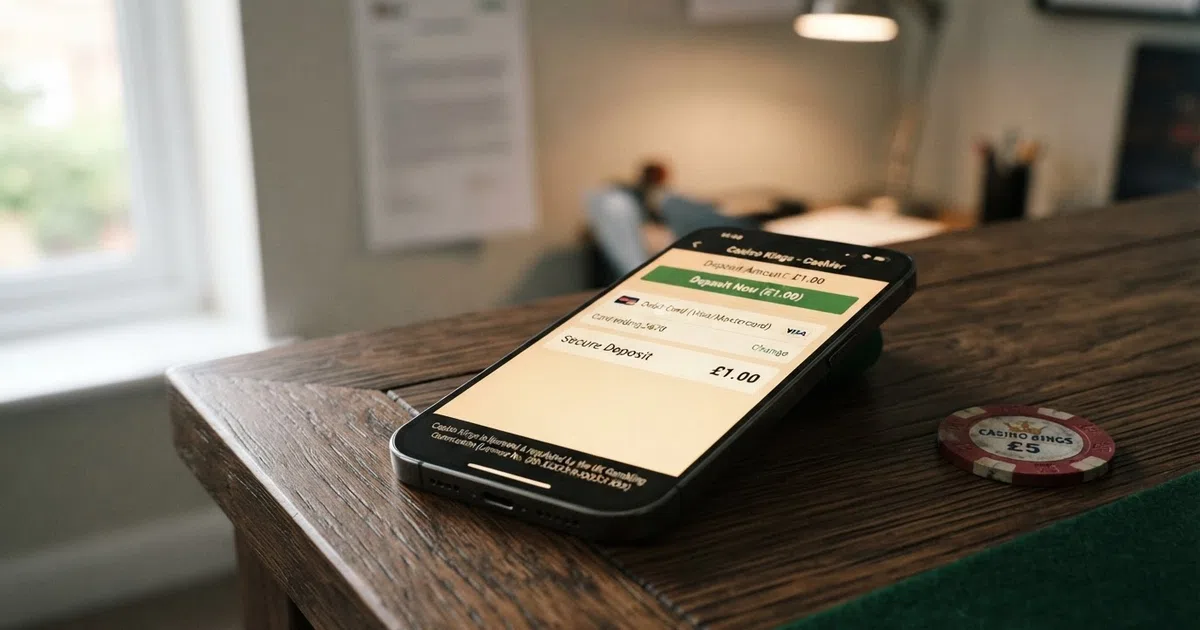
*Current as of 17 August 2026, verified against the UK Gambling Commission’s public register of licence holders and the operators’ own published terms.*
What “£1 Minimum Deposit” Actually Means at a UK Casino
The phrase has a precise reading and a loose one, and the loose one does most of the damage in search results. Precisely, it means the cashier’s minimum field will accept a £1.00 transaction from a freshly verified account, that the payment method in use will settle a pound rather than bounce it, and that the operator holds a Gambling Commission licence covering Great Britain. Loosely, it means an operator’s landing page mentions “from £1” in a banner, then quietly pushes the welcome bonus behind a £10 or £20 trigger, or the cashier refuses a £1 attempt on every method except one or two.
The first-deposit-only caveat matters. Several operators in this market will let a new account deposit £1 once, then bump the floor to £5 or £10 for the second and subsequent deposits. The £1 figure is the entry price, not a permanent tier, and any review that calls the operator a “£1 casino” without naming that limitation is doing the reader a disservice.
There is also a difference between the account minimum and the bonus minimum. Every site in this guide will let you open an account and deposit £1. Almost none will credit you the headline welcome offer on a £1 deposit. The bonus trigger is a separate dial, set higher than the deposit floor, and the two numbers belong in different sentences.
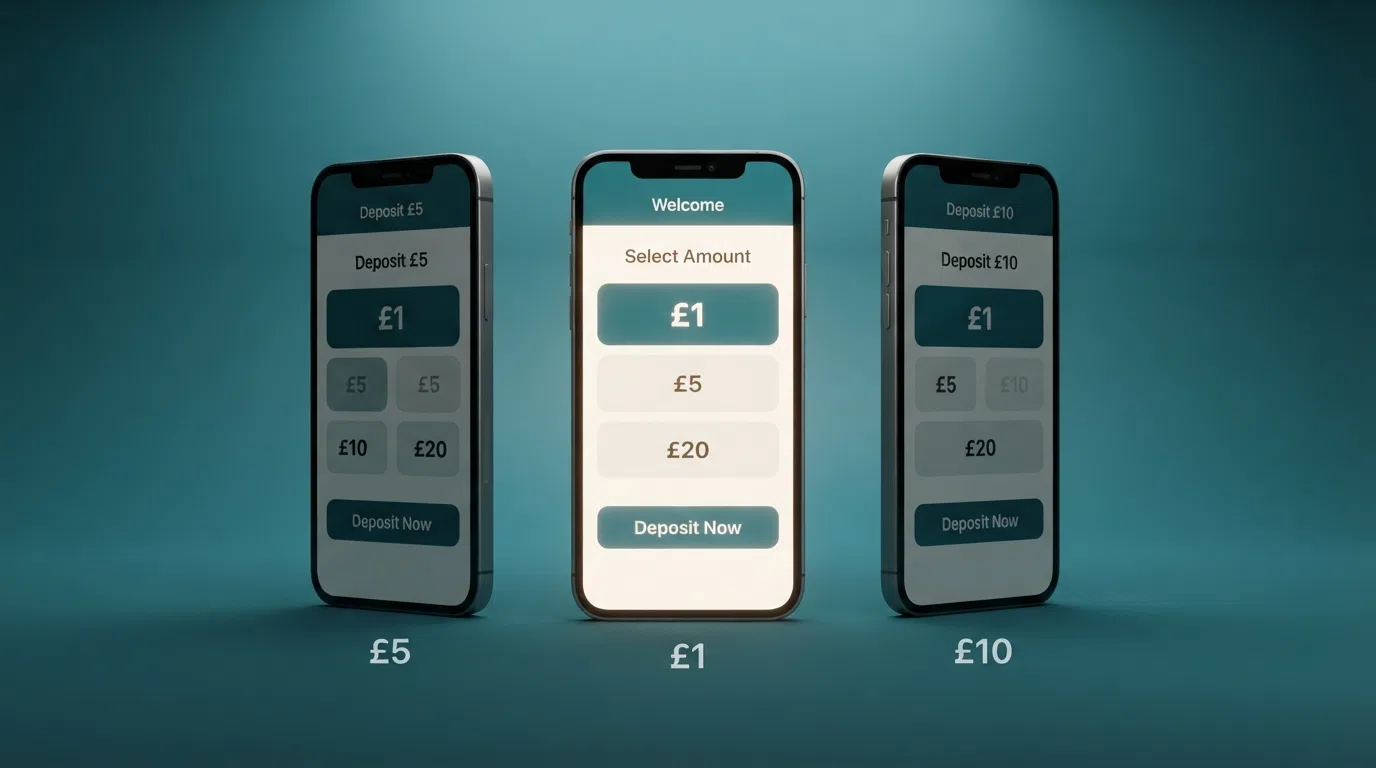
£1 vs £5 vs £10: Where the Low-Deposit Market Actually Sits
The “low deposit” label gets applied to a £5 casino and a £1 casino as if they were the same product. They are not. Walk through any major UK operator’s cashier and the floor sits at £10 — Sky Bet, Paddy Power, Bet365, William Hill, Grosvenor all default to a tenner. Drop to £5 and you pick up names like Coral (standard tier), talkSPORT BET, and a handful of mid-sized bookmakers. Reach £1 and the list collapses to a small group of slot-first and lottery-tinged sites where the low entry is a deliberate product position rather than an oversight.
PricedUp accepts £1 across all payment methods — a real £1 floor, no asterisk, no method-by-method carve-out. DragonBet accepts £1 through Visa debit, Mastercard debit and Apple Pay, but not the full list. Lottoland accepts £1 through five methods — debit card, bank transfer, Apple Pay, MuchBetter, Trustly — and holds Paysafecard at £2, which is the typical pattern for prepaid vouchers because of the way they’re denominated. Everything else in the low-deposit tier sits at £5 or £10.
The reason the market clusters at £5 and £10 isn’t mysterious. Payment processing carries fixed costs that scale badly with a single-pound transaction, fraud teams find sub-£2 deposits disproportionately risky, and bonus economics assume a customer will deposit more than a pound before any welcome credit is meaningful. A £1 floor is a marketing position an operator chooses; £5 and £10 are the price the rest of the market arrived at by default.
Real-Money Play with a £1 Deposit: What You Can Actually Do
A £1 deposit unlocks the cashier, verifies the account, and lets a player stake real money on a real slot. The session is short. On Big Bass Bonanza, with a minimum bet of £0.10, the same £1 buys ten spins. On Piggy Riches, where the minimum stake is £0.15, it buys six. Those ten or six spins are a taster, not a bankroll — a session for inspecting the cashier, the spin speed, the bonus feature, the layout on mobile, and whether the operator feels right. Anyone thinking of £1 as a serious gambling budget has misread what the product is.
What happens on those spins is ordinary slot math. On a 96.71% RTP game like Big Bass Bonanza, the house edge sits at 3.29% of every pound staked, which is a normal online slot margin and not the punishing figure you’ll find on a progressive jackpot. A win of even 10× stake on a £0.10 spin returns £1.00, doubling the £1 deposit in a single hit; a win of 100× returns £10. These are possible but not expected. The realistic outcome over ten spins on a high-volatility slot is anywhere from a few pence to a few pounds, and most of the time it is closer to “a few pence.”
Worth saying out loud: a £1 deposit cannot meaningfully chase a progressive jackpot. Mega Moolah’s headline prizes start in the millions, and the chance of hitting one on ten spins at a £0.10 stake is not zero but is small enough that treating the £1 as a lottery ticket is the honest read. Treating it as a way to inspect a casino is the other honest read. Both readings are correct at the same time.
Trust Signals: How to Know a £1 Deposit Casino Is Legitimate
Low-deposit offers attract the wrong end of the market, and the cheapest way to spot a bad one is a three-step check that takes about three minutes. Run the operator’s name through the Gambling Commission’s public register, which is searchable by trading name, domain or licence account number and currently lists 2,663 active records. A match with an active operating licence is the first gate; no match is a hard stop.
Second, check the cashier. If a UK-licensed operator offers credit cards as a deposit method, the licence is fake or the operator is breaking its own rules — credit cards have been banned for all UK gambling since 14 April 2020 under licence condition 6.1.2. A credit card option is the single fastest signal that something is wrong. A working debit card flow and a “deposit £1” option that processes cleanly is the opposite signal.
Third, check GAMSTOP participation. Since 31 March 2020, GAMSTOP self-exclusion has been mandatory for every GB-licensed online operator. If a self-excluded player can open an account and deposit £1, the site is not on the register and the licence is not enforceable. A working GAMSTOP integration, an “Are you self-excluded?” check at sign-up, and a visible safer-gambling footer are the signs the operator is doing what the licence requires.
Where a £1 Deposit Actually Works in 2026 — and Where It Doesn’t
The featured set splits three ways. The first group genuinely accepts £1 across the cashier, on a real range of methods, with no asterisk. The second accepts £1 at the account level but pushes the welcome bonus behind a £10 or £20 trigger, which is the standard industry pattern. The third sits at £5 or £10 as a floor and shouldn’t be on a £1-deposit list at all. The table below separates them, and the operator notes that follow it pick the comparison apart.
| Operator | Genuine £1 Min Deposit? | Welcome Bonus | Wagering | Free Spins |
|---|---|---|---|---|
| PricedUp | Yes — all methods | Wager £30 → 90 free spins on Big Bass Bonanza | 10× on winnings | 90 |
| DragonBet | Yes — Visa debit, Mastercard debit, Apple Pay | 20 free spins on Big Bass Splash + £20 free bet | 0× (no wagering) | 20 |
| Zodiac Casino | Yes | 80 free spins on Mega Moolah | 200× on winnings | 80 |
| Lottoland | Yes — debit, bank transfer, Apple Pay, MuchBetter, Trustly (Paysafecard £2) | Stake £20 → 100 free spins on Fishin’ Frenzy Even Bigger Fish | 0× (no wagering) | 100 |
| 888casino | Yes — £1 opens account (£10 for bonus) | 100% up to £100 | 10×, 90 days, £100 cap | — |
| Virgin Games | Yes — debit card (£10 for bonus) | Stake £10 on slots → 100 free spins | 0× (no wagering) | 100 |
| Sky Vegas | Yes — debit, Apple Pay | 50 no-deposit spins + 200 spins after £10 deposit & spend | 0× on spins | 250 |
| Coral | Not confirmed at £1 (standard £5) | 100 wager-free spins after £10 deposit & wager | 0× (no wagering) | 100 |
| Betfair Casino | Not confirmed at £1 | 50 no-deposit spins + 100 spins after £10 deposit & wager | — | 150 |
| 32Red | No (floor £10) | 320 free spins on Big Bass Splash after £30 stake | 0× (no wagering) | 320 |
The rows that matter most are the ones where the wagering column reads 0×. Three operators in the set — DragonBet, Lottoland, Virgin Games — offer bonuses that pay winnings as cash with no playthrough. That single column sorts this market more honestly than any ranking by headline free-spins count.
PricedUp
PricedUp is the only operator in the featured set that takes a genuine £1 across every payment method it supports, with no method carve-out. The welcome offer is a wager-£30-get-90-free-spins structure on Big Bass Bonanza, with 10× wagering on whatever the spins return. The trigger is three times the headline deposit, which means a player walking in with £1 will not see a single free spin unless they add more — but the cashier, the licence, and the slot are exactly what the page is about.
PricedUp holds UKGC account 001776, runs a 2,400+ game library from 30+ providers (Pragmatic Play, Blueprint, Relax, AvatarUX, 4ThePlayer, Booming among them), and is the closest the market gets to a true £1 deposit casino rather than a £1 marketing claim. The platform is slot-first, the spin count is high, and the wagering sits at the new statutory ceiling rather than above it.
PricedUp stands as the closest the market gets to a true £1 casino, and for anyone serious about slot-first play, the barrier-free entry is the feature that matters.
DragonBet
DragonBet is the only operator in the featured set whose welcome offer carries zero wagering. The structure is 20 free spins on Big Bass Splash plus a £20 free bet on the sports side, and the spins pay as cash. The £1 floor works on Visa debit, Mastercard debit and Apple Pay, which is the same trio that covers most UK bank customers.
DragonBet holds UKGC account 64908 (DragonBet Ltd). The casino is part of a sportsbook-led platform rather than a slot-first one, so the game library is smaller and the welcome offer splits between casino and sports, but the wagering-free structure is a meaningful differentiator. A £1 deposit that returns £2 from a free spin at zero playthrough is worth more than a £1 deposit that returns £2 at 30× playthrough, and that comparison is the one DragonBet wins.
For a player who values clean bonus terms over headline spin count, DragonBet is the cleanest read in the set.
Zodiac Casino
Zodiac is the £1 deposit that unlocks 80 free spins on Mega Moolah, and the headline sounds generous until the wagering column lands. The 200× playthrough is a legacy structure from before the December 2025 cap, and it sits on a progressive jackpot with an RTP of approximately 88.12% — well below the 96% range most modern slots operate in.
The reason the 200× number still exists is the timing of the regulatory change. The 10× ceiling applies to bonuses offered from 19 December 2025 onwards; offers set in motion before that date are not retroactively rewritten. Zodiac’s headline offer sits in that legacy window, and any player reading the £1 + 80 spins banner needs to see the wagering figure beside it before deciding.
For a player who wants a stab at Mega Moolah and is happy to treat the £1 as a lottery ticket rather than a serious session, Zodiac is the only entry point at this stake. Anyone reading the wagering column with their eyes open will be a smaller market.
Lottoland
Lottoland takes £1 through five payment methods — debit card, bank transfer, Apple Pay, MuchBetter, Trustly — and holds Paysafecard at £2. The welcome offer is a stake-£20-get-100-free-spins structure on Fishin’ Frenzy Even Bigger Fish, with zero wagering on the spins and a 30-day expiry. The trigger is twenty times the headline deposit, and a £1-only player won’t see those 100 spins, but the cashier at £1 is honest and the bonus terms at £20 are clean.
The platform is a lottery-and-casino hybrid rather than a slot specialist, which means the game library is broader than a pure slot site but not as deep on any one provider. Pragmatic Play and Blueprint titles are present, and the bonus slot itself — Fishin’ Frenzy Even Bigger Fish — sits at an RTP of approximately 96.12%, comfortably in the modern slot range.
Lottoland is the strongest of the lottery-tinged options, providing the most credible route for any player wanting to test a deposit without the usual trigger traps.
888casino
888casino is the classic low-deposit bait-and-switch the page exists to expose. The £1 minimum opens the account; the headline 100% up to £100 welcome bonus requires a £10 minimum deposit, carries 10× wagering on selected slots, must be played through within 90 days, and caps winnings at £100. The £1 figure is real, and the bonus figure is also real, and they do not connect to each other.
The platform itself is one of the larger UKGC-licensed casinos, with a deep NetEnt, Evolution, Playtech and Pragmatic Play library, and the matched-deposit structure is more conventional than the free-spin model the rest of the set uses. For a player depositing £10 or more, the offer is competitive. For a player depositing £1, there is no offer at all.
For a player who came to this page looking for a £1 deposit and is willing to scale up to £10, 888casino is a reasonable bet. For anyone who won’t, the operator is in the wrong list.
Virgin Games
Virgin Games takes £1 via debit card and gates the 100 free spins behind a £10 deposit-and-wager trigger. The spins are wager-free, valued at 10p each, and sit on selected slots (Game of Thrones is the current featured title). The platform runs on Gamesys proprietary software with a NetEnt, IGT and Evolution library behind it.
The £1 deposit is real, the bonus at £10 is clean, and the gap between the two is the standard pattern rather than a specific Virgin Games design. The 30-day windows — 30 days to complete the qualifying wager, 30 days to play the spins — are workable without being generous.
For a player who wants the £1 floor for a quick look and a clean £10 bonus if they stay, Virgin Games is straightforward. There is nothing novel here, but there is also nothing misleading.
Sky Vegas
Sky Vegas is the only operator in the featured set that lets a player start with no deposit at all. The 50 no-deposit free spins sit alongside a £1 minimum deposit tier, and 200 additional spins follow a £10 deposit-and-spend requirement. All spins are wager-free, with a 7-day expiry on the spins themselves and a 30-day window to place the qualifying £10 stake.
The split structure is the point. A player who only wants the 50 spins never has to deposit; a player who wants the full 250 spins tops up to £10 and gets there. The £1 deposit tier sits between the two options and serves a player who wants to inspect the cashier before committing to a stake.
For a player who values no-deposit over low-deposit, Sky Vegas is the cleanest entry in the set. The 7-day spin expiry is tight, but the wagering-free structure offsets that.
Coral
Coral sits at a standard £5 minimum and the £1 figure is unconfirmed in current research. The welcome offer — 100 wager-free spins after a £10 deposit-and-wager — is competitive, but the floor is not what the page is about. The operator is included in the featured set for completeness rather than as a £1 deposit option.
Coral holds a UKGC licence under Entain. The platform carries Playtech, NetEnt, Evolution and Pragmatic Play content and the casino is part of a larger sportsbook, which is the same hybrid model DragonBet uses but with a higher entry price.
For a player who has found this page looking for £1 and is willing to take £5 instead, Coral is fine. For anyone holding out for a true £1, the row is the wrong one.
Betfair Casino
Betfair’s £1 deposit tier is unconfirmed. Some sources mention bank transfer, but the figure is not in the published terms. The welcome offer pairs 50 no-deposit free spins with 100 additional spins after a £10 deposit-and-wager, and the spins expire after 7 days. The platform sits inside the Flutter group and runs on Playtech, NetEnt and Evolution content.
The 50-spin no-deposit component is the most interesting figure on the row. It puts Betfair alongside Sky Vegas as one of two operators in the set that lets a player start with zero of their own money at risk, and the additional 100 spins at £10 extend the offer for anyone willing to top up.
For a player who treats no-deposit as more important than low-deposit, Betfair is a reasonable second option behind Sky Vegas. The £1 figure should be treated as a possibility rather than a confirmed feature.
32Red
32Red sits at a £10 minimum deposit via debit card or instant bank transfer and offers 320 free spins on Big Bass Splash after a £30 stake on slots. The spins are wager-free, the claim window is 30 days, and the opt-in runs for 7. The platform runs on Microgaming/Games Global, NetEnt and Evolution, and is part of the Kindred Group.
32Red is the clearest example in the set of an operator the £1-deposit searcher should skip. There is no £1 path, the bonus trigger is £30, and the only argument for the operator on this page is the wagering-free 320-spin structure at the higher deposit level. For a player who came here for a pound, the row is the wrong one.
Why Your 2026 £1 Deposit Bonus Is Smaller Than It Looks
The bonuses attached to £1 deposits carry structural traps that the marketing does not flag. The headline figures look generous, the trigger amounts are the trap, and the wagering column is where the offer either survives or collapses.
The Welcome Bonus Reality at £1 Deposit Casinos
Most £1-deposit operators in this market offer free spins rather than matched deposit bonuses, because a 100% match on a £1 deposit returns £1 of bonus credit, which is not worth the marketing column it would sit in. Free spins are the natural shape of the product: a fixed stake, a fixed slot, a fixed number of attempts, and a wagering structure applied to the winnings. The triggers in the set are: PricedUp £30, Lottoland £20, Virgin Games £10, 888casino £10 (matched), Sky Vegas £10, Coral £10, Betfair £10, 32Red £30, DragonBet £1, Zodiac £1. Only two operators in the entire table gate the bonus at the same £1 floor that opens the account, and one of them is a 200× wagering legacy offer.
The pattern is structural rather than coincidental. A free-spin offer is the marketing-friendly way to give a low-stakes player a taste of the slot floor without committing to a matched deposit that would return almost nothing at £1. The trigger amount is set where the bonus becomes commercially meaningful to the operator — typically £10, £20 or £30 — and the £1 floor is a separate dial that gets the player through the door.
No-Deposit Bonus Offers at the £1 Deposit Level
Two operators in the set offer deposit-free spins, and they are the only two in the entire table. Sky Vegas and Betfair Casino both credit 50 no-deposit free spins on sign-up, and the rest of the set requires a deposit and a qualifying stake before any spin is credited. The distinction matters because “no-deposit” is a specific term in UK regulation: it means the spins are credited without any money changing hands, and the offer is fully wagering-free at the operators in the set that use it.
The mixed-product promotional offer is no longer allowed at all. From 19 December 2025, the same regulatory change that capped wagering at 10× also banned the bet-on-football-get-free-spins model, and the no-deposit offer now stands alone rather than as a hook into a larger bonus package. Sky Vegas and Betfair are the only two operators in the set whose offers sit in the no-deposit lane.
How the 10× Wagering Cap Changes Bonus Value
The December 2025 wagering cap is the single biggest change to UK bonus value in years. From 19 December 2025, wagering requirements on bonuses are capped at 10× and mixed-product promotional offers are banned, under licence condition SR Code 5.1.1. Any page still citing 30× or 60× wagering is quoting a pre-cap figure, and the £1-deposit landscape in 2026 is a 10× market with a small number of pre-cap legacy offers still in circulation.
The cap is a hard ceiling, not a target. PricedUp’s 10× on winnings sits at the line, 888casino’s 10× sits at the line, DragonBet and the rest of the wagering-free operators sit well below it, and Zodiac’s 200× sits dramatically above it because the offer predates the cap. The reader’s task is to spot the 200× figure for what it is — a holdover from the previous bonus era — and to weight the modern offers accordingly.
The Payment Methods That Accept £1 — and the Ones That Don’t
A £1 deposit is only as real as the payment method that carries it. The cashier either accepts a pound or it does not, and the spread of methods that will settle a single-pound transaction is narrower than the marketing suggests.
Debit Card, Apple Pay and Bank Transfer: The £1 Deposit Workhorses
Debit cards are the universal £1 method at every operator in the featured set. Visa debit and Mastercard debit will settle a £1.00 transaction on a UKGC-licensed cashier, and the option is the first one in the list at PricedUp, DragonBet, Lottoland, Virgin Games and 888casino alike. Apple Pay sits behind the same debit card rails and accepts £1 at DragonBet, Lottoland and Sky Vegas. Bank transfer is a slower option that will settle £1, but the processing time makes it a poor fit for a one-pound session.
The credit card is the only debit-style rail that does not work, and the reason is a flat ban. Since 14 April 2020, licence condition 6.1.2 has prohibited all UKGC-licensed operators from accepting credit card payments for gambling, and the ban extends to credit-card-funded e-wallet transactions. A cashier that offers credit cards as a deposit method is either unlicensed or breaking its own licence, and either way it is not where a £1 deposit should land.
PayPal and Pay-by-Phone at the £1 Deposit Level
PayPal’s £1-deposit coverage is patchy in this set. The featured operators that do accept PayPal tend to set the floor at £5 or £10, and a £1 PayPal deposit is more often a marketing claim than a working cashier. The reason is PayPal’s own transaction rules, which treat sub-£5 deposits as a higher-risk category than the platform’s risk model is comfortable with.
Pay-by-phone and SMS deposit methods, where a player bills a £1 stake to their mobile bill, have largely fallen out of the regulated UK market since the introduction of stricter identity verification rules. The few that remain tend to sit at a £5 minimum rather than £1, and the convenience comes with a fee structure that doesn’t disappear at low stakes. MuchBetter and Trustly are the modern e-wallet alternatives in the set, both working at £1 at Lottoland and increasingly appearing at other operators.
Withdrawal Speed and Limits at £1 Deposit Casinos
A £1 deposit does not mean a £1 withdrawal, and the gap between the two is the single most important structural fact for a low-stake player. Every UKGC-licensed operator has a minimum withdrawal threshold, and it is almost always higher than £1 — typically £5, £10 or £20 depending on the method. A player who deposits £1 and wins £3 will find that they cannot withdraw the £3 until their balance crosses the cashier’s minimum.
The processing times vary by method. E-wallets settle quickly, debit cards take a few working days, and bank transfers can take longer. The £1 player who turns £1 into £5 on a free spin is in for a wait, and the wait is part of the cost of using the lowest entry point. None of this is hidden — it sits in the cashier’s terms — but it is rarely explained on the page where a player first sees the £1 deposit claim.
Playing on Mobile with a £1 Deposit
Mobile is the default for low-stake sessions, and every operator in the featured set is mobile-compatible. The choice is between a dedicated app and a browser-based play, and the trade-off matters more at the £1 level than at higher stakes because the friction of a download is harder to justify for a one-pound session.
Mobile Apps vs Browser Play for the £1 Depositor
A dedicated casino app offers push notifications, faster login, and a tighter integration with the device’s payment system. The cost is the download itself, the storage it takes on the phone, and the small but real chance that the app and the desktop site run different bonus terms or different game libraries. The browser play needs no download, requires no storage, and runs the same games and the same cashier as the desktop version.
For a £1 player, browser play is almost always the right answer. The session is short, the download is friction, and the only thing an app offers that a browser does not is faster re-entry, which matters more for a returning player than for a one-pound inspection visit. The exception is a player who has already committed to a brand and plans to return — at that point the app’s login speed and the push notification for new offers start to earn their keep.
What Your £1 Actually Buys You on the Reels
A £1 deposit at a £0.10 minimum-stake slot buys ten spins. That is the whole session. Every other figure on the page — the welcome bonus, the wagering, the slot library — describes what happens around those ten spins, not what the £1 does on its own.
The session economics work out to a small, predictable loss on average, and a wide spread of outcomes around that average. Plugging the figures into the standard session-loss calculation: ten spins at £0.10 stake with a 96.71% RTP gives a stake total of £1.00 and an expected loss of £0.03, which is the house taking three pence on a pound of action. The same calculation on a progressive slot like Mega Moolah at an 88.12% RTP gives an expected loss of £0.12, and the same stake on Piggy Riches at 96.38% RTP gives an expected loss of £0.04. The £1 buys the player a real-money session with a known cost, and the cost is small enough that the session reads as a taster rather than a bet.
Slot Sites vs Full Casinos for the £1 Depositor
A slot-first platform with 2,400+ games gives the £1 player more options per session than a sportsbook-with-a-casino-bolted-on. PricedUp is the clearest slot-first operator in the set, and the 30+ provider list means the same £1 can be spent across Pragmatic Play, Blueprint, Relax, AvatarUX, 4ThePlayer and Booming without the player leaving the cashier. A sportsbook hybrid — DragonBet, Coral, Betfair — gives a smaller casino library but a different shape of welcome offer, often with a free bet on the sports side that a casino-only player would not use.
The provider mix matters because slot variety at the £1 stake is mostly about volatility, theme and feature design rather than jackpot size. A 96.71% slot and a 96.12% slot will both eat the £1 in roughly the same number of spins; the difference is whether the player prefers Big Bass Bonanza’s fishing feature or Fishin’ Frenzy’s bigger-catch version. The slot-first operator gives the player more of those choices per session.
Slot RTPs at the £1 Deposit Level: What the Numbers Mean
| Slot Title | RTP | Provider | Volatility |
|---|---|---|---|
| Big Bass Bonanza | 96.71% | Pragmatic Play | High |
| Big Bass Splash | 96.71% | Pragmatic Play | — |
| Fishin’ Frenzy Even Bigger Fish | ~96.12% | Blueprint Gaming | — |
| Piggy Riches | 96.38% | NetEnt / Evolution | Medium |
| Mega Moolah | ~88.12% | Microgaming | Progressive |
The RTPs span from 88.12% on the progressive to 96.71% on the modern non-progressives, and the gap is the entire reason progressive jackpots are structured the way they are. A 96.71% slot returns 96.71p on every £1 staked across millions of spins, and a player who runs ten spins is statistically close to that average. An 88.12% progressive returns 88.12p on the same volume, and the missing 8.59p is what feeds the headline jackpot. The £1 player on Big Bass Bonanza is buying a session with a 3.29% house edge; the same £1 on Mega Moolah is buying a session with an 11.88% house edge, and the difference is the price of the lottery ticket.
New £1 Deposit Casinos in 2026: What’s Changed
The £1-deposit casino list is small and slow-moving, and the bigger story in 2026 is regulatory change rather than new entrants. The 10× wagering cap of December 2025, the age-banded stake limits of April and May 2025, the mandatory deposit-limit prompt of October 2025, and the Remote Gaming Duty increase to 40% in April 2026 have all reshaped the operators that already exist. A genuinely new operator entering the £1 deposit tier is rare, and the question for a player reading a new entry is whether the regulatory framework has been applied correctly rather than whether the entry itself is new.
How to Assess a Brand-New Low-Deposit Casino
A new operator at the £1 threshold needs the same three checks as an established one: UKGC licence on the public register, working debit card and Apple Pay deposit flow at £1, and a visible GAMSTOP integration at sign-up. Beyond those, a new entrant carries a track-record gap that an established name does not. There is no payout history to verify, no player complaint pattern to inspect, no long-term consistency on bonus terms to weigh. A new operator’s T&Cs are the only forward-looking evidence, and they need reading before the £1 goes in.
The bonus terms to scrutinise first are the wagering multiplier, the trigger amount, the bonus validity window, and the maximum cashout. A 10× wagering figure on free spin winnings is the new market standard and a clean read. A 30× or 60× figure is a red flag that the offer predates the December 2025 cap or that the operator is not applying it. A trigger of £20 or £30 is the typical pattern; a trigger above £50 is unusual. A 7-day or 30-day validity window is standard; anything shorter is tight. A £100 winnings cap is a real ceiling on the offer’s value, and the reader needs to see it before treating the headline spin count as the headline number.
The Licence That Protects Your £1 — and What Happens Without It
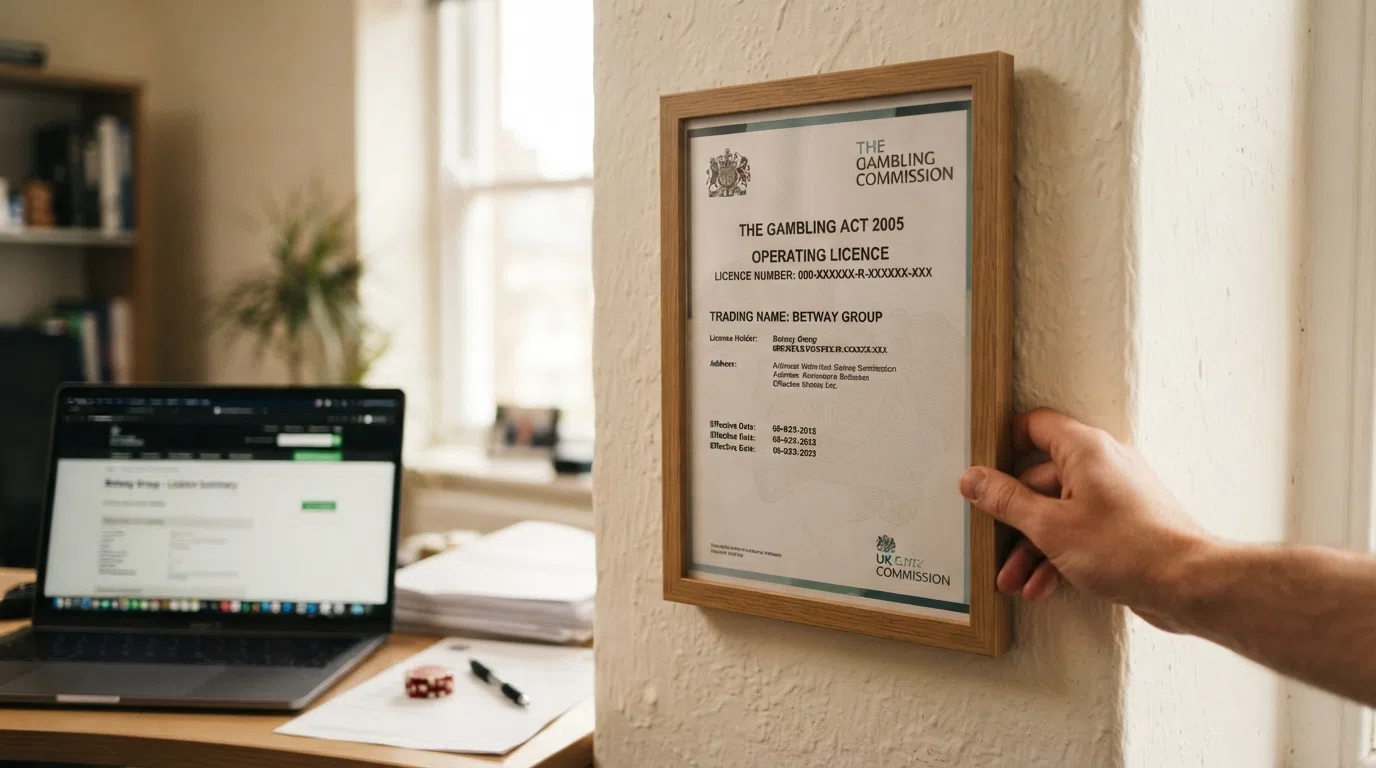
A UK Gambling Commission licence is the only thing standing between a £1 depositor and an operator that can withhold funds with no recourse. It is not a marketing badge; it is the legal framework that gives the player a complaints route, an alternative dispute resolution provider, GAMSTOP coverage, and a regulator who can investigate. Without it, the player has none of those.
Non-GamStop Casinos and the £1 Deposit Search: What the Reader Needs to Know
Sites advertising “£1 deposit not on GamStop” are unlicensed in Great Britain. By definition, a site not on GAMSTOP cannot be a UKGC-licensed operator, because GAMSTOP participation is mandatory for every GB-licensed online operator. The keyword cluster exists in the search results because the demand is real, and the page has to address it honestly rather than rank the operators. These sites offer no GAMSTOP coverage, no Commission complaints route, no ADR, and no British consumer redress if funds are withheld. The Commission has no ISP-blocking power but disrupts illegal sites through search-engine delisting and payment-provider referral. There is no confirmed penalty for the player who gambles at one; what the player loses is every protection the licensed market offers.
The honest read is that “not on GamStop” is a marketing position, not a feature. A player who has self-excluded through GAMSTOP and is looking for a way around the exclusion will find sites that do not check. A player who has not self-excluded has no reason to seek one out, because every protection the licensed market offers — stake limits, deposit-limit prompts, financial vulnerability checks, ADR, complaints, the 10× wagering cap — is missing from the unlicensed site.
The Protections a UKGC Licence Guarantees the £1 Depositor
The specific protections that matter at the £1 level are concrete and named. Identity verification is required before the first deposit, with no grace period, since 7 May 2019. Credit cards are banned across the licensed market since 14 April 2020. GAMSTOP participation has been mandatory since 31 March 2020. The 10× wagering cap has held since 19 December 2025. The deposit-limit prompt has been mandatory at first deposit since 31 October 2025, and from 30 September 2026 only a gross deposit limit (based on money paid in) may be called a “deposit limit” under RTS 12. Financial vulnerability checks trigger at £150 in net deposits over a rolling 30-day period, since 28 February 2025, under LCCP SR Code 3.4.4. Game-design limits — auto-play banned, spin speed at least 2.5 seconds, reverse withdrawals banned, losses disguised as wins banned — have been in place since 31 October 2021.
The list is what the licence means in practice. A player depositing £1 at a UKGC-licensed site is verified, paid through a debit rail, optionally self-excluded through GAMSTOP, and protected by game-design rules that prevent the worst of the casino’s design tricks. None of that is guaranteed at an unlicensed site, and the gap is the entire reason the page is built around the licensed set.
Keeping a £1 Deposit From Becoming a Bigger Problem
A £1 deposit is itself a safer-gambling tool — it sets a hard ceiling on what a single session can cost — but only if the player also uses the deposit limits, reality checks and self-exclusion tools the UK system mandates. The £1 floor is not a substitute for those tools; it is a starting point.
The Deposit Limit as a Safer-Gambling Tool
Britain does not set a nationwide deposit ceiling. The state caps the stake per spin at £5 for players 25 and over and £2 for players 18-24, but the deposit amount is the player’s choice, with a mandatory offer of a limit at the point of first deposit. From 31 October 2025, that prompt is required before the first deposit goes through; from 30 September 2026, the term “deposit limit” can only refer to a gross deposit limit (money paid in, not net of withdrawals). The £150 net deposit threshold over a rolling 30 days triggers a financial vulnerability check, but the check is a safety net rather than a ceiling.
Setting a deposit limit at sign-up is the practical step the system offers and most players skip. The £1 deposit tier makes the limit cheap to set, easy to honour, and quick to revisit. A player who commits to £1 per session and walks away when the £1 is spent is using the system exactly as it was designed to be used; a player who deposits £1, wins £3, and tops up to chase the next win has stopped using the system.
Where to Get Help: The Numbers Every UK Player Should Know
GamCare runs the National Gambling Helpline, which fields over 52,000 calls per year and operates 24 hours a day. The line is free, confidential and available across Great Britain. GAMSTOP is the national online self-exclusion register, with exclusion periods of six months, one year, five years, or five years with auto-renewal, and no early cancellation. The National Gambling Treatment Service treated 11,960 clients in 2024/25, an 11% increase year-on-year, with 93% of treatment completers showing improvement and 50% of new clients seen within six days of first contact. NHS gambling harm clinics operate in England, Scotland and Wales. Gamblers Anonymous runs peer support groups.
The prevalence figures make the help-line numbers worth printing rather than burying. 47% of adults in Great Britain had gambled in the past four weeks, with 38% gambling online. 13.1% of adults — approximately 6.8 million people — were classified as experiencing any level of gambling problems on the PGSI scale. The £1 deposit is a small lever, but the support infrastructure behind it is large and serious, and using it is not a sign of failure.
How We Selected and Ranked These £1 Deposit Casinos
The featured set is built from the UK Gambling Commission’s public register, cross-referenced with operators’ own published terms and conditions, and checked against the affiliate-reviewer data that drives the search results for this keyword. Every operator in the table is named in the register, every bonus figure is taken from the operator’s own published offer, and every wagering multiplier is the figure the operator’s T&Cs apply at the time of writing.
The evaluation criteria, in order, are: genuine £1 minimum deposit (cashier accepts £1 on at least one method, not just an advertised figure), UKGC licence status (current and active on the public register), bonus terms (wagering multiplier, trigger amount, validity window, maximum cashout), and payment-method coverage at £1. The ranking reflects these criteria, with the wagering-free and £1-across-all-methods operators rising to the top and the £5-and-above operators falling out of the genuine £1 frame.
What the ranking does not measure is also worth saying. There is no user-reviews panel, no live speed-test data, and no editorial weighting of casino reputation beyond what the licence status and the published terms already imply. The set is the licensed market’s £1 deposit tier as it sits in 2026, not a personal best-of list.
What the £1 Deposit Casino Landscape Means for Your Play in 2026
Three findings carry through the page. First, genuine £1 deposit casinos are real but rare, and the few that take £1 across the board sit alongside a larger set of operators that advertise £1 and gate the bonus behind a £10 trigger. Second, the bonus value depends on the wagering multiplier and the trigger amount, not on the headline free-spins count, and the December 2025 10× cap has reset the market into two groups: clean modern offers at 0× or 10×, and pre-cap legacy offers at 200×. Third, UK regulation protects the low-stake player in ways that older pages do not report — the stake caps, the 10× ceiling, the deposit-limit prompt, the GAMSTOP mandate, and the £150 vulnerability check are all in force, and they apply at the £1 level as much as anywhere else.
The reader’s move is to pick from the genuine operators, ignore any bonus whose trigger is out of reach, and set the deposit limit the system offers at sign-up. The licence is the gate, the wagering column is the truth, and the £1 is the smallest useful session the UK market currently allows.
Frequently Asked Questions
Can I really deposit just £1 at a UK online casino?
Yes, but only at a small number of UKGC-licensed operators. PricedUp accepts £1 across all payment methods, DragonBet accepts £1 via Visa debit, Mastercard debit and Apple Pay, and Lottoland accepts £1 via five methods including debit card, bank transfer and Trustly. Most UK operators sit at £5 or £10 as a floor, and the £1 figure on most landing pages is a marketing claim rather than a working cashier.
What are the withdrawal limits at £1 deposit casinos?
Withdrawal minimums are almost always higher than the £1 deposit, typically £5, £10 or £20 depending on the operator and the payment method. A player who deposits £1 and wins a small amount will need to build their balance above the cashier’s withdrawal minimum before they can cash out. Processing times run from a few hours for e-wallets to 3-5 working days for bank transfers.
Can I play slots with a £1 deposit?
Yes. A £1 deposit at a £0.10 minimum-stake slot buys ten spins, and the same £1 on a £0.15 minimum-stake slot buys six. The session is short, but it is real-money play on a real slot with the standard RTP and volatility in force. Modern slots at the £1 deposit level include Big Bass Bonanza, Big Bass Splash, Fishin’ Frenzy Even Bigger Fish and Piggy Riches, with RTPs from 96.12% to 96.71%.
Are £1 minimum deposit casinos available on mobile?
Yes. Every operator in the featured set is mobile-compatible, and most run either a dedicated app or a browser-based mobile casino that mirrors the desktop cashier. For a £1 inspection session, browser play is the lower-friction option; for a returning player, the app’s faster login and push notifications start to earn their keep.
Is it safe to play at a £1 minimum deposit casino in the UK?
A UKGC-licensed £1 deposit casino carries the full set of UK player protections: identity verification before first deposit, the credit-card ban, GAMSTOP self-exclusion, the 10× wagering cap, the deposit-limit prompt and the £150 financial vulnerability check. Any site advertising “£1 deposit not on GamStop” is unlicensed in Great Britain and offers none of those protections, regardless of what its landing page claims.
Limits – Real Money Online Casinos UK
Content created by the «Real Money Online Casinos UK» team