
E-wallet casinos in the UK: how to choose one and what it actually costs you
 Available in GB
Current as of September 8, 2026 and checked against the UK Gambling Commission’s public register, operator cashier pages and the conditions the operators themselves publish.
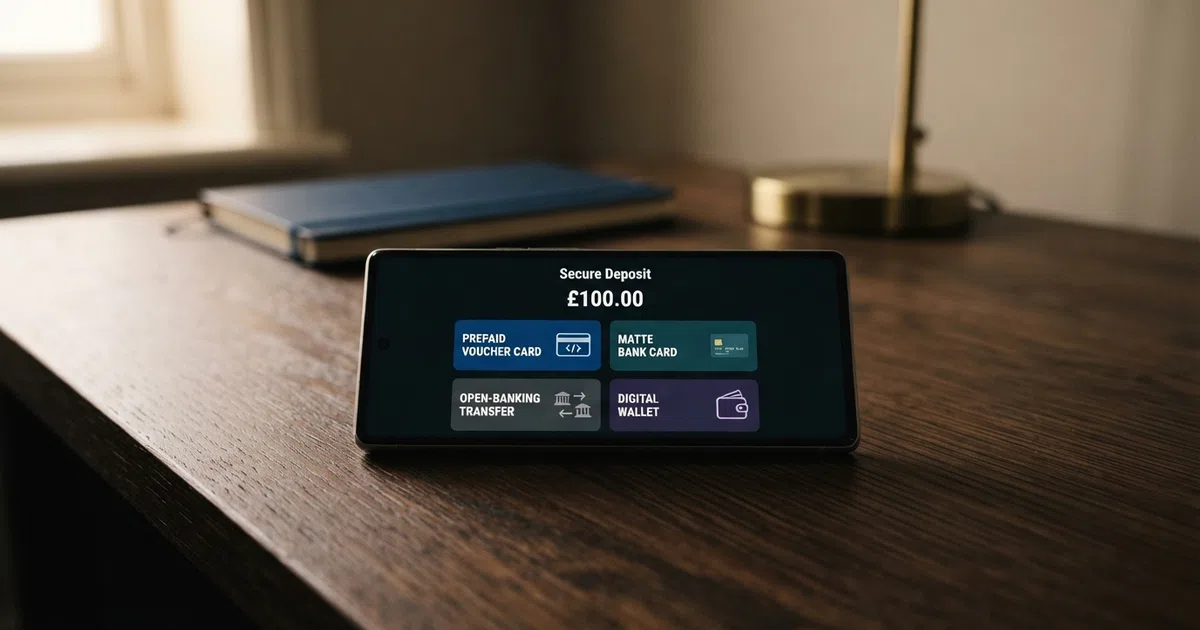
An e-wallet casino in the UK is, on the surface, just an online casino that lets you pay in and take money out through a digital wallet instead of a debit card. The wallet changes more than the icon next to the deposit button, though. It changes how quickly you are paid, which welcome bonuses you can actually claim, and what identity checks hit you before you place a first spin. This page ranks ten UK-licensed operators that take e-wallets, reads their cashiers side by side, runs one of their welcome bonuses through the arithmetic of what it actually costs in time, and lays out the licence, stake and limit rules the Gambling Commission enforces around that wallet.
What an e-wallet casino is — and why it changes your payouts
The category is wider than it looks, and that is the first thing to get right before comparing operators. A casino qualifies for this page if its UK cashier lists at least one regulated e-wallet for deposits and withdrawals, and if the licence behind the cashier is a Gambling Commission one, not a badge from Malta, Curaçao or Gibraltar that has been picked up for marketing reasons.
What counts as an e-wallet casino
The definition that matters is the operator-side one. An e-wallet casino is a UK-licensed online casino whose cashier supports at least one regulated digital wallet for both deposits and withdrawals. Two things follow. The wallet has to be a payment method the operator can actually pay out to, not just accept for deposits; and the licence has to be a GB one, because the rest of this page — the stake caps, the deposit-limit prompt, the KYC before the first spin — only applies to operators the Gambling Commission supervises.
A wallet acting as both deposit and withdrawal rail is what makes the closed-loop return work. Money goes in from the wallet, the casino holds it, and when you withdraw it goes back to the same wallet rather than wandering through a card processor. That single fact is the source of almost every speed claim e-wallet marketing makes.
The wallets UK players actually use
The wallets that show up on UK cashiers, in roughly the order players reach for them, are PayPal, Skrill, Neteller, Trustly, Apple Pay, MuchBetter and Payz. PayPal is the default for most UK players because it is the wallet they already have, the casino gets paid instantly, and the brand recognition removes the “is this a real payment method” hesitation at the cashier. Skrill and Neteller are the speed-and-privacy pair, popular with players who want the casino never to see their card number at all. Trustly is the open-banking route, which sits underneath the wallet idea but feels like one at the cashier: a bank login, an instant transfer, no card details entered on the gambling site. MuchBetter and Payz are the niche options, and Duelz is the only featured brand that lists both.
Apple Pay is the borderline case. It feels like a wallet because the phone pretends it is one, but it is a card-rail front end in almost every implementation, and the Gambling Commission’s credit-card ban reaches it in the same way it reaches a wallet funded by a credit card. The page treats Apple Pay as wallet-shaped for the player’s purposes and card-shaped for the rules.
The free-spins and matched-cash divide among UK casinos
Two offer families dominate the e-wallet category, and they pay out very differently. The first is the free-spins welcome: a deposit, sometimes a stake on a named slot, and a bundle of spins in return. Where the spins carry no wagering on the winnings — bet365, Sky Vegas, Paddy Power, LeoVegas, Grosvenor and Mecca all sit on one variant of this — what you win is yours to withdraw, subject only to a per-spin stake cap and a withdrawal method that accepts the payout. The second is the matched-cash bonus: the casino matches your deposit by a percentage up to a ceiling, and that bonus is unlocked by wagering it a set number of times. 888casino, Duelz, Mr Vegas and PartyCasino are the matched-bonus side of the featured set.
The two families cost different things and are paid differently. A free-spins welcome is paid as a series of small withdrawals or as a single one once the spins are used, and the only arithmetic worth doing is the per-spin value and any cashout cap. A matched-cash welcome is paid only after the wagering target is met, and the arithmetic is the turnover required, the time it takes at a realistic spin rate, and the house edge eaten on the way.
The best e-wallet casinos we checked: 10 UK operators ranked
Ten operators survived the licence check and the cashier check. Each one is a Gambling Commission licensee; each one’s UK cashier lists at least one of the wallets above; and each one’s welcome offer was surfaced on a current operator or review page at the time of writing. The ranking is set by the breadth of the cashier and the cost of the welcome offer in time and turnover, not by who is paying the highest affiliate share.
How the ten compare on wallets, licence and wagering
The table below reads down the columns. The licence column carries the operator’s Gambling Commission account where research was able to verify one on the public register, and a plain “UKGC-licensed” line where it was not register-confirmed this run. The wallets column is what each operator’s cashier lists for deposits and withdrawals. The wagering column states the multiplier on the bonus or on the deposit, in the operator’s own wording, with the time window research carried. The e-wallet note column is where exclusions and minimums live, and it is the column that decides whether a wallet-only player can actually claim the headline offer.
| Operator | UKGC licence | E-wallets accepted | Welcome bonus | Wagering | E-wallet deposit note |
|---|---|---|---|---|---|
| bet365 | UKGC-licensed (register-confirmed, multiple current entries) | PayPal | Up to 500 wager-free free spins | No wagering on free-spin winnings; 30 days to claim | PayPal accepted, min deposit £25 |
| Sky Vegas | UKGC-licensed (not register-confirmed this run) | PayPal | 200 free spins after £10 deposit + stake | No wagering on free spins; 7-day spin expiry | PayPal accepted |
| Paddy Power | UKGC-licensed (not register-confirmed this run) | PayPal, Skrill, Neteller | 60 no-deposit + 200 after £10 deposit + wager (260 total) | No wagering on free spins; 7-day expiry | Min deposit £30 for e-wallets |
| 888casino | 888 UK Limited, account 39028, current | E-wallets listed (specific availability not confirmed) | 100% up to £100 | 10x on selected slots within 90 days; claim within 48 hours | E-wallets listed; wallet-specific eligibility not confirmed |
| Duelz | UKGC-licensed (not register-confirmed this run) | PayPal, Skrill, Neteller, MuchBetter, Payz, Trustly | Up to £100 bonus + 100 free spins | 10x; within 7 days | Six wallets in the cashier |
| Mr Vegas | UKGC-licensed (not register-confirmed this run) | PayPal, Skrill, Neteller, Trustly | 100% up to £50 (11 no-wager free spins on surfaced variant) | 10x deposit, paid in 10% increments over 60 days | Four wallets |
| PartyCasino | UKGC-licensed (LC International Limited, account 54743 cited; not register-confirmed this run) | PayPal, Skrill, Neteller, Trustly | £10 bonus for £10 deposit and bet | 10x on selected games; max stake £2 while bonus active; 30 days | Four wallets |
| LeoVegas | UKGC-licensed (not register-confirmed this run) | PayPal | 50 wager-free free spins on Big Bass Splash, min £10 deposit | Wager-free; expiry not stated in sources | PayPal only — Skrill and Neteller not supported |
| Grosvenor Casinos | UKGC-licensed (not register-confirmed this run) | E-wallets accepted (specific availability not confirmed) | £40 bonus + 100 free spins on Big Bass Splash for £20 deposit | 10x on free-spin winnings; 10x on bonus | PayPal and Paysafe excluded from welcome (debit card needed) |
| Mecca Bingo | UKGC-licensed (not register-confirmed this run) | E-wallets supported (specific availability not confirmed) | £10 deposit + spend for 50 free spins | 5x for the bingo path; 10x for the slots path; 7 days | PayPal and Paysafe not welcome-eligible |
bet365 — up to 500 wager-free free spins
bet365’s UK casino welcome is built around a stack of free spins rather than a matched deposit, and the spin winnings carry no wagering. The cashier is narrower than the rest of the featured set: PayPal is the wallet in scope, with a £25 minimum deposit, and the rest of the funding comes from the usual card and bank-transfer rails. The 30-day window to claim after registration is the clock the offer runs on, and the absence of a wagering requirement is what makes the headline number mean what it says — there is no turnover target to grind, and the time cost of the bonus is the time it takes to use the spins, not to clear a matched amount. For a wallet-only player who can meet the £25 PayPal minimum and does not need Skrill or Neteller, bet365 is the cleanest spin-for-spin trade on the list.
Sky Vegas — 200 free spins for a £10 deposit and stake
Sky Vegas runs a deposit-gated, wager-free spin welcome: deposit and stake £10 on a qualifying game and 200 free spins land in the account, with a 7-day expiry on the spins. The cashier takes PayPal among the e-wallets, and the £10 entry point is the lowest deposit ceiling on the list alongside a couple of the matched-bonus brands. The narrow window is the trade — seven days to use 200 spins is roughly 30 spins a day, and missing the expiry returns the spins to the house — but the absence of wagering means every spin’s payout is yours. For a small bankroll that wants a known number of spins at a known entry cost, Sky Vegas is the most arithmetic-friendly wager-free option on the list.
Paddy Power — 60 no-deposit spins before you pay a penny
Paddy Power is the only featured brand with a genuinely deposit-free slice in the welcome. The headline number — 260 free spins — is the sum of 60 no-deposit spins and a further 200 spins unlocked after a £10 deposit and a £10 wager. The spins carry no wagering, and they expire after 7 days. The wallet story has a wrinkle: PayPal, Skrill and Neteller are all in the cashier, but the e-wallet minimum deposit is £30, not £10, so the deposit-gated half of the welcome is more expensive through a wallet than through a debit card. For a player who values the no-deposit slice and is happy to use a debit card for the £10 top-up, the wallet minimum is a footnote. For a player who wants every pound to come from a wallet, it shifts Paddy Power down the list.
888casino — the £100 match with 10x wagering
888casino is the matched-deposit head of the list and the operator whose licence is the most cleanly verified: 888 UK Limited, Gambling Commission account 39028, current. The offer is 100% up to £100, with 10x wagering on selected slots and a 90-day window to clear it; the bonus has to be claimed within 48 hours of the qualifying deposit. E-wallets are listed by the operator help pages, but research did not surface which specific wallets qualify, and that is the part of the offer the player has to confirm at the cashier before depositing. The 10x multiplier is now the statutory ceiling on a UK online casino welcome, so the wagering target is the worst a legitimate offer can be — which is also the best a legitimate offer can be, because anything higher would be illegal.
Duelz — six wallets in the cashier, £100 match plus 100 spins
Duelz is the broadest cashier on the list. PayPal, Skrill, Neteller, MuchBetter, Payz and Trustly all appear in the cashier, which is the only featured brand to cover all three of the niche wallets and Trustly. The welcome is a matched deposit up to £100 plus 100 free spins, with 10x wagering on the bonus and a 7-day window. The narrow window is the trade: seven days is shorter than every other matched-bonus brand on the list, and it is the figure that decides whether Duelz fits a casual player. For a wallet-only player who wants one cashier that covers every wallet they might use — including the open-banking route — Duelz is the most wallet-complete operator in the featured set.
Mr Vegas — a £50 match where wagering sits on the deposit
Mr Vegas’s matched welcome is 100% up to £50, and the wagering structure is unusual: 10x on the deposit, paid out in 10% increments over 60 days. The structure means the bonus is released in chunks as the wagering target is met, rather than the bonus being available all at once with a single turnover target. The cashier lists PayPal, Skrill, Neteller and Trustly, and the surfaced offer variant carries 11 no-wager free spins as a small extra. For a player with a smaller bankroll who values a longer window over a larger headline, Mr Vegas is the more forgiving timing structure on the list — 60 days is twice the 888casino window and more than eight times Duelz’s.
PartyCasino — a £10 bonus for a £10 bet
PartyCasino runs a small-bonus welcome: deposit and bet £10 on a qualifying game and a £10 casino bonus is credited, with 10x wagering on selected games and a £2 maximum stake while the bonus is active. The £2 stake ceiling is a real constraint — it cuts the effective spin value at any online slot and means the wagering target has to be cleared at the lower stake — and the 30-day window from registration is the second-shortest on the list. The cashier takes PayPal, Skrill, Neteller and Trustly. For a player testing a casino with a known small stake, the £10-in, £10-out shape is honest, and the £2 cap while the bonus is active is the part of the small print that decides whether the offer is worth the time.
LeoVegas — 50 wager-free spins on Big Bass Splash
LeoVegas’s welcome is 50 wager-free free spins on Big Bass Splash for a minimum £10 deposit, and that is the entire offer. The cashier takes PayPal but, unusually for the mobile-led brands, does not support Skrill or Neteller — a wallet-only player using either of those will need to fall back to PayPal or a card. The wager-free structure is the appeal: 50 spins at a known slot with no turnover target, and the winnings are paid in cash subject to the standard withdrawal flow. For a PayPal user who values the absence of wagering over the size of the headline, LeoVegas is the most concentrated free-spin offer in the featured set, even if the spin count is the smallest.
Grosvenor Casinos — £40 bonus and 100 spins, but PayPal misses the welcome
Grosvenor’s welcome is a £40 casino bonus plus 100 free spins on Big Bass Splash for a £20 deposit, with 10x wagering on both the bonus and the free-spin winnings. The wallet exclusion is the part the headline does not say: PayPal and Paysafe deposits do not qualify for the welcome, and a debit card is the funding method that triggers the offer. For a wallet-only player — and PayPal is the wallet most UK players reach for first — Grosvenor’s welcome is effectively off the menu, even though the cashier takes the wallet for regular play. The operator is worth knowing about for the offer shape, and the page is worth the row to make the exclusion visible.
Mecca Bingo — 50 spins, with PayPal deposits excluded from the offer
Mecca’s welcome is a £10 deposit-and-spend that triggers 50 free spins, with 5x wagering on the bingo path and 10x on the slots path, in a 7-day window. As with Grosvenor, PayPal and Paysafe deposits are not welcome-eligible, so a wallet-only player using PayPal has to fund the qualifying spend with a different method. The shorter window is the second constraint: 7 days to meet the wagering is tight against the 90-day window at 888casino or the 60 days at Mr Vegas. For a wallet-only player, Mecca’s bingo-led offer sits below the matched-cash brands on practical terms, and above them only if the bingo path is genuinely the path being taken.
E-wallet deposits and withdrawals: how fast you really get paid
The mechanics of paying in and taking money out through a wallet are the part of the page where the marketing language meets the operator’s actual cashier. Three things decide what an e-wallet really does for a UK player: the deposit flow, the withdrawal flow under the closed-loop rule, and the welcome-bonus eligibility that some operators quietly attach to the wallet choice.
How an e-wallet deposit works at a UK casino
The deposit itself is the simple part. The player opens the cashier, picks a wallet from the list, enters the amount in GBP, and is bounced to the wallet’s own login to confirm. The casino never sees the card or the bank details; the wallet acts as a buffer. The balance lands in the casino account within seconds, the wallet confirms the debit, and the player is in. The mechanics are the same for PayPal, Skrill, Neteller, Trustly, MuchBetter and Payz — the only difference is which login screen the player ends up on.
The part that surprises new players is what runs in parallel. Before that first deposit is even accepted, the casino has to verify the customer’s name, address and date of birth. The Gambling Commission has required that pre-verification step since 7 May 2019, and a casino that lets a wallet-only player deposit without it is a casino operating outside the rule. The verification is not a banner the player can dismiss; it is a hard gate on the first deposit, and the wallet is paying into a casino that already knows who the player is.
Which wallets each featured casino takes
The table below maps each named wallet to the featured casinos that list it. Cells are populated from the operator cashier pages and the review sources research carried; an em dash means research did not surface that combination this run.
| E-wallet | Featured casinos that accept it |
|---|---|
| PayPal | bet365, Sky Vegas, Paddy Power, 888casino, Duelz, Mr Vegas, PartyCasino, LeoVegas |
| Skrill | Paddy Power, Duelz, Mr Vegas, PartyCasino |
| Neteller | Paddy Power, Duelz, Mr Vegas, PartyCasino |
| Trustly | Duelz, Mr Vegas, PartyCasino |
| MuchBetter | Duelz |
| Payz | Duelz |
Three observations follow. PayPal coverage is effectively universal across the featured set. Skrill and Neteller cluster in the same four operators and drop off entirely at the bet365, Sky Vegas, LeoVegas, Grosvenor and Mecca end of the list. Trustly and the niche wallets only show up where the operator has built a wider cashier, and Duelz is the only featured brand that lists all six.
Withdrawal speed and the closed-loop rule
The closed-loop rule is the mechanism that makes e-wallet withdrawals faster than card withdrawals. When a player withdraws, the casino returns the money to the same funding method the deposit came from. A PayPal deposit comes back as a PayPal withdrawal, a Skrill deposit as a Skrill withdrawal, and so on. The casino does not have to wait for a card processor to clear the payout, and the wallet can credit the player’s balance the moment the casino releases the funds.

The practical benchmark, from the comparison pages research carried, is same-day payout via PayPal or Trustly, with the casino’s own pending window setting the floor. Faster Payments and open-banking rails are the plumbing that makes same-day possible; the wallet is the front end. Two cautions sit alongside the speed claim. First, a same-day payout still depends on the casino’s internal pending window — anything from a few hours to 48 hours is normal in the licensed market — and the operator’s published withdrawal time is the figure that matters, not the rail. Second, a casino that delays the withdrawal to chase deposit retry attempts is a casino that is failing the spirit of the closed-loop rule, and the regulator’s intervention record on that point is the part of the licence check that catches it.
Minimum deposits and setting up your wallet
The GBP minimums vary by operator and by wallet. bet365’s PayPal minimum is £25. Paddy Power’s e-wallet minimum is £30, against a £10 card minimum for the deposit-gated half of the welcome. The other featured cashiers do not state a GBP minimum for e-wallets in the sources research carried, which is the convention for “no operator minimum” in the UK licensed market.
Setting the wallet up before the casino is the practical order. A new e-wallet takes a few minutes to register and verify, a working balance has to be in it before the casino cashier will accept it, and a wallet funded from a credit card is blocked at the casino side under the credit-card ban. The setup sequence — register the wallet, verify the wallet’s own identity, fund it from a non-credit source, then open the casino — is the same for every wallet and every featured operator.
Welcome bonuses and e-wallet deposits: who is excluded
Two operators in the featured set exclude e-wallets from their welcome offers. Grosvenor excludes PayPal and Paysafe deposits from the £40-bonus-plus-100-spins welcome and requires a debit card to qualify. Mecca excludes PayPal and PaysafeCard deposits from the £10-deposit-and-spend welcome. The exclusions are operator choices, not regulator rules, and they are buried in the terms rather than the headline.
The arithmetic on a matched welcome is worth doing once, on 888casino’s 100% up to £100, because it is the offer on which the rest of the matched-bonus list is priced. The turnover required is the £100 bonus multiplied by the 10x wagering factor, which is £1,000 of qualifying slot play. At the £5 maximum stake per spin that applies to players aged 25 and over under the current stake cap, that is 200 spins. At a 5-second interval between spins, 200 spins is roughly 17 minutes of slot play — a small number of minutes, on a welcome that has to be claimed within 48 hours and cleared within 90. The number that matters is the £1,000 of qualifying turnover itself, not the minutes: at any slot’s house edge, that £1,000 is what the player pays to clear the bonus, and the £100 bonus is the cap on what the player is paid for paying it.
The 10x ceiling on wagering requirements is now statutory. From 19 December 2025, the Gambling Commission’s rules cap wagering at 10x for any UK-licensed welcome, and matched offers above that line are no longer lawful. The featured set sits at or below the cap, and the page’s wagering column is the spot to check the figure against.
The UK rules that govern e-wallet play
The licence behind the cashier decides which rules apply. A Gambling Commission licence pulls the operator into the full UK regime: stake caps, deposit limits, identity checks, the credit-card ban, the wagering cap. An offshore badge — Malta, Curaçao, Gibraltar — does none of that, and an operator offering to GB customers on an offshore licence alone is operating outside the law.
How a UK casino proves it is legal to play at
The proof is the Gambling Commission’s public register. The register lists every licensed operator with an account number, a licence status, and the activities the licence covers. A legitimate UK casino can be checked by name in under a minute; the account number, the licence status and the activity list are the three things to confirm. 888 UK Limited, for example, is on the register under account 39028, with current status for remote casino and bingo activities.

Point-of-consumption licensing is the legal mechanism that makes the register exhaustive for the UK market. Under the Gambling (Licensing and Advertising) Act 2014, any operator taking remote bets from customers in Great Britain needs a GB licence, regardless of where the operator is based. A Malta or Curaçao licence on its own is not enough; the operator needs the GB point-of-consumption licence on top, and the register is where it shows up. Unlicensed provision to GB customers is a criminal offence under section 33 of the Gambling Act 2005, with penalties up to 51 weeks’ imprisonment and an unlimited fine.
Operators also pay a statutory levy from 6 April 2025 to fund the research, prevention and treatment of gambling harm, and Remote Gaming Duty has sat at 40% of gross gaming yield from 1 April 2026. Players do not pay tax on winnings; the duty is on the operator, and it is one of the figures that explains why a UK-licensed welcome is smaller than an offshore one and arrives with harder terms.
The caps and checks the licensed market imposes
The rules that touch an e-wallet player’s session are listed below. The dates are the dates each rule took force under UK statute or Gambling Commission guidance; the figures are the caps the player meets at the cashier or the slot.
| Rule | What it caps | In force from |
|---|---|---|
| Online slot maximum stake per game cycle | £5 for players aged 25 and over | 9 April 2025 |
| Online slot maximum stake per game cycle | £2 for players aged 18 to 24 | 21 May 2025 |
| Credit-card gambling ban, including via e-wallets | No credit-card funding for any gambling, routed through any MSB | 14 April 2020 |
| Financial vulnerability check | Triggered at net deposits over £150 in a rolling 30-day period | From 30 August 2024; threshold tightened to £150 in 2025 |
| Pre-verification (name, address, date of birth) before gambling | Required before any gambling, including bonus use | 7 May 2019 |
| Deposit-limit labelling | Only a gross deposit limit may be labelled a “deposit limit” | 30 September 2026 |
| Wagering cap on welcome bonuses | Capped at 10x the bonus amount | 19 December 2025 |
Two of these are worth flagging for the e-wallet player specifically. The credit-card ban reaches e-wallets because the Gambling Commission treats a credit-card-funded e-wallet as a credit-card payment routed through a money service business, and the operator’s payment system blocks the route at the cashier. The deposit-limit labelling rule, in force from 30 September 2026, tightens the vocabulary of what a casino is allowed to call a “deposit limit” so that only a gross deposit limit can carry the name.
Verifying who you are before your first deposit
The pre-verification step runs before the wallet deposit and runs before any bonus is even visible. The casino has to confirm the player’s name, address and date of birth, and that confirmation has to be in place before any gambling, including bonus use, is permitted. The check is the casino’s responsibility, but the documents come from the player — a photo of a passport or driving licence, a recent utility bill or bank statement, and a selfie match in most operator flows.
For e-wallet players, an additional check can follow. Source-of-funds verification is the regulator’s response to the credit-card ban, and an operator can ask where the money in the wallet came from. A wallet funded from a current account is normally unremarkable; a wallet funded from a third party or a credit line is the trigger for further questions, and a wallet funded by credit card is the trigger for the deposit being refused. The verification is part of the cost of using a wallet at a UK-licensed casino, and it is the part of the flow the marketing language never mentions.
Safer gambling with e-wallets: the limits that protect you
The safer-gambling tools the regulator requires are the same at every UK-licensed operator, and the e-wallet player’s experience of them is shaped by two things: the deposit-limit prompt that fires before the first deposit, and the self-exclusion register that runs across the whole market.
Spending controls and the deposit-limit prompt
Before the first deposit, the operator has to prompt the player to set a financial limit. The prompt is not a marketing nudge to deposit more; it is a regulator-mandated step the casino has to take, and the player can set the limit at any level including zero. Decreases to a deposit limit have to be actioned immediately — a player who drops their daily limit from £100 to £20 sees the £20 cap the next time they try to deposit — and increases typically carry a cooling-off period before they take effect. From 30 September 2025, the vocabulary and implementation around deposit limits were tightened, and from 30 September 2026, only a gross deposit limit may carry the “deposit limit” label.
A wallet is, in practice, its own spending control. The balance in the wallet is the balance the casino can pull from, and topping the wallet up from a current account is a separate, deliberate step. Players who fund their wallet weekly from a set amount are running a deposit limit without the casino’s prompt; players who link a wallet to a card and let it refill are running no limit at all. The e-wallet shape and the deposit-limit shape are independent controls that compound when both are used.
GAMSTOP and blocking e-wallet transactions
GAMSTOP is the UK-wide self-exclusion register for online gambling. A player who registers with GAMSTOP is excluded from every UK-licensed online casino and bingo site for a chosen period — six months, one year, or five years — and the operator has to enforce the exclusion. The register is the regulator’s main tool for players who have decided to stop, and it is free to use.
The reach of self-exclusion into e-wallet transactions is a separate question. The research carried for this page does not assert a specific mechanism by which a GAMSTOP registration blocks a wallet payment to a casino, and the page leaves the question at the boundary of what the public sources state. The e-wallet player’s practical protection is the casino-side block on registration with a GAMSTOP-registered player, not a wallet-side block on the transaction.
Reality checks, session limits and where to get help
In-session controls are the casino’s tools for keeping a session visible to the player. Reality checks pop up at intervals to show time played and net position; session limits cut the play automatically at a chosen duration. The regulator requires the tools to be present, and a player who wants to use them sets them in the responsible-gambling section of the account.
For players who need help outside the casino, the resources are free, confidential and available around the clock. The National Gambling Helpline on 0808 8020 133 is run by GamCare, free from any UK phone, and operates 24 hours a day. NHS specialist gambling treatment clinics offer in-person support in England, and the regional services are the route into structured treatment for a player who wants it. GamCare’s January 2026 referral figure is the marker on the demand side: 996 referrals to treatment and peer-based support services in the month, up from 674 in January 2025 — a 48% year-on-year increase. The figure is not a marketing number; it is the count of people who asked for help, and it sits on the page because the help it points to is the part of the safer-gambling framework every reader of this page should know exists before they deposit at all.
How we chose and checked these 10 e-wallet casinos
The selection basis is the cashier and the register, in that order. An operator qualified for the ranking if its UK cashier listed at least one regulated e-wallet for both deposits and withdrawals, and if the licence behind the cashier was a Gambling Commission one. The register check ran on 888 UK Limited (account 39028, current) and William Hill Organization Limited (account 2752, current) as named examples of the register’s role in the verification; the remaining eight operators are described as UKGC-licensed on the basis of the operator’s own published licence information, with the register check noted as not carried out in this run.
The ranking was set by three criteria, in order: the breadth of the cashier (more wallets beat fewer); the cost of the welcome offer in time and turnover, with wager-free offers priced above matched-bonus offers at equivalent headline size; and the wallet exclusions that disqualify a wallet-only player from the headline, which sit Grosvenor and Mecca below the matched-bonus brands. The factual basis for each operator is the operator’s own cashier and bonus pages, plus the comparison sources research carried; the figures in the operator write-ups are the figures those pages publish, and where research could not confirm a figure, the cell carries a qualitative description or an em dash rather than a fabricated value.
Before you deposit: the e-wallet checks that decide your casino
The list above is the comparison; the four checks below are the order in which a wallet-only player should run it. None of them is a research finding in its own right. They are the practical decisions the page’s own figures argue for, and the order is the order the casino itself encounters them.
Check the wallet is accepted and welcome-eligible. A wallet in the cashier is not a wallet that triggers the welcome. Grosvenor and Mecca both take PayPal for general play and exclude it from the welcome; a wallet-only player at either operator has to fund the qualifying deposit from a debit card. The e-wallet note column in the comparison table is the spot to read this against, and the offer’s terms are the spot to confirm it.
Expect identity checks before the first spin, not after the first deposit. Pre-verification has been a hard gate on UK remote gambling since 7 May 2019. The wallet may be the rail, but the casino has to know who is paying through it before any gambling — including any bonus use — is permitted. Players who set up the verification documents before opening the cashier get through the gate in one pass.
Set the deposit limit at the same time as the first deposit. The operator has to prompt for a financial limit before the first deposit is accepted. The prompt is a regulator-mandated step, and a player who treats it as a checkbox rather than a decision is the player the prompt was written for. Decreases take effect immediately; increases carry a cooling-off period. The e-wallet is a parallel control, and the two together are stronger than either alone.
Judge the bonus by its wagering cost, not its headline. A £100 matched bonus at 10x wagering is a £1,000 turnover target, and the player’s cost of clearing it is the house edge eaten across that turnover. A 500-spin wager-free welcome is paid in cash as the spins are used, with no turnover target. The arithmetic of the two offers is the arithmetic of the whole list, and the headline number is the part of the offer the casino chose to print. The 10x cap has been statutory since 19 December 2025; the worst a UK welcome can now be is the best a legitimate offer can now be, and a higher multiplier is a flag the offer is not what it claims to be.
Frequently asked questions
Which e-wallets can I use at UK online casinos?
PayPal, Skrill, Neteller, Trustly, MuchBetter and Payz are the wallets that show up most often on UK cashiers. PayPal is the most widely supported across the featured set; Skrill, Neteller and Trustly cluster at a smaller group of operators; MuchBetter and Payz are niche and appear together at Duelz. The cashier page is the authoritative list for any given operator, and the wallets in the cashier are the wallets that will work for both deposits and withdrawals.
What is the fastest e-wallet for casino withdrawals in the UK?
PayPal and Trustly are the wallets most often cited for same-day payouts in the UK licensed market, with the closed-loop return and Faster Payments or open-banking rails doing the work. The casino’s own pending window is the figure that sets the floor, and the operator’s published withdrawal time is the one to read before depositing rather than the rail-level speed.
Do UK casinos allow credit card deposits through e-wallets?
No. The Gambling Commission’s credit-card gambling ban, in force since 14 April 2020, extends to credit-card-funded payments routed through any money service business, including e-wallets. A wallet funded from a credit card is blocked at the casino’s cashier, and a wallet funded from a current account is the route that works.
What identity and source-of-funds checks apply to e-wallet players in the UK?
Every UK-licensed remote casino has to verify a player’s name, address and date of birth before any gambling, including bonus use, and that pre-verification has been required since 7 May 2019. Source-of-funds checks can follow, and the casino may ask where the money in the wallet came from. A wallet funded from a current account is normally unremarkable; a wallet funded from a credit card is refused; a wallet funded from a third party triggers further questions.
What deposit-limit rules apply at UK online casinos in 2026?
The operator has to prompt the player to set a financial limit before the first deposit, and decreases to that limit have to be actioned immediately. From 30 September 2025, the vocabulary and implementation around deposit limits were tightened; from 30 September 2026, only a gross deposit limit may be labelled a “deposit limit”. The financial vulnerability check fires at net deposits over £150 in a rolling 30-day period.
Payments – realmoney-onlinecasinos-uk
Content created by the «realmoney-onlinecasinos-uk» team