
No-ID Casino UK: The Honest Answer to a Search That Promises More Than It Can Deliver
 Available in GB
The search “online casino without ID UK” promises something the UK market cannot lawfully give. Every casino licensed by the Gambling Commission has to verify your name, address and date of birth before you place a single bet. That is not a marketing choice any operator gets to opt out of. It is a regulatory condition written into LCCP 17.1.1, tightened in May 2019, and enforced at every site the Commission supervises.

What the search does find is a more interesting market. Some UK-licensed casinos run automated background checks at sign-up that pass without a manual document upload, which is the closest the legal market comes to the phrase “no ID.” Offshore operators serving UK players often defer the document request until a player has moved several thousand pounds through the cashier. The first route trades a little friction for full UK protections. The second postpones verification, then demands it at the worst possible moment: when you try to cash out.
This page is written to make that trade-off visible. Every operator named below holds a Gambling Commission licence and is connected to GAMSTOP. The welcome offers are read against the small print that decides whether you keep a penny. And the offshore route, where it appears, is examined honestly, because the only thing worse than a slow cashout is discovering, at the cashout, that the casino wants to know who you are.
*Currency stamp: current as of September 8, 2026; operator licence claims verified against the Gambling Commission’s public licence register.*
“No-ID Casino” Is a Search Term, Not a Real Product — Here’s What You’re Actually Looking For
“No ID casino” is shorthand. It is what a player types when they want a fast sign-up, not when they want an unlicensed site. In practice the phrase covers three very different things, and the differences between them decide what you are actually signing up to.
The first is the narrowest: a casino that runs identity and age checks through automated data providers, so a player with a clean UK electoral register entry, a UK bank account and a UK address never sees a document upload screen. The check happens in the background, returns a match, and the player proceeds. This is not “no verification.” It is verification by a different route.
The second is the broader category most players mean: any site that lets you register and deposit without sending a photo of your passport. Some of those sites are UK-licensed. Many are not. The UK-licensed ones verify you anyway, just later or differently. The unlicensed ones do not verify you at sign-up at all.
The third is the offshore model: sites licensed outside Britain, often in Curaçao or Anjouan, that take deposits from UK customers without verifying identity at registration and trigger a full document check only once cumulative deposits and withdrawals cross a threshold. The threshold is often set between £2,000 and £8,000. The site looks anonymous. It is not.
What unifies the three is that none of them is a UK-licensed casino where you can gamble without your identity ever being verified. That product does not exist. The Commission’s own guidance is plain on the point: “all online gambling businesses must ask you to prove your age and identity before you gamble.”
What “No ID Casino” Means in Practice — and What It Definitely Doesn’t
The gap between the search term and what UK regulation permits is the most important sentence on this page, so it is worth stating it cleanly.
At a UKGC-licensed casino, LCCP 17.1.1 requires the operator to verify at least your name, address and date of birth before you are permitted to gamble. The condition has been in force since 7 May 2019 and applies to every deposit, every bet, every bonus credit and every free spin. Verification is not optional and cannot be deferred. What the operator can vary is the *route*: an automated check against credit-reference and electoral-roll data passes silently for most UK residents with a stable address; a manual document upload is requested only when the automated match fails or when a source-of-funds review is triggered.
The “no ID” outcome at a UK-licensed casino, then, is one of two things. Either you passed an automated check you did not see, or the casino is licensed somewhere else and the check has been postponed. The first is what most players actually want. The second is what most players actually find when they click past the Commission’s register.
At offshore sites serving UK players, the postponement is not a small thing. Verification is commonly held until cumulative deposits and withdrawals reach £2,000–£8,000. A casual player may never hit that band. A regular player will, and they will hit it at exactly the moment they want their winnings out.
UK Law Requires Identity Checks Before You Can Place a Single Bet — and There Are No Exceptions
Britain’s gambling regulation is built on three licensing objectives written into section 1 of the Gambling Act 2005: preventing gambling from being a source of crime or disorder, ensuring gambling is fair and open, and protecting children and other vulnerable persons. Every rule that follows, including the verification rule, is a working-out of those three aims. None of them is a marketing line; they are the Commission’s terms of trade.
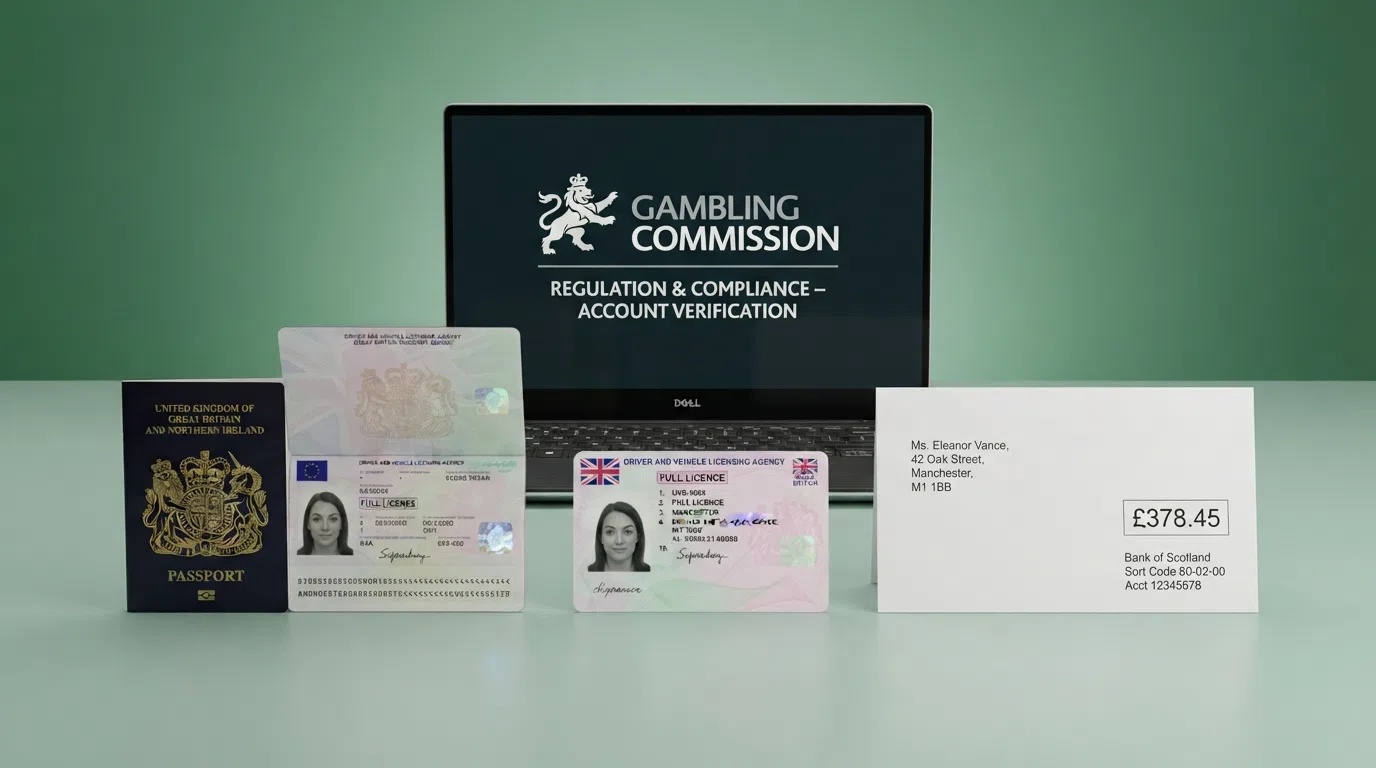
The verification rule is the one that most directly answers the search. The Commission puts it this way: “Licensees must obtain and verify information in order to establish the identity of a customer before that customer is permitted to gamble.” That sentence is LCCP 17.1.1, the headline condition that has settled the question for every GB-licensed operator since 2019. The verification covers at least name, address and date of birth. It runs before the first deposit, before the first bonus credit, before the first free spin and before the first demo play. There is no exception for low-stakes play, no exception for promotional play, and no exception for free-to-play titles hosted on a licensee’s own site.
What the rule does not do is specify the *method* of verification. That is where the search term “no ID” still has a legitimate use. A UK-licensed casino can verify a player through an automated match against third-party data providers, against the player’s bank via open banking flows, or against electoral-roll and credit-reference data, all without asking the player to upload a passport. The check has happened. The player has not seen it.
The operators that take advantage of this route are the ones that answer the search most usefully. They are faster at the registration screen because the heaviest step runs in the background. They are also UK-licensed, GAMSTOP-connected, and bound by every other Commission rule. That combination is the trade the page is about.
The UKGC Rule That Settles the Question: LCCP Condition 17.1.1
LCCP 17.1.1 is short and worth quoting. Licensees must obtain and verify information in order to establish the identity of a customer before that customer is permitted to gamble. The condition took effect on 7 May 2019, after the Commission’s review of online identity and age verification concluded that the pre-existing framework left too much room for under-18 play and weak source-of-funds checks. The tightening did two things: it raised the verification standard to one the Commission could enforce consistently across every remote licensee, and it closed the loophole that allowed free bets and bonus credit to be issued before identity had been confirmed.
The rule is non-negotiable in the literal sense. A UKGC-licensed casino cannot lawfully let a player deposit, claim a bonus or place a bet without verifying at least name, address and date of birth first. “Background check” still counts as verification. A casino that runs a soft credit-reference and electoral-roll check, gets a match, and lets the player proceed has complied. The player has not been asked for a photo document, but their identity has been verified.
What Documents Can a UK Gambling Site Ask For? — Passports, Bills and the Full List
When an automated check fails — a player at a new address, a name that does not match electoral-roll data, a payment method that does not reconcile to the registered identity — the casino can request documents. The Commission’s published list covers photo ID and address proof. Photo ID is a passport or a driving licence. Address proof is a household bill or the equivalent.
How far that list can stretch is shown by BetMGM’s published proof-of-address policy. The casino accepts electricity, gas and water bills; mobile phone bills; bank statements; government-issued letters; pension statements; vehicle registration documents; and electoral register entries. That range is unusual among featured operators and is included here because it shows the ceiling of what a UKGC-licensed casino can reasonably ask for when the automated route does not resolve a player. It is not the floor; most players at most UK-licensed casinos will never see a document request.
No Photo ID, No ID Check, No Verification — What Each “Without X” Phrase Actually Means Under UK Rules
The search terms that sit alongside “no ID casino” are not all the same question. “No photo ID” is the narrowest: it asks whether the casino can verify without a passport or driving licence. At a UKGC-licensed site, the answer is usually yes — automated checks pass without a photo document for most UK residents. “No ID check” is a legal impossibility at any GB-licensed site. There is a check. What varies is whether the player sees it. “No verification” is the broadest and is also the legal impossibility. There is always a verification, and the Commission’s condition is explicit on that point.
The distinction that matters in practice is between “no manual document upload” and “no verification.” The first is achievable at most UK-licensed casinos for most players. The second is not achievable anywhere in the regulated UK market.
What You Give Up the Moment You Play Outside a UKGC Licence
Stepping outside a UKGC licence is not a free move. The protections a player leaves behind are concrete, and several of them are statutory rather than contractual. The list below names what disappears the moment a casino is not GB-licensed.
- GAMSTOP self-exclusion. Mandatory for every GB-licensed online operator since 31 March 2020. Exclusion periods are six months, one year, five years, or five years with auto-renewal, and none of them can be cancelled early. An offshore site does not connect to GAMSTOP and cannot honour an existing exclusion.
- Statutory slot stake caps. £5 per spin for players aged 25 and over, £2 per spin for players aged 18 to 24. Unlicensed sites do not apply them.
- Deposit-limit prompting. A UKGC-licensed casino must prompt the player to set a financial limit before the first deposit and must action any decrease immediately. From 30 June 2026 (extended to 30 September 2026), only a gross deposit limit may be called a “deposit limit.” Offshore sites set their own rules.
- The Commission’s complaints route and ADR. A dispute at a UKGC-licensed casino can be referred to an alternative dispute resolution provider and, if ADR fails, back to the Commission. An offshore dispute usually has nowhere to go.
- Bonus rules. The 10x wagering cap, the ban on mixed-product promotional offers, and the prohibition on issuing bonuses before verification all apply only at GB-licensed sites.
- The credit-card ban. Credit cards have been banned for gambling since 14 April 2020, including via e-wallets. An offshore site is free to ignore the rule.
A player who values any of those protections is, at that moment, a player who should not be on an unlicensed site. The protection and the licence travel together.
How to Judge a No-ID Operator When the UKGC Isn’t Watching
A player who decides the offshore route is worth the trade still has some practical signals to read. The first is the licence itself. A Curaçao or Anjouan licence is not equivalent to a UKGC licence; it carries weaker enforcement, fewer player-protection rules, and limited dispute resolution. A Malta Gaming Authority licence sits closer to UK standards but is still not a GB licence for the purposes of point-of-consumption regulation. The licence a site advertises tells a player what regime they are actually under.
The second is independent RTP auditing. A serious offshore operator publishes return-to-player figures and has them verified by a recognised testing house. A site that runs unverified game files can, in principle, set any return it likes; whether or not it does is invisible to the player.
The third is withdrawal complaint patterns. Independent player forums and complaint aggregators surface consistent patterns faster than any single review site. A site with a long tail of withdrawal complaints is a site to avoid, regardless of what its marketing claims.
The fourth is dispute resolution access. A serious offshore operator names an ADR provider and publishes its process. A site that does not is a site where a complaint will go nowhere.
None of these is a guarantee. They are what the player has when the Commission’s backstop is not there.
RTP, Fairness and Who Settles a Dispute: The Sense-Check an Unlicensed Casino Can’t Pass
Britain’s second licensing objective is that gambling must be fair and open. The technical expression of that objective is the Remote Technical Standards, which govern how games are tested for randomness and RTP, how RNGs are certified, and how disputes about a game’s behaviour are resolved. The Commission’s ADR framework is the structural expression. A player with a complaint about a miscalculated bonus or a frozen withdrawal at a UKGC-licensed casino has somewhere to take it. A player with the same complaint at an offshore casino usually has the casino’s own customer service, and that is the end of the road.
That asymmetry is the difference the rest of this page comes back to. It is not that offshore casinos are uniformly dishonest. Many are not. It is that the player has fewer places to turn when they are not, and that the worst offshore experiences — frozen withdrawals, changed bonus terms after a big win, retroactive account closures — happen precisely when the player has the least ability to absorb them.
The Best UK Casinos Where Verification Won’t Slow You Down
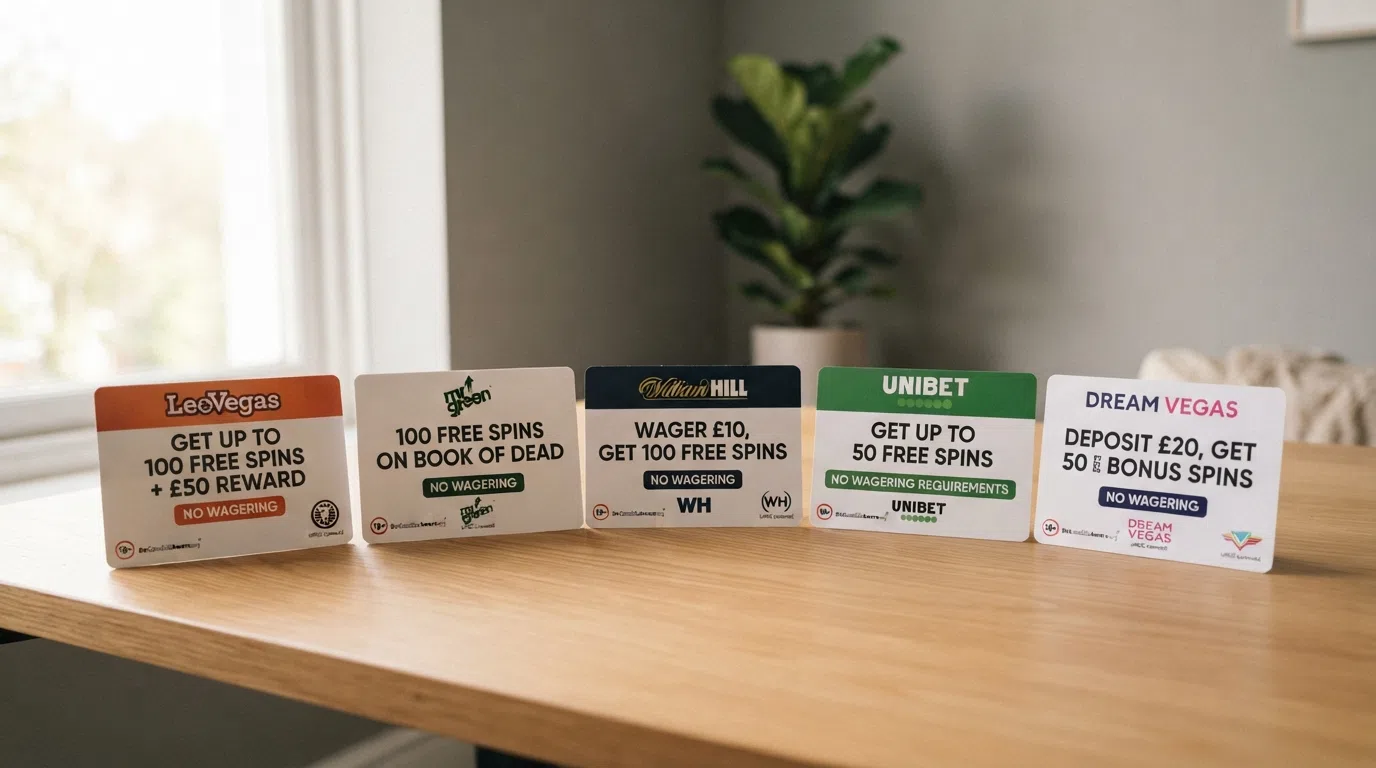
The table below ranks the ten featured UKGC-licensed operators against their welcome offers and the key condition that decides whether the offer is worth claiming. Where an operator’s bonus terms were not available at review time, the relevant cell carries an em dash rather than a guess. The five operators with published welcome data all run automated pre-gambling verification, are connected to GAMSTOP, and operate under the Commission’s full framework of player-protection rules.
| Operator | Welcome Offer | Key Condition |
|---|---|---|
| bet365 | Up to 500 free spins | No wagering; winnings as cash |
| Sky Vegas | 200 free spins | No wagering; 7-day expiry |
| PlayOJO | 50 free spins on Big Bass Bonanza | No wagering; no max-win cap |
| Betfred | 200 wager-free spins | £10 deposit + £10 slot stake; 7-day expiry |
| William Hill | — | Terms not available at review time |
| Ladbrokes | — | Terms not available at review time |
| Coral | — | Terms not available at review time |
| Yeti Casino | 23 no-deposit free spins on Big Bass Bonanza | 10x wagering; £100 max winnings cap |
| Betfair | — | Terms not available at review time |
| BetMGM | — | Terms not available at review time |
Five of the ten featured operators offer wager-free spins. That is not coincidence. The Commission’s 19 December 2025 bonus rules capped wagering at 10x and banned mixed-product promotional offers, which pushed the UK-licensed market away from the high-wagering bonuses that still dominate offshore sites. Wager-free has become the easiest way for a UK casino to be both competitive and compliant.
bet365 — Up to 500 Free Spins With No Wagering and Cash Winnings
bet365’s welcome mechanic is the closest thing to a pure no-strings offer in the featured set. The structure is a reveal game: a player makes selections of 5, 10, 20 or 50 free spins per reveal, up to ten selections in total, with up to 500 free spins at the top of the range. The terms that matter are the ones bet365 has chosen to leave off: winnings are credited as withdrawable cash, there is no wagering requirement, and there is no maximum-win cap. The offer is a marketing line that holds up under inspection.
bet365 verifies customers through automated background checks before gambling. The casino is GB-licensed and connected to GAMSTOP. For a player whose automated match passes — the majority of UK residents with a stable address — the sign-up flow does not surface a document upload screen at all.
Sky Vegas — 200 Free Spins, No Wagering, Seven Days to Use Them
Sky Vegas pairs a familiar high-street brand name with a straightforward welcome: 200 free spins after depositing and spending £10, no wagering requirement on winnings, and a 7-day window in which to use the spins. The 7-day expiry is the term that decides who the offer suits. A player who deposits on a Monday and returns to the account the following Wednesday will find the spins gone. A player who plans a session within the week will not.
Sky Vegas verifies customers through automated checks before gambling, is GB-licensed, and is connected to GAMSTOP. The casino’s compliance profile is identical to every other GB-licensed operator on the page.
PlayOJO — 50 Free Spins, No Wagering, No Max-Win Cap
PlayOJO built its brand on the “no wagering” promise and the welcome offer delivers exactly that. The structure is 50 free spins on Big Bass Bonanza at £0.10 per spin, triggered by a minimum £10 deposit, with no wagering requirement and no maximum-win cap. The named slot is the same Pragmatic Play title that appears in Yeti Casino’s no-deposit offer, and the choice is not accidental: Big Bass Bonanza is one of the most-played slots in the UK market.
For a player who values the absence of a cap, PlayOJO is the standout in the featured set. The lack of a ceiling on what the spins can win is what separates PlayOJO from Yeti, where the same slot is paired with a £100 max-winnings cap and 10x wagering.
Betfred — 200 Wager-Free Spins After a £10 Stake
Betfred’s welcome offer ties the spins to a real-money slot session rather than to a deposit alone. The trigger is a £10 debit-card deposit plus a £10 slot stake, after which 200 wager-free spins are credited on selected titles, valid for seven days. The wager-free label means winnings are withdrawable as cash; the deposit-and-stake trigger means the player is committed to a session before the spins land.
Betfred is GB-licensed, GAMSTOP-connected, and verifies customers through automated checks before gambling. This offer is a solid entry point if you already plan to spend £10 on slots.
William Hill — A GB-Licensed Stalwart With Decades of High-Street Trust
William Hill is the most recognisable name in British gambling, and the recognition is built on the high-street estate that long predated the online product. The casino is GB-licensed, GAMSTOP-connected, and verifies customers through automated background checks before gambling.
The bonus terms for William Hill were not available at the time of this review. A player considering the casino should check the live offer directly before signing up; the welcome terms on a high-street name’s online casino change frequently and the page does not carry a number it cannot verify.
Ladbrokes — Another High-Street Name, Same UKGC Rigour
Ladbrokes sits in the same regulatory position as William Hill: GB-licensed, GAMSTOP-connected, automated pre-gambling verification. The two brands are now both part of the Entain group, which also includes Coral, and the casino product sits inside the same compliance framework as the rest of the group.
The bonus terms for Ladbrokes were not available at review time. As with William Hill, the live offer should be confirmed directly with the operator before depositing. The verification flow and the responsible-gambling tools are unchanged.
Coral — GB-Licensed, GAMSTOP-Registered, and Part of the Same Group as Ladbrokes
Coral completes the high-street trio. The casino is GB-licensed, GAMSTOP-connected, and runs the same automated pre-gambling verification as every other operator on this page. Coral shares its parent group with Ladbrokes and operates under the same UKGC licence conditions.
The bonus terms were not available at review time. The page does not carry a number it cannot verify, and the welcome offer is the variable a player should check before signing up.
Yeti Casino — The Only Featured Operator With a No-Deposit Welcome Offer
Yeti is the standout on one specific point: it is the only operator in the featured set that lets a player claim free spins without depositing first. The offer is 23 no-deposit free spins on Big Bass Bonanza, with 10x wagering on those spins and a £100 maximum-winnings cap. The headline is genuinely no-deposit; the small print is what makes it a different offer from PlayOJO’s.
The 10x wagering means the winnings from the 23 spins must be wagered ten times before they become withdrawable. The £100 cap means a player who lands a feature round paying more than £100 keeps £100, not the full amount. Both terms are within the Commission’s 19 December 2025 framework, but they are also the terms that decide what the offer is worth.
Yeti is GB-licensed, GAMSTOP-connected, and verifies customers through automated checks before gambling.
Betfair — GB-Licensed Exchange and Casino Under One Roof
Betfair is unusual in the featured set because it operates both a betting exchange and a casino under the same UKGC licence. The dual product mix is what makes the Commission’s ban on mixed-product promotional offers relevant: a Betfair welcome that bundles exchange and casino credit would not be compliant. A casino-only welcome is.
Betfair verifies customers through automated background checks before gambling, is GB-licensed, and is connected to GAMSTOP. The casino welcome offer was not available at review time and should be confirmed directly with the operator.
BetMGM — The Entrant That Brought the MGM Brand to Britain Under a UKGC Licence
BetMGM is the most recent arrival in the UK market and the only featured operator with a published proof-of-address document list detailed enough to be worth quoting in full. The casino accepts electricity, gas and water bills; mobile bills; bank statements; government-issued letters; pension statements; vehicle registration; and electoral register entries.
That range is what a UKGC-licensed casino can reasonably ask for when an automated check fails to resolve a player. For most players at BetMGM, the document list is academic; the automated check will pass without surfacing it. The list is included on this page because it is the clearest available statement of what “verification” can mean at a UK-licensed casino when the soft route does not resolve.
BetMGM is GB-licensed, GAMSTOP-connected, and runs automated pre-gambling verification. The welcome bonus terms were not available at review time.
Welcome Offers Worth Claiming — and the Fine Print That Decides Whether You Keep a Penny
The welcome offers in the featured set fall into four formats, and the format dictates what the offer is worth before the player ever spins a reel. No-wagering free spins are the cleanest: winnings are credited as cash and can be withdrawn immediately. Wager-free spins with a deposit trigger are almost as clean, but with the added condition that the player must complete a real-money action before the spins land. No-deposit spins with wagering are the rarest and the most conditional: winnings carry a playthrough multiple and a cap. The bet365 reveal mechanic is its own format — a game-of-chance layered on top of a free-spin offer, with no wagering but with a stochastic outcome in the number of spins awarded.
The Commission’s 19 December 2025 bonus rules shape every one of these offers. The 10x wagering cap is the headline: any bonus issued by a UKGC-licensed casino cannot carry a wagering requirement above 10x. The ban on mixed-product promotional offers is the less-visible change: a casino cannot bundle a free-spin welcome with a sportsbook free bet or a bingo bonus. Every welcome in the featured set is single-product, because single-product is what the rules permit.
No-Deposit Bonuses Without ID: What the Search Asks For vs What the UK Market Delivers
A “no-deposit bonus without ID” is the most specific version of the search. It asks for a bonus a player can claim without paying in and without sending documents. In the UK-licensed market that combination is rare, and the reason is structural. LCCP 17.1.1 requires verification before gambling, and a free-spin credit counts as gambling. A no-deposit bonus cannot be issued before the player is verified, even if no deposit is taken.
The closest the featured set comes is Yeti Casino’s 23 no-deposit free spins on Big Bass Bonanza. The bonus itself is genuinely no-deposit. The conditions attached — 10x wagering and a £100 max-winnings cap — are what the offer actually costs. For a player who values the no-deposit mechanic, Yeti is the only option in the featured set. For a player who values the cash-out mechanic, PlayOJO’s 50 deposit-triggered spins with no wagering and no cap are the better trade.
Free Spins Offers — and Why Most of the Featured Set Has Dropped Wagering Altogether
Four of the five featured operators with published welcome data offer wager-free spins. bet365’s winnings are cash by design. Sky Vegas’s winnings carry no wagering. PlayOJO’s winnings carry no wagering and no cap. Betfred’s winnings are wager-free. The fifth, Yeti, is the exception: 10x wagering, £100 cap, no-deposit mechanic.
The shift is the most important market signal on the page. Wagering requirements were once a standard feature of UK casino bonuses, in the same way they remain standard at offshore sites. The Commission’s 10x cap and the wider reputational pressure on bonus terms have pushed the UK-licensed market toward “no wagering” as a default. The result is that a UK player who chooses a wager-free welcome is choosing the market’s new centre, not a niche offer.
Wagering Requirements, Expiry Windows and Max-Cashout Caps — The Three Terms That Decide a Bonus’s Real Value
A bonus’s headline number tells the reader what they might win. The three terms that decide whether they keep any of it are wagering, expiry and max-cashout. Wagering is the playthrough multiple on the bonus or the bonus winnings. The Commission’s 10x cap is the ceiling; many UK-licensed offers now sit at zero. Expiry is the window in which the bonus or the spins must be used. Sky Vegas’s 7-day expiry and Betfred’s 7-day expiry are typical for the featured set; a 30-day expiry is generous; a 24-hour expiry is tight. Max-cashout is the ceiling on what the bonus can pay out. PlayOJO carries no cap. Yeti caps at £100. bet365’s no-wagering cash structure has no cap because there is no bonus balance to cap.
A reader comparing two welcome offers should put the wagering, expiry and cap side by side, not the spin count. The headline number is what the offer advertises. The three terms are what the offer actually delivers.
Getting Your Money in and Out Without the Wait
The deposit flow at a UKGC-licensed casino is the part that runs fastest, because the heaviest verification step has already happened. The withdrawal flow is where players notice delays, and the delays are usually not what they look like.
Typical Withdrawal Timeframes
| Payment Method | Typical Processing Time |
|---|---|
| E-wallets | Instant to 24 hours |
| Debit Card | 1–3 working days |
| Bank Transfer | 3–5 working days |
Debit card is the baseline deposit method. Credit cards have been banned for gambling since 14 April 2020, including via e-wallets used to launder credit-card funds into gambling accounts. Pay-by-mobile is a low-friction option that charges the deposit to the player’s mobile bill or prepaid balance, but it does not bypass verification; the casino still has to confirm identity before the deposit is accepted for play. E-wallets work, but the credit-card-laundering rule limits their anonymity: a casino that suspects an e-wallet is being used to fund gambling with a credit card can and will decline the deposit.
The withdrawal flow is governed by closed-loop rules. The cashout method usually has to have been used for a deposit first. That rule exists to prevent money laundering through casino accounts, and it is the reason a player who deposited with a debit card cannot cash out to a different player’s bank account. The rule also explains why pay-by-mobile deposits create a withdrawal-routing complication: a pay-by-mobile deposit cannot be reversed to a phone bill, so the casino has to nominate an alternative cashout method, and the player may have to complete additional verification to use it.
The timeline a player actually experiences is operator-pending plus payment-processor-speed. The operator-pending period is the queue at the casino’s cashier. Payment-processor speed is how long the bank or e-wallet takes to land the funds once the casino has released them. A UKGC-licensed casino with upfront verification can still take 24 to 72 hours to process a cashout, not because the player is unknown to the casino but because the cashier’s queue is what it is.
Deposit Methods That Keep the Friction Low
For a UK player whose automated verification passes, the deposit screen is a one-step process: enter the card details, confirm the amount, and play. The lightest-touch options, in practice, are debit card and pay-by-mobile. Debit card is universally accepted and ties cleanly to the closed-loop withdrawal rule. Pay-by-mobile is fast and familiar to players who use it for small digital purchases, but it cannot fund a withdrawal.
E-wallets sit between the two. They are widely accepted, they process quickly, and they keep the casino’s cashier separate from the player’s bank statement. The Commission’s credit-card-laundering rule does limit their anonymity: a casino can require evidence that the e-wallet was funded from a non-credit-card source. For a player who values a clean separation between gambling spend and the main bank account, e-wallets remain the most useful route.
Why Withdrawals Feel Slower Than They Should — and Where the Hold-Up Really Is
A player who has been verified at sign-up and has won a cashable amount still waits for the cashout. The wait is not the verification — that has already happened. It is the operator’s pending period plus the payment-processor’s clearing time.
The pending period is the queue at the cashier. Some operators process withdrawals within hours; others batch them overnight or once a day. The Commission’s 31 October 2021 rule permanently banned reverse withdrawals, which removed the option of cancelling a pending cashout to keep playing. That change was a player-protection measure and it is the reason the pending period is now what it is: the casino cannot hold the cashout as a temptation.
Payment-processor speed is the part the casino does not control. A debit-card cashout to a UK bank typically arrives within one to three working days. An e-wallet cashout can be faster. A bank transfer can be slower. The timeline the player sees is the sum of both halves, and a casino that processes withdrawals in four hours but pays by bank transfer is still a three-day casino.
Pay by Mobile Without ID: What the Search Means and How It Actually Works Under a UK Licence
Pay-by-mobile is the deposit route the search sometimes finds by another name. A player who wants to start playing without entering card details will often reach for a pay-by-mobile option, and the marketing language around it tends to promise a faster, lighter sign-up than the debit-card route.
The promise is half true. Pay-by-mobile deposits are fast and require no card details at the casino’s cashier. They do not, however, bypass verification. LCCP 17.1.1 applies regardless of payment method, and a UKGC-licensed casino cannot accept a pay-by-mobile deposit for gambling without first confirming the player’s identity. The deposit is convenient. The verification is unchanged.
The other half of the pay-by-mobile trade is the cashout. A pay-by-mobile deposit cannot be withdrawn back to a phone bill. The casino has to nominate an alternative cashout method, which usually means the player has to complete the verification of a debit card or bank account they have not previously used at the casino. For a player who only intended to deposit by mobile, that step is the moment the closed-loop rule becomes visible.
Crypto Casinos Sell Anonymity — But the Withdrawal Trigger Proves It’s Temporary
The crypto casino market is the most aggressive advertiser of “no ID” to UK players, and the marketing is not wholly false. A serious offshore crypto casino does let a player deposit bitcoin, ether or a stablecoin, play, and request withdrawals without sending a passport at the registration screen. What the marketing leaves out is the cumulative threshold.
Offshore no-KYC casinos typically trigger full verification once a player’s cumulative deposits and withdrawals reach £2,000–£8,000. The exact threshold varies by operator. The structure is the same: verification is not avoided, it is postponed. A player who plays within the threshold will not see a document request. A player whose cumulative activity crosses it will, and they will see it at the cashout.
The postponement is what the marketing sells. The threshold is what the player eventually meets. The two facts together describe a product, and the product is not anonymity. It is deferred verification.
Bitcoin and Altcoins at the Cashier: What Changes and What Doesn’t
The practical difference between depositing with crypto and depositing with fiat at an offshore casino is the route the funds take. A crypto deposit is wallet-to-wallet and skips the banking intermediary. The casino’s own KYC triggers remain: the threshold at which verification is requested is set by the operator, not by the payment method.
What the crypto route does change is the conversion exposure. A casino that holds a player’s balance in fiat while the player deposited in bitcoin has introduced an exchange-rate move between deposit and withdrawal. A casino that holds balances in the original crypto does not. The first is more common at offshore sites, and the exchange-rate move is a cost the player absorbs without being told.
Why a Casino That “Never Asks for ID” Still Knows Who You Are
A blockchain transaction is permanent. Every deposit is recorded on a public ledger; every withdrawal is recorded on the same ledger. The wallet address is pseudonymous, not anonymous, and the address’s transaction history is visible to anyone who looks.
That is one half of why “no ID” at a crypto casino is not what the marketing claims. The other half is the cumulative threshold. A regular player who deposits and withdraws in the £2,000–£8,000 band will hit the KYC trigger within weeks or months of regular play. A player who wins a large amount at a crypto slot will hit it the moment they try to cash out. The casino has not lost the player; it has deferred the moment it has to confirm who they are.
Slots, Live Tables and the Providers Behind Them — What You Can Play at a UK-Licensed Casino
The game catalogue at a UKGC-licensed casino is shaped by the Commission’s product-design rules as much as by the studios that supply the games. The rules, in force since 31 October 2021, ban auto-play on slots, set a minimum 2.5-second spin speed, ban speed-up features, ban losses disguised as wins, ban reverse withdrawals, and require a session time/loss/win display on every slot session. The cumulative effect is a slower, more visible slot experience than the offshore equivalent.
The studios behind the catalogue are the same names that supply offshore sites. Pragmatic Play, Evolution, and the wider group of suppliers whose games populate the UK market all hold the necessary technical standards certifications to operate under a UKGC licence. The named title that appears across multiple featured welcome offers is Pragmatic Play’s Big Bass Bonanza, which is the slot PlayOJO pairs with its 50 free spins and Yeti pairs with its 23 no-deposit spins. The choice is not accidental: Big Bass Bonanza is one of the most-played slots in the UK market and is a recognisable anchor for a welcome offer.
Live dealer tables are dominated by Evolution at UK-licensed casinos, with NetEnt and Pragmatic Play’s live product supplying a smaller share. The Commission’s game-design rules apply to live tables as well as to RNG slots: no speed-up features, no disguised losses, session visibility where the format allows.
Slot Games Without ID Verification — What You Can Spin and Where
A UK player who wants to spin slots without a manual document upload can do so at every featured operator on this page, provided their automated verification passes. The spin itself is governed by the statutory stake caps: £5 per spin for players aged 25 and over, £2 per spin for players aged 18 to 24. The caps are per-game-cycle, not per-session, and apply to every spin on every slot at every UKGC-licensed casino.
The named slot in the featured set’s welcome offers is Big Bass Bonanza, which appears at PlayOJO and at Yeti. Pragmatic Play’s catalogue also includes titles that recur across the broader UK market. Evolution’s live-dealer catalogue sits alongside the slot offering, with roulette, blackjack and game-show formats available at every featured operator.
Live Dealer Games at UK-Licensed Casinos — Real Dealers, Real Regulation
Live dealer tables at UKGC-licensed casinos run under the same regulatory regime as slots. The dealers are real; the streams are real; the game’s randomness is governed by physical equipment rather than software RNG, and the integrity of the stream is governed by the Remote Technical Standards.
Evolution is the dominant provider at UK-licensed casinos. The provider’s live-dealer product covers roulette, blackjack, baccarat and the game-show formats that have become a standard feature of the UK live casino. Pragmatic Play Live and a smaller number of other studios supply additional live tables.
A live-dealer session at a UKGC-licensed casino cannot be offered without identity verification, for the same reason a slot session cannot: LCCP 17.1.1 applies to every form of gambling the casino offers. There is no live-dealer-only exception.
Limits, Self-Exclusion and a 24/7 Helpline — The Safety Net You Only Get With a UK Licence
The responsible-gambling infrastructure at UKGC-licensed casinos is the section most “no ID” pages skip. It is also the section that most clearly shows what a player loses by stepping outside the licence.
GAMSTOP is the headline tool. Participation is mandatory for every GB-licensed online operator, has been since 31 March 2020, and the exclusion periods are six months, one year, five years, or five years with auto-renewal. None of the periods can be cancelled early. A player who has registered with GAMSTOP cannot gamble at any GB-licensed online casino for the duration of their exclusion. An offshore casino is not connected to GAMSTOP and cannot honour an existing exclusion.
The deposit-limit rules sit alongside GAMSTOP. A UKGC-licensed casino must prompt a player to set a financial limit before the first deposit, and must action any decrease immediately. From 30 June 2026, only a gross deposit limit may be called a “deposit limit” — a net-deposit limit, a loss limit or a wager limit cannot be marketed under that name. The rules do not impose a state-set nationwide deposit ceiling; they require the operator to offer the limit and to action decreases when the player asks.
Financial vulnerability checks add a second layer. A light-touch publicly-available-data check runs at £500 net deposits from 30 August 2024 and at £150 net deposits from 28 February 2025. The check is the operator’s, not the player’s; it does not require a document upload. It does require the operator to pause and review.
Deposit Caps, Session Limits and Reality Checks — The Tools a UK-Licensed Site Must Give You
The mandatory player-protection tools at UKGC-licensed casinos fall into three groups. Deposit tools include the deposit-limit prompt before first deposit and the immediate-action-on-decrease rule. Session tools include the session time/loss/win display required on every slot session since 31 October 2021. Reality-check tools include the financial vulnerability checks at the £150 and £500 net-deposit thresholds.
None of these tools is optional. Every UKGC-licensed casino must offer them. A player who asks for a deposit decrease at a UK-licensed casino will see it applied within minutes. A player who asks for a deposit decrease at an offshore casino is asking the operator to apply its own house rules, which may or may not align with what the player requested.
Where to Get Help If Gambling Stops Feeling Like a Choice
The free, confidential support available to UK players is the part of the infrastructure that does not require a casino at all. The services below are available to anyone in Britain, regardless of where they play.
- National Gambling Helpline. Run by GamCare, free 24/7 on 0808 8020 133. The line is confidential and the call is free from any UK phone.
- GambleAware digital self-assessment. A free online quiz that has been completed over 160,000 times, with over half of those taking a meaningful action as a result. The tool is at gambleaware.org and is anonymous.
- NHS gambling-harm services. The NHS publishes guidance and runs support pathways for people whose gambling has become harmful. The services are free at the point of use and accessible through a GP or directly.
The same services are not available to a player at an offshore casino in any structured way. The casino may link to a help line. The casino does not connect to GAMSTOP, does not run the Commission’s vulnerability checks, and does not have a stake-cap regime to fall back on when the player asks for one.
How We Chose and Ranked the Casinos on This Page
The featured set was selected from UKGC-licensed operators verified against the Gambling Commission’s public licence register. Every operator named on this page holds a current Gambling Commission licence and is connected to GAMSTOP. The set is not the entire UK market; it is the ten operators the page ranks against the criteria below.
Ranking was driven by five criteria. Licence status was the floor: every featured operator holds a current UKGC licence, and no operator without one was considered. Welcome-offer quality and terms clarity sat at the top: the offer had to be published in enough detail to verify the wagering requirement, the expiry window and any max-cashout cap. GAMSTOP integration was treated as a baseline, because every GB-licensed online operator is required to connect. Verification efficiency was read from the registration flow: operators whose automated checks pass silently for the majority of UK residents ranked higher than operators who surface a document request earlier in the flow. Published player-protection tools were checked against the Commission’s mandatory list.
Every factual claim on this page is sourced from the Gambling Commission’s LCCP and RTS, from operator-published terms, or from independent review data. The Commission’s public licence register was the source for licence status. The Commission’s bonus and game-design rules were the source for the wagering cap, the mixed-product ban, the slot stake caps and the session-display requirement. The welcome offers were verified against the operators’ own published terms.
What You Should Actually Do With This Information
A UK player who wants to gamble online has one lawful route and several routes that are not lawful. The lawful route is the UKGC-licensed casino, where identity is verified before gambling, where GAMSTOP applies, where the slot stake caps are enforced, where the bonus rules apply, and where a complaint has somewhere to go. The unlawful routes are the offshore sites that take UK customers without holding a GB licence, where verification is postponed or skipped, where GAMSTOP does not apply, where the stake caps are not enforced, and where a complaint usually does not have anywhere to go.
The trade-off the search term “no ID casino” promises is a clean one: skip the verification, keep the convenience. The actual trade-off is the opposite. Verification at a UK-licensed casino is the price of every protection the player has. The casino that does not verify at sign-up either verifies later (offshore, at the cashout, after the player has invested time) or does not verify at all (a more serious version of the same problem). The player is paying for verification either way. The question is whether the payment comes with the protections or without them.
No operator on this page is the right operator for every player. The page’s job is to make the trade-offs visible so the reader can act on them. The five operators with published welcome data offer genuinely strong terms; the five without are well-known high-street and online names whose terms should be checked directly. The reader’s next step is the same whichever operator they pick: confirm the welcome offer against the operator’s own published terms, set a deposit limit before the first deposit, and register with GAMSTOP if the player has ever felt gambling stop being a choice.
Frequently Asked Questions
Can I gamble at an online casino in the UK without uploading photo ID?
You can avoid the manual upload at most UK-licensed casinos if your automated verification passes against UK data sources. You cannot avoid verification entirely. The Gambling Commission requires every licensed operator to confirm name, address and date of birth before any gambling, including with bonus funds.
Are no-verification casinos legal for UK players in 2026?
No. Operating without a Gambling Commission licence and serving GB customers is a criminal offence under section 33 of the Gambling Act 2005. A site that takes UK players without verifying them is either licensed elsewhere or unlicensed; either way it is not a legal GB operator.
What identity documents can a UK gambling site ask me to provide?
Photo ID in the form of a passport or driving licence, and address proof in the form of a household bill. Some operators publish longer lists; BetMGM’s published proof-of-address list is the widest in the featured set, covering utility bills, mobile bills, bank statements, government letters and pension statements.
How do “no KYC” crypto casinos handle withdrawals when KYC is triggered?
Offshore crypto casinos typically defer verification until cumulative deposits and withdrawals reach £2,000–£8,000. The verification is not avoided; it is postponed. A player who crosses the threshold is asked for documents at the cashout, and the cashout is held until the documents are reviewed.
What protection do I lose if I play at a site that is not GB-licensed?
You lose GAMSTOP self-exclusion, the statutory slot stake caps of £5 (25+) and £2 (18–24), the deposit-limit prompt and immediate-decrease rule, the Commission’s complaints route and ADR, the 10x wagering cap, the ban on mixed-product bonuses, and the credit-card ban. None of these protections apply at an offshore site.
What is the fastest way to withdraw from a UK-licensed casino after verification?
The fastest cashout is to an e-wallet that has already been used for a deposit, processed during the casino’s working hours. Debit-card withdrawals are typically one to three working days. The closed-loop rule requires the cashout method to have been used for a deposit, so the withdrawal route has to be planned at the deposit step, not at the cashout.
Real-Money vs Free-Play: Does “No ID” Mean Something Different for Each?
A player who only wants to try a slot in demo mode may assume the same rules do not apply. They do. The Commission’s age-gating rule reaches free-to-play games hosted on a licensee’s own site. A UKGC-licensed casino cannot offer a free spin on a demo slot to a player who has not been age-verified, even if no money is at stake. The rule was tightened alongside the LCCP update in May 2019 precisely because free-to-play games were being used to onboard underage players.
In practice that means a registered account is required even for a demo session at a UK-licensed casino, and registration triggers the same verification flow as a real-money play. Demo mode is a feature of having an account, not a substitute for one. Offshore sites are more permissive on this point, but they pay for that permissiveness elsewhere.
RNG vs Live — Does the Fairness Guarantee Change Depending on the Format?
RNG-based games and live-dealer games are audited differently under the Commission’s Remote Technical Standards. RNG games are tested for randomness and for the RTP that the operator publishes. Live-dealer games rely on physical equipment — wheels, shoes, decks — and on the integrity of the stream that carries the game to the player. Both formats are covered by the Commission’s second licensing objective: ensuring gambling is fair and open.
For a player, the practical difference is what they are trusting. An RNG game is trusting the certified software and the published RTP. A live-dealer game is trusting the equipment and the integrity of the stream. The RTS framework covers both, and a UKGC-licensed casino is responsible for both. The same standard of fairness applies. The mechanism is different.
Account – realmoney-onlinecasinos-uk
Content created by the «realmoney-onlinecasinos-uk» team