
UK Casino Sites That Take SMS Deposits, Ranked and Tested
 Available in GB
An SMS casino deposit is the smallest spend in British online gambling, and the ceiling is the entire point. £40 in one tap, £240 across a calendar month, both set by the Payment Services Regulations 2017, neither negotiable by the casino or the player. The rail enforces a session budget that no other UK deposit method carries at the network level. The marketing that frames SMS deposits as a niche for card-shy players misses the structural feature: this is a payment method whose law-set ceiling makes high-stakes play impossible by design.

Data current as of September 8, 2026 against the UK Gambling Commission’s public register and operator deposit pages.
The Hidden Strength of SMS Casino Deposits
Pay-by-phone has lived in the margins of UK casino marketing for years. The 2026 market — with Remote Gaming Duty having stepped from 21% to 40% in April, and the 10× wagering ceiling on bonuses having landed in December 2025 — has tightened on operators without making SMS deposits any harder to use. Eight major UK networks still carry the charge. Three intermediaries still process it. The £40 single-transaction cap and the £240 monthly ceiling sit inside the PSR 2017 framework rather than on a casino’s terms page, which means no operator can raise them and no player can talk around them.
For a reader who wants to fund a casino account at a low, fixed, predictable ceiling without typing card details, the rail is built for the job. The trade-offs — no welcome bonus at most operators, no withdrawal path, an intermediary fee at some sites — are real, and the sections that follow set them out operator by operator. What is not in trade is the safety layer: every UKGC-licensed casino must participate in GAMSTOP, the £150 financial vulnerability check catches problem play before it scales, and the spend ceiling itself is the cheapest harm-limitation tool the regulator has ever written into the payment rails.
What an SMS Casino Actually Is
An SMS casino is a UKGC-licensed online casino that accepts charge-to-mobile payments. The casino’s cashier offers a pay-by-mobile option alongside debit card, PayPal and bank transfer. Selecting it routes the deposit through a payment intermediary — most commonly Boku, Fonix, PayviaPhone or Siru Mobile — which passes the charge to your mobile network. The network bills it: either added to your next monthly statement, or deducted from your prepaid credit if you are on pay-as-you-go.
The player experience is one screen. You enter your mobile number, the casino sends a text or triggers an in-app confirmation, you tap to authorise, and the funds land in your casino balance within seconds. The charge itself settles later — at the end of the billing cycle for contract customers, immediately for pay-as-you-go. You never enter a sixteen-digit card number, a sort code, or an account number at the deposit stage. The rail is mobile-native because the casino cashier hands off to the mobile network, not to the banking system.
This is why the model is structurally different from a card or e-wallet deposit. A debit card carries an unlimited ceiling and a chargeback right; a bank transfer ties the casino to your bank’s fraud monitoring. SMS billing carries neither. What it carries is the £40 single and £240 monthly ceiling from the PSR 2017 cap, and the practical effect is that an SMS-funded session is, by law, a small one.
SMS Deposits vs Debit Card: What You Gain and What You Trade Away
A debit card is the default UK casino deposit. It is fast, accepted everywhere, eligible for welcome bonuses at every featured operator in this guide, and reversible — a card chargeback is one of the few consumer protections that crosses the gambling boundary. SMS billing is faster at the point of sale (deposit is instant and lives on the phone you are holding), but it gives up the bonus at most operators and gives up the cashout — winnings cannot be paid back to your phone bill, so a debit card, bank account or e-wallet still needs to sit on file for the withdrawal stage.
The structural difference is the ceiling. A debit card deposit at a UK casino can run to the operator’s stated maximum, often £5,000 or more per transaction. The SMS rail is capped at £40 in a single tap and £240 across a calendar month. For a casual player funding a £10 session, that ceiling is irrelevant. For a bonus-chaser sizing a £500 first deposit to clear wagering, the ceiling is the entire reason not to use it.
The convenience case for SMS deposits is narrower than the marketing suggests. The card-not-present experience on mobile has improved to the point where Apple Pay and Google Pay complete a debit card deposit in two taps, with biometric authorisation, and no card number ever typed. SMS deposits still beat that for friction — one screen, one text confirmation, no wallet handoff — but the gap is closing. The case that has not closed is the spending ceiling. There is no equivalent on a debit card without the player opting into a self-imposed deposit limit, and most players who want to spend £240 a month on slots have not opted in.
Three Payment Labels, One Mechanism: How Pay-by-SMS Actually Works
Pay by SMS, pay by phone bill and carrier billing describe the same underlying charge. The mechanism is the same at every UK operator that supports it: a payment intermediary sends the charge request to your mobile network, your network bills you, and your casino balance credits. The differences between the labels live in how the charge settles, not in how the deposit lands.
Pay by SMS is the colloquial label — the player sends or receives a text to authorise the charge, and the deposit is colloquially described as paid “by SMS”. Pay by phone bill is the operator-facing label for the same transaction when the charge settles on the customer’s monthly mobile statement. Carrier billing is the technical term for the payment rail itself, used in industry and regulatory documents. The PSR 2017 cap applies to charge-to-mobile transactions, which the regulations call “payments initiated by the payer to be charged to the payer’s mobile phone bill or mobile phone account” — that is the entire universe the £40 and £240 caps govern, regardless of which label the casino’s cashier puts on the button.
For a UK player, the practical difference between the three labels is which intermediary is in the middle. Boku, Fonix and PayviaPhone each run their own fee structure and supported-network list, which is why one casino’s SMS deposit costs nothing and another’s takes 15%. The operator-level label on the cashier button is the marketing; the fee and the supported networks are the substance.
How Your Phone Bill Becomes Your Casino Deposit
The deposit flow is quick and the rail is narrow. Most of what makes SMS deposits work — and what limits them — comes down to a single regulatory framework, a small set of payment intermediaries, and the fact that the same charge cannot be reversed into a withdrawal. The subsections below walk through each of those layers.
The SMS Deposit, Step by Step
The flow at every UKGC-licensed casino that supports pay-by-mobile runs the same way. From the cashier, you select the pay-by-mobile option — sometimes labelled Pay by Phone, Boku, PayviaPhone, or Charge to Mobile depending on the operator’s intermediary. You enter your mobile number. The casino triggers a one-time authorisation: either an SMS text asking you to reply Y, or a pop-up on your phone confirming the amount. You confirm. The deposit lands in your casino balance within seconds.
Behind that screen, three things happen at once. The intermediary passes the charge request to your mobile network. The network checks that you have consented, that the amount is within the £40 single-transaction cap, and that your rolling monthly spend has not yet hit £240. If any of those checks fail, the deposit is refused at the network level before the casino sees the funds. If they pass, the network confirms the charge and the casino credits the account. The whole round-trip is typically two to five seconds.
What does not happen is a card check, a bank check, or a credit assessment. The rail is one-sided: it can charge, but it cannot refund except as a credit to your mobile account, which is why the PSR 2017 framework treats it as a payment-initiation method, not a stored-value account. For the player, that means the deposit is instant but the deposit method cannot be reused for anything except further charges.
The £40 and £240 Caps: What You Can Actually Deposit
The £40 single-transaction ceiling and the £240 monthly ceiling are not casino preferences. They are written into the Payment Services Regulations 2017, Schedule 1, Part 2(l), which governs charge-to-mobile payments across the UK. The legal text caps a single transaction at £40 and the rolling monthly total per subscriber at £240, regardless of whether the payer is on contract or pay-as-you-go, regardless of which casino they are paying, and regardless of whether the payer has consented to a higher amount.
The practical effect is hard to overstate. The maximum a player can put through an SMS deposit in any single tap is £40. Across a calendar month — and the regulations count per subscriber across all gambling merchants, not per casino — the maximum is £240. A player who reaches £240 at one casino cannot top up at a second SMS-accepting casino until the calendar month rolls over, because the cap sits at the network level rather than at the casino level.
Compared with a debit card, this is a different shape of deposit entirely. A debit card deposit can be sized to the casino’s stated maximum — frequently £5,000 per transaction — and is not capped at the consumer level by statute. The £40 and £240 numbers are unusual in British consumer finance: they are hard regulatory ceilings applied to a specific payment rail, not a soft limit set by a bank or an operator. They cannot be raised by the player or the operator; only the regulator can change them, and the regulator has not.
The session-level consequence is that an SMS-funded casino visit is, by design, a low-stakes one. A £40 deposit at the £5 maximum stake (the UKGC slot cap for players aged 25 and over) buys eight spins. A full £240 monthly budget at the same stake covers forty-eight spins. Both numbers are well below what a card-funded session typically involves, and the rail effectively enforces what an opt-in deposit limit only suggests.
Which Mobile Networks Let You Deposit — and Which Ones Don’t
Eight UK mobile networks currently carry pay-by-mobile gambling charges: O2, EE, Vodafone, Three, Sky Mobile, Virgin Mobile, giffgaff and Tesco Mobile. The coverage is broad enough that the network check rarely blocks the deposit at a supported casino. What does vary by operator is the intermediary sitting between the casino and the network.
Boku is the largest of the intermediaries in the UK market and processes pay-by-mobile deposits at Duelz Casino (alongside Fonix) and a number of other operators, with no processing fee on the player side. PayviaPhone is the intermediary behind Fruity King’s SMS deposits and charges a 15% processing fee — a £10 SMS deposit at Fruity King lands £8.50 in playable funds. Pay by Phone billing is the third rail, used by Peachy Games and other Broadway Gaming brands. The exact intermediary at a given casino can be confirmed by opening the deposit page and reading the small print under the pay-by-mobile option.
Networks outside the eight — most notably some smaller MVNOs and the legacy pay-as-you-go brands that resell airtime without a banking-grade billing system — do not support pay-by-mobile gambling charges. A player on a network that does not carry the rail will see the deposit refused at the network level, with no funds moving and no error message more informative than “payment not available”. The check is silent, and the player can only resolve it by switching to a supported network or to a different deposit method.
Withdrawals: Why SMS Is Strictly a One-Way Street
SMS billing is a charge rail, not a payment account. It can push money from the player to the merchant, but it has no mechanism to receive money in the other direction, which means a casino cannot pay winnings back to a phone bill. The same is true of every pay-by-mobile intermediary on the UK market. There is no withdrawal option at any UKGC-licensed casino that settles to a phone number.
The practical consequence is two-method reality. A player who funds an account via SMS must register a withdrawal-capable payment method — debit card, bank transfer or e-wallet — before they can cash out. The casino will not release winnings until that second method is in place and verified, which usually means uploading a photo of the card or a recent bank statement. The friction is identical to that faced by any first-time UK casino customer: the verification step happens once, then withdrawals are routine.
Speed, once verified, depends on the chosen method. E-wallets at the featured operators clear within hours — bet365’s verified e-wallet payouts land in up to four hours, and most rivals clear within a similar window for accounts that have already passed the financial vulnerability check. Bank transfers take longer, typically one to three working days at most UKGC-licensed operators. None of this is unique to SMS-funded accounts; the only SMS-specific point is that the withdrawal method is always a separate rail from the deposit method.
Fees, Delays, and Other Friction Points
The casino side of an SMS deposit is fee-free at most UKGC-licensed operators: the player types in a number, confirms the charge, and the funds land in full. The exception is PayviaPhone, which charges a 15% processing fee on every deposit it processes. Fruity King is the operator in this guide most affected — a £10 PayviaPhone deposit at Fruity King leaves the player with £8.50 in their casino balance, and a £40 deposit (the statutory maximum per tap) leaves £34.00. The fee is disclosed on the deposit page but not always surfaced in marketing copy, which is worth checking before committing.
The other friction is the welcome-bonus exclusion. Most UK casino welcome offers list pay-by-mobile alongside Skrill and Neteller as ineligible deposit methods. The deposit lands, the bonus does not trigger, and the player has funded an account at the £40 cap without any of the matched funds or free spins that a debit-card first deposit would have earned. A handful of operators — Peachy Games, Fruity King via PayviaPhone, and Duelz via Boku — explicitly include SMS deposits in their bonus terms; the rest do not, and the only way to confirm is to read the promotion T&Cs before depositing. The section on welcome-bonus exclusion sets this out operator by operator.
The minimum deposit at most pay-by-mobile-enabled operators is £10. A player hoping to deposit £3 or £5 via SMS — the kind of micro-stake casual session the marketing often implies — will find the option absent in practice, because the operator’s floor sits above the smallest pay-by-mobile amounts that the intermediaries quote. The £10 floor also sits at the edge of the welcome offer at every confirmed SMS casino in this guide, which makes the SMS deposit a clean match for a £10-trigger bonus in a way it never was for a £5-trigger bonus.
Is Pay-by-SMS Safe? Licensing and Security Signals
A pay-by-SMS deposit is as safe as the licence the casino holds. The rail itself carries no inherent risk: the charge routes through your mobile network’s existing billing system, the same system that already handles app-store purchases and premium-rate content charges. You never type a card number. The casino never sees your bank details. The transaction is authorised by a one-time text confirmation or an in-app prompt tied to your phone number.
The licence badge is what tells you whether the casino on the other end of the rail is legitimate. Every operator featured on this page holds an active UKGC licence, verified against the public register as of the review date. The UKGC’s regulatory framework — Gambling Act 2005, the 2014 point-of-consumption reform, the LCCP and the RTS — governs how the operator runs its games, holds customer funds, runs affordability checks and processes complaints. The PSR 2017 cap governs how the deposit rail itself behaves. Together, the two frameworks cover both ends of the transaction.
What the rail does not add is identity protection beyond what your mobile network already provides. The phone number is the identifier, and a stolen SIM is a route to a one-tap deposit — which is why any player using SMS deposits should keep their phone locked with a biometric or strong PIN, and why any operator that offers SMS deposit as a method is required by the LCCP to verify the customer’s identity before processing the first deposit. The credit card ban from April 2020 does not extend to phone billing; SMS deposits sit outside that prohibition by design.
How Much Does a Session Cost? The Arithmetic on a £40 SMS Deposit
Take Big Bass Splash — the slot that recurs across the featured operators’ free-spin offers. Its published RTP is 96.71%, its volatility is rated high, and its maximum win is 2,100× the stake. The UKGC’s stake cap is £5 per spin for players aged 25 and over, and £2 per spin for players aged 18 to 24, with the lower cap for under-25s phased in from 21 May 2025. Spin speed cannot be faster than 2.5 seconds per game cycle, and auto-play is banned.
Work a £40 SMS deposit at the £5 stake. That buys eight spins. At 2.5 seconds per spin, the session runs twenty seconds — half a minute from deposit to last spin. Against the 96.71% RTP, the expected loss is £40 multiplied by the house take of 3.29%, which lands at £1.32. That is what a £40 SMS deposit is statistically worth, on average, in a single session at this stake and this game.
The arithmetic runs the same shape whichever age band the player sits in. An 18-to-24-year-old working the same £40 at the £2 stake gets twenty spins, fifty seconds of play, and the same £1.32 expected loss — the lower stake buys more spins but does not change the house edge as a share of the deposit. The point is that the statutory £40 cap, the slot’s own RTP, and the regulator’s stake cap together bound the cost of an SMS-funded session tightly, regardless of how the player chooses to spin it.
The figure is a statistical average. No individual session of eight or twenty spins will reliably come out at £38.68 of returned play. Some will return more, some less, and the high-volatility profile of Big Bass Splash means a small minority of sessions will return very little at all. The £1.32 is what the maths says to expect across many such sessions, not what any single session will deliver.
Top 10 UK Casinos Ranked: Which Ones Actually Take SMS Deposits
The table below ranks the ten featured operators against the four criteria that matter most for an SMS deposit decision: confirmed pay-by-mobile support, UKGC licence status, welcome-offer fairness, and game-library quality. Where SMS deposit support could not be confirmed against the operator’s cashier page during this review, the cell states that gap plainly — it does not fill the gap with an assumed yes. All ten are confirmed active on the UKGC public register as of the 29 July 2026 update.
| Operator | UKGC Licence | SMS Deposit Support | Welcome Offer | Free Spins | Wagering | No-Wagering Available? |
|---|---|---|---|---|---|---|
| Peachy Games | Broadway Gaming Ireland DF Limited | Yes (Pay by Phone) | 100 FS on Big Bass Splash | 100 | 0× | Yes |
| Fruity King | ProgressPlay Limited | Yes (PayviaPhone, 15% fee) | 100% up to £100 + 50 FS on Rainbow Riches Megaways | 50 | 10× | No |
| Duelz Casino | SuprPlay Limited | Yes (Boku / Fonix) | Up to 140 FS on selected games | 140 | 10× | No |
| Sky Vegas | Bonne Terre Limited (account 65519) | Not confirmed | 50 no-deposit FS + 200 FS after £10 spend | 250 | 0× | Yes |
| bet365 Casino | Hillside (UK Gaming) ENC (account 38721) | Not confirmed | Up to 500 FS on selected Games | 500 | 0× | Yes |
| William Hill Vegas | WHG (International) Limited | Not confirmed | 200 FS on Big Bass Splash | 200 | 10× | No |
| Ladbrokes Casino | LC International Limited (Entain) | Not confirmed | Bet £10 get FS on Big Bass Bonanza / Sweet Bonanza / Starburst | Up to 100 | 10× | No |
| MrQ Casino | Lindar Media Limited | No (deposit page states pay-by-mobile not supported) | 100 FS on Big Bass Splash | 100 | 0× | Yes |
| Betfair Casino | PPB Entertainment Limited (Flutter) | Not confirmed | 50 no-deposit FS on Jackpot King games | 50 | 0× | Yes |
| Betfred Casino | Petfre (Gibraltar) Limited | Not confirmed | — | — | — | — |
Peachy Games: Pay by Phone Billing with No-Wagering Free Spins
Peachy Games is one of the few UK casinos that lets you deposit via Pay by Phone billing and offer free spins with no wagering attached. The welcome offer is 100 free spins on Big Bass Splash at £0.10 per spin, and what you win from those spins credits directly to your withdrawable cash balance. There is no 10× to clear, no bonus-to-cash conversion cap, no 48-hour clock ticking down on a wagering requirement. The spins themselves expire 48 hours after crediting, but the winnings do not — once credited, they are yours to withdraw or to play with, and the player can treat the £10 deposit-and-stake requirement as the only condition that matters.
The site is operated by Broadway Gaming Ireland DF Limited and holds an active UKGC licence, verified against the public register. The game library runs to about 700 curated slots rather than the thousand-plus catalogues some rivals carry, but the curation is pointed — Pragmatic Play, Play’n GO and NetEnt mainstays, plus a few smaller studios, and a focus on mobile-friendly titles that suit a phone-first session. For a player funding via Pay by Phone at the £10 floor, the curated library suits the short session the rail produces.
This is the cleanest match on the page for an SMS-funded player. The rail is supported, the bonus is compatible with the rail, and the no-wagering offer avoids the arithmetic mismatch between a £40 deposit and a 10× turnover requirement. The 48-hour spin expiry is the only friction — claim the spins promptly and play them before the clock runs out.
Fruity King: PayviaPhone Deposits with a 100% Match Bonus
Fruity King accepts PayviaPhone deposits at a £10 minimum and runs a matched-deposit welcome offer: 100% up to £100, plus 50 free spins on Rainbow Riches Megaways. The headline number looks generous, but the bonus terms do most of the work in defining what it is actually worth. The bonus carries 10× wagering within 30 days. The free-spin winnings carry 10× wagering within 7 days. The maximum conversion from free spins is capped at £20. The maximum conversion from the matched bonus is capped at 1× the bonus amount. The site is operated by ProgressPlay Limited on an active UKGC licence.
The structural friction is the 15% PayviaPhone processing fee. A £10 SMS deposit at Fruity King lands £8.50 in the casino balance, a £40 deposit (the statutory single-transaction maximum) lands £34.00, and the matched bonus is calculated on the post-fee figure rather than the gross deposit. The fee is disclosed on the deposit page; what is less obvious is how it compounds with the £20 free-spin conversion cap and the 1× bonus conversion cap to limit the upside of the matched offer.
For a player who wants the deposit-match bonus and is happy to fund via PayviaPhone at the reduced rate, Fruity King is one of the few UK operators that lets pay-by-mobile depositors claim a welcome offer at all. The reader who values the no-wagering path Peachy Games offers will not find it here; the reader who values a larger bonus headline and a more established slot roster may. The fee, the conversion caps and the dual wagering clock are the costs.
Duelz Casino: Boku Deposits and Daily Free Spins
Duelz accepts Boku and Pay by Mobile (Fonix) deposits from a £10 minimum, and the welcome offer is structured around daily free-spin claims rather than a single one-off batch. A minimum £25 first deposit unlocks up to 140 free spins, delivered at 20 per day for seven consecutive days on selected games. Each spin is worth £0.10. Free-spin winnings are subject to 10× wagering, with a maximum conversion of £100 per day as bonus funds. The site is operated by SuprPlay Limited on an active UKGC licence, and the game library runs to 1,000-plus titles — Pragmatic Play, Play’n GO, NetEnt, Evolution and others, with a heavier live-casino presence than the more slot-curated rivals.
The mechanic worth flagging is the daily claim. Unclaimed spins expire at midnight, which means a player who misses a day loses twenty spins and cannot recover them. The offer is, in practice, a seven-day commitment rather than a one-off bonus. Combined with the £25 minimum — well above the £10 floor for the deposit method itself — the welcome package is sized for a player who intends to come back, not for a single-session visitor.
For an SMS-funded player, the daily claim structure is unusual: most rivals either credit all the spins at once or set a single expiry. The 10× wagering is the industry standard now that the UKGC’s 10× cap is in force, and the £100 daily cap on converted winnings is generous by comparison with Fruity King’s £20 free-spin ceiling. The reader who can fund a £25 first deposit via Boku and intends to log in for seven consecutive days will get more spins here than at any other SMS-accepting operator in the table. The reader who wants a single short session will not.
bet365 Casino: No-Wagering Free Spins, SMS Support Unconfirmed
bet365’s Games welcome offer is up to 500 free spins on selected games with no wagering on winnings, which makes it the largest no-wagering allocation in the table. The site holds UKGC licence account 38721 (Hillside (UK Gaming) ENC), verified active. The provider roster is the deepest in the table: Evolution, Playtech, Pragmatic Play, Red Tiger, NetEnt, IGT, Blueprint and Push Gaming, plus in-house exclusives via Hillside Games. Minimum deposit is £10. Verified e-wallet payouts clear within four hours, which is at the fast end of the UK market.
The same gap applies as on Sky Vegas: pay-by-mobile was not found on the bet365 deposit page during this review. The site lists debit card, PayPal and bank transfer as its primary deposit methods. The reader who wants to fund via SMS and claim the 500 free-spin offer would need to confirm pay-by-mobile availability on the current cashier before depositing.
For a player who can fund by debit card, bet365 is the largest no-wagering offer in the table, backed by a provider roster that few rivals can match. If you prefer to fund via SMS, the deposit rail status at bet365 is currently unconfirmed — always check the cashier for pay-by-mobile options before you register.
William Hill Vegas: 200 Free Spins, SMS Status Unclear
William Hill Vegas offers 200 free spins on Big Bass Splash with a £10 deposit and a £10 stake, at £0.10 per spin, with 10× wagering on winnings and a 72-hour expiry from credit. The site is operated by WHG (International) Limited on an active UKGC licence. The provider roster is Playtech-led, with NetEnt, Pragmatic Play and William Hill exclusives in support. The brand carries a long-standing UK retail presence, which translates into a more conservative welcome structure than the newer SMS-friendly sites.
Pay-by-mobile was not confirmed for William Hill Vegas during this review. The site lists debit card and e-wallet deposit methods; SMS funding could not be verified against the cashier. The 72-hour spin expiry is also tighter than rivals — Peachy Games and MrQ both offer 48 hours, but on bigger no-wagering packages, so the clock matters less there than it does on a 10× offer where missing the window forfeits the wagered winnings.
For the player who values the brand’s UK retail heritage and is happy to deposit by debit card, the 200-spin offer on Big Bass Splash is solid and Big Bass Splash itself is a high-volatility slot with a 2,100× max win. For the SMS-funded reader, the same gap applies as on bet365 and Sky Vegas — the rail could not be confirmed and the reader should check the cashier directly.
Ladbrokes Casino: Entain-Backed, SMS Deposit Status Unknown
Ladbrokes Casino runs on the Entain platform with a UKGC licence held by LC International Limited (account 000-039483-R-319367-001), verified active. The welcome offer is structured around a £10 qualifying bet that unlocks free spins on Big Bass Bonanza, Sweet Bonanza and Starburst — three of the most-played online slots in the UK market, all from the Pragmatic Play and NetEnt stables. Wagering is 10×, the UKGC cap. The maximum bet during wagering is £5. Bonus validity runs 30 days. The provider roster includes NetEnt, Pragmatic Play, Big Time Gaming and Play’n GO.
Pay-by-mobile could not be confirmed for Ladbrokes during this review. The site uses the Entain cashier platform, which is shared across the group’s brands; whether the rail is listed at Ladbrokes specifically depends on the cashier configuration the group runs for that brand. The reader should check the Ladbrokes deposit page directly.
For a player who values the multi-slot welcome structure — three of the most recognisable slot titles in the UK — Ladbrokes is a solid choice on a debit-card deposit. As for SMS funding, the operator does not explicitly list the rail; verify the cashier options during registration if you plan to fund with your phone bill.
MrQ Casino: No-Wagering Spins, No Pay-by-Mobile
MrQ is the cleanest example of the welcome-offer-versus-deposit-method mismatch. The welcome offer is 100 free spins on Big Bass Splash with a £10 deposit, 0× wagering, winnings credited directly to the real-money balance as cash, and no cap on what those winnings can pay out. MrQ’s own marketing material frames it as “winnings from MRQ free spins credit directly to your withdrawable cash balance the moment they’re won.” The site is operated by Lindar Media Limited on an active UKGC licence.
MrQ’s own deposit page states that pay-by-mobile is not supported. The available methods are Visa, Mastercard, PayPal and bank transfer. The phone-verification bonus — 10 free spins on Squealin’ Riches for verifying a mobile number alongside a £10 deposit, no wagering — is sometimes confused with an SMS deposit bonus, but it is a separate offer: the casino sends a verification code, the player enters it, and no charge is applied to the phone bill. MrQ’s offer is the model case for the gap between an SMS-accepting bonus structure and an SMS-accepting deposit rail.
For the SMS-funded reader specifically, MrQ is the operator to skip. The welcome offer is excellent, the no-wagering structure is the cleanest in the table, but the deposit rail is debit card only. A player who can fund by debit card should look here. A player committed to funding by SMS should not.
Betfair Casino: 50 No-Deposit Free Spins, SMS Status Unclear
Betfair runs a 50 no-deposit free-spins welcome offer on Jackpot King games after opt-in, with no wagering and no stated cap on winnings. The site is operated by PPB Entertainment Limited, a Flutter Entertainment subsidiary, on an active UKGC licence. The provider roster includes Playtech, NetEnt, Blueprint and others, running the Playtech-led platform that Betfair shares with the wider Flutter group.
Pay-by-mobile was not confirmed for Betfair during this review. The deposit page lists the standard Flutter cashier methods; SMS funding could not be verified. The 50 no-deposit spins are the strongest genuinely-deposit-free component in the table apart from Sky Vegas’s equivalent — both are wagering-free, both are Flutter brands, both could not be SMS-confirmed.
For a player who wants a zero-deposit route into a UK casino, Betfair is worth registering for the 50 spins alone. For the SMS-funded reader, the offer is technically accessible without an SMS deposit (the 50 spins cost nothing) and the rail question only matters for any subsequent real-money play.
Betfred Casino: Playtech-Powered, Minimal Data This Run
Betfred holds an active UKGC licence under Petfre (Gibraltar) Limited, verified on the public register. The platform is Playtech-led with IGT and other providers in support. Beyond the licence and the provider stack, the welcome bonus, free-spin allocation, wagering terms, validity and maximum cashout could not be surfaced in this review — the operator’s promo page was not accessible in a form that returned specific figures for the SMS-deposit context.
Pay-by-mobile was not confirmed for Betfred during this review. The cashier could not be checked against a definitive pay-by-mobile listing. The reader interested in Betfred specifically should consult the operator’s own deposit page for the current cashier configuration and the current welcome-offer terms.
For a reader prioritising SMS deposit support, Betfred sits at the bottom of the table for a reason: the data this review surfaced does not let a recommendation be made. The licence is active and the platform is established, but the bonus structure and the deposit method are both gaps that the reader needs to fill in directly.
Why Your SMS Deposit Probably Will Not Unlock a Welcome Bonus
The pattern is industry-wide and has been for years. Pay-by-mobile deposits sit in the same exclusion list as Skrill and Neteller in the welcome-bonus terms of most UKGC-licensed operators — a list of “deposit methods that do not trigger the welcome offer”. The deposit lands, the player can play, the bonus does not credit, and the player is left with whatever free-play value an unbonused session can deliver. The mechanism is operator-side risk management, not a regulatory ban: the UKGC has not forbidden SMS deposits from bonuses, but operators have chosen to exclude them anyway. The same logic applies to e-wallets and runs to chargeback risk, intermediary fees, and the small deposit sizes that make bonus allocation uneconomical.
The table below sets out the welcome-bonus terms at each featured operator, including the wagering multiplier, validity window and maximum cashout where research surfaced them. Em dashes mark the cells where the figure was not stated in the operator’s own terms.
| Operator | Offer Type | Wagering Multiplier | Validity Window | Maximum Cashout |
|---|---|---|---|---|
| Peachy Games | Free spins on deposit | 0× | 48 hours on spins | No cap |
| Fruity King | Match + free spins | 10× | 30 days bonus / 7 days spins | £20 free spins / 1× bonus amount |
| Duelz Casino | Free spins on deposit | 10× | Daily claim (7 days) | £100 per day |
| Sky Vegas | Free spins (no deposit + deposit) | 0× | 7 days | No cap stated |
| bet365 | Free spins on deposit | 0× | Varies by promotion | — |
| William Hill Vegas | Free spins on deposit | 10× | 72 hours | — |
| Ladbrokes | Free spins on deposit | 10× | 30 days | — |
| MrQ Casino | Free spins on deposit | 0× | 48 hours | No cap |
| Betfair | Free spins (no deposit) | 0× | — | No cap stated |
| Betfred | — | — | — | — |
The SMS Exclusion Problem: What Welcome Bonus Terms Actually Say
The standard exclusion wording found in UK casino welcome-offer terms reads like this: “Deposits made via Skrill, Neteller, Pay by Mobile or any other method not listed as eligible will not qualify for this promotion.” The phrasing varies — some operators name the excluded methods explicitly, others refer to a list of “eligible deposit methods” elsewhere in the T&Cs — but the substance is consistent. The pattern mirrors the long-standing Skrill and Neteller exclusions, and operators cite the same reasons: chargeback risk on intermediary rails, processing fees that erode the bonus value, and small deposit sizes that make bonus allocation uneconomical.
For an SMS-funded player, the practical check is three steps. Open the promotion T&Cs. Search for the phrase “excluded deposit methods” or “eligible deposit methods”. Look for “pay by mobile”, “phone bill”, “Boku”, “PayviaPhone”, “carrier billing” or any of the other labels the operator might use. If any of those appear in the exclusion list, the deposit will not trigger the bonus regardless of how cleanly it lands. If they do not appear — or if the operator explicitly lists SMS as eligible, as Peachy Games, Fruity King and Duelz do — the deposit should trigger the offer as written.
The cost of skipping this check is the cost of an unbonused first deposit at the £40 cap. The deposit lands, the player can play, the matched funds or free spins do not credit, and the player has funded an account at the lowest possible ceiling without any of the headline value the marketing implied. Five minutes reading the T&Cs avoids it.
Free Spins Without Wagering: The SMS-Friendly Offers That Exist
A handful of featured operators offer free spins with zero wagering attached — winnings credit directly to the cash balance and are withdrawable immediately. Peachy Games, Sky Vegas, MrQ and Betfair all run no-wagering welcome components, with Peachy Games the only one that confirms SMS deposit support for the offer. Sky Vegas’s no-wagering spins are technically accessible without an SMS deposit (the 50 no-deposit spins cost nothing), and MrQ and Betfair are debit-card-only operations.
No-wagering offers matter more for SMS-funded players than for card-funded players, because the £40 deposit cap makes any high-wagering bonus effectively worthless. A 10× wagering requirement on a £40 bonus means £400 of qualifying turnover, which at the £5 maximum stake on Big Bass Splash runs to eighty spins at a minimum of 200 seconds of play. The session time required to clear the bonus is longer than the session time the £40 cap supports at most stakes — and the wagered winnings are capped at a multiple of the bonus anyway, so the upside is bounded on both ends.
The trade-off is validity: no-wagering offers tend to carry tighter expiry windows than wagered offers. Peachy Games’s 100 spins expire 48 hours after crediting. MrQ’s 100 spins on Big Bass Splash expire 48 hours after crediting. Sky Vegas’s 250 spins expire 7 days after crediting. The shorter window is the price of the no-wagering structure, and a player who wants the cash-balance winnings needs to clear the spins in the time given. For an SMS-funded player running a session-length budget, the shorter window usually fits; for a player who registers and returns a week later, the bonus has evaporated.
SMS Verification Bonuses: A Separate Door Worth Checking
The phone-verification bonus is a separate category that lives next to SMS deposit bonuses but is fundamentally different. The casino sends a verification code to the player’s mobile number, the player enters it, and the casino awards free spins as a thank-you — with no charge applied to the phone bill. The cost to the operator is the cost of a verification text plus the slot spin cost; the cost to the player is the verification step itself. MrQ runs the clearest example: 10 free spins on Squealin’ Riches for verifying a mobile number alongside a £10 deposit, no wagering, no cashout cap. The casino wants the verified phone number for security and responsible-gambling compliance, and the free spins are the incentive to give it.
The category exists because operators need verified phone numbers for the LCCP and the GAMSTOP framework. From 1 April 2024, every GB-licensed operator that accepts bets by SMS, telephone or instant messaging must participate in GAMSTOP; verified phone numbers are how the operator matches a depositor against the GAMSTOP database and refuses the transaction if the player is self-excluded. The free-spin incentive is the operator paying the player for the data point it needs to comply with the rule. MrQ’s 10-spin verification bonus is one of the cleanest expressions of the trade.
For the SMS-funded player, the verification bonus is not an alternative to an SMS deposit bonus. The two serve different purposes: the verification bonus requires no phone-bill charge, and the SMS deposit bonus requires a charge-to-mobile deposit. A player who values the welcome offer at MrQ can claim the 10 verification spins on top of the 100 no-deposit Big Bass Splash spins, but neither requires funding via SMS. The category is worth knowing about because the marketing sometimes conflates the two — “SMS bonus” can mean a deposit-funded bonus, a verification-funded bonus, or both, and the terms make the difference.
What You Can Actually Play: Slots at SMS Deposit Casinos
The slot library at an SMS-accepting casino is the same library a debit-card-funded player sees. The deposit method funds the balance; the balance funds the spins; the spins play the same games. The £40 deposit cap does shrink the session size relative to a card-funded player, but the games themselves do not change. The UK’s slot regulation sits on top of all of this: a £5 maximum stake per game cycle for players aged 25 and over, a £2 maximum for 18-to-24-year-olds, no auto-play, no spin faster than 2.5 seconds, no losses-disguised-as-wins animations.
The Slot Titles Worth Your Spins at SMS Casinos
Big Bass Splash is the slot that recurs across the featured operators’ free-spin offers. It is the Peachy Games welcome spin, the William Hill Vegas welcome spin, and one of the MrQ welcome spins. The published RTP is 96.71% — a high-volatility Pragmatic Play title with a 2,100× maximum win. For a player running SMS-funded spins, this is the most likely game on the reels.
Rainbow Riches Megaways is the Fruity King free-spin title, a Barcrest / SG Gaming release with the Megaways mechanic layered on top of the original Rainbow Riches brand. Its RTP was not surfaced in this review, so the figure is not stated here.
Big Bass Bonanza, Sweet Bonanza and Starburst are the Ladbrokes qualifying slots for the welcome free spins. Big Bass Bonanza is the older Pragmatic Play title in the Big Bass series, with a slightly different volatility profile from Big Bass Splash. Sweet Bonanza is a Pragmatic Play cluster-pay slot. Starburst is the NetEnt staple that defined the gem-slot genre. Their individual RTPs were not surfaced in this review, so the figures are not stated here.
What this means for an SMS-funded player is that the choice of slot is mostly made by the operator’s welcome offer rather than by the player. The welcome terms name the eligible games, the player claims the spins, and the slot list is set by that point. For session play beyond the welcome offer, the broader library at each operator is the slot roster the operator curates — Pragmatic Play, Play’n GO and NetEnt are the most common names across the table.
Mobile Slots and SMS Billing: Built for Each Other
The deposit rail and the device are the same device. The phone you text to confirm the SMS deposit is the phone you tap to launch the slot, and the UK’s slot regulation already imposes the slow-spin, no-autoplay rules that suit a phone session. Spin speed cannot be faster than 2.5 seconds per game cycle. Auto-play is banned. Features that speed up play are banned. Losses disguised as wins are banned. Reverse withdrawals are banned. The slot experience at a UKGC-licensed casino is, by design, a paced one.
The £5 maximum stake for 25-and-over players sits comfortably within the £40 single-transaction SMS cap. A full £40 deposit at the £5 stake buys eight spins — a session of about twenty seconds at the 2.5-second minimum cycle. The £2 stake cap for 18-to-24-year-olds buys twenty spins for the same £40 — about fifty seconds of play. Both fit a phone session, and both fit the statutory spending ceiling that the SMS rail enforces.
A mobile-first casino is one whose cashier, menu and game grid were laid out for a phone screen from the start, rather than scaled down from a desktop design. For an SMS-funded player, mobile-first design matters because the entire deposit-to-play flow happens on the same device: open the cashier, type your number, confirm by text, land in the lobby, launch a slot. A clunky cashier on a small screen adds friction at the start of the flow that the rail is supposed to remove. Peachy Games, Duelz and Sky Vegas all run mobile-first designs; bet365 and William Hill Vegas run mobile-responsive sites that work but were not designed phone-first.
New SMS Casinos in 2026: Fresh Faces, Same Rules
A new SMS-accepting casino launches every few months in the UK. The marketing pitch is usually a larger welcome offer than the established brands, a more modern mobile interface, and a tighter game-provider roster from the studios that have signed with the platform behind the casino. The structural reality is unchanged: every UKGC-licensed casino opening in 2026 must comply with the full LCCP and RTS framework from its first day of operation, and the £40 and £240 SMS caps, the 10× wagering ceiling, the GAMSTOP requirement and the deposit-limit prompt apply regardless of how recently the licence was issued. Remote Gaming Duty sits at 40% from 1 April 2026 and the statutory levy at 1.1% of gross gambling yield from 6 April 2025, both of which shape the operator’s economics without changing the player-facing rules.
What to Check Before You Join a New SMS Casino
A new casino’s marketing will lead with its welcome offer and a game count in the thousands. Four checks matter more than either.
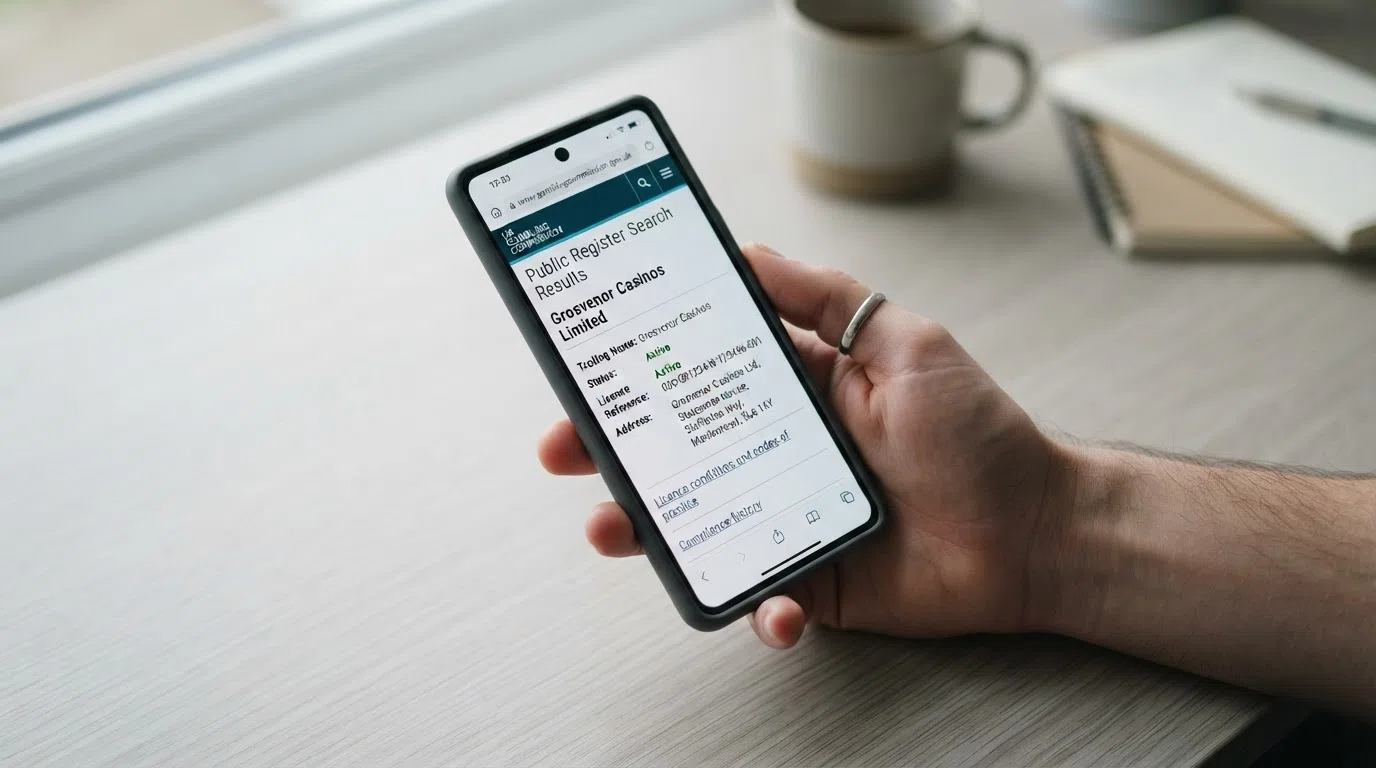
First, the UKGC public register. Find the licence account number — usually in the footer of the casino’s homepage — and enter it at the public register on the Gambling Commission’s website. Confirm that the licence is Active. Confirm that the trading name on the register matches the site you are about to deposit at. Confirm that the registered activity includes Casino. If any of those checks fail, walk away.
Second, the deposit page. Open the cashier before registering an account and look for pay-by-mobile, Boku, PayviaPhone, phone-bill or carrier billing. If none of those appear, the SMS deposit rail is not supported at this operator and no amount of welcome-bonus generosity will change that. If they do appear, note the intermediary name — that is where any processing fee will come from.
Third, the bonus T&Cs. Search for “excluded deposit methods” or “eligible deposit methods”. If pay-by-mobile is listed as excluded, the welcome offer will not trigger on an SMS deposit. If the T&Cs are silent on the rail, the offer should trigger but the absence of an explicit inclusion is a flag — operator practice has trended toward explicit exclusion, and silence is not the same as confirmation.
Fourth, the withdrawal methods. A new casino that lists pay-by-mobile as a deposit method but offers no withdrawal-capable rail — no debit card, no bank transfer, no e-wallet — is one the player cannot cash out from. The two-method reality (SMS for deposits, something else for withdrawals) holds regardless of how new the operator is.
Mobile-First New SMS Casinos: What the Label Means
“Mobile-first” describes a casino whose design, navigation and cashier were built for portrait phone screens from the ground up, rather than adapted from a desktop site. For a player funding via SMS, the distinction matters because the entire transaction lives on the phone: open the cashier, type your number, confirm by text, land in the lobby, launch a slot. A mobile-first cashier completes that flow without pinching, zooming or scrolling through menus designed for a 1,920-pixel-wide monitor.
The recognisable signs of a mobile-first casino are a portrait-laid-out game grid, a single bottom navigation bar, a cashier that opens as a full-screen sheet rather than a desktop modal, and game loading times measured in single-digit seconds on a 4G connection. The recognisable signs of a mobile-responsive casino (the alternative) are a desktop-heritage menu bar that collapses into a hamburger icon, a game grid that was laid out for landscape and rescaled, and cashier flows that require landscape orientation to fill in card details.
For the SMS-funded player, mobile-first is the better experience but not the only workable one. The UK slot regulation already imposes a slow-spin, no-autoplay experience that suits a phone session regardless of the casino’s heritage, and any modern UKGC-licensed casino will run the slots in a mobile-friendly format. The mobile-first label is a quality signal more than a hard requirement.
The GamStop Question: What SMS Casino Players Need to Know About UK Regulation
Every UKGC-licensed casino that accepts SMS deposits must participate in GAMSTOP. The rule closed a pre-2024 gap that allowed self-excluded players to use telephone, email or SMS betting operators that were not part of the GAMSTOP database, and it means a non-GAMSTOP SMS casino is, by definition, not a GB-licensed SMS casino. The distinction matters because the protections a GB-licensed casino offers — GAMSTOP self-exclusion, UKGC complaints and ADR, financial vulnerability checks, the £40 and £240 SMS caps, the £5 and £2 slot stake caps, the 10× wagering ceiling — are not transferable to an offshore operator.
GamStop and SMS Deposits: The 2024 Rule Change That Closed a Loophole
Before 1 April 2024, GAMSTOP covered online gambling — websites and apps — but not every operator that accepted bets by telephone, email or SMS text. A self-excluded player could, in principle, place bets through any operator that only took remote bets through those channels, because the GAMSTOP database check did not extend to that operator. The 1 April 2024 LCCP amendment closed the gap: every gambling operator that makes or accepts bets by telephone, email, SMS or instant messaging must now participate in GAMSTOP. As one industry source put it, “since 1 April 2024, this requirement extends to all gambling operators that make and accept bets by telephone and email.”
The practical effect is that a self-excluded player cannot use SMS deposits at any GB-licensed casino. The operator runs the GAMSTOP check before processing the first deposit, the database returns the exclusion, and the deposit is refused at the source. The check is silent from the player’s perspective — the deposit simply does not land — and the operator is required to log the refusal for compliance purposes.
For the player who is not self-excluded, the 2024 change has no day-to-day impact. GAMSTOP registration is opt-in, the exclusion periods range from six months to five years with auto-renewal, and a player who has not registered is unaffected. The change matters for the player who has registered and is now considering an SMS-funded session: any GB-licensed casino that lets the deposit through is either not checking GAMSTOP (a licence breach) or is not GB-licensed (no protection at all).
Non-GamStop SMS Casinos: What You Give Up
A non-GAMSTOP SMS casino is, by definition, an operator without a UKGC licence that accepts GB customers. The typical structure is a Curaçao or Malta corporate base, an offshore banking arrangement, and a cashier that accepts pay-by-mobile deposits from UK mobile numbers without the GAMSTOP database check. The marketing pitch is “no GAMSTOP, no verification, no limits”, which sounds attractive to a player frustrated by the UK’s regulatory friction and lands them in an unprotected space.
What the player gives up is the full GB regulatory framework. GAMSTOP self-exclusion: not honoured, because the operator is not on the database. UKGC complaints and ADR: not available, because the regulator does not have jurisdiction. The £40 and £240 SMS caps: not enforced, because the PSR 2017 cap is UK law and does not bind an offshore operator. The £5 and £2 slot stake caps: not enforced. The 10× wagering ceiling: not enforced. The £150 net-deposit financial vulnerability check: not enforced. The deposit-limit prompt before first deposit: not enforced. The reverse-withdrawal ban, the loss-disguised-as-wins ban, the auto-play ban, the 2.5-second spin speed: none of it binds.
The enforcement reality is that the UKGC issues disruption notices and refers URLs to search engines for removal — between April 2024 and June 2025, that produced 3,140 disruption notices, 447,778 URLs referred to search engines, and 287,961 URLs removed. The Commission does not hold statutory ISP or DNS blocking powers; the legislation to grant those powers has been proposed but not enacted. The player penalty for gambling on an unlicensed site is not established in UK law, which means the player is not committing a criminal offence but is also without recourse if the operator refuses to pay out.
The conclusion is structural. A non-GAMSTOP SMS casino cannot legally serve GB customers, does not protect GB customers, and offers none of the regulatory safety net a UK player is used to. The marketing is built around the absence of friction, but the friction in the GB system exists for a reason, and removing it removes the protections with it.
UKGC Licensing: The Badge an SMS Casino Must Carry
The UKGC licence badge — usually a small logo in the page footer, often linked to the operator’s entry on the public register — is the single non-negotiable check before depositing. The badge itself is not the verification; the verification is what happens when the player clicks through and reads the register entry. The badge is the link, the register is the proof.
To verify, the player needs three things from the register entry: the licence status (must read “Active”), the activity (must include “Casino” for an online casino), and the trading name (must match the site the player is on). If all three check out, the operator is authorised to take casino bets from GB customers. If any check fails — status is “Suspended” or “Surrendered”, activity does not include casino, trading name does not match — the badge is a counterfeit or a leftover from a previous licence, and the player should not deposit.
The UKGC public register was last updated 29 July 2026. Recent changes may not yet appear, and a licence that was active at the start of the month could in principle have been surrendered or suspended since. For the ten operators in the comparison table above, all ten are confirmed active on the register as of that update. The reader should re-check the register entry for any operator before depositing, particularly if the operator is one they have not visited recently.
When the Deposit Cap Is the Safety Feature: Responsible Gambling with SMS Deposits
The £40 single-transaction and £240 monthly caps are usually framed as a limitation. From a responsible-gambling perspective, they are a structural feature. No opt-in deposit limit at a UK casino can match the £240 statutory ceiling for force: a player cannot deposit more than £240 via SMS in a calendar month without the network refusing the charge, regardless of how motivated they are to override their own limit. Combined with the UK’s responsible-gambling infrastructure — GAMSTOP, GamCare, the National Gambling Helpline, GambleAware’s self-assessment tools, the NHS gambling harm clinics, and the operator-level deposit limits and reality checks — the SMS rail is one of the lowest-risk ways to fund a casino account in the UK.
Self-Exclusion Tools That Cover SMS Casino Play
GAMSTOP is the national self-exclusion scheme. Registration is free, online, and requires personal details including phone number and email. The exclusion periods are six months, one year, five years, or five years with auto-renewal. The exclusion cannot be cancelled early; once registered, the player cannot deposit at any GB-licensed casino for the chosen period, and the exclusion continues for up to seven years after the minimum period if the operator cannot reach the player to confirm the end of the exclusion.
From 1 April 2024, GAMSTOP covers every GB-licensed operator that accepts SMS deposits. The April 2024 LCCP amendment extended participation to all gambling operators that accept bets by telephone, email, SMS or instant messaging, closing the gap that had previously allowed self-excluded players to use those channels. The check happens before the first deposit is processed; the operator runs the player’s details against the GAMSTOP database and refuses the transaction if a match is found. For an SMS-funded player, the check is identical to the check for a card-funded player, and the refusal is silent at the network level.
Operator-level tools complement GAMSTOP. Every UKGC-licensed casino offers time-outs (24 hours to six weeks), reality checks (on-screen notifications of session length and net position), and deposit limits (customer-set, with decreases actioned at once and increases subject to a cooling-off period). The deposit-limit prompt is mandatory from 31 October 2025: every new customer is asked to set a financial deposit limit before their first deposit, and the limit the customer sets is enforced from the first session. The RTS 12 standardisation of the gross deposit limit definition was scheduled for 30 September 2026. The £150 net-deposit financial vulnerability check, in force since 28 February 2025, kicks in regardless of whether the deposits are made by card or by SMS, and runs a light-touch review using publicly available data rather than income verification.
Where to Get Help: UK Problem Gambling Resources
The three primary routes for a UK player who is worried about their own gambling or someone else’s are GamCare’s National Gambling Helpline, GambleAware’s self-assessment and service-finder tools, and GAMSTOP itself.
- National Gambling Helpline (GamCare): 0808 8020 133 — free, confidential, available 24 hours a day, every day. Also reachable by live chat and WhatsApp at gamcare.org.uk. In 2026, 81.5% of contacts to the Helpline disclosed online gambling as their form of gambling.
- GambleAware: Seven-question gambling harms self-assessment, service finder for local face-to-face support, and a spend calculator at gambleaware.org. GambleAware’s 2024 GB Treatment and Support Survey recorded that 13.1% of GB adults — approximately 6.8 million people — classified at any level of gambling problems (PGSI 1+).
- GAMSTOP: Free online registration at gamstop.co.uk. Blocks every GB-licensed online gambling site for the chosen period (six months, one year, five years or five years auto-renewal).
- NHS gambling harm clinics: Available in England, Scotland and Wales. Referral through a GP or, in some regions, self-referral.
The breadth of the infrastructure matters because the rail-specific question — does SMS funding carry extra risk? — answers itself once the cap is understood. A player who funds via SMS has a £240 monthly ceiling they cannot breach. A player who funds via debit card has only the limit they set themselves, and the discipline that limit requires. The rail enforces what a self-imposed limit only suggests.
How We Selected and Ranked the Best SMS Deposit Casinos
The ten featured operators were evaluated against four criteria, with no weighting, percentage scoring or proprietary index applied. The ranking is qualitative and based on the disclosed criteria.
First, confirmed SMS deposit support, verified against the operator’s deposit page. An operator with a confirmed pay-by-mobile, Boku, PayviaPhone or phone-bill option on its cashier outranks one whose SMS support could not be confirmed. An operator whose own deposit page states that pay-by-mobile is not supported is included for completeness with the gap stated.
Second, active UKGC licence status, verified against the public register. All ten operators are confirmed active as of the register’s 29 July 2026 update. The trading name on the register matches the site the player would visit.
Third, welcome-offer terms, including the wagering multiplier (compared against the new 10× UKGC cap that came into force 19 December 2025), the free-spin allocation, the no-wagering availability, the validity window and the maximum-conversion cap. Operators whose offer has no wagering and no cap on winnings rank above those with high-wagering offers and restrictive caps.
Fourth, game-library quality, judged by the depth of the provider roster and the curation of slot content. Pragmatic Play, Play’n GO and NetEnt presence was used as the baseline; studios such as Push Gaming, Evolution and Playtech were treated as positive signals.
The ranking order reflects those criteria. The top three operators — Peachy Games, Fruity King and Duelz — are the only three in the table with confirmed SMS deposit support. The next four — Sky Vegas, bet365, William Hill Vegas and Ladbrokes — carry strong welcome offers but unverifiable SMS support, and the reader needs to check the cashier directly. MrQ is included because its no-wagering welcome offer is among the strongest in the table, despite the explicit absence of SMS deposit support; the reader who can fund by debit card should look here, and the reader who cannot should not. Betfair is included for its no-deposit free-spins offer. Betfred sits at the bottom because neither the welcome offer nor the deposit method could be surfaced to a level that supports a recommendation.
Independent casino review sources — Casino.org/uk, Compare.bet, Bojoko, gg.co.uk and Slotmachines.uk.com — were consulted for operator welcome terms and SMS-deposit availability, alongside the UKGC public register and each operator’s own deposit page and promotion T&Cs.
SMS Deposits at UK Casinos Are a Trade-Off Worth Taking — for the Right Player
The trade-off is short and worth naming plainly. SMS deposits give you a £240 monthly spending ceiling you cannot breach, instant deposits without card details, and access to the same slot library any other deposit method would unlock. They cost you welcome-bonus eligibility at most casinos, they require a separate withdrawal-capable method on file, and at PayviaPhone-processed sites they cost you 15% of the deposit on top. The “generous welcome offer” framing is one most SMS-funded players will never see trigger, because the exclusion clause sits in the small print most readers skip.
The player this works for is the casual, low-stakes player who wants to cap spending at a low, fixed level without the friction of typing card details. The £40 single-transaction cap forces short sessions; the £240 monthly cap forces a finite monthly budget; the no-card-required flow removes the friction that often leads to “just one more deposit”. The bonus exclusion is a real cost, but the no-wagering offers at Peachy Games and (for debit-card-funded players) MrQ recover much of that cost for a player willing to pick the right operator.
The player this does not work for is the bonus-chaser. A 10× wagering requirement on a £40 deposit means £400 of qualifying turnover, which at the £5 slot stake runs to eighty spins of paced UK play — longer than the session the deposit funds and well past the time a player would have spent chasing the bonus. A welcome offer that is bounded by both wagering and conversion cap does not return value at the £40 deposit ceiling. The bonus-chaser should fund by debit card.
The action for a reader who wants to try SMS deposits: pick one of the three SMS-confirmed featured operators — Peachy Games for no-wagering spins, Fruity King for a matched-deposit headline, Duelz for the seven-day spin schedule. Open its deposit page and confirm pay-by-mobile is still listed. Read the bonus T&Cs for SMS eligibility. Register a withdrawal method alongside the SMS deposit so the cashout route is in place before the first spin. Start with a £10 session sized to the deposit minimum, get used to the flow, and size up from there if the rail fits the play.
The right choice between the three confirmed SMS operators depends on what the reader values. Peachy Games’s no-wagering 100 Big Bass Splash spins suit a player who wants the winnings in cash without the conversion-cap arithmetic. Fruity King’s 100% match plus 50 Rainbow Riches Megaways spins suit a player who wants the deposit-matched headline and accepts the PayviaPhone fee and conversion caps. Duelz’s 140 daily spins over seven days suit a player who intends to log in for a week and use the Boku rail without the PayviaPhone fee. None of the three is “the best” — the right answer is whichever one’s structure matches the reader’s play pattern. The £40 ceiling is the same at all three; the difference is what the player wants to do inside it.
Frequently Asked Questions
What is the maximum I can deposit via SMS at a UK casino?
The maximum per single transaction is £40, and the maximum per calendar month per subscriber is £240. Both numbers are set by the Payment Services Regulations 2017, not by the casino, and cannot be raised by the player or the operator. The £240 figure counts across all gambling merchants using the same mobile number, not per casino.
Which UK mobile networks support SMS casino deposits?
The major UK networks — O2, EE, Vodafone, Three, Sky Mobile, Virgin Mobile, giffgaff and Tesco Mobile — all carry pay-by-mobile gambling charges. Coverage is broad enough that the network check rarely blocks the deposit. What varies is the payment intermediary (Boku, Fonix, PayviaPhone or Siru Mobile) and which casinos each intermediary serves.
Do SMS casino deposits count towards the UKGC financial vulnerability check?
Yes. From 28 February 2025, UKGC rules mandate a light-touch financial vulnerability check on any customer whose net deposits reach £150 in a rolling 30-day period. SMS deposits count toward that threshold the same way card and e-wallet deposits do. The check uses publicly available data (CCJs, IVAs, DROs) and triggers a friction-light review.
Is there a fee for using SMS deposits at UK casinos?
Most UK casinos charge no fee on the casino side. The exception is PayviaPhone, which deducts a 15% processing fee from each deposit it processes — Fruity King’s PayviaPhone deposits lose 15% before the funds land. Boku and Fonix deposits are typically fee-free at the player level, as is direct carrier billing at most operators.
What is the difference between pay by SMS, pay by phone bill, and carrier billing?
The three labels describe the same underlying charge-to-mobile mechanism. Pay by SMS is the colloquial term for a text-triggered deposit. Pay by phone bill is the operator-facing label for a deposit settling on the monthly mobile statement. Carrier billing is the technical term for the payment rail itself. The PSR 2017 cap applies regardless of label.
Sky Vegas: No-Deposit Free Spins — But Is SMS Supported?
Sky Vegas runs the most generous no-deposit welcome component in the table: 50 free spins on registration, with no deposit required, no wagering on winnings, and no cap on what those winnings pay out. The second half of the offer — 200 additional free spins after depositing and spending £10 — is also wagering-free. Combined, the headline is 250 free spins with every winning pound paid as cash. The site is operated by Bonne Terre Limited, a Flutter Entertainment subsidiary, and holds UKGC licence account 65519, active on the public register. The slot library runs to 600-plus titles across NetEnt, Playtech, Play’n GO, Blueprint, Evolution, IGT and Pragmatic Play.
The honest gap is on the deposit method. Sky Vegas’s cashier could not be confirmed as listing pay-by-mobile or Boku during this review. The site may support the rail and the search did not surface it; the site may not support the rail and the player would need to deposit by debit card or PayPal to claim the offer. Either way, the reader should check the Sky Vegas deposit page directly before assuming SMS funding is available.
For a player who can fund by debit card, the offer is the strongest no-wagering package in the table — 50 spins cost nothing, the next 200 cost £10, and every penny of winnings is withdrawable. For the SMS-funded reader specifically, the gap matters: a no-deposit offer is the one welcome structure that does not require an SMS-funded first deposit, so a player who registers for the 50 free spins and only later adds funds via Pay by Phone is unaffected either way.
Slot Sites vs General Casino Sites: Does the Distinction Matter?
The “slot site” label in UK casino marketing is a positioning claim, not a regulatory category. A slot site is a casino whose game library leans slot-heavy and whose welcome offer is structured around free spins rather than a matched deposit. A general casino carries slots alongside table games, live dealer, sports betting and sometimes bingo under the same account.
For an SMS-funded player, the distinction matters less than the marketing suggests. A curated slot library of 700 titles (Peachy Games’s roster) suits a short SMS-funded session better than a 3,000-title catalogue that the player will not browse through, but a general casino with a strong slot sub-section (bet365’s Games tab) offers the same play. The deciding factors are the welcome offer, the SMS deposit support, and the bonus terms — not the slot-site label.
What does matter is the provider roster. Pragmatic Play, Play’n GO and NetEnt are the three providers that appear across the featured operators’ slot libraries most often. A player who recognises those three names as the providers behind their favourite UK slots will recognise the experience at any of the featured sites. A player chasing a specific studio’s title — Push Gaming, Nolimit City, Hacksaw Gaming — should check the operator’s game filter before depositing.
Is an SMS Casino Legal in the UK?
An SMS casino is legal in Great Britain if, and only if, it holds a UKGC operating licence. The Gambling Act 2005, as amended by the Gambling (Licensing and Advertising) Act 2014, makes a GB licence compulsory at the point of consumption: any operator serving GB customers needs the licence regardless of where it is incorporated. The UKGC is the single statutory regulator. The licensing objectives written into section 1 of the 2005 Act are three: preventing crime and disorder, ensuring fair and open gambling, and protecting children and vulnerable persons.
“UK-licensed” is the market phrase. The accurate phrase is “Great Britain licence” — the Gambling Act and the UKGC cover England, Scotland and Wales. Northern Ireland runs on separate, older legislation outside the Commission’s remit. An SMS casino serving GB customers from a Northern Ireland base still needs a UKGC licence; a UKGC licence does not, by itself, authorise the operator to serve Northern Irish customers. The distinction is rarely binding for the average player, but it is the legally accurate one.
The deposit method does not change the legal requirement. Whether the player funds the account by debit card, PayPal, bank transfer or SMS, the casino’s licence status is the same, and the regulatory framework applies the same way. SMS deposits do not sit in a different legal category from card deposits; they sit in a different regulatory category from card deposits because of the PSR 2017 cap, but the casino’s licence is the same.
Payments – realmoney-onlinecasinos-uk
Content created by the «realmoney-onlinecasinos-uk» team