
The Top-Rated UK Online Casinos, Ranked for Real-Money Play
 Available in GB
The label “top-rated” gets used loosely, and in the UK casino market that looseness costs players real money. A “4.8-star casino” might still cap your winnings at thirty quid, attach a 10x playthrough to its free spins, or quietly decline to publish the cashout cap until you have already deposited. Two pages with identical ten-out-of-ten scores can sit on opposite sides of that line. This page is built to make the line visible, then to rank ten UKGC-licensed casinos against it.

Current as of September 8, 2026; operator offers and licence standing verified against the UK Gambling Commission public register.
What Makes a UK Casino Truly Top-Rated in 2026
The phrase “top-rated” implies a measured thing. In practice it is closer to a mood. The Independent, The Standard, Racing Post, OLBG and Casino.org each publish a top-ten, and they each rate using a different mixture of editor-tested play, community votes, app-store review averages, and the welcome offer a partnership manager has pushed hardest that quarter. A 4.7-star score on one site and a 4.4 on another rarely disagree about whether a casino is competent — they disagree about what competence means. That distinction is the page’s starting point.
The Gambling Commission’s 2025 Gambling Survey for Great Britain found that 47% of adults in Great Britain had gambled in the past four weeks — 38% of them online. The licensed market is large, mainstream, and structurally different from the offshore space outside it. The Commission’s public register held 2,663 records at its 29 July 2026 update, and every casino on this page sits within that set. Treating the licence as the floor, and the bonus terms as the next measurable layer above it, is what turns a star rating into a usable comparison.
What “Top-Rated” Actually Means — and What It Does Not
A “rating” is a score, and a score is a choice about what is being scored. A rating aggregator that weights community Trustpilot averages will put a casino with a louder complaint desk and faster resolution above a quieter one with a slower complaint queue. An editorial test that spends a week on each site will put payout friction above bonus generosity. A listicle built around commercial partnerships will tend to push whatever offer a partner has priced highest in the quarter.
Two things stay measurable across every approach. The first is whether the casino appears on the UK Gambling Commission’s public register. The second is what the bonus actually costs to clear. Star counts, app-store averages and community votes all sit downstream of those two checks, and a player who treats them as the answer rather than the question tends to read the wrong column.
The deeper error is treating “highest rated” as a synonym for “best for you”. It is not. The highest-rated casino on a particular list may be the one whose game library misses every title you actually want to play, or whose stake cap on a particular game is set lower than the survey assumed. The right reading of a top-rated list is “casinos the rater considered worth their attention”, and the rest of the work is your own.
Real-Money Play: What Changes Once You Deposit
Demo mode and real-money play live in different regulatory neighbourhoods. Once money is in, three structural rules apply that did not apply a minute earlier.
The first is the age-banded slot stake cap, imposed under SI 2025/215: a £5 maximum per game cycle for players aged 25 and over (in force 9 April 2025) and a £2 maximum for players aged 18 to 24 (in force 21 May 2025). A “game cycle” runs from the moment a stake is placed until every penny of that stake is lost or every winning spin is settled, so a player cannot split a larger intended bet across rapid small spins to evade the cap. The cap applies to online slots only — roulette, blackjack and other table games sit outside it.
The second is the mandatory deposit-limit prompt. From 31 October 2025, every operator must ask a new customer to set a financial deposit limit before their first deposit. From 30 September 2026, a “gross deposit limit” must be offered with at least equal prominence, and only that form may be marketed as a “deposit limit”.
The third is the set of slot design rules that have been in force since 31 October 2021: auto-play is banned, spin speed may not be faster than 2.5 seconds per game cycle, losses disguised as wins are banned, and reverse withdrawals are banned. Real-money play on a UKGC-licensed casino is a slower, more transparent product than the offshore alternative, and the slower pace is the regulatory choice, not the operator’s.
Player Reviews, Ratings and Whose Opinion Counts
User reviews are useful, and they are also blunt instruments. A Trustpilot average tells you about volume, sentiment, and how the casino handles a complaint that has reached a public forum. It does not tell you whether a particular slot’s RTP is configured at the licensed 96% or the cheaper operator-favourable 94%. It does not tell you whether a withdrawal was held by the payment rail or by the operator. It does not tell you whether the complaint was filed by a customer who had read the bonus terms.
Editorial testing on a top competing page typically covers the same ground the operator’s own marketing covers, plus a withdrawal-speed check. Racing Post and OLBG publish game-library counts; The Independent leans on bonus terms; The Standard has historically highlighted payout speed (“15 minutes” for Grosvenor being the often-cited data point). None of them substitutes for the UKGC public register. A clean licence entry, an offer whose terms fit on one screen, and a payout speed the operator will quote in writing: those three together outrank any star count on the page.
The other pattern worth flagging: a casino with fewer reviews but a clean complaint record is frequently the stronger pick. New brands accumulate reviews slowly; old brands accumulate them regardless of how they are doing. Volume is not the same as signal.
The Welcome-Bonus Landscape in 2026
Two structural shifts have rewritten what a UK welcome bonus is. The first is the 10x wagering cap, in force from 19 January 2026 under LCCP social responsibility code 5.1.1. The Commission stated at announcement that “capping the wagering requirement to ten decreases the likelihood of harm, reduces complexity, and improves transparency while maintaining consumer choice.” The practical effect is a ceiling: no UKGC-licensed casino can ask a player to wager a bonus more than ten times before withdrawing. The second is the ban on mixed-product offers, which means a casino cannot sell a sports bet and a free-spin bundle as a single welcome package.
Underneath those rules, the market has settled into two camps. The no-wagering camp — Sky Vegas, Betfair, Paddy Power, Coral, bet365 — publishes offers whose winnings are paid in cash. The 10x camp — William Hill, Ladbrokes, 32Red — applies the cap and lives within it. The arithmetic is straightforward: a no-wagering free spin is worth whatever the slot returns; a 10x-wagered free spin is worth whatever the slot returns divided by the cost of clearing it. On a 96% RTP slot at £0.10 a spin, the difference runs from a few pounds per hundred spins to several.
Sitting above the welcome offers is a quieter structural pressure. Remote Gaming Duty on online casinos rose from 21% to 40% with effect from 1 April 2026. The tax does not fall on the player, but it changes the economics the operator writes its welcome offers against, and the trend of the last two years has been toward simpler, lower-value packages.
New UK Casinos: Fresh Faces Worth Watching in 2026
A newly launched UKGC-licensed casino has cleared a more demanding licensing path than its predecessors did. The Commission runs personal licence checks on key personnel, tests the RNG, reviews the game mix, and inspects the safer-gambling infrastructure before the first GB customer can deposit. By the time a new casino is publicly marketing, the licence is in place — but the track record is not.
Three checks carry most of the weight. The first is the UKGC public register entry, searched by trading name and confirmed against the operator’s claimed domain. The second is the payment rail: which deposit and withdrawal methods are wired in at launch, and whether the operator is using a known processor (a positive signal) or a custom one. The third is the game library: a launch with two providers and 300 games is structurally thinner than a launch with six providers and 1,500, and the difference shows up in the second month of play, not the first.
The bonus is the wrong place to evaluate a new casino. A launch-month offer is a marketing spend, and marketing spend gets adjusted quickly once the launch is over. What persists is the licence standing, the game mix, and the operator’s track record over the first twelve months — and that record does not exist yet, which is the cleanest signal of all.
The 10 Highest-Rated UK Online Casinos, Compared Side by Side
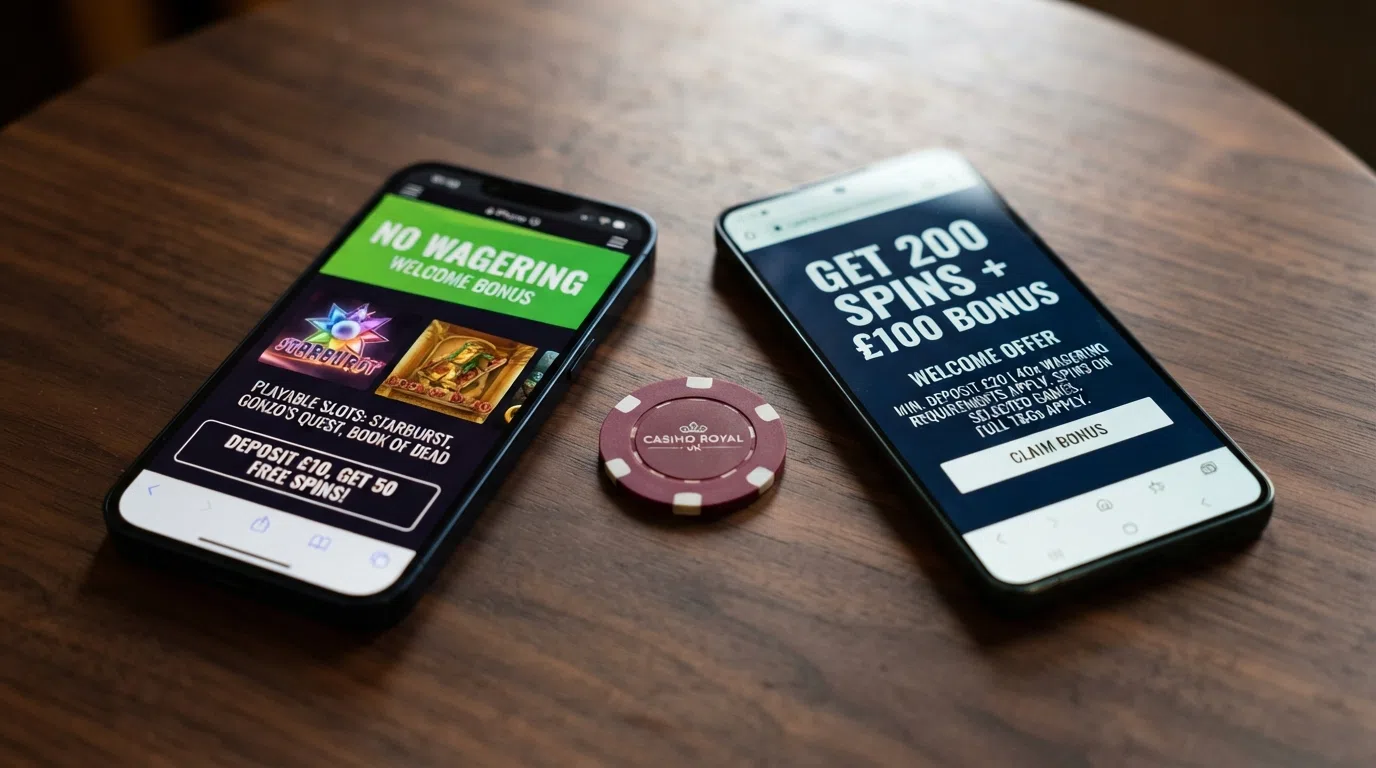
The table below ranks ten UKGC-licensed casinos by the combination of licence standing, bonus clarity, and the absence of a punitive cap. Every offer is a free-spins or spins-plus-bonus structure; the columns the table tracks are those that materially change the cost of claiming. Where research did not confirm a figure from a primary source, the cell carries an em dash rather than a guess.
| Casino | UKGC Licence | Welcome Offer | Free Spins | Wagering on Winnings | Min. Spend to Claim |
|---|---|---|---|---|---|
| Sky Vegas | Confirmed (Flutter) | 50 no-deposit spins + 200 on £10 spend | 250 | 0x | £10 |
| Betfair | Confirmed (Flutter) | 50 no-deposit spins on Jackpot King titles | 50 | 0x | £0 (no deposit) |
| Paddy Power | Confirmed (Flutter) | 60 no-deposit spins + 100 on £10 deposit/wager | 160 | 0x | £10 (for the second tranche) |
| bet365 | Confirmed (Hillside) | Up to 500 spins over 10 days | Up to 500 | 0x | £10 lifetime deposit |
| Coral | Confirmed (Entain) | 100 spins on £10 deposit and wager | 100 | 0x | £10 |
| William Hill | Confirmed (evoke) | 200 spins on Big Bass Splash | 200 | 10x | £10 |
| Ladbrokes | Confirmed (Entain) | 100 spins + 300 Ladbucks on £10 deposit and play | 100 | 10x | £10 |
| 32Red | Confirmed (Kindred) | 320 spins on Big Bass Splash | 320 | 10x | £30 |
| Betfred | Confirmed (Betfred Group) | — | — | — | — |
| Grosvenor | Confirmed (Rank Group) | 100% deposit bonus + 100 spins | 100 | — | — |
The headline split is the wagering column. Five offers carry zero wagering and pay winnings in cash; three sit at the 10x cap and live within it. The remaining two — Betfred and Grosvenor — are confirmed licensed operators whose specific bonus terms were not surfaced in this research cycle. Where a cell is empty, the operator’s offer in that dimension was either not confirmed or not applicable.
A note on the 10x camp. The 10x cap is a hard ceiling, not a target. An offer that hits 10x is, in real terms, the most a UKGC-licensed casino can ask a player to wager before withdrawing. A no-wagering offer is, by the same logic, the most lenient possible. Between those two poles, every operator in the licensed market now sits.
How We Built This Ranking
Three dimensions set the order. The first is licence standing, verified against the UK Gambling Commission’s public register (2,663 records, last updated 29 July 2026). Every operator on this page appears there. The second is bonus fairness, read through the wagering multiple and any cashout cap; the 10x ceiling is the upper bound, and operators carrying it score below those that do not. The third is the transparency of terms — the offer that fits on one screen, with the cashout cap (or its absence) stated, ranks above the offer that buries the cap three pages deep.
The casino-focused operator universe was drawn from the UK top-20 list, with Gala Bingo (Entain) replaced by Grosvenor (Rank Group) because Grosvenor is a casino operator in the slot-and-table sense rather than a primarily bingo product. Betfred’s specific bonus terms were not confirmed from a primary source this research cycle; its UKGC licence is confirmed, but the row’s offer columns are blank.
What the table does not measure is game-library depth, payout speed in the round, mobile-app quality, or the editorial judgement of the reviewer writing each entry. Those dimensions appear in the operator write-ups below.
Sky Vegas
Sky Vegas holds the largest no-wagering free-spin bundle on the page: 50 spins on sign-up with no deposit required, plus a further 200 spins when the player spends £10 across the site. All 250 spins carry zero wagering, winnings are paid in cash, and the operator has not stated a maximum cashout cap — a configuration that is rare enough to be worth naming. The 11 eligible games span the high-RTP end of the Flutter platform’s slot library: Eye of Horus, Fishin’ Frenzy, Starburst and seven others, all at a £0.10 spin value. Spins expire seven days from credit.
The offer is built for a player who wants the welcome-offer mechanic without the playthrough arithmetic. There is none. The cost of the offer to the player is the £10 that triggers the second tranche, and the upside is whatever the eligible slots pay out at face value. On a 96% RTP slot running 250 spins at £0.10, the expected return is £24 against a £10 outlay, before any single big win. That is the structural shape of a no-wagering offer: a small positive expected value, with the bonus’s primary function being to draw the player into the lobby rather than to enrich them.
For a player choosing between Sky Vegas and a casino whose offer carries 10x, the comparison is not apples to apples. The Sky Vegas offer is the bonus; the 10x offer is a loan that the player has to repay before keeping. The verdict on Sky Vegas is straightforward: if the eligible slot list contains a game the player actually wants to play, this is the most generous free-spin offer in the table.
Betfair
Betfair is the cleanest no-deposit offer in the table: 50 free spins, no deposit required, no wagering, no stated maximum cashout, and an eligible-game list that points straight at the Jackpot King progressive network. The three named titles — Crabbin’ For Cash Extra Big Catch, Fishin’ Frenzy, and The Goonies — share a jackpot pool rather than a fixed max-win, and the trade-off is structural. A progressive slot pays back less per spin in the base game than a fixed-jackpot slot of the same RTP band, because a slice of every wager funds the pool.
For a player who is testing a casino for the first time and is willing to play a progressive in exchange for the chance at a pooled prize, Betfair is the right entry point. For a player who would rather have the flat 96% return of a non-progressive, Sky Vegas’s eligible list is a better fit. The spins themselves are £0.10 each and the no-deposit posture means the player can complete the offer, withdraw whatever the eligible games paid, and walk away with no further commitment.
The verdict: a pure no-deposit offer with zero wagering and no cashout cap is rarer than the row count suggests, and Betfair’s is the one a player chasing that exact shape should pick.
Paddy Power
Paddy Power publishes the largest no-deposit spin count in the table: 60 spins on registration, broken into 50 on a list of 12 eligible slots and 10 on Paddy’s Mansion Heist, a proprietary title. A further 100 spins drop in when the player deposits and wagers £10, all at £0.10 each, all zero wagering, all with no stated cashout cap. The seven-day validity runs from credit.
The Paddy Power offer’s distinctive mechanic is the Wonder Wheel, which can add bonus spins to the running total during the offer period. That mechanic introduces a small variance: a player landing on a high-tier wheel segment sees a larger spin bundle than one who does not. For a player comparing this row against Sky Vegas’s flat 250, the comparison is between a known-quantity 250 and a known-minimum 160 with upside. The Wonder Wheel is the only real-world feature on this page that the regulator’s rules do not constrain, and the operator’s incentive to be generous with it is the marketing budget, not the licence.
The verdict: a player who values the largest guaranteed no-deposit spin count and is comfortable with the Wonder Wheel’s variance should pick Paddy Power. A player who wants the same shape without the wheel mechanic should pick Sky Vegas.
bet365
bet365 publishes the largest potential spin count on the page — up to 500 — but the actual figure a player receives is determined by a random daily allocation of 5 to 50 spins over ten consecutive days. The four eligible titles are Book of Horus, Curse of the Bayou, Magic Forge, and Wrath of the Deep; spins carry zero wagering, winnings are paid in cash, and there is no stated cap on what those winnings can total. The qualification is a £10 lifetime deposit — not a £10 deposit on this offer specifically, but a £10 cumulative deposit on the account at any point.
That last condition matters. A genuine no-deposit offer requires no prior deposit; bet365’s offer requires a £10 deposit at some point in the player’s relationship with the operator. A player opening a fresh account can deposit £10, trigger the spins, and the offer then completes on the same terms as a no-deposit one. The distinction is mostly relevant for players with existing bet365 accounts who were hoping for a no-deposit re-run; they will not get one.
The expected spin count is somewhere between 5 × 10 = 50 (worst case) and 50 × 10 = 500 (best case), with the daily randomisation making the actual figure closer to 275 across a full allocation. At a 96% RTP and £0.10 per spin, the expected return on a 275-spin average is around £26 against a £10 deposit, with a 30-day claim window and a 7-day per-batch expiry. The headline “up to 500” is the marketing floor, and the realistic figure is well below it.
The verdict: a player who wants the highest possible spin ceiling and is comfortable with the randomisation should pick bet365. It is the most flexible choice for those looking to maximize their spin count.
Coral
Coral’s offer is the simplest on the page: 100 free spins for a £10 deposit and wager, zero wagering on winnings, winnings paid in cash, no stated cashout cap. The eligible games cover a standard Entain-platform slot list at £0.10 a spin. The validity is the typical seven days. There is no no-deposit tranche, no Wonder Wheel, no daily randomisation — the offer is what it says it is.
Coral sits in the middle of the table on every metric that matters. It is not the largest spin bundle, not the smallest, and not the only deposit-triggered offer. Its game library is the standard Entain platform (Playtech, NetEnt, Evolution) shared with Ladbrokes, and the live-dealer range is correspondingly deep. For a player whose primary criterion is a clean deposit-triggered no-wagering offer without surprises, Coral is the row.
The verdict: a player who wants the same offer shape as Sky Vegas or Paddy Power’s deposit tranche, without the no-deposit element, will find Coral the most straightforward of the three.
William Hill
William Hill’s offer is the largest spin count among the 10x-wagering camp: 200 free spins on Big Bass Splash, triggered by a £10 deposit and wager, with the 10x wagering on winnings required before withdrawal. The catch is the £30 maximum redeemable cap: whatever the spins return is subject to a £30 ceiling once the 10x playthrough is complete. Spins are £0.10 each, expire after 72 hours, and the eligible game is the single high-RTP Pragmatic Play title.
The arithmetic is the story. Big Bass Splash sits in the same series as Big Bass Bonanza, with a published RTP of 96.71% — above the 96% average. On 200 spins at £0.10, the expected gross return is around £19.42. After the 10x wagering playthrough on the winnings (£194.20 of wagering at 96.71% RTP, costing roughly £6.58 in expected loss), the net is approximately £12.84. The £30 cap is, in this configuration, not binding; it only bites on a very high-variance outcome. For most sessions, the player walks away with a small positive number.
The 72-hour expiry is the practical constraint. A player who signs up and walks away for the weekend forfeits the spins. The 10x playthrough is the long-tail cost: if the spins return more than the player expects, the wagering takes a slice of the upside. William Hill suits a player who wants a quick, single-slot session and is comfortable with the wagering mechanic.
The verdict: a 10x offer on a high-RTP single-slot game is the most concentrated play in the table, and a player who values the focused experience over a multi-game offer should pick William Hill. The £30 cap is the regulator-allowed ceiling on a free-spin offer, and the published terms make it visible.
Ladbrokes
Ladbrokes runs the only offer on the page that mixes free spins with a loyalty currency: 100 free spins plus 300 Ladbucks for a £10 deposit and play on slot games, with 10x wagering on winnings. The Ladbucks are a points balance that feeds the Ladbrokes loyalty programme, redeemable against future bonuses, free bets, or site credit. The eligible slot rotates — a featured title that changes over time rather than a fixed game.
The offer’s character is hybrid. A player who treats the Ladbucks as bonus value is looking at roughly 100 spins plus a small loyalty kicker; a player who treats them as cosmetic is looking at a standard 10x offer with a 100-spin count. The rotating slot is the practical variable. CasinoAppsOnline’s listing identifies Big Bass Bonanza as a frequently featured title, but the offer terms do not pin a specific game. A player signing up specifically for Big Bass Bonanza may or may not find it eligible on the day.
The 10x playthrough on winnings applies identically to William Hill. The difference is the eligible-game variability and the Ladbucks mechanic, which adds a small additional value that a player who stays with the operator long-term can extract. For a player whose plan is welcome-offer-only, the Ladbucks have no terminal value.
The verdict: a player who is comparing offers within the Entain platform should pick Ladbrokes if the rotating slot happens to be a title they want, and Coral if they want a fixed game list with no wagering. The two operators share the same parent and the same payment rails.
32Red
32Red holds the largest single-offer spin count on the page: 320 free spins on Big Bass Splash, requiring a £30 deposit and stake (the highest deposit threshold in the table) with 10x wagering on winnings. The spins are £0.10 each, expire 48 hours after credit, and must be claimed within seven days of registration. The payment rail is restricted to debit card or instant bank transfer — e-wallets do not qualify.
The £30 deposit and the 27-minute expiry are the two operational constraints. A player who deposits £30 and clears the offer in under half an hour will see the full 320 spins; a player who delays past 27 minutes forfeits whatever is unused. The Kindred Group backing and the Microgaming-heavy game library are the operator-side strengths; 32Red’s catalogue runs deeper on Microgaming titles than on NetEnt or Playtech, which is a structural difference from the Flutter and Entain brands higher in the table.
On 320 spins at 96.71% RTP and £0.10 each, the expected gross return is around £30.95. After the 10x playthrough on winnings (£309.50 wagered at 96.71% RTP, costing roughly £10.48 in expected loss), the net is approximately £20.47. The 48-hour expiry makes that calculation contingent on a focused two-day session, and the debit-card-only payment restriction is a friction point for players who prefer e-wallets.
The verdict: 32Red suits a player who has a £30 deposit ready, a clear two-day window, and a debit card or instant bank transfer. The spin count is the largest on the page; the conditions are the tightest.
Betfred
Betfred is a top-seven UK operator by market share and a confirmed UKGC-licensed brand, but its specific casino welcome offer was not confirmed from a primary source in this research cycle. The Playtech-primary game library and the Evolution live-casino integration are both well established; what this page cannot confirm is the current shape of the welcome bonus, the wagering multiple, the eligible games, or any cashout cap that may apply.
The honest reading of the row is that the licence is in place and the operator is a serious market presence, but the offer a player would see on Betfred’s site today is not something this page can quote without re-checking directly. For a player comparing Betfred against the rows above it, the most reliable move is to check the Betfred promotions page and the UKGC register on the same day, and to read the bonus terms in the same way the table reads them for the other nine operators.
The verdict: Betfred is a legitimate UKGC-licensed operator, and a player already inclined toward it should sign up with the same caution the rest of the table recommends — read the terms, check the licence, set a deposit limit before the first deposit. The offer column is empty because the offer was not confirmed, not because the offer is bad.
Grosvenor
Grosvenor is the only operator in the table with a percentage-match offer and the only one with a significant UK land-based casino presence. The Rank Group backing and the NetEnt, Evolution and Playtech game mix give it a broadly similar library to the Flutter and Entain brands, with the structural difference of an additional 50+ UK casino floors feeding the brand. Grosvenor is a confirmed UKGC-licensed operator with a unique offering shape and a unique structural advantage (land-based presence, fast payouts). The bonus terms need to be checked on the operator’s own page, and the licence on the public register, before signing up.
The Slots, Tables and Live Games That Define a Top-Rated UK Casino
The welcome offer gets a player to the lobby; the game library decides whether they stay. A bonus is a one-time transaction, and the cost of clearing it is bounded. The game library is what a player uses every session after, and the structural shape of that library is the long-term reason to pick one casino over another.
Three product lines carry a UKGC-licensed casino. The first is the slot lobby — by volume the largest, by spend the most expensive for the average player. The second is the live-dealer studio, which has closed the gap between online and land-based play to a degree that would have surprised a 2010-era player. The third is the RNG table-game range — blackjack, roulette, baccarat — that rounds out a complete casino. Each product line carries its own RTP profile, its own regulatory treatment, and its own cost-per-session arithmetic.
The slot lobby is the one that matters most for a typical UK player. The £5 / £2 stake cap applies to online slots only, not to roulette, blackjack or other casino games. The 2.5-second minimum spin speed applies to slots only. The auto-play ban and the losses-disguised-as-wins ban apply to slots only. The slot lobby is the most heavily regulated product on the site, and the most heavily played, which is why the regulator’s attention falls there.
The Slot Lobby: RTP, Volatility and the Titles That Matter
RTP, or return to player, is the share of every wagered pound that a slot returns to players in the long run. A 96% slot returns 96p per £1 wagered, on average, across millions of spins. A session of 100 spins at £1 a spin on a 96% slot has an expected cost of £4 — the £100 staked minus the £96 returned. That is the structural shape of every slot session, and the only thing that varies is the variance around the average.
Volatility is the second variable. A low-volatility slot like Starburst returns small amounts frequently; a session might see twenty small wins and a small net loss. A high-volatility slot like Book of Dead returns infrequently, but the wins are larger when they land; a session might see ten losing spins in a row followed by a 50x win. The expected loss is the same per pound wagered, but the session experience is structurally different.
The four slots below are the ones with published RTP and volatility data in the research file. The table is short on purpose; the audit of a real game library runs into the thousands of titles, and only a handful of them have figures the operator publishes.
| Slot Title | Provider | RTP | Volatility |
|---|---|---|---|
| Starburst | NetEnt | 96.09% | Low |
| Big Bass Bonanza | Pragmatic Play | 96.71% | High |
| Book of Dead | Play’n GO | 96.21% | High |
| Gonzo’s Quest | NetEnt | 96.00% | Medium |
Starburst, released in 2012, is the oldest slot in the table and the lowest-volatility title. It is also the most widely available free-play slot in the UK market, and the one a player is most likely to have encountered before they ever deposited. Big Bass Bonanza, released in 2020, is the high-volatility Pragmatic Play title that anchors the William Hill and 32Red free-spin offers. Book of Dead, the high-volatility Play’n GO title, has a 5,000x max win — the highest in the table — and a session shape that looks like ten dead spins followed by an occasional large payout. Gonzo’s Quest, released in 2011, is the medium-volatility NetEnt title whose cascading-reels mechanic made it one of the most-imitated slots of the last decade.
Two of the four titles are by NetEnt, which is a structural feature of the Flutter and Entain platforms. The mix matters: a casino that carries only one provider’s games has a narrower volatility profile than a casino that carries six. Starburst and Book of Dead feel nothing alike, and a casino that carries both is structurally more flexible than one that carries only one of them.
The UK’s 2.5-second minimum spin speed applies to all four, and the auto-play ban applies to all four. A player who has used an offshore casino will notice both immediately. The 2.5-second floor slows a session; the auto-play ban means a player cannot set the slot running and walk away. Both are deliberate design choices by the regulator.
Progressive Jackpots: The Life-Changing Prize — and the House Edge That Funds It
A progressive jackpot slot takes a slice of every wager and feeds it into a pooled prize. The headline figure — a million pounds, a record-breaker, a life-changing sum — is real, and the chance of hitting it is real, and the expected cost of contributing to it is also real. The trade-off is structural: a progressive slot returns less per spin in the base game than a non-progressive slot of the same RTP band, because the contribution to the pool comes out of the return.
A player who plays a progressive for ninety minutes and never lands the jackpot has paid for the chance and received nothing in return beyond the base-game payouts. A player who plays the same ninety minutes on a non-progressive has received a base-game return at the slot’s published RTP. The arithmetic does not say progressives are a bad bet; it says the headline figure is not the expected return, and a player reading the lobby should know which figure they are looking at.
The UKGC requires every progressive game to meet the same technical standards as a fixed-jackpot title — the same RNG certification, the same RTP audit, the same game-design rules. The 2.5-second spin speed, the auto-play ban, the losses-disguised-as-wins ban: all of them apply to a progressive in the same way they apply to a non-progressive. The regulatory floor is the same; the variance is wider.
Live Dealer Casinos: When the Studio Replaces the RNG
A live-dealer table is a real dealer in a real studio, streamed in real time to a player’s device. The bet is placed on a digital interface; the cards are dealt, the wheel is spun, the dice are thrown, by a human being. The return-to-player figures on a live-dealer blackjack or roulette table are higher than the average slot — typically 97% to 99% on blackjack with basic strategy, 97.3% on European roulette — because the house edge on a table game is structurally smaller than on a slot.
Evolution is the dominant live-dealer provider across the featured operators: Sky Vegas, Coral, Ladbrokes, 32Red and Grosvenor all run Evolution-powered live lobbies. The catalog spans blackjack, roulette, baccarat, game-show formats, and a growing list of localised titles. The experience is closer to a land-based casino than to an RNG slot, and the cost per session is correspondingly lower at the same stake size.
The £5/£2 stake cap does not apply to live-dealer tables. A live blackjack table accepts a £500 chip if the player’s bankroll supports it, within the table’s stated limits. The 2.5-second spin speed does not apply — the wheel spins at the dealer’s pace, not the player’s. The auto-play ban does not apply, because there is no auto-play function on a live table. The regulatory rules are written for slots, and the live lobby is the part of the casino that runs on a different set.
The UKGC licensing condition still applies: a live-dealer studio has to meet the same technical standards as an RNG game, including the RNG for any virtual elements (shuffled card order, virtual roulette wheel outcomes where used). The certification is the same; the product feels different.
Table Games and Casino Classics Beyond the Slots
The RNG table-game range rounds out a top-rated casino’s library. Blackjack variants, European and American roulette, baccarat, casino poker formats — these are the games that do not sit in the slot lobby and do not carry a live dealer. They are software-driven, with a published RTP typically in the 97% to 99% range, and a stake-cap exemption that the slot lobby does not have.
The RTP profile is the reason table games matter for a player thinking about long-term cost. A 99% blackjack game with basic strategy costs £1 per £100 wagered; a 96% slot costs £4. The gap is real, and the regulator’s choice to apply the stake cap and spin-speed rules to slots rather than tables is partly an acknowledgement of that gap. A player who wants the cheapest cost per pound of session time will find it at a blackjack or roulette table, not a slot.
The catalog depth varies by operator. A top-rated casino carries ten to thirty blackjack variants, multiple roulette wheels, baccarat, and the casino-poker formats. A second-tier casino carries fewer. The game’s RTP is the same across operators (the rules are the same); the catalog depth is not.
Mobile Casino Games: The Same Library, a Smaller Screen
A modern slot release is built mobile-first; the desktop version is the one that gets adapted last, if at all. The HTML5 framework that has replaced the older Flash-based builds runs on any modern browser, on any modern device, with no separate download and no platform-specific version. The RTP and volatility of a slot are platform-independent — the same 96.09% and the same low-volatility shape on iOS, Android, Windows, or a desktop browser.
A handful of older titles still run on deprecated frameworks. These are recognisable by their loading behaviour, their interface quirks, and their absence from the operator’s “new” lists. A player who has not seen a particular title on a competitor’s mobile lobby should not be surprised: the same gap tends to exist across the market.
Live-dealer streams run natively on mobile. The studio camera and the betting interface are both designed for a portrait or a landscape phone, and the latency is low enough that a card dealt in London reaches a phone in Manchester in under a second. The experience is not quite the land-based equivalent, but it is close, and the gap is closing every year.
Apps vs Browser: Where UK Casino Play Actually Performs
The app-vs-browser question used to be a performance question. In 2026 it is mostly a feature question, with one privacy footnote. A native iOS or Android casino app loads faster, supports push notifications, and offers biometric login (Face ID, Touch ID, fingerprint) on devices that support it. A mobile browser casino needs no download, leaves no installed app, and updates instantly when the operator pushes a change to the site.
The game library is the same in both. The RTP is the same, the volatility is the same, the eligible titles are the same. The 2.5-second spin speed, the auto-play ban, the reality-check timer — all identical. The UKGC licence condition is platform-agnostic, and a casino that meets it on the browser meets it on the app, and vice versa. The two interfaces are different doors into the same building.
Dedicated Casino Apps: What You Gain — and What You Give Up
A native app delivers three features a browser cannot. Push notifications alert a player to a bonus drop, a new-game launch, or a session expiry in real time. Biometric login replaces a password entry with a face or a fingerprint scan, which is faster and which a shared-device player may prefer. Offline account management lets a player view their balance, transaction history, and active bonuses without an active network connection.
The cost is the install. A native app takes a download, occupies device storage, and needs updating when the operator pushes a new build. On a device that is already storage-constrained, a 200MB casino app is a noticeable ask. A player who only plays occasionally may find the install friction larger than the feature benefit.
Not every featured operator offers a native app for both platforms. Some run iOS-only, some run Android-only, some run both, and some run browser-only. A player with a strong platform preference should check the operator’s app availability before signing up, rather than after.
Mobile Browser Casinos: No Download, No Compromise
A well-built mobile browser casino matches the native app on every metric that matters for the games themselves. The HTML5 framework delivers the same slot library, the same live-dealer streams, and the same RTP profile. The progressive-web-app approach lets a player add a home-screen icon and run the casino in full-screen mode, which closes most of the visible gap with a native app.
The privacy advantage is the structural difference. A browser leaves no installed app behind. On a shared device, that matters: a player using a partner’s tablet or a family computer can sign in, play, and sign out without leaving an icon that the next user will tap. A native app, by contrast, will sit on the home screen until it is uninstalled.
The instant-access advantage is the practical one. A player who only plays occasionally — once a fortnight, on a trip, between meetings — does not want to install and update an app for that pattern of use. A browser casino is a URL away, and the operator’s update is a server-side change the player never sees.
Fast Cashouts Are Not a Perk — They Are the Baseline
Withdrawal speed is the most honest signal of how a casino treats its players. A bonus is a marketing spend; a payout is an operational test. A casino that processes a cashout in hours is structurally different from one that takes days, and the difference shows up in cash flow, in trust, and in how the operator handles the moment a player decides to leave.
Three payment rails carry UK casino withdrawals in 2026. E-wallets (PayPal, Skrill, Neteller) clear within 1 to 24 hours. Debit cards (Visa, Mastercard) take 1 to 3 business days, with Visa Fast Funds delivering within hours at participating banks. Bank transfers sit at the slower end. The credit-card rail is closed: credit cards have been banned for all remote gambling payments since 14 April 2020, including credit-card-funded e-wallet deposits.
E-Wallets, Debit Cards and the Real Withdrawal Timeline
The e-wallet tier is the fastest standard rail. A PayPal withdrawal approved by the operator at 10am will land in the player’s PayPal account by the same evening, often sooner. Skrill and Neteller follow the same pattern. The 1-to-24-hour range is wide because the operator’s internal approval time is the variable: some operators approve within minutes, others approve on a 24-hour batch.
The debit-card tier is the default. A Visa or Mastercard withdrawal takes 1 to 3 business days because that is how the card network processes it, not because the operator is slow. The Visa Fast Funds wildcard shortens the window at participating banks — Lloyds, Halifax, Royal Bank of Scotland, and a growing list of others — and a player banking with one of them can see funds in hours rather than days.
The KYC step sits between every withdrawal request and every payment rail. A first-time withdrawal triggers identity verification, and the operator asks for documents (passport, driving licence, proof of address) before approving. The verification typically clears within 24 hours on a well-prepared submission, but a player who has not uploaded documents in advance may see the first withdrawal delayed by a day while the operator checks the file. Pre-uploading is the practical move.
Instant-Cashout Claims: What They Mean and What They Do Not
“Instant withdrawal” is a marketing phrase, and the marketing phrase can mislead. Inside the casino’s own system, “instant” usually means the operator’s internal approval clears in minutes rather than hours. Once the funds leave the operator, the payment rail takes over: an instant e-wallet approval is still subject to the 1-to-24-hour e-wallet window, and an instant card approval is still subject to the 1-to-3-day card window.
Grosvenor’s reported 15-minute withdrawal time sits at the fast end of the e-wallet tier. If the operator’s internal approval clears in 15 minutes and the e-wallet receives the funds in the same window, the total time is around 15 minutes, not 24 hours. The Standard’s reporting on that figure has not been independently verified in this research cycle, and a player who sees the same claim on Grosvenor’s own marketing should test it with a small withdrawal before relying on it for a larger one.
The structural lesson: “instant” means instant at the operator, not instant at the player’s bank. A casino that approves in minutes and an e-wallet that delivers in hours is the realistic best case. A casino that approves in hours and a card that delivers in days is the realistic worst case. The range between the two is the structural shape of a UK casino withdrawal in 2026.
Low-Deposit Casinos: Playing for Less Without Losing Access
The minimum-deposit threshold across the featured operators is £10 in most cases, with 32Red at £30 and Betfred and Grosvenor not confirmed this cycle. The £10 threshold triggers the welcome offer at Sky Vegas, Paddy Power (second tranche), bet365 (lifetime), Coral, William Hill, Ladbrokes, and effectively at Betfair too — though Betfair’s 50 no-deposit spins do not require a deposit at all. A £10 deposit is the standard entry ticket.
A low deposit unlocks the games library but may not trigger the full welcome offer. The distinction is operator-specific: a £5 deposit at an operator with a £10 minimum welcome trigger gets the player into the lobby but not the bonus. The mandatory deposit-limit prompt (in force from 31 October 2025) sits in front of the first deposit, and the limit the player sets applies to subsequent deposits within the same window. A player who sets a £10 daily limit can deposit £10 and play; a player who sets a £100 weekly limit has a different shape to manage.
The relationship between the deposit limit and the welcome offer is the practical trade-off. A player who wants to claim the largest possible bonus and clear it efficiently may set a higher limit; a player who wants to test the casino with the minimum exposure sets a lower one. The two are not in conflict, but they are the same decision.
Why Free-Play and Demo Mode Matter Before You Deposit a Penny
Demo mode is the only way to test a slot or a table game without a deposit, and the UKGC requirement that demo mode matches real-money play means the test is honest. The RTP in demo is the RTP in real-money. The volatility in demo is the volatility in real-money. The 2.5-second spin speed, the auto-play ban, the game-design rules: all identical. A player who spends twenty minutes on Starburst in demo mode has seen what Starburst feels like, and that experience is the same one they will get for real money.
The one thing demo mode cannot simulate is the psychological weight of a real-money balance. A £50 demo balance is not a £50 deposit; the player does not feel the loss of a £5 spin in the same way, and the chasing behaviour that demo mode can quietly encourage does not appear until real money is in. The regulator’s safer-gambling tools — the deposit-limit prompt, the reality-check timer, the time-out function — are designed to intercept the moment the demo session becomes a real-money session, and they are the part of the experience demo mode does not offer.
Free Online Slots: Every Title, Zero Cost
Every featured operator on this page offers demo mode on its slot library, with the same RTP as the real-money version. The four researched titles — Starburst, Big Bass Bonanza, Book of Dead, Gonzo’s Quest — are all available in free-play on every operator that carries them. A player who wants to test a slot before claiming a free-spin offer can do so without registering, in most cases, or with a basic email registration in others.
The 2.5-second spin speed and the auto-play ban apply in demo mode exactly as they do with real money. A player who has used an offshore casino’s demo mode will notice both immediately. The slower pace is the regulator’s choice, and it does not change between free-play and real-money play.
Free Casino Games Beyond Slots
RNG table games — blackjack, roulette, baccarat — are universally available in demo mode on UKGC-licensed platforms. A player who wants to learn basic blackjack strategy or test a roulette bet type can do so without a deposit, and the experience is the same one the real-money game will offer at the same RTP.
Live-dealer tables are the exception. The studio cost, the dealer salary, and the streaming infrastructure mean live-dealer operators do not typically offer demo mode, and a player who wants to test a live lobby will need to do so with real money, at the table’s minimum stake. The cost is small (50p on most blackjack tables) and the lesson is fast.
Free-Play vs Real-Money: What the Demo Does Not Teach You
The gap between demo and real-money play is not the game — it is the player. A £100 demo balance spent across an hour of slot play feels like a game; a £100 deposit spent across an hour of slot play feels like money, and the difference shows up in the second hour, not the first. The chasing behaviour that the regulator’s safer-gambling tools are designed to catch — increasing stakes after a loss, extending a session to recover a balance, depositing again to chase a bonus — is largely invisible in demo mode, because the demo balance is replenishable.
The mandatory deposit-limit prompt is the first structural pause between demo and real-money play. The reality-check timer, which interrupts a session at a chosen interval with a session summary, is the second. Together, they create the gap that demo mode does not — a moment where a player has to decide, deliberately, whether to continue. The 2.4% problem-gambling prevalence figure (PGSI 8+, GSGB Year 3, 2025) is the population context for that gap; the safer-gambling tools are the individual response to it.
Bitcoin, Crypto and UK Casinos: What the Rules Actually Say in 2026
No UK Gambling Commission-licensed casino accepts cryptocurrency deposits in 2026. The Commission’s position, confirmed in published guidance and reiterated at industry events, is that cryptocurrency is not currently authorised as a direct payment method at any UKGC-licensed operator. An exploratory review was opened at the Betting and Gaming Council’s AGM in February 2026 to consider whether a regulated crypto pathway is feasible, but the review is at the discussion stage and no licensed casino accepts crypto in the meantime.
A site that calls itself a “UK Bitcoin casino” is, by definition, not licensed in Britain. It may accept British players, it may serve a British-language site, it may quote in pounds, but it does not hold a UKGC operating licence and is not subject to the rules that govern every casino on this page. The distinction is the structural one, and a player who deposits at an unlicensed crypto casino has left the regulated perimeter.
Bitcoin Casinos: The Offshore Reality
Offshore Bitcoin casinos operate outside the UKGC’s perimeter. The Commission’s enforcement tools — cease-and-desist notices, search-engine delisting referrals, payment-provider referrals — are the disruption powers it has, and between April 2024 and June 2025 the Commission issued 3,140 disruption notices, referred 447,778 URLs, and saw 287,961 URLs removed. The Commission does not currently hold ISP or DNS blocking powers, and the legislation that would grant them has been proposed but not enacted.
For a player, the practical consequence of playing at an offshore Bitcoin casino is the absence of every protection that applies inside the perimeter. GamStop does not cover unlicensed sites. The £5/£2 stake cap does not apply. The 2.5-second spin speed does not apply. The 10x wagering cap does not apply. The auto-play ban does not apply. The mandatory deposit-limit prompt does not apply. If the operator withholds a withdrawal, no UK alternative dispute resolution (ADR) scheme can hear the complaint, because ADR is a UKGC licence condition that the offshore operator does not hold.
Crypto-Only Sites vs Fiat Casinos: The Protection Gap
The protection gap is the structural difference between a UKGC-licensed casino and a crypto-only site, and it is the reason the licensed market is the only place a UK player should deposit. A player who has registered with GamStop cannot deposit at a UKGC-licensed casino; the same player can deposit at an offshore crypto casino, because GamStop does not cover unlicensed sites. A player who has set a deposit limit at a licensed casino cannot exceed it without a cooling-off period; the same player can deposit freely at an offshore site, because no deposit-limit requirement applies.
The ADR gap is the operational one. Every UKGC-licensed casino must belong to an approved ADR provider, and a player who cannot resolve a complaint with the operator directly can escalate to that provider. An offshore crypto casino has no such obligation, and a player whose withdrawal is held has no UK regulatory backstop. The crypto casino’s reputation is the only recourse, and reputation is not a regulator.
The Commission’s exploratory review may change the position over time. Until it does, the line is hard: no UKGC licence, no UK player protection, and no way to recover funds through a UK channel if the operator declines to pay.
The Rules That Protect Every Pound: How UK Casino Regulation Works
The UK online casino market is the most heavily regulated in the world, and the regulatory architecture is what makes the licensed market worth choosing over the offshore alternative. The Gambling Act 2005, extended to remote operators by the Gambling (Licensing and Advertising) Act 2014, requires every operator serving a GB customer to hold a UKGC operating licence. Operating without one is a criminal offence under section 33 of the Act, carrying up to 51 weeks’ imprisonment and/or an unlimited fine.
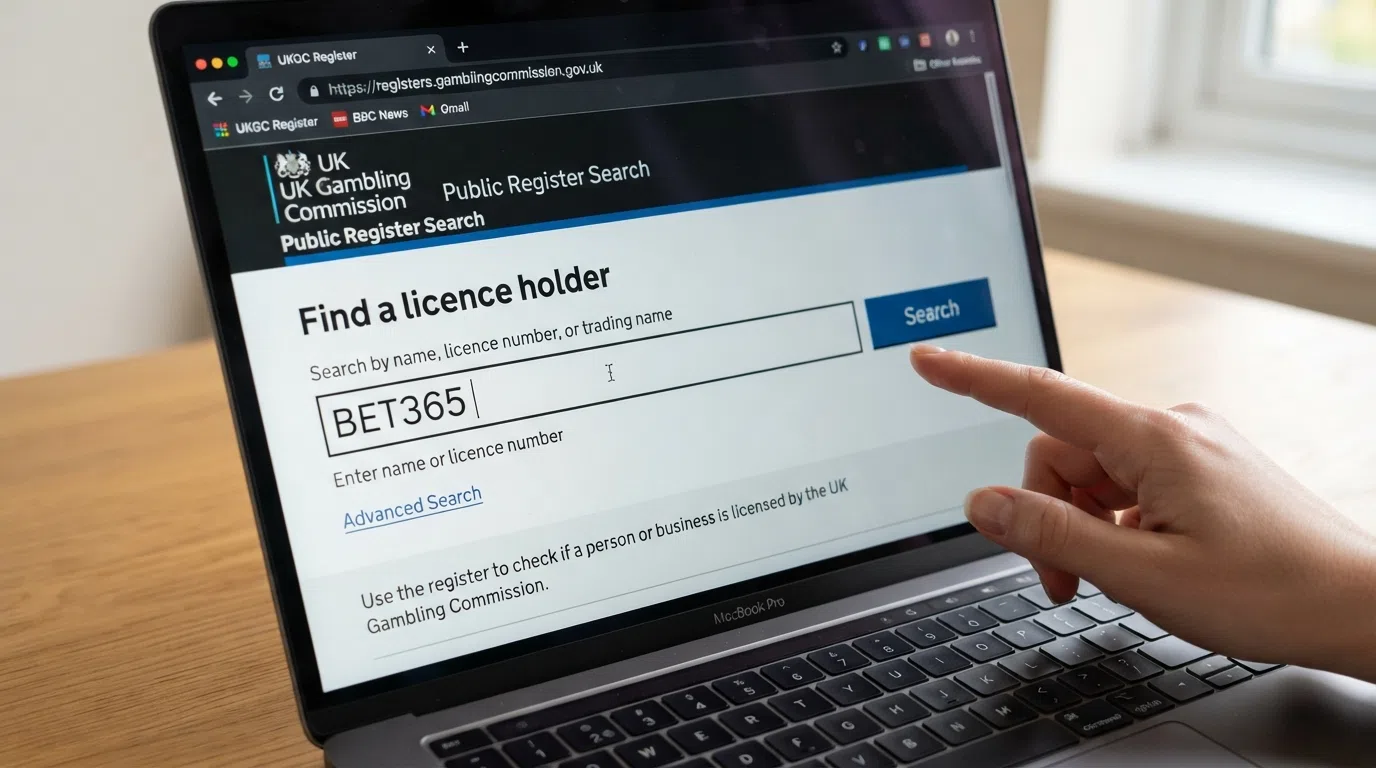
The Commission is an executive non-departmental public body sponsored by the Department for Culture, Media and Sport. It licenses operators, personnel, and software, and it publishes a public register of licence holders. The register was last updated 29 July 2026 and contained 2,663 records. The three licensing objectives set out in section 1 of the Act are preventing gambling from being a source of crime or disorder, ensuring gambling is conducted in a fair and open way, and protecting children and other vulnerable persons. Every rule, condition, and code of practice the Commission issues sits under one of those three objectives.
The UKGC Licence: What It Is, How to Check It and Why It Is the Only One That Counts
The UKGC public register is searchable by business name, trading name, domain name, or account number. A player who types an operator’s trading name into the search field and finds a matching record has confirmed the licence. A player who does not find a matching record has not confirmed anything, and should treat the absence as a negative signal. Every casino on this page appears on the register.
A UKGC operating licence is not the same as a foreign licence a site displays alongside a “.co.uk” domain. A Malta Gaming Authority licence, a Curaçao licence, or a Gibraltar licence allows an operator to run a casino; none of them allow it to serve GB customers without a UKGC licence on top. The point-of-consumption reform of 2014 closed the loophole that let operators serve GB customers from offshore, and the section 33 offence is the enforcement teeth behind it.
A separate but important clarification: Northern Ireland is outside the Gambling Commission’s remit. The regulator covers England, Scotland and Wales only. A player in Northern Ireland looking for licensed casino play needs to understand that the regulatory framework described on this page applies to GB, not to NI.
GamStop: The Self-Exclusion Net Every UK-Licensed Casino Must Join
GamStop is the UK’s national self-exclusion scheme, and participation has been a mandatory condition of every GB-licensed online operating licence since 31 March 2020. A player who registers with GamStop is blocked from depositing and playing at every UKGC-licensed online casino for the duration of their chosen exclusion period.
Four exclusion periods are available: six months, one year, five years, and five years with auto-renewal. None can be cancelled early. The minimum period is six months, and the choice a player makes at registration is the choice they live with for the full term. A player who registers for five years cannot shorten the period, and a player who registers for six months cannot extend it without starting a new exclusion.
The critical limitation: GamStop covers GB-licensed online sites only. A player who has registered with GamStop and then deposits at an offshore crypto casino is not protected by the registration, because the offshore site is not part of the scheme. The same applies to land-based casinos, which run their own self-exclusion arrangements rather than GamStop. The scheme is the most effective tool the licensed market offers, and its scope is the licensed market.
Player-Protection Mechanics: Stake Caps, Deposit Limits and Vulnerability Checks
Three structural safeguards apply to every UKGC-licensed casino, and they apply whether the player has asked for them or not.
The first is the age-banded slot stake cap: £5 per game cycle for players aged 25 and over (in force 9 April 2025), and £2 per game cycle for players aged 18 to 24 (in force 21 May 2025). The cap applies to online slots only, and the “game cycle” definition — from initiation to all money staked lost or all winnings delivered — prevents the cap from being evaded by splitting a bet across rapid small spins.
The second is the mandatory deposit-limit prompt and the gross deposit limit standard. From 31 October 2025, every operator must ask a new customer to set a financial deposit limit before their first deposit. From 30 September 2026, a “gross deposit limit” must be offered with at least equal prominence, and only that form may be marketed as a “deposit limit” under RTS 12.
The third is the financial vulnerability check at the £150 net deposit threshold. From 28 February 2025, every operator must run a check when a customer has deposited a net £150 in a rolling 30-day period, using publicly available data only — county court judgments, bankruptcy orders, individual voluntary arrangements. The check is not a credit check, and the operator does not ask the player for documents. The check is a single automated scan against public records, and a player who has none of those markers on file passes without further action.
A separate set of financial risk assessments has been announced but is not yet in force; the £5000/£2500 stage-1 thresholds and the £3000/£2000 final thresholds for 25+ and under-25 players respectively have been published, but the formal consultation on a start date has not concluded. These checks are distinct from the £150 vulnerability check and should not be conflated with it.
Staying in Control: The Tools Every UK Casino Player Should Know
The safer-gambling architecture in the UK is layered. The first layer is the regulator’s rules — stake caps, deposit-limit prompts, game-design standards — which apply to every player. The second layer is the operator’s tools — deposit limits, reality checks, time-outs — which the player configures themselves. The third layer is the external help infrastructure — GamCare, the NHS gambling harm clinics, GambleAware — which sits outside any casino’s walls.
The 2.4% problem-gambling prevalence figure (PGSI 8+, GSGB Year 3, 2025) is the population context for these tools. The GamCare figure — 996 referrals to treatment and peer support in January 2026, up 48% from 674 in January 2025 — is the trend line. The two together describe a population in which the safer-gambling infrastructure is increasingly being used, and in which the licensed market is the only place that infrastructure is reliably available.
Deposit Limits, Reality Checks and the Tools You Set Yourself
The account-level controls every UK player should configure before their first session are:
- Deposit limits — daily, weekly, or monthly caps that the player sets and that the operator cannot remove without a cooling-off period (typically 24 hours to seven days). The mandatory deposit-limit prompt is the operator’s obligation; the limit itself is the player’s choice.
- Reality checks — a timer that interrupts play at a chosen interval (typically 15 to 60 minutes) with a session summary showing time played and net position. The timer is a structural pause, not a moral judgement.
- Time-out — a short self-exclusion at the operator level, typically 24 hours to six weeks. A time-out is a cooling-off period without a GamStop registration; a player who wants to come back at the end of it can do so without further action.
- Session-tracking display — under the game-design rules in force since 31 October 2021, every slots session must display the total time played and the net win/loss position. The display is mandatory; the player does not have to ask for it.
These four controls are the minimum a player should set before depositing. A player who does not want them does not have to use them, but the operator is required to make them available, and a player who has not set a deposit limit is leaving the deposit decision to the moment of deposit itself.
Self-Exclusion: From a Time-Out to a Five-Year GamStop Registration
The escalation path runs from a casino-level time-out to a GamStop registration. A time-out is single-operator and short-term; a GamStop registration is industry-wide and long-term. The four GamStop exclusion periods are six months, one year, five years, and five years with auto-renewal, and none can be cancelled early.
A player who registers with GamStop is blocked at every GB-licensed online casino. The block is enforced at the deposit stage, and a registered player attempting to create a new account or deposit at a licensed casino is stopped at the operator’s interface. The block does not extend to land-based casinos, which run their own self-exclusion arrangements, and it does not extend to unlicensed offshore sites.
The decision to register is a serious one, and the regulator’s choice to make the minimum period six months is the regulatory acknowledgement of that. A player who is uncertain should start with a time-out at a single operator; a player who has decided they need the full industry block can register with GamStop directly.
The Help Infrastructure: GamCare, NHS Clinics and the National Gambling Helpline
The free, confidential services outside any casino’s walls are the third layer. GamCare runs the National Gambling Helpline, and in January 2026 GamCare handled 996 referrals to treatment and peer-based support — a 48% increase on the 674 referrals in January 2025. NHS gambling harm clinics operate in England, Scotland and Wales, free and confidential, for adults aged 18 and over. GambleAware publishes statistics from the National Gambling Support Network, and the National Gambling Helpline is the single point of contact for all of these.
The statutory levy that funds the system came into force on 6 April 2025, set at 1.1% of gross gambling yield for remote casino licences, collected by the Gambling Commission under the Gambling Levy Regulations 2025. The proceeds are split 50% to treatment, 30% to prevention, and 20% to research. The levy replaced the previous voluntary contribution arrangements, and the 1.1% rate is the published figure for the 2025/2026 year.
A player who is concerned about their own play, or about someone else’s, can reach the National Gambling Helpline directly. The line is free, confidential, and staffed by people who understand the help infrastructure. A player who has reached the point of asking whether to call has usually already passed the point at which a call is overdue.
How We Selected and Ranked the Top-Rated UK Casinos
The ten operators on this page were drawn from the UK top-20 casino brands by market position, then filtered for casino-product fit and licence standing. The starting universe was the UK operators’ skill table; Gala Bingo (Entain) was replaced with Grosvenor (Rank Group) because Grosvenor’s product is a casino rather than a primarily-bingo platform. Betfred is a top-seven UK operator and a confirmed UKGC-licensed brand, but its specific casino welcome bonus was not confirmed from a primary source in this research cycle; the row’s offer columns are blank rather than guessed.
The evaluation ran across three dimensions. The first was licence standing, verified against the UK Gambling Commission’s public register, which held 2,663 records at its 29 July 2026 update. Every operator on this page appears there, and no operator on this page is missing from the register. The second was bonus fairness, read through the wagering multiple (the 10x cap is the upper bound, set in force from 19 January 2026) and the cashout cap (or its absence). The third was the transparency of terms — the offer whose terms fit on one screen, with the cap stated, ranked above the offer whose cap was buried.
What the ranking does not measure is game-library depth beyond the four researched titles, the editorial judgement of a particular reviewer, or the player-experience details that show up only after a player has signed up. Those dimensions are covered in the operator write-ups above, but they are not what set the table’s order.
The sources behind the ranking are the UK Gambling Commission’s public register, each operator’s published terms and conditions, independent editorial testing published by The Independent, The Standard, Racing Post, OLBG and Casino.org, and the Gambling Survey for Great Britain for prevalence and safer-gambling context. No single score or weighted formula produced the final order; the ranking reflects the combination of licence clarity, bonus fairness, and transparency of terms, with preference for no-wagering offers over 10x offers within those constraints.
Your Move: What Matters Most When You Choose a UK Casino
The welcome offer is a one-time transaction. The cost of clearing it is bounded — a no-wagering offer costs the stake the player puts in, and a 10x offer costs that plus the expected loss on the playthrough. Both are calculable, and the table above shows the shape of the calculation for every row.
The game library, the withdrawal speed, and the licence standing are what a player lives with every session after. A no-wagering offer from a casino whose slot lobby carries 300 games is a worse long-term choice than a 10x offer from a casino whose slot lobby carries 1,500, if the 1,500 is what the player actually wants to play. The bonus is the door; the library is the building.
The UKGC licence is the binary filter. If a casino is not on the public register, nothing else on this page applies. The stake cap, the spin speed, the auto-play ban, the GamStop block, the ADR backstop, the 10x cap — all of these assume a UKGC-licensed operator. An unlicensed casino is a different product, and the comparison a player should make with it is not “which has the better bonus” but “which has any backstop at all”.
The decision this page cannot make is the player-specific one. Only the player knows which game type, which session length, and which deposit comfort zone fits their play. The tools on this page — the table, the operator write-ups, the regulatory section, the safer-gambling section — are the inputs to that decision. The decision itself is the player’s.
Frequently Asked Questions
How can I verify a casino’s UK Gambling Commission licence myself?
Search the UK Gambling Commission’s public register by business name, trading name, domain name, or account number. The register held 2,663 records at its 29 July 2026 update. A matching entry confirms the licence; a missing entry is a negative signal. The search is free and takes under a minute, and every casino on this page appears there.
Which payment method delivers the fastest withdrawal at a UK online casino?
E-wallets (PayPal, Skrill, Neteller) clear within 1 to 24 hours; debit cards take 1 to 3 business days, with Visa Fast Funds delivering within hours at participating banks. Grosvenor has been reported to process withdrawals in 15 minutes, though that figure has not been independently verified. The fastest realistic baseline is an e-wallet approved within minutes.
Can I deposit with cryptocurrency at a licensed British casino?
No UK Gambling Commission-licensed casino accepts cryptocurrency deposits in 2026. The Commission opened an exploratory review of a potential crypto pathway at the BGC AGM in February 2026, but no licensed casino accepts crypto in the meantime. A site that calls itself a “UK Bitcoin casino” is not licensed in Britain.
What is the lowest deposit a UK online casino will accept?
The standard minimum across the featured operators is £10, with 32Red at £30 and Betfred and Grosvenor not confirmed this cycle. The £10 deposit typically triggers the welcome offer; a lower deposit unlocks the games library but not the bonus. Every operator must prompt the player to set a deposit limit before the first deposit, under rules in force from 31 October 2025.
Is there a legal cap on how much I can stake per spin on British slot sites?
Yes. The statutory maximum stake per game cycle is £5 for players aged 25 and over (in force 9 April 2025) and £2 for players aged 18 to 24 (in force 21 May 2025). The cap applies to online slots only, and a “game cycle” runs from initiation until all money staked is lost or all winnings are delivered.
Which safer-gambling features must British operators provide by law?
Every UKGC-licensed operator must offer deposit limits, reality checks, time-outs, and self-exclusion; from 31 October 2025, the operator must prompt the player to set a deposit limit before the first deposit; from 28 February 2025, the operator must run a £150 net-deposit vulnerability check using publicly available data only. GamStop participation is mandatory for all GB-licensed online operators since 31 March 2020.
App vs Mobile: Which Experience Actually Delivers?
For a player who plays weekly or more, on their own device, the native app is the better fit. The push notifications, the biometric login, and the faster cold-start all add up. For a player who plays occasionally, on a shared device, or who does not want an installed gambling app on their phone, the browser is the better fit. The game library, the licence conditions, and the regulatory protections are the same in either case.
The tiebreaker is the operator’s app quality. A poorly maintained native app — one that crashes, one that has not been updated in six months, one that drains the battery — is worse than the browser version of the same casino. A player who finds the app underwhelming should use the browser rather than tolerate the app. The choice is not permanent; the two interfaces are interchangeable on the same account.
Casinos – realmoney-onlinecasinos-uk
Content created by the «realmoney-onlinecasinos-uk» team