
UK Crypto Casinos Without KYC: The Honest Guide to What Offshore Really Means
 Available in GB
No UK Gambling Commission-licensed casino accepts cryptocurrency in 2026, and every licensed one must verify your name, address, and date of birth before you place a single bet. So every “UK crypto casino no KYC” a search engine returns is, by definition, operating outside the British licensing system. The page below ranks ten offshore operators, decodes the bonuses, breaks down the payment speeds, and sets out — in the plain terms a comparison needs — what that trade actually costs a British player.
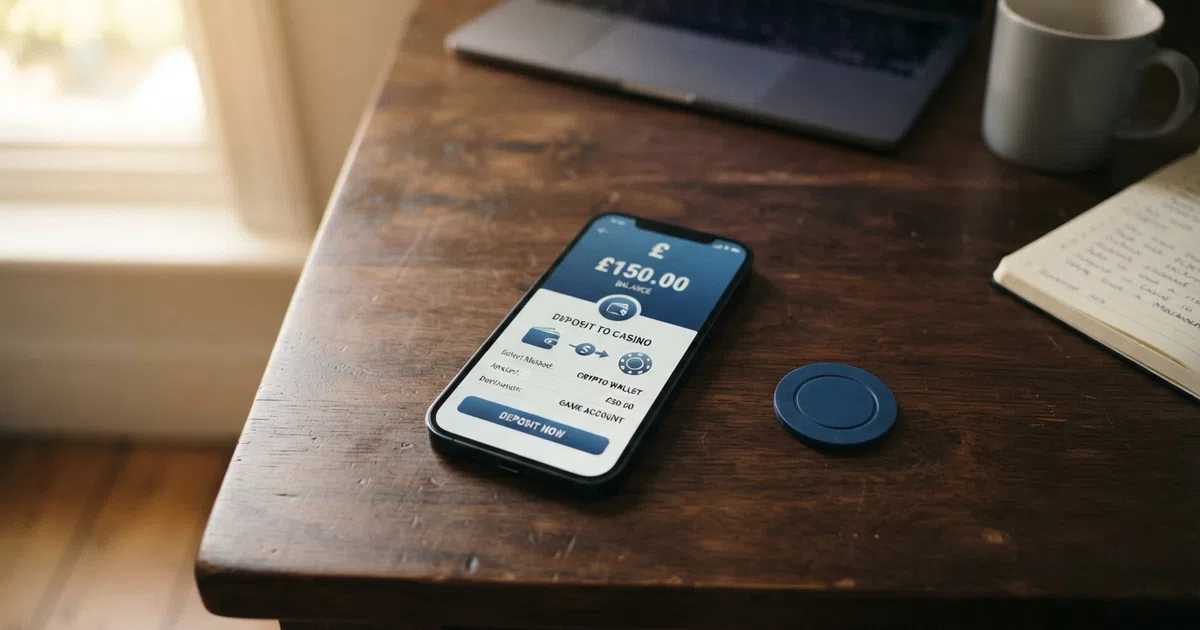
Data current as of September 8, 2026, checked against the Gambling Commission’s public register of licence holders and the issuing regulators for each offshore licence cited below.
What a Crypto Casino Really Is — and Why Every “UK” One Is Offshore
A crypto casino is an online gambling site that accepts cryptocurrency as a deposit and withdrawal method. Some are pure-crypto — you fund the account, play, and cash out only in digital coins. Others are hybrid, taking both fiat and crypto with varying identity gates between the two. A third category, blockchain-native or decentralised casinos, runs the game logic through smart contracts and uses only a wallet address, with no custodial account at all. All three categories share a defining feature: the player controls the funds on the chain rather than entrusting them to a bank-style operator balance.
The “UK” part is where the framing breaks. No UK Gambling Commission-licensed casino accepts Bitcoin, or any other cryptocurrency, as a deposit method. The UKGC’s source-of-funds, AML, and Licence Conditions and Codes of Practice requirements make direct crypto deposits effectively impossible at any operator legally serving Great Britain. The “UK crypto casino” a reader searched for is therefore a UK-ACCESSIBLE crypto casino — an offshore operation that does not block British IP addresses and accepts GBP-equivalent crypto deposits. None of the ten operators on this page holds a Gambling Commission licence.
That distinction is the entire reason this guide exists. A page that ranks Bitcoin casinos without flagging the licensing gap is selling speed and privacy at the cost of every consumer protection British law attaches to gambling. A page that does flag it has to do the work the licensed market would otherwise do for the reader.
How a Crypto Casino Works: Wallets, Deposits, and What Changes
The deposit-to-play flow at a crypto casino is a five-step sequence that looks more like a foreign exchange than a card payment. The player opens a non-custodial wallet — a piece of software that holds the private keys to a crypto balance. They buy cryptocurrency at a UK exchange such as Coinbase, Kraken, or Binance, then withdraw to that wallet. They copy the casino’s deposit address, paste it into the wallet’s send function, and broadcast the transaction. Confirmation times vary by network: Bitcoin settles in 10 to 30 minutes after one or two confirmations, Ethereum in 3 to 7 minutes, and USDT on TRC-20 in under a minute for a fraction of a cent. The casino credits the account once it sees the required confirmations, and play begins.
Two features of this flow matter more than the speed. The first is irreversibility. A crypto transaction cannot be recalled, chargebacked, or reversed by a card issuer — the funds leave the wallet when the transaction is signed, and the recipient casino holds them from that point. The second is the gap between “no KYC at sign-up” and “no KYC ever.” Most offshore crypto casinos handle deposits and withdrawals in Bitcoin, Ethereum, USDT, USDC, and a long tail of altcoins, and they let a player create an account and deposit without ever asking for a passport. That is the headline. The footnote is that the same operators routinely trigger identity verification on large withdrawals, on suspected fraud, and on any payment that touches a sanctions-list wallet. “No KYC” at an offshore crypto casino means no identity check at the front door, not immunity from the back office.
Crypto Casinos vs UKGC-Licensed Online Casinos: What You Trade Away
The structural comparison comes down to a single question: who is on the other side of the bet, and what can they be made to do if they refuse to pay?
A British-licensed site must verify a customer’s name, address, and date of birth before the first deposit — the rule took effect on 7 May 2019, and the pre-2019 “72 hours to send documents” grace period is gone. The operator holds a Gambling Commission licence, follows the Licence Conditions and Codes of Practice, and answers to the Commission if it mistreats a customer. Self-exclusion runs through GAMSTOP, a national multi-operator scheme mandatory for every online licence since 31 March 2020. Complaints route through the operator, then an approved ADR provider, then the Commission itself. Source-of-funds checks and affordability reviews are built into the operating model. The advertised stake caps, the bonus rules, the spin-speed minimum, the auto-play ban, the credit card ban — all of these are conditions of holding a GB licence.
An offshore crypto casino offers none of that infrastructure. The verification is optional at sign-up, the licence is Curaçao or Anjouan or “not specified in available sources,” and the complaints process is run by the same company holding the disputed funds. The speed and privacy are real, and the protection is absent — and the player trades one for the other in a single click of the “deposit” button.
Types of Crypto Casino Available to UK Players
Three categories define the offshore landscape. Pure-crypto casinos take, hold, and pay out only in cryptocurrency, and they live or die on the depth of their coin list. Hybrid casinos take both crypto and fiat and apply different KYC gates to the two rails — often lighter on crypto, heavier on a fiat card deposit. Blockchain-native and decentralised casinos sit further out: the game logic runs on smart contracts, the house edge is encoded rather than set by a manager, and the only identity is a wallet address. This third category is small, fast-moving, and lightly audited.
All three categories are offshore for UK players. The Gambling (Licensing and Advertising) Act 2014 made a GB licence compulsory for any operator taking GB customers, and the LCCP makes a crypto deposit incompatible with the existing licence framework. Until the UKGC’s Industry Forum work and the FCA’s FSMA 2000 (Cryptoassets) Regulations 2025 — commencement expected 25 October 2027 — change the picture, every one of these operators sits outside the British regulatory perimeter.
How to Get Started: From Wallet to First Game in Four Steps
The practical sequence is shorter than the legal framing suggests. A UK player opens a non-custodial wallet, buys crypto at a UK exchange, and withdraws the funds to that wallet. They choose an offshore crypto casino by checking the licence on the issuing regulator’s own register, not on the casino’s claims page, and by searching player forums for the operator’s withdrawal history. They make the first deposit — USDT on TRC-20 is the workhorse, settling in under a minute for a fraction of a cent — and claim a welcome offer if the terms are worth the wagering. They navigate the game lobby, and on any provably fair Originals, they verify the server seed and client seed before placing a bet.
The verification step at the end provides the core of the offshore experience’s credibility. Provably fair mechanisms allow players to independently check game outcomes against operator-committed seeds, replacing blind trust with cryptographic verification. Verifying ensures players are monitoring the platform’s math directly.
How to Evaluate a Crypto Casino: The Checklist That Actually Protects You
Five checks matter more than the welcome bonus headline. First, the licence jurisdiction and what that licence actually enforces — a Curaçao OGL framework is not the same regulatory floor as an MGA or UKGC licence, and an Anjouan licence has limited enforcement capacity and no player fund protection comparable to the more established regimes. Second, whether the operator restricts UK players in its terms and conditions, because a term buried in clause 14 voids the offer before it starts. Third, a withdrawal test with a small deposit before committing a meaningful bankroll, to confirm the operator actually pays. Fourth, the bonus terms read in full, including the wagering multiplier, the game-weighting, the maximum cashout cap, and the validity period. Fifth, the community reputation — player forums, complaint boards, and a track record of paying large withdrawals without dragging them through a manual review.
A bonus that looks generous on the headline often tells a different story once those five checks run. A 40x wagering requirement on deposit plus bonus, applied to a $4,000 package, means $160,000 in turnover before any withdrawal is possible. A “no KYC” promise that holds for a $200 deposit may collapse at $5,000, and a casino that does not enforce a withdrawal cap at the cashier may impose one through a manual review that the player has no formal route to challenge.
Safety Considerations for UK Players
The UKGC’s enforcement data for April 2024 to June 2025 — 3,140 disruption notices, 447,778 URLs referred to search engines for delisting, 287,961 URLs removed, and a 32% average fall in engagement across 160 disrupted sites — is the closest Britain comes to blocking offshore operators. The Commission does not currently hold statutory ISP or DNS blocking powers; legislation has been proposed but not enacted. What that means in practice: offshore casinos can be disrupted but not blocked, and a UK player who seeks one out will find one.
The structural risk is the absence of any formal recourse if funds are withheld. If a crypto casino refuses to pay out, there is essentially no consumer recourse beyond the operator’s own complaints process, which is often run by the same company that holds the disputed funds. No Gambling Commission complaints route, no approved ADR provider, no British consumer court with jurisdiction over a Curaçao company. The check on an operator’s behaviour is reputational — community forums, complaint histories, the length of the operating track record. That check is real, but it is not a substitute for a regulator.
High-Roller and VIP Crypto Casinos: What Changes at Higher Stakes
The “no KYC” promise erodes with withdrawal size. Higher-stakes play triggers identity verification at nearly every operator, often with source-of-funds requests that an offshore company has no obligation to escalate to a regulator but every incentive to use as leverage in a dispute. VIP programmes at offshore casinos — loyalty tiers, dedicated account managers, higher withdrawal limits — are real, and they soften the experience for players who deposit large sums. They do not change the underlying risk that a large win triggers an enquiry the operator uses to delay or deny payment.
Stake.com, the volume leader among UK players, holds five concurrent licences — Curaçao OGL/2024/1451/0918 as primary, plus Estonia EMTA, Mexico, Colombia, and Peru — which is more regulatory footprint than most offshore competitors, but the licence is still not a GB one. Stake Originals run at 99% RTP, which matters for high-volume play because the house edge at that level is a thin 1% on a verifiable game. The “no KYC” promise is most useful at small stake sizes, and the “high-roller” experience is most exposed at the moment of a large withdrawal.
The Legal Position: Why the UKGC Does Not License Crypto Casinos in 2026
The honest legal position is shorter than the marketing suggests. No UKGC-licensed casino accepts cryptocurrency deposits as of 2026, and the Gambling (Licensing and Advertising) Act 2014 made a GB licence compulsory for any operator taking GB customers, regardless of where the operator is based. The Gambling Act 2005 set three licensing objectives — preventing gambling from being a source of crime or disorder, ensuring it is conducted fairly and openly, and protecting children and other vulnerable persons — and the LCCP turns those objectives into day-to-day rules on stake limits, bonus caps, identity verification, and self-exclusion.
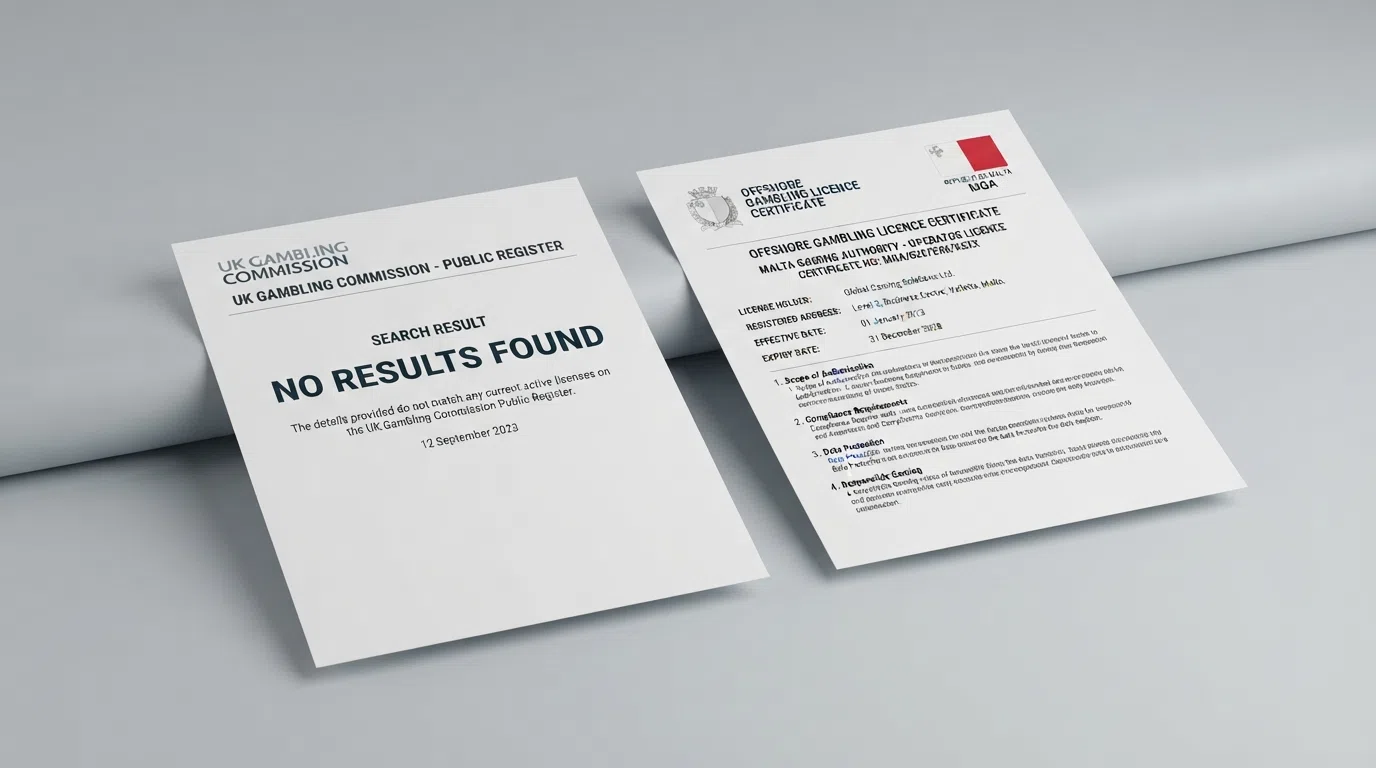
Section 33 of the Gambling Act 2005 makes providing facilities for gambling without the required licence a criminal offence, carrying up to 51 weeks’ imprisonment and/or an unlimited fine. That penalty is aimed at operators, advertisers, and intermediaries. No penalty has been traced for a UK player who merely gambles on an unlicensed site — the loss is protection, not prosecution.
What KYC Means and Why the UKGC Requires It Before You Can Gamble
Identity verification at a British-licensed site is not a checkbox at withdrawal. Since 7 May 2019, a remote licensee must verify the customer’s name, address, and date of birth before the first deposit or any gambling — whether with the player’s own money or with a free bet or bonus. The pre-2019 grace period is gone. The reason is structural: the Money Laundering Regulations apply to all GB licensees, and source-of-funds enquiries are the regulator’s answer to the question of where the gambling money is coming from. A crypto deposit, which arrives from a wallet the operator cannot reliably trace back to a verified individual, breaks that chain at the first step. KYC before play is the mechanism that keeps the chain intact.
This is what makes a “no KYC” experience structurally impossible inside the licensed market. The 7 May 2019 rule is not a holdover from older AML guidance — it is the operating condition of a GB remote licence. The UKGC’s enforcement data — 3,140 disruption notices and 447,778 URL referrals between April 2024 and June 2025 — is the regulator’s response to operators who try to serve British customers without it.
The Gambling Act 2005 and Why a GB Licence Matters
The statute defines what a legal gambling operation looks like in Great Britain. Three licensing objectives, set out in section 1 of the Act, frame every operational rule: preventing gambling from being a source of crime, ensuring fairness, and protecting children and other vulnerable persons. The Gambling (Licensing and Advertising) Act 2014 extended the regime to remote operators, so a Curaçao, Maltese, or Gibraltar licence is not a substitute — a GB-facing operator needs a Gambling Commission licence wherever it is based.
The LCCP and the Remote Technical Standards (RTS) carry the operational detail. The LCCP sets the social responsibility codes, the bonus rules, the marketing rules, and the AML obligations. The RTS sets the technical standards for game fairness, return-to-player disclosure, and platform integrity. A GB-licensed site answers to both. An offshore crypto casino answers to whichever jurisdiction issued its licence — and most of those jurisdictions do not require what the LCCP requires.
What the Licensed Market Caps or Prohibits: The Rules Offshore Casinos Do Not Follow
The licensed market is a catalogue of hard limits. The online slots statutory maximum stake is £5 per game cycle for players aged 25 and over, in force from 9 April 2025, and £2 per game cycle for players aged 18 to 24, in force from 21 May 2025. Credit cards have been banned for all remote gambling since 14 April 2020, on the ground that 22% of online gamblers who used credit cards were classed as problem gamblers. Auto-play is banned. Spin speed is capped at a 2.5-second minimum. Losses disguised as wins are banned. Reverse withdrawals are permanently banned. From 31 October 2025, operators must prompt a customer to set a financial limit before the first deposit; from 30 September 2026, a gross deposit limit must be offered with at least equal prominence to other financial limits. The wagering requirements cap took effect on 19 December 2025: a 10x ceiling, in LCCP Social Responsibility Code 5.1.1, and mixed-product promotional offers are banned alongside it.
None of these rules bind an offshore crypto casino. The operator may set a £50,000 spin ceiling or no ceiling at all; it may accept credit card deposits; it may run auto-play and reverse withdrawals; it may apply 40x wagering requirements on bonuses. The licensed market’s rules are the cost of a GB licence, and an offshore operator is not paying that cost.
One further number changes the economics. Remote Gaming Duty rose from 21% to 40% on operator gaming profits from 1 April 2026, announced at the Autumn Budget 2025. Any source citing 21% is now out of date. That 19-point jump is the lever driving some licensed operators to lower-RTP configurations to preserve margin — a structural change worth a UK player’s attention when comparing an offshore 96% slot to a licensed 94% slot, because the licensed version is paying a 40% tax the offshore one is not.
How Offshore Crypto Casinos Operate Outside UK Regulation
The dominant offshore licensing jurisdictions are Curaçao, operating under the OGL framework since 2024, and Anjouan in the Comoros, operating under the Offshore Finance Authority. What each one actually requires of its licensees is thinner than the GB regime. An Anjouan licence has limited enforcement capacity and no player fund protection comparable to the MGA or UKGC. A Curaçao OGL licence has more structure, but it does not require a player fund segregation regime equivalent to the British one.
Enforcement against these operators is disruption, not blocking. The UKGC does not currently hold statutory ISP or DNS blocking powers — legislation has been proposed but not enacted — so its toolkit is cease-and-desist notices with a 48-hour deadline, referrals of illegal URLs to search engines for delisting, work with domain registrars and hosts to suspend domains, pressure on GB-based advertisers and affiliates, and payment-provider referrals. The scale, in published figures for April 2024 to June 2025: 3,140 disruption notices, 447,778 URLs referred, 287,961 URLs removed, and a 32% average fall in engagement across 160 disrupted sites. That is the regulator’s response, and it is the answer to “why hasn’t the UKGC shut them down.”
What You Lose Outside the Licensed Market: The Real Risks
A list of consumer protections that do not follow a British player offshore:
- No GAMSTOP coverage. An excluded British player is not protected on an unlicensed site. The block is licence-bound, not person-bound.
- No Gambling Commission complaints route. The Commission’s dispute procedure only covers GB-licensed operators.
- No approved ADR provider. The operator’s own complaints process is the only formal avenue, and it is run by the company holding the disputed funds.
- No British consumer redress if funds are withheld. The operator is outside UK court jurisdiction, and an Anjouan or Curaçao enforcement action is a different proceeding in a different country.
- No statutory stake limits. The £5 and £2 per-game-cycle caps do not apply.
- No bonus wagering cap. The 10x GB ceiling does not extend offshore — sites routinely apply 35x to 40x.
- No financial vulnerability checks. The 28 February 2025 net-deposit threshold check, the pilot financial risk assessments, and the LCCP’s affordability review obligations are all licence-bound.
- No mandatory responsible-gambling tools. Auto-play bans, spin-speed minimums, reality checks, deposit-limit prompts, and the gross deposit limit from 30 September 2026 are all conditions of a GB licence, not features of an offshore platform.
The cluster is long because it is the entire British player-protection regime, and it does not survive the trip offshore.
Anonymous, No-Verification, and No-Registration: What Those Labels Actually Deliver
Three labels appear in offshore marketing. “No KYC at sign-up” is the standard at most offshore crypto casinos — the player creates an account with an email address and deposits without ever sending a document. “No KYC ever” is rarer and usually applies only to low-stakes play on smaller platforms, where the operator’s fraud model cannot justify the cost of an identity-check provider. “No-registration” is the boldest claim: a handful of decentralised casinos use only a wallet address, with no account at all, and the player connects the wallet to play. The trade-off is that those casinos are the thinnest on community reputation and the hardest to recover funds from if anything goes wrong.
The “no KYC” label is not the same as anonymity. The operator still sees the wallet address, the deposit amount, and the on-chain history of the funds, and most will trigger KYC on large withdrawals. The payment rail is pseudonymous; the account is not anonymous.
Provably Fair, Decentralised, and Web3 Trust Mechanisms
Provably fair is a cryptographic method that lets a player verify each game outcome was not manipulated after the bet was placed. It works by combining a server seed the operator commits to before play, a client seed the player can change, and a nonce that increments with each bet. After the bet, the player can check the seeds against the result and confirm that the operator could not have changed the outcome.
Stake.com’s provably fair Originals — 12 to 13 games including Crash, Dice, Mines, and Plinko — run at 99% RTP with verification tools built into each game’s interface. BC.Game operates 70+ provably fair Originals audited by iTech Labs, with RTP across Originals averaging 96 to 99%. The verification tools are accessible inside the game itself, and a player can confirm each spin in under a minute.
Provably fair verifies the spin. It does not verify that the operator will pay out, and it does not speak to bonus terms, withdrawal holds, or corporate integrity. A player who checks every bet is checking the math, not the operator. The two are different checks, and the offshore market asks the player to run both.
VPN Use: Accessing Offshore Crypto Casinos from the UK
VPN use to access offshore casinos is technically possible — the operator sees an IP address from a permitted jurisdiction, and the player sees the full casino. It is also a violation of most operators’ terms of service, and it provides no additional legal protection. A VPN hides the player’s location from the operator, not the operator’s status from UK law. The practical risk is concrete: an operator that detects VPN use may void winnings, freeze the account, or apply enhanced KYC before releasing funds. A player who has masked their location to deposit, then wins, and is asked for verification at withdrawal, has removed their own route of appeal.
The legal position is the same with or without a VPN. No penalty has been traced for a UK player who merely gambles on an unlicensed site. The Commission has not pursued individual players under the Gambling Act 2005. What the player loses is the protection, not the right.
Licensed vs Unlicensed: The Trust Signals That Actually Matter
Three checks separate a legitimate offshore operation from a risky one. The first is the Gambling Commission’s public register of licence holders: a brand is either on it or it is not, and the register is the verification route for GB-licensed status. The second is the offshore licence check, on the issuing regulator’s own register — not the casino’s claims page. The third is community longevity: an operator that has been trading since 2013 or 2014 and has a consistent public record carries more weight than a one-year-old launch.
Cloudbet, founded 2013, has the longest track record among the featured operators. BitStarz, founded 2014, is the most decorated — and the one that explicitly restricts UK players in its terms and conditions, which is a useful test of how a player should treat a “UK-friendly” claim when the small print disagrees. The red flags are equally clear: no published terms, no licence number, no complaints history, and aggressive bonus terms with punitive cashout caps.
Top 10 Offshore Crypto Casinos UK Players Can Access in 2026
Every operator in the table below is offshore and not GB-licensed. They operate under Curaçao, Anjouan, or similar licences; none appears on the Gambling Commission’s public register; and each requires a different calculus on the trade between speed, privacy, and protection. The table is ordered by UK player popularity and traffic volume, with the operator profiles below ordered to mirror that ranking.

| Operator | Licence | Welcome offer | Wagering | Free spins | Provably fair |
|---|---|---|---|---|---|
| Stake | Curaçao OGL/2024/1451/0918, plus Estonia EMTA, Mexico, Colombia, Peru | Ongoing promos ($100,000 Daily Race, $75,000 Weekly Raffle) — no traditional welcome bonus | N/A | — | Yes (12–13 Originals at 99% RTP) |
| BC.Game | Anjouan Offshore Finance Authority (Comoros) | Up to $4,000 + 400 free spins (multi-deposit) | 40x (deposit + bonus) | 400 | Yes (70+ Originals, iTech Labs audited) |
| Cloudbet | Curaçao Gaming Authority OGL (Halcyon Super Holdings B.V.) | Up to $2,500 USDT + 30% rakeback + 100 free spins | Zero-wagering on cash rewards; 40x casino | 100 | Yes (provably fair Originals) |
| BitStarz | Curaçao GCA OGL/2024/165/0185 (Gareton B.V.) | Up to 5 BTC + 180 free spins (4 deposits) | 40x (bonus) | 180 (+ 50 no-deposit) | Yes (Plinko, Crash, Mines, Keno, Great Catsby) |
| mBit | Curaçao eGaming | 175% up to 2 BTC + 300 free spins | 40x | 300 | — |
| FortuneJack | Curaçao GCA / Anjouan Gaming (PlayWave SRL, Costa Rica) | 140% up to 400 mBTC + 250 free spins | 40x | 250 | — |
| Jackbit | Curaçao CGA OGL | 100 free spins wager-free on Hot Chilli Bells | 1x (deposit + winnings) | 100 | — |
| TrustDice | Curaçao | 100% up to 3 BTC (multi-deposit) or 500% up to 1 BTC + 100 free spins | 35x–40x | 100 | Yes |
| CasinOK | Curaçao | Up to $6,000 + 200 free spins (3 deposits) | 35x (bonus) | 200 | — |
| Betpanda | Not specified in available sources — likely Curaçao or Anjouan | Not specified in available sources | — | — | — |
Stake — The Volume Leader with No Traditional Welcome Bonus
Stake.com holds five concurrent gambling licences — Curaçao OGL/2024/1451/0918 as primary, plus Estonia EMTA, Mexico, Colombia, and Peru — the highest count among the featured operators, and it is the most-trafficked crypto casino among UK players by volume. There is no traditional welcome bonus; instead, Stake runs a $100,000 Daily Race and a $75,000 Weekly Raffle, with retention built on ongoing promotions rather than a sign-up offer. The game library runs 40+ external providers plus 12 to 13 in-house provably fair Originals — Crash, Dice, Mines, Plinko, and more — at 99% RTP, with verification tools built into each game interface. Withdrawals are near-instant, KYC is minimal for crypto deposits, and a large withdrawal is the most likely trigger for an identity check.
For a UK player who treats Stake as a long-session operator rather than a bonus-chasing one, the absence of a welcome package is a feature, not a gap — the headline 99% RTP Originals are where the value sits, and the daily race format is closer to a sportsbook promotion than a casino bonus.
BC.Game — 70+ Provably Fair Originals and a $4,000 Welcome Package
BC.Game operates under an Anjouan Offshore Finance Authority licence, with limited enforcement capacity and no player fund protection comparable to the MGA or UKGC. The welcome package — up to $4,000 plus 400 free spins across multiple deposits — is the largest in the featured set, and the 40x wagering on deposit plus bonus with a 30-day expiry is the matching cost. The deeper draw is the 70+ provably fair Originals audited by iTech Labs, with 96% to 99% RTP, plus 38+ external providers and 100+ supported cryptocurrencies. Withdrawals clear in under an hour on SOL and LTC.
The $4,000 figure is the headline; the 40x wagering on deposit plus bonus is the footnote. A $4,000 bonus at 40x wagering on a $4,000 deposit means $320,000 in required turnover — the bonus’s real cost is set out in the calculation further down this page.
Cloudbet — Zero-Wagering Rewards and the Longest Track Record
Cloudbet is the oldest operator in the featured set, founded 2013 and operated by Halcyon Super Holdings B.V. under a Curaçao Gaming Authority OGL. The welcome package offers up to $2,500 USDT cash rewards plus 30% rakeback plus 100 free spins, with zero-wagering on the cash rewards — all of it is real cash, withdrawable immediately, with no playthrough requirement. The 7,000+ game library includes live dealer tables, game shows, and provably fair Originals. Bitcoin Lightning withdrawals clear in under two hours, and there is no KYC for crypto deposits.
The zero-wagering structure is the differentiator. A reader who has seen Cloudbet’s headline may have read past the consequence: a real-cash welcome means a smaller ceiling than a bonus-locked one. For a player who would otherwise skip the bonus because the wagering is unworkable, Cloudbet’s structure is the one that pays out.
Jackbit — Wager-Free Free Spins and Anti-Fraud-Only KYC
Jackbit operates under a Curaçao CGA OGL, founded 2022. The welcome offer is 100 free spins wager-free on Hot Chilli Bells on first deposit, with a £50 minimum deposit, 1x wagering on deposit plus winnings, and a $100 free spins cashout cap. KYC is positioned as an anti-fraud tool used only when flagged, not as a routine withdrawal gate — a meaningful distinction for a player who values privacy. Rakeback and sportsbook free-bet promotions are available alongside the casino offer.
The wager-free structure is the cleanest in the set, and the $100 cashout cap is the matching constraint. For a player who plans to spin and withdraw, the 1x wagering on the deposit is a known cost; for a player chasing a five-figure hit, the cap closes that door quickly.
TrustDice — No-Deposit Faucet and Provably Fair Games
TrustDice operates under a Curaçao licence, with provably fair games available. The welcome offer runs two paths: 100% up to 3 BTC spread across deposits, or 500% up to 1 BTC plus 100 free spins, with 35x to 40x wagering and a 7-day bonus validity period. The unusual feature is the no-deposit faucet, paying 67 Satoshis every 6 hours — a way to test the platform without committing funds. No KYC is advertised, and withdrawals are fast.
The 7-day bonus validity creates a condensed window that pressures the player’s turnover strategy. Anyone opting for the 500% bonus must balance the need for volume against the rapid expiration of the bonus funds, making it a high-intensity choice for dedicated bettors.
mBit — BTC-Focused with a 175% Match and a Weekly Withdrawal Cap
mBit operates under a Curaçao eGaming licence, with a 175% match up to 2 BTC plus 300 free spins, 40x wagering, a 30 USDT minimum deposit, and a 3 BTC per week maximum withdrawal. Withdrawals clear in under 2 hours on LTC, though manual processing can add delay. No KYC is required at sign-up, but identity verification may be triggered for withdrawals.
The 3 BTC weekly cap is the constraint that defines mBit. For a high-volume player, the cap is the first number to plan around; for a casual player, it is the constraint they will not hit.
FortuneJack — 16-Tier Loyalty and Daily Rakeback
FortuneJack operates under Curaçao GCA and Anjouan Gaming licences, run by PlayWave SRL in Costa Rica, founded 2014. The welcome offer is 140% up to 400 mBTC plus 250 free spins with 40x wagering. The 16-tier loyalty programme offers 2% to 14% cashback and 0.5% to 4.5% daily rakeback. The average game RTP across the library is 94%. Withdrawals clear in under an hour on LTC. The no-deposit bonus is no longer available.
FortuneJack is built for the player who values ongoing value over a one-time sign-up offer. The loyalty tier and daily rakeback are the retention mechanism, and a 94% average RTP across the library is the floor — lower than the provably fair Originals at Stake or BC.Game.
CasinOK — 9,000+ Games and a $6,000 Welcome Package, With a 5x Cashout Cap
CasinOK operates under a Curaçao licence. The 9,000+ game library is the largest in the featured set, covering slots, blackjack, roulette, baccarat, poker, jackpots, live dealer, sportsbook, and esports. The welcome package is up to $6,000 plus 200 free spins across three deposits, 100% per deposit up to $2,000, with 35x wagering on the bonus, a 30-day validity, and a 5x maximum cashout cap on bonus winnings. The minimum deposit is $20, and instant withdrawals are claimed.
The $6,000 figure is the headline, the 5x cashout cap is the constraint. A player who wins $10,000 on a bonus spin at CasinOK can withdraw $30,000 if their deposits support it — the cap is on bonus winnings, not on the balance — but the cap is the number that converts the headline into the real offer.
BitStarz — Award-Winning but Explicitly Restricts UK Players
BitStarz operates under a Curaçao GCA OGL/2024/165/0185 licence, run by Gareton B.V. on Softswiss, founded 2014. The 4,500+ game library spans 19 categories, including an exclusive BGaming title. The welcome package is up to 5 BTC plus 180 free spins across four deposits, with 40x wagering on the bonus amount and a 14-day validity. 50 no-deposit free spins are also available. Withdrawals clear in under 10 minutes, and the provably fair Originals include Plinko, Crash, Mines, Keno, and Great Catsby.
The headline is the casino’s reputation; the footnote is the terms. BitStarz explicitly restricts UK players alongside the United States, Australia, France, Spain, and Italy. A UK player who reaches the cashier and is asked to verify, or whose withdrawal is delayed pending a jurisdiction check, is learning what the small print already said.
Betpanda — VPN-Friendly with Minimal KYC but Thin Public Detail
Betpanda’s licence status is not specified in available sources — likely Curaçao or Anjouan. It is marketed as VPN-enabled with minimal KYC. Game provider details, welcome bonus terms, withdrawal times, and supported cryptocurrencies are not publicly specified at the level of detail the other nine operators provide.
The thin public record is itself a risk factor. An operator that discloses less leaves the player with less to verify before depositing, and “VPN-friendly” is a marketing line that often sits alongside “minimal KYC” and a withdrawal process the player will only learn about when they try to use it.
Crypto Casino Bonuses: Why Big Numbers Hide a Costlier Reality
Offshore crypto casino bonuses appear larger than British-licensed ones. A $4,000 welcome package at 40x wagering is a real headline, and the free-spin counts — 180, 250, 300, 400 — are real numbers. The wagering maths tells a different story.
Wagering requirements on GB-licensed casino bonuses are capped at 10x under LCCP Social Responsibility Code 5.1.1, in force from 19 December 2025. Before that ceiling, requirements as high as 60x were being applied. Offshore crypto casino bonuses routinely carry 35x to 40x wagering — three to four times the GB cap. A $4,000 bonus at 40x wagering on a $4,000 deposit means $320,000 in required turnover before any withdrawal is possible. The bonus’s real cost is what the turnover costs the player in expected loss, and that calculation runs below.
Welcome and Sign-Up Bonuses at Offshore Crypto Casinos
Three shapes of welcome offer dominate. A deposit-match bonus — the operator matches a percentage of the deposit up to a ceiling, with the match rate, the maximum value, and the currency (BTC, USDT, or mBTC) shaping the real value. A multi-deposit package — the bonus is spread across the first three or four deposits, each with its own match rate and cap. A no-deposit offer — free credit or free spins without a qualifying deposit, increasingly rare but still present at BitStarz (50 no-deposit free spins) and TrustDice (the no-deposit faucet).
The hidden term in all three shapes is game-weighting. Most offshore bonuses exclude or reduce the contribution of high-RTP games toward wagering — a stake on a 99% RTP Original may count 100% toward wagering at some operators, but a stake on a 96% slot from Pragmatic Play may count 50% or less at others. The headline 40x multiplier is applied to the weighted contribution, and a player who does not check the weighting table clears a fraction of what they expected.
No-Deposit Bonuses and No-Deposit Free Spins
No-deposit free spins — BitStarz offers 50, TrustDice runs a faucet paying 67 Satoshis every 6 hours — are trials rather than windfalls. Cashout caps, maximum win limits, and wagering requirements still apply. The distinction between a no-deposit bonus (free credit) and a no-deposit free-spin allocation matters: most featured operators no longer offer the former, and the ones that do carry a wagering requirement heavy enough to convert the free credit into a free-spin equivalent before any withdrawal is possible.
Deposit Match and Reload Bonus Offers
Reload bonuses — a smaller percentage match offered on subsequent deposits, usually with lower caps — are the ongoing value beyond the welcome package. The variance across operators is wide. Some run weekly reloads, others focus on rakeback and races. Stake runs no deposit-match bonuses at all, relying on the $100,000 Daily Race and $75,000 Weekly Raffle for retention. FortuneJack’s 16-tier loyalty programme, with 2% to 14% cashback and 0.5% to 4.5% daily rakeback, is the most structured ongoing value proposition in the featured set.
Wagering Requirements: The Multiplier That Decides Whether a Bonus Is Worth Claiming
Wagering is the number that turns a headline figure into a real cost. A 40x requirement on deposit plus bonus means a $100 deposit with a $100 bonus creates $8,000 in required turnover, and a $4,000 deposit with a $4,000 bonus creates $320,000. The GB-licensed cap is 10x; offshore bonuses carry three to four times the turnover burden. The difference between “wagering on bonus only” and “wagering on deposit plus bonus” is roughly double — the same 40x multiplier on the bonus alone would create $160,000 in turnover, half what the deposit-plus-bonus structure produces.
No-Wagering Bonuses and Wager-Free Free Spins
The cleanest bonuses in the set are the no-wagering ones. Cloudbet’s welcome package — zero-wagering rakeback plus cash drops over 30 days, all rewards real cash withdrawable immediately — is the standout. Jackbit’s 100 free spins are wager-free on Hot Chilli Bells, with 1x wagering on deposit plus winnings and a $100 cashout cap. Both structures are smaller in headline value than the 40x packages, and the reason is the operator’s cost: no-wagering rewards are payable immediately, so the ceiling is set by what the operator can sustain in real cash rather than in turnover-weighted bonus credit.
Cashback and Rakeback Programmes
Cashback and rakeback represent the primary long-term loyalty structure. Programs like FortuneJack’s 16-tier system or Cloudbet’s 30% rakeback offer sustained value, often credited as withdrawable cash. Players focusing on long-term turnover rather than initial sign-up bonuses often find these sustained rebates more advantageous to their overall bankroll management.
What the $4,000 BC.Game Bonus Actually Costs
A bonus’s headline is the figure on the offer page; its cost is the expected loss during the wagering it requires. Take BC.Game’s $4,000 welcome package at 40x wagering on deposit plus bonus, played at a 96% RTP across the games the bonus allows. The required turnover is $4,000 multiplied by 40, then doubled for the deposit-plus-bonus base — $320,000. The expected loss on that turnover at a 4% house edge is $12,800. So a $4,000 bonus, claimed in full, has a real expected cost of $12,800 in play before the wagering clears. The bonus pays out only if the player wins more than that $12,800 back from the wagering itself, and the house edge runs on every spin of it. Net: a player is, on average, paying roughly $12,800 to clear $4,000 in bonus credit, and the deal is a real cost rather than a real gain.
Deposits and Withdrawals: How Fast Your Money Actually Moves
The “instant” promise at offshore crypto casinos is real on the network side and slower on the operator side. Bitcoin deposits confirm in 10 to 30 minutes after one or two confirmations; Ethereum in 3 to 7 minutes; USDT on TRC-20 in under a minute for a fraction of a cent. The end-to-end withdrawal time at a well-tuned operator is typically 5 minutes to 1 hour, dominated by the internal approval step rather than blockchain latency. The bottleneck is the operator’s cashier, not the chain.
Deposit Methods and Minimum Deposit Thresholds
The cryptocurrencies accepted across the featured set span Bitcoin, Ethereum, USDT, Litecoin, DOGE, XRP, Solana, Bitcoin Cash, and dozens more. Minimum deposits range from TrustDice’s zero-deposit faucet to Jackbit’s £50 minimum for the free-spins offer, with mBit at 30 USDT and CasinOK at $20. The network choice matters: TRC-20 USDT deposits clear in under a minute for under a cent, while ERC-20 USDT costs several dollars and takes minutes. A $50 deposit on ERC-20 USDT is half-consumed by gas fees; the same $50 on TRC-20 lands intact.
Withdrawal Speed: What “Instant” and “Fast” Actually Mean
The internal approval step is the bottleneck. Operators cite near-instant or under-10-minute processing, but manual review, fraud checks, and KYC triggers add time. Per-operator benchmarks: Stake near-instant to minutes; BC.Game under 1 hour on SOL/LTC; Cloudbet 0 to 2 days on Bitcoin mainnet, with Lightning Network withdrawals under 2 hours; BitStarz under 10 minutes; mBit under 2 hours on LTC, with manual processing potentially adding delay; FortuneJack under 1 hour on LTC. The network matters — Litecoin, Solana, and TRC-20 are consistently faster than Bitcoin mainnet, and the difference is the gap between the operator’s quote and the player’s experience.
Unlimited Withdrawals and High-Limit Cashouts
Most operators do not publish an explicit per-transaction ceiling, but KYC-triggered reviews at high values act as a de facto gate. mBit imposes a 3 BTC per week cap — a ceiling high-volume players must plan around. CasinOK’s 5x maximum cashout cap on bonus winnings limits what a bonus player can actually withdraw regardless of balance. Stake and Cloudbet do not publish fixed withdrawal caps — large sums are handled case by case, and the case-by-case process is where disputes tend to surface.
The Crypto Wallets and Networks That Work for Casino Payments
A private non-custodial wallet — not an exchange account — is the correct tool for depositing to and withdrawing from a crypto casino. The networks that deliver speed are TRC-20 for USDT (under 1 minute, near-zero fees), Lightning Network for Bitcoin (Cloudbet under 2 hours, still uncommon), Solana for SOL, and Litecoin for LTC. The networks to avoid for casino transfers: ERC-20 USDT, which can cost more in fees than a small deposit. Depositing directly from a UK exchange — Coinbase, Kraken, Binance — risks the exchange flagging gambling-related transactions and freezing the account, because the exchange’s own AML programme does not always distinguish between gambling and other crypto transfers.
Payment Processing Times Compared Across Methods
| Payment method | Deposit confirmation time | Typical network fee | Withdrawal speed |
|---|---|---|---|
| Bitcoin (BTC) | 10–30 minutes (1–2 confirmations) | Variable, spikes with congestion | Minutes to hours at well-tuned operators; Lightning under 2 hours at Cloudbet |
| Ethereum (ETH) | 3–7 minutes | Gas fees fluctuate sharply | Minutes at well-tuned operators |
| USDT on TRC-20 (Tron) | Under 1 minute | A fraction of a cent | Minutes to under 1 hour |
| USDT on ERC-20 (Ethereum) | 3–7 minutes | Several dollars per transaction | Minutes to hours |
| Litecoin (LTC) | 2–5 minutes | A few cents | Under 1 to 2 hours at most operators |
| Solana (SOL) | Sub-second finality | Near-zero | Under 1 hour at BC.Game and Cloudbet |
| Bitcoin Lightning | Seconds | Near-zero | Under 2 hours at Cloudbet |
The table is the network comparison; the operator comparison sits in the previous section. The right coin and the right network can save an hour on the deposit and several dollars in fees on the withdrawal.
Which Cryptocurrencies You Can Use at UK-Accessible Casinos
Bitcoin is universally supported — every operator in the featured set accepts it. Ethereum and USDT are near-universal. The long tail of altcoins separates the deep-platform operators from the narrow ones: BC.Game leads with 100+ supported cryptocurrencies, Stake supports 20+, and most other operators run 6 to 10. The practical advantage of a deep coin list is that the player can deposit and withdraw in the coin they already hold without converting.
Bitcoin Casinos for UK Players
Bitcoin remains the universal baseline for crypto gambling across all featured operators. While mainnet deposits typically require a 10-to-30-minute wait, the Lightning Network—offered by Cloudbet—reduces this to under two hours, though it remains relatively rare. Users must ultimately choose between the mainstream reliability of standard Bitcoin transactions and the faster, though less supported, specialized network options.
Ethereum, USDT, and Stablecoin Casinos
USDT on TRC-20 functions as the primary rail for crypto casino transactions, offering sub-minute confirmation times and minimal fees. In contrast, Ethereum transactions can incur unpredictable gas costs, complicating small-amount deposits. Because stablecoins like USDT mitigate exchange-rate volatility, they remain the preferred choice for players aiming to maintain a consistent dollar-denominated bankroll throughout their session.
Multi-Cryptocurrency Platforms: Playing with Altcoins
BC.Game leads with 100+ supported cryptocurrencies — the broadest coin support in the featured set. Stake supports 20+ coins including BTC, ETH, USDT, LTC, DOGE, and XRP. Most other featured operators support 6 to 10 coins covering the majors plus Litecoin and Dogecoin. The practical advantage: a player who already holds SOL or BCH or one of the smaller-cap coins can deposit and withdraw without converting to BTC and back, saving the conversion spread and the network fee.
Privacy Coins: Monero and Anonymous Deposits
Privacy coins like Monero offer the most robust on-chain obfuscation for those prioritizing anonymity. However, casino support remains extremely limited, and attempting to utilize such methods frequently triggers additional operator scrutiny. Players who prioritize these privacy features should anticipate prolonged identity-verification delays, as their activity often diverges from standard offshore risk models.
Emerging Blockchains: Solana, TRON, Cardano, BNB
Solana is supported by BC.Game and Cloudbet — sub-second finality and near-zero fees make it an ideal casino chain. TRON hosts the TRC-20 standard that carries USDT, the most-used casino payment rail, and TRX itself is accepted at several operators. Cardano and BNB have limited casino support — none of the 10 featured operators prominently lists them, but smaller platforms outside the featured set may accept them. The casino industry follows liquidity, and the chains with the deepest stablecoin and BTC bridging will draw the most operators in the next two years.
The Games You Will Actually Play at Offshore Crypto Casinos
Offshore crypto casinos carry thousands of titles, and the headline is the depth. The difference is in the in-house provably fair originals and the RTP configurations. Crypto-native games — Crash, Plinko, Mines, Dice — do not exist in the GB-licensed market and are the defining game category of the offshore crypto casino. Stake Originals run at 99% RTP across 12 to 13 titles. BC.Game Originals average 96% to 99% across 70+ titles. The 99% figure is roughly twice the house edge of a typical land-based slot and the structural reason a crypto casino can be cheaper to play than a high-street alternative — when the player can verify the math.
Slot Games: Classic, Jackpot, Progressive, and Megaways
Offshore casinos carry slots from the same major providers as the licensed market — Pragmatic Play, NetEnt, Play’n GO, BGaming — but they may run lower-RTP configurations than the GB-licensed versions of the same titles. The slot variety spans classic three-reel, video slots, Megaways, and progressive jackpots. The £5 and £2 per-spin stake caps that apply at GB-licensed casinos since spring 2025 do not apply offshore; the player must set their own limit. Stake runs 40+ providers, BC.Game 38+, BitStarz 4,500+ games across 19 categories, CasinOK 9,000+. A player comparing the same Pragmatic Play title at a licensed site and an offshore site should check the RTP variant — the offshore 94% and the licensed 96% are the same game on paper and a different one in expected value.
Provably Fair Slots and No-KYC Slot Sites
Provably fair is native to in-house Originals — Crash, Dice, Mines, Plinko — where the cryptographic seed system was built into the game. Most third-party slots do not support it, and a slot from Pragmatic Play or NetEnt at a crypto casino runs on the provider’s own RNG. “Provably fair” as a casino-level claim does not extend to these titles. The no-KYC slot experience is available at most featured operators for low-stakes play, with KYC triggered at withdrawal thresholds. Treating a Pragmatic Play slot as “provably fair” simply because the host casino features provably fair games conflates two distinct categories, potentially leading users to misinterpret the game’s actual transparency.
Crash Games, Plinko, Mines, and Dice: Crypto-Native Games Explained
Crash is a multiplier that rises until it crashes; the player cashes out before the crash or loses the stake, with 99% RTP on Stake’s version. Plinko is a ball that drops through a pegboard with risk levels that trade payout variance for expected value. Mines and Dice are simple binary-outcome games with player-adjustable house edge. The common thread: all four are provably fair, low-complexity, high-RTP, and exist only at crypto casinos. Those who have yet to experience Crash are overlooking the crypto casino’s defining product; engaging with these Originals represents the most direct, verifiable assessment of the house edge available in the offshore sector.
Table Games: Roulette, Blackjack, Baccarat, and Poker
Standard RNG table games are available at every featured operator, with house edges that follow the game’s mathematical baseline. The RTP difference matters: a GB-licensed operator may configure a table at a regulated RTP, while an offshore operator can set its own configurations with no regulatory floor. The variants — European Roulette (single zero) versus American Roulette (double zero), multi-hand blackjack, high-limit baccarat — are the same games as in any licensed casino, with the same house edges on the European variants and the same penalty on the American double-zero wheel. Serious players should always verify the wheel’s configuration before placing a wager, particularly given the difference in house edge between European and American roulette variants.
Live Dealer Crypto Casinos
Live dealer games at offshore crypto casinos are fed by the same studio providers that supply GB-licensed sites — Evolution, Pragmatic Play Live, Ezugi. The experience is identical in production quality, but the operator’s licence determines what happens if a dispute arises over a live-game outcome. Cloudbet carries 7,000+ total games including live dealer and game shows; CasinOK carries 9,000+ including live dealer. The picture and the cards are the same; the route to a refund is not.
Sports Betting at Crypto Casinos
Stake, Cloudbet, Jackbit, and CasinOK all operate sportsbooks alongside their casino product — the line between “crypto casino” and “crypto sportsbook” is porous in the offshore market. Sports betting deposit and withdrawal work on the same crypto rails with the same KYC policies. The UKGC ban on mixed-product promotional offers, in force from 19 December 2025, does not apply offshore — a bonus may condition casino play on sports betting activity. A player who prefers to keep casino and sports bankrolls separate should be aware that an offshore operator may not.
Playing on Mobile: What Works at Crypto Casinos
Most offshore crypto casinos are mobile-optimised browser experiences rather than App Store or Google Play downloads. The few dedicated apps that exist are Android APK sideloads — not listed on official app stores because gambling apps face store-level restrictions.
Mobile-Optimised Crypto Casino Sites
The full casino catalogue, deposits, withdrawals, and provably fair verification tools are available through the mobile browser at every featured operator. The game lobby adapts — providers design slots and table games for touch, and live-dealer streams scale to mobile screens. The experience is indistinguishable from the desktop version for slot play and table games, and slightly compressed for live dealer.
Dedicated Crypto Casino Apps for iOS and Android
Most featured operators do not offer a dedicated iOS or Android app — the browser is the primary mobile channel. Android APK downloads exist for a minority of operators but require sideloading and bypassing Google Play Protect warnings. No featured operator has an app listed on the Apple App Store — Apple’s gambling-app policies restrict real-money casino apps to native iOS applications submitted by licensed operators with jurisdiction-specific entitlements. A UK player who wants an app is, by the licensing reality, looking for an experience the offshore market does not offer.
New Crypto Casinos in 2026: What Has Launched and What to Check
New crypto casinos launch frequently, often with aggressive welcome offers and modern interfaces. The trade-off: a new operator has no community reputation, no complaints history to search, and no public record of paying large withdrawals. The newest operator in the featured set with verified detail is Jackbit, founded 2022 — two years of operation is the minimum threshold for a meaningful track record. Newer launches exist but fall below the verification bar this page applies, with no published licence check, no community history, and no withdrawal record.
Latest Crypto Casino Launches Accessible to UK Players
The featured set is dominated by operators with at least two years of public record. Cloudbet, founded 2013, is the oldest; FortuneJack, founded 2014, is the second-oldest. Operators newer than Jackbit do not appear in the table because the verification step — checking the licence on the issuing regulator’s register, searching complaint boards, testing withdrawals — does not have enough public material to draw a conclusion. A reader who sees a brand-new crypto casino advertised with a $10,000 welcome offer is looking at an offer that no community record has yet tested.
What to Look for When Evaluating a New Crypto Casino
The due-diligence checklist that matters more when the operator is brand new runs five steps. Verify the licence on the issuing regulator’s own register — do not rely on the casino’s licence-claims page. Search player forums and complaint boards for the operator’s name before depositing. Test the withdrawal process with a small deposit before committing a meaningful bankroll. Read the bonus terms for wagering multipliers, game-weighting, and maximum cashout caps before claiming any offer. Check whether the operator restricts UK players in its terms and conditions — BitStarz’s restriction is a useful example of a term buried in the conditions and surfaced only at withdrawal.
Staying in Control When GAMSTOP Cannot Reach Your Casino
GAMSTOP covers every GB-licensed online gambling site. It cannot reach an operator outside the GB licensing system. The UK’s responsible-gambling infrastructure is built around the licensed market, leaving offshore players to assemble their own safeguards.
Why GAMSTOP Does Not Cover Offshore Crypto Casinos
GAMSTOP participation has been a mandatory condition of every Gambling Commission online operating licence since 31 March 2020. Exclusion periods run six months, one year, five years, or five years with auto-renewal, and cannot be cancelled early — if the person does not contact GAMSTOP after the minimum period expires, the exclusion continues for up to a further seven years. An excluded British player who registers with GAMSTOP is blocked from every GB-licensed site but is not protected on an unlicensed site. The block is licence-bound, not person-bound, and a UK player who has self-excluded and then opened an offshore crypto casino account has not defeated the self-exclusion — they have stepped outside it.
Deposit Limits, Session Controls, and Self-Exclusion Tools at Offshore Sites
Some offshore operators offer voluntary deposit limits, session timers, and cool-off periods — but these are operator-set features with no regulatory obligation, enforcement, or cross-operator reach. The GB-licensed mandatory tools — auto-play banned, spin speed minimum 2.5 seconds, reality checks, mandatory deposit-limit prompts from 31 October 2025, the gross deposit limit from 30 September 2026 — do not apply offshore. A player can self-exclude from a single offshore operator, but nothing stops them opening an account at the next one. The practical step is to treat the offshore operator’s tools as a personal discipline aid rather than a regulatory backstop, and to set the limits before the first deposit rather than after the first loss.
Where to Get Help: The Services That Work Regardless of Where You Play
The National Gambling Helpline, run by GamCare, is free, 24/7, and confidential: 0808 8020 133. In January 2026, the helpline made 996 referrals to treatment and peer-based support services, a 48% increase year-on-year. NHS gambling treatment clinics operate in England, with approximately 1.6 million adults who gamble potentially benefiting from some type of treatment or support and 243,000 potentially needing intensive CBT-based treatment. Gamban is blocking software that stops access to gambling websites and apps on devices, irrespective of the operator’s licence status. Gamblers Anonymous runs local support groups using the 12-step model. GambleAware funds the National Gambling Support Network, with almost 11,000 people receiving support or treatment from the NGSN between April 2023 and March 2024. The helpline is the first call; the blocking software is the second; the clinics are the third.
The Scale of the Problem: What UK Gambling-Harm Data Tells Us
The proportion of National Gambling Helpline contacts citing online forms of gambling has risen to 81.5% in 2026, up from 79.5% in 2025 — a five-year high. Offshore gross gaming yield is estimated to have climbed from approximately £200 million in 2019 to £685 million in 2025, with growth linked to the tax hike on licensed operators. 25% of participants in a NIESR survey reported using some form of unlicensed gambling — unlicensed websites, cryptocurrency gambling, non-GAMSTOP sites, or VPN access to overseas websites. The numbers frame the choice: the offshore market is growing because the licensed market has become more expensive for operators, and that growth is the player population that the British player-protection regime cannot reach.
How We Selected and Ranked Every Casino on This Page
Every operator was checked against the Gambling Commission’s public register of licence holders — none of the 10 featured operators holds a GB licence. Licence jurisdiction was verified against the issuing regulator’s own register — Curaçao Gaming Authority, Anjouan Offshore Finance Authority — not the operator’s claims. Bonus terms were read in full for wagering multipliers, game-weighting, validity periods, and maximum cashout caps. KYC policies were assessed on the actual trigger points — sign-up versus withdrawal versus large-transaction review — not the marketing language. Provably fair verification tools were tested for existence and documented RTP. Community reputation, player forum complaint histories, and length of operating track record were weighed qualitatively; no numerical weighting was assigned. Operators that explicitly restrict UK players in their terms and conditions are identified as such.
The ranking is by UK player popularity and traffic volume, with Betpanda included at the foot of the table for completeness despite the thin public record on its licence and bonus terms — the absence of detail is itself a ranking input, and a reader who values transparency over anonymity should weight the table accordingly.
What UK Players Should Actually Do About Crypto Casinos in 2026
The GB-licensed market offers the full suite of player protections — identity verification, GAMSTOP, deposit-limit tools, stake caps, a 10x wagering ceiling, an ADR route, and a statutory regulator with enforcement powers — but it does not accept cryptocurrency and it requires KYC before the first bet. The offshore crypto casino market offers speed, privacy, crypto payments, provably fair games, and no compulsory identity gate at sign-up — but it strips away every GB consumer protection and leaves the player with no formal recourse if funds are withheld.
The decision is not one of convenience. It is a choice of which trade-off the player is willing to accept. The data on offshore GGY growth — from £200 million in 2019 to £685 million in 2025 — and the rise in helpline contacts citing online gambling to 81.5% in 2026, a five-year high, suggests more UK players are making that trade-off without understanding the protections they lose. The 25% NIESR figure for unlicensed gambling use is the same finding from a different angle: a quarter of British gamblers have stepped outside the licensed market, and the National Gambling Helpline is hearing from them.
For a player who chooses an offshore operator, the practical minimum is five steps. Verify the licence on the issuing regulator’s register, not the casino’s claims page. Test withdrawals with a small amount before committing a meaningful bankroll. Read every bonus term — wagering multiplier, game-weighting, validity period, maximum cashout cap — before claiming. Set personal deposit and session limits before the first deposit, and stick to them. Know the National Gambling Helpline number, 0808 8020 133, before it is needed. The five steps are not a defence against a bad operator, but they are the difference between gambling with eyes open and gambling on a marketing headline.
Frequently Asked Questions
Can I play at Stake or BC.Game from the UK without KYC?
Yes — both operators accept UK players and do not require identity verification at sign-up. The standard caveat applies: KYC is typically triggered for large withdrawals or suspected fraud, so the “no KYC” experience is real at small stake sizes and conditional at large ones. Both operators are offshore — Curaçao and Anjouan respectively — and neither holds a Gambling Commission licence.
Are crypto casino bonuses worth the high wagering requirements?
The headline figure rarely matches the real value. A $4,000 bonus at 40x wagering on deposit plus bonus means $320,000 in required turnover, and the expected loss on that turnover at a 96% RTP is $12,800. The GB-licensed wagering cap is 10x, in force from 19 December 2025, so offshore bonuses carry three to four times the turnover burden of a British-licensed equivalent. Zero-wagering offers at Cloudbet and wager-free free spins at Jackbit are the exceptions that convert the headline into real cash.
What is provably fair gambling and how do I verify game outcomes?
Provably fair is a cryptographic method that lets a player check each game outcome against seeds the operator committed to before the bet was placed. The operator publishes a server seed, the player provides a client seed, and a nonce increments with each bet. After the bet, the player can verify the result against the seed pair. Stake’s Originals (12 to 13 games at 99% RTP) and BC.Game’s 70+ iTech Labs-audited Originals both build the verification tool into each game interface. Provably fair verifies the spin, not the payout, and it does not speak to bonus terms, withdrawal holds, or corporate integrity.
Are crypto casino winnings taxable in the UK?
No. Gambling winnings are not treated as income in the UK and are outside capital gains tax; player-side betting duty was abolished in 2001. A UK player who wins at an offshore crypto casino pays no UK tax on the winnings. The operator pays Remote Gaming Duty — the rate rose from 21% to 40% on operator gaming profits from 1 April 2026 — but the operator’s tax bill is not the player’s.
What is the safest way to gamble with cryptocurrency from the UK?
The licensed route is the safest by the metrics a regulator measures: GB-licensed casinos offer GAMSTOP, identity-verified payouts, ADR routes, and a regulator with enforcement powers. Crypto is not available at any GB-licensed casino in 2026. The least-risky offshore approach is to verify the operator’s licence on the issuing regulator’s register, test the withdrawal process with a small deposit before committing a meaningful bankroll, set personal deposit and session limits before the first deposit, and know the National Gambling Helpline number (0808 8020 133) before it is needed.
How do I deposit and withdraw Bitcoin at an online casino from the UK?
Open a non-custodial wallet and buy BTC at a UK exchange such as Coinbase, Kraken, or Binance. Withdraw the BTC to the wallet — not directly to the casino, because the exchange may flag a gambling-related transfer. Copy the casino’s deposit address from the cashier, paste it into the wallet’s send function, and broadcast the transaction. Bitcoin deposits confirm in 10 to 30 minutes after one or two confirmations. Withdrawals work in reverse: request a withdrawal at the cashier, and the funds arrive in the wallet in minutes to hours, depending on the operator’s internal approval step. USDT on TRC-20 is the faster, cheaper alternative for players who do not need BTC specifically.
Account – realmoney-onlinecasinos-uk
Content created by the «realmoney-onlinecasinos-uk» team