
Chasing the Jackpot: A UK Player's Guide to Progressive Slots in 2026
 Available in GB
Progressive jackpot slots carry the loudest promises on any UK casino lobby. A counter that climbs with every spin, a headline figure that sits between seven and eight figures, a single bonus-wheel click that has paid more than the GDP of a small country. They are also, by design, the worst-paying slots you can put money into on a spin-by-spin basis. This guide is built around that contradiction: which progressive jackpot slots in the UK are worth playing, who should be playing them, and what the marketing is quietly costing you.
The data was checked against the UK Gambling Commission’s public register and operator terms pages as of September 8, 2026.
What Progressive Jackpot Slots Really Are (and Why That Jackpot Keeps Growing)
A progressive jackpot is not a different kind of slot. It is a standard reel game with a side prize pool attached, and that pool climbs every time a player puts money in. The defining feature is pooling: instead of one machine funding the prize, every casino carrying the same networked title feeds a single meter. When the meter reaches a trigger condition, the prize pays out and resets to a seed value, and the climb starts again.
The defining record win on a progressive slot tells you what the pool can become. On 6 October 2015, a British soldier named Jon Heywood placed a 25p bet on Mega Moolah at Betway and hit a bonus wheel that paid out €17,879,645 — the Guinness World Record for an online slot payout, a figure that has not been surpassed at the time of writing. The bet size that produced the win was smaller than the price of a chocolate bar. That combination — minuscule bet, life-changing return — is what the progressive jackpot category sells, and it is also what makes the maths underneath so unfavourable for almost every spin that does not trigger the wheel.
How a Progressive Jackpot Actually Works: Seed, Pool and the Trigger
Every networked progressive jackpot sits on three pieces of plumbing: a seed value, a contribution rate and a trigger. The seed is the floor. When a jackpot pays out, it does not return to zero; it resets to a starting figure that the operator or the game’s publisher funds. Mega Moolah’s Mega jackpot, for instance, is seeded at over £1m. That seed is the guarantee: even if no player has fed the pool for a single spin, the next winner takes home at least the seeded amount.
The pool is what the seed grows into. Every qualifying wager on the networked title routes a small percentage of the stake into the progressive meter. Across thousands of players and millions of spins a month, a tiny percentage becomes a number with seven figures in front of it. That is the visible climb a reader sees on a casino lobby.
The trigger is the moment the pool pays. There are two flavours. The first is a random trigger — every spin has a chance of firing the jackpot regardless of stake size, symbol combination or bonus-game entry. Mega Moolah works this way: a bonus wheel can pop on any spin. The second is a must-hit-by trigger — the prize is guaranteed to pay before it reaches a published ceiling, which compresses the timing but does not change the odds. Random-trigger progressives can climb indefinitely; must-hit progressives have a built-in ceiling that no player can outlast.
Once a jackpot pays, the meter drops back to seed and the cycle begins again. The pool never remembers who funded it. The seed never remembers who paid out last. That is the mechanical reality behind the marketing.
The Biggest Progressive Jackpot Wins Ever Recorded
The Guinness World Record stands at €17,879,645, won by Jon Heywood on Mega Moolah at Betway on 6 October 2015 from a 25p spin. That figure, verified by Guinness World Records, remains the high-water mark for an online slot payout. The same game’s largest single payout on some tracking sources is listed at £18.9 million — a different currency conversion of essentially the same event, recorded on different dates by different trackers.
These numbers are useful mostly as a reminder that the progressive jackpot dream is real, but it has been realised by a vanishingly small number of players. The headline-grabbing payout is a single event, not a pattern. Behind every £17m win sit hundreds of millions of spins that paid nothing like it, and the people who played those spins paid the full cost of funding it. The wins that reach the newspapers tell you what is possible. They do not tell you what is probable.
The Real Cost of That Growing Jackpot: RTP and Odds Explained
A progressive slot’s headline return to player (RTP) figure conceals a split that the marketing does not volunteer. Mega Moolah’s published RTP is 96.12% — a respectable number that beats many non-progressive slots. The split underneath is roughly 88.12% returned by the base game and around 8% routed into the progressive jackpot pool. That 8% is a forced side bet. Every spin pays for a chance at the wheel whether or not the player wants it.
Independent trackers do not always agree on the headline number, and the disagreement is itself informative. SportsMole lists Mega Moolah at 93.42% RTP with high volatility. Slotcatalog lists it at 88.12% with medium volatility and a maximum line-win of 11,250x (excluding jackpots). RTPtrack lists the full split: 96.12% headline, ~88.12% base, ~8% jackpot contribution. The 88% base figure is the one that matters for a session: it is what an ordinary spin returns, and it is roughly eight percentage points lower than a comparable non-progressive slot at the same stake size.
The practical reading: a £100 session on a non-progressive slot at 96% RTP loses you, on average, £4. The same £100 session on a progressive slot at 88% base RTP loses you roughly £12 before any jackpot contribution returns anything. The progressive is paying for the chance of a wheel spin with money the base game would otherwise have returned. Whether that is worth it depends entirely on what the reader is buying.
Progressive vs Non-Progressive Slots: What You Gain and What You Give Up
The progressive-versus-non-progressive trade-off is straightforward on paper. The progressive takes 5–10 percentage points off your base-game return and routes it into a jackpot pool. Volatility is generally higher because the dry spells between jackpot triggers can run long — the headline win is funded by long quiet stretches where the base game pays table-rate prizes and nothing more. The non-progressive keeps the full RTP in the base game, pays smaller wins more often, and never offers the seven-figure payout.
For most sessions on most days, the non-progressive is the better mathematical play. The progressive is the right choice when the reader has decided to treat the stake as a ticket price for the chance at the wheel — paid entertainment with a known cost per spin rather than an investment with an expected return. The two are not the same product, even when they sit on the same casino lobby.
Playing Progressive Jackpot Slots for Real Money in the UK
Real-money progressive play in Great Britain runs inside a tighter regulatory frame than in most other markets. Three rules shape every session.
The first is the stake cap. From 9 April 2025, online slots are limited to £5 per spin for players aged 25 and over. From 21 May 2025, the cap is £2 per spin for players aged 18–24. There is no way around this at any UK-licensed site, and the cap applies to every spin on a progressive just as it applies to every spin on a non-progressive. The pace at which a reader can chase a jackpot is therefore capped from above.
The second is the verification regime. A licensed UK site cannot allow anonymous play. ID verification has to be completed before the first deposit is accepted, not after the first withdrawal is requested. The credit-card ban, in force since 14 April 2020, removes one funding route entirely. The reader funds a session from a debit card, an e-wallet or a bank transfer, and the casino knows who they are before any of it begins.
The third is the in-session tracking. Operators must display total losses, total wins and time played during slots sessions. Reality-check prompts interrupt play at intervals. Auto-play is banned. Spin speed cannot drop below 2.5 seconds. The slot is engineered to slow the reader down, not speed them up. That is the UK regulator’s design philosophy, and it runs through every progressive slot on a UKGC-licensed site.
The Best Progressive Jackpot Slot Sites for UK Players: Our 2026 Picks
The ten UK-facing sites below were ranked on four criteria: licence standing on the UKGC public register, progressive catalogue breadth, bonus fairness (wagering requirement and any win cap), and independently recorded payout speed. The table is built around the variables research could verify. Cells the sources did not cover carry an em dash.
| Operator | Free Spins Welcome Offer | Wagering on Winnings | Validity Window |
|---|---|---|---|
| bet365 Games | Up to 500 free spins via daily prize selections | No wagering | 30 days to claim; 7 days per spin batch |
| Sky Vegas | 50 no-deposit spins + 200 after £10 deposit and spend | No wagering | 7 days |
| Virgin Games | 100 free spins on Game of Thrones (1p × 10 lines) | No wagering | Wager £10 within 30 days |
| Betfred Casino | Up to 200 free spins from a £10 wager | No wagering | 7 days |
| William Hill Vegas | 200 free spins at 10p each on Big Bass Splash | 10x | Spins expire 72 hours; wagering 7 days |
| Ladbrokes Casino | 100 free spins from a £10 bet | 10x | — |
| Paddy Power Games | 50 free spins (per reviewed listing) | No wagering | — |
| Betway | — | — | — |
| 32Red | 320 free spins on Big Bass Splash at £0.10 each | No wagering | Opt-in within 7 days; spins expire 30 days after claim |
| Casumo | 100 free spins | 10x | — |
The split between UKGC-licensed operators and those whose current licence status this run could not fully verify is intentional. Betway is the only operator in the table whose UKGC Casino Remote licence entry is fully surfaced in the source material — Active from 1 November 2014. 32Red’s UKGC register entry for the displayed entity lists remote activities as Surrendered to 12 March 2025; the current live status of a successor licence is not confirmed from the sources reviewed. Both cases are flagged rather than smoothed over, because a licence standing is the single most important variable on a UK-facing list and a reader who treats a “surrendered” entry as equivalent to an “active” one is being misled.
bet365 Games: Wager-Free Jackpot Wins and the Jackpot365 Network
bet365’s progressive play runs through two separate mechanisms and both of them return winnings as cash. The welcome mechanic awards up to 500 free spins via daily prize selections after a £10 minimum lifetime deposit, with no wagering on the resulting winnings. Jackpot365 winnings — the prizes from bet365’s in-house progressive network — are paid automatically to the withdrawable cash balance, again with no wagering attached. The claim window is 30 days from registration, with selections across 20 days at 24-hour intervals and seven-day validity per spin batch. The £10 minimum lifetime deposit is the only qualifier; after that, anything the welcome mechanic produces is real money in the cash balance.
bet365 is best suited to a reader who plans to play several sessions and wants every spin they receive to be a real-money spin, not a bonus-fund spin with strings. The Jackpot365 network sits behind the welcome offer as the long-term proposition.
Sky Vegas: The No-Deposit Entry Point for Progressive Slot Play
Sky Vegas is the only featured operator whose reviewed offer starts at no deposit at all. New customers can opt in and receive 50 free spins without funding the account, then deposit and spend £10 to claim a further 200 free spins. Both batches are reported as carrying no wagering requirements, and the spin expiry sits at seven days. The first 50 are genuinely free; the second 200 require a real-money outlay before they appear.
The seven-day clock is the main drawback. For those looking to test a slot without an immediate financial commitment, Sky Vegas offers the most accessible entry point in our featured set.
Virgin Games: No-Wagering Spins on a Branded Progressive Title
Virgin Games routes its welcome offer through a single named slot — Game of Thrones, played at 1p coin size across 10 lines, giving 100 free spins after opt-in and a £10 wager on slots within 30 days of registration. The terms state no wagering requirements on winnings, so anything the spins produce is withdrawable cash. Game of Thrones is itself a branded progressive-linked title, so the welcome offer doubles as a tour of one of the slots the reader is here to compare.
The 1p coin size at 10 lines is the smallest stake the offer will produce, and it caps the upside per spin accordingly. That is the deal: a no-wagering route into a progressive-linked slot at the lowest commercially viable stake.
Betfred Casino: No-Wagering Spins Across Age of the Gods Progressive Titles
Betfred’s reviewed welcome is up to 200 free spins from a £10 wager, with no wagering on winnings and seven days of validity. The package is structured as a choice: 50 spins at £0.20 on Age of the Gods, 100 spins at £0.10 on Better Wilds, or 200 spins at £0.05 on Age of the Gods: God of Storms 2. All three slots sit on Playtech’s progressive infrastructure, with Age of the Gods being one of the most recognisable branded progressive networks in the UK market. The £0.05 option delivers the largest number of spins; the £0.20 option delivers the highest stake per spin.
A reader who wants the largest spin count takes the £0.05 option; a reader who wants the highest per-spin stake takes the £0.20 option. Both produce no-wagering winnings. The choice is about pace and prize structure, not bonus fairness.
William Hill Vegas: Larger Spin Value but Wagering Applies
William Hill Vegas stands out for two reasons and against one. The 200 free spins at 10p each on Big Bass Splash is a higher individual spin value than most peers offer, and the £10 deposit and stake trigger is straightforward. Against that sits a 10x wagering requirement on free-spin winnings within 7 days, a winnings cap of £30, and a 72-hour expiry on the spins themselves. A spin that produces a win above £30 is clipped at the cap regardless of what the slot would otherwise pay.
The £30 cap is the primary limitation here. While high-volume players might bank a predictable return, anyone hoping to use this welcome as a springboard into a serious session will quickly run into the cap.
Ladbrokes Casino: A Straightforward Entry with Fast Skrill Payouts
Ladbrokes offers 100 free spins triggered by a £10 bet with a 10x wagering requirement on winnings — a standard UK welcome with no surprises either way. The distinguishing feature is on the cashier side: independent testing recorded a Skrill payout at 45 minutes, among the faster e-wallet times on the UK market. A reader whose priority is getting money out quickly after a session will see that as the headline. The progressive catalogue is broad. For a reader who values payout speed over bonus generosity, Ladbrokes is the cleanest choice in the featured set.
Paddy Power Games: Jackpot King Network and No-Wagering Free Spins
Paddy Power’s reviewed offer is 50 free spins with no wagering on winnings. The longer-term proposition is the Jackpot King progressive network, a Blueprint Gaming system that pools contributions across multiple slot titles rather than concentrating them on one — Fishin’ Frenzy Jackpot King being the most recognisable member. Blueprint’s networked model is generally more flexible than the single-title alternatives found elsewhere.
Betway: The Site Where the World-Record Progressive Jackpot Landed
Betway holds a unique position in progressive jackpot history: the Guinness World Record online slot payout landed here, on Mega Moolah, on 6 October 2015. The site has carried Mega Moolah continuously since, and a reader who wants to play the same slot on the same platform that produced the record win is choosing Betway for that reason. The UKGC Casino Remote licence is Active from 1 November 2014 — the longest continuously verified licence in the featured set. Independent testing also recorded a Trustly payout at 50 minutes, the fastest Trustly withdrawal on the UK market.
The site is best suited to a reader who treats the Mega Moolah experience as the headline — the slot, the platform and the verified payout record all in one place. The welcome offer is not the reason to choose Betway; the catalogue and the licence standing are.
32Red: The Highest Free-Spin Count with Zero Wagering — but Check the Licence Status
32Red’s reviewed offer is the largest free-spin count in the featured set: 320 free spins on Big Bass Splash at £0.10 each, after playing £30 on slots, with 0x wagering on winnings. The opt-in window is seven days from registration and the spins expire 30 days after claim. On bonus terms alone, this is the most generous welcome on the table.
The caveat is on the licence page, not the offer page. The UKGC public register entry for the displayed entity lists remote activities as Surrendered to 12 March 2025, and the current live status of a successor licence is not confirmed in the sources reviewed. Verifying the live licence on the public register before depositing is strongly advised, as the zero wagering terms do not offset the regulatory ambiguity.
Casumo: Fast PayPal Payouts and a Consistent Free-Spins Welcome
Casumo holds the fastest independently recorded PayPal withdrawal time among UK-facing casino sites at 35 minutes. The reviewed welcome is 100 free spins with 10x wagering on winnings — a standard deposit-based offer with no unusual conditions. A reader whose cashier priority is PayPal and whose acceptance threshold on bonus terms is ordinary finds Casumo at the top of the relevant shortlist.
The Progressive Jackpot Games That Made Headlines — and the Studios Behind Them
The progressive slot category is dominated by a handful of networks and a smaller handful of titles. The table below carries only the figures that independent trackers published for the exact titles in the source material; titles without a per-source figure take an em dash rather than an estimate.
| Slot Title | Provider | Published RTP | Volatility | Max Win |
|---|---|---|---|---|
| Mega Moolah | Games Global | 96.12% (RTPtrack); 93.42% (SportsMole); 88.12% (Slotcatalog) | High (SportsMole) / Medium (Slotcatalog) | x11,250 excluding jackpots (Slotcatalog); £18.9m largest payout (RTPtrack) |
| Age of the Gods | Playtech | 95.02% | Medium-to-high | 50,000x |
The Mega Moolah RTP disagreement across three trackers is itself a signal. RTPtrack’s 96.12% figure includes the jackpot contribution; Slotcatalog’s 88.12% figure is the base-game return alone; SportsMole’s 93.42% sits between the two. A reader who treats any single figure as gospel is reading past the split underneath. The Age of the Gods figure is cleaner: 95.02% total, 0.99% progressive contribution, so the base-game return is roughly 94% — a tighter gap to non-progressive slots than Mega Moolah offers.
Mega Moolah: The Slot That Created Millionaires
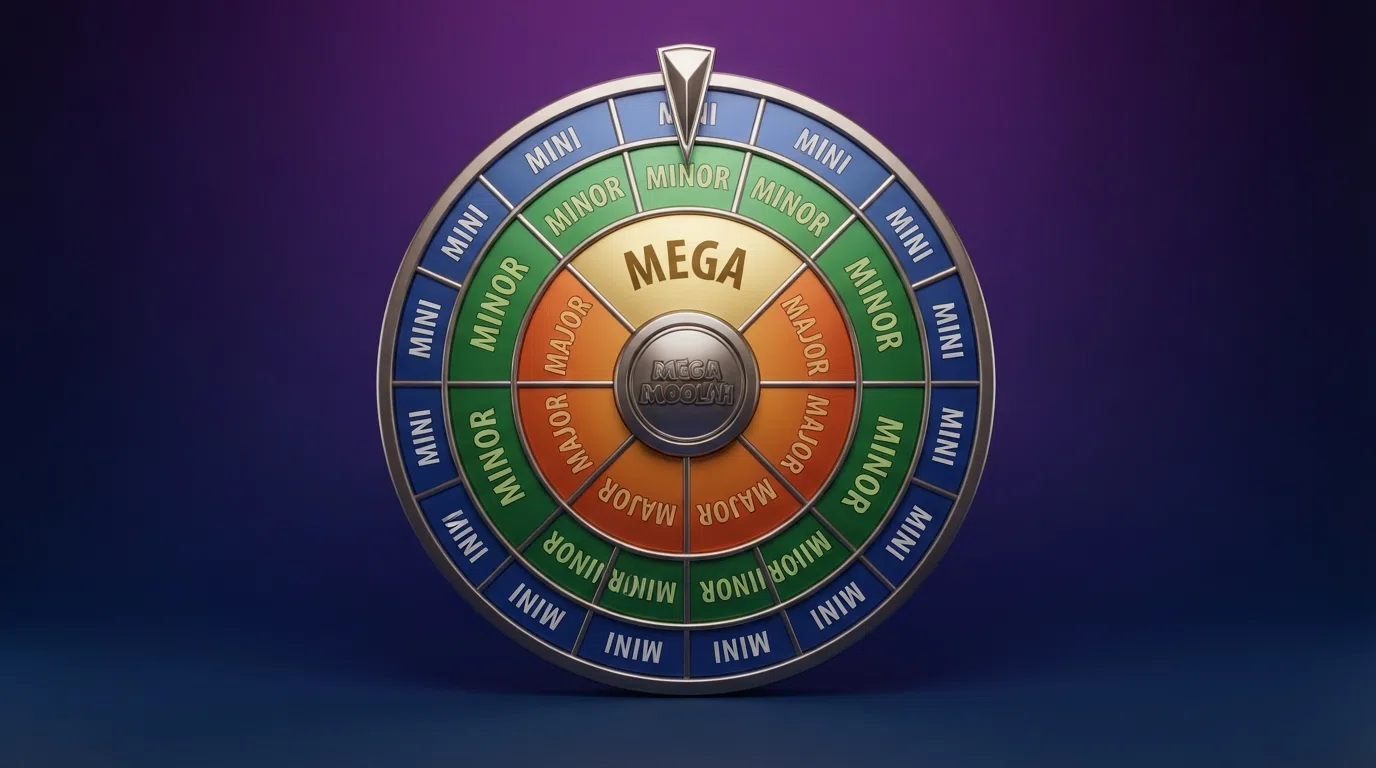
Mega Moolah has defined the progressive jackpot category for two decades because its four-tier structure keeps paying out at multiple price points. The Mini, Minor, Major and Mega jackpots climb independently; the Mega is seeded at over £1m and pays out eight figures regularly. The bonus wheel that triggers the jackpot spins randomly on any qualifying wager, so the stake size does not gate the entry — a 25p spin can hit the wheel, and on 6 October 2015 it did. The headline RTP figure is 96.12%, but the base-game return is closer to 88.12%, with the remaining 8% funding the wheel. The Guinness World Record and the £18.9m largest payout on tracking sources both attach to this title. The base-game max win is x11,250 excluding jackpots.
For players prioritising historical payout data, verified records and a substantial network presence, this title remains the definitive choice.
Jackpot King: Blueprint’s Multi-Title Progressive Network
Jackpot King works on a different model from Mega Moolah. Instead of one slot feeding one pool, Blueprint’s network pulls contributions from a catalogue of titles — Fishin’ Frenzy Jackpot King being the most widely recognised member — into a single progressive prize. A reader who likes a particular slot in the Jackpot King family but wants to chase the same jackpot pool across games finds this design more flexible than a single-title progressive. The network is hosted across multiple UK operators, with Paddy Power among the most prominent UK-facing hosts.
Age of the Gods and Beyond: Branded Progressive Slots Worth Knowing
Age of the Gods is the centrepiece of Playtech’s branded progressive range, with a 95.02% RTP (including 0.99% progressive contribution), medium-to-high volatility and a 50,000x max win. The series extends across multiple themed titles — King of Olympus, Fate Sisters, Goddess of Wisdom — all feeding the same networked jackpot structure. Mega Fortune and Divine Fortune are the comparable branded progressive offerings from NetEnt, sitting in a similar product space. Branded progressives typically pay smaller top prizes than the network-wide leaders but fire more often, and the higher base-game RTP means the session-by-session cost is closer to a non-progressive slot than Mega Moolah’s split.
Why Your Progressive Jackpot Bonus Terms Matter More Than the Headline Figure
A free-spins welcome offer is the cheapest way into a progressive slot, and it is also the offer most likely to mislead a reader about what they are buying. Two variables decide the real value: the wagering requirement on winnings and any win cap attached. A 200-spin welcome with 10x wagering and a £30 cap is worth less than a 50-spin welcome with 0x wagering and no cap, even though the headline spin count is four times higher.
UK rules set the ceiling. From 19 December 2025, wagering requirements on bonuses are capped at 10x and mixed-product promotional offers are banned, so the worst-case wagering on a regulated UK site is 10x. Many operators have moved to 0x wagering as a competitive response — Virgin Games, Betfred, Sky Vegas, bet365 and 32Red all run wager-free welcome offers in the featured set. William Hill Vegas, Ladbrokes and Casumo still attach 10x. The £30 cap on William Hill’s spins is the most aggressive ceiling in the table; without that cap, the welcome would be substantially more valuable.
Free Spins That Actually Work on Progressive Jackpot Slots
The free-spins welcome offers in the featured set vary on three variables: where the spins land, what each spin costs and whether any cap applies. The list below covers what research surfaced for each.
- bet365 Games: up to 500 free spins via daily prize selections; no wagering on winnings; 30 minutes of session time is the only trigger.
- Virgin Games: 100 free spins on Game of Thrones at 1p × 10 lines; no wagering on winnings; Game of Thrones itself is a progressive-linked slot.
- Betfred Casino: up to 200 free spins from a £10 wager with no wagering; three packages — 50 spins at £0.20 on Age of the Gods, 100 at £0.10 on Better Wilds, or 200 at £0.05 on Age of the Gods: God of Storms 2.
- William Hill Vegas: 200 free spins at 10p on Big Bass Splash; 10x wagering; £30 win cap; 72-hour expiry on spins.
- Sky Vegas: 50 no-deposit spins plus 200 after £10 deposit and spend; no wagering on winnings.
- 32Red: 320 free spins on Big Bass Splash at £0.10; 0x wagering; 7-day opt-in, 30-day spin validity.
Virgin Games and Betfred route spins onto progressive-linked or networked progressive titles directly, so the welcome doubles as a tour of the slot category. bet365 and Sky Vegas deliver the largest spin counts in the table. William Hill offers the highest individual spin value but pays for it with a 10x wager and a £30 cap. The headline number is the worst guide to the value.
No-Deposit Progressive Jackpot Offers: What the UK Market Actually Has
Among the featured operators, only Sky Vegas runs a genuine no-deposit free-spins route — 50 spins on opt-in, with no funding requirement and no wagering on winnings. Every other welcome in the table requires either a deposit, a wager trigger or a minimum lifetime deposit before spins are issued. bet365’s £10 minimum lifetime deposit is the closest comparison: a token requirement rather than an active transaction, but still a deposit. The distinction matters because a no-deposit offer lets the reader test a slot without committing any money; a deposit-triggered offer asks the reader to fund the session before the spins appear.
The rest of the UK market beyond the featured set follows the same pattern. True no-deposit free spins on progressive-eligible titles are rare; deposit- or wager-triggered no-wagering offers are common. A reader who wants to play without funding anything first should expect the short list to stay short.
Can You Practise Progressive Jackpot Slots Without Spending a Penny?
Demo mode is available at every UKGC-licensed casino site, and most major progressive titles sit in a demo lobby alongside the real-money version. The reader can spin the reels, watch the bonus wheel land (or not) and read the published RTP and volatility information on the game information screen without funding the account. Demo mode is the right way to assess a slot’s pace, look and bonus frequency before committing real money.
The catch is that the jackpot itself cannot be won in demo mode. The progressive meter on a demo spin is decorative — it ticks up the same way it does on a real-money spin but pays nothing when the trigger fires. Demo mode offers a complete look at the game mechanics, but leaves the actual jackpot potential out of the equation.
Where to Find Free Progressive Jackpot Slots Online
Every UKGC-licensed site in the featured set carries a demo lobby, and the larger operators — bet365, Sky Vegas, William Hill — run extensive progressive title collections in free-play format. Independent slot-review sites also host embedded free-play versions of Mega Moolah, Age of the Gods and the Jackpot King titles, often with the published RTP and volatility figures alongside. Registration or verification steps before demo access vary: most demo lobbies are open without an account, but the UK regulator’s age-verification regime means a reader will be asked to confirm they are over 18 before any real-money option becomes available, and some operators verify before demo too.
Demo Mode vs Real-Money Progressive Play: What Changes When You Deposit
The maths does not change. The published RTP, the volatility class, the bonus frequency and the jackpot contribution rate are identical between demo and real-money play on the same title. What changes is the psychological weight of every spin. A real-money session on a progressive carries the genuine possibility that the bonus wheel will land and pay seven figures, and the stake-cap rules and the in-session tracking — reality checks, time played, total losses displayed — apply only on the real-money side. The 2.5-second minimum spin speed, the auto-play ban and the loss-disguised-as-win ban are real-money rules with no equivalent in demo. A reader who has tested a title in demo and understands the mechanic should expect the real-money experience to look the same and feel very different.
Progressive Jackpots on Mobile: The Same Pots in Your Pocket
Every progressive slot that runs on a UKGC-licensed desktop site also runs through the mobile browser and, in most cases, through a dedicated iOS or Android app. bet365, Sky Vegas, William Hill, Paddy Power, Betway, Casumo and Ladbrokes all offer native apps; the rest run a fully featured mobile browser version that mirrors the desktop lobby. There is no RTP difference, no feature difference and no jackpot difference between desktop and mobile on the same title — the same networked meter feeds both, so a jackpot won on a phone is the same jackpot as one won on a laptop.
The cashier flow is what changes in practice. PayPal, debit card and bank-transfer deposits work identically on mobile; withdrawals go back to the same payment method. A reader who plans to play on a phone should expect the slot, the bonus and the payout to behave the same way as on desktop, with the only difference being the screen size.
Why Crypto Progressive Jackpots Are Off the Table at UK-Licensed Casinos
No UKGC-licensed casino accepts Bitcoin, Ethereum or any other cryptocurrency for progressive slot play, and the regulatory reasons are structural rather than commercial. The UK regime requires pre-gambling ID verification — a reader cannot fund an account without confirming who they are, and anonymous crypto wallets cannot satisfy that test. The credit-card ban in force since 14 April 2020 extends to credit-card-funded e-wallet routes, which closes most of the on-ramps a crypto-funded player would otherwise use. The functional payment currency at every licensed UK casino is GBP, processed through a debit card, an e-wallet or a bank transfer.
Unlicensed crypto casinos operate outside the UKGC’s remit. They take Bitcoin, they pay out in Bitcoin, and they carry none of the GB player protections — no GAMSTOP, no deposit limits, no ADR route, no stake cap. The regulatory model for unlicensed operators is enforcement by disruption (notices, payment-provider referrals, search-engine actions) rather than ISP blocking. A reader who plays at a non-GamStop crypto casino is trading the UK protections for the anonymity the UK regime will not offer, and the trade-off is not symmetrical — the protections lost are real, and the anonymity gained does not extend to the funds sitting in an offshore wallet.
What UK Gambling Law Means for Every Spin You Make
The Gambling Act 2005 and the Gambling Commission (UKGC) set the framework for every online slot spin placed in Great Britain. The Commission issues operating licences, publishes codes of practice (the LCCP) and technical standards (the RTS), and enforces compliance. A reader who plays on a UK-licensed site is playing inside a regime designed to slow the session down, surface the cost and block the design tricks that accelerate losses.

The headline rules are concrete. Online slots are capped at £5 per spin for players aged 25 and over and £2 per spin for players aged 18–24. Auto-play is banned. Spin speed cannot drop below 2.5 seconds. Losses disguised as wins are banned. The system must not celebrate a return that is less than or equal to the total stake gambled. Reverse withdrawals are banned. From 19 December 2025, wagering requirements on bonuses are capped at 10x and mixed-product promotional offers are banned. GAMSTOP self-exclusion has been mandatory for every GB online licensee since 31 March 2020. The statutory levy, in force from 6 April 2025, sits at 1.1% of the leviable amount for relevant remote licences, with the proceeds split 50% treatment, 30% prevention, 20% research. Remote Gaming Duty rose from 21% to 40% on operator gross profits from 1 April 2026. None of these rules are optional at a UK-licensed site, and the rules apply equally to progressive and non-progressive slots.
Stake Caps, Deposit Limits and the Rules That Shape Every Session
The per-spin stake cap is the most visible rule on the slot screen, and it cuts both ways. The £5 cap on the 25+ age band protects the reader by capping the downside per spin; it also caps the pace at which a progressive jackpot contribution can be funded. The £2 cap on the 18–24 age band is tighter still, reflecting the regulator’s view of the harm profile for younger players.
Deposit limits sit beside stake caps as the second financial control. From 31 October 2025, operators must prompt the reader to set a deposit limit before the first deposit is accepted, and any decrease to an existing limit takes effect immediately. From 30 June 2026, the only limit that may be called a “deposit limit” is one based solely on the gross amount the customer pays into the account over a set duration. The financial vulnerability check at a £150 net deposit threshold in a rolling 30-day window uses publicly available data only — CCJs, DROs, IVAs — to flag players who may be in financial difficulty.
GAMSTOP, Self-Exclusion and the Non-GamStop Casino Risk
GAMSTOP is a single national self-exclusion scheme that every GB-licensed online casino has to be part of. A reader who registers with GAMSTOP is blocked from every UKGC-licensed online gambling site for 6 months, 1 year or 5 years, with the option of a 5-year period that auto-renews. The exclusion cannot be cancelled early. It is a hard block, not a soft prompt, and it is the single most effective player-protection tool in the UK regime.
A non-GamStop casino is an unlicensed operator providing gambling facilities to GB consumers without UKGC authorisation. The name is marketing rather than regulatory: the site is unlicensed, not exempt. The player protections a UK-licensed site carries — deposit limits, stake caps, ADR, GAMSTOP — do not apply. The UKGC’s enforcement model focuses on disruption: notices, payment-provider referrals, search-engine actions. The reader’s recourse at an unlicensed site is materially thinner than at a UK-licensed one, and the difference is the entire reason the UKGC exists.
How the UK’s Bonus and Advertising Rules Changed Progressive Jackpot Promotion
The bonus landscape at UK-licensed sites shifted decisively in late 2025. From 19 December 2025, wagering requirements on bonuses are capped at 10x and mixed-product promotional offers are banned, so a reader can no longer be asked to wager a casino bonus 30x or 40x to clear it, and a single promotion can no longer bundle a sports bet with a casino spin batch. Many operators responded by moving to 0x wagering entirely — bet365, Virgin Games, Betfred, Sky Vegas and 32Red all run wager-free welcome offers in the featured set. The 10x cap is a ceiling; 0x is now the competitive floor.
The advertising rules tightened on a parallel track. From 1 May 2025, direct-marketing opt-ins are per product and per channel, so a reader who opts in to casino email does not automatically opt in to sports or bingo. Gambling advertisements may not show under-25s or feature anyone who could plausibly be under 25 in a significant role. The Committee of Advertising Practice (CAP) and the Broadcast Committee of Advertising Practice (BCAP) codes are enforced by the Advertising Standards Authority (ASA). The rules reshape what an offer can look like before it reaches the page.
Staying in Control: The Safety Net Every Progressive Jackpot Player Has
The UK has the most developed responsible-gambling infrastructure of any major regulated market, and the help is free, confidential and available 24/7. The first point of contact for any reader who is worried about their own play, or about someone else’s, is GamCare’s National Gambling Helpline on 0808 8020 133, with live chat and WhatsApp also available. The line is free and runs around the clock. GambleAware publishes a gambling-harms self-assessment and a service finder that routes readers to the right local support. The NHS runs specialist gambling-harm clinics in England, Scotland and Wales, and the Primary Care Gambling Service handles referrals from GPs. GOV.UK states that almost 1.6 million adults in England who gamble may benefit from some type of treatment or support for harmful gambling.
A reader who wants help does not have to commit to treatment to start the conversation. A single phone call to 0808 8020 133, or a live chat, is enough to find out what is available next.
The Tools Built Into Every UK-Licensed Progressive Jackpot Session
Every UKGC-licensed site carries the same baseline of player-protection tools because the rules require them. A deposit limit must be offered before the first deposit, and any decrease takes effect immediately. Reality checks interrupt play at intervals to show time elapsed and money spent. Session limits and time-outs can be set from the casino lobby. Auto-play is banned. Spin speed cannot drop below 2.5 seconds. The slot cannot celebrate a return that is less than or equal to the total stake gambled. Reverse withdrawals are banned. The tools are not optional extras; they are part of the game.
Where to Get Help If Progressive Jackpot Play Stops Being Fun
The full support pathway runs from a single phone call to specialist NHS treatment, and the entry point is low-friction.
- GamCare’s National Gambling Helpline on 0808 8020 133, free and confidential, 24/7, with live chat and WhatsApp.
- GambleAware’s gambling-harms self-assessment, which helps a reader decide whether they want support and routes them to the right service.
- NHS gambling-harm clinics in England, Scotland and Wales, and the Primary Care Gambling Service for GP referrals.
- GAMSTOP self-exclusion, which blocks every UKGC-licensed online gambling site for 6 months, 1 year or 5 years and cannot be cancelled early.
- Gam-Anon and GamCare’s support for affected others — family members and friends who are worried about someone else’s gambling.
The 1.6 million adults in England who may benefit from treatment are not abstractions; they are the readership this section exists for. A reader who picks up the phone has already done the hardest part.
How We Chose the Best Progressive Jackpot Slot Sites for This Guide
The ranking criteria are public and verifiable. The UKGC public register was the primary licence-verification source, accessed in August 2026. Independent data sources — SportsMole, Slotcatalog, RTPtrack, OLBG and casino.org/uk — supplied the RTP, volatility and payout-speed figures cited for individual titles and operators. Operator T&Cs pages were checked for bonus terms, wagering multiples, win caps and validity windows. Qualitative criteria were the progressive catalogue breadth, the bonus fairness measured by wagering requirement and the presence or absence of a win cap, the independently recorded payout speed and the licence standing.
Where the public register surfaced a licence status that did not match the operator’s own marketing — 32Red’s surrender to 12 March 2025 is the clearest example — that mismatch is named in the operator write-up rather than smoothed over. Where a per-source figure was not available, the cell carries an em dash rather than an estimate. The audit on competitor pages found no public-register licence verification and little current UKGC rule detail; this page is built to fill those gaps rather than reproduce them.
What the Numbers Say About Chasing a Progressive Jackpot
A session on Mega Moolah costs the player roughly £12 per £100 wagered at the base game’s 88.12% return — the figure before any jackpot contribution returns value. That is the arithmetic underneath the marketing. The £5 per-spin stake cap on the 25+ age band caps the downside, but it also caps the pace at which the player can fund the contribution. The bonus landscape tilts toward zero wagering for most of the featured set, with William Hill Vegas, Ladbrokes and Casumo as the remaining 10x outliers; win caps and spin-value limits determine the real ceiling on the wager-free offers as much as the spin count.
The conclusion the numbers support: progressive jackpot slot play is paid entertainment with a known cost, not an investment strategy. The right approach is to set a deposit limit before the first deposit, treat every spin as a purchase of a chance rather than a stake in an expected return, and never chase losses. The headline that promises a £17m win from a 25p bet is not a typical outcome — it is a single event on a single day in 2015 — and the £12 in £100 the base game keeps is what every other spin in the meantime actually costs. The bonuses in the featured set let the reader keep what they win on the welcome spins, which is genuine value. The progressive itself pays back less per spin than a non-progressive at the same stake. The reader who understands both numbers before they play is the reader who gets to decide whether the trade is worth it.
Frequently Asked Questions
Are online progressive jackpot slots legal to play in Great Britain?
Yes. Online slots — including progressive jackpot slots — are legal at any UKGC-licensed casino. The Gambling Act 2005 and the Gambling Commission cover England, Scotland and Wales; Northern Ireland runs under separate law. A reader who plays on a UK-licensed site is inside the UK regulatory framework, with deposit limits, stake caps, GAMSTOP self-exclusion and ADR routes available as standard.
What is the maximum you can stake per spin on UK online slots?
From 9 April 2025, the per-spin stake cap on online slots is £5 for players aged 25 and over. From 21 May 2025, the cap is £2 per spin for players aged 18 to 24. The cap applies to every spin on a progressive slot at any UK-licensed site, and there is no way to exceed it inside the regulated market. Northern Ireland is outside the UKGC’s remit.
Do UK-licensed casinos allow progressive jackpot wins from free spins or no-deposit bonuses?
The bonus terms, not the licence, decide this. A wager-free welcome offer (bet365, Virgin Games, Betfred, Sky Vegas, 32Red) pays any free-spin winnings as cash that can be withdrawn, and jackpot wins follow the same rule. A 10x wagering welcome (William Hill Vegas, Ladbrokes, Casumo) requires the winnings to be wagered before withdrawal; jackpot wins from a wagered bonus still follow the bonus terms. Sky Vegas’s no-deposit spins run without a deposit trigger. The reader should check the specific bonus terms before claiming.
How do progressive jackpot slots reduce base-game RTP while still publishing a headline RTP?
A percentage of every wager is routed into the progressive jackpot pool rather than paid back through the base game’s pay table. Mega Moolah’s published 96.12% RTP includes roughly 88.12% from the base game and about 8% from the jackpot contribution. The base-game return is the number that governs session-by-session losses; the headline number includes a forced side bet on the wheel. A reader who wants the session cost looks at the base figure, not the headline.
Which UK casinos offer fast PayPal withdrawals for jackpot-slot play?
Independent testing records Casumo’s PayPal withdrawal at 35 minutes — the fastest PayPal time on the UK-facing market. Skrill’s fastest recorded payout is 45 minutes at Ladbrokes; Trustly’s fastest is 50 minutes at Betway. These figures are recorded payout times, not promises, and the actual time depends on account verification, payment provider and withdrawal size.
What responsible-gambling tools and support services can UK players use for jackpot play?
Every UKGC-licensed site carries deposit limits, reality checks, session limits and GAMSTOP self-exclusion as standard. GamCare’s National Gambling Helpline on 0808 8020 133 is free, confidential and available 24/7, with live chat and WhatsApp. GambleAware publishes a gambling-harms self-assessment and a service finder. The NHS runs specialist gambling-harm clinics across England, Scotland and Wales, and the Primary Care Gambling Service handles GP referrals. GOV.UK states that almost 1.6 million adults in England who gamble may benefit from some type of treatment or support.
Slots – realmoney-onlinecasinos-uk
Content created by the «realmoney-onlinecasinos-uk» team