
Casinos not registered with GamStop — the UK player's real choices for 2026
 Available in GB
Most search results for casinos “not on GamStop” lead with the same cheerful list — ten offshore brands, ranked by bonus size, with a paragraph that mostly says “huge welcome offer” and moves on. This page tries to do something different. It takes the same ten sites, splits them by where the licence actually sits, and asks the only question the bonus copy never answers: what does a UK player give up by playing here, and is what they get back worth it?

The answer runs in two directions. Four of the featured operators hold a UK Gambling Commission licence and are listed on GamStop’s database — they appear in this article because their welcome offers happen to suit players whose self-exclusion period has ended, and because they set the benchmark every offshore brand is measured against. The other six are offshore operators, mostly Curacao-licensed, who do not query GamStop at all. Both groups are reviewed here. The two paths lead to very different places.
Data current as of September 8, 2026 and verified against the UK Gambling Commission’s public register and the operator terms published on each brand’s website.
What “casinos not registered with GamStop” actually means for a UK player
GamStop is a self-exclusion scheme the UK Gambling Commission made mandatory for every licensed remote operator on 31 March 2020. The way it works is simple in design: a UK player who signs up to GamStop picks an exclusion window — six months, one year, five years, or five years with auto-renewal — and the database then blocks that player from opening or continuing any account at a UKGC-licensed online casino. The exclusion cannot be cancelled early. There is no cooling-off, no appeal, and no “I have changed my mind” form. Pick the long window, and the long window is what you get.

A casino “not registered with GamStop” is one that has never been asked to query the database in the first place. GamStop is an online-only self-exclusion register, and it only applies to operators the UKGC licences. Offshore sites — licensed in Curacao, Anjouan, or other jurisdictions outside Great Britain — are not on the regulator’s radar, and they do not connect to GamStop’s API. A self-excluded UK player can walk up to one, complete the registration form, deposit, and play. That is the entire mechanism. No special software, no technical workaround, no secret handshake — just a regulator boundary.
Three things are worth keeping distinct from the start.
The first is “not on GamStop” against “not registered with GamStop.” Both phrases describe the same set of casinos. A player searching for one phrasing or the other ends up at the same sites. There is no operational difference between the two queries — the database either does or does not check the player, and the player either gets blocked or doesn’t.
The second is the online-only scope. GamStop does not touch land-based casinos, betting shops, arcades, or any premises-based gambling. A UK player who self-excludes through GamStop can still walk into a high-street bookmaker and place a bet. This article covers online casinos exclusively because that is where GamStop has any effect and that is what the search query points at.
The third is the licence split. Among the ten featured operators below, four hold a UKGC licence and are subject to GamStop. They appear because their offers suit a player who is no longer excluded. The other six hold offshore licences and have no GamStop integration at all. The article reviews both groups, and it does not pretend they are equivalent.
“Not on GamStop” vs “not registered with GamStop” — same thing, different words
The two phrasings appear interchangeably across UK search queries, and they mean the same thing. “Casinos not on GamStop” describes a casino that is not part of the GamStop scheme. “Casinos not registered with GamStop” describes the same thing from the database’s point of view: the operator has not been entered into the register of licensees that GamStop serves. The pool of casinos the player reaches is identical.
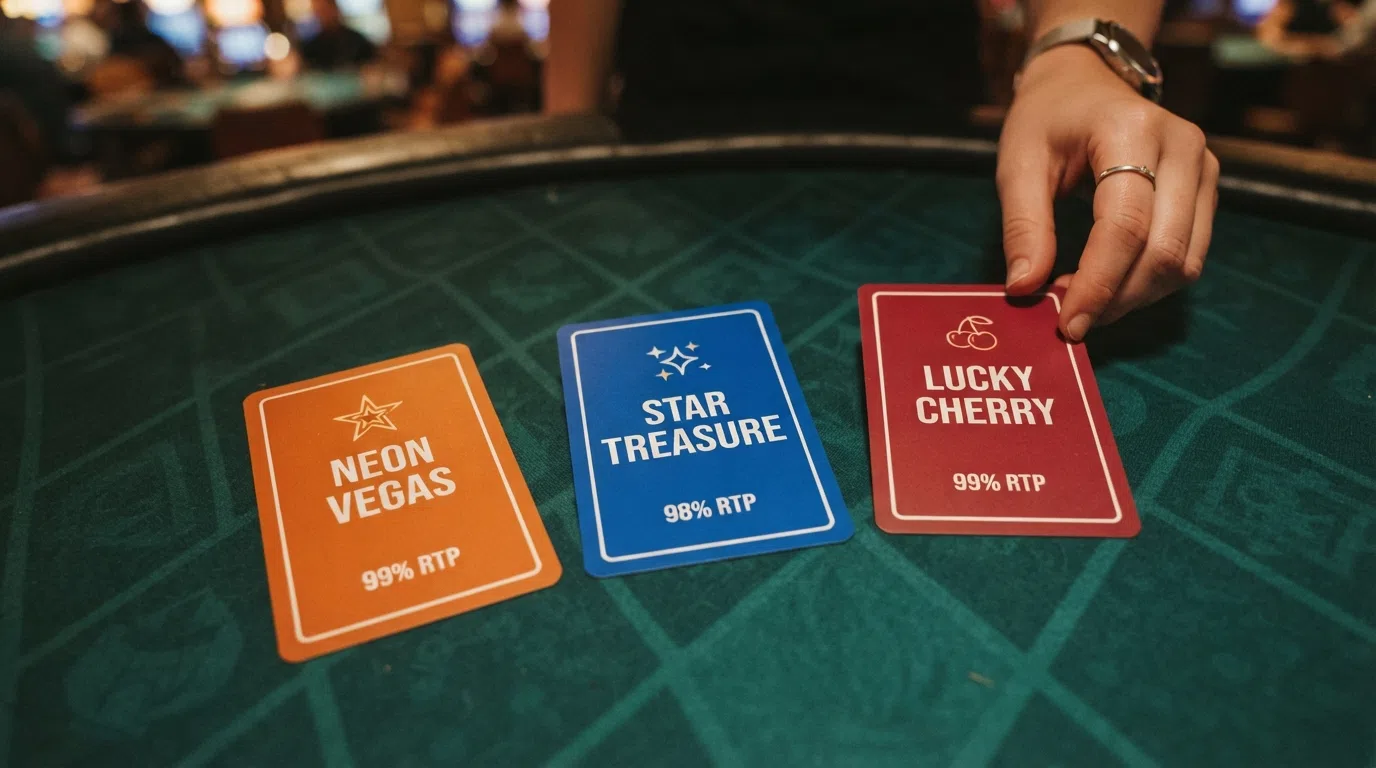
This is not a semantic quibble — it matters for how the search results read. A player who searches for “not on GamStop” finds listicle articles dominated by offshore brands. A player who searches for “not registered with GamStop” finds the same listicle articles, sometimes with a UKGC-licensed brand mentioned as a contrast. The clusters overlap so heavily that the article below treats them as one query and addresses both audiences in the same ranking.
Which casinos? How this page answers the list-style and question queries
Search results for this topic in the UK are dominated by affiliate listicles — “Top 10 casinos not on GamStop,” “Best non-GamStop sites for 2026,” and similar. The users behind these searches are looking for two things at once: a list of brands they can sign up at, and a safety check that the list is not steering them into something unsafe. The best-performing pages address both halves: a ranked list of operators and a serious section on legality and player protection.
This page addresses the same dual intent. The ranking section that follows lists ten operators, four of them UKGC-licensed and six offshore, with their bonus terms laid out side by side. The legality section that follows the ranking answers the safety question directly — what UK law actually says about offshore play, which protections disappear outside the UKGC system, and how a player can assess an offshore casino’s reputation without relying on the UKGC badge.
The 2026 non-GamStop casino landscape — analysed side by side
The table below is the article’s working surface. Ten operators, ranked by licence type first — UKGC-licensed operators come first because they sit inside the regulatory regime a UK player is most likely to trust, and offshore operators follow because their absence from that regime is the central fact about them. Welcome bonus, wagering requirement and bonus validity are the three columns most often asked about. The table is honest about gaps: where a figure is not published, an em dash stands in its place rather than an estimate dressed up as data.
| Operator | Licence and Status | Welcome Bonus | Wagering Requirement | Bonus Validity |
|---|---|---|---|---|
| Bet365 | UKGC Licensed (GB) | Stake £10 Get 50 Free Spins | 0x (winnings paid in cash) | 7 days |
| Sky Vegas | UKGC Licensed (GB) | 100 Free Spins, no wagering | 0x | 7 days |
| William Hill | UKGC Licensed (GB) | Stake £10 Get 100 Free Spins | 0x | 24 hours |
| 888 Casino | UKGC Licensed (GB) | 100% up to £100 | 30x (bonus amount) | 90 days |
| MyStake | Offshore, Curacao, not on GamStop | 150% up to £750 | 30x (deposit + bonus) | 30 days |
| DonBet | Offshore, Curacao, not on GamStop | 150% up to £750 + 50 FS | 30x (deposit + bonus) | 30 days |
| GoldenBet | Offshore, not on GamStop | 100% up to £500 | 30x (deposit + bonus) | — |
| Seven Casino | Offshore, not on GamStop | 200% up to £250 | 30x | — |
| 1Red Casino | Offshore, Curacao, not on GamStop | 100% up to £3,000 + 50 FS | 30x | — |
| JackBit | Offshore, Curacao, not on GamStop | 100 FS on first deposit | 0x | — |
The most striking pattern in the table is the wagering column. The four UKGC-licensed operators offer free spins with zero wagering — what you win is paid in cash, withdrawable immediately. The offshore operators, with one exception (JackBit, which offers 100 zero-wagering free spins), require 30x turnover on deposit plus bonus. That is the difference between a bonus you can cash out in a single winning session and a bonus whose real cost depends on how much you play through.
The bonus-cost calculation below makes this concrete. Take Seven Casino’s 200% up to £250. A player depositing £125 to claim the headline figure receives a £250 bonus, with 30x wagering — creating a substantial turnover obligation before any of the bonus is withdrawable, before the 10x bonus cap imposes its ceiling on what any single run can return.
For JackBit, the offshore zero-wagering outlier, the calculation collapses to a different shape: 100 free spins with no playthrough means the time-cost is zero, and the only cost is the variance of the spins themselves.
The bonus-cost calculation applies to every operator in the table. Plugging in the bonus amount and wagering multiple from each row, with the £1 stake and five-second interval assumptions held constant, gives the time-cost of clearing each welcome offer before any of it is withdrawable. The numbers vary widely. The cost in real money — the expected loss over that turnover — varies more.
Bet365 — the UKGC safe harbour with no-wagering spins
Bet365 is the long-standing UKGC-licensed option in the featured set. The welcome offer is built for low commitment: stake £10 on any slot, receive 50 free spins, winnings paid in cash. There is no wagering requirement. The £10 you stake is your only upfront cost; the 50 spins, valued at roughly £0.10 each, give you £5 of nominal spin value with no playthrough attached. The bonus validity is seven days — comfortable for most players, tight by UKGC standards only compared to 888 Casino’s 90-day window.
The game catalogue runs through Playtech, Microgaming and NetEnt — three of the largest providers in the UKGC market. None of these studios’ games carry the bonus-buy features available offshore; UKGC rules prohibit them. What Bet365 offers instead is the full UKGC protection package: GamStop coverage, UK ADR access for dispute resolution, the £5/£2 stake caps by age bracket, and the £150 financial vulnerability check.
For a UK player whose GamStop exclusion period has ended, Bet365 is the option that delivers the smallest gap between marketing and reality. The free spins are free spins. The £10 stake is the £10 stake. There is no turnover to chase, no cashout ceiling, and no protection missing from the package.
Sky Vegas — 100 no-wagering free spins, no deposit needed
Sky Vegas is the only deposit-free welcome offer in the UKGC set. The promotion is genuinely deposit-free: 100 free spins with zero wagering, no upfront financial commitment required, winnings paid in cash. The bonus validity is seven days, and the max cashout from the offer is unlimited.
The provider mix is Pragmatic Play, IGT and Evolution — Pragmatic and IGT for slots, Evolution for live dealer. The live-dealer catalogue at Sky Vegas is one of the deeper ones in the UKGC market.
What makes Sky Vegas worth flagging is the rarity of what it offers. A no-deposit, no-wagering welcome promotion is unusual in any regulated market, and the UKGC rules on bonus design make it rarer still. Sky Vegas’s willingness to run this offer says something about the operator’s confidence in its retention model — and the seven-day validity window keeps the cost bounded.
William Hill — 100 free spins for a £10 stake, cleared in 24 hours
William Hill’s welcome offer is the highest spin count in the UKGC set: stake £10 and receive 100 free spins with zero wagering. The 24-hour validity window is the tightest in the featured set — and that is the offer’s defining feature. A player who stakes £10 has one day to use 100 spins, which works out to roughly 8.3 minutes per spin if the full count is to be used. That is brisk.
The provider mix runs through Microgaming, NetEnt and Red Tiger. William Hill has been in the UK market for decades; the brand carries weight, the catalogue is deep, and the UKGC protections apply in full.
For a player who wants to take a free-spin offer and clear it the same evening, William Hill is built for that. For a player who would prefer the spins to sit in the account for a week, Sky Vegas’s seven-day window is the better fit.
888 Casino — 100% match up to £100 with a 90-day clearance window
888 Casino is the only percentage-match bonus on the UKGC side of the featured set. The promotion matches 100% of the first deposit up to £100, with 30x wagering on the bonus amount only — not on deposit plus bonus. That distinction matters: a £100 deposit with a £100 bonus carries £3,000 of required turnover at 888 Casino, against the £6,000 the same promotion would carry under the offshore model of 30x on deposit plus bonus.
The 90-day bonus validity is the longest in the featured set. A player clearing 888 Casino’s bonus has three months to do it, against 30 days at most offshore operators. Combined with the lower wagering base, the time-cost of clearing is meaningful for a player who likes to take bonuses slowly.
The provider mix includes 888’s in-house Section 8 studio alongside NetEnt and IGT. Section 8 produces proprietary slots that are not available at competing UKGC brands, which is a small but real differentiator for a player looking for games they cannot play elsewhere.
MyStake — 150% up to £750 under a Curacao licence
MyStake is the most-searched offshore brand in the non-GamStop space. The headline offer — 150% up to £750 on the first deposit — is the largest percentage match among Curacao-licensed operators in the featured set, alongside DonBet. The wagering requirement is 30x, and the bonus validity is not published. Max cashout from the offer is 10x the bonus amount.
The provider mix runs through Hacksaw, Pragmatic Play and Relax Gaming — three studios known for high-volatility slot design and bonus-buy mechanics. Bonus-buy features, which allow a player to purchase direct entry to a slot’s bonus round, are restricted at UKGC-licensed sites and freely available offshore. MyStake’s catalogue leans into that.
The trade-off is the full UKGC protection package. MyStake is not registered with GamStop, which is the central fact the operator’s marketing turns on. A UK player who signs up at MyStake gives up UK ADR access for dispute resolution, the £5/£2 stake caps on online slots, the £150 financial vulnerability check, and the credit-card ban that has been in force at UKGC sites since April 2020. The 150% bonus is the upside. The protection gap is the cost.
DonBet — 150% up to £750 plus 50 free spins
DonBet matches MyStake’s headline rate and adds 50 free spins. The package — 150% up to £750 plus 50 free spins — is the most generous two-component welcome offer in the offshore set. Wagering is 30x on deposit plus bonus, validity 30 days, max cashout 10x the bonus amount.
The provider mix is Pragmatic Play, Play’n GO and Red Tiger. Pragmatic Play’s slot catalogue is one of the deepest in the industry, and Play’n GO’s Book of Dead remains a default first-deposit slot at many offshore sites.
For a player who values spin volume alongside a percentage match, DonBet’s structure is the closest equivalent in the offshore set to a UKGC-licensed no-wagering offer — except that the wagering requirement here is 30x, not zero. The time-cost of clearing DonBet’s bonus is meaningful. The free spins add a no-wagering component if DonBet’s terms apply the zero playthrough only to the FS portion — players should confirm this before staking.
GoldenBet — 100% up to £500 with Evolution live tables
GoldenBet is the live-dealer-focused brand in the offshore set. The welcome offer is a straight 100% match up to £500, with 30x wagering on deposit plus bonus. The provider mix includes Evolution alongside Pragmatic Play and NetEnt, which gives GoldenBet a live-casino catalogue comparable to what UKGC-licensed brands offer.
For a player whose primary interest is live dealer — roulette, blackjack, game shows — rather than slots, GoldenBet’s positioning is a clean fit. The bonus terms are standard for the offshore set. The differentiator is the live table.
Seven Casino — 200% up to £250, the steepest percentage match in the set
Seven Casino’s 200% up to £250 is the highest percentage match in the featured set. A £125 deposit returns a £250 bonus — the deposit doubles and then some. Wagering is 30x, and the bonus validity is not published. The provider mix is Pragmatic Play and NetEnt.
The headline number is the appeal. The arithmetic is what the marketing copy leaves out. At Seven Casino’s terms, a £125 deposit with a £250 bonus carries 30x wagering on deposit plus bonus — £11,250 of required turnover. At £1 per spin and a five-second spin interval, that is roughly 15.6 hours of continuous play before any of the bonus is withdrawable, before the 10x bonus cap imposes its ceiling on what any single run can return.
For a player who wants the largest possible percentage boost and is willing to put the time in, Seven Casino’s offer is sized accordingly. The cost in time is real and worth pricing in before the deposit.
1Red Casino — 100% up to £3,000, the largest headline figure in the set
1Red Casino’s 100% up to £3,000 is the largest headline figure in the featured set — bigger than any UKGC-licensed operator’s offer and bigger than any other offshore operator’s. A £3,000 deposit returns a £3,000 bonus. Wagering is 30x, validity is not published, max cashout is 10x the bonus amount.
The provider mix is Hacksaw, Pragmatic Play and NetEnt. Hacksaw Gaming’s high-volatility slots — Wanted Dead or a Wild, Le Bandit, Hand of Anubis — are widely available in the offshore market and largely restricted at UKGC-licensed sites.
The bonus-cost calculation on 1Red Casino’s headline figure is substantial. A £3,000 deposit with a £3,000 bonus at 30x wagering carries a significant required turnover. At £1 per spin and a five-second interval, that is a substantial number of spins and hours of continuous play. The offer is sized for a player who wants to deposit at scale and put the time in; the time-cost is the largest in the featured set.
JackBit — 100 free spins with zero wagering on a crypto-first platform
JackBit is the only offshore operator in the featured set offering zero-wagering free spins. The welcome offer is 100 free spins on first deposit with 0x playthrough, which puts it in the same category as Bet365, Sky Vegas and William Hill on the wagering column — and separates it from every other offshore brand on the table.
JackBit is a crypto-first casino, with Bitcoin, Ethereum and Litecoin deposits and withdrawals as the default payment rails. The provider mix runs through Pragmatic Play, Evolution and Hacksaw, which covers slots, live dealer and high-volatility releases.
For a UK player who wants crypto payments, no GamStop integration, and zero-wagering free spins in the same package, JackBit is the closest fit in the featured set. The protection gap remains — no UK ADR, no UKGC stake caps, no £150 vulnerability check. The wagering gap closes.
Is it legal? The UK regulatory picture for playing outside GamStop
UK law does not make it illegal for a UK resident to gamble at an offshore casino. The relevant statute is the Gambling Act 2005, and the relevant offence is Section 33 — which falls on the unlicensed operator, not the player. A UK player who signs up at a Curacao-licensed casino and plays is not committing a criminal offence under UK law. The operator is.
That is the headline. The detail matters more.
The Gambling (Licensing and Advertising) Act 2014 made a GB licence compulsory for any operator taking GB players. The effect of that rule, in practice, is that offshore operators accepting UK customers are operating in breach of UK law. The enforcement focus sits with the operator, not the customer. UKGC enforcement against offshore operators has historically been limited by jurisdiction — once a brand is licensed in Curacao and the servers are outside the UK, the UKGC’s practical levers narrow. That is the structural reason offshore casinos continue to accept UK players despite the rule.
A player who chooses to play at an offshore casino is making a choice the law does not punish them for. What the law does not do is protect them either. The UKGC’s protections — GamStop, ADR, the £5/£2 stake caps, the £150 vulnerability check, the credit-card ban — apply to UKGC-licensed operators. Outside that perimeter, the player is on their own.
The GamStop database — who runs it, who it blocks, and why offshore casinos ignore it
GamStop is run as a self-exclusion database mandated by the UKGC for all licensed remote operators. The mandate took effect on 31 March 2020. Every UKGC-licensed online casino must check the database before allowing a new customer to deposit, and must recheck active customers against the exclusion list on a regular basis. A player who has registered with GamStop and selected a six-month, one-year, five-year, or five-year-with-auto-renewal exclusion window is blocked from every UKGC-licensed site for the full term. There is no early cancellation, no cooling-off period, no appeal mechanism that shortens the window.
The mechanism is technical, not contractual. When a player attempts to register at a UKGC-licensed casino, the operator’s software sends a query to GamStop’s API. If the player’s details match an active exclusion, the registration is refused. Offshore operators are not connected to that API. They do not query GamStop. The self-excluded player’s details never reach the database from the offshore side, because the offshore operator never asks.
That is the entire mechanism behind “casinos not registered with GamStop.” There is no special software on the player’s side, no VPN requirement, no identity workaround. The boundary is regulatory: the operator either queries the database or it doesn’t, and only UKGC-licensed operators are required to.
The UKGC route — what a Gambling Commission licence actually delivers
A UK Gambling Commission licence is the most heavily-regulated remote gambling licence a UK player can hold an account under. The package of protections attached to it is substantial.
Mandatory GamStop participation: every UKGC-licensed remote operator must check the GamStop database before allowing a new customer to deposit. The integration is technical, the mandate has been in force since 31 March 2020, and the database covers all UKGC-licensed brands.
UK ADR access: Alternative Dispute Resolution providers — IBAS being the dominant one — are accessible to UKGC-licensed customers who cannot resolve a dispute directly with the operator. ADR rulings are not binding on the player but carry weight with the operator, and access to the process is free.
Stake caps on online slots: maximum stakes of £5 per game cycle for players aged 25 and over, and £2 for players aged 18-24. The caps took effect in 2025 under the Gambling Act 2005 (Operating Licence Conditions) (Amendment) Regulations 2025.
Financial vulnerability checks: a check is triggered at a net deposit threshold of £150 within a 30-day period. The threshold sits in the Licence Conditions and Codes of Practice (LCCP 3.4.4) and applies to all remote licensees.
Credit-card ban: credit cards have not been accepted for UK gambling at UKGC-licensed sites since April 2020. The ban closes a fast-fraud pathway and removes a credit-on-demand mechanism that the UKGC judged incompatible with safer gambling.
The Gambling Act 2005 covers Great Britain — England, Scotland and Wales — as a single jurisdiction. Northern Ireland has separate gambling legislation and sits outside the GB framework.
Curacao and offshore licences — what they actually offer (and what they don’t)
Curacao eGaming is the dominant offshore licensing jurisdiction among non-GamStop casinos available to UK players. Anjouan is an emerging alternative; a small number of the featured operators are licensed in other jurisdictions. The regulatory touch is lighter than the UKGC’s by design.
A Curacao licence carries no GamStop integration. There is no requirement for the operator to check any self-exclusion database, and no requirement to integrate with the UKGC’s player-protection framework. A Curacao-licensed operator accepts UK players at its own discretion, and the protections it offers — deposit limits, self-exclusion, time-out tools — are tools the operator chooses to provide rather than rules it must follow.
No UK ADR access is automatic. A Curacao-licensed casino does not route disputes through IBAS or any other UK ADR provider. Dispute resolution happens through the operator’s own customer service process, and where that fails, through the Curacao licensing authority — which is a slower and less player-friendly route than IBAS.
No UKGC stake caps apply. The £5 and £2 caps are conditions of a UKGC licence; they are not features of Curacao’s regulatory framework. A Curacao-licensed casino can offer slots at any stake level the operator chooses.
No UKGC financial vulnerability checks apply. The £150 net-deposit threshold is a UKGC licence condition. Offshore operators are not required to run vulnerability checks at any threshold.
Credit cards are often accepted. The UKGC’s credit-card ban does not apply to offshore operators, and many Curacao-licensed casinos accept credit-card deposits as a routine payment method.
The trade-off is clear. A Curacao licence gives an operator the freedom to offer larger bonuses, higher stake ceilings, fewer restrictions on game features and faster onboarding than a UKGC licence allows. The player gives up the UKGC’s protection package in exchange.
What a UK player gives up outside the UKGC system
- No GamStop coverage. A self-excluded player can register and deposit. The exclusion has no effect at offshore sites.
- No UK ADR access. Dispute resolution is through the operator’s own process. IBAS is not available.
- No £5/£2 stake caps. Slots can be played at any stake the operator accepts. The UKGC’s age-based limits do not apply.
- No £150 financial vulnerability check. The automatic deposit-threshold check that runs at UKGC sites does not run offshore.
- Credit cards often accepted. The April 2020 ban does not extend to offshore operators.
- No mandatory affordability assessments. The UKGC’s broader affordability framework does not apply.
That is the protection gap, itemised. Each item corresponds to a specific UKGC rule that a UKGC-licensed operator must follow and an offshore operator does not. None of the items is theoretical. Each one is a rule that would have triggered in a specific situation at a UKGC-licensed site and will not trigger offshore.
How to assess safety and reputation at a non-GamStop casino
The UKGC badge is the easiest safety signal a UK player has, and it is not available at offshore casinos. That does not leave the player with nothing — it leaves the player with a different set of checks.
Verify the licence on the regulator’s website. A Curacao licence number should resolve to a valid licensee on the Curacao Gaming Control Board’s public register. An Anjouan licence should resolve similarly. A licence number that does not resolve is the strongest single signal that something is wrong.
Check for independent audits and RNG certifications. Look for testing-house seals — eCOGRA, iTech Labs, and Gaming Laboratories International — and verify them on the testing house’s own website. A seal image on the casino’s footer is not evidence; a clickable verification is.
Review player-forum histories and complaint records. Long-standing complaint threads on independent forums are a stronger signal than any seal. A pattern of unresolved withdrawal complaints is the most reliable warning sign in the offshore market.
Assess the payment-method mix and withdrawal track record. Crypto and credit cards are common offshore; PayPal and Boku are not. The withdrawal times research reports should be tested with a small withdrawal before any large deposit.
Evaluate whether the casino offers its own responsible-gambling tools. Deposit limits, session-time reminders and per-casino self-exclusion are not mandatory offshore, but reputable operators provide them. The presence of these tools is a signal; the absence is a quieter one.
Independent UK support is available regardless of where a player gambles. GamCare’s National Gambling Helpline (0808 8020 133), GambleAware’s treatment and support services, and the NHS gambling-harm clinics are all reachable from anywhere in Great Britain. A player who feels their gambling is moving beyond their control can reach these services whether they play at Bet365 or at an offshore brand.
Wales, Scotland and the rest — the UK-wide picture
The Gambling Act 2005 covers England, Scotland and Wales as a single jurisdiction. A GB licence — issued by the UK Gambling Commission — is the only licence valid across all three. GamStop applies UK-wide to all remote licensees; there is no Welsh-only or Scottish-only carve-out.
The cluster behind this keyword includes a Wales-specific phrasing. The rule is the same in Cardiff as in London or Edinburgh: GamStop applies, the UKGC’s protections apply, and the offshore casino’s absence from GamStop applies. Northern Ireland sits outside the GB framework, with its own gambling legislation, and is not addressed by the Gambling Act 2005.
Slots and live tables at non-GamStop casinos — what you can actually play
The slot catalogue at non-GamStop casinos overlaps heavily with the UKGC market on providers and diverges sharply on features. Pragmatic Play, NetEnt and Hacksaw Gaming — three of the most widely-deployed slot studios in the industry — are available across both UKGC and offshore operators. The difference is what the studios’ games look like at each. UKGC rules require the disablement of bonus-buy features, slot spin speeds above a certain threshold, and other mechanics the regulator judges to increase harm risk. Offshore operators run the games as the studios ship them.
The result is a catalogue that looks familiar but plays differently. A Pragmatic Play slot at a UKGC-licensed site is the same game with bonus buys disabled; the same slot at a Curacao-licensed site allows the player to purchase direct entry to the bonus round. Hacksaw Gaming’s high-volatility releases — which are designed around bonus-buy access — sit closer to their intended play pattern offshore than they do in the UKGC market.
Three slot titles carry researched RTP figures that put them in the top return-rate band available anywhere. The table below lists them in descending order of return rate. The figures come from the studios’ published specifications.
| Slot Title | RTP |
|---|---|
| Mega Joker | 99% |
| Book of 99 | 99% |
| Blood Suckers | 98% |
Return rate is the long-run average a slot returns to players across a very large number of spins. A 99% RTP slot returns £99 for every £100 wagered, on average, over millions of spins — not over any individual session. The figure is what the house edge is built against, and a 1% house edge is one of the lowest in the industry. These three titles are available at offshore non-GamStop casinos, and at UKGC-licensed sites where the studios’ games are integrated.
The slot catalogue outside GamStop — bonus buys and fewer restrictions
The provider list across the featured offshore operators covers Pragmatic Play, NetEnt, Hacksaw Gaming, Play’n GO, Red Tiger and Relax Gaming. That is the same shortlist a UKGC-licensed site would carry, with the addition of Relax Gaming and the high-volatility catalogue that comes with it.
The difference is in the feature set. Bonus-buy mechanics — the option to purchase direct entry to a slot’s free-spins or bonus round, typically at a multiple of the base stake — are restricted at UKGC-licensed sites and freely available offshore. Hacksaw Gaming’s catalogue is built around bonus-buy access; so is a growing share of Pragmatic Play’s higher-volatility releases.
The slot spin-speed limits that UKGC operators must enforce do not apply offshore. The autoplay restrictions do not apply offshore. The reality-check frequency rules do not apply offshore. A player who values the unfiltered version of a studio’s catalogue will find it offshore; a player who values the safer-gambling framing will find it at UKGC sites.
Slot-focused sites vs full casino platforms
Some non-GamStop casinos position themselves primarily as slot destinations. Their catalogues run deep on slot content and shallow on table games and live dealer. Other operators run full platforms with balanced coverage across slots, table games, live dealer and often sportsbook.
The provider mix is the easiest signal. GoldenBet’s Evolution and Pragmatic Play mix points to a full-platform operator with a live-dealer emphasis. JackBit’s Pragmatic Play, Evolution and Hacksaw mix is the same shape. DonBet’s Pragmatic Play, Play’n GO and Red Tiger mix leans slightly more toward slots.
For a player who knows what they want to play, the provider mix is the most useful filter. For a player who wants a balanced catalogue across slots and live dealer, the full-platform operators are the better fit.
Live dealer tables — Evolution and the live-casino offer outside GamStop
Evolution is the dominant live-casino provider across both UKGC and offshore operators. The studio’s catalogue — roulette, blackjack, baccarat, game shows like Crazy Time and Monopoly Live — is available at most non-GamStop casinos in the featured set, including GoldenBet, Sky Vegas and JackBit.
UKGC rules restrict some live-dealer table configurations — primarily around table stake limits and the availability of certain side-bets. Offshore operators run the full Evolution catalogue without those restrictions.
For a player whose primary interest is live dealer rather than slots, the offshore market offers the broader version of the catalogue. The trade-off remains the same as elsewhere: no UK ADR, no UKGC stake caps, no £150 vulnerability check.
Getting money in and out — payments at casinos outside the UKGC system
The payment-method split between UKGC and offshore casinos is sharper than any other divide on this page. PayPal and Boku — two of the most popular payment methods at UKGC sites — are largely absent offshore. Crypto and credit cards — both of which the UKGC restricts — are widely available offshore. The deposit method a player chooses shapes the withdrawal experience as much as the bonus terms do.
Why PayPal and Boku are scarce at non-GamStop casinos
PayPal’s acceptable-use policy explicitly restricts gambling transactions at unlicensed or offshore sites. The policy is not a suggestion; it is the rule PayPal enforces on its merchant accounts. A Curacao-licensed casino cannot route deposits through PayPal without breaching PayPal’s terms, and PayPal’s processing will decline the transaction. The result is that PayPal is effectively limited to UKGC-licensed operators and a small number of regulated European brands.
Boku’s pay-by-mobile infrastructure is integrated with UKGC-licensed operators as the primary market. The carrier-billing model — where a deposit appears on the player’s mobile phone bill — depends on operator relationships that Boku has built primarily with UKGC-licensed brands. Offshore operators rarely appear in Boku’s merchant list, and the practical effect is that pay-by-mobile is largely a UKGC-only option.
For a UK player who prefers PayPal or Boku, the UKGC-licensed operators in the featured set — Bet365, Sky Vegas, William Hill, 888 Casino — are the realistic options. The offshore brands are not.
Pay by mobile at non-GamStop casinos — limited but not impossible
Pay-by-mobile exists at a small number of offshore sites through alternative providers, but the depth of coverage is far narrower than at UKGC sites. Boku dominates the UKGC side; on the offshore side, pay-by-mobile is more often an exception than a default.
The deposit limits on mobile billing are typically lower than on card or e-wallet deposits — frequently capped at £30 or £50 per day — which makes pay-by-mobile useful for small deposits but impractical for the headline-figure bonuses at operators like 1Red Casino.
For most players, pay-by-mobile is effectively a UKGC payment method. The offshore alternative is crypto.
Crypto, cards and the withdrawal picture
Crypto deposits — Bitcoin, Ethereum, Litecoin and a growing list of others — are widely accepted at offshore non-GamStop casinos. The withdrawal times are typically faster than at UKGC sites, where card and e-wallet withdrawals can take 24 to 72 hours depending on the operator. Crypto withdrawals often settle within minutes once the operator approves them.
Credit cards are accepted at most offshore operators. The UKGC’s April 2020 ban on credit-card gambling applies to UKGC-licensed sites only; offshore operators can and do accept credit-card deposits. A player who wants to use a credit card at a casino cannot do so at a UKGC-licensed site and can at most offshore sites.
The withdrawal picture offshore is mixed. Reputable operators pay out within stated timeframes — often 24 to 48 hours for crypto, 3 to 5 business days for cards. Less reputable operators delay withdrawals, add verification steps that were not present at deposit, or cap withdrawal amounts below what a winning session produced. The small-withdrawal test mentioned in the safety section above is the most reliable defence.
What a player should verify before depositing: the withdrawal timeframe published in the terms, the verification documents required at withdrawal (these should be no more than at deposit), the maximum withdrawal amount per transaction or per week, and the fees applied to withdrawals.
Staying in control — safer gambling when GamStop isn’t watching
The UK’s responsible-gambling infrastructure was built around the UKGC’s regulatory perimeter. GamStop, the £150 vulnerability check, the stake caps, the credit-card ban — all of these are UKGC-licence conditions. Outside that perimeter, the player must build their own safety net.
Self-exclusion beyond GamStop — the tools that still work
GamStop does not apply offshore. A self-excluded UK player who wants to extend their exclusion to offshore sites has three options, each with a different scope.
Per-casino self-exclusion is the first line of defence. Most reputable offshore casinos offer self-exclusion tools in their account settings, typically with periods ranging from six months to permanent. The tool is honoured at the casino that offers it; it does not extend to other brands.
Device-level blocking software — Gamban is the most widely-cited example in the UK market — blocks access to gambling sites at the device level rather than at the operator level. Gamban covers thousands of gambling domains and is subscription-based. It works regardless of whether the casino is on GamStop or not.
Bank-level gambling blocks — offered by most UK banks as a setting in the mobile banking app — prevent gambling transactions from being authorised on the player’s accounts. The block applies across operators and across payment methods.
None of these tools is a GamStop replacement. Each covers a different layer of the access chain — the casino, the device, the bank. Combined, they cover most of what GamStop covers at the UKGC-licensed end.
UK support services are available regardless of where a player gambles. GamCare’s National Gambling Helpline (0808 8020 133) is free and confidential. GambleAware provides treatment and support services. The NHS runs gambling-harm clinics across England. A player who feels their gambling is moving beyond their control can reach these services from anywhere in Great Britain.
Setting your own limits — deposit caps and session controls
The UKGC’s £150 financial vulnerability check is automatic. A player who crosses that threshold at a UKGC-licensed site is asked to provide information about their finances before continuing. The threshold sits in LCCP 3.4.4 and applies to all remote licensees.
Offshore, that check does not run. The player is responsible for setting and enforcing their own deposit limit. Most reputable offshore casinos offer deposit-limit tools in the account settings — daily, weekly, or monthly caps — and the tools work when the player activates them. The activation is the player’s responsibility.
Session-time reminders — pop-up notifications that prompt a player to consider how long they have been playing — are available at some offshore operators and not at others. Where available, they are useful. Where absent, a player can set their own external timer.
The £5 and £2 stake caps are UKGC-only. Offshore operators do not enforce age-based stake limits. A player who has been relying on the UKGC caps to manage their slot play will not have that boundary at an offshore casino.
The practical steps a player can take to self-limit at an offshore casino: set a deposit limit on day one, before any impulse deposit; activate any session-time reminder the operator offers; choose an external device-level blocking tool if multiple casinos are involved; pre-commit a withdrawal schedule — for example, withdrawing any balance above a set threshold rather than letting it accumulate.
How many UK players are affected? The problem-gambling numbers
NHS Digital and GambleAware report that approximately 0.4% of adults in England meet the threshold for problem gambling on the PGSI scale (a score of 8 or higher). The figure is from 2024 and is the most authoritative UK prevalence estimate available.
0.4% sounds small. In absolute population terms it is not. Applied to the adult population of England, the figure translates to several hundred thousand people. The UKGC’s regulatory apparatus — GamStop, the stake caps, the £150 vulnerability check, the credit-card ban — was built around that prevalence figure and the broader at-risk population that sits beneath it (the PGSI 6+ “moderate risk” category, which runs into the low single-digit percentages of adults).
The support infrastructure for that population exists outside the UKGC’s perimeter. GamCare’s National Gambling Helpline (0808 8020 133) is the UK’s primary gambling-harm support line. GambleAware provides treatment and support services. The NHS runs gambling-harm clinics in several regions. These services are free, confidential, and available regardless of where a UK player gambles — UKGC-licensed or offshore.
How we selected and ranked these non-GamStop casinos
The featured set is ten operators, split four-and-six between UKGC-licensed and offshore. The split is the article’s organising principle and the most important fact about any individual entry.
Sources consulted. The UK Gambling Commission’s public register for licence status, verified for each UKGC-licensed operator. Operator websites for bonus terms, wagering requirements, validity periods and max cashout figures. Independent player forums and complaint records for reputation signals on offshore brands. The Curacao Gaming Control Board and Anjouan regulator websites for licence verification on offshore brands.
Evaluation criteria. Licence type and regulatory status, with UKGC-licensed operators treated as a distinct category from offshore. Bonus terms, including wagering multiple, validity period and max cashout. Game-provider range, as a signal for catalogue depth and slot-versus-live-dealer emphasis. Payment-method availability, as a signal for deposit and withdrawal experience. Player-safety tools, including the presence or absence of deposit limits, session reminders and per-casino self-exclusion.
Ranking logic. Within each licence category, operators are listed in the order the research surfaces them, not by an invented score. The four UKGC-licensed operators come first because the regulatory regime is the primary differentiator and is more important than any single bonus term. The six offshore operators follow, ordered by the size and structure of the welcome offer.
The featured set is not the entire non-GamStop market. The UKGC register lists many more licensed brands than this article covers, and the offshore market includes many more operators than the six featured here. The list is a curated sample, not a directory.
Which path should you take? The UKGC safe harbour or the informed offshore choice
The closing question is not which brand to pick. It is which category.
For a player whose GamStop exclusion period has ended, the UKGC-licensed operators in the featured set are the realistic options. Bet365, Sky Vegas, William Hill and 888 Casino carry the full UKGC protection package: GamStop re-entry is available if needed, UK ADR is accessible for disputes, the £5 and £2 stake caps are enforced, the £150 vulnerability check runs automatically, and credit cards are not accepted. The welcome offers at these four brands are zero-wagering on the free-spin side, with the percentage match at 888 Casino as the single exception. The cost in time and turnover is small to moderate. The protection package is intact.
For a player with an active GamStop registration who is searching for an offshore alternative, the six operators in the second half of the ranking table are the realistic options. The protection gap is real and itemised: no GamStop, no UK ADR, no stake caps, no vulnerability check, credit cards accepted. The bonus sizes are larger than at UKGC sites — 150% to 200% match offers, headline figures up to £3,000. The wagering requirements are 30x on deposit plus bonus, and the time-cost of clearing is substantial at the larger bonus amounts. The trade-off is the protection gap against the offer size.
The responsible-gambling resources are the same on either path. GamCare’s helpline (0808 8020 133), GambleAware’s treatment services and the NHS gambling-harm clinics are available to any UK player who feels their gambling is moving beyond their control. The path chosen does not change the support available.
The safest non-GamStop casino is the one a player approaches with a clear understanding of what they are trading. The trading is not subtle. A UKGC-licensed operator gives a UK player the full domestic protection package at the cost of smaller bonuses and tighter rules. An offshore operator gives a UK player larger bonuses and looser rules at the cost of every protection in the UKGC package. The choice is the player’s, and the trade-off is the player’s to make — but it is a real one, and it deserves to be made with eyes open.
Frequently asked questions
Will I face prosecution in the UK for using an offshore casino site?
No. UK law does not make it illegal for a UK resident to gamble at an offshore casino. Section 33 of the Gambling Act 2005 places the offence on the unlicensed operator, not the player. UKGC enforcement focus sits with the operator. The protections the UKGC offers — GamStop, ADR, stake caps, vulnerability checks — do not apply offshore, but the act of playing is not a criminal offence under UK law.
Which payment methods actually work at non-GamStop casino sites?
Crypto (Bitcoin, Ethereum, Litecoin), debit cards and credit cards are widely accepted offshore. PayPal is not — its acceptable-use policy restricts gambling transactions at unlicensed sites. Boku is rarely available offshore and is largely a UKGC-only method. The withdrawal times are typically faster for crypto than for cards at the same operator.
What is the difference between UKGC-licensed casinos and Curacao casinos?
A UKGC licence is the most heavily-regulated remote gambling licence a UK player can hold an account under. It carries GamStop integration, UK ADR access, the £5 and £2 stake caps on online slots, the £150 financial vulnerability check and the credit-card ban. A Curacao licence carries none of these requirements. The trade-off is protection against freedom — offshore operators can offer larger bonuses, higher stakes and fewer game restrictions than UKGC sites allow.
Which specific slot titles carry the best published odds at casinos outside the UKGC system?
Mega Joker (99% RTP), Book of 99 (99% RTP) and Blood Suckers (98% RTP) are the three slot titles with researched return rates at or above 98% that are available at non-GamStop casinos. These figures are the studios’ published specifications. Return rate is a long-run average across millions of spins, not a guarantee for any individual session.
How do I self-exclude from a casino that isn’t on GamStop?
Three tools cover different layers. Per-casino self-exclusion is offered by most reputable offshore operators and applies at the casino that offers it. Device-level blocking software (Gamban) blocks gambling sites at the device level across operators. Bank-level gambling blocks — available in most UK mobile banking apps — prevent gambling transactions at the bank. GamCare’s helpline (0808 8020 133) is reachable regardless of where a player gambles.
Will I be taxed on my winnings at an offshore casino?
No. Gambling winnings are not taxed for individual players in the UK, regardless of where the gambling takes place. UKGC-licensed or offshore, the winnings are the player’s and are not subject to UK income tax or capital gains tax. The operator may be subject to tax in its licensing jurisdiction, but that is the operator’s obligation, not the player’s.
Online only — what about land-based casinos?
GamStop does not extend to land-based gambling venues. A UK player who has self-excluded online can still place a bet in a betting shop, buy a lottery ticket, or sit down at a casino table in a physical premises. The scheme’s scope is precisely defined: remote (online) operators only.
This article is about online casinos and stays inside that scope. The reason is the mechanism the keyword describes. A self-excluded player looking to gamble online is searching for an online venue that does not query GamStop. The land-based question is real, but it is a different question — and a different regulatory regime, run through local licensing authorities rather than the UKGC.
Account – realmoney-onlinecasinos-uk
Content created by the «realmoney-onlinecasinos-uk» team