
Casinos Without a UK Licence: What British Players Gain and Lose in 2026
 Available in GB
*Data current as of September 8, 2026; operator licence claims verified against the Gambling Commission’s public register.*
A “casino without a UK licence” is, for a British player, an online operator that accepts registrations and wagers from the United Kingdom while holding no Gambling Commission operating licence. None of the ten operators reviewed on this page appear on that register, which carried 2,663 business records at its last update on 29 July 2026. The phrase “UK-friendly” appears throughout the comparison pages a British player will encounter, and it means the operator takes GBP deposits from British customers, not that it holds any UK regulatory approval. The distinction matters: a Curaçao or Anjouan licence grants nothing the Commission enforces, and the protections a UK-licensed player takes for granted do not transfer.

The interest is real and growing. Online gross gambling yield in Great Britain reached £1.55 billion in the first quarter of 2026, with online slots up 12% year-on-year, and the Gambling Commission’s enforcement activity has intensified in parallel: 3,140 disruption notices issued, 447,778 URLs referred to search engines for delisting, 287,961 URLs removed, and an average 32% fall in engagement across the 160 disrupted sites between April 2024 and June 2025. The same tightening that pushed compliance staff into operators’ back offices has pushed a measurable slice of British players toward sites that do not sit within the regime at all.
What “Casino Without a UK Licence” Actually Means
The terminology British players meet online is loose. “Offshore casino,” “international casino,” “non-Gamstop casino” and “non-UKGC casino” are used interchangeably on affiliate pages, but the terms are not synonyms. An offshore casino is any operator licensed outside the UK; a non-Gamstop casino is any operator that does not connect to the Gamstop self-exclusion database; a non-UKGC casino is one without a Gambling Commission operating licence. Most sites in the offshore market meet all three descriptions, but the only definition that is functionally useful to a British player is the one that matters at the cashier: does this operator hold a UKGC licence, and if not, what does it hold instead?
The point-of-consumption principle settled this for the licensed market. Any operator taking bets from customers in Great Britain must hold a Gambling Commission licence, regardless of where the operator is incorporated, hosted or regulated. An MGA, Curaçao or Anjouan licence is not a substitute. Operators reach British customers through international payment rails, crypto gateways, and affiliate marketing; the customer base is not the regulatory regime, and the regulator has no authority over the operator. The Commission’s enforcement toolkit is real, and 287,961 delisted URLs is not a number that suggests a token effort, but the toolkit targets the operator, the advertiser and the payment path, not the individual British player.
The Push Factors: Why UK Players Look Beyond the UKGC
A short list of specific, dated UKGC rules explains the bulk of the search volume for non-UK casinos in 2026.
- The online slots stake cap took effect on 9 April 2025 for players aged 25 and over at £5 per game cycle, and on 21 May 2025 for players aged 18 to 24 at £2. The 2.5-second minimum spin speed and the auto-play ban have been in force since 31 October 2021; reverse withdrawals were banned the same day.
- Wagering requirements at UKGC-licensed casinos are now capped at 10× under LCCP Social Responsibility Code 5.1.1, in force from 19 December 2025. Mixed-product promotional offers that combine casino play with sportsbook bets in a single bonus are banned under the same provision.
- A financial vulnerability check using publicly available data, including bankruptcy, County Court Judgments, IVAs and DROs, triggers at a £150 net deposit threshold in a rolling 30-day period under LCCP Social Responsibility Code 3.4.4, in force from 28 February 2025.
- Credit cards have been banned for all remote gambling in Great Britain since 14 April 2020, including e-wallet deposits funded by credit cards. The ban is enforced at the cashier and at the payment-processor level.
- No UKGC-licensed casino or betting operator accepts cryptocurrency as a deposit or withdrawal method. The Commission has not formally banned crypto but has indicated through licence conditions and guidance that crypto payments are incompatible with current regulatory requirements.
Each rule has a clear rationale, and the cumulative effect is a tighter, slower, more friction-laden experience at the licensed cashier. Some players find the friction proportionate. Others look for an alternative.
The Legal Reality: What You Keep and What You Lose Outside UKGC Regulation
The first half of the legal picture is unambiguous. Under Section 33 of the Gambling Act 2005, providing gambling facilities without a licence is a criminal offence that targets the operator, not the player. The operator faces up to 51 weeks’ imprisonment (6 months in Scotland) and an unlimited fine. The Gambling Commission and its sister regulator, the Advertising Standards Authority, have additional civil powers, including cease-and-desist notices, search-engine delisting referrals, and the disruption notices that have accompanied the 32% engagement fall across disrupted sites. No traced sanction has fallen on a player who merely used an unlicensed site.
The second half is the longer ledger. The three licensing objectives under Section 1 of the Gambling Act 2005, preventing crime, ensuring fairness, and protecting children and vulnerable persons, are not aspirations a non-UKGC operator has to demonstrate. The Gambling Commission’s code, the LCCP, the Remote Technical Standards, the mandatory Gamstop connection, the affordability framework, the stake and wagering rules: every one of them stops at the GB border. A British player at a Curaçao-licensed casino is not under UK regulatory supervision of any kind. The operator’s own licence is the only supervision that applies.
The statutory duty to verify identity before the first deposit or first bet, in force at UKGC sites since 7 May 2019, is not a universal offshore requirement. Some operators run KYC at registration, others delay it to withdrawal, and a handful delay it indefinitely. The credit card ban does not travel with the player; an offshore operator that chooses to accept cards can do so, and some do. Section 75 of the Consumer Credit Act still applies to credit card transactions over £100 made in the UK, regardless of which merchant is on the other end, which means a cardholder may have a chargeback route that does not depend on the casino’s licence. It is a narrow, residual protection, and it does not cover debit cards, e-wallets, bank transfers or crypto.
What a UKGC Licence Guarantees — the Full Checklist
A UKGC operating licence is a documented set of obligations, and the list is long enough that the gaps offshore become visible by contrast.
- LCCP and RTS compliance, covering everything from game design to marketing copy to identity verification timing.
- Mandatory Gamstop participation since 31 March 2020, with exclusion periods of six months, one year, five years, or five years with auto-renewal, none of which can be cancelled early, and a default continuation of up to seven further years if the minimum period ends without a removal request.
- Online slots stake limits of £5 for adults aged 25 and over, and £2 for adults aged 18 to 24, per game cycle.
- Wagering requirements capped at 10× and no mixed-product bonus offers, in force from 19 December 2025.
- Financial limit prompting before the first deposit, with immediate effect for any limit decrease, in force from 31 October 2025. From 30 September 2026, only a gross deposit limit may be labelled “deposit limit”.
- Financial vulnerability check at a £150 net deposit threshold in a rolling 30-day period.
- Credit card ban for all remote gambling, including e-wallet deposits funded by credit cards.
- Auto-play ban and 2.5-second minimum spin speed, in force since 31 October 2021.
- Reverse withdrawals banned, in force since 31 October 2021.
- Statutory levy at 1.1% of gross gambling yield for remote casino licences, in force from 6 April 2025, with proceeds split 50% treatment, 30% prevention, 20% research.
- Remote Gaming Duty at 40%, in force from 1 April 2026.
That list is what a UKGC-licensed player has already paid for, in compliance cost, in reduced bonus generosity, in slower payouts, and in friction at the deposit page. The list of what a Curaçao-licensed operator is required to provide is shorter, narrower and less enforced.
Gamstop and Self-Exclusion: How It Works and Why It Does Not Cover Offshore Sites
Gamstop is the single most consequential protection the UKGC framework offers, and it is the one that does not travel. Every operator licensed in Great Britain is connected to the Gamstop database, and a registered self-exclusion blocks new account creation, deposits, and the receipt of marketing at every connected site for the chosen period. The exclusion periods are six months, one year, five years, or five years with auto-renewal. None can be lifted early. If a player does not request removal at the end of the minimum period, the exclusion continues for up to seven further years.
The structure is exactly the feature a self-excluded player may be trying to escape, and a non-UKGC casino is, by definition, not connected to the database. The 287,961 URLs the Commission has had removed from search results over the 15-month enforcement period are not the same as blocking the sites themselves; the Commission’s tools do not include statutory ISP or DNS blocking, and legislation to grant that power has been proposed but not enacted. A determined player who knows the name of an offshore operator can reach the site directly. That is the design, not a bug, of the offshore market.
The honest corollary is that operator-level self-exclusion still exists at the better-run offshore sites, and it functions when used. The honest risk is that no third party, Gamstop, the Commission, the ASA, can compel an offshore operator to enforce it. A player who has self-excluded under Gamstop and is looking for a way around the exclusion is asking offshore sites to do something the UK framework was built to prevent, and the framing should not pretend otherwise.
Alternative Jurisdictions Compared: MGA, Curaçao, and Anjouan
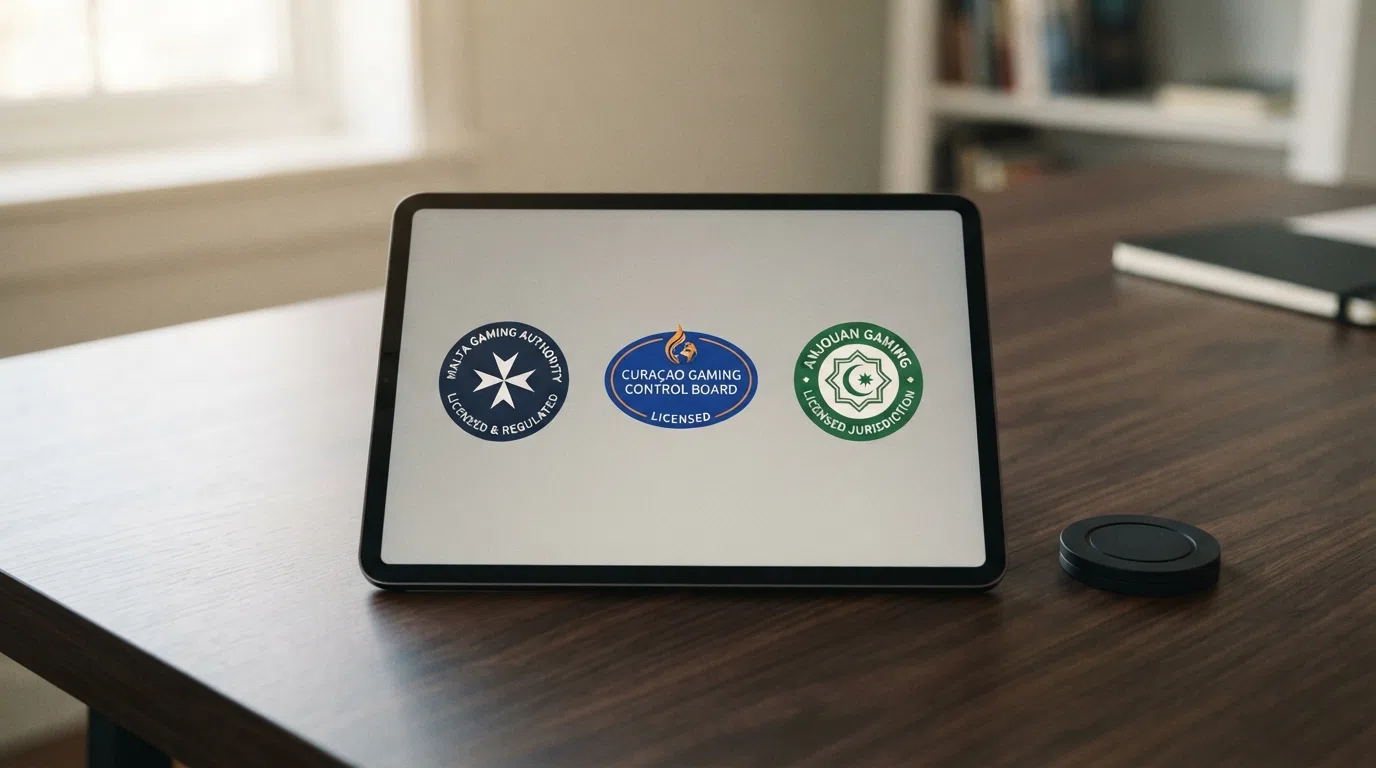
Not every non-UKGC licence is the same licence with a different flag. The three jurisdictions a British player will encounter on a non-Gamstop casino page are at materially different points on the regulatory spectrum, and the gap matters in cash terms.
| Feature | Malta Gaming Authority (MGA) | Curaçao (CGA) | Anjouan |
|---|---|---|---|
| Segregated player funds | Required | Not guaranteed; depends on operator | No meaningful fund segregation |
| Approved complaints route | Yes, through MGA-approved ADR | CGA-registered, but disputes “often does not respond” | No meaningful dispute resolution |
| Compliance audits | Regular, documented | Compliance programmes required; less intensive | Limited regulatory infrastructure |
| Responsible gambling tools | Self-exclusion, deposit limits, reality checks | Operator-dependent | Operator-dependent |
| AML/KYC threshold | Enhanced due diligence at €2,000 cumulative deposits | Identity checks “unpredictable” | Unclear |
| Licence register | MGA public register | CGA register at cert.cga.cw | Anjouan Gaming Board |
| Financial vulnerability checks | No monetary threshold prescribed | None mandated | None mandated |
An MGA-licensed operator is the closest non-UK equivalent to a UKGC site on the player-protection axis, and the comparison is not flattering to the other two tiers. A Curaçao GCB or CGA OGL licence is, in practice, a registration and a brand standard, not a continuous supervisory relationship. Anjouan is weaker still, and the protections an MGA-licensed site must offer cannot be assumed to be present at a Curaçao- or Anjouan-licensed one. None of the three grants a UK player the right to complain to the Gambling Commission or to access Gamstop, and that is the floor any comparison has to start from.
What You Lose When You Play Outside UKGC Regulation
The catalogue of protections that disappear at a non-UKGC site is substantial. British players lose access to Gamstop self-exclusion, the UKGC complaints route, and the protection of an approved ADR provider. Guaranteed fund segregation is generally absent unless the operator is MGA-licensed—none of the reviewed operators are—and the UK’s credit card ban does not apply. Stake caps of £5 or £2, the 10× wagering limit, and mandatory financial vulnerability checks at the £150 threshold are also absent. Additionally, identity verification may be deferred until withdrawal, and features like auto-play and turbo spins are unrestricted.
The list reads as a marketing menu because, in a sense, it is one. Every UKGC-licensed restriction is an offshore feature. That is precisely why British players look offshore, and it is precisely why the protections in the paragraph above are not in place to begin with.
The 2026 Regulatory Landscape: Enforcement, Tax Rises, and What Is Changing
The Commission has been tightening enforcement, and the operator side has been getting more expensive. The two trends are not the same trend, but they have the same effect on a British player’s search results.
On the enforcement side, the April 2024 to June 2025 figures are the headline: 3,140 disruption notices, 447,778 URLs referred to search engines, 287,961 URLs removed, and an average 32% fall in engagement across the 160 disrupted sites the Commission measured. The toolkit is real and it is used. It targets operators, advertisers and payment providers, not the British player at the other end of the transaction. The Commission does not currently hold statutory ISP or DNS blocking powers, and legislation to grant those powers has been proposed but not enacted, which means the legal architecture for a domestic blocking regime does not yet exist.
On the cost side, Remote Gaming Duty rose from 21% to 40% on 1 April 2026, and the statutory levy of 1.1% of gross gambling yield for remote casino licences has been in force since 6 April 2025. Both are operator costs. The RGD, in particular, is large enough that the net amount left for bonuses, promotions and player acquisition is materially smaller at a UKGC-licensed site than at an offshore competitor paying a different (or no) equivalent duty. The argument is sometimes made that the offshore bonus is more generous because the offshore operator is not paying UK tax, and the argument is, at the margin, correct. It is also the reason the offshore bonus can carry a 30× wagering multiple, the kind of number that simply does not survive the 10× UK cap and a 40% duty on the same revenue.
The Best Non-Gamstop Casinos for UK Players in 2026
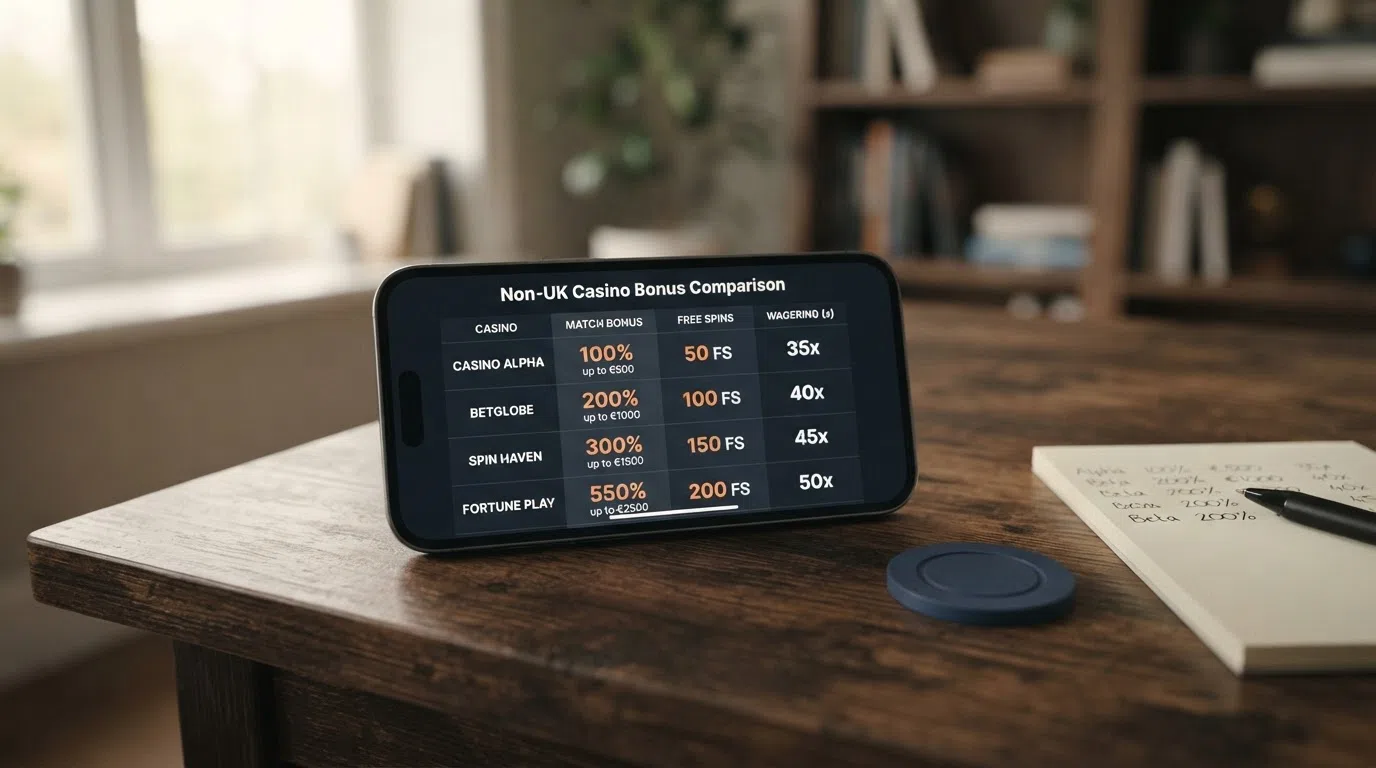
The table below compares ten non-UKGC operators that actively accept British players, none of which appear on the Gambling Commission’s public register. The comparison is on licence, welcome bonus, wagering requirement, free spins and minimum deposit, with the rest of the operator data carried in the write-ups that follow.
| Operator | Licence | Welcome Bonus | Wagering | Free Spins | Min Deposit |
|---|---|---|---|---|---|
| MyStake | Curaçao GCB | 150% up to €1,000 (casino) / 300% up to €1,500 (mini-games) | 30× bonus | 50 FS on sign-up (no-deposit) | £20 |
| Donbet | Anjouan Gaming Board | 150% up to £750 + 50 FS | 30× bonus | 50 FS welcome + 15 no-deposit FS | £20 |
| Goldenbet | Curaçao GCB | 100% up to £500 | 30× bonus | 20 FS on Big Bass Splash (no-deposit) | £20 |
| Freshbet | Curaçao GCB (OGL/2024/1800/1049) | 250% up to £1,500 across 3 deposits + 25 FS no-deposit | 30× bonus | 25 FS no-deposit + FS with welcome | £20 |
| Velobet | Curaçao GCB | 150% up to £500 + 70 FS (under £500) OR 100% up to £1,000 + 70 FS (£500+); 160% up to €1,000 (crypto) | 30× casino / 35× crypto | 70 FS with welcome | £20 |
| Lucky Block | Curaçao (Entretenimiento Rojo B.V. / Igloo Ventures SRL) | 200% up to €10,000 + 50 FS (Wanted Dead or a Wild) | Instalment: 10% per 6× deposit wagering | 50 FS on Wanted Dead or a Wild | €20 |
| BC.GAME | Curaçao GCB | Four-tier up to 360%, 180% first deposit | — | — | — |
| Winstler | Curaçao GCB | 550% welcome bonus | — | — | — |
| Snatch Casino | Curaçao GCB | 450% up to £2,960 + 325 FS across deposits | — | — | — |
| WinSpirit | CGA (OGL/2024/923/0383) | 100% match + 100 FS + 20 no-deposit FS | — | — | — |
The em-dash entries in the table are not a typographic accident. Research did not surface a specific wagering multiple, free-spin package or minimum deposit for BC.GAME, Winstler, Snatch Casino or WinSpirit, and the table leaves the cells empty rather than invent a number. The cells matter: a 30× wagering multiple on a £500 bonus means a £15,000 turnover before withdrawal, and a player choosing between operators deserves to see the column either filled or honestly empty.
How to read the table: licence is the single most important column, because it sets the regulatory tier (MGA > Curaçao > Anjouan), the level of fund-segregation guarantee, and the realistic dispute route. Welcome bonus is the headline number, but the wagering requirement below it is the column that determines what the bonus actually costs to clear. Free spins and minimum deposit are the supporting facts that turn a welcome offer into a real session.
MyStake
MyStake runs a Curaçao GCB licence and splits its welcome package into a casino track and a mini-games track, a choice the operator clearly thinks matters. The casino welcome is 150% up to €1,000 at 30× bonus wagering, and the mini-games welcome is 300% up to €1,500. The headline free-spin offer is the unusual one: 50 free spins on sign-up with no deposit required, with a cashout cap of £50–£100 and a typical 10p spin value. The minimum deposit across the cashier is £20, and the cashier takes Visa, Mastercard, Skrill, Neteller and four cryptocurrencies (BTC, ETH, LTC and bank transfer for fiat, with the cryptocurrency list matching research). Withdrawal timing is 0–24 hours for crypto and 1–3 business days for fiat. Pragmatic Play, NetEnt, Evolution and Play’n GO are the providers named in research. MyStake is often the first stop for a player with a small bankroll comparing no-deposit free spins at non-Gamstop casinos, serving as a clear benchmark for the current market standard in no-deposit offers.
Donbet
Donbet is the only Anjouan-licensed operator in the featured set, and the choice is a deliberate one: Anjouan is the weakest of the three regulatory tiers a British player will encounter, and Donbet leans into faster fiat withdrawals rather than stronger player protection. The welcome is 150% up to £750 plus 50 free spins, with 15 additional no-deposit free spins, and the wagering is 30× on the bonus amount at a £20 minimum deposit. Spin value is fixed at 10p, and the cashout cap on free-spin winnings is £50–£100, the same range as the rest of the set. The withdrawal timing is where Donbet earns its place: 0–72 hours for fiat, the fastest fiat window among the ten operators, with crypto withdrawals processed in between instantly and 12 hours. The trade-off is the licence. Anjouan does not require fund segregation in any meaningful sense, and Donbet is the operator a player who has decided that faster fiat payouts are worth that specific protection gap. For a player prioritising any of the other regulatory features, the Anjouan licence is a reason to look elsewhere.
Goldenbet
Goldenbet is a Curaçao GCB operator with a 100% match up to £500 at 30× bonus wagering and 20 no-deposit free spins on Big Bass Splash, a Pragmatic Play title with a 96.71% RTP. The minimum deposit is £20, and the cashier includes Visa, Mastercard, Skrill, three cryptocurrencies (BTC and ETH named in research, with direct debit as the unusual addition), and a direct-deposit option that no other operator in the set names. Withdrawal windows are 1–2 days for crypto and 2–5 business days for fiat. The offer is a clean 100% match on a fixed cap, and the standout fact is the direct debit availability: most UK-facing non-Gamstop casinos route deposits through cards and e-wallets, and direct debit at the cashier is rarer than the affiliate pages suggest. The headline is small next to BC.GAME’s 360% or Winstler’s 550%, but the wagering is the column that matters, and Goldenbet’s 30× is competitive against the rest of the set.
Freshbet
Freshbet is the highest aggregate match rate among the Curaçao operators in the set, with 250% up to £1,500 spread across three deposits (100% then 50% then 100%, each capped at £500), plus 25 no-deposit free spins at 30× bonus wagering. The licence is Curaçao GCB under OGL/2024/1800/1049, held by Ryker B.V., which puts Freshbet under the reformed Curaçao framework rather than the older sub-licence structure. The game library is one of the larger ones in the set at 4,800+ slots from Pragmatic Play, NetEnt, Evolution, Play’n GO and others, and the crypto withdrawal window is 10–60 minutes, which puts Freshbet in the faster end of the offshore cashout curve. Fiat withdrawals take 1–3 business days. The minimum deposit is £20, and the cashier takes Visa, Mastercard, Skrill and three cryptocurrencies including USDT. For a player comparing the welcome offer across Curaçao operators, Freshbet’s three-deposit structure is the trade-off: more total bonus, paid in three instalments, each at a different percentage.
Velobet
Velobet has the largest game catalogue in the set at 7,000+ titles from 90+ providers, and the welcome package reflects the catalogue’s depth with a dual-track offer. A deposit under £500 takes 150% up to £500 plus 70 free spins; a deposit of £500 or more takes 100% up to £1,000 plus 70 free spins; and a crypto-specific track offers 160% up to €1,000 at 35× wagering. Free-spin winnings carry 35× wagering and a £100 max cashout. The minimum deposit is £20, and the cashier takes Visa, Mastercard, Skrill, three cryptocurrencies (BTC, ETH, LTC and USDT named in research) and a crypto withdrawal window of under one hour. Fiat takes 1–3 business days. Velobet acts as the primary choice for players prioritizing library depth, offering a dual-track welcome package that allows them to tailor their bonus based on their deposit size.
Lucky Block
Lucky Block runs a Curaçao licence via Entretenimiento Rojo B.V. and Igloo Ventures SRL, and the welcome offer is structured as a 200% match up to €10,000 plus 50 free spins on Wanted Dead or a Wild. The bonus is paid in instalments: 10% of the bonus is released for every 6× wagering of the deposit amount, an unusual structure that turns the wagering from a single cliff into a series of smaller steps. The minimum deposit is €20, the game library runs to 3,000–5,000 titles from 26+ providers, and the cashier takes BTC, ETH, LTC, USDT, DOGE, Visa and Mastercard. Crypto withdrawals are instant, fiat takes 1–5 business days. Lucky Block caters to players committed to cryptocurrency who appreciate an instalment-based bonus structure that avoids the cliff of a single, large wagering requirement.
BC.GAME
BC.GAME is a Curaçao GCB-licensed crypto casino with the widest coin support in the set at 100+ cryptocurrencies and a four-tier welcome package reaching 360%, with 180% on the first deposit. The fiat cashier is limited; the operator is built around crypto. Withdrawal timing is near-instant for crypto, which is the single most useful number for a player comparing payout speed across the set. The game library is broad, with the standard crypto-casino mix, and the licence tier is the standard Curaçao GCB framework. For a player who has decided that cryptocurrency is the only payment method that matters, BC.GAME is the largest in the set by coin count. The bonus numbers are large in headline, and the 360% aggregate is a marketing figure that needs to be read alongside the tier structure to know what a single deposit actually yields.
Winstler
Winstler runs a Curaçao GCB licence with a 550% welcome bonus, the most aggressive match in the set, on terms research flags as aggressive without specifying. The game library is 5,000+ titles from 80+ providers, the crypto withdrawal window is under 30 minutes, and the fiat withdrawal window is 3–7 business days, the slowest fiat window in the set. The cashier takes crypto, Visa, Mastercard and bank transfer. The 550% is the headline that draws the click, and it is also the figure a player needs to think hardest about: 30× wagering on a deposit like that represents a significant turnover commitment. Winstler offers the most aggressive match percentage in the set, making it a destination for experienced players who have reviewed the terms and are comfortable committing to the associated turnover.
Snatch Casino
Snatch Casino is a Curaçao GCB operator with 450% up to £2,960 plus 325 free spins distributed across multiple deposits, the highest combined free-spin count in the set. Pragmatic Play and NetEnt are the providers named in research, the crypto withdrawal window is 0–24 hours, and fiat takes 2–5 business days. The cashier takes Visa, Mastercard, Skrill, BTC and ETH. The free-spin total is the standout figure: 325 spins is a marketing number rather than a single-deposit offer, and a player reading the bonus column should expect the spins to be distributed in tranches tied to specific deposits. The wagering terms for the free spins and the cashout cap on free-spin winnings are the figures research did not surface for this operator, and they would be the next thing to check before depositing.
WinSpirit
WinSpirit runs a CGA OGL licence under OGL/2024/923/0383, which puts the operator under the reformed Curaçao framework rather than the older GCB structure, and the welcome package is a 100% match plus 100 free spins on welcome deposit, with an additional 20 no-deposit free spins. The cashier is the most varied in the set: 11 cryptocurrencies, Visa, Mastercard, Skrill, Neteller, Apple Pay and bank wire. Crypto and e-wallet withdrawals take 0–24 hours; cards and bank transfers take 3–7 days, the longest fiat window alongside Winstler. For a player who values Apple Pay as a deposit method at a non-UKGC casino, WinSpirit is the operator in the set, and the no-deposit free spins are the second largest in the set after MyStake.
Why Your 2026 Offshore Bonus Is Bigger — and What It Really Costs to Clear
The headline match percentages at non-Gamstop casinos are real, and the comparison with the UKGC-licensed welcome offers is unflattering for the licensed market. The licensed baseline is now a 10× wagering cap under LCCP Social Responsibility Code 5.1.1, in force from 19 December 2025, and a ban on mixed-product promotional offers under the same provision. A 100% match at a UK-licensed casino is the upper end of the licensed market, and the wagering is the hard cap. Offshore, the same headline match percentage comes with a 30×, 35× or 50× wagering multiple, and the bonus itself is typically several times larger.
The arithmetic is straightforward, and the conclusion is not flattering to the offshore marketing line. A £100 deposit at MyStake, with a 150% match and 30× bonus wagering, yields a £150 bonus and £4,500 in required turnover. At an RTP of 96.10% (the Starburst figure used in the calculation), the expected loss on that turnover is £4,500 × (1 − 0.961) = £175.50. That figure is the cost of clearing the bonus, and it is independent of the bonus amount itself. A player who cleared a £100 bonus at a UK-licensed site at 10× wagering would face £1,000 in turnover, and the expected loss on the same RTP would be £1,000 × 0.039 = £39. The headline comparison is £150 bonus against £150 bonus; the cost comparison is £175.50 against £39. The “bigger” bonus is more expensive to clear, and the difference is not at the margins.
This is the point at which the marketing language starts to leak. A 150% match sounds more generous than a 100% match, and it is, on the headline. The wagering multiple changes the comparison, and the expected loss is the figure that tells the player what the bonus actually costs. The 10× cap is one of the UKGC rules British players most often cite as a reason to look offshore, and the calculation above is the reason it exists.
No-Deposit Bonuses and Free Spins at Non-Gamstop Casinos
A no-deposit free spin offer at a non-Gamstop casino is, structurally, a marketing introduction: 10 to 25 free spins on a selected Pragmatic Play or BGaming slot, with 35× to 50× wagering on the winnings and a cashout cap of £50 to £100. The five operators in the set with a no-deposit free spin offer are MyStake (50 spins), Donbet (15 spins), Goldenbet (20 spins on Big Bass Splash), Freshbet (25 spins) and WinSpirit (20 spins). The wagering is on winnings only, not on a deposit, and the cashout cap is the upper limit on what a player can withdraw from the offer regardless of how the spins land.
A player with no skin in the game and a 10p spin value on a 96.10% RTP slot, across 25 free spins, faces expected winnings of 25 × 0.10 × 0.961 = £2.40, before the cashout cap. Apply 40× wagering on the winnings and the playthrough is £96, with an expected loss of £3.74. The 40× wagering is the structure, not the outcome: a player can clear the playthrough with positive expected value if the winnings are large enough, and most will not, because the winnings are themselves a small number. The cashout cap of £100 is the upper bound on what is actually payable, and it sits well above the expected winnings from a no-deposit offer. The no-deposit bonus is a marketing introduction, and the wagering and the cap are the terms on which it is one.
Welcome Packages and Deposit-Match Offers
The welcome offers in the set range from Goldenbet’s 100% match up to £500 to Winstler’s 550% match, with multi-deposit structures at Freshbet (three deposits, 100%/50%/100%) and Snatch Casino (325 free spins distributed across deposits). The maximum bonus amount interacts with the minimum deposit to determine the percentage match, and a player comparing operators needs to read both numbers. A 100% match up to £500 with a £20 minimum deposit yields a £20 bonus on the minimum deposit, not a £500 one, and the headline figure only applies to deposits large enough to consume the cap.
The two crypto-specific tracks in the set, Velobet at 160% up to €1,000 and BC.GAME at 180% on the first deposit of a 360% four-tier package, are the offers the licensed market structurally cannot replicate. A UK-licensed site cannot offer a crypto track because no UK-licensed site accepts crypto, and the offshore welcome offer is structured around the payment method in a way the licensed market does not need to be. The Remote Gaming Duty rise from 21% to 40% on 1 April 2026 is part of the reason the licensed welcome offers have shrunk relative to the offshore ones, and it is a background fact rather than a direct cause: the licensed market and the offshore market are now on materially different cost bases, and the headline numbers reflect that.
Wagering Requirements: How Offshore Terms Compare to the UK Cap
The 10× UKGC cap is the baseline, and the offshore multiples of 30× to 50× sit three to five times higher. The implication is not subtle. A £100 bonus at 10× wagering is £1,000 in turnover; at 30× it is £3,000; at 50× it is £5,000. The expected loss scales linearly with the turnover, and a player clearing a 50× bonus pays roughly five times the expected loss of a player clearing a 10× bonus on the same RTP.
The Lucky Block instalment structure is the alternative model in the set. The bonus is paid in 10% slices as the deposit is wagered at 6× the deposit amount, which turns the playthrough from a single cliff into ten smaller steps. The model is a different way of expressing the same trade-off, and a player who finds a single 30× cliff hard to think about may find the instalment version easier to plan around, or may not. The 10× UK cap is the cleanest structure on the page, and it is the one the offshore market has decided not to copy.
Getting Money In and Out: Payments, Crypto, and Withdrawal Speeds at Non-UK Casinos
The payment page is where the gap between the licensed market and the offshore market is most visible. No UKGC-licensed operator accepts cryptocurrency, and the offshore market treats BTC, ETH, LTC, USDT and other coins as a baseline payment rail. The credit card ban in force at UKGC sites since 14 April 2020 does not extend to the offshore market, and the operators that choose to accept cards do so on the card network’s terms rather than on the Commission’s. The result is a payment menu at the offshore cashier that the licensed cashier cannot match, and the player who has decided that crypto or card flexibility matters is, in payment terms, already outside the licensed market.
The withdrawal speed tiers are a function of the payment method, not the licence. Crypto is the fastest: near-instant at BC.GAME, under 30 minutes at Winstler, 10–60 minutes at Freshbet, under one hour at Velobet, 0–24 hours at MyStake, Donbet, Snatch Casino and WinSpirit, and 1–2 days at Goldenbet. E-wallets typically process in 24–48 hours at the licensed market; the offshore e-wallet window is comparable. Cards take 1–5 business days at most offshore operators, and 3–7 business days at Winstler and WinSpirit. Bank transfers are the slowest rail, and the few operators that offer them as a primary withdrawal route carry the longest windows.
What Pay and Play Means at a Non-UK Casino
Pay and Play is a deposit-and-play model built on Trustly and similar instant-bank-transfer rails: a player deposits from a bank account, plays without creating a password-protected account, and withdraws back to the same bank account without a separate verification step. The model is well-established at MGA-licensed European casinos and at Nordic-licensed sites serving their home markets. At the UK-facing non-UKGC market, the Pay and Play concept exists more in the marketing than in the cashier; the operators reviewed on this page use traditional account-based registration. The structural reason is that the UKGC’s pre-deposit identity verification requirement, in force since 7 May 2019, applies only to UK-licensed operators, and a non-UKGC site is not bound by it. The trade-off is that an offshore operator can offer faster sign-up, but the verification, when it eventually happens, may run at the withdrawal stage rather than at the deposit stage, and a player used to UKGC timing may find the delay unexpected.
Cryptocurrency Deposits and Withdrawals
Crypto is the largest single payment-method difference between the licensed market and the offshore one. The set covers BTC, ETH, LTC, USDT and DOGE, with BC.GAME extending to 100+ cryptocurrencies and WinSpirit to 11. Every operator in the set except Goldenbet (which lists BTC and ETH in research) takes at least three cryptocurrencies, and the crypto withdrawal windows are the fastest payment times on the page. The UKGC has not formally banned crypto deposits, but licence conditions and guidance indicate that crypto payments are incompatible with current regulatory requirements, and no UK-licensed operator processes them.
For a player comparing operators on payment flexibility, the practical question is not “does this site take crypto” (most do) but “how fast is the crypto withdrawal” (the spread is under 30 minutes to 1–2 days) and “how many coins are supported” (the spread is three coins to 100+). BC.GAME is the widest by coin count; Winstler is the fastest by withdrawal time; Freshbet sits in the middle on both. The licensed market cannot compete on either axis because it is structurally unable to process crypto at all.
Withdrawal Speed Reality Check: Crypto vs Fiat at Offshore Casinos
The “instant withdrawals” line that runs through offshore marketing is true of crypto, less true of fiat, and the rest of the paragraph is where the qualification lives. The crypto withdrawal spread is sub-30 minutes (Winstler) to 1–2 days (Goldenbet), with most operators clustering in the under-one-hour band. The fiat withdrawal spread is 0–72 hours (Donbet, the fastest in the set) to 3–7 business days (Winstler, WinSpirit). E-wallets are the fastest fiat rail; cards sit in the middle; bank transfers are the slowest.
The MGA-licensed operators provide stronger withdrawal guarantees than the Curaçao- or Anjouan-licensed ones, and the reason is the segregated-player-funds requirement. None of the operators reviewed on this page is MGA-licensed, which means the withdrawal guarantee is, in each case, the operator’s own commitment rather than a regulatory one. The fast fiat window at Donbet is a marketing claim supported by the cashier’s record; it is not a guarantee the Anjouan Gaming Board can be expected to enforce if a withdrawal stalls. A player choosing an operator on fiat withdrawal speed is, in part, choosing the operator’s track record over the regulator’s promise.
Staying in Control: Responsible Gambling Tools and Help Outside the UKGC Framework
The responsible-gambling help available to a British player does not depend on the licence of the casino the player is using. GamCare, the National Gambling Helpline, NHS gambling harm clinics, the Samaritans-adjacent crisis lines, and Gamblers Anonymous are all UK-based services that work regardless of where the player has placed a bet. The offshore casino is outside the UK responsible-gambling infrastructure, but the player is not.
The case for the help infrastructure being on the page is the case for the page being useful at all. The NHS Adult Psychiatric Morbidity Survey 2023–24 found a 0.4% PGSI 8+ rate for problem gambling among adults in Great Britain and a 1.6% PGSI 3+ rate for moderate risk or above. The English treatment-need estimate, drawn from the same survey base, put the number of adults who may benefit from some form of treatment or support at almost 1.6 million, with 970,000 potentially benefiting from level-2 intensity treatment. The GamCare referral data for January 2026 shows 996 referrals to treatment and peer support, up 48% from 674 in January 2025. The numbers are not a warning to the median reader; they are a reminder that the median reader is not the entire readership, and the infrastructure exists because the non-median cases are not rare.
Self-Exclusion Tools Available Outside Gamstop
Operator-level self-exclusion exists at every reputable offshore casino, and the way to use it is the same as at a UK-licensed site: contact the operator’s support team, request the exclusion, and confirm the period. The exclusion is enforced only at the operator that granted it, and the period starts when the operator confirms the request, not when the player makes it. The Gamstop exclusion periods, six months, one year, five years, or five years with auto-renewal, are the reference points a player is used to from the licensed market, and offshore operators typically offer comparable options.
The SENSE scheme is the land-based self-exclusion system for UK casinos, and it does not cover online. The Gamban and BetBlocker software options are platform-agnostic blocking tools that work at the device level, and a player who wants a layer that is independent of any operator can install them. None of these substitutes for the Gamstop database, and none of them is connected to it. A player who has self-excluded under Gamstop and is asking how to bypass the exclusion is asking a question this page is not the place to answer.
Setting Deposit and Session Limits at Offshore Casinos
Deposit-limit tools at offshore casinos are operator-dependent, and the comparison with the UKGC-licensed baseline is sharp. The UKGC requires deposit-limit prompting before the first deposit from 31 October 2025, and from 30 September 2026 only a gross deposit limit may be called a “deposit limit” (the renaming rule that limits the operator’s ability to frame net deposits as gross). The £150 net-deposit financial vulnerability check, in force from 28 February 2025, is the trigger for the next layer of friction. MGA-licensed casinos are required to offer deposit limits, reality checks and session timers as a baseline. Curaçao-licensed casinos may offer any, all or none of these. Anjouan-licensed casinos are not required to offer any of them.
The practical implication is that a player who wants a deposit limit, a session timer, or a reality check at an offshore casino needs to set it manually, typically through the responsible-gambling section of the account, and the limit is enforced only at that operator. A player who wants the limit to follow them across operators needs a third-party blocking tool. The licensed market offers a structural version of this protection, and the offshore market does not.
Recognising Problem Gambling and Where to Get Help in the UK
The help infrastructure is a UK national one and it works for any British player regardless of where they gamble. GamCare runs the National Gambling Helpline on 0808 8020 133, with live chat, email support, and a forum. GamCare made 996 referrals to treatment and peer-based support services in January 2026, up 48% on January 2025’s 674. GambleAware funds research, prevention and treatment. NHS gambling harm clinics operate in England, Scotland and Wales, and the referral path runs through a GP or directly through the clinic network. Gamblers Anonymous runs peer-support meetings. None of these services depends on the licence of the casino the player is using, and the page lists them because the operators in the table do not provide equivalent protection by themselves.
The NHS estimate that almost 1.6 million adults in England may benefit from some form of treatment or support for harmful gambling, with 970,000 potentially for level-2 intensity treatment, is the context the help lines sit in. The 48% year-on-year rise in GamCare referrals is a current data point rather than a long-run estimate, and it is the figure that tells a reader in 2026 the help infrastructure is being used at a higher rate than a year ago. The 0.4% PGSI 8+ problem-gambling prevalence from the NHS Adult Psychiatric Morbidity Survey 2023–24 is the lower bound; the 1.6% PGSI 3+ moderate-risk-or-above rate is the figure that includes the people who are not yet at the problem-gambling threshold but are starting to need the help lines.
How We Evaluated and Ranked These Non-UK Casinos
The starting point for the ranking was the Gambling Commission’s public register, which carried 2,663 business records at its last update on 29 July 2026. Every operator reviewed on this page was checked against that register, and none appears on it, which is the floor of what “non-UKGC” means in practice. The “UK-friendly” definition used throughout is the one the comparison pages themselves use: an operator that actively accepts UK players and processes GBP, regardless of the licence it holds. None of the operators on this page is UKGC-licensed, and the distinction matters more than the affiliate pages typically let on.
The ranking criteria, in the order they were applied: licence tier and regulatory credibility, with MGA above Curaçao above Anjouan; bonus terms and wagering fairness, with the 30× to 35× cluster rated against the 10× UKGC cap; withdrawal speed, with crypto sub-hour rated above fiat sub-72 hours; payment-method range, with crypto and direct debit adding credit; and game-library depth and provider quality, with the 7,000+ catalogue at Velobet and the 4,800+ library at Freshbet rated higher than the smaller sets. The sources used to compile the ranking were web market research for the non-Gamstop operator set, operator websites for bonus terms and cashier data, Gambling Commission publications for the regulatory frame, GamCare data for the help-infrastructure context, and the Gambling Act 2005 and the LCCP for the legal picture. Where research did not surface a specific figure (a wagering multiple at BC.GAME or Winstler, a free-spin total for several operators), the table leaves the cell empty rather than invent a number, and the operator write-ups name the gap where the gap matters.
What the Offshore Alternative Means for Your Play in 2026
The honest ledger is short. On the licensed side: Gamstop, a UKGC complaints route, approved ADR, age-banded stake limits, a 10× wagering cap, financial vulnerability checks at the £150 net-deposit threshold, a credit card ban, a 2.5-second minimum spin speed, an auto-play ban, reverse-withdrawal protection, identity verification before the first deposit, fund segregation, and a regulator that responds to complaints. On the offshore side: larger welcome bonuses, crypto deposits and withdrawals, faster payout windows for crypto, no stake caps, no Gamstop connection, and a regulatory regime that ranges from MGA-grade on the high end to Anjouan on the low. The two are not the same product at different prices; they are different products with different protection profiles, and the comparison the player needs to make is not “is the offshore bonus worth it” but “is the offshore bonus worth the specific protection I am giving up”.
The MGA/Curaçao/Anjouan tiered reality means not all offshore casinos carry equal risk, and a player who has decided to play offshore can still choose a tier. The MGA-licensed operators provide the closest-to-UK protection profile; the Curaçao-licensed operators provide a registered brand standard with less enforcement; the Anjouan-licensed operators provide the registration and not much beyond it. The licence tier is the single most useful fact on a non-Gamstop comparison page, and it is the one the headline match percentages do not include.
Checking a licence on the official register is the practical first step, and the registers are public. The CGA register is at cert.cga.cw; the MGA register is on the MGA website; the Anjouan Gaming Board maintains its own list. A licence number that does not appear on the relevant register is a marketing line, and the operator has not been verified.
The responsible-gambling help services on the page are the safety net that does not depend on the operator’s licence, and they are the part of the picture a UK player does not lose by going offshore. GamCare, the National Gambling Helpline, NHS gambling harm clinics, GambleAware, Gamblers Anonymous: all of these are reachable from anywhere in the UK, regardless of where the player has placed a bet.
The verdict, for a player who has read this far: the offshore market suits a player who has decided that the licensed market’s stake limits, wagering cap, financial-vulnerability checks and Gamstop coverage are not the right framework for them, and who is willing to trade those protections for the bonus size, the crypto rails and the faster cashouts. The offshore market is not the right framework for a player who has self-excluded under Gamstop, who is in active treatment, or whose gambling is starting to need the help lines. The decision belongs to the player, and the page is the case for making it with the numbers in front of you rather than with the marketing lines.
Frequently Asked Questions
Is it illegal for a British player to gamble at a casino without a UK licence?
No. Under Section 33 of the Gambling Act 2005, the criminal offence targets the operator providing unlicensed gambling facilities, not the player using them. A UK resident who deposits at an offshore casino without a UKGC licence commits no offence under the Act. The legal risk falls on the operator, the advertiser and the payment intermediary, not the individual player. What the player loses is regulatory protection, not liberty.
Which offshore gambling licence gives UK players the strongest safeguards?
The Malta Gaming Authority (MGA) provides the strongest non-UK safeguards: segregated player funds, an approved complaints route through an MGA-approved ADR provider, regular compliance audits, and required responsible-gambling tools including self-exclusion, deposit limits and reality checks. Curaçao (CGA) sits below MGA, with reformed OGL licences and required compliance programmes but less intensive enforcement. Anjouan is the weakest tier, with limited regulatory infrastructure and no meaningful fund segregation or dispute resolution. None of the three grants a UK player Gamstop coverage or a UKGC complaints route.
How do I resolve a dispute with an offshore casino that has no UKGC licence?
The UKGC complaints route is not available, and there is no automatic UK ADR. The MGA-licensed operators provide a formal complaints route through an MGA-approved ADR provider. Curaçao-licensed operators may respond to a complaint through the CGA register, but the body often does not respond. Anjouan-licensed operators offer no meaningful dispute resolution. The practical first step is the operator’s own support team and complaints function. Beyond that, chargeback rights may apply to credit and debit card transactions, and the card network’s dispute process can be used regardless of the operator’s licence. Section 75 of the Consumer Credit Act may apply to credit card transactions over £100.
How do I verify that a non-Gamstop casino’s licence is genuine?
Check the licence number on the official register of the regulator that issued it. The MGA register is at the Malta Gaming Authority website; the CGA register is at cert.cga.cw; the Anjouan Gaming Board maintains its own register. A licence number that does not appear on the relevant register, or that returns a different operator name when searched, is not a verified licence. The UKGC public register (2,663 records at the last update on 29 July 2026) is the negative check: a UK-facing non-Gamstop casino should not appear on it. A casino that cannot be found on either the issuing regulator’s register or the UKGC’s register is one to avoid.
Do non-Gamstop casinos accept GBP deposits?
Most UK-facing non-Gamstop casinos accept GBP, although some offers are denominated in EUR or USD and the conversion happens at deposit. The “UK-friendly” definition used on most comparison pages assumes GBP acceptance. The cashier section of the operator’s website is the place to confirm, and the supported currencies are usually listed alongside the payment methods. Where a non-UKGC operator denominates its bonus in EUR with a GBP deposit, the conversion rate and any conversion fee are the next numbers to check.
Licence – realmoney-onlinecasinos-uk
Content created by the «realmoney-onlinecasinos-uk» team