
Click2Pay is gone — here is what UK casino players actually use now
 Available in GB
The short answer first: nothing, because Click2Pay is no longer operational as a consumer payment method. The original wallet service was discontinued effective 1 October 2014, and its parent company’s collapse in 2020 made any revival impossible. Every UK casino search result that still lists Click2Pay as a deposit option is referring to a method that has not existed for over a decade. This page explains how that happened, what UK players actually use at licensed casinos today, and how to compare the ten biggest UK operators by the criteria that matter once Click2Pay is off the table.
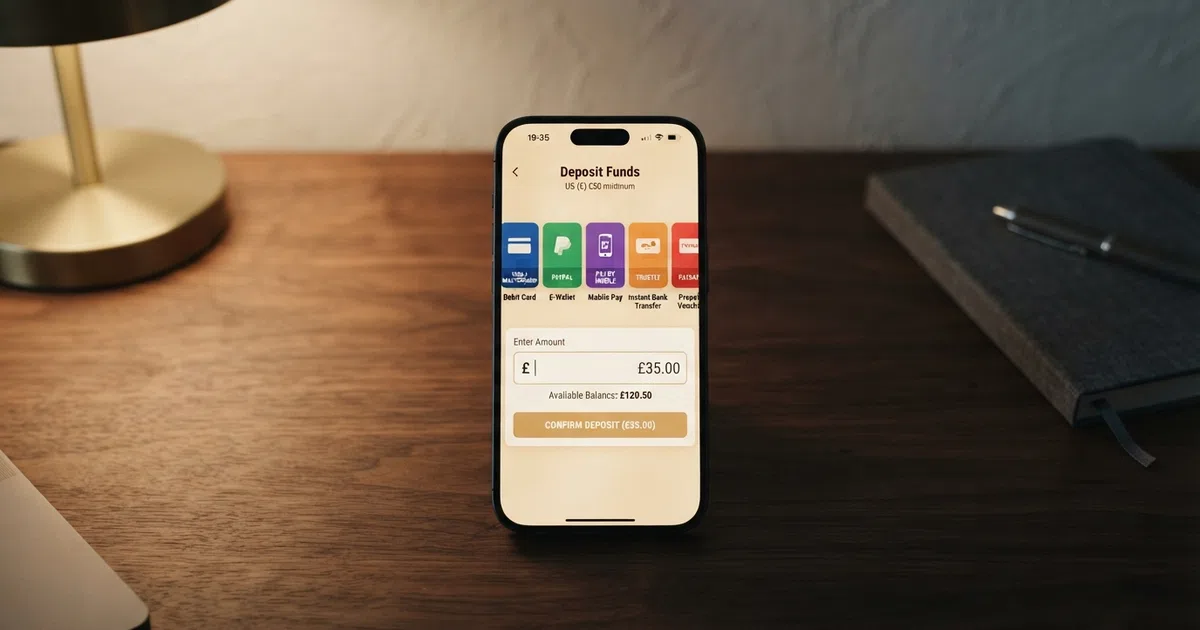
Data current as of September 8, 2026, verified against the Gambling Commission public register.
Click2Pay shut down in 2014 — the full story and what took its place
What Click2Pay was and how it worked
Click2Pay was a Germany-based e-wallet that operated in more than twenty countries, including the United Kingdom, throughout the 2000s and into the early 2010s. Its pitch to casino players was simple and, for the era, genuinely useful: load funds into the Click2Pay wallet from a bank account or card, then deposit at any partner casino without ever sharing card or bank details with the operator. In the years before open banking, that shielding mattered. A player who valued privacy, or who simply did not want a casino cashier storing card numbers, had a reason to pick Click2Pay over a plain debit-card deposit.
E-wallets in general were the preferred deposit route for online casino players in that period, both for the privacy layer and for the speed. Card deposits were instant but exposed the player’s full billing details to the merchant. Bank transfers were slow. E-wallets sat in between — fast on the way in, fast on the way out, with a buffer the player controlled. Click2Pay’s peak adoption ran from roughly 2008 to 2013, on that same logic. It was not unique in offering it; PayPal, Skrill and Neteller were the bigger names in the same lane. But Click2Pay had presence, and it had casino integrations that players learned to trust.
Why Click2Pay disappeared from UK online casinos
The shutdown came in two stages, the first of which the user-facing press mostly missed. Click2Pay had already pulled out of the United States in 2007, shortly after the Unlawful Internet Gambling Enforcement Act was passed in late 2006. That was an early warning sign that the regulatory environment around online gambling payments was hardening, but for UK and European customers, nothing changed at the time.
The effective end for UK players arrived on 1 October 2014, when Click2Pay discontinued its consumer wallet service. From that date the wallet could not be funded, existing balances were wound down through a defined claims process, and partner casinos removed Click2Pay from their cashier lists. Several industry sources still describe Click2Pay as “discontinued” or “no longer accepting new customers,” which is the same fact from a different angle. The corporate seal came six years later, in 2020, when Wirecard AG — the parent company linked to Click2Pay’s European operations — declared insolvency. With the parent gone, there was no operational entity left to revive the brand even if a market for it still existed. There was not, by then; PayPal, Skrill and open banking had filled the lane Click2Pay once occupied.
The Click2Pay Limited company — not the e-wallet you remember
A separate confusion now sits on top of the historical one. Companies House lists CLICK2PAY LIMITED, company number 13031743, incorporated on 19 November 2020, with Active status. That entity shares a name with the defunct e-wallet and was incorporated the same year the parent company collapsed — but it is a distinct legal entity, with no documented connection to the discontinued payment service. Searches for “Click2Pay UK” sometimes surface this company record, which can mislead a former Click2Pay user into thinking the wallet has returned.
It has not. A corporate registration is a Companies House record; an operating payment service is a regulated business with a banking or e-money licence behind it. The two are not interchangeable, and nothing on the Click2Pay Limited record suggests a consumer-facing wallet has been relaunched.
From debit cards to open banking — every way UK players fund a casino account in 2026
The market has not stood still since Click2Pay left. Total online Gross Gambling Yield in Great Britain reached £1.55 billion in the first quarter of 2026, up seven per cent year-on-year, with slots alone generating £773 million of that total. Average monthly active online gambling accounts stood at 13.4 million in the same period. The payment-method landscape behind those numbers is broader and more regulated than anything Click2Pay ever sat inside.

Debit card, e-wallet or bank transfer — how each method actually works
Visa and Mastercard debit remain the baseline. Every UK-licensed casino accepts both, deposits are instant, and the card details sit behind the operator’s standard security. Withdrawals take one to five working days once the casino has processed the request — the casino side of that window is usually under twenty-four hours, the rest is the card network and the player’s bank.
E-wallets sit between the player and the casino. PayPal, Skrill and Neteller hold the funds, the casino never sees the underlying card, and the player moves money in and out of the wallet on their own terms. PayPal deposits are instant with a £10 minimum and withdrawals land in 0–48 hours at UK-licensed casinos. Skrill and Neteller follow the same pattern. The trade-off is that some casinos exclude e-wallet deposits from welcome bonuses — 888 Casino blocks Skrill and Neteller from bonus eligibility entirely, and Betway restricts bonus qualification to debit-card deposits only.
Open banking and Trustly are the modern upgrade Click2Pay never became. Instead of funding a separate wallet, the player authorises a direct bank-to-casino transfer through their own banking app, authenticated by biometrics on the phone. Trustly, Volt, Token and TrueLayer are the providers pushing this route, and adoption is growing fast across UK-licensed operators. There is no separate account to top up and no new set of credentials to remember.
Paysafecard is the outlier. A prepaid voucher bought in a shop, redeemed by entering a sixteen-digit code at the cashier. Deposits are instant and the minimum is £5, the lowest of any method on this page. The catch is that there is no withdrawal option — winnings have to come back to a bank account or e-wallet, not to a voucher.
Bank transfer is the slowest route on both ends. Deposits take two to ten days, withdrawals three to ten, and the minimum is £100, which puts it out of reach for anyone playing with a small bankroll.
Deposit speed, withdrawal times and what ‘instant’ really means
“Instant deposit” is the most overused phrase in casino marketing, and it is mostly accurate — for the deposit itself. The money moves the moment the player confirms. “Instant withdrawal” is where the gap opens. The casino has to approve the request first, and that approval window is what separates the fast operators from the slow ones. Once the casino releases the funds, PayPal, Skrill and Neteller typically settle inside two days; debit cards take one to five; bank transfers drag to ten.
The other side of “instant” is the credit card ban that has been in force since 14 April 2020 under LCCP 6.1.2. The rule blocks every credit card payment for remote gambling, including credit-card-funded top-ups to e-wallets that would then be used at a casino. The ban does not stop a debit card, and it does not stop an e-wallet that was funded from a debit card or bank account. What it stops is any route that would let a player gamble on borrowed money. The effect on Click2Pay’s modern equivalents is nil — PayPal, Skrill, Neteller, Trustly, Apple Pay and Google Pay all clear the rule because the underlying funding source is debit-based.
Click2Pay is gone — here are the alternatives UK players use instead
No single method replicates every Click2Pay feature, but the menu of working alternatives is wider than anything Click2Pay ever offered. PayPal is the closest match on the core promise — instant deposits, fast withdrawals, and a buffer between the player’s bank and the casino. Skrill and Neteller cover the same ground for players already comfortable with e-wallet flows. Apple Pay and Google Pay deliver the same one-tap mobile experience Click2Pay tried to pioneer, with biometric authentication built in. Trustly and the open banking providers it leads are the upgrade Click2Pay never became: instant, bank-backed, and requiring no separate account at all. Paysafecard sits at the privacy extreme for anyone who wants to deposit without linking a bank account to a casino.
The trade-off, which Click2Pay would have warned players about if it had survived, is that some of these routes exclude you from bonuses or carry fees on the wallet side. PayPal deposits can be free at the casino end but PayPal itself can charge for currency conversion or receiving certain payment types. Skrill and Neteller have a similar structure. Open banking through Trustly is generally free at both ends. The cleanest free route is still the debit card — universally accepted, no wallet fees, no conversion cost, but slower on the way out.
What UK casinos charge in fees, and the real minimum you can deposit
At the casino end, deposits are free across all the major methods at every featured operator on this page. The fees, when they exist, sit on the wallet side — PayPal for receiving certain payments, Skrill and Neteller for inactivity, and the currency conversion line on any cross-border wallet. The minimum deposit tells a more interesting story. Paysafecard and most debit card routes start at £5. PayPal starts at £10. Bank transfer starts at £100, which excludes most casual players by design. The £5 deposit casinos are real and accessible — Bet365, Ladbrokes, Coral, Betfred and Sky Vegas all accept £5 on at least one method — but the headline minimum is not always the practical minimum once bonus qualification rules apply. Bet365’s £5 deposit does not trigger the welcome bonus; the qualifying deposit is £10. Ladbrokes and Coral accept £5 across the board, including for the offer.
The UK casinos with the widest range of deposit and withdrawal options
The ten operators below were drawn from the UK market-share leaders and filtered for two things: a UKGC licence that is Active on the public register, and a payment-method list broad enough to give a Click2Pay refugee several working routes. The table summarises what each one offers; the sections beneath rank them by payment breadth and bonus fairness.
| Operator | UKGC Licence | Key Payment Methods | Welcome Offer | Wagering | Min Deposit |
|---|---|---|---|---|---|
| Bet365 | Active (38721/55148/55149) | Debit card, PayPal, Apple Pay, Google Pay, Trustly, Paysafecard, bank transfer | 100% up to £100 (casino) | 10× | £5–£25 / £10 for bonus |
| William Hill | Active | Debit card, PayPal, Apple Pay, Paysafecard, instant bank transfer, Skrill, Neteller | Bet £10 Get £30 free bets | 10× | £10 |
| Ladbrokes | Active | Debit card, Apple Pay, Google Pay, PayPal, Paysafecard, bank transfer | Bet £5 Get £30 free bets | 10× | £5 |
| Coral | Active | Debit card, Apple Pay, Google Pay, PayPal, Paysafecard, bank transfer | Bet £5 Get £30 free bets | 10× | £5 |
| Paddy Power | Active | Debit card, Apple Pay, PayPal, Paysafecard, bank transfer | 60 no-deposit + 200 free spins on £10 | 0× | £10 |
| Betfred | Active (39544/1058/49528) | Debit card, PayPal, Paysafecard, Skrill, bank transfer | Stake £10 Get 200 no-wager spins | 0× | £5 |
| Sky Vegas | Active (Flutter) | Debit card, Apple Pay, PayPal, bank transfer | 50 no-deposit + 200 free spins on £10 | 0× | £5 |
| Betfair | Active (Flutter) | Debit card, Apple Pay, PayPal, Paysafecard, bank transfer | 50 no-deposit + 150 free spins on £10 | 0× | £10 |
| 888 Casino | Active (evoke plc) | Debit card, Apple Pay, PayPal, bank transfer (Skrill/Neteller excluded from bonus) | 100% up to £100 (90-day) or 100 free spins | 10× | £10 |
| Betway | Active | Debit card, PayPal, Trustly, bank transfer (debit card only for bonus) | 100% up to £50 | 10× | £10 |
Bet365 — 8 payment methods and the UK’s largest casino operator
Bet365 sits at the top of the UK market by a clear margin and runs the broadest payment menu in the comparison. Eight methods are live on the casino cashier — Visa and Mastercard debit, PayPal, Trustly, Apple Pay, Google Pay, Paysafecard and bank transfer — which gives a Click2Pay refugee every modern route in one place, including the two that did not exist when Click2Pay was alive (Trustly for open banking and Google Pay for mobile). The casino welcome offer is a 100% deposit match up to £100 at 10× wagering, which is the post-December 2025 UKGC ceiling in practice rather than the exception. The minimum deposit is £5 across most methods and £10 to qualify for the bonus. Game providers cover the full UK mainstream — Playtech, NetEnt, Microgaming, Pragmatic Play and Evolution. For a player who wants one account that handles deposits, withdrawals and live dealer without compromise, Bet365 is the most complete option on the page. The pay-off for that breadth is that no single method gets the operator’s special attention — PayPal withdrawals are not faster here than anywhere else, and the bonus validity is the standard seven days.
William Hill — 8 payment methods with Skrill and Neteller on the list
William Hill has been a UK high-street name since the 1930s and runs an eight-method cashier that still includes Skrill and Neteller — two e-wallets many rivals have quietly dropped. That matters for any player whose existing wallet is one of those two, because it removes the friction of opening a new one just to deposit. PayPal, Apple Pay, Paysafecard and instant bank transfer fill out the rest of the menu. The welcome offer is Bet £10 Get £30 in free bets for sports, with a parallel casino package, all at 10× wagering and a seven-day validity. The minimum deposit is £10 across the board. The game library runs Playtech, NetEnt, Evolution, Pragmatic Play and IGT. William Hill’s edge over the rest of the high-street names is the e-wallet coverage; for a player who already uses Skrill or Neteller for other online spending, this is the cleanest deposit route in the comparison.
Ladbrokes — 7 payment methods from the high-street giant
Ladbrokes offers seven methods covering the modern mobile-wallet pair — Apple Pay and Google Pay — alongside PayPal, Paysafecard, debit card and bank transfer. Skrill and Neteller are not on the list, which pushes any e-wallet user toward PayPal or toward a wallet they may not already have. The welcome offer is Bet £5 Get £30 in free bets for sports at 10× wagering, and the minimum deposit is £5 across the board, which is the lowest in the high-street cluster alongside Coral. Game providers are Playtech, NetEnt, Evolution and Pragmatic Play. Ladbrokes’ appeal is the entry threshold — a £5 deposit with Apple Pay or Google Pay is the cheapest route into a UKGC-licensed casino on this page. The cost of that low entry is that the bonus validity is the standard seven days, and the welcome package is sports-led rather than casino-led.
Coral — 7 payment methods and a £5 minimum deposit
Coral mirrors Ladbrokes almost line for line: seven methods including Apple Pay, Google Pay, PayPal, Paysafecard, debit card and bank transfer, a Bet £5 Get £30 free bets welcome at 10× wagering, and a £5 minimum deposit across the cashier. Game providers are the same Playtech/NetEnt/Evolution/Pragmatic Play core. The two are siblings under the same parent group, and the practical difference is mostly brand familiarity and promotional cadence. Comparing the two is often less about the static welcome offer and more about whichever sibling happens to be running the more generous promotion on the day.
Paddy Power — 60 no-deposit free spins with zero wagering
Paddy Power’s welcome structure is the one that costs the player nothing to sample. The casino hands out 60 free spins the moment a new account is verified — no deposit required, no wagering on whatever those spins return. A further 200 free spins unlock on a £10 deposit and wager, for a total of 260 free spins, all at 0× wagering. The minimum deposit for the deposit portion is £10. Six payment methods are live: debit card, Apple Pay, PayPal, Paysafecard and bank transfer. Game providers run through Playtech, NetEnt, Evolution, Pragmatic Play and Red Tiger. The catch on any no-wagering offer is that operators limit which games the spins land on and cap any cash conversion if the terms allow one at all. Paddy Power is upfront about both, and the no-deposit portion remains a genuine free trial of the casino’s slot catalogue. This no-deposit component functions as a genuine trial of the casino’s slot lobby before any bankroll is risked.
Betfred — 200 no-wagering free spins on a £10 stake
Betfred’s welcome is the largest single no-wagering free-spin bundle in the comparison. Stake £10 and the casino credits 200 free spins, all at 0× wagering, valid for seven days. The minimum deposit is £5, and the qualifying stake for the bonus is £10. Six payment methods are accepted: debit card, PayPal, Paysafecard, Skrill, and bank transfer. The game library spans Playtech, NetEnt, IGT, Evolution and Pragmatic Play. Betfred’s appeal over Paddy Power is the bundle size — 200 spins versus Paddy Power’s 60 no-deposit portion — but the trade-off is that Betfred requires a stake up front, whereas Paddy Power gives the first 60 away for nothing. The right pick depends on whether the player wants to test the casino for free first or wants the larger bundle on day one.
Betfair — 200 free spins on a £10 stake from the exchange brand
Betfair runs a similar structure to Paddy Power, split into a no-deposit tranche and a stake-gated tranche. Fifty free spins land at registration with no wagering, and a further 150 free spins unlock on a £10 stake, for 200 in total at 0× wagering. Six payment methods cover the cashier: debit card, Apple Pay, PayPal, Paysafecard and bank transfer. The minimum deposit is £10. Game providers are NetEnt, Playtech, Evolution, Pragmatic Play and Red Tiger. The Flutter Entertainment ownership links Betfair to Sky Vegas on the back end, which means the same game catalogue infrastructure and the same regulatory footing. The deciding factor between the two is brand familiarity — Betfair’s exchange heritage appeals to players who already use the sportsbook, Sky Vegas to players who want a casino-only experience.
Sky Vegas — 50 no-deposit no-wager spins, the simplest claim in the list
Sky Vegas trims the welcome to its simplest form. Fifty free spins land at registration, no deposit, no wagering. A further 200 free spins unlock on a £10 deposit and spend, for 250 total at 0× wagering. The minimum deposit is £5. Five payment methods are accepted: debit card, Apple Pay, PayPal and bank transfer. Game providers are NetEnt, Evolution, Pragmatic Play, Blueprint and Red Tiger. Sky Vegas’ edge over its Flutter sibling Betfair is the lower minimum deposit — £5 versus £10 — and the slightly larger combined bundle. For a player who wants the cleanest no-strings entry into a casino, this is the route. The cost of that simplicity is a narrower payment menu than Betfair, missing Paysafecard for anyone who prefers the prepaid voucher route.
888 Casino — the longest bonus validity at 90 days
888 Casino is the only featured operator giving players three months to clear a welcome bonus, which is a structural difference worth pausing on. The deposit-match offer is 100% up to £100 at 10× wagering, valid for 90 days, with winnings from the bonus capped at £100. The alternative path is 100 free spins on a £10 deposit, valid for seven days. Five payment methods are accepted: debit card, Apple Pay, PayPal and bank transfer — Skrill and Neteller deposits are excluded from bonus eligibility. The minimum deposit is £10. Game providers are NetEnt, Evolution, Pragmatic Play, Playtech and Red Tiger. The 90-day window is the genuine advantage: a player who can only play on weekends, or who wants to spread a £1,000 turnover requirement across three months, has no equivalent at any other featured operator. The £100 win cap on the deposit match is the offset — the same bonus cleared at Bet365 or Betway has no equivalent ceiling, but the seven-day validity at those operators forces a much faster pace.
Betway — Trustly and PayPal, a lean 5-method lineup
Betway runs the narrowest payment menu in the comparison, with five methods: debit card, PayPal, Trustly and bank transfer. That trim is the deliberate point — Betway is one of the few featured operators to integrate Trustly directly into the cashier, alongside PayPal, and the deposit-match bonus is structured for that lean flow. The welcome is 100% up to £50 at 10× wagering, valid for seven days. The minimum deposit is £10. Bonus eligibility is restricted to debit-card deposits only — PayPal and Trustly deposits do not qualify. Game providers are Microgaming, NetEnt, Evolution and Pragmatic Play. The argument for Betway over the broader menus is the Trustly integration for players who already use open banking elsewhere, plus the lower match ceiling (£50 versus £100) which means the wagering requirement at the maximum is only £500 rather than £1,000. The argument against is that PayPal deposits do not trigger the bonus, which catches players who assume all listed methods qualify.
Why your 2026 welcome bonus is smaller than it looks
The “100% up to £100” headline is the single most misleading number in UK casino marketing. A 100% deposit match up to £100 at 10× wagering is not a free £100; it is a £1,000 turnover requirement before any of the bonus balance converts to withdrawable cash. The cost of clearing that requirement depends on what the player wagers on, and that cost is where the marketing word “free” stops holding up.
The expected loss calculation works like this: a player claiming the maximum £100 bonus at 10× wagering has to turn over £1,000 before withdrawal. Assuming every pound of that turnover goes through Book of Dead (96.21% RTP, the kind of high-volatility slot most welcome bonuses are restricted to), the expected loss is £1,000 × (1 − 0.9621), or £37.90 across the clearing period. That is the bonus’s real cost in expectation — not the £100 headline, not the £1,000 turnover figure, but the £37.90 the mathematics says the player is statistically likely to give back. The number is an estimate over many spins under the stated assumptions, not a promise for any individual session.
Welcome bonuses and deposit matches — what the headline number hides
The wagering maths turns every deposit match into a turnover race. A £100 bonus at 10× is £1,000 of required play. A £50 bonus at 10× is £500. The advertised match percentage does not change the multiple — only the cap does. At Bet365 and 888 Casino, both offering 100% up to £100, the maximum cost to clear the bonus at the cap is the same: £1,000 turnover and an expected loss in the same neighbourhood if the eligible slot sits near the 96% RTP band. The differences between these two offers are elsewhere — 888 Casino gives 90 days to clear, Bet365 gives seven. 888 Casino caps winnings at £100 from the bonus, Bet365 does not. The same headline number sits on top of two very different player experiences.
The slot RTP shifts the real cost further. A bonus restricted to a 96.21% RTP slot costs more to clear than the same bonus restricted to a 98% RTP slot, because every pound of turnover returns less on the lower-RTP game. Welcome bonus terms at UK casinos almost always restrict play to slots and exclude or down-weight table games, which is why the slot RTP is the figure that actually drives the cost.
No-wagering bonuses and no-deposit free spins — the offers that cost nothing to claim
The cleanest offers in the comparison are the no-wagering free spin bundles, and there are four of them in the featured set. Paddy Power’s 60 no-deposit no-wager free spins cost the player literally nothing — no deposit, no turnover, whatever the spins return is withdrawable cash subject to the standard withdrawal rules. Sky Vegas mirrors that with 50 no-deposit no-wager free spins. Betfred’s 200 free spins on a £10 stake and Betfair’s 200 total (50 no-deposit plus 150 on a stake) round out the set at 0× wagering. These offers are rare because they work — operators use them as acquisition tools, and the eligible games are usually limited to a handful of slots, but the player keeps what the spins return without further play. For a player comparing welcome offers strictly on cost-to-claim, the no-wagering bundles beat every deposit match in the table by a margin the wagering maths makes obvious.
Bonus codes, validity windows and the terms that catch players out
The seven-day validity window is the UK casino standard, and missing it voids the bonus and any winnings attached to it. Bet365, William Hill, Ladbrokes, Coral, Betfred, Sky Vegas, Betfair and Betway all run seven-day bonus validity. 888 Casino’s 90-day window is the outlier — the only featured operator giving a player three months to clear a welcome bonus. The shorter windows force a faster pace of play, which the spin speed minimum of 2.5 seconds per game cycle and the auto-play ban both conspire to slow down. A player who would historically have run 600 spins an hour on auto-play now runs around 1,440 spins an hour as a hard ceiling (3,600 seconds ÷ 2.5), and has to click each spin manually. The combination of fast wagering requirements and slow spin speeds is the reason the seven-day window feels tight on a £1,000 turnover requirement.
Game weighting is the other catch. Most welcome bonuses count slots at 100% of stake toward wagering, but blackjack and roulette often count at 10–20%, and some games are excluded entirely. A player who tries to clear a £1,000 turnover on roulette at 10% weighting has to put £10,000 through the wheel to clear the bonus, with the table game’s lower house edge turning the expected loss calculation on its head.
The deposit-method restrictions are operator-specific and worth checking before the first deposit. 888 Casino excludes Skrill and Neteller deposits from bonus eligibility. Betway restricts bonus qualification to debit-card deposits only. A player who deposits via PayPal at Betway and then tries to claim the welcome offer will find the bonus is not credited. The fix is to read the bonus terms before depositing, not after.
The slots and table games UK players actually play with real money
Slots drive the UK online casino market in a way no other product does. Slots GGY reached £773 million in the first quarter of 2026, up 12% year-on-year and accounting for roughly half of the total online GGY of £1.55 billion. The 13.4 million average monthly active online gambling accounts in the same period are overwhelmingly playing slots, with table games and live dealer as secondary products. The RTP and volatility of the slot the player chooses has more impact on the session outcome than any other decision the player makes before depositing.
The slots with the best RTP at UK online casinos
Three titles dominate the UK mainstream, and each has a published RTP and volatility profile that frames the session it produces. Big Bass Bonanza from Pragmatic Play leads on return at 96.71% RTP with high volatility and a maximum win of 2,100× stake. Book of Dead from Play’n GO sits at 96.21% RTP, also high volatility, with a higher maximum win of 5,000× stake. Starburst from NetEnt is the low-volatility entry at 96.09% RTP with a 500× maximum win. The table below compares what the three offer.
| Slot Title | Provider | RTP | Volatility | Max Win |
|---|---|---|---|---|
| Big Bass Bonanza | Pragmatic Play | 96.71% | High | 2,100× |
| Book of Dead | Play’n GO | 96.21% | High | 5,000× |
| Starburst | NetEnt | 96.09% | Low | 500× |
The RTP figure is an average over thousands of spins, not a session return. A 96% RTP slot returns £96 for every £100 wagered across a statistically large sample — a single session of 200 spins can return anywhere from £20 to £300 on a £200 total stake without contradicting the RTP. The volatility class describes the distribution: high-volatility slots pay out less often but in larger chunks when they do, which is why Book of Dead’s 5,000× maximum win is the headline number despite a slightly lower RTP than Big Bass Bonanza.
Blackjack, roulette and the table games with the lowest house edge
Table games are the alternative for players who want better odds than slots offer. Blackjack played with perfect basic strategy carries a house edge under 1%, depending on the variant and the rule set — the closest thing to a fair fight the casino floor offers. Roulette sits higher: the European single-zero wheel gives the house a 2.70% edge, the American double-zero wheel pushes that to 5.26%. Baccarat’s banker bet carries around a 1.06% edge, the player bet around 1.24%. The Gambling Survey for Great Britain reports 37% of adults gambled online in the past four weeks; the mix between slots and table games within that figure is not separately reported.
The trade-off against the lower house edge is bonus eligibility. Welcome bonuses at UK casinos almost always restrict play to slots, and table game contributions to wagering requirements are typically 10–20% of stake rather than the 100% slots contribute. A player who tries to clear a £1,000 turnover requirement on blackjack at 10% weighting has to wager £10,000 to clear it, which wipes out the table game’s edge in expectation. For a player who wants to mix table games into a bonus clearing session, 888 Casino’s 90-day validity is the one window long enough to make that work.
Live dealer games — what you can play with a real croupier
Live dealer is the segment where one provider’s name comes up at every featured operator: Evolution. The live-dealer catalogue at Bet365, William Hill, Ladbrokes, Coral, Paddy Power, Betfred, Sky Vegas, Betfair, 888 Casino and Betway all runs through Evolution Gaming, with a small number of Pragmatic Play Live tables at some of them. The game types are live blackjack, live roulette, live baccarat and the game-show formats that have grown around them — Crazy Time, Monopoly Live, Dream Catcher and the rest of the wheel-based catalogue. Live dealer deposits and gameplay run on the same payment methods as the RNG casino, but the session pace is slower: each hand or spin takes longer than an RNG equivalent, which means a smaller number of decisions per hour and a different bankroll burn rate. The stake structures start lower at most operators than the equivalent RNG table, which suits players with a smaller bankroll who still want the live-casino experience.
Playing on your phone — the mobile reality for UK casino players
The mobile casino is now the default casino in the UK, and the payment methods that work on a phone are the ones the previous section covered for a reason. Apple Pay is live at Bet365, William Hill, Ladbrokes, Coral, Paddy Power, Sky Vegas, Betfair and 888 Casino. Google Pay is live at Bet365, Ladbrokes and Coral. PayPal works on every mobile browser and inside most native apps. Trustly’s open banking flow runs through the phone’s banking app, which means the same biometric authentication a player uses for their bank unlocks the casino deposit as well.
Casino apps versus the mobile browser — which one to actually use
Native iOS and Android apps exist at most of the featured operators, but the practical choice is between the dedicated app and the mobile browser version of the same site. Apps give a faster login through Face ID or fingerprint authentication, push notifications for bonus drops and free spin offers, and a slightly smoother live dealer stream on weaker connections. The cost is the download — casino apps run large, often several hundred megabytes, and the storage cost on a phone with limited space is real. The mobile browser version needs no download and runs the same game catalogue with a slightly longer initial load time.
The 2.5-second spin speed minimum and the auto-play ban apply on both platforms — a regulation that does not distinguish between native and browser play. A player who would historically have run a slot on auto-play at desktop speed now has to click each spin manually on both phone and computer. The slot experience is fundamentally slower than it was before October 2021, on every device and at every licensed operator.
Apple Pay, Google Pay and funding an account from a phone
Apple Pay is the most widely supported mobile wallet on this page, present at eight of the ten featured operators. Google Pay is narrower — three operators, with Bet365, Ladbrokes and Coral the only featured names that accept it. Both work through the same flow: the player confirms the deposit in the phone’s wallet app, biometric authentication replaces the typed card details, and the money moves instantly. Both clear the credit card ban because both are debit-backed by default — Apple Pay and Google Pay do not route through credit card accounts at UK banks.
The one limit is the casino’s deposit ceiling. Some operators cap mobile wallet deposits lower than debit card deposits, which is a per-operator policy rather than a regulation. The Apple Pay and Google Pay deposit minimums match the casino’s standard minimum in most cases — £5 at Bet365, Ladbrokes, Coral, Betfred and Sky Vegas, £10 at the rest.
New UK casinos in 2026 — what a fresh licence does and does not guarantee
A new UKGC licence in 2026 comes with the same obligations as an established operator’s licence — identity verification before first deposit, a mandatory deposit-limit prompt, GamStop integration, the 10× wagering cap, the credit card ban, and the slots stake caps. None of these are waived for a launch-year operator. What a new licence does not guarantee is operational track record: how fast the operator pays out, how the customer support handles a disputed withdrawal, whether the bonus terms in practice match the bonus terms as advertised.
What a brand-new UKGC licence obliges an operator to do
The obligations start before the first deposit. Since 7 May 2019, every GB-licensed operator has had to verify name, address and date of birth before the player can deposit or place a bet — no grace period, no anonymous play. Since 31 October 2025, the operator must prompt the player to set a financial deposit limit before the first deposit, with decrease requests taking effect immediately and increase requests subject to a cooling-off period. Since 31 March 2020, the operator must integrate GamStop and honour every active self-exclusion registered against the player’s details.
The bonus and payment rules apply on day one. The 10× wagering cap from 19 December 2025 is a hard ceiling that no new operator can exceed. The credit card ban from 14 April 2020 blocks every credit card deposit, including credit-card-funded e-wallet top-ups. The slots stake caps of £5 for players aged 25+ and £2 for players aged 18–24 apply from the first spin. None of these are launch-period incentives to relax — they are licence conditions the operator cannot opt out of.
Why new casinos fight on payments and bonuses to win players
The competitive pressure on a new UKGC operator is unusually heavy, and the cost structure has just got heavier. Remote Gaming Duty rose from 21% to 40% from 1 April 2026 — a near-doubling of the tax rate on online casino gross profit, announced at the Autumn Budget 2025 and effective from the start of the new financial year. The statutory levy that replaced voluntary contributions on 6 April 2025 adds another 1.1% of GGY to the cost base. For an established operator with a mature player base, those costs are absorbed across a large revenue pool. For a new operator with no track record and a small initial player base, the same costs hit the same percentages on a much smaller number — which is why new casinos compete hardest on the levers they can move: welcome bonus generosity and payment speed.
The reliable pattern at UK launch year is fast withdrawals as the trust signal and a no-wager or low-wager free-spin bundle as the acquisition offer. The reader comparing a new casino against an established name on this page should weigh two things the launch offer cannot tell them: the withdrawal time in practice, and what the bonus terms look like for a returning player after the welcome offer has been claimed. The bonus fairness on reloads and the speed at which the cashier actually releases funds are the two metrics a new operator earns over its first twelve months.
Bitcoin, crypto and Click2Pay — two routes UK regulation closed off
The crypto casino is the other search a player who once used Click2Pay might run. Both routes share a common shape: a payment method that operated outside the traditional banking rails, that advertised faster or more private deposits than the regulated alternatives, and that the UK gambling regime has either formally closed or left to operate only outside the GB licensing perimeter. Click2Pay is a closed route from 2014. Bitcoin is an open route that the GB licence cannot accommodate.
Why you will not find a UKGC-licensed Bitcoin casino
The reason is the identity verification requirement. Since 7 May 2019, every GB-licensed operator must verify name, address and date of birth before the first deposit or any gambling. Crypto’s pseudonymity does not satisfy that check. A Bitcoin deposit cannot be tied to a verified identity in the way a debit card or open banking payment can, and the source-of-funds requirements that sit underneath the verification flow make the gap wider, not narrower. A casino advertising Bitcoin deposits to UK players is, by definition, not operating under a GB licence.
The distinction matters between a casino that runs on blockchain and one that merely accepts a crypto deposit. The former is a separate product category that does not touch the GB-licensed market. The latter is a fiat casino with a crypto funding option, and the GB licence forbids that combination because of the verification gap. Either way, the casino accepting Bitcoin deposits is outside the UK regulatory perimeter.
What the player loses at an offshore crypto casino is the three-pillar protection the GB licence provides: no GamStop coverage, no Gambling Commission complaints route, and no access to an approved Alternative Dispute Resolution provider. The 208,088 enforcement actions on illegal online gambling between October 2024 and September 2025 are the scale of the UKGC’s disruption effort against this offshore market — cease-and-desist notices, search-engine delisting referrals, domain suspensions, and payment-provider referrals. The player is not committing a criminal offence by gambling on an unlicensed site, but the regulatory protection that makes a GB-licensed casino a safer place to deposit is not there to be lost.
Is your casino actually licensed? The UK rules that protect your money
The UKGC licence is the single most important check before depositing a penny at any online casino. Every protection on this page — the credit card ban, the slots stake caps, the 10× wagering ceiling, GamStop, the ADR route, the fund segregation rules — flows from the licence. Every operator on the comparison table above holds an Active licence on the Gambling Commission public register, verified as of the date stamp on this page. Operators that do not hold that licence do not offer those protections, however generous their welcome bonus looks.

UKGC-licensed casinos — the protections every player gets
The protections start at sign-up. Identity verification — name, address and date of birth — has been mandatory before any deposit or gambling since 7 May 2019. No anonymous play is possible at a GB-licensed site. From 31 October 2025, the operator must prompt the player to set a financial deposit limit before the first deposit; from 28 February 2025, a financial vulnerability check fires automatically once the player has deposited £150 net in a rolling 30-day period.
The bonus rules are hard ceilings. Wagering requirements are capped at 10× under LCCP Social Responsibility Code 5.1.1, effective from 19 December 2025. Mixed-product promotions — bet £10 on football, get free spins on a slot — are banned. Direct marketing requires an opt-in per product and per channel, with unticked boxes as the default since 1 May 2025.
The product rules constrain what the games look like. Online slots carry statutory maximum stakes of £5 per game cycle for players aged 25 and over (from 9 April 2025) and £2 for players aged 18 to 24 (from 21 May 2025), under SI 2025/215. Auto-play is banned, the spin speed minimum is 2.5 seconds per game cycle, features that speed up play are banned, and losses disguised as wins are banned. Reverse withdrawals — the option to cancel a withdrawal request and return the funds to the playing balance — have been permanently banned since 31 October 2021.
The payment rules close off the credit route. The credit card ban from 14 April 2020 under LCCP 6.1.2 blocks every credit card payment for remote gambling, including credit-card-funded top-ups to e-wallets. The dispute resolution route is mandatory for every GB licensee — an approved Alternative Dispute Resolution provider must be available, and the operator’s licence number must be displayed on the complaints page. Player funds must be held in segregation from operating capital under the LCCP, with the level of segregation disclosed to the player.
Click2Pay casinos not on GamStop — what that search really means
GamStop covers every GB-licensed online operator by law since 31 March 2020. A casino that is “not on GamStop” is, by definition, operating without a GB licence — GamStop integration is a licence condition, not an opt-in. The search volume for non-GamStop Click2Pay casinos is real, but the casinos those searches surface are outside the regulatory perimeter the rest of this page describes.
The scale of the UKGC’s disruption effort gives the picture. Between April 2024 and June 2025, the Commission issued 3,140 cease-and-desist notices, referred 447,778 URLs to search engines for delisting, and saw 287,961 of those URLs removed. The enforcement is not ISP-level blocking — that power has been proposed but not enacted — but the cumulative effect of cease-and-desist, search-engine delisting, domain suspension and payment-provider referral is the practical disruption of offshore operators targeting UK players. The player who ends up at one of these casinos has not committed a criminal offence. What has been lost is the protective envelope the GB licence provides.
Offshore casinos and the risks of playing without a UK licence
The protections that disappear at an unlicensed casino are specific. No GamStop coverage — a self-exclusion registration does not reach the site. No Gambling Commission complaints route — the regulator will not intervene in a dispute with an operator it does not licence. No approved ADR provider — the alternative dispute resolution body that would hear a complaint at a GB-licensed casino does not have jurisdiction. No fund segregation guarantee — the player’s deposit is not protected by the LCCP’s segregation rules. No guarantee of payout — the operator’s terms are the only terms that apply, and there is no UK regulator to enforce them.
The player’s legal position is straightforward. There is no criminal sanction for a player who gambles on an unlicensed site. The sanction sits with the operator: operating without a GB licence while serving GB customers is a criminal offence under section 33 of the Gambling Act 2005, with penalties up to 51 weeks’ imprisonment, an unlimited fine, or both. The disruption model the UKGC uses — cease-and-desist, search-engine delisting, domain suspensions, payment-provider referrals — is the practical lever against that offshore market. ISP-level blocking has been proposed but not yet enacted.
Safety checks every player should run before depositing
The pre-deposit check takes under five minutes and is worth the time every time.
- Search the operator’s name on the Gambling Commission public register and confirm the licence status is Active. The register is at gamblingcommission.gov.uk.
- Match the licence number on the casino’s website footer against the register entry. A discrepancy means the site is displaying a number it does not hold.
- Confirm the operator is integrated with GamStop by checking the GamStop registered operators list.
- Find the named ADR provider on the casino’s complaints page and confirm it is on the UKGC’s approved ADR list.
- Read the withdrawal policy before depositing — the minimum withdrawal amount, the processing window, and any per-method fees are in the terms, not the marketing pages.
Staying in control — the tools every UK-licensed casino must give you
The responsible gambling infrastructure at a GB-licensed casino is not optional for the operator and not optional for the player. Every tool below is a regulatory requirement that the operator must offer, and the player can configure without contacting customer support.
Deposit limits, reality checks and time-outs — the tools you can set right now
Deposit limits are the single most important control. From 31 October 2025, every GB-licensed operator must prompt the player to set a financial deposit limit before the first deposit. Once set, a decrease to the limit takes effect immediately; an increase is subject to a cooling-off period so the player cannot raise the ceiling on impulse after a losing session. The 2.5-second minimum spin speed and the auto-play ban — both in force since 31 October 2021 — change the texture of a slot session: each spin is a manual click, the pace is fixed, and there is no auto-repeat to keep the player spinning through a stop-loss decision they should be making.
Reality checks are the pop-up session timers that display time played and net position at intervals the operator chooses. They are mandatory, and the operator cannot disable them at the player’s request. Time-outs are the short cooling-off breaks that range from 24 hours to six weeks — long enough to step back from a session, short enough to be reversible if the player wants to return. Self-exclusion is the heavier tool, and GamStop is the national register that enforces it across every GB-licensed operator.
GamStop, GamCare and where to get help if gambling stops being fun
GamStop is the national multi-operator self-exclusion scheme. Registration is free, and four exclusion periods are available — six months, one year, five years, or five years with auto-renewal. Once registered, the exclusion cannot be cancelled early; the player serves the full period they chose. GamStop covers every GB-licensed online operator by law. It does not reach unlicensed or offshore sites, which is one of the reasons the regulatory perimeter matters beyond the bonus and payment rules.
GamCare runs the National Gambling Helpline, which is the first point of contact for anyone whose gambling has stopped being fun. The NHS operates gambling harm clinics in England, Scotland and Wales, providing free specialist treatment. GambleAware commissions treatment and prevention services across Great Britain. Gamblers Anonymous runs peer-support meetings for problem gamblers. The Gambling Survey for Great Britain reports that 47% of adults gambled in the past four weeks and 37% did so online — a reminder that the player reading this page is one of a large group, and the support infrastructure exists because a meaningful share of that group needs it at some point.
How we chose and evaluated the casinos on this page
The ten featured operators were drawn from the UK market-share leaders — Bet365, William Hill, Ladbrokes, Coral, Paddy Power, Betfred, Sky Vegas, Betfair, 888 Casino and Betway — and filtered for two criteria. The first was an Active UKGC licence, verified on the Gambling Commission public register as of the date stamp on this page. The second was a payment-method list broad enough to give a player several working alternatives to Click2Pay. The comparison table ranks them by payment-method breadth first and bonus fairness second; the operator sections beneath it discuss each one’s specific trade-offs in the prose the table cannot carry.
The evaluation baseline is the UKGC regulatory framework in force at the time of writing. The 10× wagering cap, the credit card ban, the slots stake caps, the identity verification and financial vulnerability check requirements, and the GamStop integration are the regulatory floor every operator meets. The differentiation between operators sits above that floor — in payment-method breadth, bonus terms, withdrawal processing speed, game catalogue, and the specific exclusions or restrictions each operator applies on top of the regulatory minimum. This page is a payment-methods comparison and a bonus-fairness comparison, not a full casino review. The game-by-game evaluation, the customer-support testing, and the long-term payout auditing are out of scope for what this page covers.
What UK casino players should actually do now that Click2Pay is gone
Click2Pay has been gone for over a decade and Wirecard’s 2020 collapse removed any prospect of revival. The question is closed. The search results that still list Click2Pay as a working deposit method are referencing a service that does not exist, and the UK’s regulated payment landscape now offers more choice with stronger protections than Click2Pay ever provided. Open banking through Trustly is the modern equivalent Click2Pay never became — instant, bank-backed, authenticated through the player’s own banking app. PayPal, Skrill and Neteller cover the e-wallet lane. Apple Pay and Google Pay deliver the mobile wallet experience. Paysafecard covers the privacy route.
The single most important action before depositing at any UK casino is the five-minute licence check on the Gambling Commission public register. Every protection on this page — the credit card ban, the stake caps, the wagering ceiling, GamStop, the ADR route, the fund segregation rules — flows from that licence. An operator without an Active licence does not offer those protections, however generous the welcome bonus looks on the landing page.
For a player choosing among the ten operators in the comparison table, the decision is between payment-method breadth, bonus fairness, and game catalogue. Bet365 leads on breadth. Paddy Power, Sky Vegas, Betfair and Betfred lead on no-wager bonus generosity. 888 Casino leads on bonus validity. The right pick depends on what the player values — and the comparison table is structured to make that pick quickly.
Frequently asked questions
Are credit cards banned for gambling deposits in the UK?
Yes. Since 14 April 2020, the Gambling Commission has banned credit card payments for all remote gambling under LCCP 6.1.2, including credit-card-funded top-ups to e-wallets that would then be used at a casino. Debit cards, bank transfers, e-wallets funded from debit sources, and prepaid vouchers are not affected. The rule blocks the credit route; the debit route stays open at every UK-licensed operator.
Are my funds safe if I use an e-wallet at a UKGC-licensed casino?
Funds are protected by the GB licence’s segregation rules, which require the operator to hold player balances separately from operating capital. The e-wallet itself is a payment route; the protection sits with the operator’s licence, not the wallet. A player using PayPal, Skrill or Neteller at a UKGC-licensed casino has the same fund segregation protection as a player using a debit card, provided the casino holds an Active licence on the public register.
What is the fastest way to get my winnings out of a UK online casino?
PayPal, Skrill and Neteller are the fastest at most UK-licensed casinos, with withdrawals typically landing in 0–48 hours once the operator has approved the request. Debit cards take one to five working days after approval. Bank transfers take three to ten days. The casino’s internal approval window is the variable — some operators approve in hours, others take a day or two. The payment method determines what happens after approval.
Can I deposit at a UK casino without sharing my bank details?
Yes, through an e-wallet or a prepaid voucher. PayPal, Skrill and Neteller sit between the player’s bank and the casino — the operator sees the wallet, not the bank or card. Paysafecard is the cleanest privacy route: a prepaid voucher bought in a shop, redeemed by entering a sixteen-digit code, no bank or card details shared. Open banking through Trustly requires the player to authorise the transfer through their banking app but does not share the bank details with the casino.
Do I break the law if I play at a casino without a UK licence?
No. There is no criminal sanction for a player who gambles on an unlicensed site. The criminal offence sits with the operator: serving GB customers without a GB licence is an offence under section 33 of the Gambling Act 2005. What the player loses at an unlicensed casino is the protective envelope — no GamStop coverage, no Gambling Commission complaints route, no approved ADR provider, no fund segregation guarantee. The choice is legal; the trade-off is regulatory.
Does GamStop block me from every online casino, or just UK-licensed ones?
GamStop covers every GB-licensed online operator by law since 31 March 2020. A self-exclusion registration blocks the player from every casino and betting site that holds a UKGC licence. It does not reach unlicensed or offshore sites, which is why the regulatory perimeter matters beyond the bonus and payment rules. A player who has registered with GamStop can still reach an offshore casino that does not integrate with the scheme.
Payments – realmoney-onlinecasinos-uk
Content created by the «realmoney-onlinecasinos-uk» team