
Where can I use Ukash at a UK online casino in 2026?
 Available in GB
Data current as of September 8, 2026 against the UK Gambling Commission public register.
Ukash Is Gone — Here Is What UK Casino Players Use Instead
There is no such thing as a UK online casino that accepts Ukash in 2026. The brand stopped distributing vouchers on 31 August 2015 and stopped redeeming the last of them on 31 October 2015. The product, in the form anyone who remembers it would recognise, has been off the market for the best part of a decade.
Yet the search terms keep coming. “Ukash casino UK”, “casinos that accept Ukash”, “Ukash deposit” — they are typed into Google by people who want one specific thing: a UK online casino where they can deposit without handing over a debit card or bank details. The product they are asking about by name no longer exists, but the need it solved does. That is what this page is for.
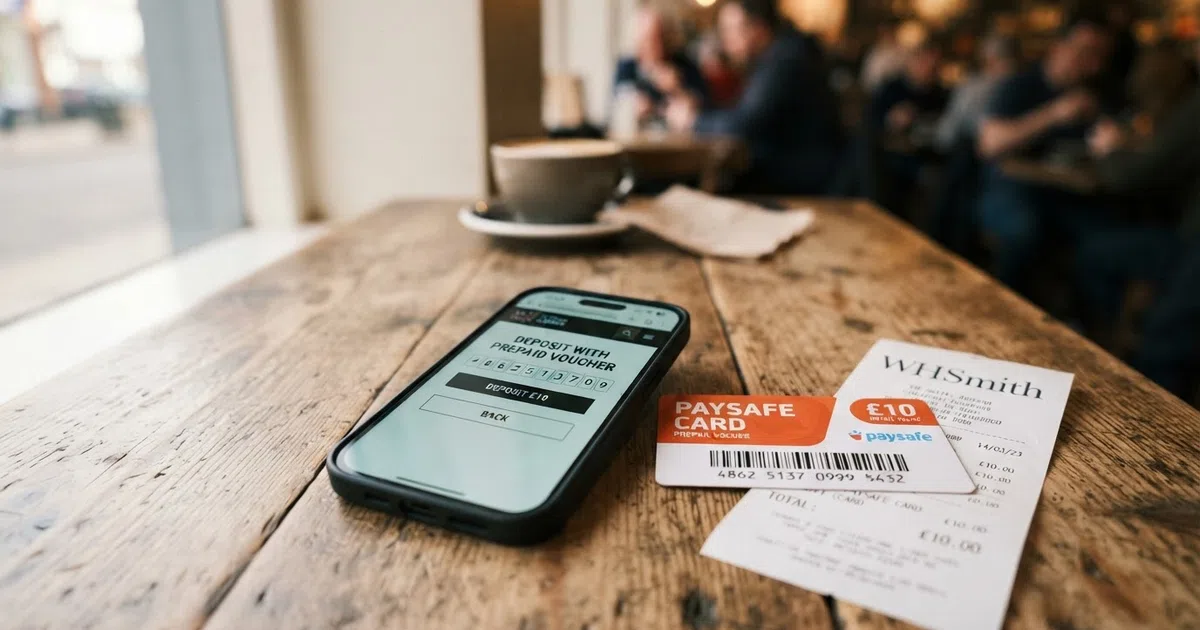
The direct replacement is Paysafecard, the same Skrill-owned network that absorbed Ukash when the brand was retired. It works almost identically — a prepaid voucher bought at a UK shop or online, exchanged at the casino cashier for a 16-digit PIN — and it is accepted by every UKGC-licensed casino on this page. Three other prepaid options sit alongside it: Neosurf and Flexepin, two secondary vouchers with smaller UK footprints, and Pay by Mobile, which charges the deposit to a phone bill. Each has a role; none is a perfect Ukash twin.
The UK online casino market that those methods serve is large and growing. The Gambling Commission’s operator data for January to March 2026 puts online gross gambling yield at £1.55 billion, up 7 per cent year on year, with slots GGY alone up 12 per cent. The market is not in decline. The methods have just changed.
What Ukash Was — and Why It Mattered for UK Casino Players
Ukash was a prepaid voucher. You bought a paper slip at a UK newsagent or petrol station for a fixed pound amount — £10, £20, £50, £100, £250 — and the slip carried a single 19-digit code. At the casino cashier you typed the code in, the funds landed instantly, and the casino never saw your bank account.
For players who did not want their gambling spending on a debit card statement, who did not have a current account in their own name, or who simply preferred the discipline of spending only what they had physically bought, that was the appeal. In the late 2000s and early 2010s the alternatives at most UK online casinos were Visa, Mastercard and bank transfer. None of those delivers the same privacy, and the bank-card norm of the era was not really designed for the prepaid mindset. Ukash filled a gap that nothing else in the UK cashier did.
The product was acquired by Skrill Group in April 2014, and the writing was on the wall from that point. Voucher distribution stopped on 31 August 2015 and the final redemption window for outstanding vouchers closed on 31 October 2015. After that date, any 19-digit Ukash code was a worthless piece of paper.
Can You Still Use Ukash at a UK Casino in 2026? The Short Answer
No. No UK-licensed casino has accepted Ukash since October 2015, and no legitimate operator anywhere accepts it now. If a casino cashier shows a Ukash logo today, that site is either running a decade out of date, has lifted a logo from a copy-and-paste template, or is unlicensed. All three should make a UK player close the tab.
The reason the Ukash brand survives only as a search term and a piece of memory is simple: Paysafecard absorbed it. The same PIN-economy that made Ukash work — buy at retail, spend online — is what Paysafecard does now, and the rest of this page covers every viable version of it.
Ukash, Paysafecard, Prepaid Voucher — Sorting Out the Terms UK Players Actually Search
Three terms get used as if they were the same thing and they are not quite. Ukash was the original 19-digit voucher, retired in 2015. Paysafecard is the 16-digit PIN voucher that took its place, FCA-licensed and still active. “Prepaid voucher” is the umbrella term covering both — and also covering Neosurf, Flexepin and any other pay-now-spend-later product the cashier takes.
In the casino world “e-voucher” and “prepaid voucher” mean the same thing. “16-digit PIN” and “19-digit code” are the two product generations — old Ukash was 19 digits, modern Paysafecard is 16. If a player sees either phrase on the cashier page they know what kind of product they are dealing with.
The phrase “Ukash casino” is a relic. The intent behind it — deposit at a UK casino without sharing bank details — is alive and well, and the rest of this page answers it under the right names.
Why Players Still Type “Ukash Casino UK” Into Google in 2026
Search engines have memory. A player who used Ukash in 2013 remembers the brand, types the word, and trusts Google to translate. The fact that the top results for “Ukash casino UK” are still comparison sites does not mean Ukash is back; it means the comparison sites have learned that the page ranks and that a reader who lands on it is one good redirect away from a current, working option.
What those readers want, beneath the brand name, is a UKGC-licensed casino that takes a prepaid voucher for deposits. That is the question the rest of this page answers.
Every Deposit Method Left at a UK Online Casino in 2026 — and Which Ones Actually Work
The prepaid-voucher category did not die with Ukash. It changed names, with Paysafecard taking the high-street slot and three other options filling niches around it. The UK Gambling Commission permits all four as deposit methods, subject to the same KYC and AML rules as every other payment route a UKGC-licensed operator offers.
What unites them is the deposit experience. The player never types a debit card number into the casino. The cashier takes a PIN, a phone number or a confirmed phone-bill charge, and the funds arrive without the casino ever seeing a bank account. That property is what people came to Ukash for, and it is the property every method below preserves.
What separates them is the rest: how widely they are accepted, what the deposit limits are, whether any fee is involved, and whether the casino treats them as eligible for the welcome bonus. The four-method table later in this section answers all four at a glance.
The whole category sits under a new regulatory weight. In October 2025 the Gambling Commission classified prepaid payment methods as high-risk for money-laundering purposes, citing the ability to pre-pay with cash, the anonymous nature of some products and cross-border availability as factors. For an ordinary player depositing £10 to £50 at a UK shop and spending it at one UKGC-licensed casino the practical impact is small. For the operator, it means enhanced due diligence on the deposit side, and it is why every prepaid deposit ends up inside the same KYC framework as every other payment method.
The Full Ukash Timeline — Acquisition, Shutdown and the Paysafecard Handover
The story has four dates that matter.
In April 2014 Skrill Group acquired Ukash. Skrill already owned Paysafecard, and the strategic logic of buying a competitor you were about to retire is the kind of decision that only makes sense if you intend to migrate the customers.
In August 2015 voucher distribution stopped. From 1 September 2015 no new Ukash slips were sold in UK shops. Existing stock could still be redeemed.
On 31 October 2015 the redemption window closed. Any unspent Ukash balance became unrecoverable after that date.
From November 2015 onwards Paysafecard is what the UK retail network sells. The same product, the same PIN-economy, a 16-digit code instead of a 19-digit one, and a brand that has been kept current by the operator that absorbed the old one.
The shutdown happened to land before the UK’s point-of-consumption licensing regime fully matured, which is one reason so many players still associate “deposit without a card” with the Ukash brand. The methods to do it have been there the whole time. The vocabulary just changed.
Paysafecard — the Direct Replacement and the Voucher Most UK Casinos Accept
Paysafecard is what Ukash became. It is a prepaid voucher sold at tens of thousands of UK retail outlets — newsagents, petrol stations, convenience stores — and online through the official Paysafecard site. The voucher has a 16-digit PIN. The cashier takes the PIN, the funds land instantly, and the casino never sees a bank account.
The deposit range is £10 to £1,000 per voucher, and a player can combine up to ten PINs in a single transaction, lifting the effective ceiling to £10,000. Most UKGC-licensed casinos on this page take Paysafecard for deposits, and Paysafecard is licensed by the Financial Conduct Authority, which puts it in a stronger regulatory position than the secondary voucher options below.
The hard limitation, and the one that catches players out, is withdrawals. A standard Paysafecard voucher cannot receive a casino cashout. There is no 16-digit code the casino can send money back to. To withdraw winnings, the player needs a separate verified method — typically a debit card or bank account — and that requirement kicks in at withdrawal time regardless of how clean the deposit side was.
For players who want to avoid that limitation, there is an opt-in: myPaysafecard, an online account that turns Paysafecard into a registered e-wallet. myPaysafecard can receive withdrawals at some casinos, but registration requires full KYC — name, address and date of birth — which defeats the original privacy motive for some users. The standard PIN voucher is the default for most players, and they need a second method for cashouts.
Neosurf and Flexepin — Two More Prepaid Vouchers Available at Select UK Casinos
Neosurf is the smaller of the two. It uses a 10-digit PIN, the deposit range is £10 to £100 per voucher, and the funds land instantly. UK availability is through selected newsagents and online resellers, with a noticeably thinner retail footprint than Paysafecard. A player who walks into a chain newsagent is more likely to see a Paysafecard display than a Neosurf one, and that is the practical difference. Neosurf cannot receive withdrawals either.
Flexepin sits in the middle. It uses a 16-digit code like Paysafecard, the per-voucher range is £20 to £500, and the player can combine vouchers up to a £5,000 effective deposit ceiling. UK availability is convenience stores and newsagents, with a limited retail footprint compared with Paysafecard. It cannot receive withdrawals.
The practical advice with both is the same: check the casino cashier for the Neosurf or Flexepin logo before buying a voucher. Fewer UKGC-licensed casinos take these methods than take Paysafecard, and a player holding a £100 Neosurf voucher for a casino that does not accept Neosurf has bought themselves a piece of paper.
Pay by Mobile — Phone-Bill Casino Deposits, Convenient but Capped and Fee-Heavy
Pay by Mobile charges the deposit to the player’s phone bill or prepaid credit rather than to a voucher or card. It works across all major UK networks — EE, O2, Vodafone, Three — and the funds arrive instantly or within five minutes, depending on the operator’s integration.
The limits are tighter than for vouchers. UKGC-licensed operators typically cap phone-bill deposits at £10 to £30 per day, and there is usually a £2.50 fee per transaction. On a £10 deposit the fee is 25 per cent of the value before a single spin is played, which is the kind of arithmetic that should give any player pause. The fee falls as a percentage on larger deposits, but the daily cap means a player cannot reach the £100+ deposit range that Paysafecard handles as standard.
Pay by Mobile cannot receive withdrawals either, and the player still needs a separate verified cashout method. The use case is short sessions on small budgets — a £10 deposit to test a casino before committing a real deposit by voucher or debit card. Beyond that, the fee and the cap make it a poor fit.
Prepaid Voucher Options at a Glance
| Method | Type | Deposit speed | Withdrawals possible | Deposit limits (UK) | UK availability |
|---|---|---|---|---|---|
| Paysafecard | Prepaid voucher (16-digit PIN) | Instant | No (except via myPaysafecard account) | £10–£1,000 per voucher (combine up to 10 PINs) | Widely available at UK retail and online |
| Neosurf | Prepaid voucher (10-digit PIN) | Instant | No | £10–£100 per voucher | UK newsagents and online resellers |
| Flexepin | Prepaid voucher (16-digit code) | Instant | No | £20–£500 per voucher (combine up to £5,000) | Convenience stores and newsagents; limited UK availability |
| Pay by Mobile | Phone bill | Instant to 5 minutes | No | £10–£30 per day (operator cap) | All major UK networks (EE, O2, Vodafone, Three); typically £2.50 fee per deposit |
The headline point the table carries: Paysafecard is the only one of the four with wide UK retail reach and full FCA licensing, and none of the four can receive a casino withdrawal. Every prepaid player needs a secondary cashout method, full stop.
Why Your Prepaid-Voucher Welcome Bonus May Be Smaller Than You Expect
This is the single most expensive detail on the page, and it is the one most competitor guides miss.
Several UKGC-licensed casinos accept Paysafecard for deposits but exclude Paysafecard from welcome-bonus eligibility. The exclusion is buried in the payment-method clause of the promotional T&Cs, which most players do not read before depositing. Two of the ten featured casinos in the comparison on this page are confirmed cases: William Hill, where the welcome bonus requires a debit card or other eligible method and explicitly excludes Paysafecard deposits, and PartyCasino, where Paysafecard, Skrill and Neteller deposits are all excluded from the welcome match. The other eight operators in the comparison do not exclude Paysafecard from their welcome offers, but the lesson is general: a player who deposits with a prepaid voucher without reading the bonus T&Cs first risks claiming nothing.
Why casinos do this is the obvious follow-up. Prepaid vouchers are now classified as high-risk for money laundering by the Gambling Commission, and operators have a regulatory reason to look more closely at the source of funds flowing through them. Welcome bonuses attract exactly the kind of bonus-abuse behaviour the regulator worries about — multiple accounts, voucher cycling, withdraw-and-redeposit patterns — and excluding vouchers is the simplest lever the operator can pull. The cost falls on the legitimate prepaid player who simply wanted a bonus on a voucher deposit.
The mitigating news is the 10× wagering cap that has applied to UK welcome bonuses since 19 December 2025 under LCCP Social Responsibility Code 5.1.1. Pre-December 2025 bonuses routinely carried 30× or 40× wagering requirements. The 10× cap means a £100 bonus now costs £1,000 of slot play to clear rather than £3,000 or £4,000, which is the practical saving the player sees when a voucher deposit does qualify.
Working through that £100 bonus case at the new cap. Bonus £100, wagering 10×, slot stake at the statutory maximum of £5 per game cycle for a player aged 25 or over, each spin taking the regulated 5-second minimum to play. Required turnover is £100 × 10 = £1,000. At £5 a spin that is £1,000 ÷ £5 = 200 spins. At 5 seconds per spin that is 200 × 5 = 1,000 seconds, which works out at roughly 17 minutes of slot play to clear the bonus. The figure is an average over many spins under those assumptions, not a guaranteed outcome, but it gives a sharp player the time-cost of a bonus that the headline “100% match” deliberately hides. This estimate assumes only the bonus amount is wagered and does not include the deposit.
The 2026 Deposit-Limit Rules — and Why Prepaid Vouchers Were Built for This
From 31 October 2025 every UKGC-licensed operator must prompt a customer to set a financial limit before their first deposit. Decrease requests take effect immediately. From 30 September 2026, only gross deposit limits — money paid in over a set period — may be called “deposit limits”, and the Commission has stated the position in its own words: “From 30 September 2026 operators must: offer gross deposit limits to customers… only this type of limit can be called a ‘deposit limit’”.
The Commission’s direction is clear. The player-facing controls are converging on a single hard number — gross deposits over a defined window — and the days of operators offering net-deposit or bonus-balance framings as “deposit limits” are ending.
Prepaid vouchers fit that direction without the player having to do anything. A Paysafecard voucher bought for £50 cannot be exceeded. The cashier rejects any attempt to deposit £51 because the underlying funds do not exist. The cap is structural rather than configurable, and the player’s spending cannot drift above the number on the slip in their pocket.
Contrast that with a debit card deposit. The deposit limit on a debit card is a soft setting the operator enforces and the player can raise at any time, subject to a cool-off. The limit is a guardrail. A voucher is a wall. Both are useful, and a player who uses both is double-covered, but the voucher is the one that holds without the player needing to remember to keep it tight.
10 UK-Licensed Casinos for Prepaid-Voucher Deposits — and Where the Bonus Still Works
Every casino in the section below holds an active UK Gambling Commission remote casino operating licence, verified against the Commission’s public register as of 29 July 2026. All ten accept Paysafecard for deposits. Two of them — William Hill and PartyCasino — exclude Paysafecard from welcome-bonus eligibility, and both exclusions are flagged in their write-ups.
The ranking is built on four criteria, applied consistently across the featured set. The first is whether the casino accepts prepaid voucher deposits and whether the welcome bonus is actually claimable with one. The second is bonus fairness, with the wagering multiple benchmarked against the 10× statutory cap that has applied since 19 December 2025. The third is the strength of the UKGC licence, verified against the public register. The fourth is the breadth and quality of the game-provider portfolio, with providers named where research has confirmed them. Prepaid-voucher compatibility carries the most weight, bonus fairness the second most, and the comparison table at the end of the section ranks operators in the same order.
How We Ranked These Casinos — Prepaid Acceptance, Bonus Fairness and UKGC Standing
The order on this page is not editorial preference. It is the result of four questions asked of every operator, in this order.
Does the casino accept Paysafecard for deposits, and is the welcome bonus claimable with a Paysafecard deposit? If the answer is no to either half, that operator carries a flag the reader needs to see before signing up.
What is the wagering multiple on the welcome bonus, and where does it sit relative to the 10× statutory cap that has applied to UK welcome bonuses since 19 December 2025? A bonus at 30× is grandfathered older terms; a bonus at 0× is the cleanest possible offer. The cap is the new normal, and the table marks where each offer sits against it.
Is the UKGC licence active on the public register, and which licensed entity holds it? The Commission’s register, last updated 29 July 2026, is the source. An “Active” status on every row of the comparison table is the floor, not the ceiling.
Which game providers does the casino carry, and how broad is the portfolio? Names in research are NetEnt, Evolution, Pragmatic Play, Play’n GO, Microgaming, Playtech, IGT, Red Tiger, Blueprint, Novomatic and Gamesys proprietary. A casino carrying five of those for slots and live-dealer content has more to play than one carrying three.
The ranking in the write-ups below follows these criteria. The comparison table at the end of the section presents the same data in a single grid.
PlayOJO — Wager-Free Spins, Paysafecard Fully Welcomed and Wins Paid in Cash
PlayOJO runs 50 free spins on Big Bass Bonanza at £0.10 each for a first deposit of £10 or more. There is no wagering requirement. There is no maximum win cap. Every win lands in the cash balance the moment the spin ends. Paysafecard is one of 29 supported deposit methods and the bonus is not excluded.
The operator is licensed in the UK via SkillOnNet Ltd and the licence is active on the public register. Game providers include NetEnt, Evolution, Pragmatic Play, Play’n GO, Microgaming and Red Tiger, which is the deepest provider list in the featured set.
Verdict: this is the cleanest prepaid-voucher proposition in the comparison. The “no wagering” line that marketing loves to use is normally a haircut on the bonus amount; here it is literally true. A Paysafecard player depositing £10 gets the full offer and keeps every penny they win.
Casumo — 50 Wager-Free Spins with a £10 Deposit, Paysafecard Accepted
Casumo runs a deposit-and-spend-£10 offer for 50 free spins on Big Bass Splash at £0.10 each, with zero wagering and a 7-day expiry on the spins. Paysafecard is accepted and no exclusion is stated on the bonus terms.
The UKGC licence is held by Casumo Services Limited, and it is active on the register. Gaming partners include NetEnt, Evolution, Pragmatic Play, Play’n GO and Microgaming.
Verdict: a straight wager-free offer with a £10 deposit entry point and no bonus-exclusion flag. The 7-day expiry on spins is the only operational quirk; everything else is what the marketing page promises.
Sky Vegas — 50 Spins with Zero Deposit Required, the Only Genuinely Free Starter
Sky Vegas splits the welcome into two halves. The first 50 free spins require no deposit at all, which makes Sky Vegas the only operator in the comparison offering a genuinely deposit-free entry. The remaining 200 spins require a £10 deposit and stake within 30 days of registration. All 250 spins carry zero wagering, there is no stated maximum cashout, and the 7-day spin expiry applies from credit.
The UKGC licence is held by Flutter Entertainment (PPB Entertainment Limited), active on the register. Game providers include NetEnt, Evolution, Pragmatic Play, Playtech and Blueprint.
Verdict: the only operator in the set where the reader can try the casino without depositing anything at all. The 50 no-deposit spins are a useful test run before committing any voucher funds.
LeoVegas — 50 Wager-Free Spins on Big Bass Splash, Debit Card Needed for the Bonus
LeoVegas runs 50 free spins on Big Bass Splash at £0.10 each with zero wagering. A £10+ deposit within 7 days of registration is required, with a 1× wager on eligible games, and spins expire 3 days after credit.
The catch is in the payment-method clause. PayPal deposits are excluded from the bonus, and the eligible methods are debit card or Open Banking. Research does not confirm whether Paysafecard deposits qualify for this offer, and the safer reading is that a Paysafecard deposit risks missing the bonus entirely. The casino’s own terms are the place to verify.
The UKGC licence is held by LeoVegas Gaming plc, active on the register. Game providers include NetEnt, Evolution, Pragmatic Play, Play’n GO and Microgaming.
Verdict: a strong mobile casino with a wager-free offer, but a payment-method gate that the prepaid player cannot assume they have passed. Check the cashier before depositing.
888casino — 100% Match Up to £100, the Largest Bonus Among Prepaid-Accepting Casinos
888casino runs a 100% match up to £100 with a £10 minimum deposit and 10× wagering on the bonus amount, playable on selected slots. Bonus validity is 90 days from credit, and the offer must be claimed within 48 hours of the deposit. Maximum cashout from the offer is capped at £100. Research does not flag Paysafecard as excluded from this bonus.
The UKGC licence is held by 888 UK Limited, active on the register. Game providers include NetEnt, Playtech, Evolution, Pragmatic Play and Red Tiger.
Verdict: the largest match bonus in the featured set, priced exactly at the 10× statutory cap. The 48-hour claim window and 90-day validity are both player-friendly; the £100 max cashout is the trade-off for a 100%-up-to-£100 offer.
BetMGM — 100% Up to £200 Plus 50 Free Spins, Paysafecard Deposits Accepted
BetMGM runs a 100% match up to £200 with 50 free spins attached. Paysafecard is accepted for deposits and no exclusion is flagged. Wagering multiplier, bonus validity, the exact bonus slot title and the spin value were not confirmed in the research pass on which this page is built, and any reader evaluating the offer should check the current BetMGM promotional terms before depositing.
The UKGC licence is held via the Entain group and is active on the register. Game providers include Evolution, Pragmatic Play, NetEnt, Play’n GO and Red Tiger.
Verdict: the headline package — 100% up to £200 plus spins — is the largest nominal offer in the set, but the unconfirmed wagering multiple and bonus terms mean a reader should treat it as a candidate to investigate rather than a finished deal.
Virgin Games — 30 No-Wagering Spins or a Bingo Bonus, Paysafecard-Friendly
Virgin Games runs a spend-£10 offer that lets the player choose between 30 free spins with zero wagering or a £50 bingo bonus. Paysafecard is accepted for deposits and no exclusion is flagged. The bonus slot title and spin value were not confirmed in the research pass.
The UKGC licence is held via Gamesys Operations Limited under Bally’s Corporation (account 38905), and it is active on the register. The platform offers titles from Gamesys proprietary, NetEnt, Evolution and IGT.
Verdict: a flexible entry point for a player who would rather have a bingo bonus than free spins, which most of the rest of the set does not offer. The Gamesys proprietary content is the genuine differentiator.
Grosvenor Casinos — Deposit £20, Play with £40 at the UK’s Biggest Land-Based Brand
Grosvenor runs a deposit-£20-play-with-£40 offer with a 30× wagering requirement, which is the highest wagering multiple in the featured set and three times the statutory cap that applies to new welcome bonuses after 19 December 2025. The terms reflect an older offer design. Whether Paysafecard qualifies for the bonus is not confirmed in the research, and the casino’s own terms need checking.
The UKGC licence is held via Rank Digital Gaming (Alderney) Limited (account 41224), with active status on the register. The brand has operated a UK land-based estate since 1970 and an online operation since 2008, featuring IGT, Novomatic, Evolution, Pragmatic Play and Playtech.
Verdict: a familiar high-street name carrying legacy bonus terms in a market that has moved on. The brand matters if the player values the dual-channel land-based and online presence; the wagering multiple makes it the weakest offer in the set for a player optimising on bonus cost.
William Hill — 200 Free Spins, Zero Wagering, but Paysafecard Deposits Miss the Bonus
William Hill runs a bet-£10-get-200-free-spins offer on Big Bass Splash at £0.10 each. Zero wagering. No maximum cashout cap. On paper it is the best spins offer in the comparison.
In practice, Paysafecard deposits are excluded from the welcome bonus. A William Hill player who deposits with a Paysafecard voucher and meets the £10 stake requirement has funded the casino but has not claimed the 200 spins — those require a debit card or another eligible method. Paysafecard is still accepted for ongoing deposits and regular play, which is the second-best outcome for a prepaid player, but the welcome-bonus position is closed.
The UKGC licence is held via WHG (International) Limited (account 39225), active on the register. Game providers include Playtech, NetEnt, Evolution, Pragmatic Play, IGT and Blueprint.
Verdict: the headline offer is unmatched, and the payment-method gate is what stops a Paysafecard player from collecting it. The trade-off is clean: either switch to a debit card for the first deposit, or pick an offer in the comparison that does not gate the bonus by method.
PartyCasino — 100% Up to £200 at 10× Wagering, Paysafecard Excluded from the Offer
PartyCasino runs a 100% match up to £200 with a £10 minimum deposit-and-bet and 10× wagering on the bonus plus deposit. Opt-in is required within 30 days and there is no cap on winnings from the offer.
The exclusion list is the largest in the comparison: Paysafecard, Skrill and Neteller deposits do not qualify for the welcome bonus. Paysafecard remains accepted for regular deposits and gameplay, so a prepaid player can still use the cashier — they just cannot claim the welcome offer with it.
The UKGC licence is held via LC International Limited (account 54743), and it is active on the register. The library is curated with games from NetEnt, Evolution, Pragmatic Play, Playtech and Red Tiger.
Verdict: a flat statement — the welcome offer is not available to a Paysafecard player, and that is the only sentence that matters for the reader who arrived on this page. Move on to one of the eight casinos in the comparison that welcome both the deposit and the bonus.
Prepaid-Voucher Casinos Compared — Side by Side
| Casino | UKGC licence status | Welcome offer | Wagering requirement | Paysafecard deposits accepted |
|---|---|---|---|---|
| PlayOJO | Active (SkillOnNet Ltd) | 50 free spins on Big Bass Bonanza, £0.10 each | 0× | Yes |
| Casumo | Active (Casumo Services Limited) | 50 free spins on Big Bass Splash, £0.10 each | 0× | Yes |
| Sky Vegas | Active (Flutter Entertainment, PPB Entertainment Limited) | 50 no-deposit spins + 200 spins after £10 deposit and spend | 0× | Yes |
| LeoVegas | Active (LeoVegas Gaming plc) | 50 free spins on Big Bass Splash, £0.10 each | 0× | — |
| 888casino | Active (888 UK Limited) | 100% match up to £100 | 10× on bonus (selected slots) | Yes |
| BetMGM | Active (Entain group) | 100% up to £200 plus 50 free spins | — | Yes |
| Virgin Games | Active (Gamesys Operations Limited) | Spend £10: 30 free spins or £50 bingo bonus | 0× on spins | Yes |
| Grosvenor Casinos | Active (Rank Digital Gaming (Alderney) Limited) | Deposit £20, play with £40 | 30× | — |
| William Hill | Active (WHG (International) Limited) | Bet £10 get 200 free spins on Big Bass Splash | 0× on spins | Excluded from welcome bonus |
| PartyCasino | Active (LC International Limited) | 100% match up to £200 | 10× on bonus plus deposit | Excluded from welcome bonus |
The William Hill and PartyCasino rows are the only ones where a Paysafecard deposit misses the welcome offer. Every other row accepts both the deposit and the bonus. Em-dash cells mark where the research did not confirm a value, so a reader evaluating that casino checks the operator’s own terms.

Are Prepaid Casino Deposits Legal in the UK? The Licence Rules That Protect You
The UK online casino market is legal and fully licensable, and it has been since the Gambling (Licensing and Advertising) Act 2014 extended the Gambling Act 2005 to remote operators. The Gambling Commission is the single statutory regulator, an executive non-departmental public body sponsored by the Department for Culture, Media and Sport. A GB licence is compulsory for any operator serving GB customers regardless of where the operator is based, and operating without one is a criminal offence under section 33 of the 2005 Act — up to 51 weeks’ imprisonment, an unlimited fine, or both.
The Commission works to three licensing objectives set out at section 1 of the Act: preventing gambling from being a source of crime or disorder, ensuring gambling is conducted in a fair and open way, and protecting children and other vulnerable persons from being harmed or exploited. Every licence condition the Commission writes ties back to one of those three.
Every casino on this page holds an active UKGC remote casino operating licence, verified against the public register as of 29 July 2026. That status is not the ceiling of player protection; it is the floor. The licence is the gate that gives a player the protections that follow — stake caps, deposit limits, the credit card ban, the wagering cap, GAMSTOP coverage, and the Commission’s complaints and ADR routes.
The UKGC Licence — What It Demands from Every Casino Payment Method
The licence conditions that govern deposits are not specific to payment type. They apply to every deposit a UKGC-licensed operator accepts.
Before any deposit or any gambling, the operator must verify the customer’s name, address and date of birth. Anonymous play is impossible in the GB market — a voucher deposit without a verified account is a deposit the operator is required to refuse. This is why the prepaid-voucher experience is not the anonymous one it was in the early 2010s, and why any player who thinks they can hide behind a voucher is reading the wrong decade.
The point-of-consumption licence regime means an operator answerable to the UKGC is answerable regardless of corporate domicile. WHG International, LC International, SkillOnNet, Casumo Services, LeoVegas Gaming, 888 UK, Gamesys Operations, Rank Digital Gaming, PPB Entertainment, Entain — all are answerable to the Commission on GB customer terms.
Since 31 March 2020 GAMSTOP integration has been a compulsory licence condition. Every UKGC-licensed casino must check the GAMSTOP register and refuse play from a registered self-excluded customer. The integration is at the operator’s account-verification stage, and it applies before the first deposit, which is why a prepaid voucher deposit does not bypass it.
“High-Risk for Money Laundering” — What the UKGC’s Prepaid Classification Means in Practice
In October 2025 the Gambling Commission published emerging money-laundering and terrorist-financing risks guidance that classified prepaid payment methods as high-risk. The Commission’s own reasoning: “the ability to pre-pay or pre-load using cash and, in some cases, cryptoassets either directly or via third party websites; the anonymous nature of some pre-paid payment methods”.
For a player who buys a £20 Paysafecard voucher at a UK Tesco and deposits it at a UKGC-licensed casino, the practical impact is small. The risk-based due diligence the classification triggers is mostly invisible to the customer depositing modest amounts. It is the operator’s job to do, not the player’s, and on small UK-domestic flows it adds friction only at withdrawal time when full KYC lands anyway.
The part that does affect players is the consequence operators have drawn. Welcome bonuses have become a regulatory concern because bonus abuse is a known AML risk pattern. Excluding vouchers from bonus eligibility — as William Hill and PartyCasino have done — is one of the simplest levers an operator can pull to reduce that exposure. The cost is borne by the legitimate prepaid player who simply wants a bonus on a voucher deposit.
There is also a separate risk factor the Commission’s AML guidance applies to flows that cannot return funds to the deposit method. Every prepaid voucher is one of those flows — the deposit goes in, the withdrawal cannot come back to the same voucher — and the operator is required to treat that asymmetry as an additional risk indicator in its customer monitoring.
Deposit Caps, Stake Limits and the Credit Card Ban — Your Protections as a UK Player
The protections a UKGC licence confers are concrete and dated.
Online slots carry a statutory maximum stake per game cycle of £5 for players aged 25 and over, in force from 9 April 2025, and £2 for players aged 18 to 24, in force from 21 May 2025, imposed by SI 2025/215. The cap applies to online slots only, not to other casino games, and the age band means two adults at the same casino can face different maximum bets on the same slot. That is what the regulation actually does.
Credit cards have been banned for all gambling in Great Britain since 14 April 2020 under LCCP licence condition 6.1.2, and the ban extends to e-wallets funded by credit cards. The credit card ban is the reason debit card is the default for UK players and the reason every prepaid voucher on this page is a debit-card alternative by design.
The 10× wagering cap has applied to GB welcome bonuses since 19 December 2025 under LCCP Social Responsibility Code 5.1.1, alongside the ban on mixed-product promotional offers that try to cross-sell between betting, casino, bingo and lottery. Older bonuses at higher wagering multiples — Grosvenor’s 30× is the example on this page — are grandfathered terms that pre-date the cap and will not be replaced.
Game-design rules in force since 31 October 2021 ban auto-play, set a 2.5-second minimum spin speed on online slots, ban losses disguised as wins, ban reverse withdrawals permanently, and require operators to display total losses, total wins and time played during a slots session. None of those rules are about payment methods, but all of them apply on every slot played with a voucher deposit.
Playing Offshore with a Prepaid Voucher — What You Lose
A casino operating without a GB licence is committing a criminal offence under section 33 of the Gambling Act 2005, but the law targets the operator, not the player. There is no established player penalty for gambling on an unlicensed site. What the player loses is the protections that follow from the licence.
The Commission’s enforcement model is disruption rather than ISP or DNS blocking. Between April 2024 and June 2025 it issued 3,140 cease-and-desist notices, referred 447,778 URLs to search engines and saw 287,961 URLs removed. The Commission also pressures domain registrars and payment providers to withdraw services from unlicensed operators, and it publishes the results.
A player on an unlicensed site loses GAMSTOP coverage — which means a self-exclusion registered in the UK is invisible to that operator and the deposit will not be refused. The Commission complaints route is closed because the Commission does not regulate the operator. ADR — alternative dispute resolution — is closed because the licensed-operator ADR scheme does not reach an unlicensed site. British consumer redress is closed because the operator is outside UK jurisdiction.
None of that changes because the player used a prepaid voucher to deposit. The deposit method does not confer legality; the licence does. A £50 Paysafecard deposit at a UKGC-licensed casino carries the protections listed above. The same £50 Paysafecard deposit at an unlicensed casino carries nothing the player can enforce.
Northern Ireland is a separate case. The Gambling Act 2005 does not apply there, and the Gambling Commission does not regulate gambling in Northern Ireland. Northern Ireland runs on older, separate legislation. A player in Belfast reading this page is reading GB regulation, and the casino’s status for them is different.
How Prepaid Vouchers Help You Stay in Control — and Where to Get Support
The safer-gambling case for prepaid vouchers is structural. The cap is not configurable; it is the value of the voucher in the player’s pocket. A Paysafecard voucher bought for £50 cannot be exceeded because the funds do not exist to exceed it. That is a different kind of limit from the one a debit-card player sets in a casino’s responsible-gambling menu, and the UKGC’s policy direction is moving toward exactly that kind of structural limit.
The Gambling Commission’s Health Survey for Great Britain in 2025 puts problem gambling prevalence (PGSI 8+) at 2.4 per cent, down from 2.7 per cent in 2024. Moderate-risk gambling ticked up slightly to 3.5 per cent. The numbers are small in percentage terms but large in absolute ones — roughly 1.3 million adults at the PGSI 8+ threshold — and they are the reason every UKGC-licensed casino is required to signpost the help resources below.
Every one of the resources listed in this section is free, confidential and available to a UK reader right now, regardless of which casino they choose and regardless of whether they have deposited a penny.
The Hidden Safety Feature — How Prepaid Vouchers Naturally Cap Your Casino Spending
A Paysafecard voucher bought for £50 cannot be exceeded. The cashier rejects any attempt to deposit £51. The player is stopped by the absence of funds, not by a software limit they could raise.
A debit card deposit limit is a soft setting. It is configurable, and at most UKGC-licensed casinos it can be raised after a cooling-off period. The Commission’s deposit-limit direction is to move that limit toward a hard gross-deposit ceiling that operators must offer from 30 September 2026 — in the Commission’s own words, only gross deposit limits may be called “deposit limits”.
Prepaid vouchers already do that. A player who buys a £50 voucher and deposits it is at their structural cap. A player who buys two £50 vouchers and deposits them has doubled the cap by a deliberate act, which is a friction point — they had to walk back to the shop — that a debit card deposit does not impose.
For a player who never sets a formal deposit limit, a voucher acts as one. The limit is the value of the slip. It is the single safer-gambling feature the player does not have to configure.
The £150 Financial Vulnerability Check — What It Means for Prepaid-Voucher Players
A light-touch financial vulnerability check using publicly available data is triggered at a £150 net deposit threshold in a rolling 30-day period under LCCP Social Responsibility Code 3.4.4. The check is in force from 28 February 2025.
The threshold is on net deposits — deposits minus withdrawals — across every payment method. A Paysafecard player depositing £50 three times in a month and withdrawing nothing has crossed the threshold and the casino will run the check. A debit-card player depositing £150 once crosses it the same way. The check is method-blind; the only thing the casino is counting is the total.
The light-touch check uses publicly available data and does not require the customer to provide payslips or bank statements. Heavier financial risk assessments — at announced thresholds of £5,000 net deposits in 24 hours for players 25 and over and £2,500 for those under 25 — have been published but have not yet commenced. The start date is to be confirmed in a formal consultation response, and the published thresholds are not the final ones. There is no current date by which a player can expect the heavier checks to begin, only a regulatory signal that they will.
Where to Get Help — GamCare, the National Helpline and Every UK Resource
The National Gambling Helpline, run by GamCare, is the front door. The number is 0808 8020 133. It is free, confidential and available 24 hours a day, 7 days a week.
Around it sit the other channels. GamCare runs the helpline and offers a personalised self-help tool called MyGamCare that tracks gambling behaviour and lets the player set goals. GambleAware is the source for self-assessment and tools, and it signposts further help. GAMSTOP is the self-exclusion register itself — registration is free, online, and effective at every UKGC-licensed casino immediately. NHS gambling harm clinics run in England, Scotland and Wales, providing free face-to-face treatment. Gamban and Betblocker are free blocking software tools for UK residents that prevent access to gambling sites and apps at the device level. Most UK banks also offer gambling transaction blocks via their mobile banking apps, which stop gambling payments at the card level.
Every UKGC-licensed casino is required to link to these resources on its responsible-gambling page. A player does not need to be logged into a casino to use any of them. The help is free, it is available now, and it does not require the player to stop playing to access it.
How We Selected and Ranked the Casinos on This Page
The selection is from UKGC-licensed brands that accept Paysafecard for deposits and have a published welcome offer. Every casino on the comparison table holds an active UKGC remote casino operating licence, verified against the Gambling Commission’s public register as of 29 July 2026. The licensing entity is named for each operator.
The evaluation criteria are prepaid-voucher deposit acceptance, welcome-bonus fairness (whether the bonus is claimable with a prepaid deposit and the wagering multiple), UKGC licence standing, and the breadth and quality of the game-provider portfolio. The ranking is built on those criteria applied consistently across the featured set. The page does not invent weightings or percentages the research does not carry; the order is the natural order the criteria produce.
Operator terms change. Welcome bonuses are revised, wagering multiples are revised, payment-method eligibility clauses are revised. The data this page is built on is current as of the date in the stamp at the top, and a reader who is about to deposit £100 of voucher funds should still check the casino’s own promotional T&Cs before doing so. The comparison table is a snapshot, not a contract.
Prepaid Vouchers at UK Casinos in 2026 — What You Should Actually Do
The shortest version: stop looking for a casino that accepts Ukash. None exists, and the brand has been gone since October 2015.
The practical version: pick a UKGC-licensed casino from the comparison above, confirm Paysafecard is in the cashier, read the welcome-bonus payment-method clause before depositing, and set a deposit limit even though the voucher itself caps your spend. Paysafecard is the right starting point because it has the widest UK retail footprint, full FCA licensing, and acceptance at every casino in the comparison. Neosurf, Flexepin and Pay by Mobile each fill a specific niche, and the table at the start of this page is the place to pick between them.
The most important term to check is whether the welcome bonus is claimable with a Paysafecard deposit. Two operators in the comparison — William Hill and PartyCasino — exclude Paysafecard from the welcome bonus. The other eight welcome both the deposit and the bonus. A player who skips that check deposits a voucher, claims nothing, and only finds out when the bonus does not appear.
The last move is the safer-gambling one. Prepaid vouchers carry a built-in spending cap that aligns with the UKGC’s deposit-limit direction, which is itself moving toward gross-only deposit limits from 30 September 2026. A player who uses them is already operating inside the policy direction, with or without a formal limit set. If the spending stops feeling controllable, the National Gambling Helpline on 0808 8020 133 is free, confidential, available 24/7, and the entry point to every other resource in the safer-gambling section. Use it.
Frequently Asked Questions
Can I withdraw casino winnings to a Paysafecard voucher or another prepaid method?
No. Standard Paysafecard, Neosurf and Flexepin vouchers cannot receive casino withdrawals. To cash out, a player needs a separate verified method such as a debit card or bank account. The myPaysafecard online account can receive withdrawals at some casinos but requires full KYC registration, which removes the privacy benefit of voucher use.
What is the minimum and maximum amount I can deposit with a single Paysafecard voucher at a UK casino?
A single Paysafecard voucher carries £10 to £1,000 in value, with a minimum deposit at the casino cashier of £10. Up to ten PINs can be combined in a single transaction, lifting the effective ceiling to £10,000. The casino may impose its own minimum above the voucher floor, so check the cashier.
Do UK online casinos charge any fees when I deposit with a prepaid voucher?
Most UKGC-licensed casinos do not charge a deposit fee for Paysafecard, Neosurf or Flexepin. Pay by Mobile is the exception — operators typically charge a £2.50 fee per transaction, which is a quarter of a £10 deposit. The fee is paid to the operator or its payment processor, not to Paysafecard or the network.
Can I make a prepaid voucher deposit at a UK casino without verifying my identity first?
No. UKGC-licensed casinos must verify name, address and date of birth before accepting any deposit or allowing any gambling, regardless of payment method. The voucher does not bypass the verification step, and an unverified account cannot deposit at any UKGC-licensed casino in the GB market.
How long does a Paysafecard or prepaid voucher deposit take to appear in my casino account?
A Paysafecard deposit is credited instantly once the cashier accepts the PIN. Neosurf and Flexepin deposits are also instant at most UKGC-licensed casinos. Pay by Mobile deposits take from a few seconds up to five minutes depending on the operator’s integration. Withdrawals to a verified alternative method take longer — typically one to three working days for a debit card.
GAMSTOP and Prepaid Deposits — Does Self-Exclusion Cover Voucher Play?
GAMSTOP self-exclusion covers every GB-licensed online gambling site, including every casino on this page, and the coverage is independent of deposit method. A registered self-excluded player cannot deposit by Paysafecard, Neosurf, Flexepin, Pay by Mobile, debit card or e-wallet at any UKGC-licensed casino. The exclusion operates at the account level and the casino must refuse the deposit, full stop.
Exclusion periods are six months, one year, five years, or five years with auto-renewal, and the choice cannot be reversed early. GAMSTOP has been a mandatory UKGC licence condition since 31 March 2020, which is the date every operator in the comparison was required to integrate the register.
A prepaid voucher does not bypass GAMSTOP. A self-excluded player who tries to deposit at a UKGC-licensed casino is refused at verification, before the deposit is accepted, regardless of the payment method. The only way to circumvent the exclusion is to play at an unlicensed site, and that is exactly the scenario where the player loses every other protection covered elsewhere on this page.
Payments – realmoney-onlinecasinos-uk
Content created by the «realmoney-onlinecasinos-uk» team