
The Honest Guide to UK Jackpot Mobile Casinos in 2026
 Available in GB
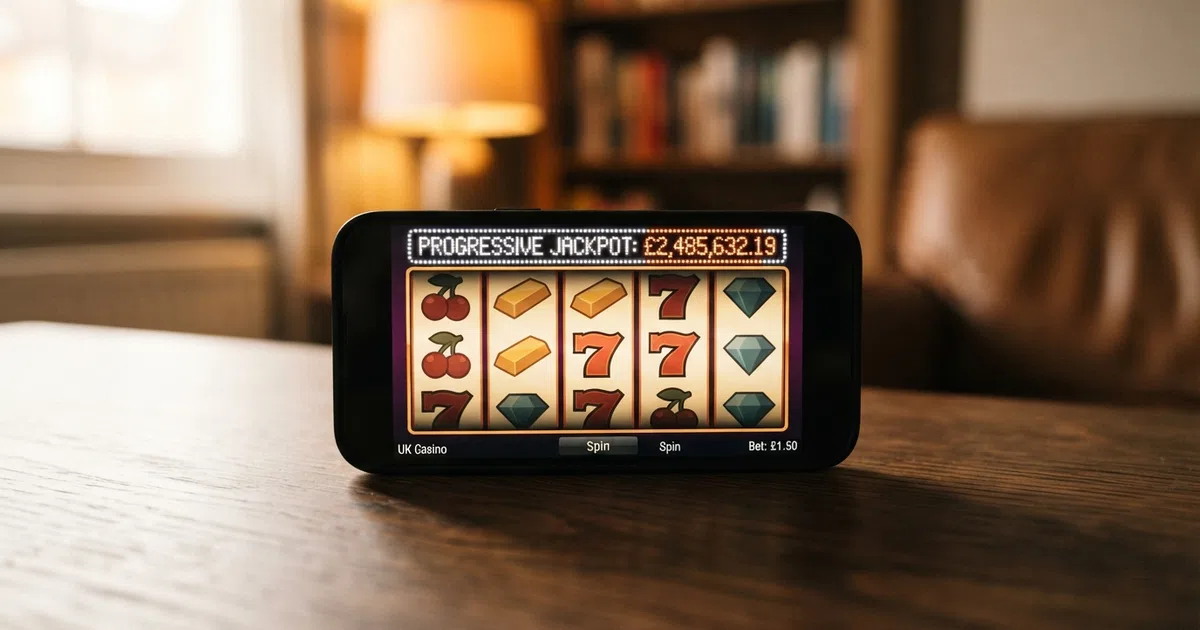
Jackpot mobile casinos in the UK look generous on a first scroll. Spin counts climb into three figures, “no wagering” badges sit beside welcome packages, and progressive totals tick into seven digits above the reels. The terms underneath are tighter than the marketing implies, and the rules governing every spin in Britain have changed more in the last twelve months than in the previous decade. This guide walks through what a UK jackpot player actually faces in 2026: how the licences check out, what the bonus offers cost in real time, which operators carry the deepest progressive lobbies, and where the safer-gambling infrastructure sits when the balance needs to stop.
Data current as of September 8, 2026 and verified against the Gambling Commission’s public register.
What Jackpot Casinos Are, and Why Mobile Defines the 2026 Hunt
A jackpot casino is, in the most literal sense, any online casino that runs progressive or timed jackpot slots on its platform. The label is mostly marketing, because nearly every major UK operator carries a jackpot section. What separates a genuinely jackpot-focused brand from a slot site with a “jackpots” tab is depth: how many progressive titles run on the platform, whether the site carries network-level pools (Mega Moolah, WowPot, Jackpot King, Dream Drop), and whether the welcome offer leads the player toward the jackpot lobby rather than the standard slot catalogue.
The UK market in 2026 is large and concentrated. Between April 2024 and March 2025, the Remote Casino, Betting and Bingo sector generated £7.8 billion in gross gambling yield (GGY), with online casino games producing £5.0 billion and slots alone accounting for £4.2 billion. Slots are not a side category; they are the centre of the online casino economy in Britain. The majority of that play happens on a phone. Mobile is no longer a secondary access channel, it is the channel. A jackpot page in 2026 that treats the mobile experience as an afterthought has misread the audience.
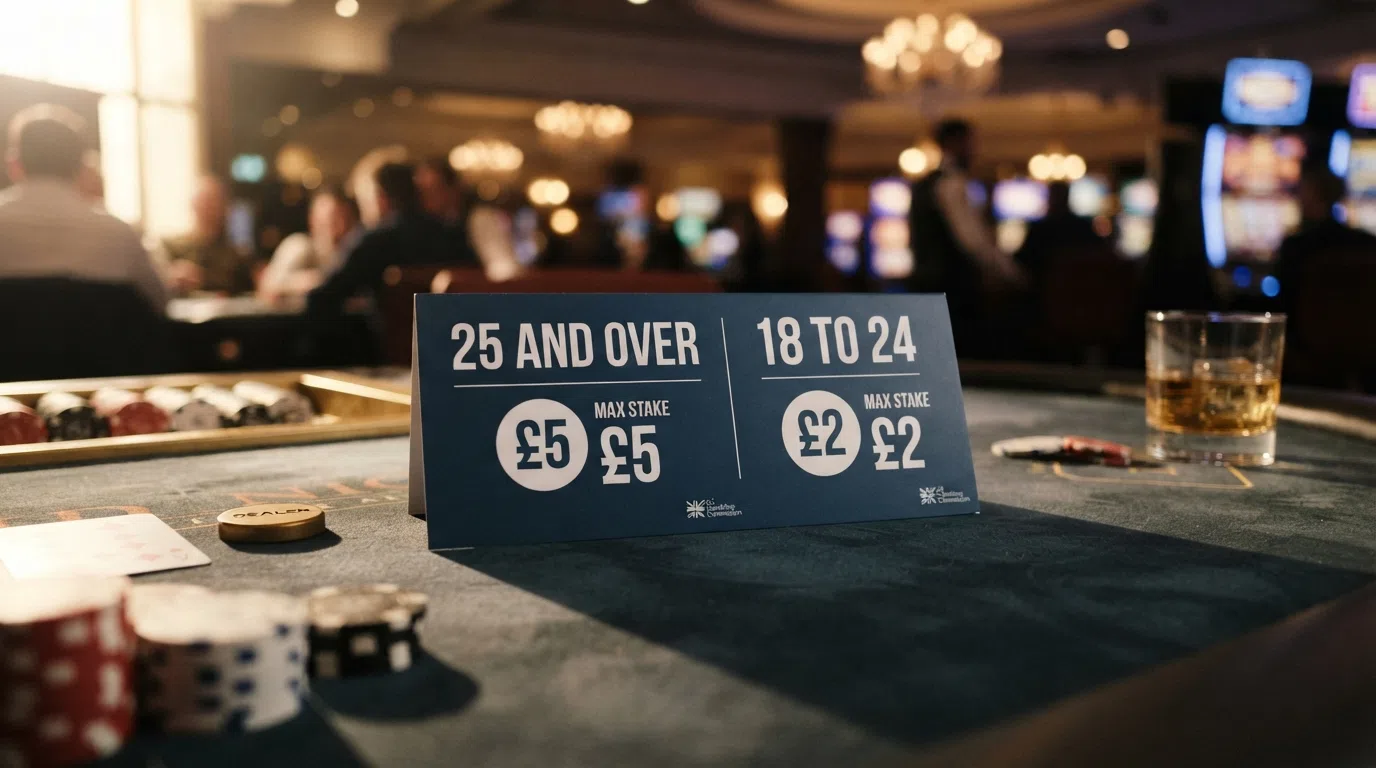
The reason mobile matters so much is partly regulatory. The maximum stake a UK player can place on an online slot is £5 per game cycle for adults aged 25 and over, and £2 for adults aged 18 to 24. That cap travels with the player’s account, not the device. Whether the spin happens on a desktop browser, a native app, or a mobile site, the ceiling is the same. What changes between platforms is the surrounding experience: how fast the lobby loads, whether a progressive ticker is visible above the reels, whether biometric login replaces a password, and whether a push notification can warn the player that a must-drop jackpot is close to its ceiling.
What Is a Jackpot Casino, and What Makes a Slot a Jackpot Slot
A jackpot slot is a slot machine that pays out a prize pool larger than the standard paytable allows. The pool is fed by some share of every qualifying stake across a network of casinos, or in some cases from a single operator’s pool. When the prize drops, the pool resets to a seed value, and the build begins again.
The main categories a UK player encounters:
- Fixed jackpots: a static top prize that does not change as players wager. The paytable lists the maximum win and that figure is the ceiling.
- Progressive jackpots: a pool that grows with each qualifying spin across a network. Mega Moolah, WowPot, Jackpot King and Dream Drop are the dominant network progressives available at UK-licensed operators.
- Daily or must-drop jackpots: a pool guaranteed to fall within a set window, often 24 hours. The ticker counts down in real time, and a “must-drop-by” ceiling prevents the pool from rolling indefinitely.
- Random jackpots: a prize awarded at random to a player who meets a minimum stake condition, regardless of which symbols land on the reels.
What separates a jackpot slot from a standard slot is the seed-and-pool mechanic. A standard slot has a fixed maximum win; a progressive has a starting value (the seed) that rebuilds after each hit, funded by a small contribution from every spin. The base game’s RTP, the part returned through ordinary paytable wins, sits below the headline RTP because a slice of every spin flows into the jackpot pool. That split is why jackpot slots tend to feel tighter in the short run: the player is paying, in effect, a per-spin premium for a chance at the headline prize.
The UK Online Jackpot Casino Landscape in 2026
The UK online jackpot market sits inside the world’s most heavily regulated remote-gambling regime. Every operator serving British customers requires a UK Gambling Commission operating licence, issued under the Gambling Act 2005 and extended to remote operators by the Gambling (Licensing and Advertising) Act 2014. There is no offshore shortcut: a Curaçao, Malta or Gibraltar licence does not authorise a site to take bets from players physically located in Great Britain.
What this means for the jackpot player is that every featured brand on a reputable UK list holds the same baseline qualification, a live GB operating licence verified on the Commission’s public register. The competitive layer sits above that floor: which operators carry the deepest progressive lobbies, which welcome offers carry wagering, and which platforms deliver a clean mobile experience.
The market is competitive. Slots at £4.2 billion of GGY represent the largest product vertical in British online casino, and progressive jackpot slots occupy the premium tier of that vertical. Mobile-first operators tend to dominate the jackpot conversation because progressive play is session-heavy: the player logs in, watches a ticker, and waits for a trigger that may never come.
Real-Money Jackpot Slots vs Free Demo Play, What Is at Stake
Demo mode at a UKGC-licensed operator lets a player spin with virtual credits and learn the mechanics of a title before committing cash. What demo mode can teach is genuine: feature trigger frequency, volatility feel, bonus-round structure, the difference between a base-game win and a jackpot-tier hit. What demo mode cannot simulate is the psychological weight of real-money play, the friction of a withdrawal request, or the patience required to qualify for a progressive that drops once every few weeks.
The stake cap does not apply in demo mode. A player testing Mega Moolah in demo can spin at any stake the demo interface allows. Real-money play, by contrast, is bounded by the £5/£2 ceiling from the first penny risked. The difference matters when comparing base-game RTP to jackpot-tier RTP: the headline figure is the same in either mode, but the player’s actual stake envelope is not.
The deeper lesson is that demo mode is a mechanics tutorial, not a payout predictor. A player who spends twenty minutes on a progressive in demo learns how the bonus round triggers, not whether the next spin will drop a seven-figure jackpot. Treating the demo as a predictor of real-money outcomes is one of the more common errors new jackpot players make.
How to Play and Win: Jackpot Slot Mechanics, RTP and Payout Speed
A progressive jackpot drops when a trigger condition is met. The most common triggers are a random condition (the slot’s RNG selects a winning spin regardless of reel alignment), a symbol combination (five or six specific symbols on a payline), or a must-drop-by ceiling (the pool forces a win before a deadline). What the player sees on screen is the pool value ticking upward; what happens underneath is a small fraction of each qualifying stake flowing into that pool.
The RTP of a progressive slot is split between the base game and the jackpot contribution. A slot like Big Bass Bonanza runs at 96.71% RTP at its top setting (the figure PlayOJO publishes for its welcome-offer title), and that figure excludes any progressive pool contribution. A progressive title’s “total” RTP includes both halves. The player experiences the split as ordinary-session losses that feel slightly larger than the headline RTP would suggest, offset by the chance of a pool-tier hit.
UK withdrawal rules make cashing out friction-free relative to most offshore markets. Reverse withdrawals are banned; once a player requests a withdrawal, the operator cannot reverse it into playable credit. Pre-deposit identity verification is mandatory, which means the player has cleared KYC before the first deposit and the first withdrawal is faster as a result. Payout speed still varies by payment method, but the regulatory floor is fast and clearly defined.
The Best UK Jackpot Casinos for 2026, Ranked and Compared
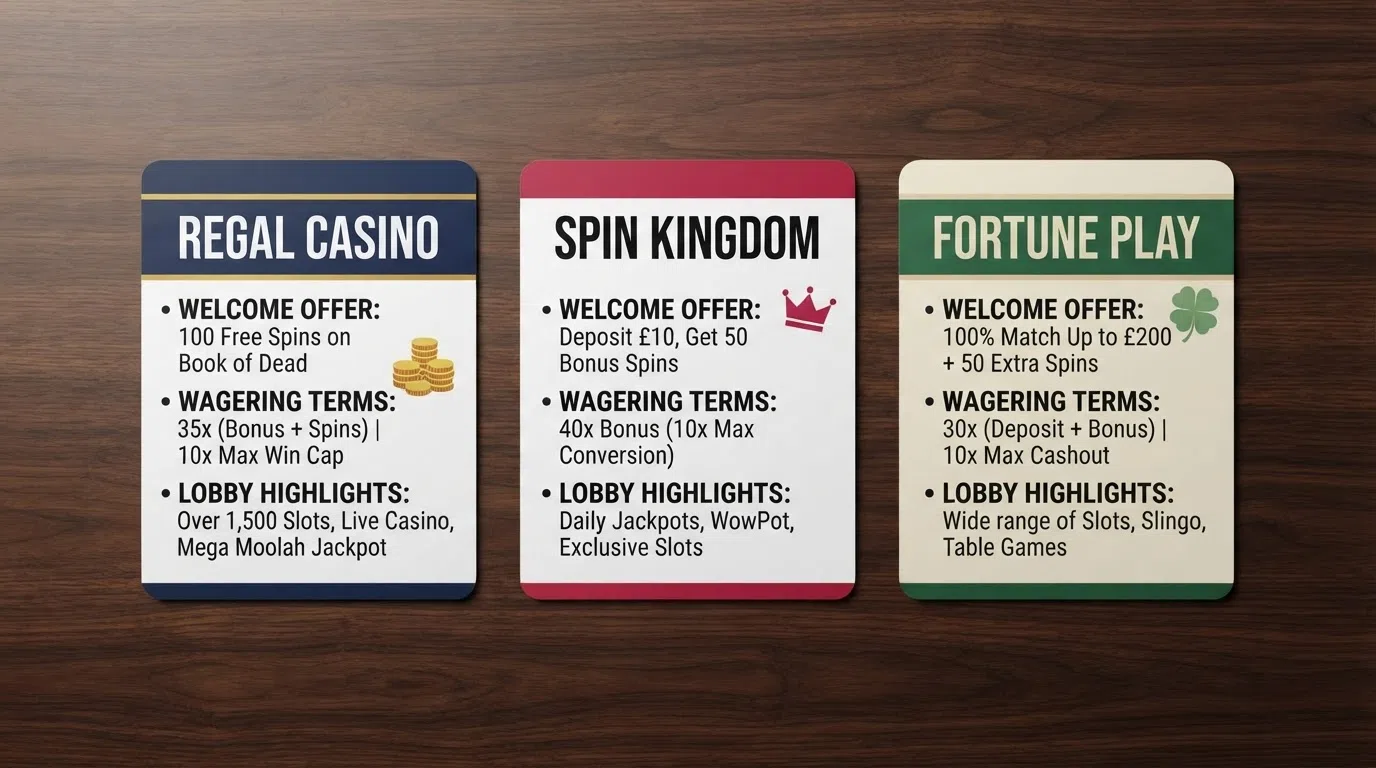
Every operator below holds a live UK Gambling Commission operating licence. The ranking splits on three axes: jackpot lobby depth (whether the operator carries network progressives and how many), welcome-offer quality (free-spin count, wagering multiplier, cashout cap), and mobile delivery (native app, mobile-browser parity). All ten brands passed the same licence baseline before any of those axes were assessed.
| Operator | UKGC Licence | Welcome Offer | Wagering on Bonus | Jackpot Focus |
|---|---|---|---|---|
| Sky Vegas | Yes (Flutter/Sky Betting & Gaming) | Up to 200 free spins (up to £250 value) | No wagering | Broad UK slot catalogue |
| Virgin Games | Yes | Free spins welcome package | No wagering | Broad slot and live catalogue |
| PlayOJO | Yes | 50 free spins on Big Bass Bonanza (96.71% RTP) | No wagering | Major UK slot studios |
| LeoVegas | Yes | 50 wager-free free spins on Big Bass Splash | No wagering | Major UK slot/live studios |
| Paddy Power Games | Yes (Flutter) | 50 free spins | No wagering | Full Flutter slot/live catalogue |
| Betfair Casino | Yes (Flutter) | 50 no-deposit free spins on Jackpot King games | No wagering stated | Jackpot King titles |
| Jackpot Village | Yes | Up to 200 bonus spins on Book of Dead | 10× on bonus funds | Mega Moolah, WowPot, Jackpot King |
| Mr Vegas | Yes | Wager-free cashback reported | Wager-free | 500+ jackpot titles |
| Jackpot City | Yes | 150 free spins (trigger: £20 stake/deposit) | — | Mega Moolah titles |
| Dream Jackpot | Yes | — | — | Mega Moolah, Wheel of Wishes, Divine Fortune |
A few patterns sit behind the table. Six of the ten operators offer no-wagering welcome packages; one (Jackpot Village) carries a 10× wagering requirement that matches the new statutory ceiling; one (Betfair) runs a genuine no-deposit free-spins offer, which is rare in the licensed UK market because pre-deposit identity verification imposes a structural cost on no-deposit promotions. The jackpot-focus column separates generalists from specialists: Mr Vegas and Dream Jackpot lead on progressive depth, Jackpot Village follows close behind, and the Flutter group operators rely on the breadth of their parent catalogue.
Sky Vegas: 200 Extra-Spin Awards, Winnings Held Yours Entirely, Across a Deep UK Slot Catalogue
Sky Vegas is the casino arm of the Flutter-owned Sky Betting & Gaming group, one of the largest licensed operators in Britain. The welcome package runs to up to 200 free spins with a stated maximum bonus value of £250, and the key term is that winnings from those spins carry no wagering obligation. There is no cashout cap stated in the published terms, which separates Sky Vegas from operators that attach a ceiling to free-spin returns.
The catalogue is broad rather than jackpot-specialist: major UK slot studios, a live-dealer floor, and the standard range of table games. Sky Vegas is a solid choice for those who value the scale and reliability of a major Flutter-group brand rather than the deepest progressive lobby.
Verdict: a mainstream Flutter-group casino whose welcome offer does what the marketing says it does, and whose mobile delivery benefits from being inside one of Britain’s largest gambling groups.
Virgin Games: An Introductory Round Package Where Winnings Carry No Rollover Obligation
Virgin Games sits on the same UKGC-licensed platform as several other established British gaming brands, with a welcome package built around free spins and no wagering on winnings. A minimum deposit and a qualifying wager are required to activate the offer. There is no cashout cap on the welcome package as published, which keeps the offer competitive with the other zero-wagering entries in this ranking.
The brand’s slot and live catalogue is broad, drawing on a network of major UK studios. The progressive lobby is not the deepest in the featured set, but the welcome terms are clean enough that the brand suits a player who values transparency over progressive depth.
Verdict: a long-established UK brand whose welcome package carries no rollover obligation, and whose mobile experience matches what most UK players expect from a mainstream operator.
PlayOJO: 50 Extra Turns on a Verified High-RTP Title, Winnings Paid Out in Full
PlayOJO built its reputation on a single pitch: no wagering, ever. The welcome offer delivers 50 free spins on Big Bass Bonanza, a Pragmatic Play title with a top RTP setting of 96.71%. The £10 minimum deposit is the activation threshold, and there is no wagering obligation on winnings. The RTP figure is unusually well-documented for a bonus-spin title, which gives the player a real handle on expected returns.
The brand’s broader catalogue runs through major UK slot studios and the catalogue depth is competitive. What separates PlayOJO from the rest of the no-wagering cluster is the transparency of the offer: the slot title is named, the RTP is published, and the wagering terms are zero. A player who values that level of clarity over progressive depth will find PlayOJO a clean fit.
Verdict: the no-wagering pioneer, with the clearest published RTP of any welcome-offer title in the featured set, and a platform that does what its marketing claims.
LeoVegas: 50 Wager-Free Spins on Big Bass Splash, Built for Mobile
LeoVegas positioned itself as a mobile-first operator long before “mobile-first” became industry vocabulary. The welcome package is 50 wager-free free spins on Big Bass Splash, another Pragmatic Play title, with a £10 minimum deposit. There is no wagering on winnings. The per-title RTP for Big Bass Splash was not confirmed in this run, which is the one gap in the offer documentation.
LeoVegas carries the major UK slot and live studios, and the mobile app is one of the more polished in the featured set. For a player who plays primarily on a phone and wants the welcome offer to lead toward a known title, LeoVegas fits the brief.
Verdict: the most explicitly mobile-built brand in the featured set, with a clean wager-free welcome on a named Pragmatic title.
Paddy Power Games: 50 Complimentary Rounds, Zero Playthrough Obligation, Flutter Group Backing
Paddy Power Games is the casino product of the Paddy Power brand, operating under the Flutter group’s UK Gambling Commission licence. The welcome offer delivers 50 free spins with no wagering on winnings, and no cashout cap is stated. The catalogue inherits Flutter’s full UK slot and live range, which is one of the largest in the British market.
Paddy Power’s retail heritage translates into a casino product that prioritises broad appeal over progressive depth. A player who values the Flutter catalogue and the brand recognition will find the welcome offer honest. A player chasing the deepest progressive lobby will look further down this ranking.
Verdict: a Flutter-group casino whose welcome offer is clean and whose catalogue depth comes from the largest gambling group in Britain.
Betfair Casino: 50 No-Deposit Free Spins on Jackpot King Games
Betfair is the only operator in the featured set carrying a genuine no-deposit free-spins offer. The welcome package delivers 50 free spins on eligible Jackpot King games, with no deposit required and no wagering stated. No cashout cap is stated. The Jackpot King series is a Blueprint Gaming progressive network, and Betfair’s inclusion of those titles in a no-deposit promotion is unusual within the licensed UK market.
The reason no-deposit offers are rare in the licensed UK market is structural. Pre-deposit identity verification is mandatory at every UKGC-licensed operator, which means the cost of issuing a no-deposit free-spin package includes the KYC burden. Operators that carry no-deposit offers absorb that cost because the marketing value outweighs the friction. Players looking to test a progressive network without risking real money first will find Betfair’s no-deposit structure the most compelling entry on this list.
Verdict: the only no-deposit welcome in the featured set, eligible on a named progressive network, and a useful test bed for Jackpot King before committing a bankroll.
Jackpot Village: 200 Bonus Spins on Book of Dead, 10× Wagering, £50 Cap
Jackpot Village is the most explicitly jackpot-focused brand in the featured set. The welcome offer runs to up to 200 bonus spins on Book of Dead, triggered by a £20 first deposit, with a 10× wagering multiplier on bonus funds and a £50 cap on winnings from bonus spins. The 10× multiplier is exactly the new statutory ceiling; no operator can legally attach a higher multiple from 19 January 2026 onward.
The progressive lobby carries Mega Moolah, WowPot and Jackpot King, which is the deepest network coverage in the featured set. Jackpot Village suits a player who wants the progressive depth and is willing to clear a wagering requirement to access it. The £50 cashout cap on bonus-spin winnings is the trade-off: the lobby is deep, but the welcome-offer ceiling is the lowest in the ranking.
Verdict: the deepest progressive lobby in the featured set, with a welcome offer that costs the player a wagering multiple and a £50 cashout cap, and that sits exactly at the new statutory ceiling on wagering.
Mr Vegas: 500+ Jackpot Titles and Wager-Free Cashback
Mr Vegas carries the largest jackpot lobby in the featured set, reported at over 500 titles. The welcome offer details were not confirmed this run; the cashback component is reported as wager-free, which is consistent with the no-wagering positioning. What is known is the licence (UKGC), the lobby scale, and the cashback mechanic. What is not confirmed is the headline welcome structure, the free-spin count, and any cashout cap.
For a player who prioritises jackpot depth above everything else, Mr Vegas’s 500+ lobby is the headline figure. Those prioritizing jackpot depth above all else will find the 500+ lobby unrivaled, though anyone focused on welcome-offer specifics should cross-reference terms directly on the operator’s site before registering.
Verdict: the largest jackpot catalogue in the featured set, with wager-free cashback confirmed, but welcome-offer specifics that require a direct check on the operator’s published terms.
Jackpot City: 150 Free Spins with Mega Moolah Access
Jackpot City delivers 150 free spins triggered by a £20 stake or deposit, with Mega Moolah titles available in the lobby. The wagering multiplier and any maximum cashout on the welcome offer were not confirmed this run. The brand is a long-running UKGC-licensed operator with a clear progressive focus.
The Mega Moolah inclusion is the key signal: Jackpot City carries the most famous network progressive in online casino. A player who wants Mega Moolah specifically and a generous free-spin count will find the headline numbers competitive. The gap on wagering and cashout terms is the reason to check the operator’s published conditions before claiming.
Verdict: a long-running UK jackpot brand with Mega Moolah access and a 150-free-spin headline, though the wagering and cashout specifics need a direct check on the operator’s site.
Dream Jackpot: Mega Moolah, Wheel of Wishes and Divine Fortune Under One Roof
Dream Jackpot is a progressive-jackpot specialist. The lobby carries Mega Moolah, Wheel of Wishes and Divine Fortune, which is a tighter selection than Mr Vegas but a stronger one than the generalist Flutter-group operators. Welcome-offer specifics were not confirmed this run.
For a player who values progressive depth on a smaller, more focused platform, Dream Jackpot is a clean fit. The gap on the welcome offer means the headline pitch here is the lobby, not the bonus. Verify the current welcome terms on the operator’s site before claiming.
Verdict: a progressive specialist with three major network titles, though welcome-offer terms need a direct check on the operator’s published conditions.
Why Your 2026 Jackpot Bonus Is Smaller Than It Looks: the 10× Cap and What It Means
From 19 January 2026, the Gambling Commission capped bonus wagering requirements at 10× and banned mixed-product promotional incentives. Before that date, UK operators could attach wagering multipliers of 30×, 40×, even 65× to a welcome bonus, and could bundle free spins, deposit matches and bonus credit into a single package. That structure is now closed. A welcome offer in 2026 either carries a wagering multiple at or below 10×, or it carries no wagering at all.
The Commission’s own rationale was that capping the multiplier “decreases the likelihood of harm, reduces complexity, and improves transparency while maintaining consumer choice.” That phrasing is regulator-speak for: high wagering multipliers were a harm vector, and a 10× ceiling is the maximum that still leaves operators room to compete on bonus value.
What this means in practice is that the no-wagering cluster of operators (Sky Vegas, Virgin Games, PlayOJO, LeoVegas, Paddy Power, Betfair) sit on the more generous end of the spectrum. Their welcome offers convert free-spin winnings to withdrawable cash with no further play required. Jackpot Village sits exactly at the ceiling: its 10× wagering on bonus funds is the maximum any UKGC-licensed operator can now attach. A player who clears that multiple keeps the bonus funds, subject to the £50 cap on bonus-spin winnings.
The distinction between bonus funds and free-spins winnings matters. Free-spins winnings at a no-wagering operator are cash from the moment they land. Bonus funds, even with no wagering attached, may carry game-weighting rules and time limits. Reading the difference is part of decoding a UK bonus offer, and the 10× cap does not change that underlying structure.
Welcome and Sign-Up Bonuses at UK Jackpot Casinos
The dominant welcome-offer format in the featured set is free spins, not matched deposits. Sky Vegas leads on free-spin count at up to 200 spins, Jackpot Village matches that ceiling with its 200 bonus spins on Book of Dead, and Jackpot City runs to 150 spins. PlayOJO, LeoVegas, Paddy Power and Betfair cluster around 50 spins. Virgin Games’ exact spin count was not confirmed.
Matched-deposit offers are constrained by the 10× cap, which is one reason they appear less frequently. A 100% match at £100 with 10× wagering requires £1,000 of qualifying turnover, a meaningful grind even at the new ceiling. Free-spin offers are easier to clear because the wagering is zero and the spin value is fixed.
Minimum-deposit triggers across the featured set sit between £10 (PlayOJO, LeoVegas) and £20 (Jackpot Village, Jackpot City). The lower the trigger, the faster a player can activate the offer. The higher the trigger, the more the operator is filtering for players who intend to play beyond the welcome package.
No cashout cap is stated for the no-wagering cluster, which means free-spin winnings at those brands convert directly to withdrawable cash. Jackpot Village’s £50 cap on bonus-spin winnings is the lowest ceiling in the featured set. The cap exists because the offer carries wagering; the trade is between deeper progressive access and a lower cashout ceiling.
No-Deposit Jackpot Bonuses and Free Spins: What Exists in 2026
Betfair is the only operator in the featured set carrying a genuine no-deposit free-spins offer, and the eligible titles include Jackpot King games. That single fact tells most of the story. No-deposit offers are rare in the licensed UK market because pre-deposit identity verification is mandatory at every UKGC-licensed operator. The cost of issuing free spins to a player who has not deposited includes the KYC burden, and most operators absorb that cost only when the marketing value is high.
A deposit-triggered free-spins offer is the structural default at UK jackpot casinos. The player deposits, the operator verifies identity (which often happens before the deposit is processed), and the free spins are credited. The verification requirement is a player protection, not an obstacle; it is also the reason no-deposit offers cluster around a small number of operators willing to absorb the friction.
The difference between no-deposit and deposit-triggered free spins, from the player’s perspective, is the timing of the verification step and the size of the qualifying commitment. A no-deposit offer tests the platform first; a deposit-triggered offer assumes the player is committed enough to fund the account before the welcome package activates.
Promo Codes, Wagering Caps and How to Read the Terms
A jackpot bonus offer in the UK comes with terms that fall into a small number of categories: the wagering multiplier, the game weighting, the time limit, the cashout cap, and any game restrictions. Reading those terms carefully is the single biggest determinant of whether the welcome offer is worth claiming.
The 10× statutory maximum on wagering means that any welcome offer in 2026 will sit at or below that multiple. A 65× requirement, which existed in the pre-2026 market, is no longer legal. That ceiling tightens the spread: most offers cluster around 0× (no wagering) or 10× (the maximum), with little in between. Game weighting is the rule that says a percentage of each stake counts toward clearing wagering; jackpot slots often contribute less than 100%, which slows the clearing process even at the new ceiling. The cashout cap is the maximum withdrawable amount from bonus winnings, and Jackpot Village’s £50 cap is the worked example in the featured set: a player who clears the 10× wagering on bonus funds can withdraw up to £50 from bonus-spin winnings, not the full amount won.
Time limits vary by operator and are not always published in headline terms. A welcome offer with a 30-day clearing window is a different proposition from one with a 7-day window. The shorter the window, the harder the grind.
Mobile Jackpot Play: Apps, Browsers and What Actually Works
The UK mobile jackpot experience runs on two access paths: a native app downloaded from the App Store or Google Play, and a mobile browser session on the operator’s responsive site. Both paths support progressive jackpot slots. The question is which path delivers a better experience for jackpot play specifically.
The honest answer is that research does not carry a per-operator comparison of app-versus-browser jackpot UX for this run. What is known is that the HTML5 mobile-browser path is universal across the featured set: every operator on the list supports mobile-browser play, and progressive slots run on that path. The native-app path is operator-dependent: Sky Vegas, Virgin Games, Paddy Power, Betfair and LeoVegas have notable app presences, while smaller jackpot specialists may rely more heavily on the browser path.
What the regulatory floor guarantees is identical across both paths. The £5/£2 stake cap applies regardless of access method. The 2.5-second spin-speed cap applies regardless of access method. Auto-play is banned regardless of access method. Reverse withdrawals are banned regardless of access method. The player experience is bounded by the same rules on phone, tablet, or desktop.
Dedicated Jackpot Casino Apps: Who Has One and What It Delivers
The major UK brands in the featured set carry native apps. Sky Vegas, Virgin Games, Paddy Power, Betfair and LeoVegas have notable app presences in the British market, and the Flutter group’s shared platform infrastructure means the Flutter-owned brands benefit from a consistent mobile experience across the family.
App-specific advantages for jackpot play include biometric login (fingerprint or face), which reduces friction at session start; push notifications, which can alert the player to a must-drop jackpot approaching its ceiling; and session persistence, which keeps the player logged in across short phone interruptions. App-specific disadvantages include storage cost (the app occupies phone memory), update friction (a forced update can break a session), and the absence of app stores in some configurations (Android side-loads, restricted iOS regions).
Per-operator app-availability data was not carried in this research run. What is confirmed is that the major UK brands have apps. What is not confirmed is the per-operator app-feature set for jackpot play specifically. Verify on the operator’s site before assuming a feature exists.
Not All Jackpots Are Created Equal: Progressive, Daily and Live Formats Compared
The four jackpot formats a UK player encounters are progressive, daily or must-drop, live dealer, and random. Each has a different payout structure, a different expected frequency, and a different feel at the reels.
Progressive jackpots are the headline format: a network-fed pool that grows with every qualifying spin until it drops. Daily or must-drop jackpots are guaranteed to fall within a set window, often 24 hours. Live dealer jackpots layer a progressive pool onto a live blackjack, roulette or game-show table. Random jackpots award a prize pool at random to any qualifying spin, independent of reel alignment.
What separates the formats is the strategic calculus for the player. A progressive requires patience and a stake level that qualifies for the pool contribution. A must-drop jackpot rewards timing: the closer the pool is to its ceiling, the better the expected return. A live dealer jackpot rewards table-session bankroll. A random jackpot rewards volume: every qualifying spin has a chance.
Progressive Jackpot Slots: How They Work and the Top Titles in the UK
A progressive jackpot slot pulls a small contribution from every qualifying spin and routes it to a central pool. The pool grows until a trigger condition drops the prize, after which the pool resets to its seed value and the build begins again. The network that hosts the pool can be a single operator, a single studio, or a multi-operator network like Mega Moolah or WowPot.
The titles available at UK-licensed operators include:
- Mega Moolah (Microgaming network): the most famous progressive jackpot in online casino, with a seed value in the six-figure range and historical payouts in the seven-figure range.
- WowPot (Microgaming network): a newer progressive layer sitting above Mega Moolah, with a higher ceiling.
- Jackpot King (Blueprint Gaming network): a progressive layer available at Flutter-group operators and Jackpot Village, eligible on Betfair’s no-deposit offer.
- Dream Drop (Relax Gaming network): an in-studio progressive mechanic that has become more visible in 2026 releases.
- Wheel of Wishes (Microgaming/Alchemy): a single-game progressive available at Dream Jackpot.
- Divine Fortune (NetEnt): a long-running progressive available at Dream Jackpot.
Jackpot Village carries Mega Moolah, WowPot and Jackpot King in its lobby. Dream Jackpot carries Mega Moolah, Wheel of Wishes and Divine Fortune. Betfair carries Jackpot King titles. Jackpot City carries Mega Moolah. The network coverage across the featured set is broad; the depth per operator varies.
The trade-off in progressive play is between base-game RTP and jackpot contribution. A progressive slot’s headline RTP is typically lower than a standard slot’s because a slice of every spin flows to the pool. The player pays, in effect, a per-spin premium for access to the headline prize. The expected return over a long session is the base-game RTP plus the probability-weighted jackpot contribution; the variance is higher because most sessions will not hit the pool.
Daily and Timed Jackpot Slots: Must-Drop Before the Clock Runs Out
Daily jackpot slots are must-drop-by titles: the pool is guaranteed to fall within a set window, often 24 hours, and the closer the pool is to its ceiling the better the expected return for the player. The mechanic is simple to grasp and changes how a player approaches the reels: a pool at 99% of its ceiling with an hour to go is a different bet than a pool at 20% of its ceiling with twelve hours to go.
The trade-off relative to a network progressive is smaller ceiling and higher hit frequency. A daily jackpot slot typically tops out in the four- or low-five-figure range, against Mega Moolah’s seven-figure ceiling. The hit frequency is much higher, often multiple times per day across the network. A player who wants frequent jackpot hits over ceiling size prefers the daily format; a player who wants ceiling size over frequency prefers the network progressive.
The strategic calculus for daily jackpots is timing. A player who watches the ticker and enters a session when the pool is close to its ceiling is making a positive-EV decision relative to a session entered when the pool is low. The discipline required is patience, which is harder than it sounds in a session-based casino format.
Live Jackpot Dealer Games: When the Table Carries a Progressive Prize
Live dealer studios have layered progressive jackpots onto blackjack, roulette and game-show formats. The mechanic is typically a side-bet trigger: the player places an additional wager on the jackpot side, and a qualifying event (a suited blackjack, a specific roulette number, a bonus-round outcome in a game show) drops the pool.
The live-dealer jackpot catalogue is thinner than the slot progressive catalogue, partly because live studios have fewer releases per year than slot studios and partly because the side-bet mechanic adds a layer of complexity that some players find off-putting. For a player who prefers live table sessions over slot play, the live jackpot format is a way to add a progressive layer to a familiar product.
The Flutter-group operators (Sky Vegas, Virgin Games, Paddy Power, Betfair) and LeoVegas carry the strongest live catalogues in the featured set. The jackpot-specialist brands (Jackpot Village, Dream Jackpot, Mr Vegas) focus on slot progressives rather than live jackpots. The trade-off is between live-dealer breadth and slot-progressive depth, and which the player prefers depends on the format they play most.
New Jackpot Slot Releases in 2026: What Is Fresh and Worth a Spin
The trend in 2026 jackpot releases is toward in-studio progressive mechanics rather than network pools. Dream Drop, Jackpot King and similar in-house networks give studios more control over the pool size, the hit frequency, and the title-by-title configuration. Network progressives like Mega Moolah remain the ceiling-tier option, but the new-release pipeline is dominated by studio-built mechanics.
Per-title release dates were not carried in this research run, so the precise calendar of 2026 releases is not documented here. What is documented is the directional shift: more progressive slots are launching with in-studio mechanics, and the major network pools (Mega Moolah, WowPot) remain the headline options rather than the new-release pipeline.
For a player who tracks new releases, the practical implication is to watch the studio-built mechanics for new configurations and treat the network pools as established fixtures. The studios releasing new jackpot mechanics in 2026 include several of the same studios whose slots populate the featured operators’ lobbies.
Free Jackpot Slots: What Demo Mode Teaches You That Real-Money Play Cannot
Demo mode at a UKGC-licensed operator is a virtual-credits version of the same slot that runs in real-money mode. The mechanics are identical: the same reels, the same features, the same bonus-round structure. What differs is the stake (virtual credits instead of real money) and the payout (virtual credits instead of withdrawable cash).
What demo mode teaches is genuine and useful. The player can learn how often the bonus round triggers, how the feature round plays out, what a high-volatility session feels like, and how the base game behaves over hundreds of spins. The player can compare two titles side by side without committing cash. The player can identify titles that feel engaging versus titles that feel like a grind.
What demo mode cannot teach is the psychological weight of real-money play. A session in demo mode is friction-free: no withdrawal request, no bankroll anxiety, no risk of loss-chasing behaviour. A session in real-money mode carries all of those pressures, and the discipline required to manage them is not something a demo session can simulate. The player who learns a slot in demo and then plays it for real discovers that the experience is different in ways the demo did not prepare them for.
The progressive qualification rules are another thing demo mode cannot teach. A network progressive may require a minimum stake to qualify for the pool contribution; a demo session can run at any stake the demo interface allows. The player who learns a progressive in demo and then plays for real at a stake below the qualification threshold is not playing the same game the demo simulated.
Demo mode is a mechanics tutorial and a volatility feeler. It is not a payout predictor and it is not a progressive-qualification simulator. The honest framing of demo mode at a UK jackpot casino is that it teaches the shape of the game, not the cost of playing it.
Crypto Jackpot Casinos: What UK Players Lose When They Leave the Licence
Crypto jackpot casinos are overwhelmingly offshore, and offshore for a UK player means unlicensed for the purposes of British consumer protection. A Curaçao, Malta or Gibraltar licence does not authorise a site to take bets from players physically located in Great Britain. The UK Gambling Commission’s position is that a GB licence is compulsory at the point of consumption, and that providing gambling facilities without the required licence is a criminal offence under section 33 of the Gambling Act 2005.
What the player loses at an offshore crypto casino is the regulatory layer that the UKGC provides. GAMSTOP does not cover offshore operators, which means a player who has self-excluded through GAMSTOP and then opens an offshore crypto account is still gambling. ADR routes (eCOGRA, IBAS) do not bind offshore operators. The £5/£2 stake cap does not apply offshore, which means a player can wager at any stake the offshore operator accepts. Segregated player funds guarantees do not apply. Reverse-withdrawal bans do not apply. The game-design limits (auto-play ban, 2.5-second spin-speed cap, losses disguised as wins ban) do not apply.
The enforcement regime against offshore operators is disruption-based rather than ISP/DNS-blocking-based. The Commission issued 3,140 disruption notices between April 2024 and June 2025, referred 447,778 URLs to search engines, and reported 287,961 URLs removed in that period. That activity targets the operators, not the players. No penalty was verified for a player who merely gambles on an unlicensed site; what the player loses is regulatory protection, not legal exposure.
For a UK player, the honest framing of a crypto jackpot casino is that the product exists and the regulatory layer does not. The choice is between a UKGC-licensed brand where every spin is bounded by British rules, and an offshore brand where the player is the consumer-protection layer for themselves.
Bitcoin Jackpot Slots: the Offshore Reality for UK Players
Bitcoin-denominated jackpot slots exist, and the casinos offering them are not UKGC-licensed for GB players. The deposit, withdrawal and tax implications for a UK player who uses bitcoin at an offshore casino are different from the UKGC-licensed path.
Deposit: bitcoin deposits at offshore casinos are irreversible in practice. Once a transaction is broadcast to the blockchain, it cannot be reversed by the operator or by the player. A player who sends bitcoin to the wrong address, or to an operator that fails to credit the account, has no recourse through the UKGC complaints process because the operator is not UKGC-licensed.
Withdrawal: bitcoin withdrawals from offshore casinos face no UKGC processing-time rules. Reverse withdrawals are not banned offshore, which means an offshore operator can reverse a withdrawal request back into playable credit at its discretion. The friction-free UK withdrawal process does not apply.
Tax: the player pays no tax on gambling winnings in the UK, regardless of whether the operator is UKGC-licensed or offshore. The operator’s tax position is different: a UKGC-licensed operator pays Remote Gaming Duty at 40% from 1 April 2026, while an offshore operator pays no UK duty. The offshore operator’s lower tax burden is one reason offshore casinos can offer bonus structures that would be illegal under UKGC rules.
FCA and FOS protection does not extend to gambling transactions, whether at UKGC-licensed or offshore operators. The Financial Ombudsman Service handles financial services complaints, not gambling disputes. The protection layer for UKGC-licensed operators is the Gambling Commission’s ADR framework; for offshore operators, that framework does not apply.
UK Jackpot Casino Laws and Regulatory Limits
The United Kingdom’s gambling framework provides a stringent, player-centric environment. Operators must hold a GB operating licence, issued under the Gambling Act 2005 and extended to remote operators by the Gambling (Licensing and Advertising) Act 2014. Key statutory rules and dates are outlined below:
| Regulation Area | Statutory Limit / Rule | Effective Date |
|---|---|---|
| Online Slots Stake | £5 (25+); £2 (18-24) | April/May 2025 |
| Bonus Wagering Cap | 10× maximum | 19 January 2026 |
| Deposit Limits | Standardised definition | 30 June 2026 |
| Credit Cards | Banned for gambling | 14 April 2020 |
| Auto-Play | Banned | 31 October 2021 |
Licensing is the foundational requirement, and no offshore licence substitutes for it. Stake caps are tiered by age, ensuring that younger players operate within tighter bounds. Bonus wagering is strictly capped to simplify terms and reduce consumer harm, while deposit limit standardisation ensures that when a player sets a limit, it refers to money paid into the account.
Game design rules, including the ban on auto-play, the 2.5-second spin-speed floor, and the requirement to display session time and losses, are mandatory for all licensed slots. Payment methods are equally regulated, with credit cards banned since 2020. Advertising is monitored by the ASA, with strict “strong appeal” tests to protect under-18s. Finally, while players pay no tax on winnings, operators contribute through Remote Gaming Duty and a statutory levy.
UKGC Licensing: What It Takes to Run a Jackpot Casino in Britain
The UK Gambling Commission issues operating licences under the Gambling Act 2005, with the regime extended to remote operators by the Gambling (Licensing and Advertising) Act 2014. The Commission’s remit covers licensing, compliance, enforcement, and consumer protection. An operator that wants to offer remote gambling to players in Great Britain must hold a valid GB operating licence; no offshore licence substitutes for that requirement.
A player can verify a licence on the Commission’s public register. The register lists every licensed operator, the licence type, the licence status (active, suspended, revoked), and the trading names associated with the licence. A jackpot casino that cannot be found on the public register is not UKGC-licensed for GB players, regardless of what other licences it holds.
Providing gambling facilities without the required licence is a criminal offence under section 33 of the Gambling Act 2005. Enforcement against unlicensed operators is disruption-based: cease-and-desist notices, search-engine referrals, registrar and payment-provider work. The Commission does not currently hold statutory ISP or DNS blocking powers, which means the disruption regime relies on cooperation from intermediaries rather than direct blocking.
Player Protections Under UK Law: Stake Caps, Deposit Limits and Design Rules
The UK jackpot player is protected by a stack of rules that constrain the operator’s freedom to design and promote its product. The £5/£2 stake cap bounds the maximum wager per spin. The 10× wagering cap bounds the maximum bonus multiplier. The auto-play ban and 2.5-second spin-speed cap bound how fast the player can cycle through spins. The losses-disguised-as-wins ban removes a design pattern that made losses feel like wins. The reverse-withdrawal ban removes the friction-free re-gambling of withdrawn funds. The session display rules force the operator to show the player their session losses, wins, and time played.
The deposit-limit rules from 30 June 2026 standardise what “deposit limit” means: a limit based solely on the amount paid into the account over a set duration. Before that date, “deposit limit” could mean different things at different operators. After that date, the term has a single definition. A player who wants to set a budget sets a deposit limit; a player who wants to bound their session sets a time limit; a player who wants to step away sets a self-exclusion.
The game-design limits have been in force since 31 October 2021 and apply to every UKGC-licensed online slot. The player who plays at a UKGC-licensed casino in 2026 is playing a slot that has been modified to comply with British design rules. The same slot at an offshore casino may not carry those modifications, which is one of the structural differences between licensed and offshore play.
Dispute Resolution and Fair-Play Guarantees: What to Do When Something Goes Wrong
A UKGC-licensed operator must offer an internal complaints process and an escalation path to an independent ADR provider. The internal process is mandatory under the LCCP (Licence Conditions and Codes of Practice). The ADR provider is approved by the Gambling Commission; common ADR providers include eCOGRA and IBAS.
The escalation path is: internal complaint to the operator, response within a defined window, escalation to ADR if the response is unsatisfactory, and finally a complaint to the Gambling Commission if the ADR adjudication is unsatisfactory. The Commission’s complaints function reviews ADR outcomes and can take regulatory action against an operator that fails to comply, but the Commission does not award compensation to individual players. ADR adjudication is the ceiling for individual dispute resolution.
The limit of ADR is that it can adjudicate a dispute but cannot guarantee compensation. A player whose complaint is upheld by an ADR provider may receive an award, but the award is binding on the operator only if the operator accepts the ADR ruling. An operator that refuses to comply faces regulatory consequences, but the player does not have a court-style enforcement mechanism through the Commission.
Safer Gambling Is Not a Footnote: Tools, Limits and Where to Get Real Help
Safer-gambling infrastructure in the UK is the most comprehensive in any regulated market. The tools are mandatory at UKGC-licensed operators, the self-exclusion scheme (GAMSTOP) covers every online licensee, and the support network behind the tools is funded by a statutory levy.
Between April 2024 and March 2025, the National Gambling Support Network treated 11,960 clients, an 11% increase on the previous year. In January 2026, the National Gambling Helpline made 996 referrals to treatment and peer-based support services, up 48% year-on-year from January 2025. Those figures describe a treatment system that is seeing more clients, not a population that is gambling more. The interpretation is contested but the data is published.
Deposit Limits, Reality Checks and Session Tools: What Every UKGC Casino Must Offer
The deposit-limit rules from 30 June 2026 standardise what “deposit limit” means: a limit based solely on the amount paid into the account over a set duration. Every UKGC-licensed operator must offer this. Before that date, the term could refer to different mechanics at different operators.
Reality checks are mandatory session-time reminders that prompt the player to confirm they want to continue playing. Time-outs allow the player to lock themselves out of the account for a defined period, from 24 hours to several weeks. Self-exclusion via GAMSTOP is the multi-operator version, covering every UKGC-licensed online casino at once.
Session-loss, session-win and time-played displays are mandatory at UKGC-licensed operators. The player can see how much they have spent, how much they have won, and how long they have been in session, without leaving the slot. The reverse-withdrawal ban ensures that a withdrawal request cannot be reversed back into playable credit. The cooling-off period after a self-exclusion request gives the player a window to reconsider before the exclusion activates.
Self-Exclusion via GAMSTOP: One Registration, Every UKGC Casino
GAMSTOP is the national multi-operator online self-exclusion scheme for Great Britain. Registration is free, the minimum exclusion period is six months, and the scheme has been mandatory for online licensees since 31 March 2020. A player who registers with GAMSTOP is blocked from opening new accounts at UKGC-licensed online operators for the duration of the exclusion.
What GAMSTOP covers is every UKGC-licensed online casino. What GAMSTOP does not cover is offshore operators, land-based venues, or lottery products. A player who self-excludes through GAMSTOP and then opens an account at an offshore crypto casino is still gambling; the self-exclusion is a British consumer-protection tool, not a universal block.
The registration process is straightforward: the player provides identification details, selects an exclusion period, and confirms the registration. The exclusion cannot be lifted early. After the minimum period expires, the player can request removal, with a cooling-off period before the request is processed.
How We Evaluated and Ranked These Jackpot Casinos
The evaluation basis for this ranking rests on three sources: the Gambling Commission’s public register (for licence verification), the operators’ own published terms (for welcome-offer, wagering and cashout data), and publisher data captured during this research run. Every operator in the ranking was verified against the public register before any bonus, lobby or mobile feature was assessed.
The ranking criteria, in order of weight: UKGC licence verification (baseline filter), jackpot lobby depth (how many progressive titles and which networks), welcome-offer quality (free-spin count, wagering multiplier, cashout cap), and mobile delivery (native app presence and mobile-browser parity). The ranking does not include first-hand deposit-and-play testing, which was outside the scope of this run. Bonus terms change; the operator data captured this run is current as of the dates noted on the relevant sources but may differ from the operator’s current published terms. Where welcome-offer specifics were not confirmed this run (Mr Vegas, Jackpot City, Dream Jackpot), the gap is noted in the operator write-up.
Market-share figures from operator-level research were used for shortlisting only and are not published in this ranking. The ranking is a comparison of public, verifiable features, not a popularity contest.
Your 2026 UK Jackpot Casino Checklist: What to Do Next
Four actions a reader can take from the evidence on this page:
Verify the UKGC licence on the public register. Every operator in this ranking holds a live GB operating licence, but licences can be suspended or revoked. A 30-second check on the Commission’s public register confirms the current status of the licence under which the operator trades. The section on UKGC licensing walks through what the register shows and what to look for.
Read the bonus terms against the 10× cap and any cashout ceiling. The 10× wagering cap is the statutory maximum; any offer above that multiple is illegal. The cashout cap on bonus winnings varies by operator, and Jackpot Village’s £50 ceiling is the lowest in the featured set. The section on promo codes and wagering caps walks through how to decode the terms.
Set a deposit limit before the first deposit. From 30 June 2026, every UKGC-licensed operator must offer a deposit limit based on the amount paid into the account over a set duration. Setting a limit before depositing is faster than setting one after, and the limit takes effect immediately. The section on deposit limits and session tools covers the mechanics.
Register with GAMSTOP as a precaution. GAMSTOP registration is free, covers every UKGC-licensed online casino, and the minimum exclusion period is six months. Registration is not a commitment to permanent self-exclusion; it is a tool that can be lifted after the minimum period. The section on self-exclusion walks through the process.
The four actions are not operator recommendations. They are the steps a UK jackpot player can take from the regulatory and bonus infrastructure this page has documented.
Frequently Asked Questions
How do I verify a jackpot casino’s UKGC licence is genuine?
The Gambling Commission maintains a public register of every licensed operator. Search the register by operator name, confirm the licence status is active, and check the trading names associated with the licence. A jackpot casino that does not appear on the register is not licensed for GB players, regardless of any other licence it holds. The register is the single authoritative source.
What is the catch with no-wagering free spins at UK jackpot casinos?
The catch is usually game weighting, time limits, or a cashout cap on bonus winnings. The no-wagering cluster in the featured set (Sky Vegas, Virgin Games, PlayOJO, LeoVegas, Paddy Power, Betfair) carries no wagering on free-spin winnings, but the operator may attach a time limit for using the spins or a game-restriction clause. Jackpot Village’s £50 cashout cap on bonus-spin winnings is the trade-off between progressive depth and welcome generosity.
What is the maximum I can stake on online jackpot slots in the UK?
£5 per game cycle for adults aged 25 and over, in force since 9 April 2025. £2 per game cycle for adults aged 18 to 24, in force since 21 May 2025. The cap applies to every spin at every UKGC-licensed online casino, progressive jackpot or not, and applies identically on mobile apps, mobile browsers, and desktop.
Are mobile jackpot slots identical to the desktop versions?
The slot mechanics are identical: same reels, same features, same RTP, same stake cap. What differs is the surrounding experience: mobile sessions may have shorter attention spans, faster deposit flows, and biometric login. The regulatory floor (stake cap, spin-speed cap, auto-play ban) applies identically on both platforms.
Why do most UK-licensed jackpot casinos not accept bitcoin?
Because UKGC-licensed operators must comply with anti-money-laundering and Know Your Customer requirements that bitcoin’s pseudonymous structure complicates. Pre-deposit identity verification is mandatory at UKGC-licensed operators, and bitcoin deposits do not easily satisfy that requirement. Operators that focus on UKGC licensing tend to offer debit cards, bank transfers, and regulated e-wallets rather than cryptocurrencies.
Does GamStop block me from all UK jackpot casinos at once?
Yes. GAMSTOP covers every UKGC-licensed online casino. Registration is free, the minimum exclusion period is six months, and the exclusion cannot be lifted early. What GAMSTOP does not cover is offshore operators, land-based venues, or lottery products. A player who has self-excluded through GAMSTOP can still access offshore crypto jackpot casinos, which is one reason the offshore-versus-licensed distinction matters for anyone who has chosen to self-exclude.
Mobile Browser vs Native App: Does It Matter for Jackpot Slots?
For jackpot slots specifically, the practical difference between mobile browser and native app is smaller than for general casino play. A progressive slot loads through HTML5 in either configuration, the reel set is identical, and the stake cap applies identically. The differences are around session management and notification delivery rather than the core game experience.
Browser advantages include zero download cost, no storage footprint, and immediate access from any device with a modern browser. Browser disadvantages include slower login (password entry rather than biometric), no push notifications, and reliance on the mobile browser’s performance characteristics.
App advantages include faster login through biometrics, push notifications for jackpot alerts, and session persistence across phone interruptions. App disadvantages include the storage footprint, update friction, and the risk that the app store version lags behind the desktop site’s feature set.
For a player whose jackpot play is session-heavy (logging in to check a ticker, watching a must-drop jackpot approach its ceiling), the app’s push-notification capability is the standout advantage. For a player whose jackpot play is occasional (deposit, spin, withdraw), the browser path is sufficient.
Slots – realmoney-onlinecasinos-uk
Content created by the «realmoney-onlinecasinos-uk» team